
A dove shows up and something in you pauses. You feel it before you even think it. That quiet moment is worth paying attention to, because across nearly every spiritual tradition on earth, the dove carries one of the most consistent messages in all of nature: peace is possible, hope is near, and you are not alone. Whether you spotted a white dove outside your window, had one land unusually close, or keep seeing doves during a hard season of life, this guide will help you understand what it might mean and, more importantly, what to actually do with that meaning today.
Dove Bird Spiritual Meaning and White Dove Symbolism

Eliza Thornwick
10 Apr 2026
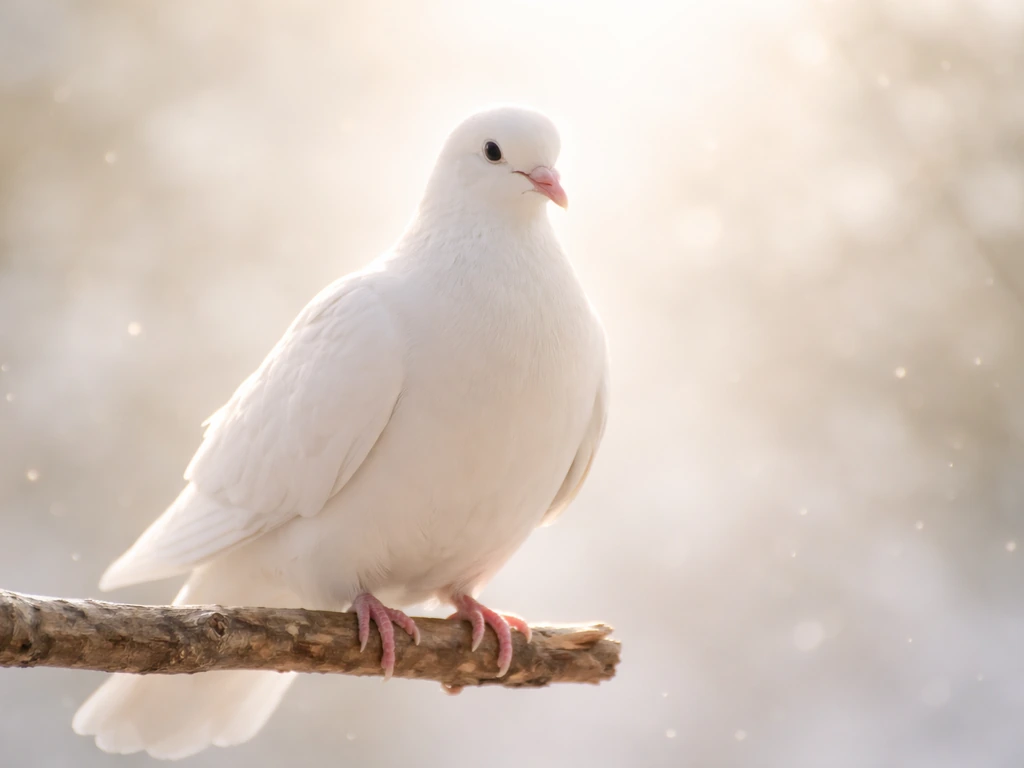
What the dove spiritually represents at its core
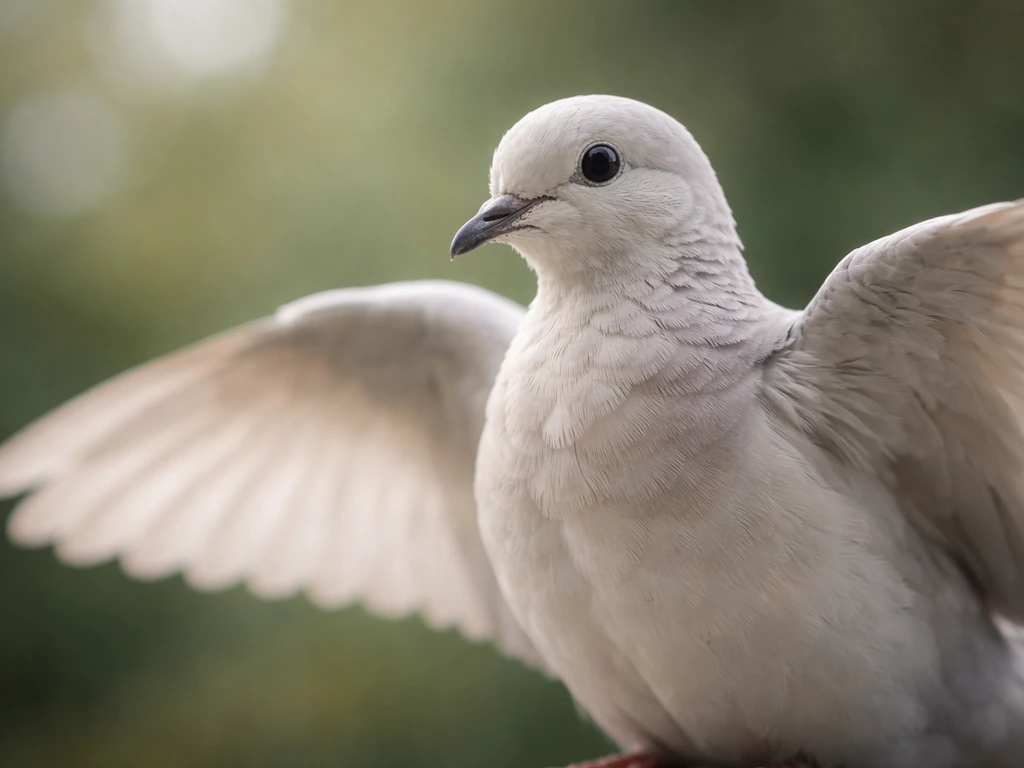
Before you interpret your specific encounter, it helps to understand what the dove has meant across time. The short version: the dove is almost universally a symbol of peace, gentleness, love, new beginnings, and the presence of something sacred. That consistency is rare. Most bird symbols shift dramatically from one culture to the next, but the dove tends to carry the same gentle, hopeful energy almost everywhere you look.
A big part of that consistency comes from behavior. Doves are soft-voiced, calm, and remarkably unbothered by human presence. blank" rel="noopener noreferrer">Cornell's ornithologists note that Mourning Doves will nest on gutters, eaves, and even abandoned equipment near homes without distress, which is part of why human-dove encounters feel so intimate. They don't startle and flee the way many birds do. That calmness has always read as sacred to human observers.
Spiritually, the dove's core themes break down like this:
- Peace and the end of conflict (internal or external)
- Hope arriving after a dark or difficult period
- Healing, especially emotional or relational healing
- Love, both romantic and the broader, unconditional kind
- New beginnings and fresh starts
- A message of reassurance: things will be okay
- A connection to the divine, the sacred, or a loved one who has passed
If you're someone who works with spirit guides or animal totems, the dove often shows up as a guide for people who are carrying grief, anxiety, or conflict and need a reminder that gentleness is not weakness. It's also worth noting that unlike, say, the drongo bird, which carries much more ambivalent or trickster-like energy in various traditions, the dove is remarkably consistent in its positive associations. That makes it one of the easier bird symbols to interpret with some confidence.
White dove spiritual meanings: why they're a little different
If the dove you saw was white, or if you're drawn specifically to white dove imagery, there's an extra layer here. White doves carry all of the core dove symbolism above, but they intensify it. The white color adds purity, clarity, and a more direct divine connection to the mix.
In Christian symbolism, the white dove is one of the oldest and most recognized sacred images. Early Christians actually used the dove symbol before the cross became prominent, and by the time Christian visual culture developed fully, the white dove became the primary representation of the Holy Spirit, specifically the third member of the Trinity. This isn't just a modern reading: the Biblical Archaeology Society traces this symbolism back to depictions of the baptism of Jesus, where the dove descends as a visible, tangible presence. That same imagery shows up in stained glass, church art, and sacred education materials across centuries and denominations.
Even outside explicitly Christian contexts, white in bird symbolism tends to elevate the message. White is about clarity, purity of intention, and things becoming visible or known. So if you saw a white dove specifically, the spiritual message often leans toward: something sacred is close, clarity is coming, or a pure and loving presence is with you.
One thing worth noting: a lot of what people call 'white doves' in everyday life are actually domesticated rock pigeons with white coloring. This doesn't make your encounter less meaningful spiritually, but it's a helpful reality check that not every pale bird is a rare wild dove. The spiritual significance you assign to an encounter isn't about the ornithological species; it's about the meaning that resonates for you.
How to read your specific dove encounter
Not all dove sightings feel the same, and they shouldn't be interpreted the same. Here's what to pay attention to when you're trying to understand what your encounter might mean.
What was happening in your life?
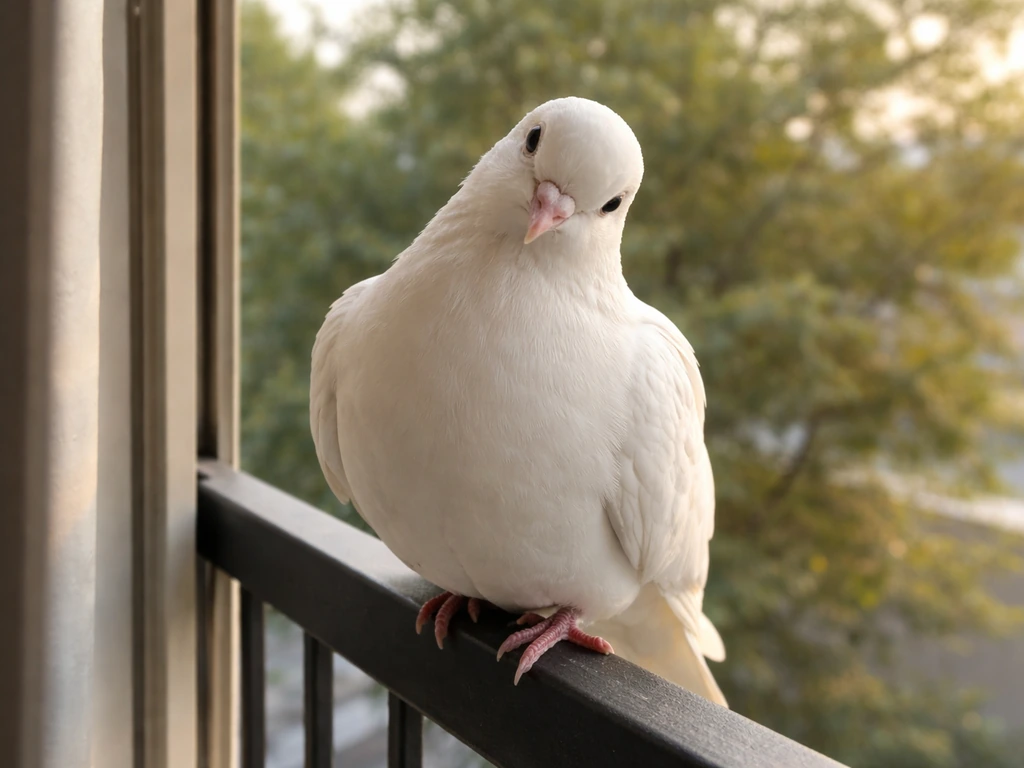
This is always the first question. The most important context for any spiritual symbol is what's going on for you right now. Were you in the middle of a difficult decision? Grieving a loss? Feeling stuck or hopeless? Or were you in a moment of quiet joy? The dove's message tends to mirror the need of the moment. If you were hurting, it likely came as comfort. If you were at peace, it may have been a confirmation to keep going.
How did the dove behave?
Behavior matters a lot. A dove that lands near you, makes eye contact, or lingers unusually long carries a different weight than one you spot in passing. Similarly, a dove that returns to the same spot repeatedly over days or weeks is harder to dismiss as coincidence. Doves are naturally calm around humans, so when one's behavior seems particularly directed or persistent, many people find that spiritually significant. On the other hand, if you simply noticed a dove on a wire during your commute, the message (if any) is probably a softer nudge than a visitation.
Was there a sound component?
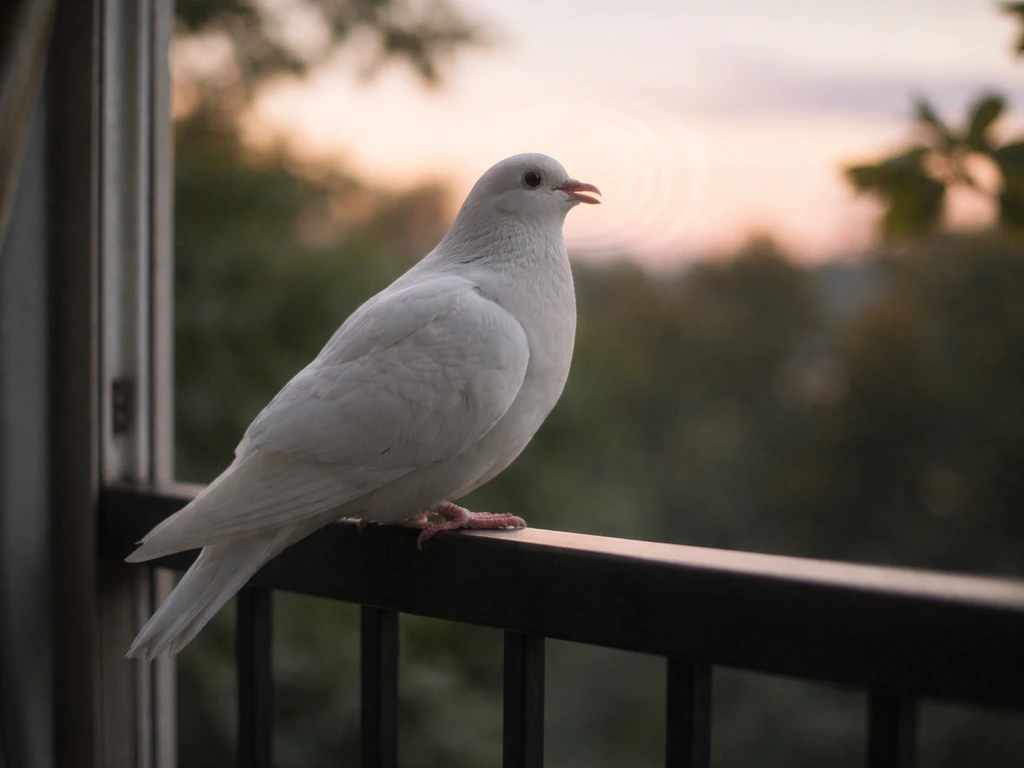
Dove cooing has its own spiritual weight. It appears in Biblical prophetic imagery as a sound of mourning or longing, and in many personal spiritual frameworks, the soft, repetitive cooing of a dove near your home is interpreted as a gentle call to slow down, go inward, or pay attention to something you've been avoiding. If the dove was cooing and you found it moving or arresting, sit with why.
Where did it appear?
Location adds nuance. A dove appearing near your home often relates to family, peace in your domestic life, or a message connected to your roots. One appearing during a funeral, a wedding, or another significant life event layers additional meaning onto the core symbolism. A dove that shows up at a hospital, a place of worship, or at a moment of prayer is something many people interpret as direct spiritual reassurance.
What the dove might be telling you right now
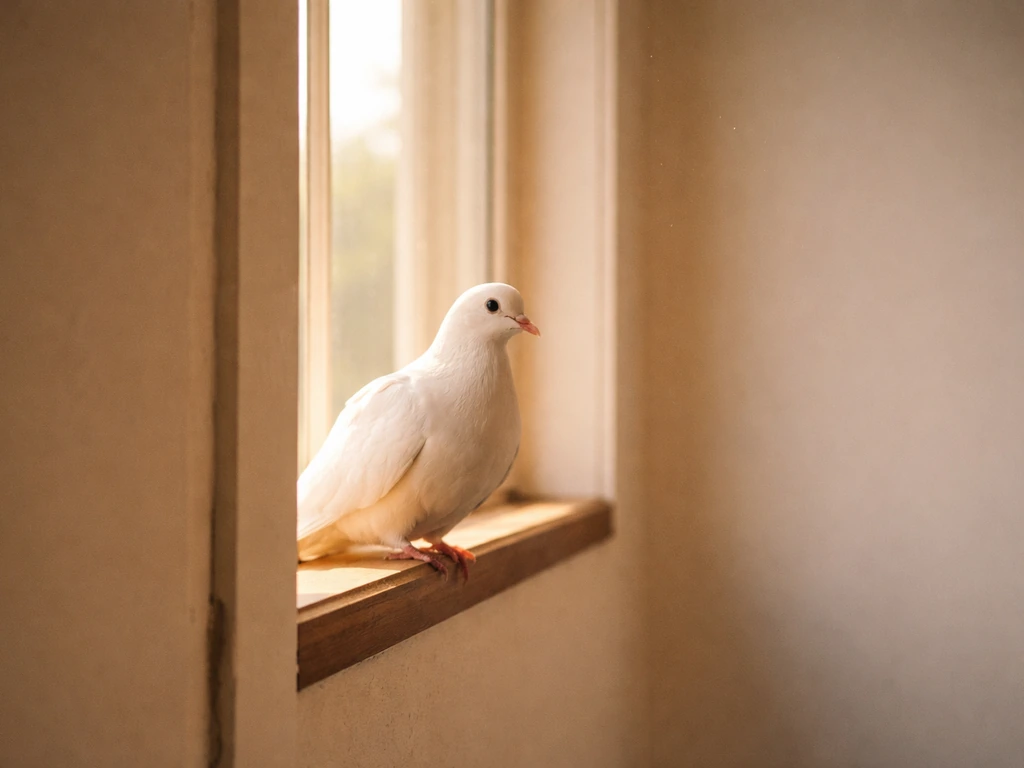
Once you've thought through the context, here are the most common messages people receive from dove encounters. These aren't meant to be prescriptive, but they're the themes that come up most consistently.
| Theme | What It Might Mean for You | Common Trigger Situations |
|---|---|---|
| Peace | An invitation to release conflict, forgive, or find stillness | Ongoing argument, internal turmoil, stress |
| Hope | A reminder that things will improve; the hard season is not permanent | Grief, depression, feeling stuck |
| New Beginnings | Something is ending so something better can begin | Life transitions, endings, crossroads |
| Love | You are loved; open your heart or nurture a key relationship | Loneliness, relationship strain, seeking connection |
| Healing | Emotional or physical healing is underway or available to you | Illness, loss, trauma recovery |
| Divine Presence | A sense that the sacred, God, or a loved one's spirit is near | Prayer, grief, spiritual seeking |
| Reassurance | You're on the right path; keep going | Self-doubt, big decisions, fear |
One theme I hear from readers again and again: doves showing up after a loved one dies. Many people interpret this as a sign that the person who passed is at peace, or that they're sending comfort. There's no way to prove or disprove that, but if a dove appearing at that moment brought you a genuine sense of peace, that experience is real and worth honoring.
It's also worth comparing the dove's energy to birds that carry very different messages. The hadida bird, for instance, tends to be associated with loud announcements and disruption rather than gentle reassurance. The contrast actually helps clarify the dove: its message is always quiet, interior, and soft. If what you need right now is a gentle nudge rather than a dramatic wake-up call, the dove is the right messenger.
Practical next steps: what to actually do today
Spiritual symbolism is only useful if you do something with it. Here's a simple framework for taking your dove encounter from interesting to genuinely useful.
Start with a journal entry
Write down everything you remember about the encounter while it's fresh: where you were, what you were thinking or feeling just before, what the dove did, and how you felt in that moment. Then write freely about what was happening in your life around that time. Don't overthink it. Just let the connections surface on the page. Many people find that the journaling itself is where the real insight arrives, not the interpretation you read online.
- Describe the encounter in as much sensory detail as you can
- Write about what was on your mind or in your heart that day
- List any words the encounter brings up (peace, hope, love, etc.)
- Write one sentence about what you most need right now
- Notice if the dove's symbolic themes match that need
Use it as a prompt for prayer or meditation

If you have a spiritual or prayer practice, bring the dove into it. You don't need to treat it as a prophecy or a direct message from God. You can simply use it as a gentle opening: 'I noticed a dove today and felt something. I want to be open to whatever that was pointing to.' That posture of openness and curiosity is usually more spiritually productive than trying to decode a specific command.
Take one concrete action aligned with the message
This is the step most people skip, and it's the most important one. If the dove felt like a message about peace, do one thing today that moves you toward peace: send the text you've been putting off, take the walk you need, have the conversation that's been hanging. If it felt like hope, do one small thing that affirms hope in your life. The symbol only becomes meaningful when it moves you to act.
Cultural and religious lenses: how meaning shifts (and how to discern your own)
The dove's symbolism is remarkably consistent across traditions, but it's not identical everywhere, and it's worth being honest about that so you can choose the lens that actually fits your life.
In Jewish tradition, the dove-and-olive-branch connection comes directly from the story of Noah's ark, where the dove returns with an olive leaf as the first sign of dry land and the receding of the flood. The Jewish Telegraphic Agency connects this imagery to broader themes of peace, healing, and hope in Jewish cultural memory. It's one of the earliest recorded uses of the dove as a symbol of good news arriving after suffering.
In Christianity, the dove is one of the oldest sacred symbols, predating the cross in Christian visual culture. It's primarily associated with the Holy Spirit and appears in baptism imagery going back to the earliest centuries of the church. Catholic Answers Encyclopedia also explains that in Christian antiquity the dove appeared in early representations connected with baptism baptism imagery going back to the earliest centuries of the church. That layered history means the white dove carries significant weight for Christian readers, though the exact interpretation of dove encounters varies between denominations and individual believers.
In Islam, the dove does not carry the same specific spiritual significance as in Christian or Jewish frameworks. Islamic scholarship generally treats the dove as a bird without particular religious meaning, which is a useful reminder that the symbolism you bring to a bird encounter is shaped by your tradition, not universal law.
In many Indigenous and earth-based traditions, the dove's symbolism tends to focus on its behavior: the gentle cooing, the calm demeanor, the way it returns home. These traditions often interpret the dove as a teacher of peace rather than a divine messenger in the way Christian frameworks do.
All of this is worth holding lightly. Just as the chickadee bird carries different meanings depending on whether you're reading from a Native American, Celtic, or modern spiritual lens, the dove's significance shifts with the lens you bring to it. None of these frameworks is more correct than another. What matters is which one resonates as true for you.
A word on discernment
One caution worth raising: bird encounters, however meaningful, are best used as invitations to reflection rather than as direct commands or prophecies. Treating a dove sighting as a definitive sign that a specific decision is the right one is a step further than most spiritual traditions recommend. The encounter can open a door, but you still have to walk through it with your own discernment, prayer, and wisdom. Use the symbol to get quiet and pay attention, not to bypass the thinking you still need to do.
This same principle applies across bird symbolism. Whether you're exploring the shama bird's spiritual meaning or sitting with what a dove encounter might mean for your life, the most useful posture is curious openness rather than certainty. You're looking for resonance, not a rulebook.
Dove symbolism across the broader bird world
Part of understanding the dove is understanding what makes it distinct from other birds in the symbolic landscape. Its gentleness and consistency set it apart from birds that carry more complex or contradictory meanings. The jackdaw, for example, tends to carry themes of cunning, mystery, and the unknown, which is almost the opposite of the dove's clarity and comfort. And unlike the whydah bird, which carries themes of longing and unresolved grief in some African spiritual traditions, the dove generally signals that the grief is moving toward resolution.
Even the dodo bird's spiritual meaning, which often centers on extinction, endings, and the importance of adapting before it's too late, shows you how different bird symbols can be. The dove is essentially the dodo's opposite in emotional tone: where the dodo warns, the dove reassures.
That contrast is actually useful when you're trying to discern whether a bird encounter is a gentle nudge or a stronger warning. If the encounter left you feeling unsettled or called to urgency, that's a different energy than the dove typically carries. The dove's message, almost always, feels like a hand on the shoulder rather than an alarm bell.
Putting it all together
The dove is one of the most spiritually generous birds you can encounter. It shows up carrying peace, hope, healing, love, and reassurance, and it has done so across thousands of years of human spiritual life. If you saw one and felt something, trust that feeling enough to sit with it. Journal about it. Bring it into your prayer or meditation. And then take one small action that honors what the encounter was pointing toward.
You don't need to land on a single definitive interpretation. What you need is to let the encounter open something in you, whether that's a softer stance toward a conflict, a renewed sense of hope during a hard stretch, or simply a moment of feeling that something loving is present with you. That's what the dove has always been here to offer.
FAQ
What if I saw a dove, but I didn’t feel peaceful?
If you felt fear, dread, or urgency instead of calm, treat the dove as a prompt to check your interpretation rather than assume the symbol is “good news.” Re-read the details (where you were, what you were thinking, how the dove behaved). If your body signals alarm, you may be noticing your own stress more than receiving a comforting message.
Does seeing doves repeatedly make the spiritual meaning stronger?
Yes, but use a different level of certainty. Pay attention to whether the bird actually changed your next thoughts or actions, not just how often it appeared. When the sighting is truly “persistent,” many people respond by choosing one peace action you can do in one day (a hard conversation, a boundary, a small repair).
How should I interpret the dove’s distance from me, or whether it just flew by?
“Near” is meaningful, but distance helps you calibrate. A dove landing close, following you for a stretch, or returning to the same spot usually feels more personal than seeing one pass by at random. Still, because doves can be naturally comfortable around people, behavior cues (lingering, eye contact, repeated visits) matter more than mere presence.
How do I respond if the dove cooed or seemed to “call” my attention?
Coaching your mind with a practice can help. For example, after the sighting, take one slow breath and ask one question aloud: “What part of peace do I need to practice right now?” Then choose one concrete step that matches the answer (rest, apology, closure, or taking a smaller next step on a goal).
What if I’m not religious, or I don’t follow a specific tradition?
If you already have strong spiritual beliefs, you can use the dove as confirmation of your existing lens. If you do not, treat it as an invitation to values (peace, gentleness, hope) rather than doctrine. The key is to avoid forcing a specific religious meaning when nothing in your life connects to it.
Can a dove sighting be a sign that I should take a specific action?
It helps to separate “symbolic comfort” from “decisions.” Use the dove as guidance for how you want to be (calm, honest, kind), but don’t use it as proof that one outcome will happen. If a choice is high-stakes, pair spiritual reflection with practical discernment, like talking to a trusted person or reviewing real options.
What does a dove encounter mean during grief or a loss, especially if I’m still raw?
Yes. One approach is to journal two lines: (1) the emotion the dove brought up, (2) the next peace-oriented action your body agrees with. Grief often needs gentle pacing, so the “action” might be something supportive like attending a service, writing a letter, or making space for rest rather than a big change.
How does the location of the sighting (home, funeral, hospital, place of worship) change the message?
If the bird was in a place tied to an event, let that context shape the theme. Near a wedding or celebration, the message may lean toward blessing, unity, or continued kindness. Near a hospital or prayer setting, many people interpret it as reassurance or courage to endure, not a promise of outcome.
What if the “white dove” might actually have been a pigeon, does that invalidate the sign?
If you suspect it might have been a white pigeon or another domesticated bird, you can still honor the meaning without needing it to be a rare species. Treat the encounter as a mirror for what you were already feeling, and focus on your response (the peace action) rather than proving the exact species.
Next Article
Hamerkop Bird Spiritual Meaning: Messages, Encounters, Guidance
Hamerkop bird spiritual meaning by encounter, covering intuition, boundaries, protection, love guidance, and a daily rit