When a drongo crosses your path, the most likely spiritual message is this: pay close attention to what you're being told right now, and question whether the noise around you is genuine signal or clever distraction. Drongos are birds of sharp intelligence, bold presence, and extraordinary communication skills. Spiritually, they tend to show up as messengers urging alertness, discernment, and the courage to speak up or protect what matters. But the specific meaning shifts quite a bit depending on what the bird was actually doing when you saw it, and what was already on your mind.
Drongo Bird Spiritual Meaning: What It Means for You Now

Eliza Thornwick
19 May 2026
What the drongo is and why it catches people's spiritual attention
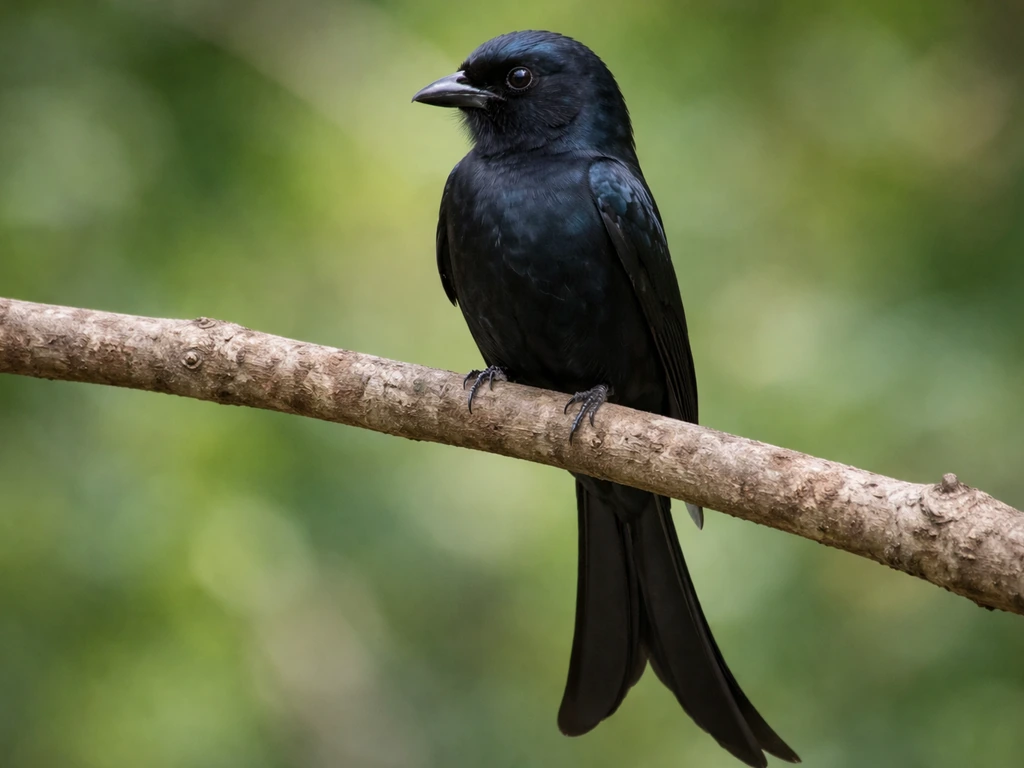
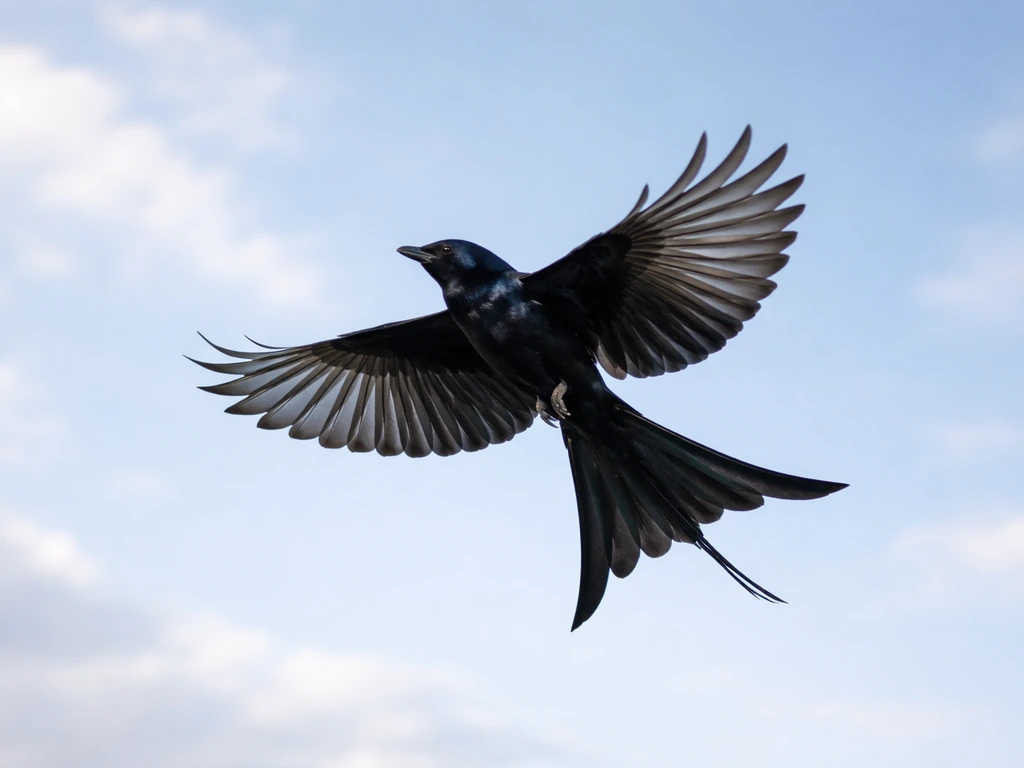
Drongos are small-to-medium passerine birds, glossy black with long forked or distinctive tails, found across Africa, Asia, and Australia. There are around 29 species, but the fork-tailed drongo of sub-Saharan Africa and the black drongo of South and Southeast Asia are the ones most people encounter, and the ones that show up most in spiritual conversations. If you're comparing bird omens across traditions, you might also look into the whydah bird spiritual meaning as a related option spiritual conversations. They're hard to miss. Drongos are loud, fearless, and visually striking. They'll mob hawks, chase eagles, and sit right at the top of a bare branch where everyone can see them.
What really makes people feel there's something spiritual happening with a drongo is its personality. These birds are famously clever, sometimes to the point of trickery. Research on fork-tailed drongos has documented them issuing genuine alarm calls that send meerkats and other animals scrambling for cover, and then blank" rel="noopener noreferrer">turning around and stealing the food those animals dropped. They can even mimic the alarm calls of other species to make the deception more convincing. That combination of protector, communicator, and trickster sits right at the heart of drongo spiritual symbolism across many traditions. A bird that can warn you and deceive you with the same breath is asking you to think carefully about discernment.
General spiritual meanings of seeing a drongo
Across the cultures where drongos are native, a few consistent themes emerge. In parts of South Asia, the black drongo is sometimes called the "king of birds" despite its small size, because it so fearlessly defends its territory against birds many times larger. This protective boldness gives it a reputation as a guardian spirit in some folk traditions. In parts of Africa, the fork-tailed drongo's knack for intelligence and communication has made it a symbol of wit and strategic thinking. Indigenous Australian traditions often connect birds with ancestral messages, and the drongo's habit of perching conspicuously and calling loudly fits the role of herald or messenger spirit.
Spiritually, a drongo sighting generally points toward one or more of the following themes: a need for sharper awareness, a message about communication (either yours or someone else's), a prompt to examine whether the information you're receiving is truthful, or a reminder that you have more protective power than you might feel right now. Some people also connect hadida birds with similar spiritual themes, especially messages about awareness and discerning what is truly real hadida bird spiritual meaning. If you've been second-guessing yourself, feeling talked over, or sensing that something in your environment isn't quite as it appears, a drongo showing up is rarely a coincidence.
- Alertness and vigilance: something in your life needs a closer look
- Bold communication: you may need to speak up, speak clearly, or defend your position
- Discernment: not every alarm around you is real; learn to tell signal from noise
- Protection: you are being watched over, or you need to take a more protective stance yourself
- Intelligence in adversity: the drongo teaches that wit and strategy matter more than size or force
- Spiritual messaging: a loved one or guide may be trying to get your attention
What the drongo's behavior is telling you

The general symbolism is a starting point, but the drongo's behavior when you saw it is where the real message lives. A drongo sitting quietly on a branch and watching you is offering a very different message than one that dive-bombs your head or screams at you from ten feet away. Here's how to read the most common encounter types.
A drongo landing on you or very close to you
This is a rare and significant encounter. When a wild bird chooses to land on a person, it tends to feel unmistakably intentional, and spiritually it often is. A drongo landing on you suggests direct, personal spiritual contact. Some traditions would say a messenger or ancestor is reaching out without ambiguity. The drongo's association with bold communication means this isn't a gentle whisper from the spirit world; it's a clear nudge. Ask yourself what you've been avoiding or what decision you've been circling. The answer is probably what this landing is about.
A drongo calling loudly near you
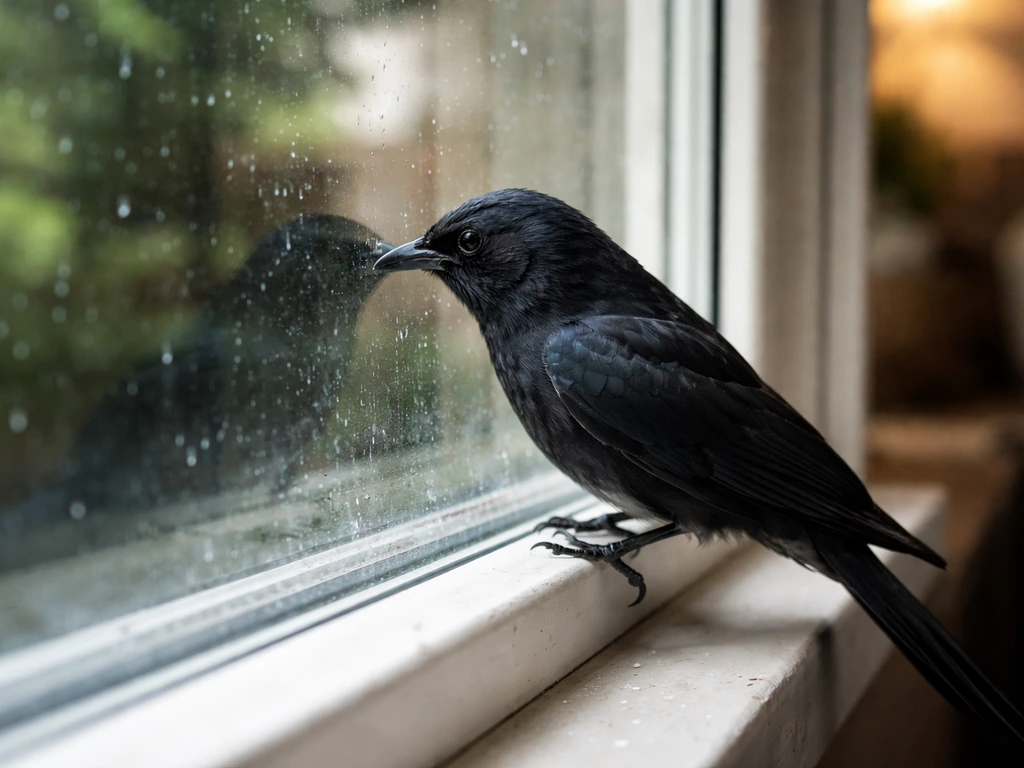
Loud, insistent calling is one of the drongo's most characteristic behaviors, and spiritually it translates directly: something or someone needs your undivided attention. This could be a message that you're missing important information in a situation, or that your own voice needs to be heard more. Given what we know about drongos and their alarm calls, this encounter also carries a discernment dimension. Is the alarm around you real, or is someone in your life creating noise to manipulate your behavior? A drongo calling loudly is a prompt to slow down and think before reacting.
A drongo tapping on or flying at a window
Window encounters have long been interpreted as messages from the spiritual realm, partly because a window sits between two worlds: inside and outside, the known and the unknown. A drongo specifically doing this suggests urgency. The message is knocking and hasn't been answered yet. In many traditions, a bird tapping at a window is connected to the spirit of someone who has passed, or to a higher guidance trying to break through your current mental state. With a drongo, the additional layer of communication symbolism makes this feel like a very direct, 'wake up and pay attention' moment.
A drongo flying close or circling you
If a drongo is flying close but not landing, circling or hovering near you, think of it as an escort. Spiritually, this often signals that you are being watched over during a period of transition or vulnerability. The drongo's reputation as a guardian of other animals in its habitat (many species follow drongos specifically to benefit from their alarm calls) makes this a particularly comforting encounter. You may be going through something that feels unsupported, but the circling drongo suggests protection is present even if you can't see its full shape yet.
A drongo that keeps appearing repeatedly
One drongo sighting can be coincidence. Three or more across different days or locations is a pattern, and patterns are where spiritual meaning concentrates. Repeated drongo encounters usually signal that a message hasn't landed yet. You've been given the first prompt, maybe the second, but something is blocking you from receiving or acting on it. This is a good moment for honest self-reflection: what have you been persistently avoiding or rationalizing away?
Drongo habits as spiritual omens: nests, attacks, and alarm calls
Finding a drongo nest near your home
A drongo choosing to nest near or on your property is generally considered a positive omen in many of the cultures where this bird lives. Drongos are fierce nest protectors and will drive away predators far larger than themselves. Their presence near your home suggests that your household is being spiritually guarded. If you've been worried about safety, stability, or a threat to your family or living situation, this is a reassuring sign. It can also signal that a creative project or new beginning is about to take root in a meaningful way.
A drongo acting aggressively or dive-bombing you
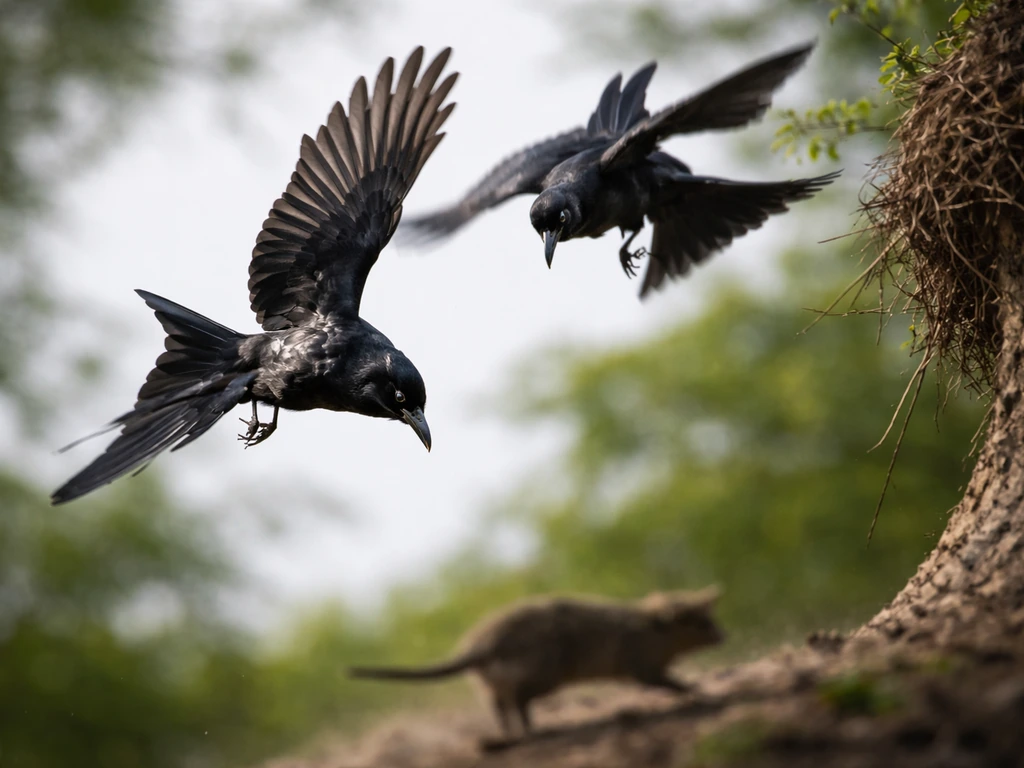
This is one of the most reported drongo encounters, because these birds are genuinely bold about protecting their nests and territory. If a drongo is dive-bombing or swooping at you, the first thing to check is whether you're near a nest. But spiritually, this kind of protective aggression carries a message too. It's asking you: what are you protecting? What in your life deserves that level of fierce defense? Alternatively, this can be a mirror reflection: are you being overly aggressive in defending something that doesn't actually need defending? The drongo's boldness invites you to look at where you're placing your defensive energy.
The drongo's alarm call and its trickster dimension
The drongo's famous false alarm behavior is one of the most fascinating and spiritually layered things any bird does. Studies have shown that fork-tailed drongos can switch between their own genuine alarm calls and mimicry of other species to deceive animals into dropping food. In a spiritual context, this behavior is a direct teaching about discernment. When a drongo calls, it's asking you to evaluate: is the crisis in your life real, or has someone (or some inner voice) created the sense of emergency to keep you reactive and manipulable? This is a bird that teaches you to think before you flee.
A drongo chasing other birds or predators
Watching a drongo aggressively drive away a hawk or crow that's three times its size is one of the natural world's clearest lessons in courage without proportionality. Spiritually, this scene is about not letting the scale of a challenge determine whether you engage with it. If you're watching a drongo mob a much larger bird, that's often a direct mirror for something in your own life where you've been holding back because the odds feel stacked against you.
What the drongo might be saying about specific areas of your life
A lot of people who come to a drongo sighting aren't just generally curious about birds. They're in the middle of something. A hard decision, a relationship question, a career crossroads. The drongo's symbolism applies differently depending on the context of your life at the moment of the encounter.
| Life Area | What the Drongo Might Be Saying |
|---|---|
| Relationships | Examine whether communication in this relationship is honest. Someone may be sending misleading signals, or you may need to speak more boldly about your needs. |
| Career / Work | You have more influence and protective power than you're using. Bold action, even against a 'larger' opponent or challenge, is being supported right now. |
| Major decisions | Slow down before reacting to alarms or urgency. Not all pressure is genuine. Use discernment to separate real signals from manufactured noise. |
| Grief / Loss | The drongo as messenger suggests a spirit connection. A loved one may be trying to reach you, or you're being reminded that protection continues beyond the physical. |
| Creativity / New projects | This is a time for strategic intelligence, not brute force. Think several moves ahead, as the drongo does when it plans its deceptions. |
| Personal protection / Boundaries | You are being given the drongo's energy of fierce, intelligent guardianship. Your instinct to protect yourself or someone you love is spiritually validated. |
It's worth noting that the drongo shares certain symbolic territory with other clever, communicative birds. The jackdaw, for instance, also carries associations with intelligence and trickery. The jackdaw bird spiritual meaning can offer similar themes of intelligence, connection, and discernment. The shama bird is known for its extraordinary vocal gifts. But the drongo's particular combination of aggressive protectiveness, advanced mimicry, and bold fearlessness gives it a distinctly active, warrior-like spiritual energy that sets it apart.
How to interpret your encounter honestly and personally
Here's where I want to be straight with you: no one can tell you exactly what your drongo encounter means, because meaning is built from the intersection of the symbol and your life. If you are also drawn to the dodo bird spiritual meaning, look for similar themes of awareness and inner guidance that match your personal situation drongo encounter. What I can give you is a reliable method for figuring it out yourself, which is honestly more useful than a fixed answer.
- Notice what you were thinking or feeling at the exact moment the drongo appeared. The mind often holds the question that the encounter is answering.
- Observe the behavior precisely. A quiet, watching drongo and a screaming, dive-bombing one are not sending the same message. Details matter.
- Consider the timing. Was this a period of uncertainty, transition, or conflict? Spiritual encounters tend to cluster around charged moments.
- Check your gut response. Did the encounter feel like a warning, a comfort, or a challenge? Your emotional reaction is data, not just sentiment.
- Look for patterns. A single sighting is a possibility. Three sightings in a week is a conversation. Track what was happening in your life during each one.
- Hold multiple interpretations lightly. The drongo's trickster nature is itself a reminder that one fixed meaning can mislead you. Stay curious rather than certain.
Different spiritual traditions will frame the drongo's message through their own lenses. Indigenous African traditions may emphasize the drongo as a literal spirit-guide and protector of communities. South Asian folk beliefs might connect the black drongo to valor and royal authority. A more Western metaphysical reading might frame it as a power animal calling you toward confidence and strategic thinking. None of these are wrong. They're all facets of the same fundamental energy that this bird carries. Take what resonates with your own background and lived experience.
What to actually do after a drongo encounter
Spiritual encounters only stay as interesting stories unless you do something with them. Here are concrete next steps you can take today to turn this encounter into something actionable.
Start with journaling

Grab a notebook as soon as you can after the encounter and write freely. The goal isn't to be poetic; it's to capture details before they fade and to let the writing surface what your conscious mind might be editing out. Use these prompts as a starting point.
- What was I thinking about in the hour before I saw the drongo?
- What did the drongo do, specifically? How did it make me feel in my body?
- What is the biggest area of uncertainty or pressure in my life right now?
- Is there a 'false alarm' in my life that I've been reacting to without questioning?
- Where am I holding back my voice, my protection, or my boldness?
- What would I do differently if I had the drongo's fearlessness for one week?
A short grounding practice
You don't need a formal ritual for this. Find five quiet minutes, ideally outside or near a window. Take three slow breaths, and on each exhale, picture yourself releasing the noise and distraction that isn't yours to carry. Then mentally ask: 'What is the real signal I need to hear right now?' Sit with whatever comes up, even if it feels uncomfortable. The drongo doesn't shy away from difficult truths, and this practice is about borrowing a little of that clarity. If you have a prayer practice, you can frame this as asking for discernment, protection, or the courage to communicate what's true. If you're wondering about the chickadee bird spiritual meaning, this same discernment mindset can help you notice what your intuition is actually responding to. The intention matters more than the exact words.
Concrete alignment actions for today
Spiritual guidance only becomes useful when it changes something in the physical world. Based on the drongo's core messages, here are practical actions to take in the next 24 to 48 hours.
- Identify one conversation you've been avoiding and take a step toward having it. Draft a message, make a note to call someone, or simply decide on a time.
- Examine one piece of information or urgency in your life and ask honestly: is this real, or is someone (including your own fear) manufacturing this pressure?
- Take one small, bold action in an area where you've been waiting for permission or better odds. The drongo doesn't wait.
- Set or reinforce one boundary that protects your energy, your home, or your creative work.
- If you suspect a spiritual connection to someone who has passed, set aside a quiet moment to acknowledge them, light a candle, or speak their name aloud.
- Notice the next drongo encounter and write down what was happening right before it. You're building a personal record of what this bird means in your life specifically.
The drongo is not a subtle bird, and its spiritual message usually isn't subtle either. It shows up when something in your life needs clarity, courage, or careful examination. The meaning you build from this encounter, grounded in honest observation and genuine reflection, will be far more useful to you than any single fixed interpretation. Trust what the encounter stirred in you. That stirring is the message.
FAQ
How can I tell whether my drongo sighting is “real guidance” or just a coincidence?
Use a 24-hour reality check. If the encounter sparked a specific, actionable insight (a decision to make, a conversation to have, a pattern to stop), it likely functions as guidance for you. If it only created vague anxiety or stayed purely interpretive, treat it as a prompt to observe without making big moves yet.
What should I do if I get the opposite message from what my drongo behavior seems to suggest?
Prioritize the detail that affects you most emotionally and practically. For example, if the drongo was near you but the strongest feeling was “I need to speak up,” act on communication-focused steps first, not the behavior-based theme that feels less connected to your current life.
Does a drongo encounter always mean someone is trying to manipulate me or “fake me out”?
Not automatically. The false-alarm symbolism is a reminder to verify information, not a guaranteed claim of deception. Try a simple filter: confirm facts with a second source, wait before reacting, and check whether your urgency is being produced from outside or by your own fear.
How many drongo sightings count as a “pattern,” and what if I only see one?
A pattern is often three or more sightings across separate days or locations, not a cluster of the same day. If you only see one, treat it as a single prompt for awareness, not a directive to make a major life change immediately. Give it a short window, then decide what to do with the insight.
What does it mean if the drongo dive-bombs me, but I do not think there’s a nest nearby?
First check for likely nesting zones within your line of sight (trees, gutters, eaves, fences, sheltered corners). If nothing obvious is found, still consider it a mirror about “defending” something. Ask what boundary is being tested, and respond with focused protection rather than escalating conflict.
If a drongo lands on or very near me, is that more intense than other encounters?
Generally, yes. Landing or direct contact is the most “personal” style of encounter. To stay grounded, treat it as a clear call to pay attention rather than a guarantee of supernatural contact, then ask what decision or avoidance your attention is circling in your real life.
How should I interpret a window encounter if I do not believe in spirits?
You can translate the symbolism into psychology and timing. A bird tapping at a window can be read as a boundary signal (something you keep “outside” is trying to reach you). Use it to prompt immediate reflection on what you are ignoring indoors, emotionally or practically.
What’s the best way to journal about the encounter without getting stuck in overthinking?
Write in two rounds. Round one, capture facts only (time, weather, distance, what it did, who was present). Round two, write one sentence each for (1) what it made you feel, and (2) the next small action you can take within 48 hours.
Should I take any physical action, like moving my home or changing routines, after a drongo near my property?
Avoid drastic changes based on symbolism alone. A drongo near your property is more useful as a prompt to strengthen your actual safety and stability routines, such as checking household security, setting clear family boundaries, or protecting a project’s beginnings with consistent effort.
Can I pair the drongo meaning with other bird symbolism like jackdaw or hadida?
Yes, but keep it selective. Use only one “primary” bird theme as your main lens, then use the second bird’s theme to refine a single question (for example, discernment from drongo plus communication strategy from another bird). If two interpretations pull you in different directions, pause and decide which aligns with your most urgent real-life need.
Next Article
Hadida Bird Spiritual Meaning: Symbols and What to Do
Interpret hadida bird spiritual meaning by encounter type, plus a calm checklist for journaling, cleansing, and next ste