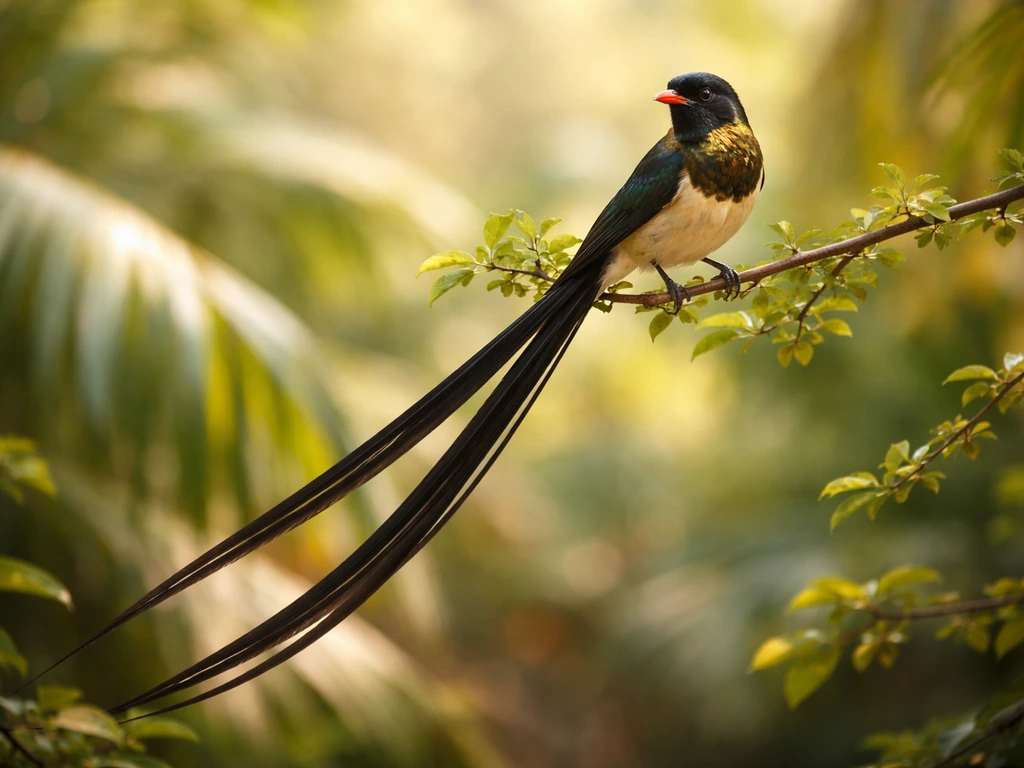
If a whydah bird has caught your attention, spiritually speaking it is calling you toward themes of love, freedom, beauty, and authentic self-expression. These striking African birds, with their dramatically long tails and elaborate courtship displays, are most commonly interpreted as messengers about romance, passion, and the courage to show up fully in your relationships and your life. That said, the specific message shifts quite a bit depending on how the bird showed up for you, what it was doing, and what is already stirring in your own world right now.
Whydah Bird Spiritual Meaning: What It Could Signify

Eliza Thornwick
2 May 2026
What the Whydah Bird Means Spiritually at a Glance
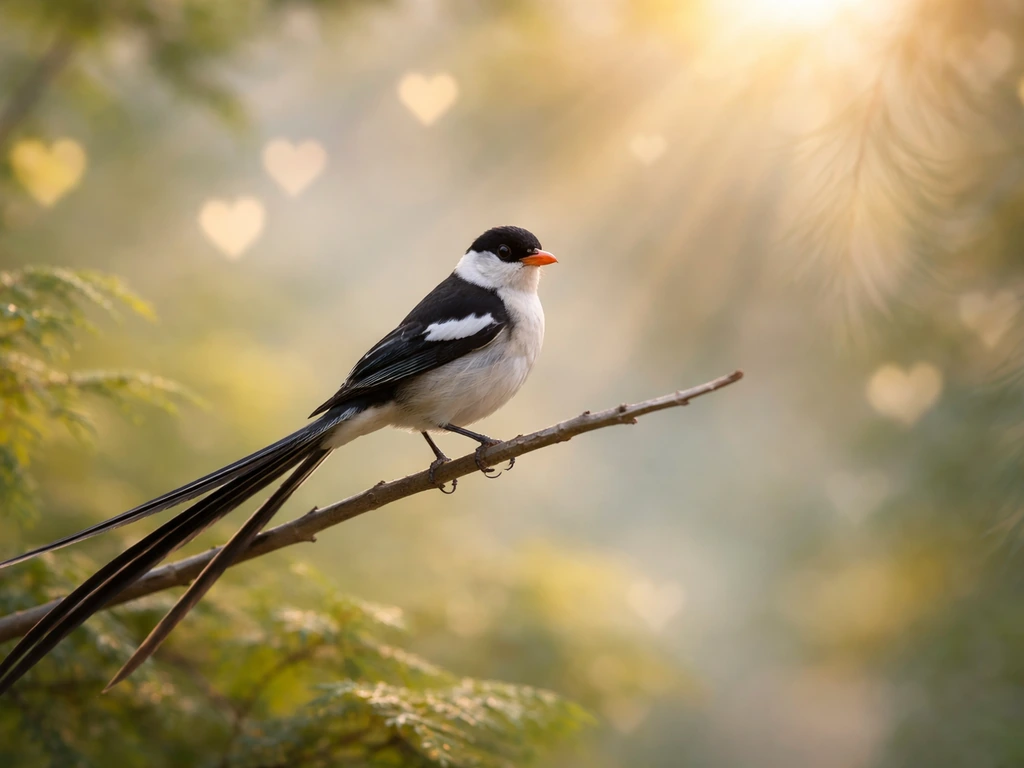
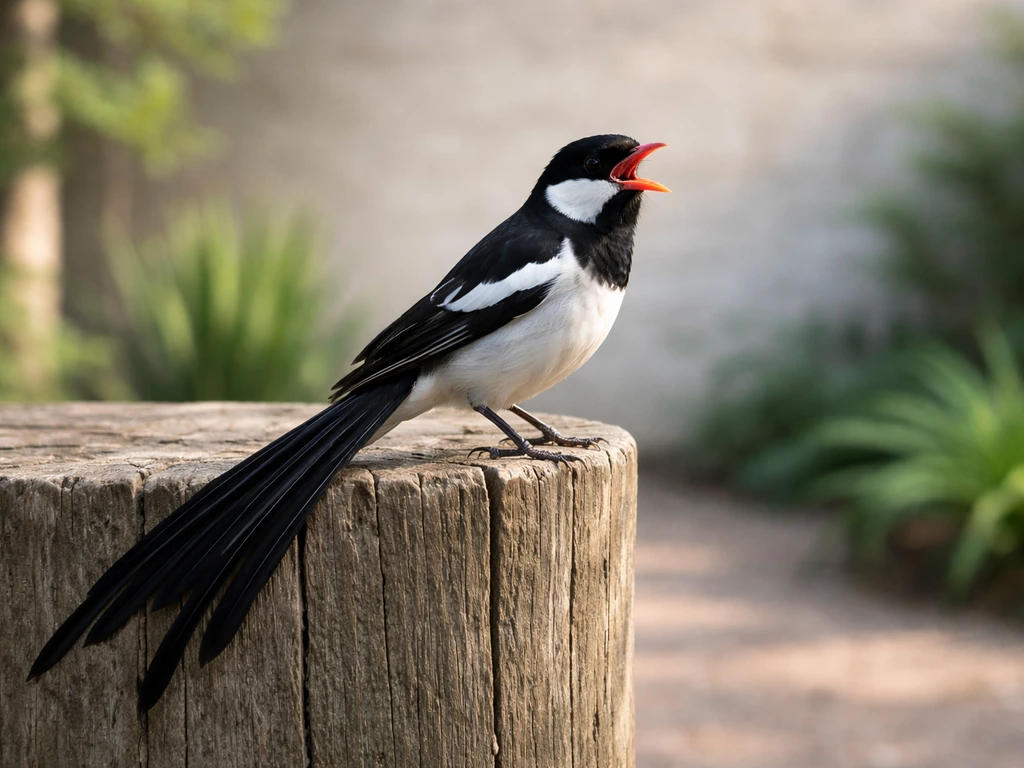
The whydah (also spelled whidah or wydah, and closely related to the widowbird) is a family of birds native to Africa, belonging to the group Viduinae. Several species exist, including the popular pin-tailed whydah, and they are all known for the male's spectacular long tail feathers and show-stopping courtship flights. Spiritually, these traits are hard to ignore. When a bird literally drapes itself in finery and hovers in mid-air to win attention, it becomes an easy symbol of dedication, beauty, passion, and the importance of putting yourself forward without apology.
At the broadest level, the whydah bird is linked to: love and romantic pursuit, expressive freedom, emotional beauty, social connection, and transformation through display. If you are curious about a different small, swift bird such as a hadida bird, you can compare its hadida bird spiritual meaning alongside the whydah’s love-and-expression themes. It is also associated with protection and the open spaces of the African savanna, which lends it a quality of expansiveness, of breathing room and perspective. Think of the whydah as a spiritual prompt asking you whether you are truly showing up, whether you are expressing what is in your heart, and whether you are giving your relationships the dedicated energy they deserve.
The word 'whydah' itself carries some interesting spiritual weight. It traces back to the city of Ouidah (historically 'Whydah') in Benin, a place deeply tied to Vodun, one of West Africa's most spiritually rich traditions. Ouidah is considered by many to be a spiritual capital, and while the direct link between the city's sacred history and the bird's symbolism is not a formally documented traditional teaching, modern spiritual writers do draw on this resonance. The name also connects to 'widow bird,' from the Latin vidua, pointing to the bird's association with mourning, loss, and the emotional depth that follows grief.
What It Means Depending on How the Whydah Showed Up
Not every bird encounter carries the same weight. The way the whydah appeared to you is one of the most important clues to what the message might be. Here is how meaning tends to shift across different types of sightings.
You Simply Saw One
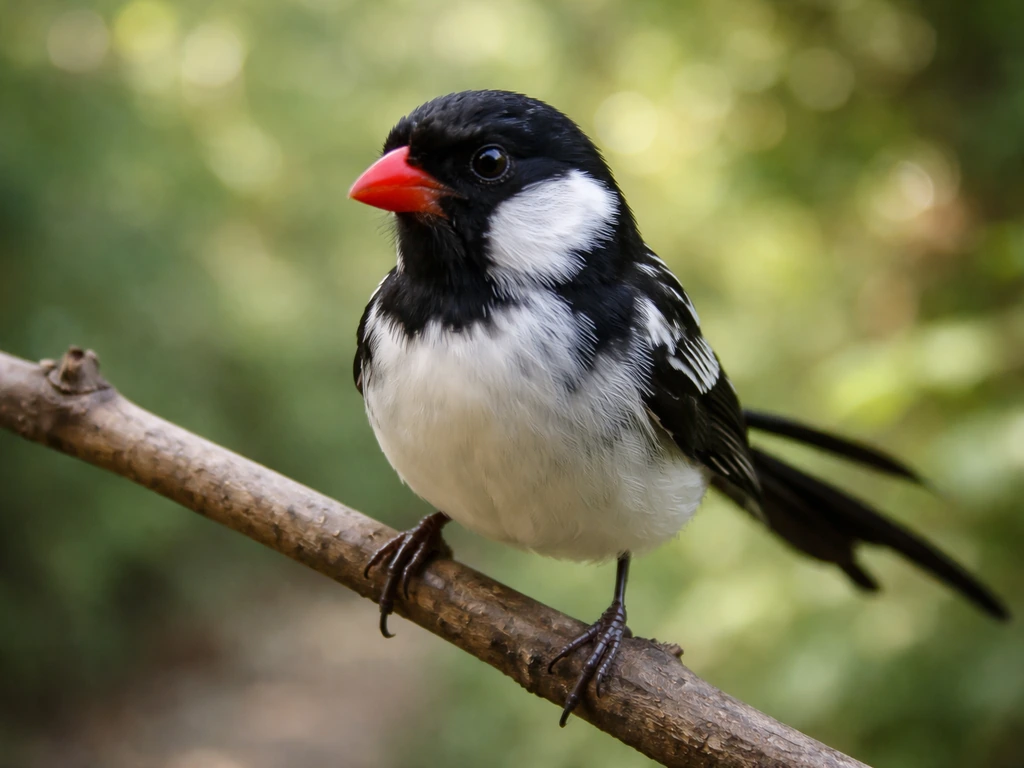
A sighting, even a brief one, is worth paying attention to, especially if the bird stood out to you or you felt an inexplicable pull toward it. Seeing a whydah is most often interpreted as an invitation to look at beauty and passion in your own life. Are you expressing yourself fully? Are you giving love the energy it deserves? The bird does not land dramatically in your path, but it does cross your field of vision as a gentle nudge. Notice it, sit with what you were thinking about in the moments before, and ask yourself if the themes of love, freedom, or authentic expression are calling for your attention.
It Landed On or Very Near You
A bird landing on or very close to you is one of the more intimate kinds of encounters, and most spiritual traditions treat it as a direct message rather than background symbolism. With a whydah specifically, a close landing is often read as a sign that matters of the heart are pressing in on you right now, not in the abstract future but today. It may also be a sign of heightened intuitive connection, a moment where the boundary between the physical and the spiritual world is especially thin. Take it seriously. This is the kind of encounter worth writing down in detail.
It Seemed to Follow or Stay Near You
If a whydah kept reappearing near you or seemed to follow your path, the message is likely persistent and layered. Spiritually, this pattern suggests something is not getting through to you on the first try. The themes of love, expression, or freedom may be especially urgent right now, or you may be avoiding something that needs facing. Following behavior in spiritual animal work is often associated with a guide or messenger that is not giving up on delivering its message. Pay attention to what kept coming to your mind while the bird was near.
It Called Loudly or Repeatedly
Calling behavior is about communication, both the bird's and yours. If the whydah was singing or calling prominently near you, the spiritual interpretation often centers on voice, expression, and being heard. Are you holding back something you need to say? Is there a conversation you have been putting off, or a feeling you have been suppressing? The whydah's call, especially in the context of its courtship role, is an act of pure, unfiltered communication, and its appearance as a caller may be prompting you to find yours.
Whydah Behaviors and What They Can Indicate
Beyond how the bird appeared, what it was doing adds another layer of meaning. Whydahs have some very specific and spiritually suggestive behaviors.
| Behavior | Common Spiritual Interpretation |
|---|---|
| Courtship display flight (hovering with long tail) | Dedication, passion, willingness to go all-in for love or a creative pursuit |
| Nesting or gathering nesting materials | Preparation, building foundations, a season of constructive domestic energy |
| Flocking with other birds | Community, social harmony, finding your tribe or support network |
| Unusual or erratic movement | A disruption message, something in your environment or situation that deserves closer attention |
| Laying eggs in another bird's nest (brood parasitism) | Shadow themes: hidden influence, boundaries, examining who is benefiting from your energy |
The courtship display is the behavior most people associate with the pin-tailed whydah specifically. The male hovers dramatically over the female, trailing his long tail feathers as a kind of aerial performance. Spiritually, this translates into a message about putting in genuine effort for what you love, not holding back, not playing it cool. If you witnessed this display, consider whether you are giving your relationships, your creative work, or your own joy that same level of devoted energy.
The brood-parasitism angle is worth addressing honestly. Whydahs, like cuckoos, lay their eggs in other birds' nests and leave those birds to raise the chicks. Spiritually, some writers interpret this as a shadow theme around boundaries, energy drain, or hidden dynamics in relationships. It can also prompt reflection on where you might be unconsciously outsourcing responsibility or where someone else is doing the same with you. It is not a doom message, but it is worth sitting with.
Culture, Mythology, and Where This Bird Comes From
The whydah's spiritual identity is deeply African in origin, and that context matters. The name traces directly to Ouidah in present-day Benin, historically a center of the Vodun tradition. Vodun is a living spiritual system that honors ancestors, nature spirits, and the interconnectedness of the living and the dead. While there is no single, formally documented 'whydah bird omen' within classical Vodun teaching, the city's association with bird messengers and the spirit world is real and layered. Modern spiritual writers often draw on this background when interpreting whydah encounters, even if their readings are contemporary syntheses rather than ancient doctrine.
The 'widow' etymology adds another cultural thread. In many traditions, the widow figure is associated with grief, resilience, survival, and deep emotional wisdom. The dark plumage and long trailing tail of the male whydah was historically likened to a widow in mourning dress. This reading, far from being morbid, can be spiritually rich. It connects the whydah to the idea of emerging through loss, carrying grief with grace, and finding new beauty on the other side of sorrow.
Across broader bird-symbolism traditions, from the general framework shared in many cultures including Celtic, Native American, and Eastern philosophies, birds are understood as messengers between the physical and spiritual realms. They carry perspective from above and remind us that our current vantage point is not the only one. The whydah fits comfortably into this framework while bringing its own distinctly African, emotionally resonant texture. If you are coming to this from a tradition other than African or Vodun contexts, your own spiritual lens is still valid here. The bird's core symbolism, beauty, love, expression, and freedom, translates across frameworks.
The Core Spiritual Messages of the Whydah
Across the various ways the whydah can appear and the range of cultural contexts it draws from, a handful of recurring themes emerge. These are the messages most commonly attributed to this bird across modern spiritual interpretation.
- Love and romantic dedication: The whydah's courtship behavior is so dramatic and devoted that it becomes almost impossible not to read it as a message about pouring real energy into your relationships. If love has felt routine or neglected, this bird may be asking you to shake things up.
- Freedom and open space: These birds live in expansive African grasslands and savannas. Their presence often signals a need to breathe, expand your thinking, and resist the cage of routine or other people's expectations.
- Authentic self-expression: The male whydah puts on a full show without apology. The spiritual message here is about letting yourself be seen, whether in relationships, creative work, or personal identity.
- Communication: The bird's call is a direct act of reaching out. This theme of finding and using your voice is especially strong when the whydah appears calling or singing near you.
- Change and transformation: The whydah undergoes dramatic seasonal changes in plumage. The male's long tail is a breeding-season feature. This makes the bird a symbol of seasonal transformation and the courage to change with your circumstances.
These themes share a common thread: the whydah is pushing you toward more, toward more expression, more openness, more courage in love and communication. It is not a bird that rewards hiding. If you have been playing small in any area connected to these themes, that is likely where this bird's message is pointed.
Shadow Meanings: When the Message Feels Heavy
Not every spiritual encounter feels light and uplifting, and that is okay. The whydah does carry some darker symbolic notes, and ignoring them does not serve you. The 'widow' root of its name connects it to grief, loss, and the specific kind of aching emotional weight that follows a significant ending. If you are in or approaching a period of mourning, whether the loss of a person, a relationship, a phase of life, or even a version of yourself, the whydah may be appearing as a companion in that grief rather than a promise of immediate joy.
The brood-parasitism behavior surfaces in shadow readings as a theme of boundaries and hidden dynamics. Some spiritual writers interpret the whydah appearing during a difficult relational period as a prompt to ask: who is taking energy from you without reciprocation? Are you unknowingly doing the same to someone else? This is not an accusation, it is an invitation to examine your relationships with honesty.
Aggression is also listed among the whydah/widowbird's symbolic traits. Male whydahs can be territorial and combative. If the encounter felt aggressive or disruptive, that energy may be mirroring something in your own situation, perhaps a conflict you are avoiding or a boundary that needs defending. The encounter is not a bad omen so much as a signal to look honestly at where tension exists in your world right now.
The most grounded approach to any shadow message from a bird encounter is to treat it as information rather than doom. Ask yourself what resonates. Does the grief theme ring true? The boundary theme? The aggression theme? The one that lands is almost always the one worth sitting with. And if nothing feels like a warning, trust that too. Sometimes a bird in your path is simply saying 'pay attention,' and the love and freedom themes are the whole message.
What to Do Next: Journaling, Reflection, and Action

The best thing you can do after a spiritually significant bird encounter is slow down and give it some real attention before the moment fades. Here is a practical sequence you can use today.
- Write down the encounter in detail while it is fresh. Where were you? What time of day? What were you thinking or feeling just before you noticed the bird? What was it doing? The more specific you are, the more the symbolism will clarify itself.
- Identify which of the core themes lands for you right now. Love, freedom, expression, communication, or change. You probably already have a gut sense of which one this encounter is about. Write that theme at the top of a journal page.
- Ask yourself three reflection questions: Where am I holding back in the area of [your theme]? What would it look like to show up more fully, like the whydah in full display? What one small action could I take in the next 24 hours to move toward that?
- If the encounter felt heavy or shadow-tinged, add: Is there a grief I have not fully acknowledged? Is there a relationship or dynamic that is draining my energy without my full awareness? Where do I need a clearer boundary?
- Take one concrete action tied to your reflection. Send the message you have been sitting on. Have the conversation. Book time for yourself. Create something. The whydah is not asking you to think harder about love and freedom; it is asking you to live them.
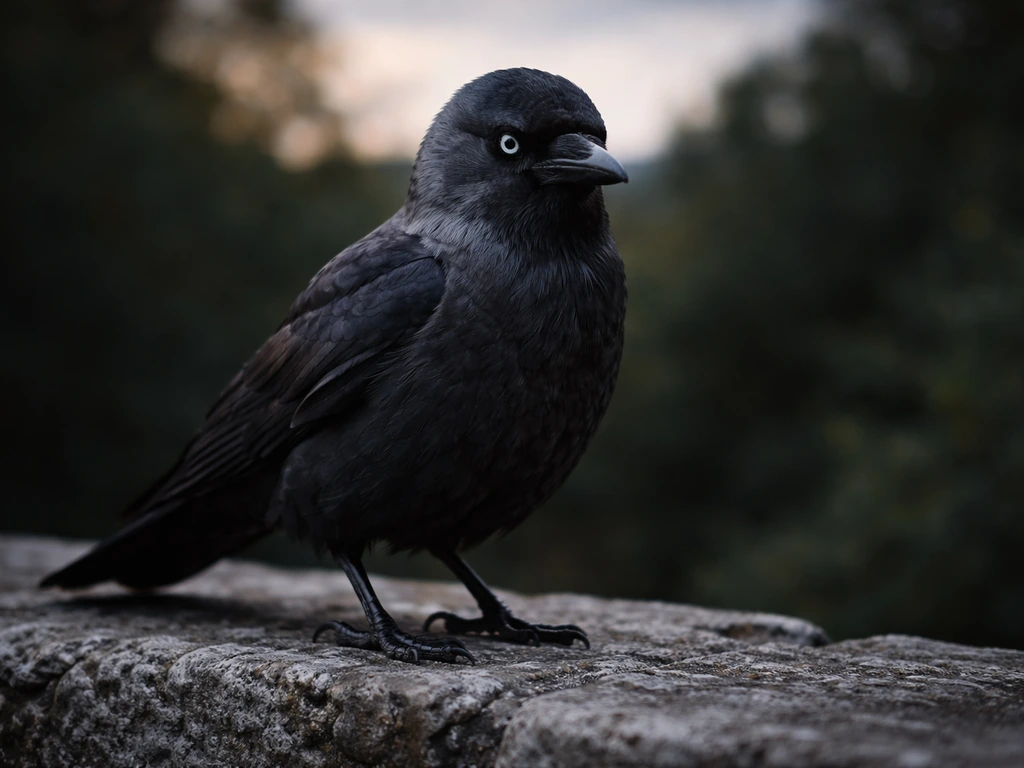
You might also find it useful to compare the whydah's message with that of other bird messengers you have encountered. Some readers also connect these signals to the jackdaw bird spiritual meaning, where bold presence and clear messages can play an important role compare the whydah's message. Birds like the dove bring peace and gentleness to love themes, while the drongo or shama carry their own distinct flavors of communication and expression.
If you are comparing symbolism across species, you may also want to look at the shama bird spiritual meaning for insights about communication, expression, and emotional resonance. If you are drawn to the drongo bird, its spiritual meaning is often discussed in terms of communication, expression, and trusting your inner voice. The dove bird spiritual meaning often emphasizes peace, gentleness, and emotional balance, which can help you refine what the whydah is asking you to express.
If the whydah is not the only bird that has been appearing for you lately, looking at the full picture can be illuminating.
Above all, trust that you noticed this bird for a reason. For a deeper look, you can also explore the dodo bird spiritual meaning and what that symbolism can highlight for your personal journey. You did not search for its spiritual meaning by accident. Something in you recognized that the encounter carried weight. That recognition is itself a form of spiritual attunement, and it is worth honoring by actually using what it points you toward. If you want to explore a different message, you can also look up the chickadee bird spiritual meaning and see how it compares to your current season of life.
FAQ
What should I do in the first 10 minutes after seeing a whydah bird?
Pause, then write down three details while they are fresh (what you were thinking, what the bird did, and how you felt). Next, ask which theme fits best right now, love, freedom, authentic expression, or grief and loss. The message is usually clearest when tied to a specific moment, not a vague interpretation.
Does the whydah bird spiritual meaning change if I saw it at home versus outside?
Yes. Seeing one near your home often gets read as a nudge about your everyday relationships and self-expression, what you tolerate in private, and how you communicate when you feel safe. Seeing it outdoors, especially in open spaces, leans more toward freedom, perspective, and stepping into a broader life.
What does it mean if the whydah bird flew past without any strong feeling?
If the encounter felt neutral, many readers treat it as a light “attention” sign rather than a direct message. In that case, the most useful next step is to check whether the themes are already on your radar. If nothing resonates, trust that the bird may simply be prompting awareness rather than action.
If I kept seeing whydahs, how do I figure out what I am avoiding?
Look for the topic that repeatedly returned to your mind during the sightings, especially a conversation, decision, or boundary. Avoidance often shows up as “I’ll do it later” energy. Write down the smallest responsible action you can take within 24 hours, then consider if that action makes you feel uneasy.
What is the spiritual meaning if the whydah looked aggressive or chased something?
Aggression is commonly read as a sign that tension exists where you need to protect your energy or enforce a boundary. Instead of assuming a person is “the problem,” ask what situation is draining you or forcing you to overextend. Then decide on a concrete boundary (time limit, clearer ask, or reduced access).
How should I interpret the brood-parasitism theme without blaming anyone?
Use it as a mirror for energy exchange, not as an accusation. Ask where you are contributing without reciprocation, or where you have been benefiting from someone else’s effort without fully seeing it. If you identify a pattern, respond with clarity, for example, renegotiating roles or stopping an unpaid obligation.
Is it a bad omen if the “widow” or grief theme comes up?
Not necessarily. The grief connection usually points to emotional depth, release, and resilience, rather than immediate misfortune. A helpful approach is to notice whether you are still carrying something from a past ending that never got processed. If so, the message may be permission to mourn and then rebuild.
What does it mean if the whydah was singing or calling near me?
Calling behavior is often interpreted as a prompt to be heard, speak sooner, and express feelings directly. If you have been holding back a truth, plan one honest communication step you can manage today, even a short message or a request. The “right” response is usually alignment, not performance.
Can whydah spiritual meaning apply to creativity or career, not just romance?
Yes. The courtship display themes are frequently extended to creative work and personal branding, where “dedicated effort” replaces playing it cool. If you’ve been half-showing your talent, treat the encounter as encouragement to present the work, share it publicly, and take one bold next step toward visibility.
How do I confirm I am not just projecting personal meaning onto the bird?
Check whether the bird’s themes match your current emotional weather, not just your ideal storyline. Projection is more likely when the interpretation ignores your real life. A grounding method is to pick one theme that truly creates a practical action you can take, then see if you feel calm and clear afterward.
What if multiple birds appear, does that change the whydah message?
It can. When different birds show up close together, many readers treat it as a sequence, not a single verdict. For example, one bird might emphasize expression while another emphasizes peace or communication style. Compare what each one is “urging,” then merge them into one coherent next action.
Next Article
Jackdaw Bird Spiritual Meaning: Messages and What to Do
Interpret jackdaw bird spiritual meaning and learn practical steps for common encounters, messages, and life application