The short answer: a chickadee encounter is widely interpreted as a message about joy, resilience, and the quiet courage to take small but meaningful steps forward. Whether you spotted one at your window, heard its call during a hard morning, or had one land surprisingly close to you, the chickadee has long been seen as a messenger that says: you are more capable than you think, and the small things in front of you right now matter.
Chickadee Bird Spiritual Meaning: Symbolism and What to Do

Eliza Thornwick
16 Apr 2026
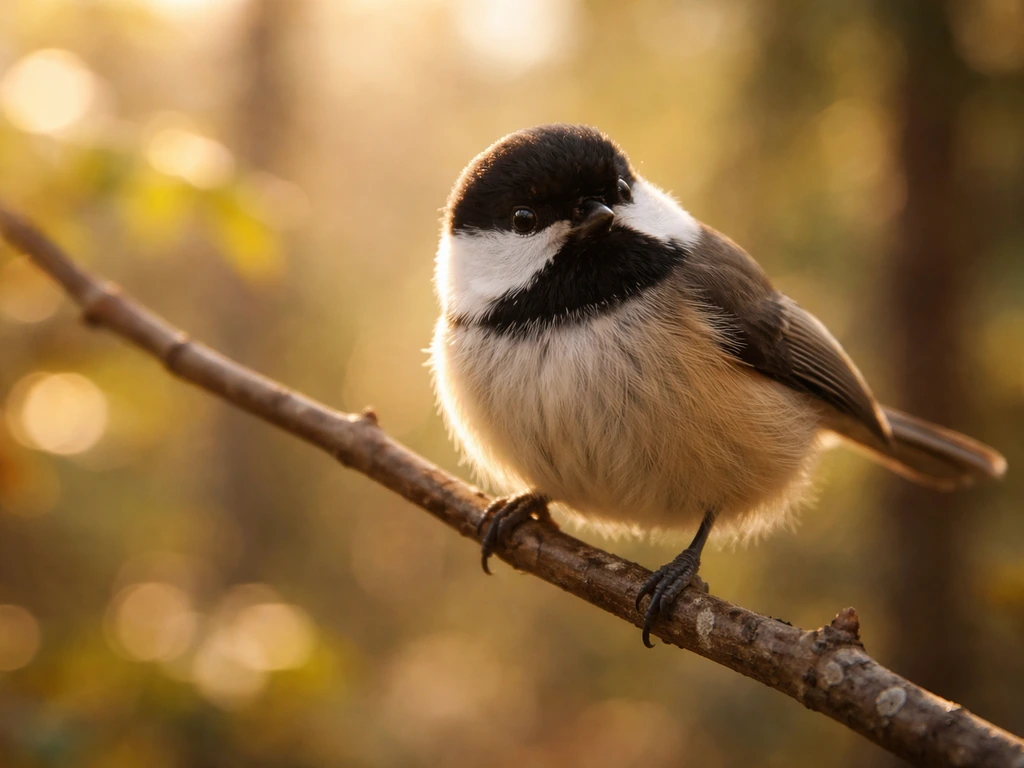
The core chickadee message at a glance
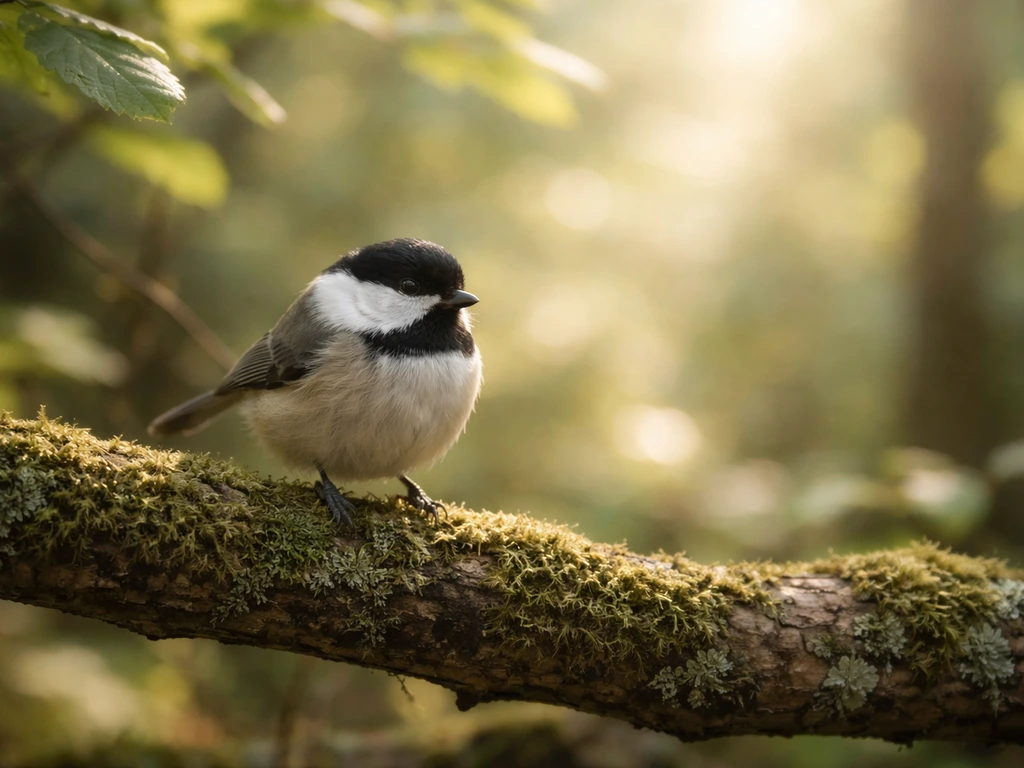
Before we go deeper, here is the quick spiritual takeaway most people are looking for. The chickadee shows up symbolically as a reminder of three things: lightness (release the weight you're carrying that isn't yours), inner truth (speak up, even in a small voice), and preparedness (you've already done more groundwork than you realize). If you walked away from your encounter feeling unexpectedly lifted, that's the message working. If you felt a pang of curiosity or a nudge toward something you've been avoiding, that's also the message working. The chickadee doesn't shout. It shows up at eye level and waits.
What chickadees are said to represent spiritually
Across folk traditions and nature-based spiritual frameworks, chickadees carry a consistent symbolic thread even though the details vary by culture. In many Native American traditions, small birds with bold voices are seen as carriers of truth and healing energy, particularly the kind of healing that comes from speaking honestly. In folk symbolism catalogues, the chickadee is often listed alongside qualities like joy, adaptability, fearlessness, and the ability to defend what matters without aggression. Some practitioners in the broader folk-magic lineage describe the chickadee as a "bird of truth" that helps open perception and balance the voice, meaning it shows up when you need to say something you've been holding back.
What strikes me most about chickadee symbolism is how it anchors around the idea of courage that has nothing to do with size or power. This is a tiny bird that survives brutal northern winters by caching food across hundreds of locations and remembering every single one. That's not luck, that's an extraordinary act of quiet preparation. Spiritually, that maps directly onto themes of personal resilience: small, consistent effort paying off; trusting what you've already stored up inside yourself; and moving forward even when conditions are harsh. If you've been feeling small in the face of a big challenge, the chickadee asks you to reconsider what "small" actually means.
Hearing a chickadee's song is sometimes interpreted in spiritual circles as a sign of good news arriving, or at least of a shift in energy that's coming your way. The "chick-a-dee-dee-dee" call itself is far more complex than it sounds: researchers have found that the number of "dee" notes actually encodes real information about threat level, which gives this bird's voice a layer of nuanced truth-telling that feels symbolically rich. The clean, whistled "fee-bee" call (which Cornell Lab describes as a 2-3 note song that males begin singing as early as mid-January) is associated with renewal, spring energy, and the return of hope after a dark stretch.
For comparison, other small birds carry different but related themes. The shama bird's spiritual meaning leans heavily into the idea of voice and song as a vehicle for joy, while the dove bird spiritual meaning centers on peace and divine communication. The chickadee sits between those energies: it's joyful but alert, peaceful but fierce when it needs to be.
Sighting vs. hearing vs. behavior: how to read what actually happened
The context of your encounter really does matter for interpretation. A chickadee passing through your yard is different from one that stopped and looked at you directly. Here's how to think about each situation.
You saw a chickadee (a brief or passing sighting)
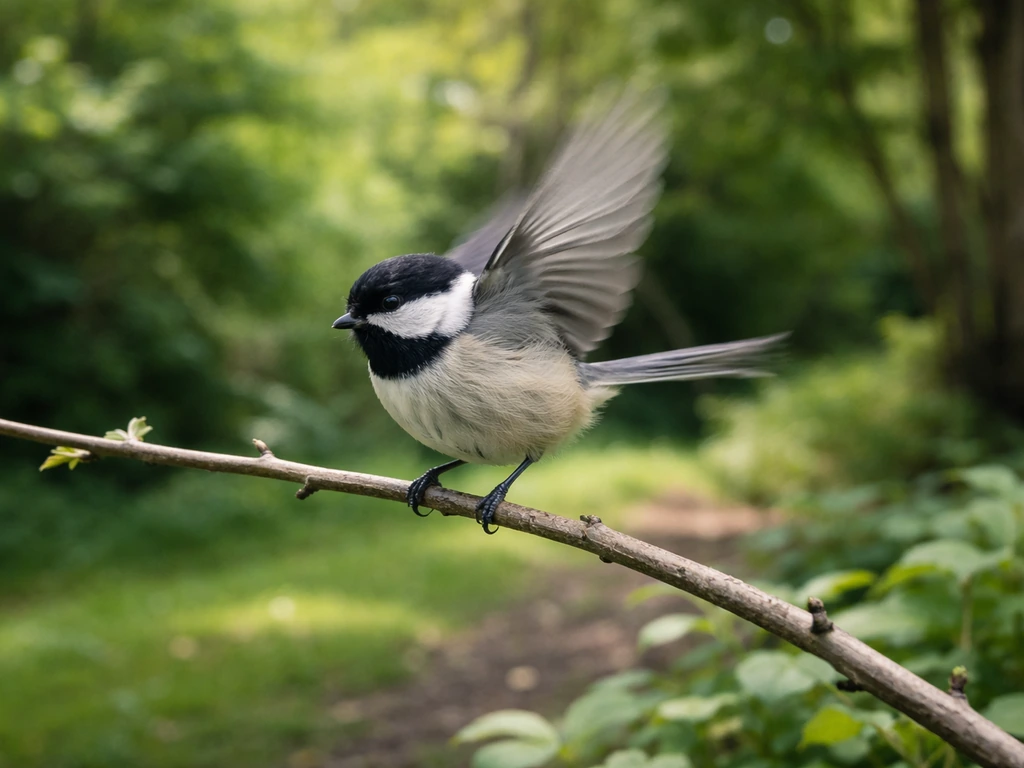
A standard sighting, especially in a yard or on a walk, is often a gentle check-in rather than an urgent message. The symbolic read here is: joy is available to you right now, even if you're not feeling it. The chickadee appears and disappears quickly, which mirrors the nature of the message: lightness is accessible in small doses. Notice what you were thinking about when the chickadee appeared. If a specific worry or person came to mind in that moment, that's your starting point for reflection.
You heard a chickadee but didn't see it
Hearing the call without seeing the bird is often interpreted as a prompt to listen rather than look. Spiritually, this can point to an area where you need to trust information that's coming to you intuitively or through indirect channels, not necessarily through obvious, visible proof. The "chick-a-dee" call peaks in fall and winter when birds are flocking, so if you're hearing this call in colder months, the timing itself carries symbolic weight: it's the season of gathering, internal preparation, and community. If you're hearing the "fee-bee" song, research shows singing rates peak sharply between March and May, the season of new beginnings, which aligns with themes of fresh starts and readiness to be seen and heard.
The chickadee behaved unusually (came very close, landed near you, made eye contact)
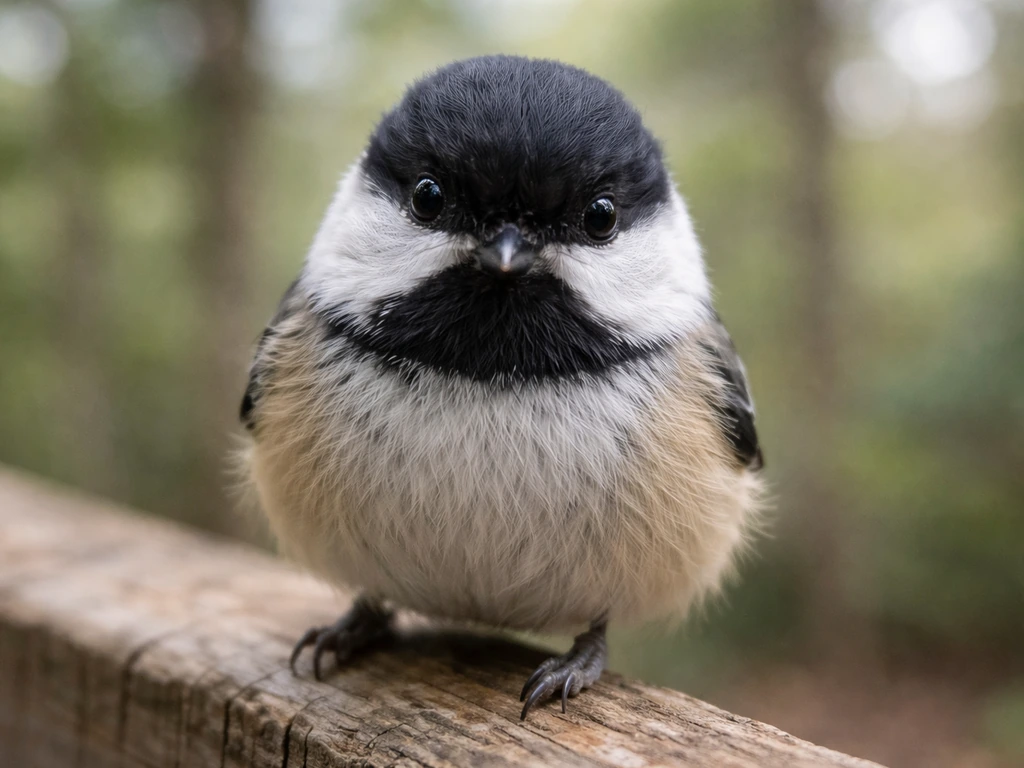
This is where people most often feel they've received a message, and I think they're right to pay attention. Some chickadees are naturally bolder than others: researchers studying backyard bird personalities have found that individual birds of the same species genuinely differ in how exploratory and fearless they are. But when a chickadee comes unusually close to you, especially during a moment of quiet or emotional weight, most spiritual frameworks read it as a direct and personal message. The meaning here intensifies: whatever the chickadee symbolizes generally (joy, courage, truth, small steps), it is now pointing that meaning at you specifically. Trust what you felt in that moment.
Chickadees at your home: feeders, windows, and close encounters
When a chickadee shows up in or around your home space specifically, the spiritual read often involves your personal life rather than external circumstances. Home is the self. A chickadee visiting your feeder regularly can be seen as an invitation to nourish yourself consistently, not just in bursts. The feeder relationship requires your participation: you have to put the seed out. Spiritually, that mirrors the inner work of staying open to receiving joy even when you have to make a deliberate effort to create the conditions for it.
A chickadee at a window is more charged. If it's simply perching on the sill or looking in, many traditions interpret this as a message crossing the threshold between the outer world and your inner world, something worth paying attention to. If the chickadee is repeatedly tapping or striking the window, the spiritual interpretation changes, but so does the practical reality: birds often do this because they see their reflection and mistake it for a rival.
Cornell Lab and bird-safety organizations confirm this is common and can cause injury to the bird. For example, Eastside Audubon reminds the public about the Migratory Bird Treaty Act and offers practical guidance for common bird-window emergency scenarios Migratory Bird Treaty Act and window-stroke guidance.
Spiritually, a bird fighting its own reflection is a fascinating image: it's the perfect mirror for the question "where are you in conflict with yourself? " That said, if this is happening at your home, please also take practical steps to break up the reflection (applying window tape or decals) so the bird isn't harming itself.
The jackdaw bird spiritual meaning also touches on birds visiting homes as threshold messengers, and the hadida bird spiritual meaning carries a similar theme of birds bringing attention to what's happening close to home. Each species carries its own energy, but the home-visit pattern is worth exploring across traditions.
When the chickadee keeps showing up: reading a pattern
One sighting is an invitation. A repeated pattern is a conversation. If you've been noticing chickadees consistently over days or weeks, especially during a difficult stretch, the spiritual community is fairly unified in reading that as a spirit guide or animal messenger making sustained contact rather than a one-time nudge. This is where it becomes worth journaling and asking deeper questions.
The timing matters here. Are you seeing the chickadee at specific times of day, in specific locations, or when you're in a particular emotional state? Patterns with context are much more information-rich than random frequency. If the chickadee keeps showing up when you're at your lowest or most doubtful, the message is probably about resilience and trusting what you've already built. If it shows up when you're in a moment of quiet or peace, it may simply be affirming that you're on the right path and to keep going.
In spirit-animal and oracle frameworks, one method practitioners use is to notice the very first thought that crosses your mind when you see the animal, before any interpretation kicks in. That raw, unfiltered thought is considered a direct clue about what the message is addressing in your life right now. If your first thought was about a specific relationship, a decision you've been avoiding, or a hope you've been sitting on, the chickadee's symbolism is probably speaking to exactly that. Interestingly, the whydah bird spiritual meaning offers a fascinating parallel around the idea of transformation through repeated appearances, and some practitioners work with both birds' energy during times of personal change.
One thing I'd gently offer: it's worth distinguishing between a meaningful pattern and ordinary seasonal behavior. Chickadees are active at feeders year-round and become especially vocal from late winter into spring. If you've recently set out sunflower seeds or live near a suitable habitat, you may simply be attracting a local flock. That doesn't cancel the spiritual layer, but it means you don't need to assign weight to every individual visit. Look for the visits that feel different, ones that make you stop, look up, and feel something.
A dead or injured chickadee: how to hold this with compassion
Finding a dead or injured chickadee tends to shake people, and I want to address it directly and calmly. First, the practical side, because the bird may actually need help.
If the chickadee has struck a window and is stunned but alive, give it time but not too much time. Place it in an unwaxed paper bag or a small cardboard box with breathing holes, cushioned with tissue at the bottom, and put it somewhere warm, dark, and quiet. Do not offer food or water.
If it hasn't recovered and flown off on its own within about two hours, or if it shows obvious injury (drooping wing, bleeding, inability to stand), contact a local wildlife rehabilitation center immediately. Window strikes can cause internal trauma that isn't visible, so even a bird that looks okay may need assessment. The general guidance from wildlife rehabilitation sources is to treat these as emergencies and get professional help rather than waiting it out.
Now, the spiritual dimension. A dead chickadee is symbolically associated with the acknowledgment of impermanence, of something that was bright and brief. In many traditions, finding a small dead bird is not considered a bad omen so much as a memento mori: a gentle reminder that life is fleeting and that the joy and courage the chickadee represents should not be postponed. If you found a dead chickadee, ask yourself honestly: is there something in your life you've been saving for later that you should be bringing forward now? A conversation you've been putting off, a creative project you've been waiting for the "right time" to begin, a feeling of joy you've been permission-seeking before allowing yourself to feel?
The dodo bird spiritual meaning takes a harder look at extinction and endings as spiritual themes, while the drongo bird spiritual meaning deals with adaptability in the face of loss. If you're sitting with grief alongside this encounter, both of those perspectives might resonate alongside the chickadee's message.
Chickadee symbolism compared to similar bird messengers
If you're trying to understand how the chickadee's message is unique compared to other bird encounters, this comparison is useful.
| Bird | Core spiritual theme | Tone of message | Best for |
|---|---|---|---|
| Chickadee | Joy, resilience, small courage, truth-speaking | Warm, encouraging, personal | Times of self-doubt, new beginnings, finding lightness |
| Dove | Peace, divine communication, love | Calm, gentle, universal | Grief, reconciliation, spiritual reassurance |
| Jackdaw | Intelligence, memory, shadow work | Pointed, curious, sometimes unsettling | Uncovering what's hidden, facing complexity |
| Shama | Voice, song, hidden beauty | Lyrical, introspective | Creative blocks, finding your authentic expression |
| Drongo | Adaptability, cunning, survival | Sharp, practical, resilient | Navigating chaos, outsmarting obstacles |
The chickadee's message is the most personal and immediate of these. Where a dove might speak to a situation broadly, the chickadee tends to address you directly and now. That's what makes it such a beloved messenger in animal symbolism traditions.
Practical next steps: how to actually work with this encounter
Here's where I want to give you something concrete to do with this experience, because meaning without action stays just an interesting moment.
Quick message checklist
Run through these questions honestly and notice which ones create a small inner reaction, a yes, a twinge, or a resistance. Those are your starting points.
- Is there something I've been afraid to say out loud, to someone else or to myself?
- Am I underestimating what I've already built or prepared in my life right now?
- Where have I been waiting for conditions to be perfect before I allow myself to feel joy?
- Is there a small, specific step I've been putting off that I could take today?
- Am I in conflict with a reflection of myself (a habit, a belief, a relationship pattern that mirrors something I don't like)?
- Where in my life do I need to trust my voice more, even if it seems small?
Journaling prompts
- Write about what you were thinking or feeling in the 10 minutes before your chickadee encounter. What thread connects that state of mind to the chickadee's symbolism?
- If the chickadee could speak one sentence directly to you, what would it say? Write the first thing that comes without editing it.
- What does 'small courage' look like in your life right now? Name one specific thing that fits that description.
- Where are you caching energy or effort for later that could be drawn on now? What have you already prepared that you're not giving yourself credit for?
- Write about a time you felt genuinely light and joyful. What was present then that could be invited back in some form today?
A small action or intention to set
The chickadee's spiritual message almost always points toward action, but small action. It doesn't ask you to overhaul your life. It asks you to do the one thing you've been waiting to do. Pick the smallest version of something meaningful to you and do it today: send the message, write the first paragraph, say the true thing, show up for the thing you care about. That's the chickadee operating in real life.
If your encounter felt more like a moment of peace than a nudge, your intention can simply be to spend 10 minutes outside this week with no agenda, just noticing. The chickadee as a symbol of presence and joy doesn't always require a dramatic response. Sometimes the right next step is just staying open and paying attention, which is something even the most experienced spiritual practitioners remind themselves to do.
Finally, know this: you don't have to be certain whether the chickadee was a sign or just a bird passing through. Holding both possibilities at once is completely fine. The reflection and the meaning you found are real regardless of their origin. What matters is that you stopped, noticed, and asked what it might mean for you. That act of attention is itself a spiritual practice, and the chickadee, with its sharp little eyes and fearless small voice, would probably approve.
FAQ
How can I tell whether the chickadee is a real “sign” versus just normal seasonal behavior?
Use a “feels different” test. If the visit happens during typical chickadee activity (feeders, late winter through spring vocals) it may be local flocking, but treat it as meaningful when it triggers a specific first thought or emotional prompt you then can act on within a day or two. If it passes without any internal reaction, it’s probably just wildlife.
What should I do if I keep seeing chickadees only when I’m stressed or doubting?
That pattern often points to resilience, so choose a tiny action that matches the nervous energy. For example, write down the one decision you keep postponing, then do a 15 minute “starter step” toward it (draft the email, make the first call, outline the first paragraph). Re-check whether your body feels even slightly more open after you act.
Does the chickadee meaning change if it shows up at a window but doesn’t tap or hit the glass?
Yes. Perching or looking in is commonly read as a threshold message (outer world to inner awareness), but window tapping often has a practical cause, the bird misreading its reflection as a rival. If it is only perching calmly, prioritize the symbolism (inner truth, readiness to be seen), and still consider reflection reduction if it starts acting erratically.
If I hear the calls but never see the bird, how do I interpret that practically?
Treat it like a prompt to listen rather than search. Pick a single information source you might be dismissing (a conversation, an instinct, a subtle pattern in your day), then ask, “What is this trying to tell me, in plain terms?” You can also note the time of day and what you were doing when the call peaked, since timing can narrow the message’s “target area.”
What if my first thought when I saw or heard the chickadee was negative or fearful?
That negative first thought is often the actual clue, not a contradiction. Instead of forcing a positive interpretation, ask what the fear is protecting you from, then choose a micro-correction that honors safety while still moving forward (for instance, replace “I can’t handle this” with “I can handle the next step,” then do the next step).
Is it okay to assign spiritual meaning to a dead or injured chickadee, or is that harmful during grief?
It can be okay if it helps you respond, not if it turns into blame or doom. If the idea of “impermanence” increases despair, use a gentler action, such as writing one permission slip you’ve been delaying (create, speak, reach out) or doing a small remembrance ritual for yourself and your life. If grief becomes overwhelming, consider support from a trusted person or counselor.
What should I do if a chickadee strikes a window and looks stunned, but I’m unsure whether it’s safe to wait?
Err on the side of wildlife safety and quick assessment. Keep it warm and quiet in a ventilated box, and do not offer food or water. If it has not recovered and flown off within about two hours, or if you notice drooping wing, bleeding, or difficulty standing, contact a local wildlife rehabilitator right away, since internal injury may not be visible.
How long should I “pay attention” to the pattern before assuming it’s just coincidence?
A practical window is one to two weeks. If the appearances cluster with a consistent context (specific emotional states, the same location, similar timing) it’s more likely to be a meaningful pattern for your reflection. If it fades quickly and you never translate it into any small action, it may have been ordinary attraction to food and habitat.
Can chickadee symbolism relate to communication, like saying something I’m holding back?
Often, yes. The chickadee is commonly tied to inner truth and a balanced voice, so a useful next step is to plan a “small honest sentence” rather than a big confrontation. Write the sentence you want to say, check it for clarity and kindness, then deliver it in the smallest appropriate form (text, short conversation, or a first draft).
Next Article
Dodo Bird Spiritual Meaning: Letting Go and Embracing Change
Dodo bird spiritual meaning for letting go, ending denial, and adapting through change in love, career, and healing.