
A yellow bird crosses your path and something in you pauses. Whether it landed nearby, tapped at your window, or simply caught your eye at a moment when you really needed a lift, here is the short answer: spiritually, a yellow bird is most commonly interpreted as a sign of joy, hope, optimism, and new beginnings. It is one of those symbols that shows up across wildly different traditions and almost always carries a positive, encouraging message. If you are seeing one today, especially repeatedly or unexpectedly, it is worth paying attention to what is going on in your inner life right now.
Spiritual Meaning of Yellow Bird: Love and Message Guide

Eliza Thornwick
3 Apr 2026
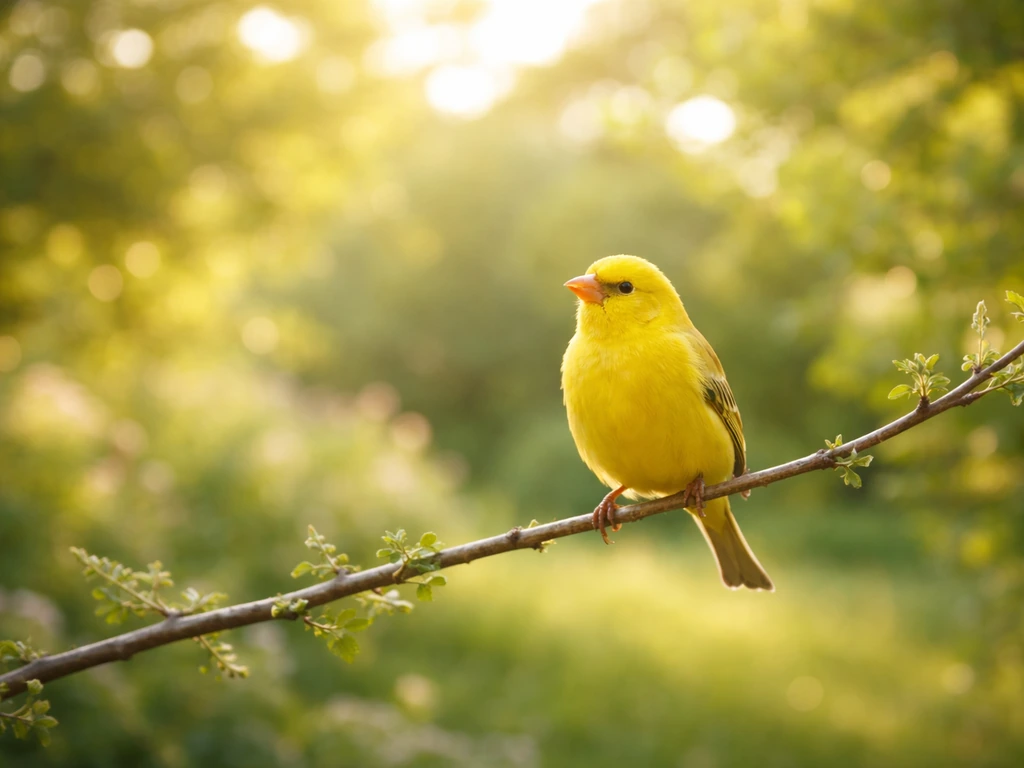
What a Yellow Bird Represents Spiritually
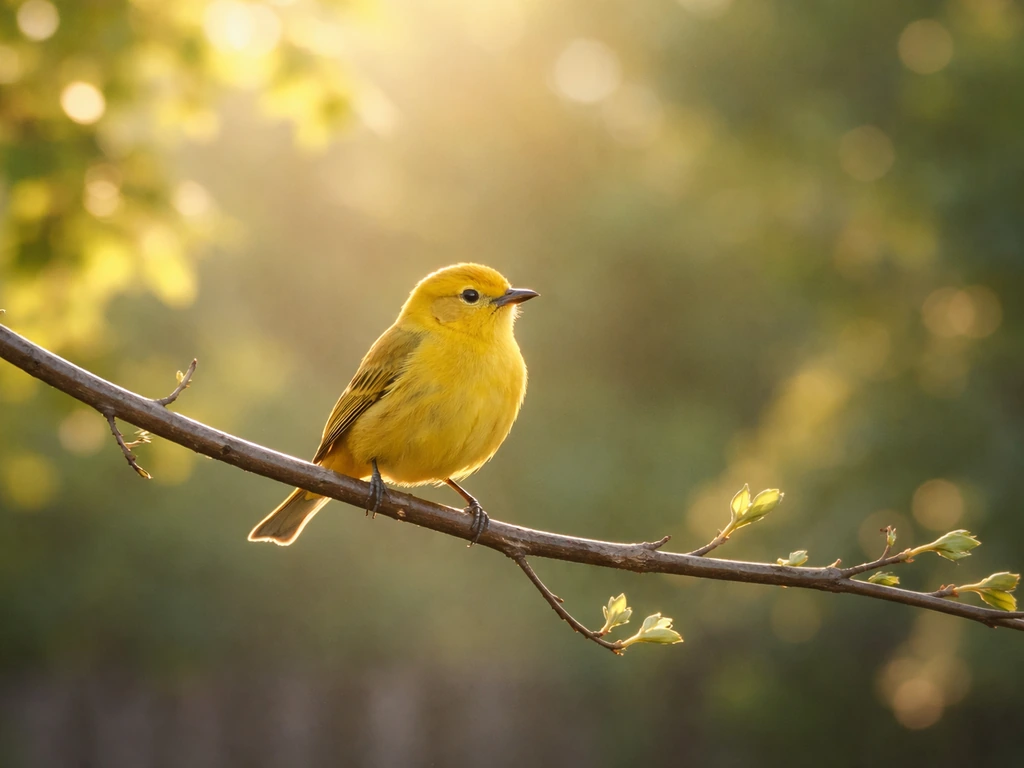
Yellow is the color of sunlight, warmth, and mental clarity. In a spiritual context it is linked to enlightenment, happiness, and positivity. When that color rides on a living, flying creature, the symbolism compounds: you get both the brightness of yellow and the freedom and elevation of a bird. That combination is why so many spiritual traditions have landed on the same basic interpretation across centuries.
In some Buddhist thought, yellow birds symbolize freedom and enlightenment, the idea that the mind can break free of its own limits. In several Native American traditions, a yellow bird sighting is read as a sign of powerful spiritual protection, as if a guide is watching over you. Across a broader range of folk and metaphysical traditions, the yellow bird is simply treated as a messenger of hope, especially during challenging times when doubt is loudest. Spend any time reading about what yellow birds mean spiritually and you will see these same threads woven together again and again: joy, renewal, encouragement, and the gentle reminder that things are moving in the right direction.
One theme that stands out to me personally is the renewal angle. A yellow bird does not just mean "be happy." It often signals that something new is beginning, whether you can see it yet or not. If you have been stuck in a season of waiting or uncertainty, that bright flash of yellow may be nature's way of saying the season is shifting.
What It Means When You Keep Seeing a Yellow Bird
Timing and repetition matter a lot in bird symbolism. A single sighting is worth noticing, but when you see a yellow bird more than once in a short period, or when it shows up at an emotionally charged moment, many spiritually oriented readers treat that as a stronger signal. The question is: what is going on in your life right now?
If you are in a period of self-doubt, stress, or transition, a yellow bird appearing during that window is often interpreted as a direct message of hope and encouragement. The symbolism is reassurance-forward: healing has begun, you have the courage to adapt, keep going. This is not just a feel-good platitude. It is actually a useful reframe, because when we are in doubt we tend to stop paying attention to the small good things happening around us. The bird becomes a prompt to look up.
Repeated, noticeable appearances carry one additional layer: some traditions connect them to an awakening of dormant spiritual awareness. In other words, if yellow birds keep finding you, it may be less about a single message and more about an invitation to develop a more consistent practice of tuning in. This lines up with what I have heard from readers who describe a period of intense yellow-bird sightings just before a major personal shift or clarity moment.
Pay attention to your emotional state at the exact moment of the sighting. Are you anxious? Hopeful? Grieving? That internal weather is part of the context. Spiritual symbolism is not a fixed dictionary; it is a dialogue between the sign and what you are carrying when you see it.
Yellow Birds and Love: What This Encounter Might Be Telling You
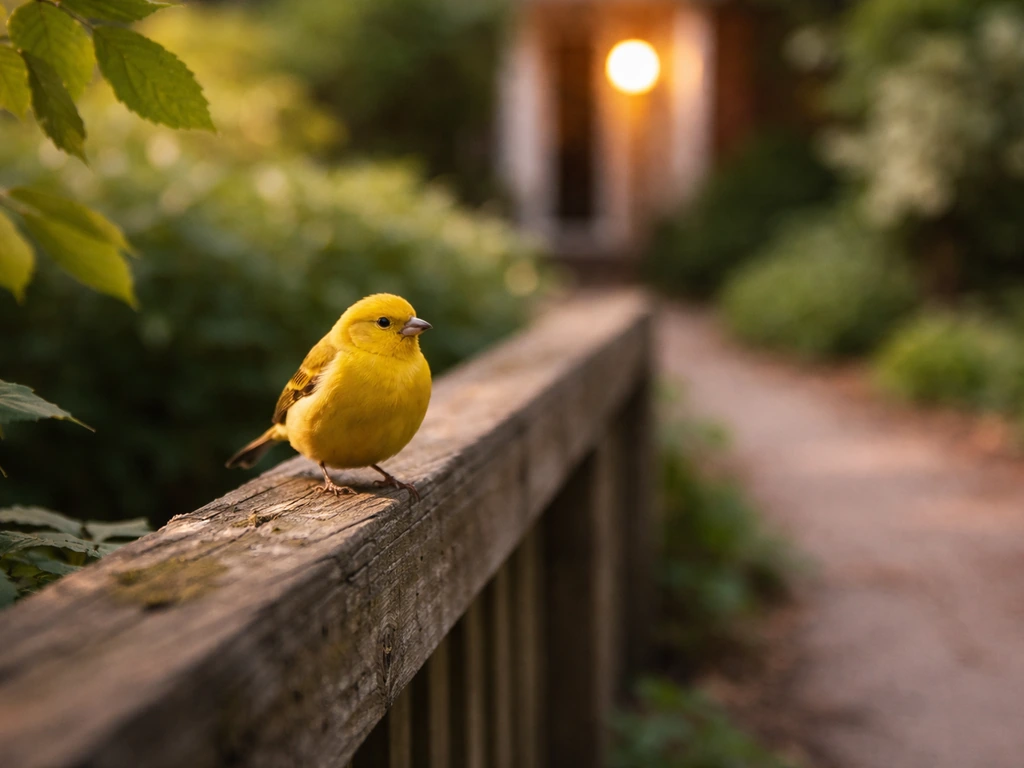
Yellow bird encounters come up a lot in love and relationship questions, and for good reason. The symbolism translates naturally. A warm yellow bird presence is widely associated with love, warmth, and connection. If you are in a rough patch relationally, or you have been healing after heartbreak, seeing a yellow bird can be interpreted as a sign that your heart is ready to open again, or that healing is underway even if you cannot feel it yet.
One interpretation I find especially useful: a yellow bird appearing after a difficult relationship period signals personal growth that is making room for deeper connection. It is not just about the other person. It is about you expanding. That reframe alone can shift how you approach the next conversation, the next date, or the decision to let someone back in.
If you see two yellow birds together, some traditions read that as a symbol of reconnection or enduring love. I have heard from readers who described yellow finches showing up as a pair during a reconciliation period and feeling like it confirmed they were on the right path. Whether you take that literally or use it as a mirror for your own readiness, it is a compelling image. If you want to explore this further, the spiritual meaning of a yellow-breasted bird adds another layer, since the chest and heart area carry their own symbolism around emotion and openness.
The practical takeaway for love: let the yellow bird be a nudge toward openness rather than a verdict. It is an encouragement to communicate, to soften, to stay curious about connection rather than closed off by past hurt.
How Color Variations Shift the Message
Not every yellow bird is a pure, solid yellow. When black or green enters the picture, the spiritual interpretation shifts in interesting ways. Here is how I think about each combination.
Yellow and Black Birds
Black added to yellow introduces the symbolism of contrast and balance. Where yellow alone is pure light and joy, yellow paired with black is read as a symbol of the balance between light and darkness, or between shadow and hope. In practical terms this often means the message is about navigating duality: you may be experiencing both difficulty and opportunity at the same time, and the bird is reminding you that both are real and both serve a purpose. Some traditions specifically link this combination to partnership stability, particularly the balance required in long-term relationships. If you want to go deep on this, there is a dedicated piece on the spiritual meaning of a yellow bird with black wings that covers the nuance well. You might also find it useful to read about the spiritual symbolism of a black bird with a yellow beak, which carries a slightly different but related energy around speaking truth and clarity.
Green and Yellow Birds
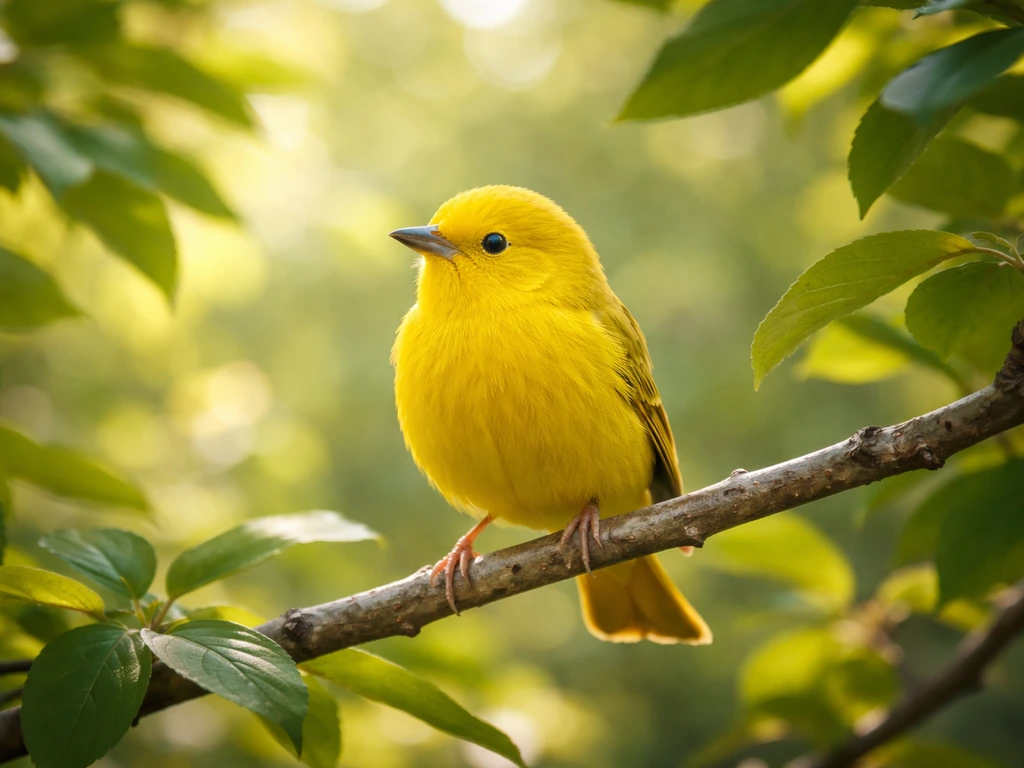
Green adds growth, healing, fertility, and renewal to the yellow base of joy and optimism. In feather symbolism traditions, green is explicitly mapped to healing and renewal. Spiritually, green is also associated with the heart chakra, so a green-and-yellow bird is sometimes described as carrying healing energy that connects directly to matters of the heart. If you encounter one during a health challenge, a grief process, or a season of emotional recovery, the combined message is: growth is happening, healing is active, stay open. Think of it as yellow's optimism being grounded and made fertile by green's growth energy.
| Bird Color Pattern | Core Spiritual Themes | Practical Message |
|---|---|---|
| Pure yellow | Joy, hope, optimism, new beginnings, enlightenment | Something positive is starting; stay open and move forward |
| Yellow and black | Balance of light and shadow, duality, partnership stability | Navigate both difficulty and opportunity; balance is the work |
| Green and yellow | Growth, healing, heart chakra, renewal, fertility | Healing is active; lean into emotional openness and recovery |
Reading the Encounter Itself: Behavior, Location, and What the Bird Did
The what and where of a yellow bird sighting can refine the message considerably. A bird that simply flies past is one thing. A bird that lingers, interacts, or behaves unusually is another. Here are the most common encounter types and what they tend to mean.
Tapping or Flying Into Your Window
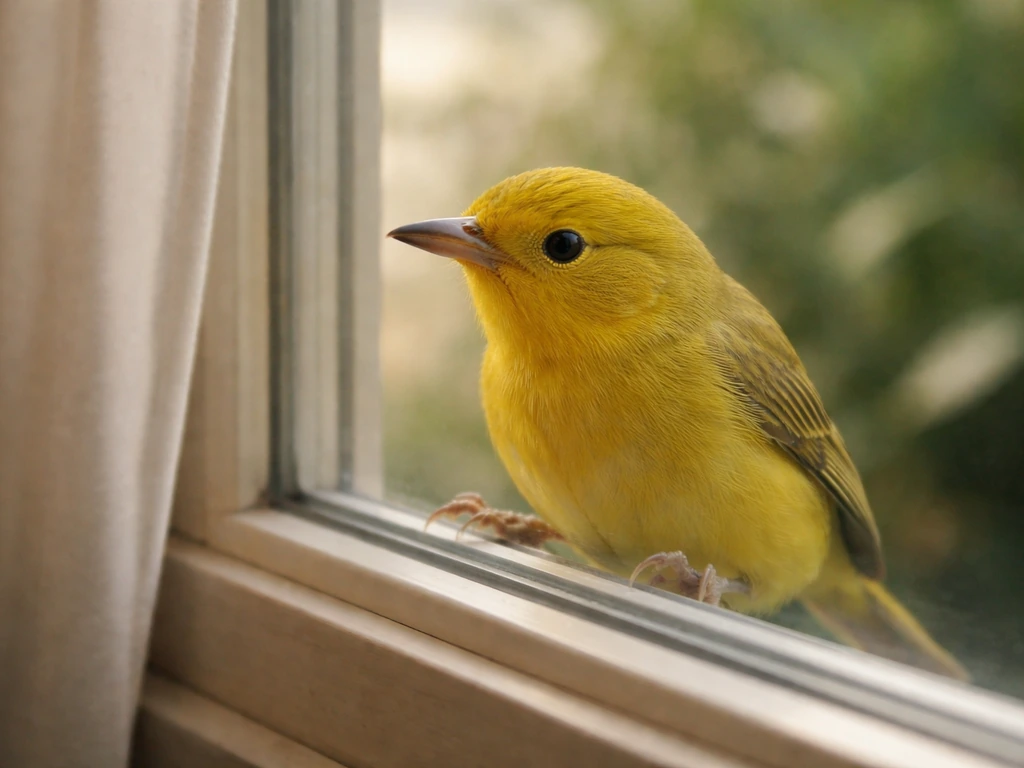
A bird tapping at your window is one of the most frequently searched spiritual encounters, and for good reason: it feels deliberate. In many spiritual traditions, windows represent a boundary between your inner world and outside messages. A bird tapping there is often interpreted as a nudge from the spirit world to pay attention, a message about transformation, or a call to pause and reflect. If it keeps repeating, some practitioners read that as an even more insistent prompt to stop and listen to what your inner life is trying to tell you. That said, I think it is worth applying some discernment here. Not every bird that hits a window has a spiritual meaning. Birds genuinely do fly into glass because of reflections. If it happens once, take a moment to reflect. If it keeps happening, that is when I would sit down with a journal.
Landing Near You or on You
A yellow bird landing close to you, or directly on you, is often read as one of the more personal and direct spiritual encounters. This kind of closeness is treated as a sign of strong spiritual presence, protection, or a message meant specifically for you. The emotional feeling you get in that moment is important data. Did you feel calm, comforted, or suddenly tearful? That response is part of the message.
Building a Nest Near Your Home
Nesting is creation and commitment energy. A yellow bird choosing to build near your home is often read as a blessing of security, family stability, or new growth being established in your life. If you have been hoping for something to take root, whether that is a relationship, a creative project, or a new chapter at home, a nesting yellow bird is a good omen.
Showing Up Unexpectedly or Out of Season
An out-of-context sighting, one where seeing that bird makes no geographic or seasonal sense, tends to carry the most weight in spiritual interpretation. That kind of "wait, why is that bird here?" moment is exactly the type of encounter that many traditions point to as a genuine sign rather than background noise. Yellow birds like canaries also carry their own rich tradition in this space. The spiritual meaning of a canary bird specifically, and the more focused lens of yellow canary bird spiritual meaning, both explore how domestic and wild yellow birds interact differently with spiritual interpretation.
Location Matters Too
Where you are when you see the bird adds context. Near your home: domestic life and personal security. At work or during a commute: your career or daily path. At a moment of grief or at a cemetery: many traditions read this as a message from a loved one who has passed. In nature during quiet reflection: a more contemplative spiritual message about your inner path. Similarly, birds like the yellow-breasted chat tend to appear in very specific habitats, and if you encounter one somewhere unexpected, that out-of-place quality amplifies the spiritual significance. Even the yellow belly bird's spiritual meaning carries location-linked symbolism, particularly around groundedness and instinct.
How to Actually Use This: Journaling, Intuition, and Next Steps
Knowing the symbolism is only half the work. The other half is figuring out what this particular encounter means for you, in your life, right now. Here is a practical process I recommend.
- Write down the encounter immediately. Note the date, time, your location, what the bird did, and most importantly what you were thinking or feeling right before you saw it. This context is crucial for interpretation.
- Ask yourself the core question: 'What am I currently doubting, hoping for, or healing from?' Yellow bird symbolism almost always has a specific target in your life. Your honest answer to that question usually points directly to it.
- Sit with the feeling rather than rushing to a verdict. The message in a yellow bird sighting is usually reassurance, not instruction. You do not need to do something dramatic. You need to soften, open up, or keep going.
- Check your emotional response to each possible interpretation. When you read 'this is a sign of new beginnings,' does something in you relax or light up? That resonance is your intuition confirming the interpretation.
- Identify one concrete behavior to align with the message. If the message is about love: initiate one open, honest conversation. If it is about hope during doubt: write down three things that are actually going well. If it is about healing: give yourself permission to rest from a specific worry for 24 hours.
- Track future sightings. If yellow birds keep appearing over the next week or two, note them. A pattern of sightings is worth treating as an ongoing dialogue rather than a one-time event.
The journaling piece is not optional, in my experience. Without writing it down, encounters blur together and the meaning evaporates. With even a sentence or two recorded, you can look back and often see a clear arc: yellow birds appeared, something was beginning or healing, and it unfolded. That retrospective confirmation is what builds genuine trust in your own intuitive reading over time.
When Is It a Spiritual Sign Versus Just a Bird?
This is the question I get asked most, and I think it deserves a direct answer. Not every yellow bird is a cosmic message. Birds exist, they fly around, they sometimes hit windows because of reflections, and they land in your yard because there is food there. Treating every bird encounter as a profound sign can actually dilute the meaningful ones.
Here is the discernment framework I use. Treat it as likely symbolic when: the sighting is unexpected or out of context, it happens at a moment of emotional significance, you feel a distinct internal response (a sudden calm, a feeling of being watched over, unexpected emotion), it repeats in a short period without an obvious natural explanation, or you were actively asking for a sign or sitting with a specific question.
Treat it as probably just a bird when: you are at a nature reserve surrounded by that species, the bird is clearly behaving according to its natural patterns (foraging, avoiding you, chasing insects), or there is an obvious structural reason for a window strike like a clean pane reflecting sky. Mindful observation and honest self-questioning before drawing conclusions is part of what makes this practice meaningful rather than superstitious.
Also be careful with dramatic or fear-based interpretations. Some sources will map bird encounters to omens of death or catastrophe. I would gently steer you away from those for yellow birds specifically. The yellow bird's core spiritual identity across cultures is hopeful, warm, and encouraging. If an interpretation is making you anxious rather than grounded, that is a signal to look for a different reading or sit with the encounter a little longer before deciding what it means.
The most useful framing I know: let the yellow bird be an encouragement to pay attention to your inner life, not a prediction of your outer circumstances. Used that way, it is always worth noticing, always worth a moment of reflection, and never something to fear.
FAQ
What should I do in the moment when I see a yellow bird, so I actually use the message instead of just noticing it?
Take 30 to 60 seconds to check your emotional state right then, then ask one concrete question (for example, “What am I ready to let grow?” or “What am I avoiding?”). If it helps, write a single sentence about what you were thinking right before you saw it. That prevents the meaning from becoming vague or purely “feel-good.”
How do I tell the difference between a real spiritual sign and a coincidence, especially if yellow birds are common in my area?
Use context and timing. If you see them in the middle of a normal foraging season, or in a place you’d expect them (park, yard with feeders, nesting area), treat it as “likely just bird” unless it repeats during an emotionally charged moment or when you are actively asking a question. If your inner response is unusually distinct (calm, reassurance, urgency to pause), that’s more consistent with a symbolic reading.
Can the spiritual meaning change if the bird is specifically a canary or a finch, not just any yellow bird?
Yes. Domestic or semi-domestic yellow birds can symbolize “messages closer to home,” like everyday guidance or routine life themes, while wild species often get read as bigger “seasonal turning points” or more universal protection. If your encounter is with a specific species you know by name, narrow your interpretation to that bird’s typical cultural lens rather than using one generic meaning.
What does it mean if I see the yellow bird repeatedly, but my life circumstances are not improving yet?
Repetition can point to an invitation to practice, not instant outcomes. In that case, treat the message as direction-setting (keep showing up, adjust your approach, stay open to healing) rather than a guarantee of immediate results. Track small measurable shifts you can influence, like new conversations, new routines, or clearer boundaries, so the sign stays grounded.
If a yellow bird taps my window, should I assume it is “from a loved one” or a warning?
Not automatically. Window strikes can happen from reflections, especially with certain angles, lighting, or glass. If it happens once, do a quick check for reflections and then reflect on what was on your mind. If it keeps happening, journal the pattern (time of day, your mental state) and look for a supportive prompt like “pause, listen, revise,” rather than jumping to death or catastrophe themes.
Does it matter where the yellow bird appears, like at work versus at a cemetery?
Yes, location usually refines the theme. Work or commute sightings often get read as guidance for your daily path, priorities, or communication style. Cemetery sightings are sometimes interpreted as presence or remembrance, but it still should be handled gently, using it as a prompt for comfort and connection rather than a prediction.
What if I felt anxious when I saw the yellow bird, not comforted?
That is useful information. If the encounter makes you fearful or ruminative, avoid forcing a “positive sign” interpretation. Instead, slow down and ask what unresolved feeling might be resurfacing. You can also reframe it to your agency, like “What boundary or next step would help me feel safer?”
How should I interpret a yellow bird with black or green coloring if I don’t know the exact pattern?
Use the dominant contrast. Yellow with noticeable black often gets read as balancing light and shadow, suggesting both opportunity and difficulty are present. Yellow with green accents is commonly read as healing and growth that is becoming active, especially around heart-centered topics. If the pattern is unclear, base your meaning on your emotional context and whether you felt growth-oriented or caution-oriented in the moment.
If I see two yellow birds together, does that always mean reconciliation in love?
Not always. While paired sightings can be read as reconnection or enduring love, it can also reflect “two parts of you” integrating (your desire and your readiness, your hopes and your boundaries). A good next step is to ask, “What am I trying to align?” and then choose a small action that supports that alignment.
Is journaling really necessary, and what’s the minimum I should write?
You don’t need an essay. The minimum is the date, where you were, what you were feeling, and one sentence about what you think the encounter is pointing toward. Over time, you’ll notice patterns (for example, it tends to show up during transitions or before conversations), which makes your interpretations more trustworthy.
What are common mistakes people make when interpreting yellow bird sightings?
The biggest ones are taking every sighting as a cosmic directive, ignoring whether the bird behaved naturally (foraging, avoiding you, reacting to habitat), and making fear-based predictions. Another mistake is using someone else’s interpretation without checking your emotional context, which is where the sign becomes personal and actionable.
What’s a practical “next step” I can take after the sighting if I want to act on it?
Choose one small, doable response within 24 to 48 hours that matches the theme you felt. For hope and new beginnings, that could be starting a conversation, applying for something, or making a plan. For healing, it could be a check-in with your body or a journaling prompt. The key is to turn the moment into one concrete step, not just reflection.
Next Article
Hamerkop Bird Spiritual Meaning: Messages, Encounters, Guidance
Hamerkop bird spiritual meaning by encounter, covering intuition, boundaries, protection, love guidance, and a daily rit