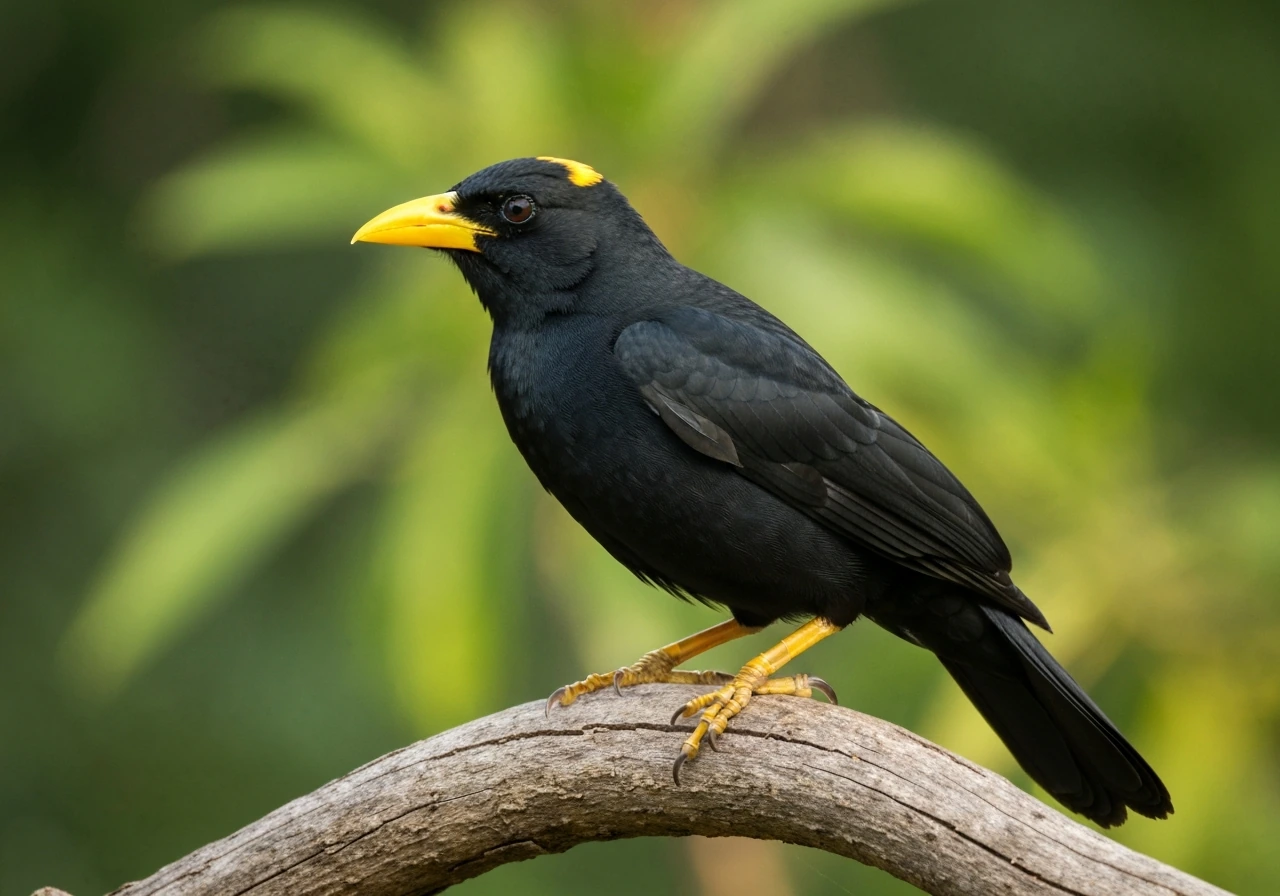
When a yellow bird crosses your path, most spiritual traditions agree on the core message: hope, light, and encouragement. That bright flash of yellow is widely interpreted as a gentle nudge from something bigger than yourself, a reminder that things are moving in a positive direction even when life feels heavy. That said, the full meaning depends a lot on the context, which species you saw, what the bird was doing, how many times you've seen it, and honestly, what's going on in your life right now. This guide walks you through all of that so you can move from "what does this mean?" to "what do I do with it?"
Yellow Bird Meaning Spiritual: What It Symbolizes Now

Eliza Thornwick
9 Apr 2026
What yellow birds most often symbolize spiritually
Across most spiritual frameworks, yellow birds carry a cluster of closely related meanings: hope, optimism, renewal, joy, and divine guidance. Think of yellow as the color of sunlight, and the bird as a living messenger moving through the world freely. Put them together and you get something that feels like a spiritual green light, a sign that you're supported, that light is available to you, and that a new chapter may be opening up.
The spiritual meaning of yellow birds tends to center on upliftment rather than prediction. This isn't a sign that tells you exactly what's going to happen. It's more like reassurance that you're not walking alone. Many people report seeing a yellow bird right when they're at a crossroads, grieving, or feeling stuck, and the encounter lands as a moment of comfort rather than coincidence.
Why yellow carries so much spiritual weight
Yellow's spiritual symbolism is deep and consistent across many cultures. It's the color most associated with sunlight, warmth, intellect, and awakening. Mindbodygreen lists yellow's positive spiritual associations as new beginnings, hope, intellect, and optimism, and that tracks with what you find across folklore, religion, and modern metaphysical writing. In medieval European thought, yellow was even linked to reason itself.
In biblical and Christian color symbolism, yellow and gold are tied to divine light, purity, and joy. Australian Catholic liturgical art frames yellow as the color of spiritual joy specifically, separating it from gold's more formal "divine glory" role. So when a yellow bird appears in a moment where you need clarity or comfort, the color itself amplifies the message.
That said, yellow also has a duality worth knowing about. It's used in warning signage for good reason, and in some spiritual frameworks, yellow can signal a need for caution or invite reflection on imbalance. The color magick tradition, for example, describes yellow as a reminder to "let your inner sun shine" but pairs that with an emphasis on balance and authenticity. So yellow isn't purely "everything is great", it can also mean "pay attention."
Birds as messengers: encounters vs. finding a bird
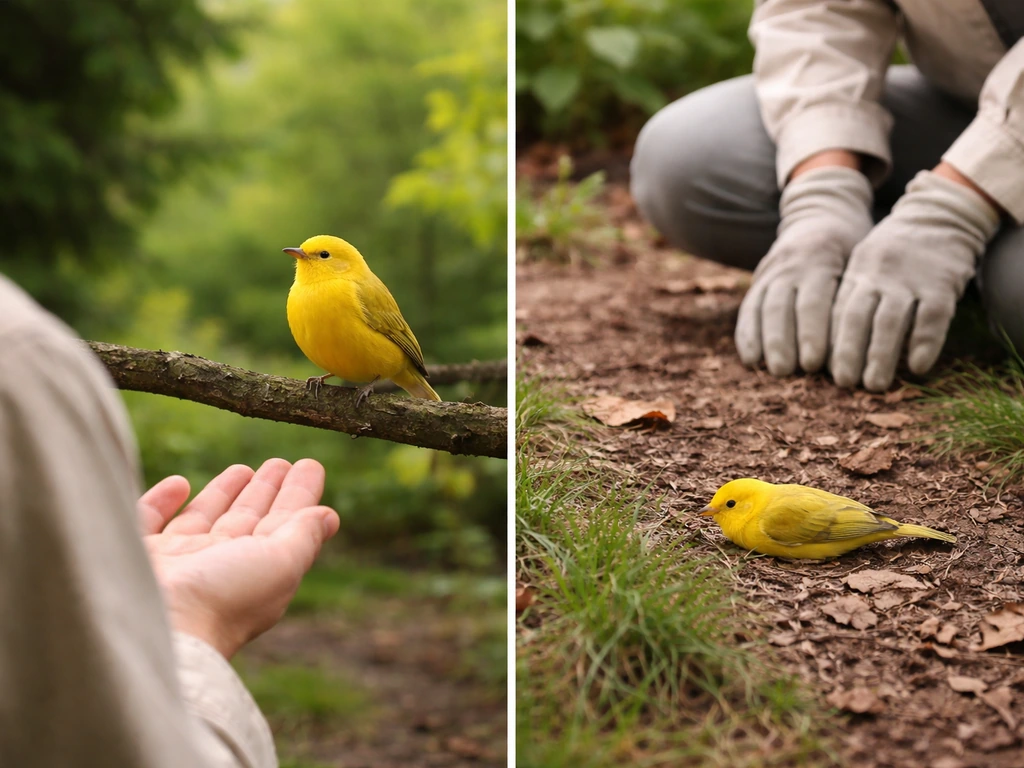
There's an important distinction between actively encountering a living yellow bird and finding one, especially if it's injured or dead. A living yellow bird that appears near you, flies across your path, or lands close by is typically interpreted as an active, present-tense message. The energy is alive, immediate, and encouraging. This is the classic "messenger" experience that most spiritual traditions are pointing to when they talk about birds carrying signs.
Finding a yellow bird under more unusual circumstances, particularly one that's stunned after a window strike or that has died, shifts the interpretive frame. The message may still be present, but it comes wrapped in something heavier. More on that below. What matters here is that you don't have to treat every yellow bird sighting the same way. The bird's behavior and condition are part of the message.
Common scenarios and how to read them
A yellow bird flies across your path or lands nearby
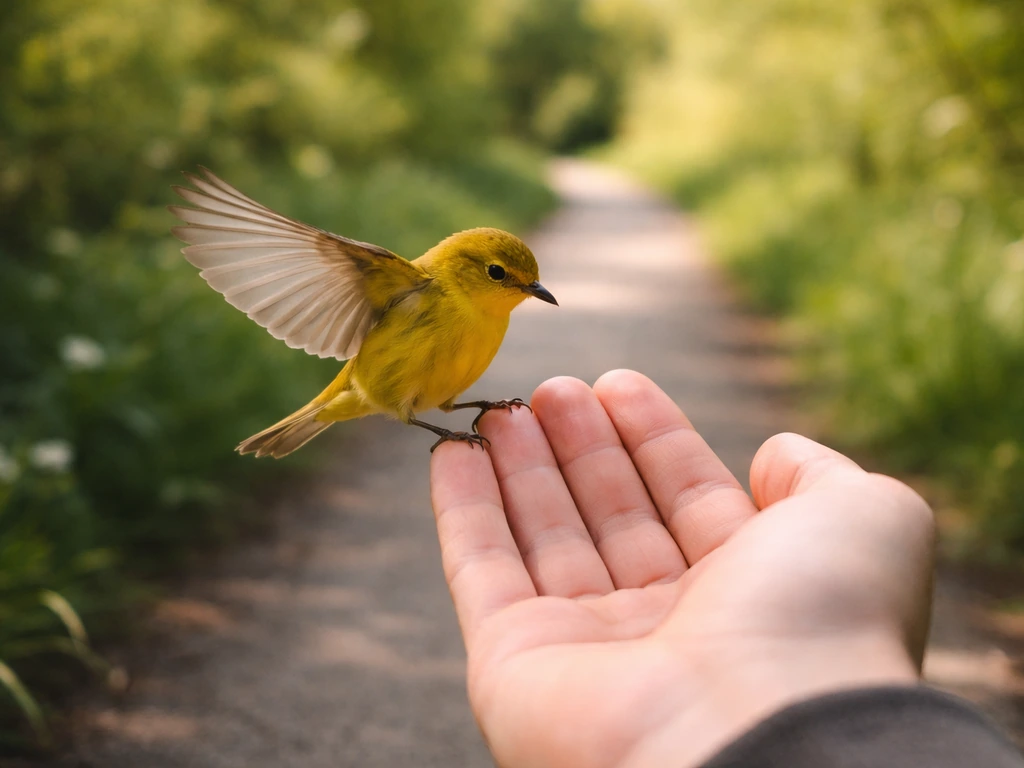
This is the most common type of encounter and the most straightforwardly positive. A yellow bird crossing your field of vision or landing close to you while you're going about your day is widely read as a sign of encouragement, hope arriving in the present moment, or confirmation that you're on the right path. Spiritual Marker specifically describes this kind of encounter as symbolizing divine protection and transitional encouragement, which resonates with a lot of readers who notice yellow birds during periods of change.
A yellow bird lands on you
When a wild bird actually lands on your body, that's an unusually intimate encounter. Most interpretations treat this as a more direct, personal message: the universe (or a specific guide or loved one in spirit) is reaching out to you specifically. Take that moment seriously. Pause, breathe, and notice what you were just thinking about. That thought or question is often exactly what the message is addressing.
Repeated sightings of yellow birds
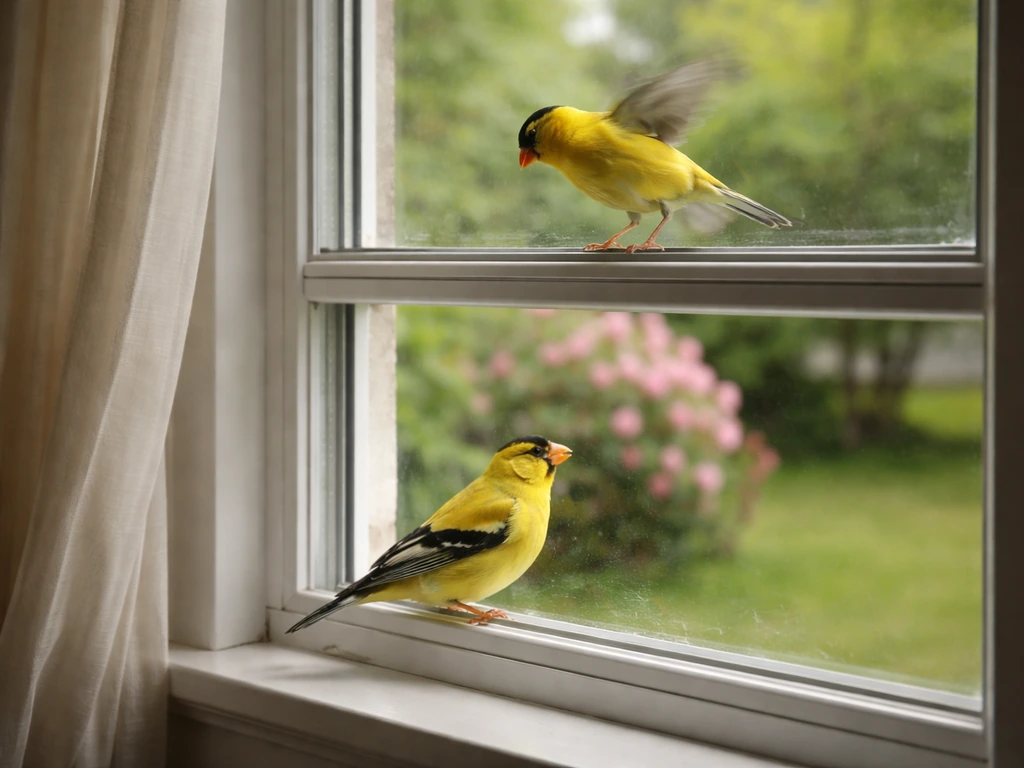
One sighting can be a coincidence. Three or more in a short window of time, especially if they feel charged or noticeable in the moment, is often interpreted as a pattern worth paying attention to. Repetition tends to amplify the message and suggests you may not have fully received or acted on what the encounter was pointing toward. Ask yourself: what have I been ignoring or avoiding?
A yellow bird tapping or pecking at your window
Window-tapping is one of the most emotionally charged bird encounters people report. Before going fully into symbolic territory, it's worth knowing the practical side: birds frequently peck at windows because they see their own reflection and interpret it as a rival. This is especially common in the morning when sunlight hits glass at certain angles. It's a very real behavioral pattern, not always a sign.
That said, many people do interpret window tapping spiritually, as a message trying to break through, a call to pay attention, or even a visiting presence from someone who has passed. Both interpretations can be true simultaneously. You don't have to choose. You can address the practical cause (like placing a decal on the window) while still sitting with the symbolic question the encounter raised.
A yellow bird building a nest near your home
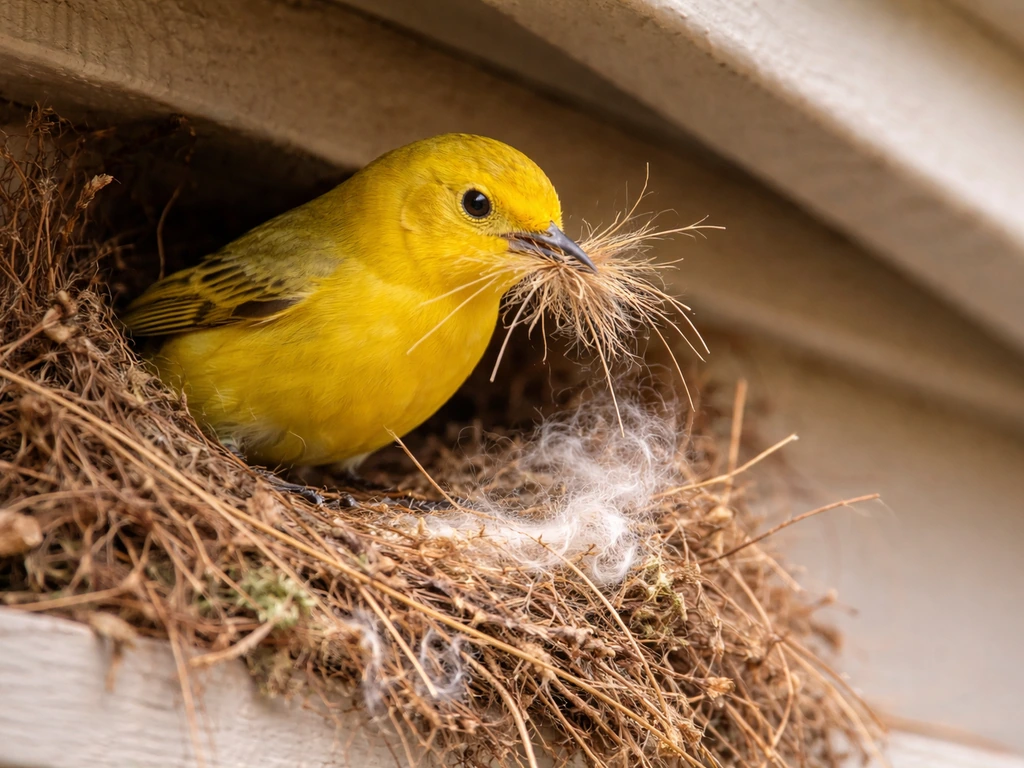
Nest-building is almost universally seen as a positive omen: new beginnings, fertility (in the broad sense of creative or professional growth, not just literal), and a symbol that something is being constructed in your life. If a yellow bird chooses to build near your home, many traditions would say your space is energetically welcoming and that growth is coming.
The species matters more than you might think
"Yellow bird" covers a surprising range of real species, and the specific bird can add layers to the meaning. A bright yellow canary carries very different cultural and spiritual associations than a yellow warbler or an American goldfinch. Wikipedia notes that domestic canaries were historically used as sentinel species in coal mines, and by analogy the phrase “blank" rel="noopener noreferrer">canary in the coal mine” is used for early warnings. If you can identify what you saw, it's worth digging into species-specific symbolism.
For example, the canary bird spiritual meaning draws heavily on themes of voice, song, and self-expression, partly because of the canary's history as a caged singer and partly because of its role in mines as a sentinel for danger. Similarly, the yellow canary bird spiritual meaning specifically emphasizes joy, creative energy, and the courage to speak your truth.
Birds with mixed coloring add another dimension entirely. The yellow bird with black wings spiritual meaning often brings in themes of duality, the balance between shadow and light, or transformation through contrast. Meanwhile, a black bird with yellow beak spiritual meaning can suggest communication (the beak as the instrument of voice) combined with groundedness or mystery. Species matter, so if you can ID the bird, you'll get a richer read.
Some specific birds worth knowing: the yellow breasted chat bird spiritual meaning leans into themes of hidden wisdom and playful energy, while the broader yellow breasted bird spiritual meaning tends to emphasize emotional warmth and heart-centered messages. And if you spotted something with a distinctly yellow underside, exploring the yellow belly bird spiritual meaning can help you narrow down what tradition says about that specific visual signature.
How different traditions interpret yellow birds
| Tradition | Core interpretation | What to watch for |
|---|---|---|
| Christian / Biblical | Divine guidance, God's love and light, Holy Spirit presence | Gold/yellow tied to divine glory; negative associations with greed or betrayal in some contexts |
| Indigenous / Native American | Guidance on the spiritual path, wisdom offered to the living | Highly tribe-specific; secondary sources generalize broadly, so treat with openness rather than certainty |
| African Folklore | Ancestral wisdom carried to the living, messages from those who have passed | The bird as bridge between worlds; pay attention to what the encounter stirs in you emotionally |
| Esoteric / Metaphysical | A spirit guide signal, renewal, soul-level awakening, law of attraction alignment | Non-denominational; encourages personal reflection and intuitive response over doctrine |
| Color Magick / Folk | Solar energy, authenticity, inner light, balance between brightness and caution | Yellow as a call to show up fully and honestly, not just feel good |
One thing to keep in mind: most of what you'll read about Indigenous bird symbolism online comes from secondary sources and broad generalizations. Native American spiritual traditions are deeply tribe-specific, and a yellow bird's meaning in one nation's teaching may differ completely from another's. If this tradition resonates with you, seek out voices from within those communities rather than relying on generalized spiritual content.
When the message feels heavy: shadow meanings
Not every yellow bird encounter feels uplifting, and that's okay to acknowledge. Sometimes a yellow bird appears when you're grieving, and the encounter stirs grief rather than comfort. Sometimes repeated sightings feel urgent or unsettling rather than reassuring. Shadow interpretations exist in this space.
In some traditions, a yellow bird appearing at a specific moment (right after a loss, near the end of a relationship, or during a health crisis) can carry a message of unfinished business, a call to address something you've been avoiding, or a warning to slow down and pay attention before something shifts. The caution dimension of yellow color symbolism is real. It doesn't cancel out the hope, but it can sit alongside it.
Biblical color symbolism also notes a "warning" dimension for yellow, alongside the more common divine light associations. And in Christian liturgical art, yellow's shadow side is associated with worldly greed or misdirected focus. If a yellow bird encounter feels heavy to you, trust that. Ask what the encounter might be warning you about rather than rushing to frame it as purely positive.
If the encounter involves a dead yellow bird, the weight is more significant. Many traditions interpret finding a dead bird as a signal of ending, transition, or a need to release something. That doesn't mean it's a bad omen in a fatalistic sense, but it does suggest that something is completing itself in your life. Sit with that rather than rushing past it.
How to actually use the meaning today
Spiritual interpretation only becomes useful when it connects back to your real life. Here's how to take the encounter from interesting to actionable.
Journaling prompts to try right now
- What was I thinking about or worrying about right before the yellow bird appeared?
- What area of my life needs more hope or light right now?
- If this bird were carrying a message from someone who loves me, what would they be saying?
- Is there something I've been avoiding that this encounter is nudging me toward?
- What would I do differently today if I believed I was fully guided and supported?
Meditation and prayer suggestions
If you have a prayer practice, try speaking directly to whatever you call the divine and thank it for the message, even if you're not yet sure what the message is. Gratitude opens the channel. If meditation is more your style, try sitting quietly, visualizing the yellow bird, and simply asking: "What are you here to show me?" Then wait. Don't force an answer. Let it come as a feeling, a word, or an image.
Connecting the message to a real-world action
The most common themes in yellow bird symbolism (hope, new beginnings, renewal, joy) all point toward action, not just feeling. So ask yourself: what one thing could you do today that reflects more hope or optimism than you've been allowing yourself? It doesn't have to be huge. Send the email you've been putting off. Schedule the conversation. Start the creative project. Say yes to something you've been second-guessing. The bird message isn't meant to stay in the spiritual realm; it's meant to move through you into your actual life.
Stay grounded: when to set the symbolism aside
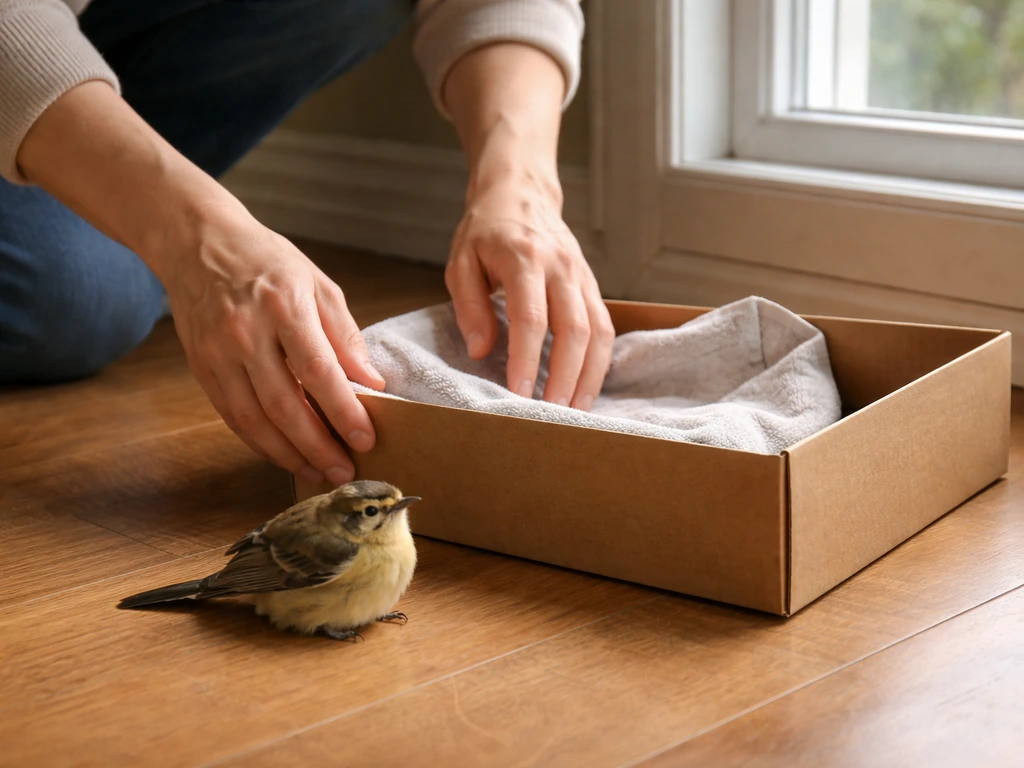
If your encounter involves a bird that is injured, stunned, or has died, the immediate priority is practical, not symbolic. Birds frequently strike windows because glass is essentially invisible to them, and even a bird that flies away after a window strike may be internally injured and in need of help. The American Bird Conservancy is clear on this: window-collision birds should be taken to a wildlife rehabilitator even if they appear to recover on their own.
Here's a quick framework for what to do in real-world bird situations:
- If a bird has struck a window and is stunned: gently place it in a ventilated cardboard box in a quiet, dark space. Do not give it food or water. Contact a licensed wildlife rehabilitator as soon as possible.
- If a bird appears injured (visible broken limb, bleeding, shivering, unable to move): do not attempt to treat it yourself. Contact your local wildlife rehabilitation center or animal services.
- If you find a dead bird: do not touch it with bare hands. The CDC advises against handling dead wild birds directly. Report it to your state health department or state wildlife agency per your local protocols.
- If you're dealing with a larger bird (hawk, heron, crow): proceed with extra caution around sharp talons and bills. Contact your local Audubon chapter, animal services, or wildlife rehabber rather than handling it yourself.
You can absolutely sit with the spiritual significance of the encounter and take care of the bird's welfare at the same time. These aren't in conflict. In fact, responding with care and compassion to a living creature in need might be exactly the action the encounter is calling you toward. The meaning and the moment can coexist.
And if you're someone who tends to over-interpret, it's worth holding all of this lightly. Not every yellow bird that crosses your path is a cosmic message. Sometimes birds are just birds, doing bird things in your field of vision. The encounters that carry genuine weight tend to feel different, charged, timed strangely, or emotionally resonant in a way that's hard to explain. Trust your gut on which ones to pay attention to, and let the rest be the simple, beautiful thing they are: a living creature, briefly sharing your world.
FAQ
How can I tell whether my yellow bird sighting is “message worthy” or just coincidence?
A practical way is to check for emotional and situational “coherence.” If the encounter coincides with a live decision, a recurring worry, or a feeling you cannot shake, it is more likely to function as a meaningful nudge. If you felt neutral, it happened randomly with no lingering attention, or you would forget it within a day, treat it as coincidence and move on.
Does the bird’s behavior matter as much as the color?
Yes. In many interpretations, action is the punctuation mark. Examples, a bird that sings or calls can point toward communication, while a bird that avoids you or keeps its distance can suggest you need space or patience rather than a direct “do this now” command. If you notice a specific pattern, mirror it back to your life (for instance, “calling,” “waiting,” or “flying toward” a goal).
What if the yellow bird encounter feels unsettling or comes during bad news?
Allow for a dual reading. The same symbolism that carries hope can also highlight what needs adjustment, like avoidance, unhealthy attachment, or a need to slow down. A simple check is to ask, “Is this urging me to comfort myself, or is it asking for a concrete change?” If it feels urgent, focus on the concrete steps first.
Should I interpret a dead yellow bird differently than a living one?
Often, yes. Many traditions treat a dead bird as more about completion and release than encouragement. Practically, if you find a bird, avoid handling it with bare hands and consider contacting a local wildlife or animal control service if you suspect disease. Spiritually, you can still treat it as a prompt to close a chapter, but do it gently and realistically, not as a prediction.
If I’m trying to apply the meaning, what’s a good “next action” without overthinking?
Choose one action that matches the most dominant theme you felt, hope, renewal, joy, or guidance. A helpful rule is to pick something measurable within 24 to 72 hours, like sending a message, making a small budget adjustment, starting a routine, or writing down one honest next step. If you cannot identify a real action, the message may be asking for emotional self-support rather than productivity.
What should I do if the yellow bird is injured or after a window collision?
Treat it as a safety and welfare priority. If the bird is stunned, contact a licensed wildlife rehabilitator for instructions, even if it seems to recover and fly away. Keep pets and people away, use a ventilated container if needed, and avoid feeding or giving water unless a professional tells you to.
Can I combine spiritual interpretation with a scientific explanation for things like window tapping?
Yes, and it is often the healthiest approach. Window tapping can be caused by reflection and sunlight angles, but people also experience it as a “call to notice.” You can address the cause (like adding a decal to reduce collisions) and also ask the symbolic question that came up, without forcing one explanation to erase the other.
Does “yellow bird meaning spiritual” change depending on the species I saw?
Often. Species can shift the emphasis from general hope to a more specific theme. For instance, a bird known for song may point toward voice or self-expression, while a more secretive species might suggest hidden information or inner work. If you can ID the bird, let that detail refine your question, “What does this particular aspect of me need now?”
What if I saw a yellow bird with another distinctive marking, like black wings or a yellow beak?
Mixed markings can be used as a “symbolic contrast” cue. Many people interpret contrast as transformation, balancing light and shadow, or communicating a message with boundaries. A useful method is to focus on what the contrast evokes emotionally for you (clarity, protection, duality, restraint) rather than trying to memorize fixed meanings.
How many sightings count as “a pattern,” and when should I stop analyzing?
A common threshold is repetition within a short window, such as multiple sightings across several days, especially when they line up with the same problem or decision. Once you have taken one meaningful action, or you have gained a clear sense of what you are being guided toward, it is reasonable to pause the analysis. If the interpretation is making you anxious, scale back and return to practical steps.
Are there spiritual traditions I should be careful about applying broadly?
Yes. Indigenous and community-specific teachings are often tribe- or language-specific, and generalized online summaries can miss important context. If a tradition deeply resonates, it is better to seek guidance from authentic community voices and be careful not to treat one group’s meanings as universally applicable.
What if I don’t believe in spirits or signs, but I want to use the experience constructively?
You can treat the encounter as a mindfulness prompt. Instead of “a messenger,” view it as a moment that interrupts autopilot. Use it to check your values, name what you are avoiding, and choose one supportive action. This keeps the benefit (clarity and hope) without requiring belief in the supernatural.
Next Article
Black Bird With Yellow Beak Spiritual Meaning and Next Steps
Interpret black bird with yellow beak spirit meaning and variations, then use journal steps to apply the sign today