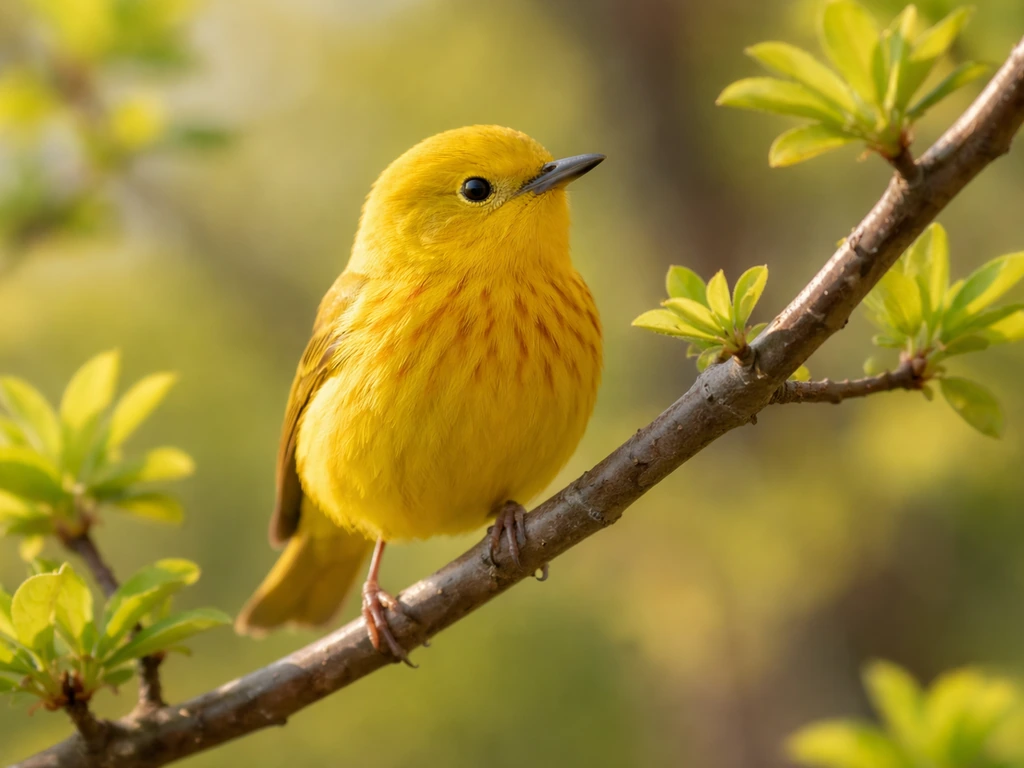
If a warbler just crossed your path, here is the short version: warblers are almost universally read as messengers of renewal, self-expression, and hope. Their song is the whole point. Spiritually, when a warbler shows up, the prompt is to pay attention to what you have been holding back, what new chapter is knocking, and whether you are actually listening to your own inner voice. That is the core. Everything else, the specific meaning for your specific moment, comes down to the details of your encounter, and that is exactly what we are going to work through here.
Warbler Bird Spiritual Meaning: Messages, Omens, and How to Interpret It

Eliza Thornwick
20 Apr 2026
What a warbler symbolizes spiritually
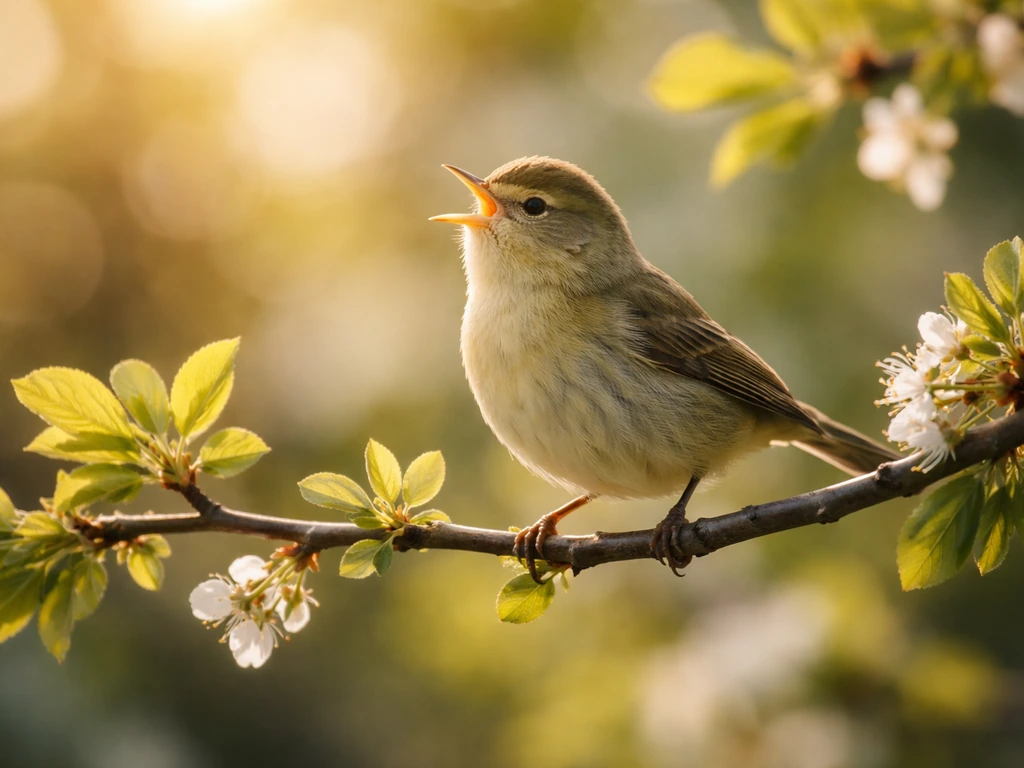
Warblers carry a handful of consistent spiritual themes across nearly every tradition that notices them. The most prominent is renewal. Warblers are migratory birds, and in the northern hemisphere their return tracks closely with spring. The willow warbler, for example, is one of the first to reappear in northern Europe each year, arriving almost like a living announcement that winter is done. That biological fact has layered itself into spiritual interpretation over centuries: when a warbler appears, something old is ending and something new wants to begin.
The second big theme is song, and this one is especially important. Warblers are not known for their looks. They are known for their voice. Spiritually, that points directly at self-expression and communication. A warbler encounter often carries the question: are you singing your own song, or have you gone quiet? Many sources frame the warbler as encouraging you to express yourself freely, speak your truth, and stop muting the parts of yourself that feel too much or too loud.
Beyond that, warblers are linked to hope, emotional flexibility, healing, and listening inward. In some Native American-influenced spiritual traditions, particularly around yellow warblers, the bird is described as carrying healing energy into the space where it appears. The warbler's varied, complex song is also read as a symbol of versatility and adaptability, a reminder that you do not have to stay stuck in one note when life changes around you.
- Renewal and new beginnings: letting go of what is past and opening to a fresh cycle
- Self-expression and communication: finding and using your authentic voice
- Hope: a gentle reassurance during uncertain or difficult seasons
- Healing: particularly emotional or spiritual healing tied to sound and presence
- Inner listening: paying attention to your own intuition and quiet knowing
- Flexibility and adaptability: moving through change with ease rather than resistance
- Spiritual messages: the warbler as a messenger between realms, especially in dream encounters
How people usually encounter warblers, and what each situation tends to suggest
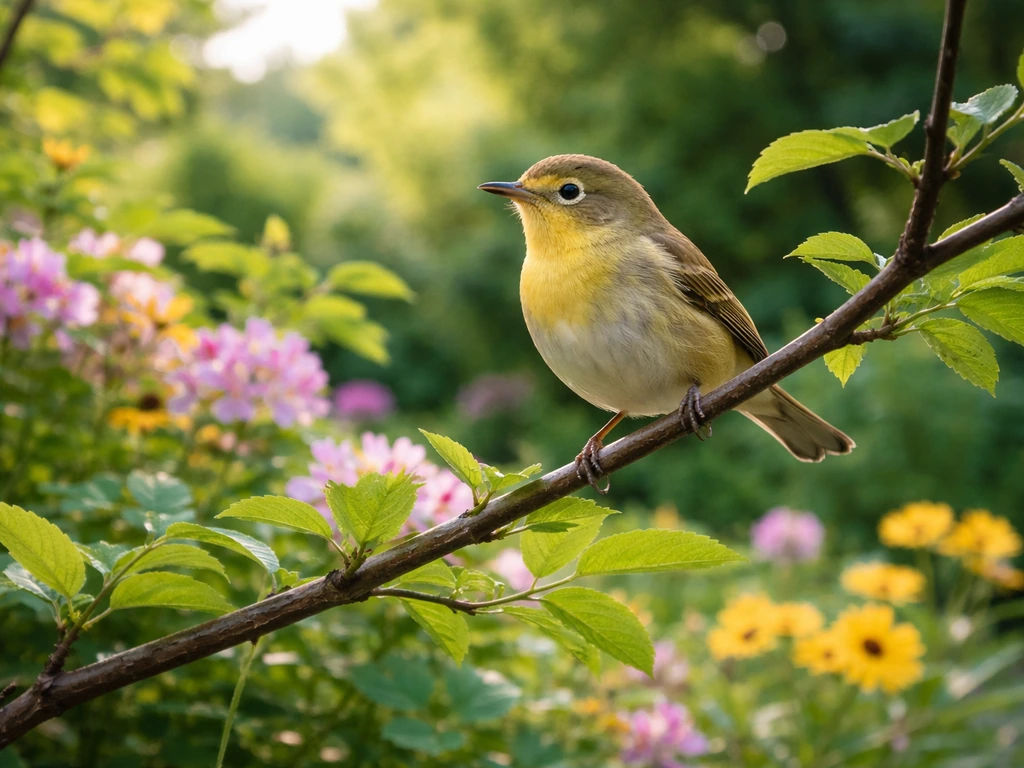
Not every warbler encounter carries the same weight. How you encountered the bird matters quite a bit, so let's go through the most common scenarios.
Seeing one in your yard or garden
A warbler visiting your personal space, especially your home garden, is often read as a positive sign touching your domestic life. If you are in the middle of a transition, whether that is a relationship shift, a home change, or a personal reinvention, this kind of close-to-home visit is frequently interpreted as reassurance that the change is the right one. If the bird was near or in a birdbath, that adds a layer of meaning: the birdbath is associated with cleansing and renewal, pointing to a fresh spiritual stage or a clean break from something old.
Hearing the song without seeing the bird
This is actually very common with warblers since several species, including the Japanese bush warbler, are notoriously secretive and more often heard than seen. The Japanese bush warbler is a Japanese passerine whose distinctive breeding song can be heard throughout much of Japan from the start of spring.
The Cornell Lab of Ornithology notes that some warblers are seldom seen at eye level and are often easier to locate by listening to their calls or song first, then following the sound patiently warblers are more often heard than seen. Spiritually, hearing a warbler without seeing it can be one of the more potent encounters.
It turns the message inward: you are receiving the communication, but there is no external spectacle to distract you. The invitation here is to stop and actually listen, to your environment, to your gut, and to whatever question has been sitting unanswered in your mind.
Seeing one in the wild, away from home
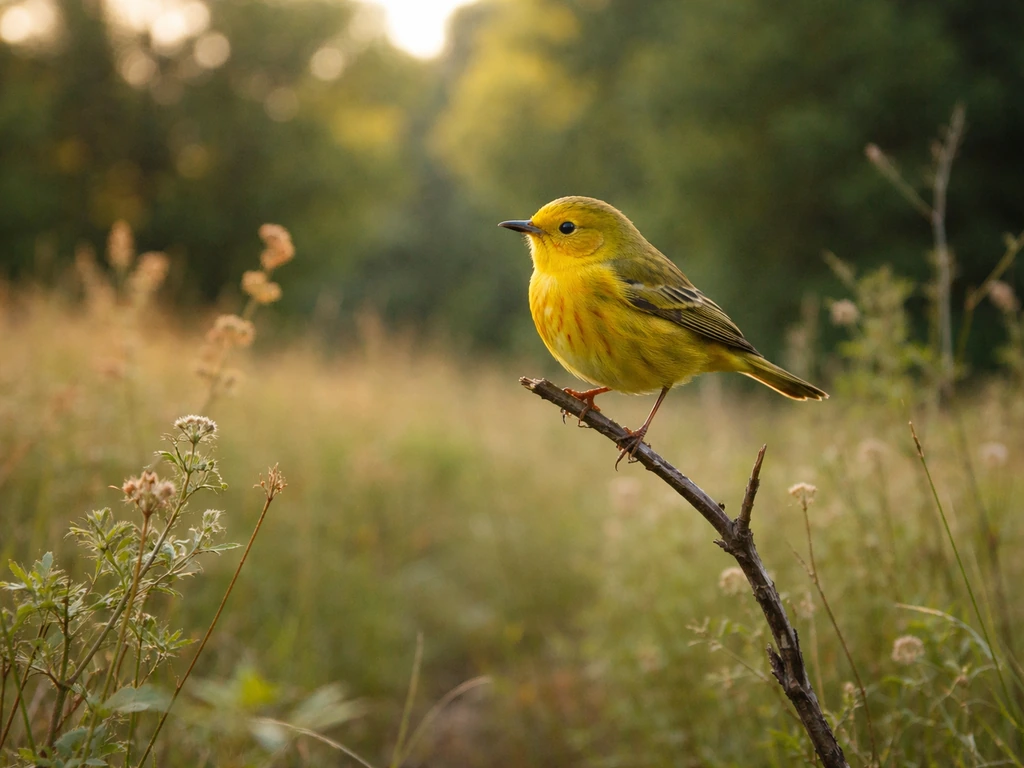
A warbler spotted in a forest, field, or open landscape often carries a broader message about your life path rather than your immediate home situation. It can point to new opportunities opening up in career or creative pursuits, or serve as encouragement to be more outgoing and socially engaged. It can also simply be a reminder to stay present with nature and the rhythms of life rather than getting lost in mental loops.
A warbler landing on or very close to you
This is the encounter that tends to shake people, because it feels undeniably personal. A wild bird landing on you is rare enough that it is worth taking seriously. Spiritually, this is frequently read as a direct message, delivered right to you. The warbler is not singing in the distance, it is in contact. If you feel drawn to the bird or emotionally moved in that moment, many traditions would say the connection is genuine and the message is personal. Pay attention to what you were thinking about just before it happened.
Repeated sightings over several days
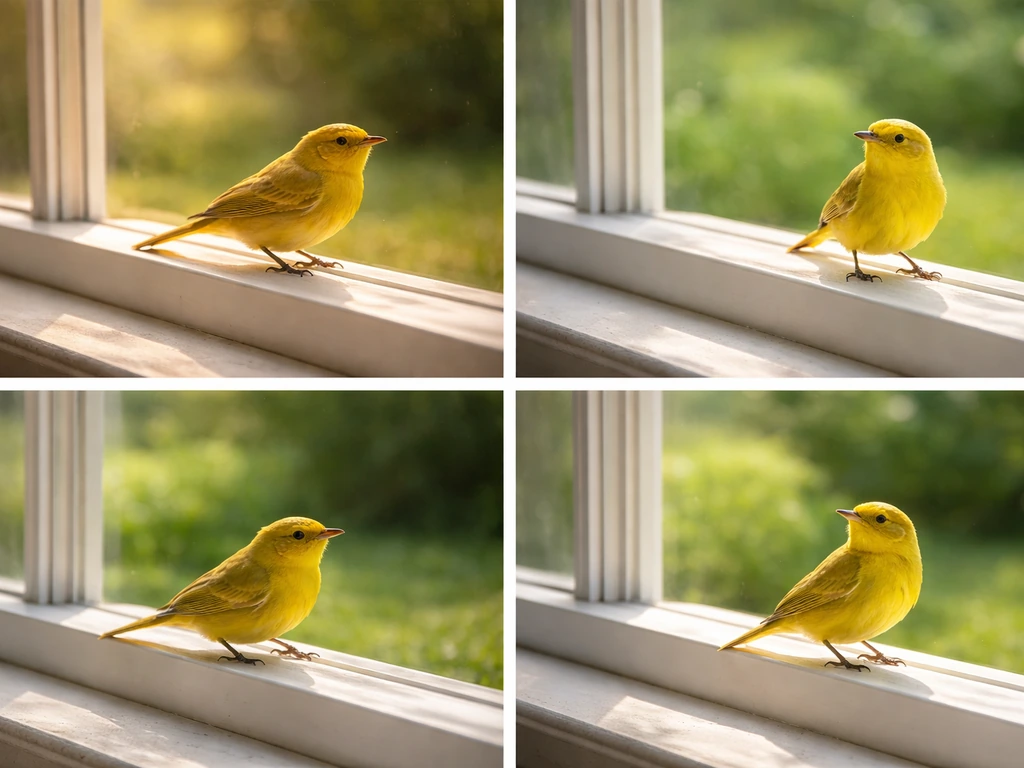
If you keep seeing or hearing a warbler and it feels like more than coincidence, most spiritual frameworks would agree: repetition amplifies the message. The warbler is not just passing through your field of awareness. It is persisting. That persistence is itself a symbol tied to the theme of patience, and it is a prompt to stop brushing it off and actually sit with what it might be saying to you right now.
How timing, location, and your emotions shift the meaning
One of the most important things to understand is that a warbler sighting is not a fixed message. It is a starting point. The actual meaning for you depends heavily on three variables: when it happened, where it happened, and what you were feeling.
Timing is especially powerful with warblers. If your encounter happened in spring, or at a personal crossroads moment, the renewal theme is dominant. If it happened during a season of grief or loss, the hope and healing threads become more relevant. If you were thinking about a specific decision, a relationship, a career move, or a question you have been avoiding, that timing connection is not a coincidence to dismiss. Spiritual interpretation works best when you notice the overlap between what is happening inside you and what appears outside.
Location adds texture. A warbler in your garden versus one deep in a forest versus one outside your office window are all pointing at slightly different domains of your life. Home, personal freedom, and professional life each carry different energetic weight. The Japanese bush warbler, for instance, is deeply associated with early spring and spiritual listening in Japanese culture, and if you encountered one in a quiet, contemplative setting, that layer of meaning feels especially apt.
Your emotional state at the moment of the encounter is arguably the most personal and most telling variable. If you felt a rush of sudden peace or joy when the warbler appeared, that emotional signal is data. If you felt a strange prickling awareness or even tears you could not explain, that matters too. Many practitioners would say your emotional response is the spiritual body recognizing the message before the thinking mind catches up. Do not dismiss it.
Reading warbler behavior: song, flight, window visits, and landing
The warbler's behavior during your encounter is its own layer of meaning. A bird that sits still and sings directly toward you is sending a different signal than one that darts around nervously or visits your window repeatedly.
Song, especially sustained or complex song
The warbler's song is its defining spiritual feature. A rich, varied, sustained song is associated with full self-expression, emotional openness, and the encouragement to let your own voice be heard. If the bird sang at length in your presence, the message is almost always about communication, whether that means having a hard conversation, creating something, sharing something you have held private, or simply giving yourself permission to feel things fully. The warbler's flexibility in song, its ability to vary pitch and pattern, also speaks to adaptability.
Quick, flitting flight
Warblers move fast. If the bird appeared briefly and then vanished, it can mean the message is time-sensitive, or that you are being invited to stay alert and agile rather than settling into complacency. It can also reflect the nature of new beginnings: fleeting, worth catching in the moment, and not something you can force to stay.
Landing on you or staying very close
As covered above, this is the most direct encounter. Spiritually, it signals a personal message of some intimacy. Some people report that a bird landing on them correlates with a time when they really needed reassurance or guidance, and the contact felt like an answer. Take what you were pondering seriously in this case.
Visiting or tapping a window
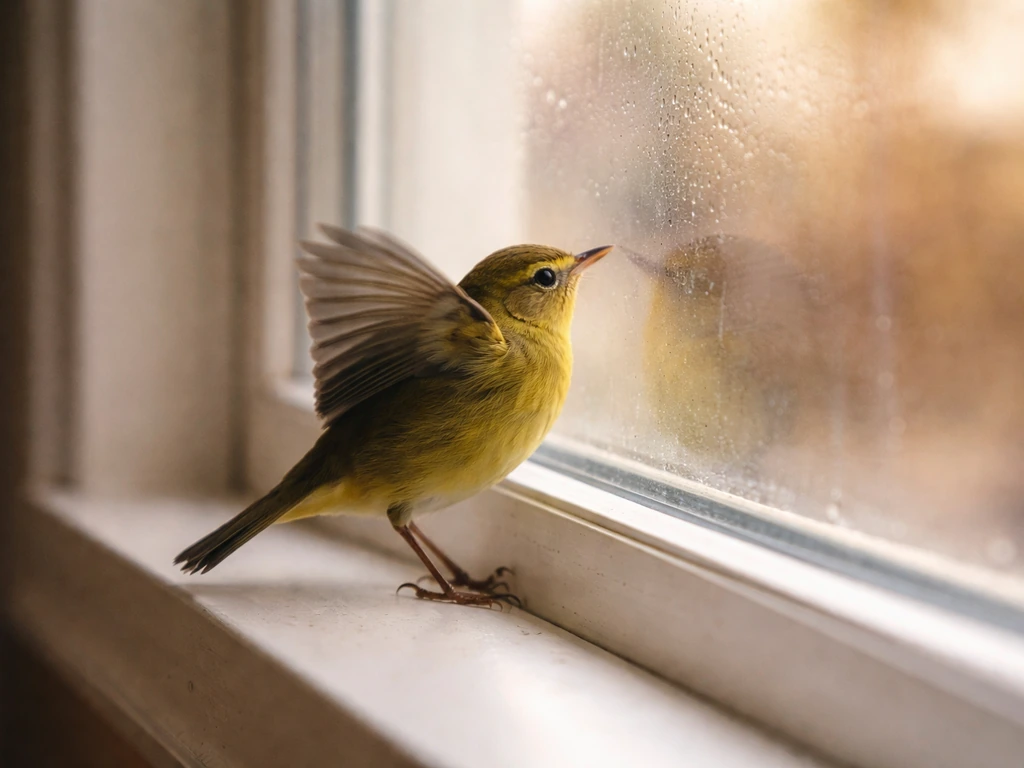
Window visits in bird symbolism are often associated with threshold moments, something trying to get through from one space to another. A warbler at your window could be interpreted as a message trying to reach your inner awareness, a reminder to look at what is just outside your current perspective, or an encouragement to open up something you have been keeping closed. If it taps the glass, the urgency increases. This is a theme that comes up across many bird species spiritually, and the warbler specifically ties it to the themes of communication and renewal.
Good omen or warning: when to take warbler symbolism more seriously
Here is the honest answer: warblers lean strongly positive. They are not the bird most traditions associate with death, bad luck, or warnings in the way some other birds can be. Their dominant spiritual profile is hopeful, encouraging, and renewing. If you are worried that seeing a warbler is a bad sign, you can generally relax.
That said, context changes things. If a warbler behaves in a genuinely unusual or distressed way, flailing at a window repeatedly, appearing injured, or acting disoriented, some spiritual traditions would read this as a signal to pay closer attention to something in your life that needs care. It is less about doom and more about: slow down, something here needs your attention. The warbler's usual message of patience and listening becomes more urgent in these moments.
A warbler encounter is not a prophecy. It does not predict a specific outcome. If someone or something is pushing you to read it as a fixed forecast (this will happen, or something bad is coming), that is worth pushing back on. Every reputable spiritual framework around this bird treats its message as contextual, a piece of a larger puzzle, not a verdict. The warbler points toward things to reflect on, not things to fear.
Where warblers do carry a gentle but clear signal is in life areas involving stagnation. If you have been avoiding something, suppressing your voice, or refusing to let go of a past that no longer serves you, a warbler arriving in that season is often interpreted as a nudge. Not a warning exactly, but a clear prompt. The bird is associated with forward movement and spring cycles, and if you are stuck, that message is worth taking seriously.
What to actually do after a warbler encounter
Spiritual encounters with birds mean more when you actually do something with them. Here are the practical steps that work, whether you are new to this kind of reflection or have been doing it for years.
- Write it down immediately. Note the date, time, weather, where you were, what the bird did, and what you were thinking or feeling just before and during the encounter. Details you dismiss as trivial often become meaningful later.
- Ask yourself the key questions. What area of my life is this pointing to? What have I been hesitating to say or do? What am I holding onto that wants to be released? What new beginning might be knocking that I keep dismissing?
- Sit with the bird's primary theme. If the warbler was singing, spend a few minutes in quiet with the question of your own voice and expression. If it visited your garden, reflect on your home life and what feels like it is shifting there.
- Try a birdwatching meditation. This is exactly what it sounds like. Go somewhere you might hear birdsong, sit quietly without your phone, and open up to whatever arrives. Warblers are often heard before they are seen. Let the experience be sensory first, meaning second.
- Set a clear intention. After your reflection, state out loud or write down what you are choosing to carry forward from this encounter. This turns passive symbolism into active intention.
- Watch for confirmation over the next few days. If the theme you identified keeps showing up, in conversations, dreams, or synchronicities, that is a reasonable signal you are reading it correctly. If nothing resonates, let the meaning breathe and revisit it in a week.
Journaling is genuinely the most useful tool here, not because it is mystical, but because it forces you to slow down and articulate what you actually felt and thought. Most people who do this are surprised by what surfaces once they stop just scrolling past the experience.
How different traditions interpret the warbler
Warbler symbolism is not monolithic. Different cultures and traditions have landed on overlapping but distinct meanings, and knowing a few of them helps you choose the frame that resonates most with your own background and beliefs.
| Tradition | Core warbler symbolism | What it emphasizes |
|---|---|---|
| General Western spiritual / folk | Renewal, new beginnings, hope | Seasonal return as a sign of fresh cycles; encouragement to let go of winter (or stuck periods) |
| Native American-influenced traditions | Healing, sacred sound, presence | The bird's song as carrying healing energy into a space; yellow warblers especially linked to healing vibrations |
| Japanese (uguisu / bush warbler) | Spring herald, spiritual listening, sacred voice | The bird's call linked to Buddhist sutras; hearing it as an invitation to inner stillness and spiritual receptivity |
| Spirit animal / totem frameworks | Self-expression, communication, outgoing energy | Warbler as spirit animal encouraging you to be social, expressive, and forward-moving |
| Contemporary metaphysical / angel-number adjacent | Messenger, synchronicity, divine guidance | Repeated sightings as confirmation of alignment; warbler as bridge between physical and spiritual realms |
The Japanese bush warbler (uguisu) is a particularly rich case. Its call, rendered as 'Hoo-hokekyo,' is directly associated with the Lotus Sutra in Japanese Buddhist tradition, and the bird has been described as a voice that ushers in spring with something like a sacred recitation. If you have any connection to Japanese or East Asian spiritual traditions, or simply feel drawn to a more meditative, listening-centered interpretation, that framework may feel more resonant than a purely Western one.
The important point is that none of these traditions cancel each other out. They all agree on the warbler's core energy: renewal, voice, and a connection to something beyond the ordinary. What varies is the cultural container they put it in. Use the one that fits your life and your sense of the sacred.
And if you are drawn to the symbolism of other small, vivid birds, the yellow warbler in particular carries its own distinct layer of meaning worth exploring, as does the spiritual symbolism connected to white birds and threshold experiences. If you are curious about widow bird spiritual meaning, the themes of guidance, emotional processing, and renewal can offer another perspective.
The spiritual meaning of a white bird often centers on purity, guidance, and a helpful shift toward renewal spiritual symbolism connected to white birds. Some traditions also connect renewal energy to the whippoorwill bird spiritual meaning, especially around intuition and messages heard at night.
Whatever tradition you use as your lens, the warbler's invitation is consistent: do not stay in winter when spring is calling. Listen more carefully. Speak more honestly. And trust that the message you need right now is already somewhere in what you felt when that small, singing bird crossed your path.
FAQ
What does it mean if I hear a warbler a lot but never actually see one?
Yes, but the focus shifts. If you repeatedly hear a warbler and never see it, treat it like an “inward” message, because there is less to distract you with visuals. Make your next step practical, pause and listen, write down what thought or question was looping right before you heard it, then choose one small action that answers that question (a message you need to send, a boundary you need to set, or a decision you need to stop postponing).
How do I interpret a warbler encounter when it feels emotional, but I cannot tell if it is “good” or “bad”?
Use the emotional trigger as a tiebreaker. If you felt relief, warmth, or openness, lean toward renewal and self-expression. If you felt fear, agitation, or an urgent sense to act, treat it as a prompt that something is calling for care sooner than later. Also consider your environment, for example, hearing a warbler near a place where you make decisions (office, mailbox, bedroom window) often points back to a specific life area you are currently engaging with.
Is a warbler sighting a prophecy or a guarantee of what will happen next?
A grounded way is to avoid turning it into a prediction and instead make it a reflection. Ask, “What am I being invited to do or stop doing?” and then check your body cues (calm, lightness, or clarity) after you write your answer. If your first impulse is to catastrophize, pause and reframe it as guidance for one concrete step, not a forecast of outcomes.
What should I pay attention to if the warbler’s behavior was different from what I expected?
Look for message cues in the details you already observed. A sustained, varied song often points to communication and emotional openness. A brief appearance can mean the moment is time-sensitive, so respond quickly with one small choice rather than waiting for another “sign.” If it darted nervously or kept returning to the same spot, interpret that as emphasis, your attention is needed in that domain (for example, home, work, or a relationship).
Can I use more than one spiritual tradition’s meaning for the warbler, or will that confuse the message?
Yes, but do it with boundaries. If you feel drawn to the symbolism, choose one interpretation lens that matches your values (renewal and voice, listening and healing, or a specific cultural container you respect) and keep it consistent for the month. Multiple frameworks can help you see different angles, but switching every day can make you feel uncertain instead of clarifying your next step.
What if the warbler looks injured or keeps hitting my window, does that change the spiritual meaning?
If the bird appears injured, disoriented, or acts distressed (for example, repeated window impacts), prioritize real-world care over symbolism. Contact a local wildlife rehabilitator or animal control, keep pets inside, and reduce stress. Spiritually, you can still take it as a “slow down” signal, but do not let it replace safety and practical help.
How does the meaning change if I encountered the warbler during a grief or healing period?
Timing matters, so compare the encounter to the type of season you were living in internally. If it was springlike in your personal life (new plans, new relationship energy), renewal and forward movement will dominate. If you were in grief, the hope and healing thread becomes stronger, and the song can be interpreted as encouragement to express what you have been holding back, gently but honestly.
I keep seeing or hearing warblers, how do I know when it is time to take action?
Treat repetition as emphasis, not intensity. For example, if you keep seeing or hearing one, use it as a reminder to revisit a single question you are avoiding. A simple method: write a one-sentence intention, “I will address ____ this week,” then check your progress. If you make no movement for several weeks, the sign may be pointing to fear or a need for support, not just a motivational nudge.
If a wild warbler lands on me, what is the best way to respond without overreacting?
If a warbler lands on you, you can interpret it as a highly personal moment, but avoid treating it as fate. The safest spiritual approach is to connect it to what you were already thinking and feeling, then choose a modest action that aligns with that insight. If you feel overwhelmed or disconnected, return to basics, grounding, breathing, and journaling, before you decide anything major.
How can I tell whether the warbler message is about my home, relationships, or my career?
Different sightings can map to different life areas, home, communication, and career, but your current context decides the domain. A garden or birdbath visit often emphasizes renewal at home or emotional cleansing. An appearance near a workplace or outside an office window can emphasize voice, boundaries, and decisions you are delaying. Use location only as a hint, then verify with the emotion you felt at the moment it occurred.
Next Article
Yellow Warbler Bird Spiritual Meaning: What It Means and What to Do
Interpret yellow warbler bird sightings spiritually, from joy and hope to guidance, and get a practical checklist of wha