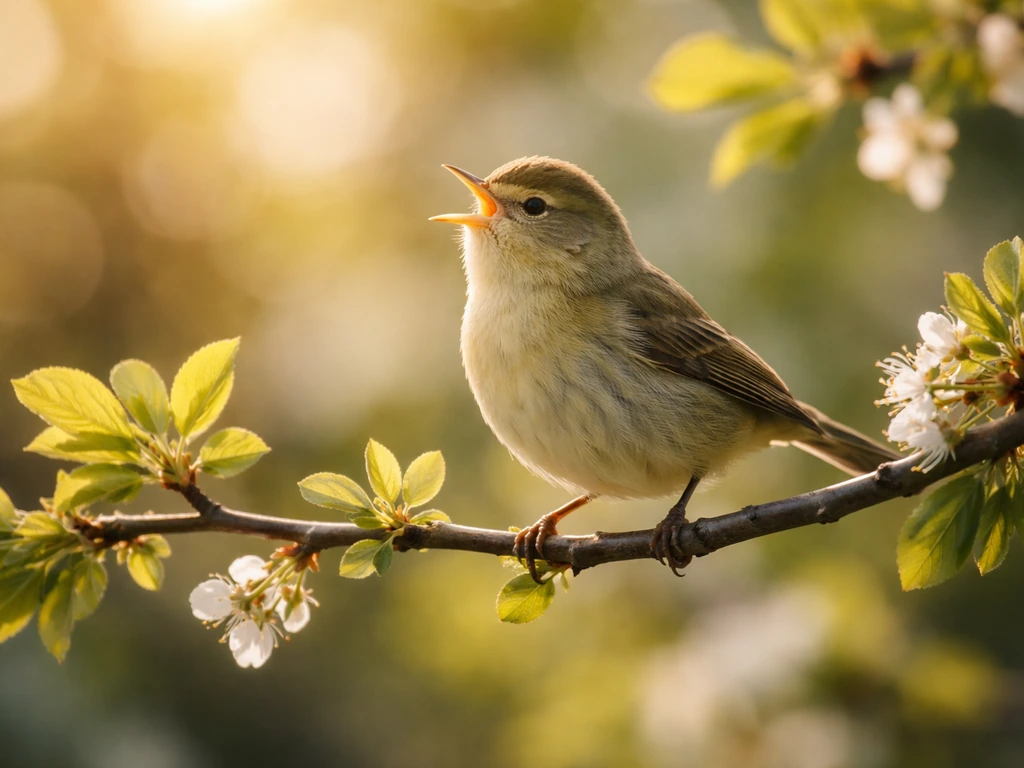
The whippoorwill carries one of the most spiritually loaded voices in the natural world. Most people never see one, but they hear it, that relentless, haunting chant pouring out of the dark woods at night, and something in them knows it means something. Across Native American traditions, Southern American folklore, and modern spiritual practice, the whippoorwill is widely understood as a message-bearer, a threshold bird that lives at the edge of the visible world and the unseen one. If you've had an encounter, whether you heard the call, spotted one in daylight, or found one injured near your home, this guide will help you figure out what it might mean and what to do next.
Whippoorwill Bird Spiritual Meaning: What It Means and What to Do

Eliza Thornwick
21 Apr 2026
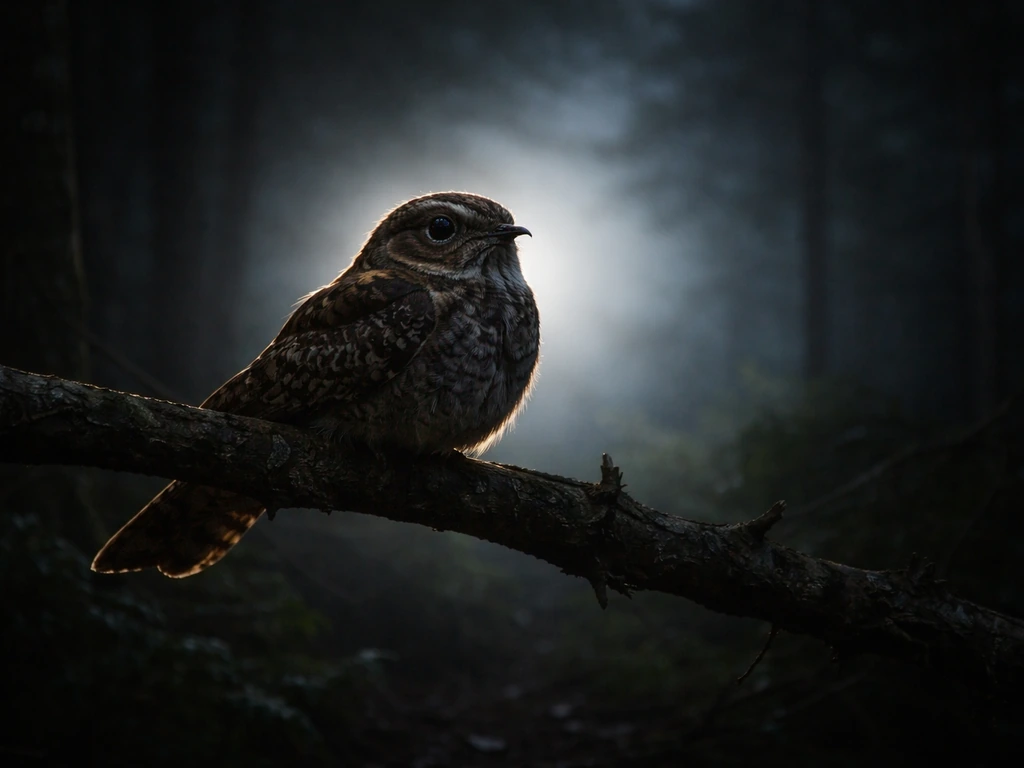
What makes the whippoorwill feel like a messenger
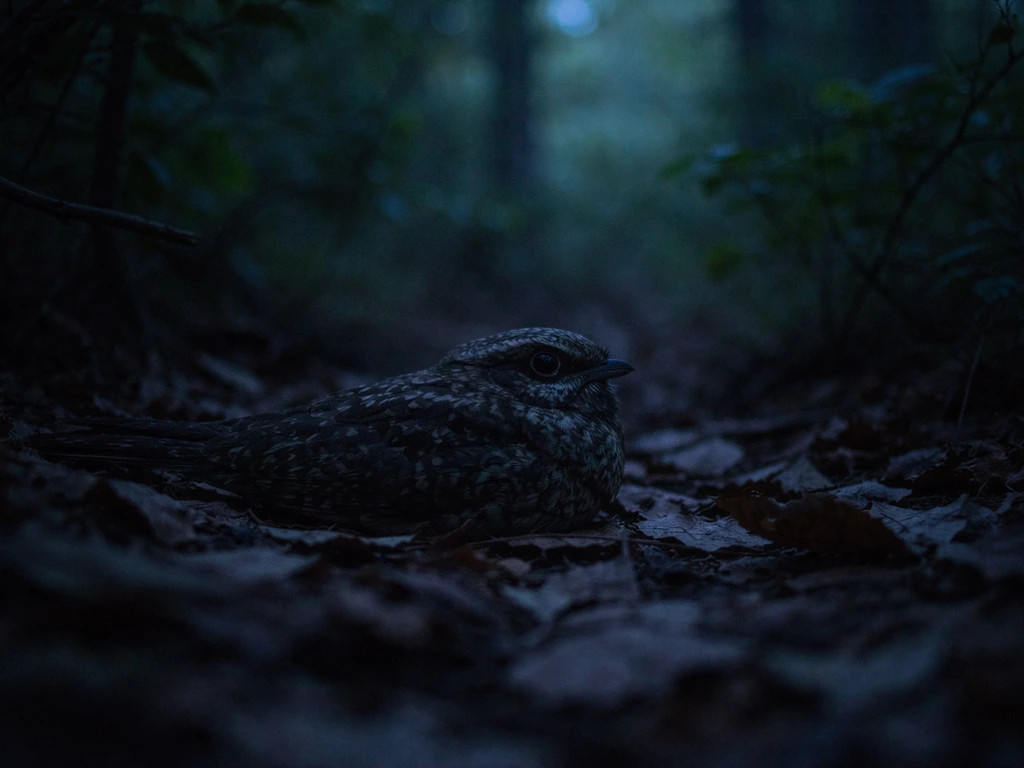
The whippoorwill (eastern whip-poor-will, Antrostomus vociferus) is strictly nocturnal. It forages during twilight and moonlit hours, roosts motionless on the ground or a low branch during the day, and is so well camouflaged in leaf litter and dappled shade that even experienced birdwatchers rarely spot one. Cornell Lab puts it plainly: it's very difficult to see during the day. What that means for you as a spiritual seeker is that the whippoorwill is, almost by definition, a presence you sense before you see, a voice from the darkness rather than a figure you can pin down.
That quality, heard but hidden, loud but invisible, is exactly why so many traditions have loaded the bird with symbolic weight. It shows up at the border between waking and sleeping, between the known world and the mysterious one. Several Native American and Southern folk traditions frame the whippoorwill's song as initiating a threshold crossing, a moment when ordinary reality opens onto something deeper: healing, spiritual insight, or a message from someone who has passed on. Modern New Age frameworks echo that by linking the bird to messages from the spirit world and unseen realms, and to heightened intuition. You don't need to subscribe to any single tradition to feel the resonance. Most people who ask about whippoorwill symbolism report a gut-level sense that the encounter was not random, and that instinct is worth honoring.
The night call and what it's usually trying to say
Hearing a whippoorwill call at night is by far the most common encounter, and it's the one that tends to stop people in their tracks. The call is persistent, sometimes continuing without letup for long stretches, and it arrives in the dark when your defenses are down and your mind is quiet. Spiritually, that timing is significant.
The most widely shared meanings connected to the night call fall into three overlapping themes. The first is stillness and inner listening. The bird's call cuts through background noise and demands your attention. Many spiritual frameworks interpret this as an invitation to pause, stop what you're mentally churning on, and listen to something you've been avoiding. The second theme is transition. Whippoorwills are most vocal during spring and summer evenings, especially during their breeding season when they chant continuously. This seasonal timing, the edge of spring moving into summer, already carries the energy of change, of one chapter closing and another opening. If you're at a crossroads in your life, the call can feel uncannily well-timed. The third theme is connection to what is unseen. Whether you frame that as ancestors, spirit guides, the unconscious mind, or simply your own deep intuition, the whippoorwill's voice from the dark has long been understood as a signal that something invisible is trying to get your attention. If you’re curious about a yellow warbler and its spiritual meaning, look for themes of communication, bright awareness, and heartfelt guidance yellow warbler bird spiritual meaning.
One important nuance: older folklore in some Native American and Appalachian traditions associated the whippoorwill's call with death, sometimes as an omen, sometimes as a soul-carrier. It's worth knowing that framing exists, but it's also worth understanding where it comes from. Scholars and naturalists point out that these associations often reflect historical human fear of the night and of the unknown rather than anything inherent in the bird. In most contemporary spiritual practice, the whippoorwill's call is read not as a death threat but as a reminder of life's impermanence, a nudge to pay attention to what matters before time passes. That's a very different energy, and a more useful one to work with.
Seeing a whippoorwill in daylight
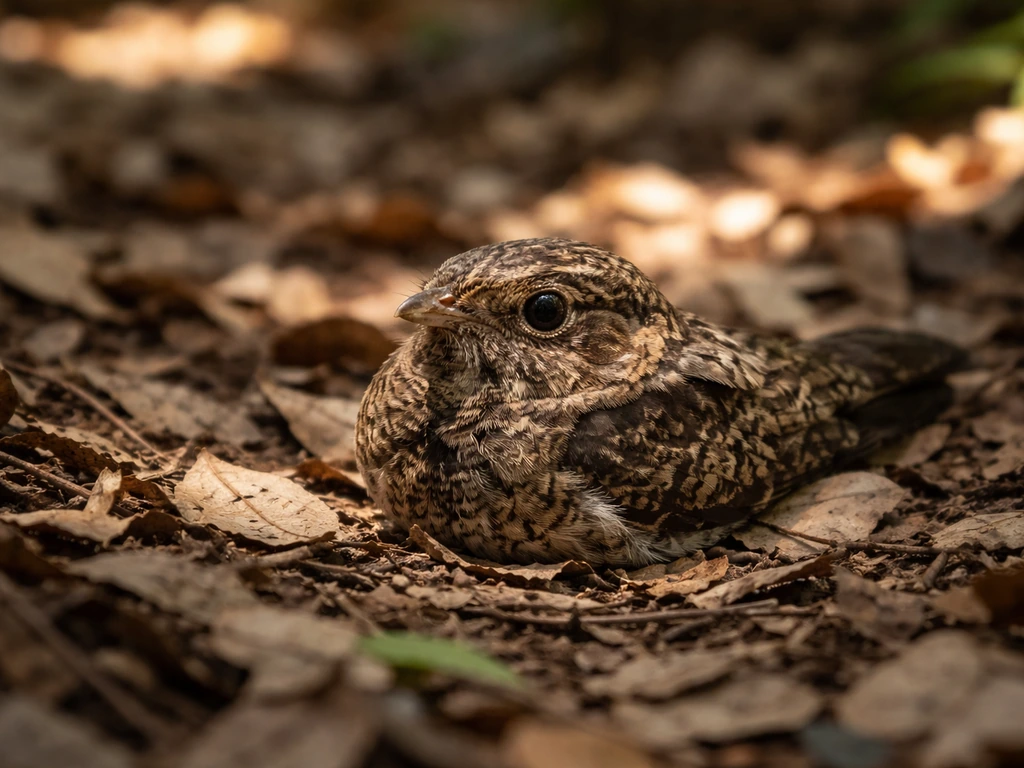
If you actually see a whippoorwill during the day, that's genuinely rare. The bird's camouflage is remarkable. It roosts on the ground under shaded cover or on a low branch, sitting motionless, and blends so completely into its surroundings that most people walk right past one without ever knowing it was there. A daytime sighting usually means one of two things: either you stumbled into the bird's roosting spot and came close enough to flush it, or the bird is stressed or unwell (more on that in the injury section below).
Spiritually, seeing something that is supposed to stay hidden carries its own meaning. Several traditions associate the sudden revelation of a hidden thing with the uncovering of a truth you've been keeping from yourself, or with a secret that is about to come to light. If a whippoorwill reveals itself to you in broad daylight, the reflection question to sit with is: what have I been hiding, either from others or from myself, and is it time for that to change? The encounter can also be read as a sign of unusual clarity, that your perceptual awareness is sharp right now, and you're positioned to see what others miss.
Specific encounter types and what they suggest
The bird flew close to you or circled you
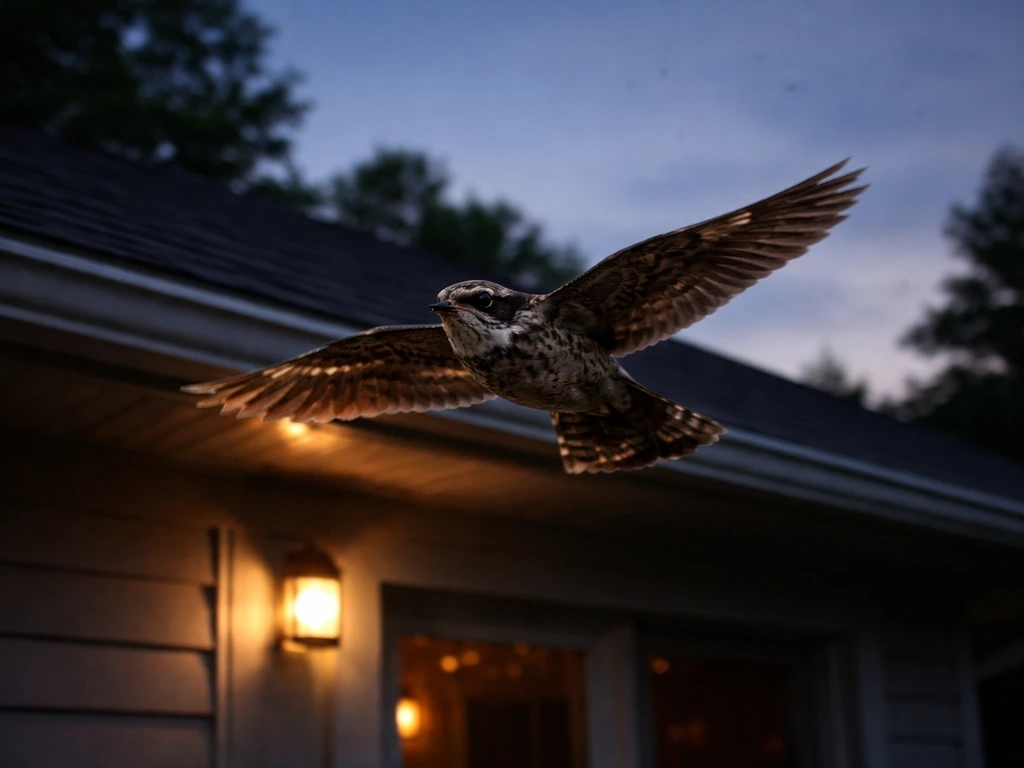
A whippoorwill flying near you, especially at dusk or in low light, often indicates you've walked through or near its territory. Because these birds are aerial insectivores, they sometimes swoop close to people simply because human activity stirs up insects. That said, in spiritual terms, a bird that enters your personal space is broadly understood as a direct, personal message rather than a background sign. The closeness amplifies the invitation to pay attention. Ask yourself what was on your mind at the exact moment the bird came near. That mental or emotional content is often the thread to pull.
Tapping on your window or returning repeatedly
A whippoorwill tapping at a window or repeatedly returning to the same spot near glass is most likely reacting to its own reflection, mistaking it for a rival bird during breeding season. Birds simply cannot see glass as a barrier; they fly toward what looks like open sky or habitat reflected in the surface. On a practical level, this is a genuine hazard. The USFWS recommends closing curtains or blinds at night to reduce light spill outward and make the glass more visible to birds. Breaking up the reflection with window film, screens, or visual deterrents on the outside of the glass is equally effective.
Spiritually, the image of a bird repeatedly confronting its own reflection is striking. In many symbolic traditions, this is read as a mirror message: something in your current situation is looping because you're confronting a version of yourself you haven't fully recognized yet. The bird keeps coming back to fight what is actually itself. It's worth sitting with the question of where in your life you might be doing the same.
Landing on or very near you
A whippoorwill landing on or extremely close to you is among the rarest encounters possible, given how secretive and camouflaged these birds are. If it happens, most spiritual traditions would treat it as a high-intensity sign: a direct, unmistakable contact. Themes of ancestral communication, a significant transition, and a call to trust your intuition above all else are the most common interpretations. The bird choosing you, or appearing to, when it goes out of its way to avoid humans in every other circumstance, carries the symbolic weight of something genuinely unusual breaking through into your awareness.
Finding a dead, injured, or stranded whippoorwill
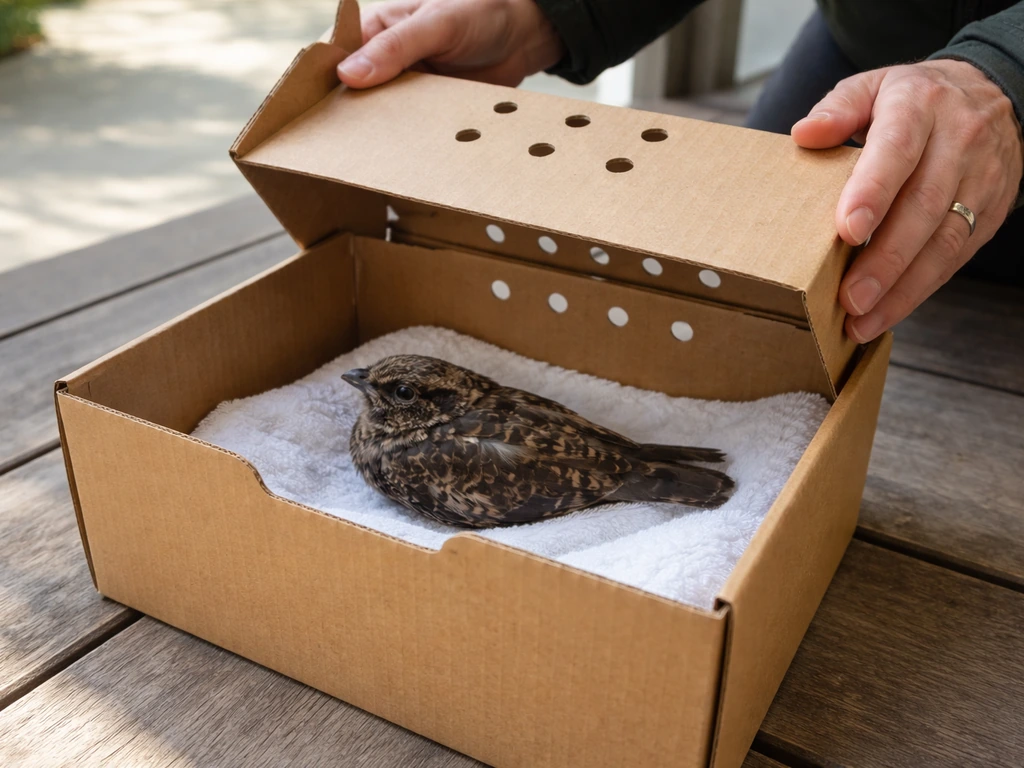
Let's start with the practical side, because this is where action matters most. If you find a whippoorwill that has hit a window, is sitting motionless on the ground in an exposed spot, or appears injured, the first thing to do is blank" rel="noopener noreferrer">contact a licensed wildlife rehabilitator. Under U.S. federal law (the Good Samaritan provision at 50 CFR 21.31(a)), you are allowed to take temporary possession of a sick, injured, or orphaned migratory bird to get it to a rehabber, but that's as far as your legal and practical role extends. Do not offer food or water until a rehabber instructs you to do so, as feeding the wrong thing can cause serious harm. Gently place the bird in a small cardboard box with ventilation holes, keep it in a dark, quiet place away from pets and children, and call your local wildlife rehabilitation center immediately. Wildlife rehab centers like Greenwood Wildlife Rehabilitation Center recommend placing a struck bird in a paper bag or ventilated box and keeping it in a dark, quiet place away from pets or predators until you can get help blank" rel="noopener noreferrer">keep it in a dark, quiet place away from pets and children. Audubon and the USFWS both emphasize that window-strike injuries are often internal and not obvious to the eye, so a bird that looks okay may still need expert care.
On the spiritual side, finding a dead or seriously injured whippoorwill does not automatically mean something terrible is coming for you. If you are curious about other birds that carry symbolic themes, learning the yellow warbler bird spiritual meaning can add another layer to your overall interpretation. If you're curious about the warbler bird spiritual meaning, exploring that symbolism can deepen how you interpret the message you received. I want to be direct about that, because the old death-omen folklore can trigger real anxiety. A dead bird near your home most often signals an ending of some kind: a relationship, a belief system, a phase of life, or an old version of yourself that no longer serves you. That kind of ending is not a punishment. It's part of the cycle. The whippoorwill, as a threshold bird, is an especially apt symbol for that passage. Acknowledge what might be completing in your life, sit with it honestly, and focus on what needs to be released rather than on fear of what comes next. Other bird symbolism traditions, like those associated with the widow bird or white birds, similarly frame endings as openings rather than simply losses. The widow bird spiritual meaning also treats endings as a transition, reminding you that support and insight can follow even after loss. If you're also curious about the white bird spiritual meaning, that symbolism often aligns with themes of endings and openings, guidance, and heightened intuition.
Context matters: season, habitat, and time of night
Not every whippoorwill encounter has the same spiritual weight, and paying attention to context helps you interpret it more accurately. Here's a framework for reading the situational details.
| Context | What it adds to the meaning |
|---|---|
| Spring/early summer | Breeding season; themes of new beginnings, creative energy, and fertility are strongest. The bird's call is most intense and continuous during this period. |
| Late summer/fall migration | Migration toward the Gulf Coast and wintering grounds; themes of transition, letting go, and following your own path toward what nourishes you. |
| Deep night (post-midnight) | Traditionally the hour associated with the veil between worlds being thinnest. A call at 2 or 3 a.m. carries stronger ancestral or spiritual-contact symbolism. |
| Just after dusk / twilight | The liminal threshold between day and night; themes of moving from the known into the unknown, making a decision, or stepping into a new chapter. |
| Dry woodland or forest edge habitat | The whippoorwill's natural home; encountering one in its own territory is considered more significant than a bird that has wandered out of place. |
| Near open fields or meadow edges | Suggests themes of openness, exposure, and readiness to move into wider space, spiritually or practically. |
The direction the call seems to come from matters to some traditions too. A call from the east is associated with new beginnings and illumination; from the west, with endings and wisdom; from the north, with endurance and the ancestors; from the south, with warmth, growth, and community. None of these are rules, but they can be useful handles if the directional quality of the experience felt significant to you.
Turning the encounter into something useful
The point of paying attention to a sign is not just to decode it but to let it shift something in how you move through your life. Here are the reflection questions I'd suggest sitting with after a whippoorwill encounter. Write them in a journal if that's your practice, or just hold them in your mind as you go about your day.
- What in my life right now feels like it exists in the dark, unexamined or unspoken? What would it mean to bring it into the light?
- Am I in a period of transition? If so, what am I holding onto that I could safely release?
- Whose voice, living or passed on, do I feel like I haven't truly listened to recently?
- Where in my life am I fighting my own reflection, circling the same situation without recognizing that the obstacle is a version of me?
- What would it look like to trust my intuition completely for the next 30 days, even when it doesn't make logical sense?
A simple journaling practice
For three nights after a significant whippoorwill encounter, spend five minutes before bed writing down two things: the clearest thought or image that came to you in the moments just before falling asleep, and any memory or person that surfaced unexpectedly during the day. Don't analyze it yet. Just collect it. After three nights, read back through your notes and look for a pattern. Threshold experiences like a whippoorwill encounter often kick loose something that's been waiting just below the surface, and giving it space to appear in writing is one of the most practical ways to receive the message.
Protection and clearing practices
If the encounter felt heavy, especially if it involved a dead bird or a call at an hour that left you unsettled, a clearing practice can help you process and move on. This doesn't need to be elaborate. Standing outside in the morning light, breathing slowly, and consciously releasing whatever fear or unease you're carrying is genuinely effective. Some people burn dried herbs like sage or cedar in their space. Others use sound, a singing bowl, a bell, or even playing music with open windows to shift the energy of a room. The goal is not to undo the message but to clear the emotional static so you can receive it clearly rather than through a filter of anxiety.
Your action plan after a whippoorwill encounter
- Identify the encounter type: heard the call, saw it in daylight, flew near you, window tapping, landing close, or found dead/injured.
- Note the context: time of night, season, habitat, and what was on your mind in the moment.
- If the bird is injured or dead and needs help, contact a licensed wildlife rehabilitator before doing anything else. Do not offer food or water.
- If the bird is tapping or returning to a window, reduce light spill by closing blinds at night and add visual deterrents to the outside of the glass.
- Sit with the reflection questions above and write down whatever surfaces, without editing.
- For three nights, keep a short journal tracking pre-sleep thoughts and unexpected memories or emotions during the day.
- If the encounter felt heavy or anxious, do a morning clearing practice: light, breath, and a conscious intention to receive the message without fear.
- Revisit your journal after three days and look for the pattern the encounter was pointing you toward.
FAQ
What should I do spiritually right after hearing a whippoorwill call at night, besides journaling or reflecting?
Take a 60 to 90 second “listening pause” before you interpret anything. Sit quietly, note the emotion you feel first (calm, dread, curiosity), then make one small choice the next day that matches that emotion, for example, saying what you have been avoiding, or setting a boundary with your schedule.
If I hear a whippoorwill more than once in the same night, does that intensify the meaning?
Often, repeated calls are read as “reinforcement” rather than escalating doom or guaranteed messages. Treat the first call as the invitation, and the second or third as confirmation to follow through on one practical step, like finishing a conversation, starting a plan, or doing the clearing routine you would usually postpone.
How can I tell the difference between a meaningful spiritual sign and a stressful misinterpretation?
Use a simple check: if your interpretation creates action that helps you feel clearer within 24 hours, it is likely constructive. If it makes you catastrophize, replay worst-case scenarios, or avoid important responsibilities, pause and reframe the message around impermanence and attention, not fear.
What if the call happens during a time I normally feel emotionally vulnerable, like during grief or an anxiety spiral?
Anchor the experience to compassion instead of certainty. Read the sign as a prompt to care for yourself (rest, hydration, talk to someone) and delay major decisions until you have slept. A spiritual message should increase steadiness, not remove your safety.
If I saw a whippoorwill in daylight but did not flush it or it did not look injured, how should I interpret that?
A daytime reveal can still be meaningful, but in that scenario it is also worth checking practical causes like weather, habitat disturbance, or you being near its roost. Spiritually, treat it as “hidden truth becoming visible,” then ask what in your life feels overdue for honest review rather than assuming the bird is a direct warning.
What should I do if I find a whippoorwill and it looks fine, but it is acting strangely (on the ground, uncoordinated, or unusually still)?
Treat “unusual behavior” as a possible injury. Keep distance, reduce stress, and contact a licensed wildlife rehabilitator for guidance even if there is no visible bleeding. Internal trauma from window strikes can look outwardly normal.
Can I move a whippoorwill myself if it is in immediate danger, like near traffic or cats?
Yes, temporarily, under the federal Good Samaritan provision, but only to the extent needed to prevent harm and to get it to a rehabilitator quickly. Use a ventilated box or container, keep it dark and quiet, and do not feed or give water unless the rehabber instructs you.
How long should I watch or wait before contacting a rehabber?
If the bird is on the ground exposed, repeatedly returning to a spot, or shows weakness or impaired movement, contact rehab immediately rather than waiting for “overnight recovery.” If it is clearly alert and able to fly away on its own in a safe spot, you can monitor from a distance without intervention.
Does the direction of the call (east, west, north, south) matter, or is it just symbolic?
It can be used as an optional lens, not a rule. If you did not feel a directional pull strongly in the moment, skip it and focus on the themes that were most emotionally present, like inner listening, transition, or noticing what feels unseen in your life.
If a whippoorwill keeps hitting my window or tapping glass, should I still treat it as a spiritual sign?
You can, but prioritize the real-world cause. Window strikes and reflection behavior are mechanical, especially during breeding season. Make the glass visible quickly (close curtains, add exterior deterrents, reduce nighttime light), then after the issue stops you can reflect on any personal “mirror message” connection.
If the encounter felt heavy, what is a quick clearing practice I can do without herbs or special tools?
Try a grounded reset: stand outside (or by an open window), place both feet firmly, inhale for four counts, exhale for six counts, and on each exhale say silently, “I release what is not mine to carry.” Repeat for three minutes, then do one calming, physical task (shower, tidy one small area).
What should I avoid doing after a whippoorwill encounter, spiritually or practically?
Avoid treating it as a guaranteed prophecy. Don’t make drastic life changes based on one night’s meaning alone. Practically, don’t feed the bird, don’t attempt to “heal” it yourself, and don’t handle it longer than necessary if you do need to move it to safety.
Next Article
Warbler Bird Spiritual Meaning: Messages, Omens, and How to Interpret It
Interpret warbler bird spiritual meaning: messages, omens, and how to read sighting timing, behavior, and feelings for g