
If you've had an encounter with a widow bird and felt like it meant something, you're probably right to pause and pay attention. Vidua species are brood-parasitic, laying eggs in the nests of particular weaver finch species so their eggs can incubate and develop there brood-parasitic, laying eggs in the nests of weaver finches.
Widow Bird Spiritual Meaning: Signs, Themes, and What to Do
Eliza Thornwick
24 Apr 2026
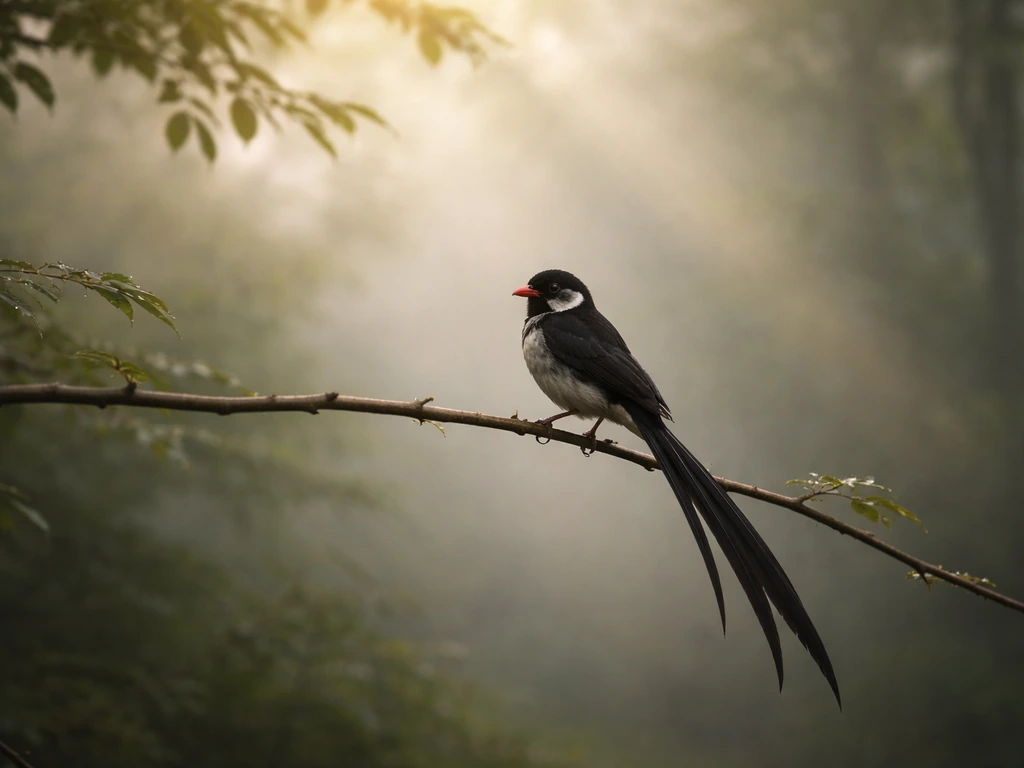
The widow bird carries some of the most layered spiritual symbolism in the bird world, centering on themes of grief, transformation, loyalty, and the kind of letting go that actually leads somewhere new. Whether you saw one fly past, had one tap at your window, or keep crossing paths with the same striking black bird with an impossibly long tail, the message is usually less about loss and more about what comes after it.
First: Are You Sure It's a Widow Bird?
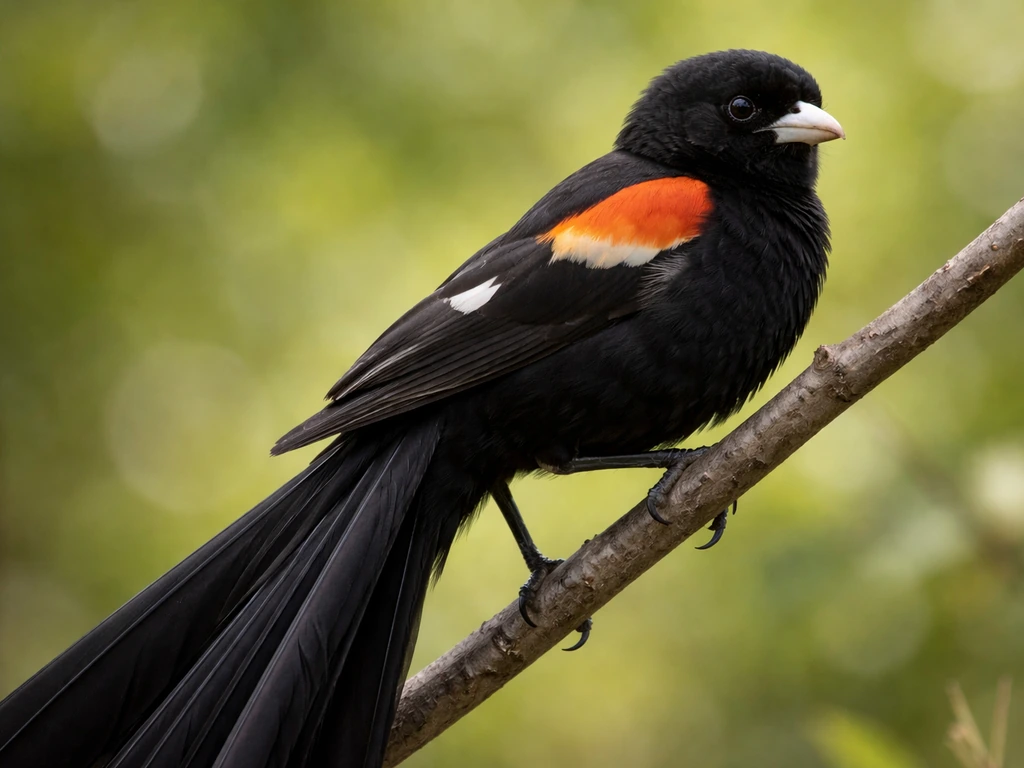
This matters more than it might seem, because "widow bird" is used in a few different ways. In the strictest sense, widow birds belong to the family Viduidae, a group of African birds whose Latin genus name, Vidua, literally means "widow." The name came from the males' dramatic black plumage, which historically evoked the image of a widow dressed in mourning. The most commonly spotted members of this group are the long-tailed widowbird and the pin-tailed whydah, and both are visually unmistakable when the males are in breeding plumage.
A breeding male long-tailed widowbird is almost entirely black with vivid orange and white shoulder patches and a bluish-white bill. Its tail is extraordinarily long and wide, sometimes more than twice the length of its body. The pin-tailed whydah male has those same pennant-like, trailing tail feathers, with dark brown wings marked by white patches and clean white underparts. Outside of breeding season, both males look much plainer and streakier, similar to sparrows, which can cause confusion. Non-breeding females of both species are brownish and streaked.
In some spiritual and folk traditions, especially in parts of Africa, the Caribbean, and diaspora communities, "widow bird" is also used more loosely as a symbolic label for any dark or solitary-seeming bird that appears during times of grief or transition. If you're working with a dream image or a piece of folklore rather than a literal bird, the symbolism still applies, but the identification question doesn't. Just know which situation you're in before drawing conclusions.
The Core Spiritual Meaning: Endings That Open Into Something New
The widow bird's spiritual symbolism is rooted in the very thing that named it: widowhood. But widowhood, in its spiritual reading, is rarely just about death. It's about the experience of continuing after profound loss, of carrying something precious while also being forced to evolve. The widow archetype across cultures represents grief, yes, but also fierce devotion, resilience, and the particular kind of strength that only comes from having your life rearranged by something outside your control.
When a widow bird appears in your life, it often signals that you are in, or approaching, a threshold moment. Something is ending or has ended, and the bird's presence is a nudge to honor that ending fully rather than rush past it. This might be the literal loss of a person, but it can just as easily be the end of a relationship, a career chapter, a belief system, or a version of yourself you've outgrown. The widow bird doesn't come to deliver bad news. It comes to say: you are allowed to grieve this, and there is ground on the other side.
The transformation thread runs just as strong as the grief thread. Notice that in nature, the male widow bird's dramatic tail, that sweeping, almost theatrical plumage, is blank" rel="noopener noreferrer">grown specifically during breeding season and then shed. It is literally a seasonal transformation, a spectacular display followed by a return to something quieter and unassuming. Spiritually, this maps onto cycles of visibility, vulnerability, and renewal. You don't stay in the dramatic plumage forever. You grow it, use it, and let it go.
Loyalty and devotion are the other core threads. The widow image carries an undertone of remaining true to something or someone even after they are gone. If you're in a season of grief, a widow bird encounter can feel like validation: your loyalty and love are not foolish. They are sacred. The spiritual message is often to honor the bond while also allowing yourself to move forward.
What the Encounter Type Actually Tells You
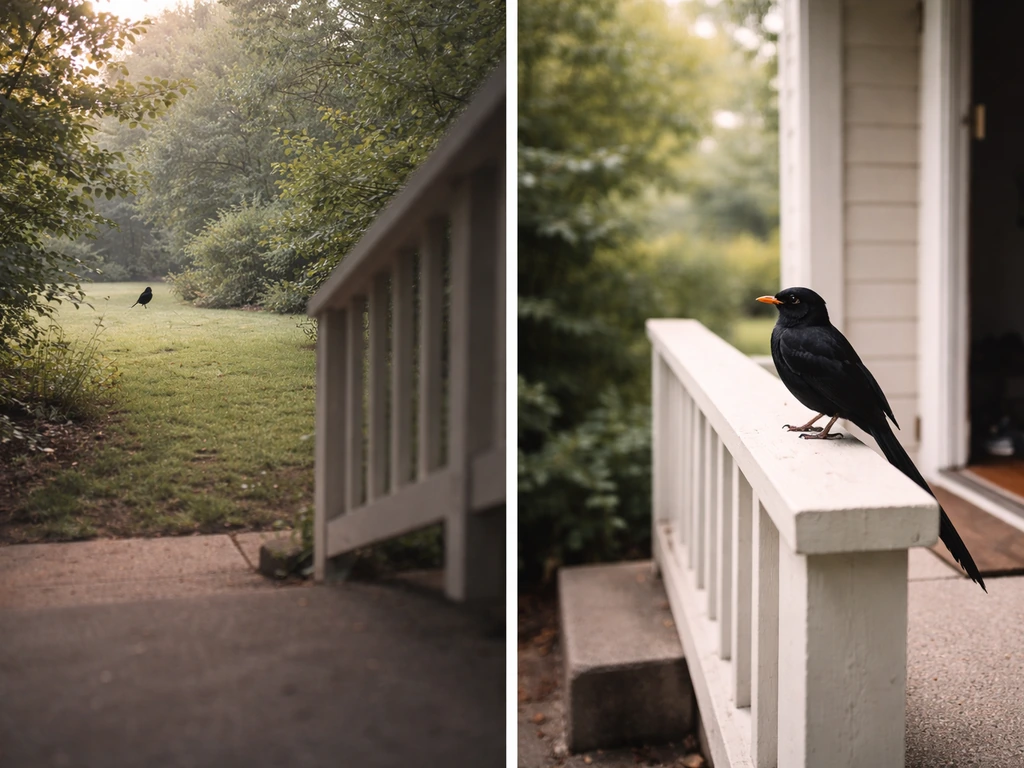
The way the widow bird showed up matters a lot in interpretation. A quick sighting carries a different weight than a bird that lands near you, follows you, or keeps appearing at the same spot. Here's how to read the most common encounter types.
A Single Sighting
A brief sighting, especially when the bird catches your attention in a striking or unusual way, is generally read as a gentle reminder or check-in. Something in your life may need acknowledgment. Pay attention to what you were thinking about when you saw it, because that context is often the message. Were you worrying about a decision? Grieving something quietly? The widow bird showing up in that moment is less a warning and more a mirror.
The Bird Landing Near You or Following You
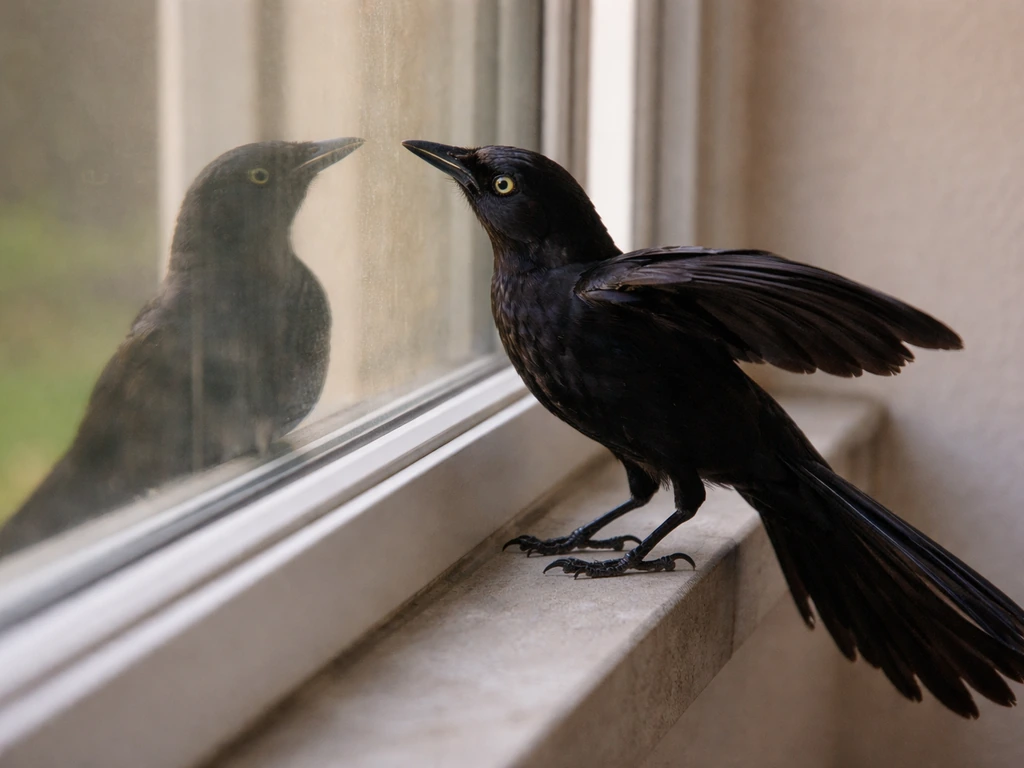
When a widow bird lands unusually close or seems to follow your path, the spiritual community tends to interpret this as a more direct communication, like the message has been upgraded from a text to a phone call. This kind of encounter often points to a specific area of your life that needs your conscious attention: a relationship that's ended but hasn't been released, a decision you've been avoiding, or a grief that hasn't had space to be expressed. It can also be interpreted as the presence of someone who has passed, reaching toward you through the natural world.
Tapping or Striking at Your Window
Window tapping by any bird has a rich spiritual tradition attached to it, and with a widow bird, the symbolism layers especially deeply. From a purely practical standpoint, birds tap windows because they see their reflection and interpret it as a rival bird encroaching on their territory. They are literally fighting their own image. Spiritually, that behavior maps onto an invitation for you to examine where you might be in conflict with your own reflection, your own identity, choices, or shadow self. Many traditions read window tapping as a sign that a message is being delivered, that change is coming, or that something on the "other side" of a threshold is asking for your attention.
If a widow bird taps repeatedly at your window, the most common spiritual interpretation is that a significant transition is imminent or that you're being called to stop avoiding something you already know. It's not a death omen. It's more like a persistent knock from your own higher self or from an ancestor saying: wake up, it's time.
Nesting Near Your Home
Nesting behavior is almost universally a positive sign in bird symbolism, and widow birds are no exception. A widow bird choosing to nest near your home can be read as a sign that you are building something of lasting value, that transformation is not just happening to you but through you, and that the home or space you occupy is being blessed with the energy of resilience and renewal. It can also signal a new chapter of life taking root, particularly after a period of loss or upheaval.
Appearing at a Significant Date or Time
If the encounter happened on an anniversary, a birthday, or close to a date connected to someone who has passed, most people find that timing impossible to dismiss as coincidence, and many spiritual traditions would agree with them. In those moments, the widow bird's presence is often interpreted as a message of connection from the other side, a sign that love outlasts physical presence, and that the departed are aware of the living.
When It Keeps Happening: Recurring Encounters
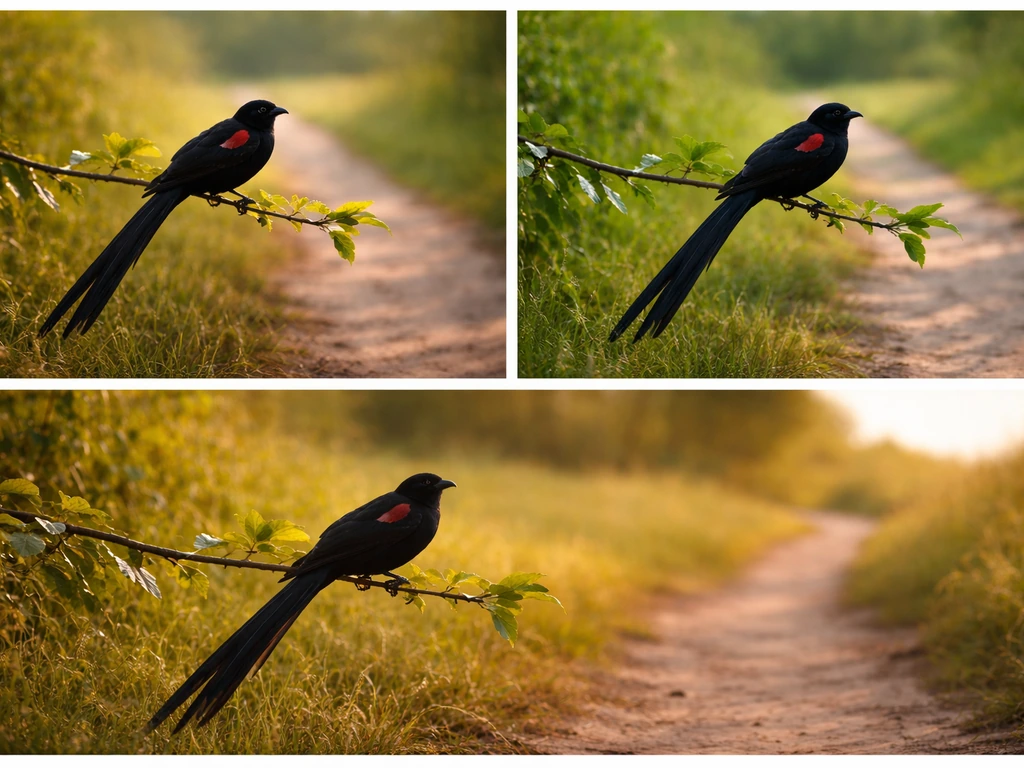
A single encounter can be a nudge. Recurring encounters, especially if they feel charged or meaningful rather than coincidental, are generally read as something more urgent. The widow bird may be showing up repeatedly because the message hasn't landed yet, or because the transformation it's signaling is accelerating. Ask yourself honestly: is there something I keep putting off? A grief I haven't let myself feel? A chapter I'm refusing to close? Recurring widow bird appearances often correlate with moments when life is waiting for you to take a step you've been hesitant to take.
Intense or escalating encounters, like a bird that begins appearing daily or starts behaving very unusually around you specifically, can also be an invitation to deepen your spiritual practice. Some people in this situation find it useful to start a dedicated journal tracking when the bird appears, what they were doing or thinking, and what shifts in their life in the days following. Patterns become visible quickly and are often illuminating.
If the Encounter Involves Death, Remains, or Distress
Finding a dead widow bird, or a widow bird that has been injured (often from a window strike), adds another layer to the symbolism but doesn't automatically make the message dark. In many spiritual traditions, a dead bird represents the completion of a cycle, the formal close of a chapter, or a release of something that was ready to be let go. It can be a profoundly meaningful symbol of an ending that has been fully honored. If you find remains, the spiritual practice is the same as any widow bird encounter: sit with it, ask what is ending in your life, and allow yourself to feel whatever arises.
If the bird is injured rather than dead, and especially if it's a window-strike victim, the practical and spiritual response run in parallel. Practically: don't assume it will recover on its own. Audubon and wildlife veterinary guidance is clear that window-collision birds often need expert care, including medication, from a licensed wildlife rehabilitator. The U.
S. National Park Service also recommends using visual markers like dots or stripes spaced no more than 2 inches apart to help reduce bird collisions with glass [window-collision birds often need expert care](https://www. nps. gov/articles/000/bird-safe-glass.
htm). Contact a local wildlife rescue. Spiritually, a wounded bird asking for help is sometimes interpreted as a call for you to pay attention to where you yourself need healing, or where you have been tending to others while ignoring your own wounds.
One more thing worth naming directly: if this encounter is happening in the context of real, active grief, especially the recent loss of someone you loved, and the symbolism is bringing up feelings of despair or overwhelm, please don't navigate that alone. Bird symbolism can be a beautiful way to feel connected to what was lost, but it doesn't replace human support. Grief counseling, trusted community, or in a crisis moment, services like NHS 24 or emergency services, are there for exactly this. Spiritual meaning and practical care are not opposites.
What to Actually Do Right Now

Spiritual encounters with birds are most useful when they move you toward something rather than leaving you spinning in interpretation. Here are concrete steps to take today.
- Ground yourself first. Before you analyze anything, spend five minutes outside (or near a window), breathe slowly, and notice what you physically feel. Encounters lose their signal in anxious overthinking. Start from calm.
- Write down the encounter in as much detail as you can. Where were you? What were you doing or thinking just before? What did the bird do exactly, and for how long? What was your gut feeling in the moment? Don't interpret yet, just record.
- Ask the core widow bird questions in your journal: What in my life is ending or needs to end? Is there a grief I haven't fully acknowledged? Where am I being called to transform? What am I devoted to that might need to be released or honored differently?
- Choose one action from whatever surfaces. It doesn't have to be big. It might be writing a letter you never send, having a conversation you've been postponing, or simply giving yourself permission to grieve something out loud for the first time.
- Create a small ritual if that feels right. Light a candle, go to a meaningful outdoor spot, or hold an object connected to what you're processing. Widow bird energy responds well to acts of conscious honoring, marking endings with intention rather than letting them blur into the past unacknowledged.
- If the encounter involved a dead or injured bird, handle it with care (gloves for remains, wildlife rehabber for injured birds) and consider that act of care as part of the spiritual practice itself.
How Your Tradition and Life Context Shape the Meaning
Here's what I'd caution against: taking any single spiritual interpretation as the definitive one. Widow bird symbolism is particularly sensitive to cultural and personal context, and the same encounter can carry genuinely different meanings depending on where you're coming from.
| Tradition / Context | How Widow Bird Tends to Be Read | What to Watch For |
|---|---|---|
| African spiritual traditions | Ancestral messenger; connection between living and departed; protection during grief | Pay attention to timing relative to deaths or anniversaries in your family |
| Christian / Western folk | Symbol of devotion and faith during suffering; reminder of resurrection after loss | Framing is often less about endings and more about enduring faithfully through them |
| Native American traditions | Varies by nation; generally, black birds carry messages from spirit world; transformation and shadow work | Not all traditions assign this specific bird a role; look to your own lineage first |
| Celtic / European folk | Dark birds near the home can signal change; mourning symbolism is common but not always negative | Context and behavior of the bird matters more than color alone in Celtic readings |
| Personal grief context | If you are actively grieving, the encounter may be primarily about that grief, not a broader life metaphor | Avoid forcing the encounter into a larger spiritual framework if the immediate emotional message is obvious |
What to avoid assuming: don't assume the widow bird is predicting a death. That's the most common fear people bring to this encounter, and it's also the least supported reading across traditions. The widow bird is far more associated with processing loss that has already occurred, or navigating a transition already underway, than with foretelling something new and terrible. Don't assume the message is urgent or negative just because the symbolism involves grief. And don't assume the meaning is universal: your specific life circumstances, what you were feeling, and what tradition you feel connected to all matter more than any generalized interpretation.
If you find yourself drawn to exploring related bird symbolism for comparison, birds like the white bird, the whippoorwill, or the warbler each carry their own distinct energies around transformation and spirit communication, and reading them alongside widow bird symbolism can give you a richer picture of what the natural world might be saying to you right now. If you are exploring related symbolism, the warbler bird spiritual meaning can offer another lens on renewal and spirit communication.
A yellow warbler bird spiritual meaning reading can help you compare those themes of renewal and heartfelt transformation to what you're experiencing with the widow bird. If you want another perspective on spirit communication and transformation, you can also look into the whippoorwill bird spiritual meaning. If you're comparing, it's also worth looking into the white bird spiritual meaning, since it can add clarity about purity, healing, and new beginnings.
The widow bird's core invitation is this: don't skip the ending. Whatever is completing itself in your life deserves your full, conscious attention. Grieve it, honor it, mark it. The transformation that follows will be proportional to the depth of attention you bring to what came before. If you want a broader comparison, you can also explore white bird spiritual meaning to see how different birds are read for grief, transformation, and guidance.
FAQ
How can I tell if I truly saw a widow bird versus another dark bird, and does it change the meaning?
Start by separating identification from symbolism. If it was actually a long-tailed widowbird or pin-tailed whydah, the encounter is usually read through the themes in the article. If it was a different dark or solitary-looking bird, treat the message as symbolic only, and anchor your interpretation in what you were experiencing (grief, closure, change) rather than assuming it is “a widow bird message” because of color or mood.
What should I do if I keep seeing a widow bird repeatedly but I am not sure what it is pointing to?
If the encounter felt charged, pick one concrete “ending” to focus on, then one action for “what comes next.” For example, if you keep avoiding a conversation, write the first sentence you need to say, or schedule it, rather than relying on repeated sightings to create closure for you.
Is repeated widow bird window tapping always spiritual, or is there something I should do to prevent injury?
Window-tapping is often read spiritually as a call to pay attention, but you can also treat it practically as a bird behavior and risk check. Reduce hazards by closing blinds or turning off interior lights near windows at night, and if the bird keeps tapping, look for nearby reflective surfaces that may be confusing it.
If I find a dead or injured widow bird, does that mean something bad is coming?
A dead or injured bird generally points to cycle completion or the need for help, but it should not automatically be treated as a prediction. The safer spiritual approach is to ask, “What in my life is ready to be released, and what needs compassionate attention right now?” If you were already in acute grief, prioritize support over interpretation.
What if the meaning I am getting feels scary or overly negative?
If you felt unsettled, avoid “black and white” conclusions. Use a quick reality check: was there a transition already underway (ending a relationship, job change, moving, seasonal shift, anniversaries)? If yes, map the encounter to that, and if no, wait for your next meaningful context before drawing a final conclusion.
How should I interpret different encounter types, like a brief sighting versus a bird landing near me?
Use encounter details as decision aids. A bird that lands close often suggests you need direct action in a specific area, while a brief pass tends to be a gentle reminder. If you can’t act on it immediately, write down one small step you can take within 24 to 72 hours.
Can widow bird spiritual meaning differ depending on cultural or personal beliefs, and how do I apply it respectfully?
Yes, but don’t let the cultural framing override your lived reality. If you resonate with a tradition that treats widow-bird symbolism as spirit communication, you can set an intention to honor the bond and ask for comfort. Still, choose grounded practices (journaling, memorial rituals, reaching out to support) instead of relying only on signs.
How do I use widow bird symbolism in a healthy way when I am grieving someone recently?
If you’re navigating active grief, use the encounter as a bridge to care, not a replacement for it. Choose one supportive step such as contacting a grief counselor, joining a support group, or scheduling check-ins with trusted people, especially if feelings of despair escalate.
What is a practical ritual or action plan I can follow after a widow bird encounter?
Spiritual interpretations become most useful when they produce movement. A simple template is: identify the “ending” you’re tempted to bypass, name the emotion you’ve been suppressing, then select one practical ritual or boundary that supports the release (for instance, clearing a space, writing a goodbye letter, or taking a first step toward a new role).
Next Article
Whippoorwill Bird Spiritual Meaning: What It Means and What to Do
Spiritual meaning of a whippoorwill, from night call to sightings, plus what to do and a calming action checklist.