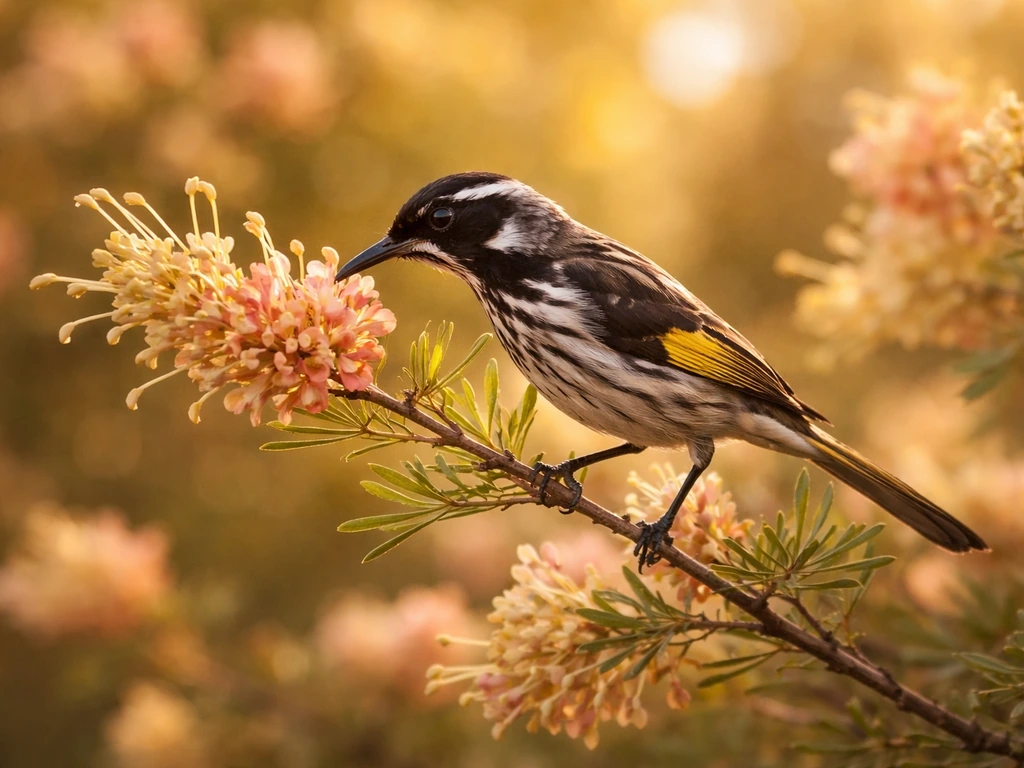
A loerie bird encounter carries themes of vibrancy, creative expression, guidance, and joy. In Southern African spiritual tradition, the loerie (most often the Knysna Turaco or one of its cousins) is seen as a living reminder to trust your instincts, embrace your authentic self, and pay attention to what the universe is nudging you toward right now. That said, the exact message depends heavily on which bird you actually saw, how the encounter unfolded, and what is happening in your life at this moment.
Loerie Bird Spiritual Meaning: What It May Signify and Do Next

Eliza Thornwick
12 May 2026
Which bird are we actually talking about?
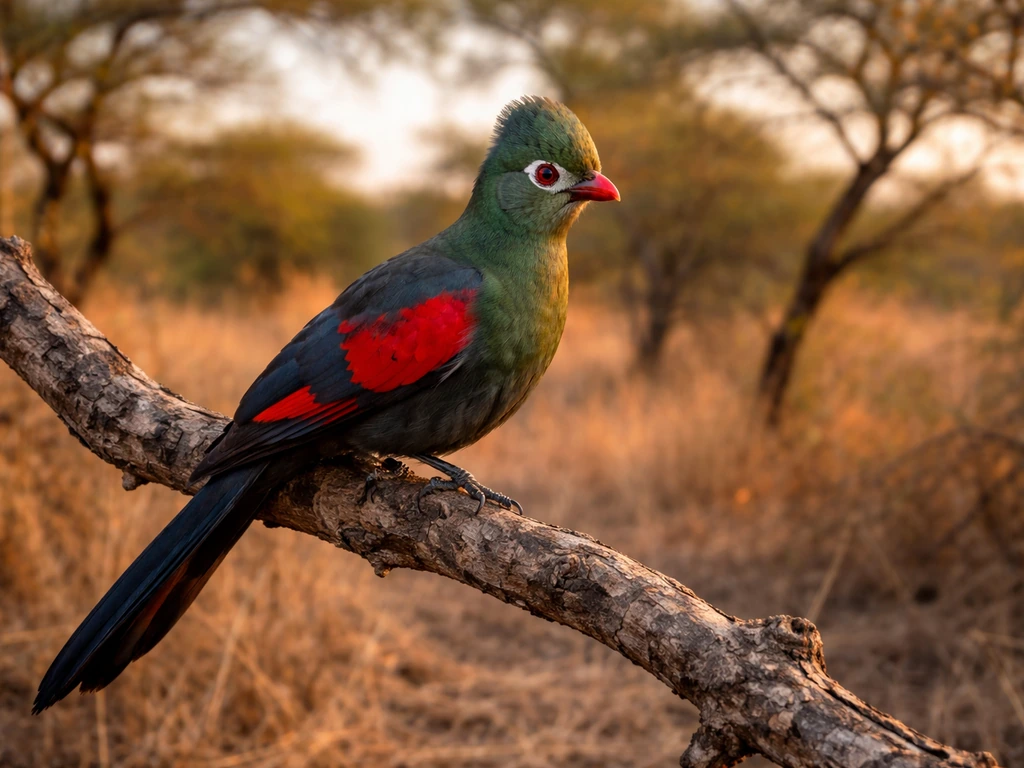
This matters more than most spiritual-meaning articles admit, so let's clear it up first. In Southern Africa, "loerie" (also spelled "lourie") is a broad vernacular name used for several turaco species, not just one bird. The Knysna Turaco (Tauraco corythaix) is the one most people picture: glossy green body, vivid red wing-flash, a neat white-rimmed crest, and a call that cuts through the forest canopy. But the grey go-away-bird is also widely called a "grey loerie" or "grey lourie," and the purple-crested turaco gets the same treatment. These are genuinely different birds with different personalities, habitats, and energies.
Why does the species matter spiritually? Because if you are working with a Knysna loerie, you are engaging with a lush, jewel-coloured forest bird associated with beauty, creative fire, and deep woodland energy. If your "loerie" was a grey go-away-bird, you are dealing with a bird famous for its harsh "g'way" alarm call, historically treated in some traditions as a warning or a signal to reconsider a plan. The messages can point in different directions, so it is worth pausing to confirm which bird you encountered before you anchor yourself to one interpretation.
- Knysna Loerie (Knysna Turaco): vivid green and red, white facial markings, forest habitat, relatively quiet and secretive
- Purple-crested Loerie (Purple-crested Turaco): deep blue-green with a bright purple crest, forest edges and riverine bush, very vocal
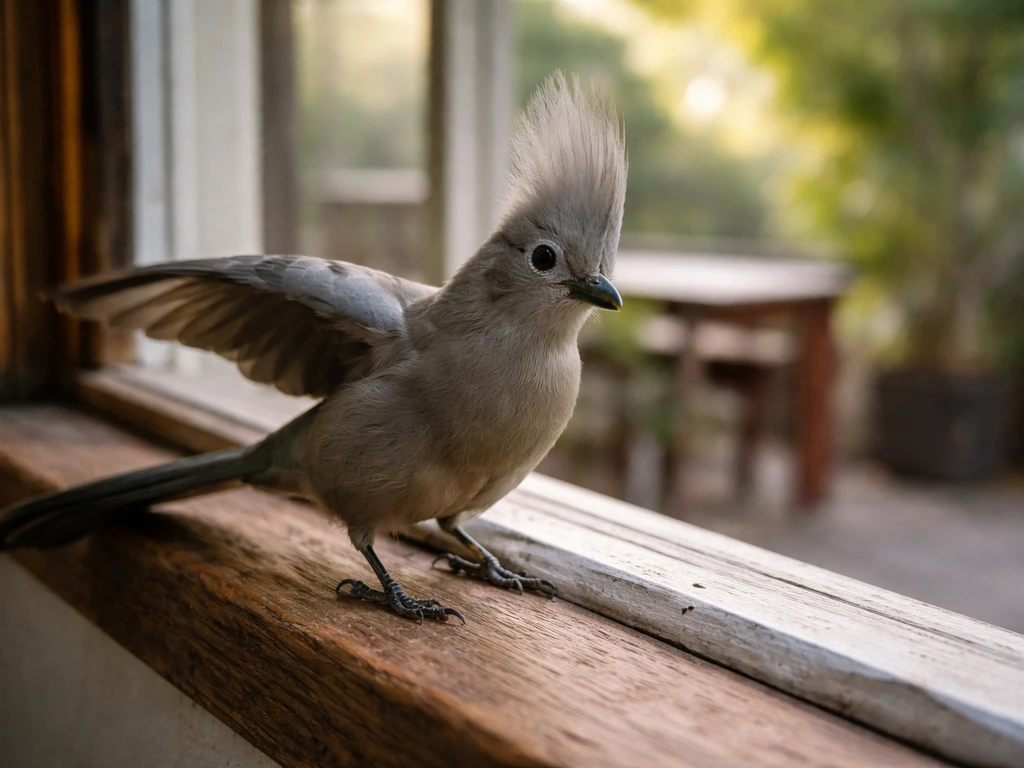
- Grey Loerie (Grey Go-away-bird): dull grey, long tail, open woodland, famous nasal "kweh" or "g'way" call
- Schalow's Turaco and others: similar to Knysna but found further north into East Africa
If you are confident about the species, great. If you are not sure, think about the colour you remember most. Vivid green and red? You are most likely in Knysna loerie territory. Dull grey with a loud complaining call? That is the grey loerie. The rest of this article focuses primarily on the Knysna Turaco and similar colourful loeries, since that is the bird most people associate with spiritual significance in Southern African and general turaco symbolism discussions.
The core spiritual symbolism of the loerie
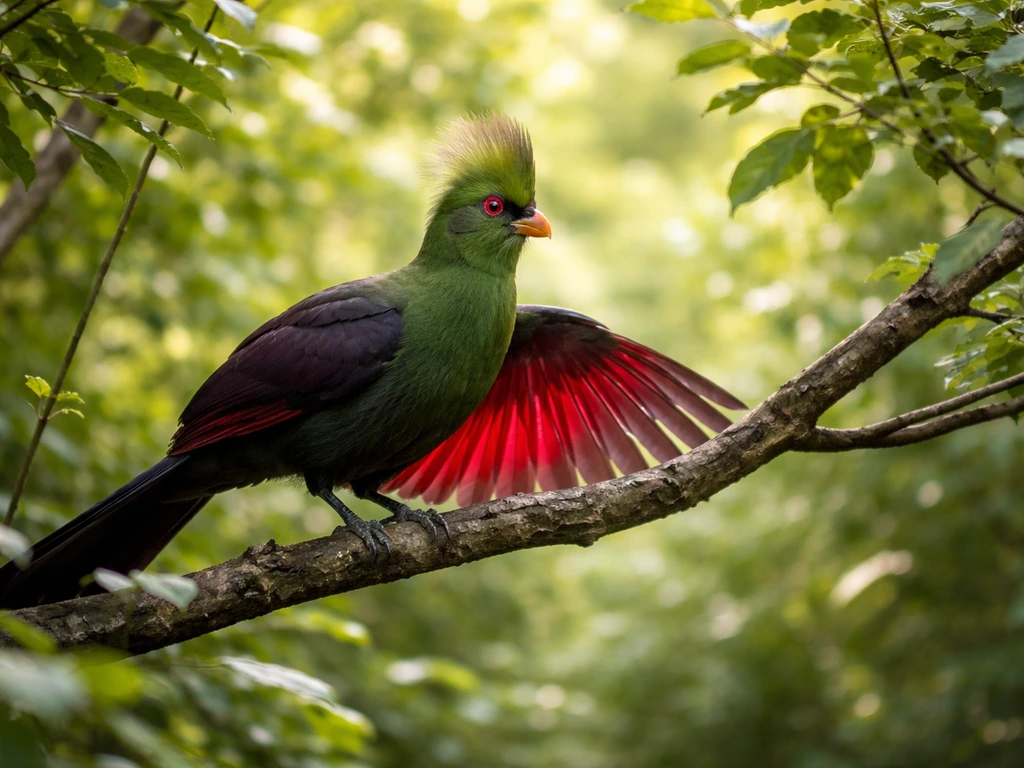
The loerie's spiritual reputation is built largely on how it looks and how it lives. That impossibly vivid plumage, the hidden scarlet in the wing that only blazes when the bird takes flight, the way it moves through dense forest with quiet confidence: all of these qualities have shaped how people across traditions interpret its presence. A project documented by Cultural Survival even linked an "Indigenous Loerie (turaco) bird" explicitly to spiritual significance for a South African community, showing this is not just internet spirituality but something rooted in lived local knowledge. The Oryx study discussed by Cambridge Core reports that people linked turacos to culturally valued qualities and were supportive of biodiversity conservation because of that cultural connection blank" rel="noopener noreferrer">Indigenous Loerie (turaco) bird. Black phoebe bird spiritual meaning is a related option if you are comparing messages from different birds beyond loerie symbolism.
The word "Igwalagwala" in Zulu refers to the loerie, and in some accounts the bird has been treated as a predictor or messenger bird, an animal whose presence marks a moment worth paying attention to. That framing aligns closely with how the bird appears in broader spiritual literature: as a guide or signal, not a random background presence.
| Spiritual Theme | What it Points To | Who It Tends to Speak To |
|---|---|---|
| Joy and vibrancy | A call to step back into colour, pleasure, and delight after a grey period | Those feeling dull, stuck, or emotionally flat |
| Creative expression | Permission to show the hidden "red wing" of your talent or personality | Artists, writers, anyone shrinking their gifts |
| Authentic guidance | Trust your instincts; the path ahead is clearer than it feels | Anyone at a crossroads or second-guessing themselves |
| Protection and blessing | You are watched over; move forward without fear | Those feeling vulnerable or starting something new |
| Abundance and prosperity | Good fortune is nearby; stay open to receiving | Those in financial transition or abundance work |
| Spiritual growth | A deeper awakening or shift in awareness is underway | Those in active spiritual practice or questioning |
None of these themes are fixed rules. Think of them as a starting menu, not a diagnosis. The loerie is offering an invitation, and your job is to notice which theme resonates with where you actually are right now.
How to read the encounter itself
The circumstances of your encounter matter as much as the bird's identity. A loerie sitting quietly in a tree while you take a morning walk carries a different quality than one that repeatedly appears at your window or one you heard calling during a significant conversation. Here is how to break it down.
Seeing vs. hearing
Seeing the bird in full colour, especially if it flashes those red wings, is widely read as a message about visibility and expression: something in your life wants to be seen, or you are being called to stop hiding. If the bird you saw was a lyre bird, its spiritual meaning is often tied to voice, expression, and truthful communication, so look for those themes in your situation lyre bird spiritual meaning. Hearing the loerie without seeing it, which happens often since these birds are notoriously easier to hear than spot, tends to lean toward inner knowing and intuition. The message is there even when the source is not visible. That can be a prompt to listen to your gut on something you have been ignoring.
Timing and location
Pay attention to what you were thinking or feeling the moment the bird appeared. Encounters during a period of decision-making are often interpreted as guidance to move forward with confidence. A loerie near your home, especially in a garden you tend, can carry a protective or blessing energy around family and domestic life. Spotting one during travel or in an unfamiliar place often signals that the path you are on is right, even if it is new territory.
Repeated sightings
Seeing the same bird (or clearly different loeries) multiple times over days or weeks is generally interpreted as an amplified message: the universe is not whispering, it is knocking. Take it seriously. Write down the dates and circumstances of each sighting. Patterns will emerge. That said, be honest with yourself: if you have recently started noticing loeries everywhere, part of that could be the well-documented psychological effect of confirmation bias, where you simply start spotting what you are primed to look for. The spiritual and the psychological are not mutually exclusive, but both are worth acknowledging.
Unusual behaviour
A loerie landing unusually close to you, following you, or appearing at your window repeatedly is the kind of behaviour that stops people in their tracks for good reason. Spiritually, unusual proximity is often read as an especially direct or personal message. Practically, though, a bird repeatedly hitting a window is almost always a window-strike issue: the bird sees a reflection of sky or trees and cannot distinguish the glass. If this is happening, covering the reflective surface or applying visual markers to the window will stop the behaviour and is genuinely the kindest response for the bird, whatever spiritual meaning you take from the encounter.
What your encounter might mean in different life areas
Because the loerie's symbolism is broad, it helps to filter the encounter through whichever part of your life is most alive right now. These are possibilities to sit with, not prescriptions.
- Love and relationships: The loerie's vivid display suggests bringing more colour, honesty, and openness into a relationship. If you have been holding back feelings or dimming yourself for a partner, this bird may be prompting you to speak up or show up more fully. For those seeking partnership, it can signal that authenticity is the magnetic quality you need right now.
- Career and creativity: The hidden red wing flash is a powerful symbol for creative gifts that have not yet been revealed. If you have been sitting on a project, an idea, or a career change, the loerie often appears as a nudge to take that leap. It can also signal a period of recognition for work you have already done.
- Spiritual growth: A loerie encounter during prayer, meditation, or a period of questioning is often interpreted as confirmation that you are on the right path, even if the forest feels dense and unclear. The bird navigates canopy confidently. You can too.
- Healing and wellbeing: The loerie's association with joy and vibrancy suggests that a season of heaviness may be lifting. It can also be a gentle reminder to nourish beauty and pleasure in your daily life as part of your healing practice.
- Warnings and course correction: Some interpretations, particularly around the grey loerie, associate the bird with a warning to reconsider a plan or watch for deceit. If your encounter felt jarring or uncomfortable rather than uplifting, treat it as an invitation to slow down and check your current direction rather than a definitive bad omen.
When the encounter feels unsettling: dead birds and distressing signs
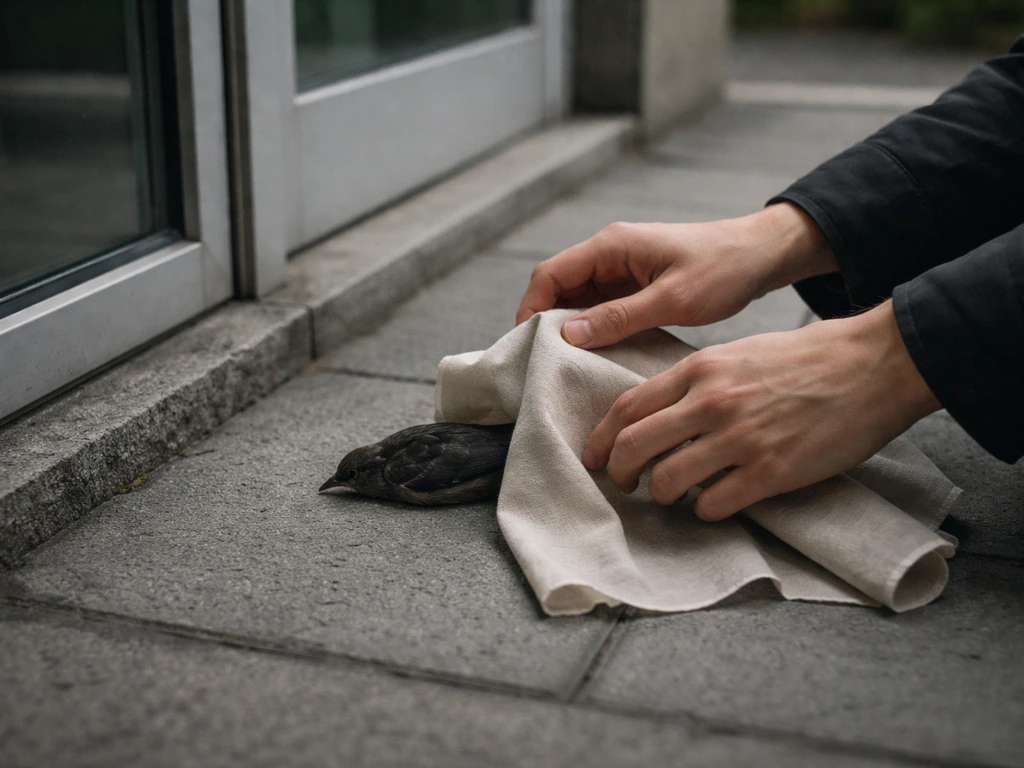
Finding a dead loerie is understandably unsettling, and it is natural to wonder whether it carries a negative message. In many spiritual traditions, a dead bird marks the end of one phase and the beginning of another. It is less a warning of doom and more a signal that something is completing, a relationship, a chapter, a way of thinking, and something new is being prepared. That is not nothing, but it is not a curse either.
Practically speaking, a dead bird near a window or building is almost always the result of a window collision. Glass surfaces reflect sky and vegetation, confusing birds fatally. If you find a dead loerie, the most grounded response is to note what the encounter stirs in you emotionally, hold any spiritual reflection you find meaningful, and then handle the practical reality carefully. Avoid touching the bird with bare hands, use gloves or a bag, and dispose of it according to local guidelines. Massachusetts public guidance recommends using gloves and a surgical mask when handling a dead wild bird, and placing it into a thick plastic trash bag with gloved hands handle the practical reality carefully by avoiding bare hands and using gloves or a bag to dispose of the bird. If you find multiple dead birds in a short time (five or more in a matter of days), that warrants reporting to your local wildlife authority, as it can indicate a disease event or pesticide exposure in the area.
If a loerie is stunned rather than dead, perhaps after a window strike, the most helpful thing you can do spiritually and practically is the same: place it gently in a dark, quiet, ventilated box and leave it in peace for an hour. Many birds recover on their own. Resist the urge to handle it repeatedly or rush to interpret the event while the bird is still in distress. Wait, and see. That patience itself is a spiritual practice.
A step-by-step way to decode the message today
Here is a practical process you can work through right now, whether your encounter was this morning or a week ago.
- Confirm the bird. Before anything else, be as certain as you can about which loerie species you encountered. Colour, call, habitat, and behaviour will help you narrow it down. This is not pedantry; it shapes the interpretation meaningfully.
- Anchor the moment. Write down exactly what was happening when you saw or heard the bird. Where were you? What were you thinking about? What had you been worrying about or hoping for in the days before? Context is everything.
- Notice your first emotional response. Did the encounter feel uplifting, neutral, or uneasy? Your gut reaction before you started analysing it is important data. Spiritual messages tend to resonate emotionally, not just intellectually.
- Match it to your current life. Look at the life-area themes above: love, creativity, healing, career, spiritual growth. Which one feels most alive or most pressured right now? The loerie's message almost always speaks directly to the area where you most need it.
- Check for confirmation bias. Ask yourself honestly: am I interpreting this to confirm something I already want to believe? There is nothing wrong with finding comfort in a bird encounter, but the most useful interpretations also challenge you gently, not just validate you.
- Sit with a question, not an answer. Rather than deciding definitively what the loerie meant, arrive at a question to carry with you: What am I being called to express? What do I already know that I have been pretending not to know? This keeps the encounter alive and useful rather than closing it down prematurely.
- Record it. Write the encounter in a journal, including the date, the bird, your circumstances, your emotional response, and the question you landed on. Patterns across multiple entries over weeks will reveal far more than any single interpretation.
What to do after your loerie encounter
Interpreting the sign is only half the work. The other half is responding to it in a way that actually moves something in your life. Here are the most grounded next steps.
Offer gratitude, whatever your tradition
Whether you pray, meditate, or simply pause in quiet acknowledgement, take a moment to say thank you for the encounter. This is not superstition; it is a practice of attention. When you mark a moment as meaningful, you train yourself to stay open to the guidance that comes through ordinary life. A simple spoken or written "thank you" is enough.
Journal prompts to go deeper
- What part of myself have I been hiding that wants to be seen, like the loerie's red wing?
- What decision have I been sitting on that this encounter might be nudging me toward?
- Where in my life do I need more joy, vibrancy, or creative expression right now?
- If this bird is a messenger, what is the one sentence it would say to me today?
- What is completing in my life, and what is trying to begin?
Take one real-world action

The loerie's spiritual message is most powerful when it moves you to actually do something, not just feel something. If the encounter pointed toward creative expression, create something today, even something small. If it pointed toward a conversation you have been avoiding, send the message or make the call. Spiritual encounters are invitations to action, and the action does not need to be dramatic. A small honest step counts.
When to seek real-world help
A bird encounter, however moving, is not a substitute for practical help when you genuinely need it. If your loerie sighting is connected to distress in your life, whether in a relationship, your health, your finances, or your mental wellbeing, use the encounter as a prompt to seek real support: a counsellor, a trusted friend, a doctor, or a financial advisor. The bird can open a door; it is up to you to walk through it and get the help that is actually needed on the other side.
The loerie is a remarkable bird, and an encounter with one is worth taking seriously. Whether you saw a flash of green and red in the forest, heard that distinctive call above your house, or found one near your window, the encounter is an invitation to pay closer attention to your own life. People often connect a pee wee bird’s appearance with its spiritual meaning too, so if you meant a different species, it can help to check that specific symbolism pee wee bird spiritual meaning. Some people also connect this kind of “loerie” spiritual sign to the pootoo bird spiritual meaning they’ve encountered in their own symbolism research heard that distinctive call above your house. Sit with it, journal it, and let it ask you the question it came to ask. That is the real spiritual practice here, and it is a genuinely useful one. If you enjoy working with bird symbolism this way, the hoopoe bird and the honeyeater bird carry similarly layered spiritual traditions worth exploring, as does the lyre bird if the themes of creative expression and authentic voice resonate strongly with you. You can also explore the hoopoe bird spiritual meaning, since it is often linked with guidance, intuition, and sacred protection. If you are also curious about the phoebe bird spiritual meaning, you can use the same approach to notice what message is landing for you right now.
FAQ
How can I tell whether my “loerie” was really a Knysna Turaco versus a grey go-away-bird?
Use what you recall about colour and the call. Knysna Turaco descriptions usually include vivid green with a hidden red wing flash during flight, while grey go-away-birds are remembered for a louder “g’way” alarm-type call and a more uniform grey tone. If you only have the call and it sounded harsh or complaining, treat it as likely grey go-away rather than Knysna Turaco, and let the message focus more on reconsidering a plan than on creative “jewel” themes.
What should I do if a loerie keeps calling near my home but I never see it?
When the encounter is auditory only, lean into inner knowing and timing rather than “visibility” themes. Track the time of day and what was on your mind at those moments (for example, before you make a decision, after a difficult conversation, or during periods of uncertainty). If the call happens consistently around a specific task or emotional trigger, the practical next step is to make one small aligned choice then, not later.
If I saw a loerie during a big decision, does that mean I should act immediately?
It usually means you should act with more confidence, but immediate does not always mean impulsive. Choose one low-risk action you can complete within 24 to 72 hours (send a message, book a consult, outline your next step). If the decision is legally, medically, or financially high-stakes, treat the encounter as encouragement to get real information, not as a substitute for due diligence.
Is it normal to feel confirmation bias after noticing loeries repeatedly?
Yes. Confirmation bias can make you notice more sightings once you start looking for meaning. A quick check is to ask, did the encounters increase only after you began researching, or are they also happening at times when you are not actively thinking about loeries? Even if bias is present, you can still use the pattern ethically by journaling what you were already concerned about, rather than forcing a fixed spiritual story.
What if the loerie appeared when I was stressed or angry, does that change the message?
It often shifts the “invitation” away from inspiration and toward regulation. Instead of jumping straight to “creative expression” or “progress,” treat the encounter as a cue to reset first: take a short breath break, write the emotion down plainly, then choose one constructive action. The spiritual meaning can be about clearing mental noise so your instincts are easier to hear.
How should I interpret a loerie landing near me or at my window if I suspect it is a glass problem?
If it repeatedly hits or circles the window, the kindest practical interpretation is that it is mistaking reflections for space. Window behaviour does not mean doom or fate, it usually means the bird cannot see the glass clearly. Add visual markers or coverings immediately, and only after the bird is safe should you reflect on any personal themes the encounter stirred.
What is the safest way to handle a dead loerie I find near a building?
Assume it could be from a window collision, but still prioritize safety. Avoid touching with bare hands, use gloves or a bag, and dispose of it according to local guidance. If it is near a high-traffic building, also consider reporting multiple incidents, especially if there are several dead birds within a short window, since that can indicate broader environmental issues.
If a loerie is stunned, is there anything I should do besides waiting an hour?
Your article already covers the quiet, ventilated box approach, which is the safest baseline. If the bird is visibly bleeding heavily, trapped for a long time, or you cannot keep it protected and calm, contact a local wildlife rescuer. Do not give food or water unless a licensed rescuer instructs you, and avoid repeated handling since stress can prevent recovery.
Does finding a dead loerie always indicate an omen of bad luck?
No. A dead bird is more often read as the end of a phase, but it is not automatically “bad.” Focus on what in your life feels like it has reached a stopping point, then choose a concrete “next beginning,” such as closing an outdated agreement, ending a draining pattern, or starting a fresh routine, while still keeping practical reality in mind.
What if I want to use the loerie encounter spiritually, but my life requires professional help anyway?
Use the encounter as motivation, not as a replacement. If you are dealing with relationship crises, health concerns, finances, or mental wellbeing, you should seek real support regardless of the omen. A useful middle step is to write one line about what the bird “invited” you to do, then translate it into a specific support action (book an appointment, contact a trusted person, set a repayment plan, or schedule a check-up).
Should I journal the encounter, and what details matter most?
Yes, but journal for usefulness. Include the date, time, exact location (garden, window, forest path), whether you saw red wing flash or only heard the call, your emotional state at the moment, and what situation in your life was active then. This makes it easier to spot patterns without overinterpreting, and it helps you choose the right next step later.
Next Article
Honeyeater Bird Spiritual Meaning: Signs, Messages, Next Steps
Interpret honeyeater spiritual meaning with decision-friendly signs, context-based messages, and grounding next steps.