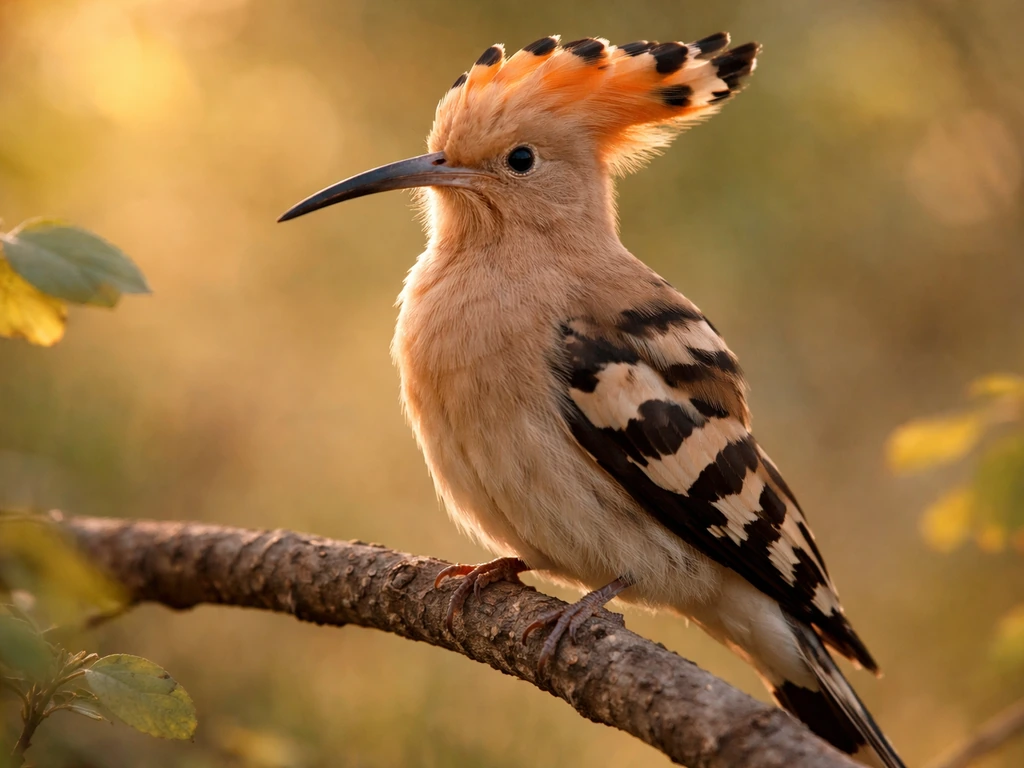
What the hoopoe is really known for spiritually
If you saw a hoopoe today and felt like it meant something, you're almost certainly right to pay attention. The hoopoe is one of the most symbolically loaded birds in the world, especially across Near Eastern, Islamic, Persian, and ancient Egyptian traditions. Its core spiritual meaning orbits around messages, wisdom, devotion, and the kind of love that requires courage and action. This isn't a bird that shows up with vague, wishy-washy energy. The hoopoe is a messenger, a guide, and a bridge between people who need to connect.
In the Qur'anic tradition, the hoopoe (called hudhud) is the bird that Solomon trusted to carry correspondence between himself and the Queen of Sheba, essentially serving as the bridge that brought two powerful figures into relationship with each other. That one narrative alone tells you a lot: this bird is associated with meaningful communication, with building bonds across distance or difference, and with the kind of message that changes everything once it's received. In the Sufi poem "Conference of the Birds" by Farid ud-Din Attar, the hoopoe takes the lead role as a guide directing all the other birds on a spiritual journey through seven valleys toward a higher truth. A Creighton University repository item on a prose translation/edition of Attar’s work describes the hoopoe as directing the birds on a spiritual journey through the seven valleys toward a higher truth. This bird doesn't just carry messages. It leads souls toward what they're seeking.
In ancient Egypt, the hoopoe appeared in iconography as a symbol connected to heirs and successors, pointing to themes of legacy and continuity. In Upper Egyptian village tradition today, a hoopoe sighting near your home is still considered a good omen, particularly if the bird calls at dawn. The through-line across all of these traditions is this: the hoopoe means something significant is trying to get through to you, and that something is usually tied to a relationship, a decision, or a message you've been putting off.
What a hoopoe sighting means for your love life
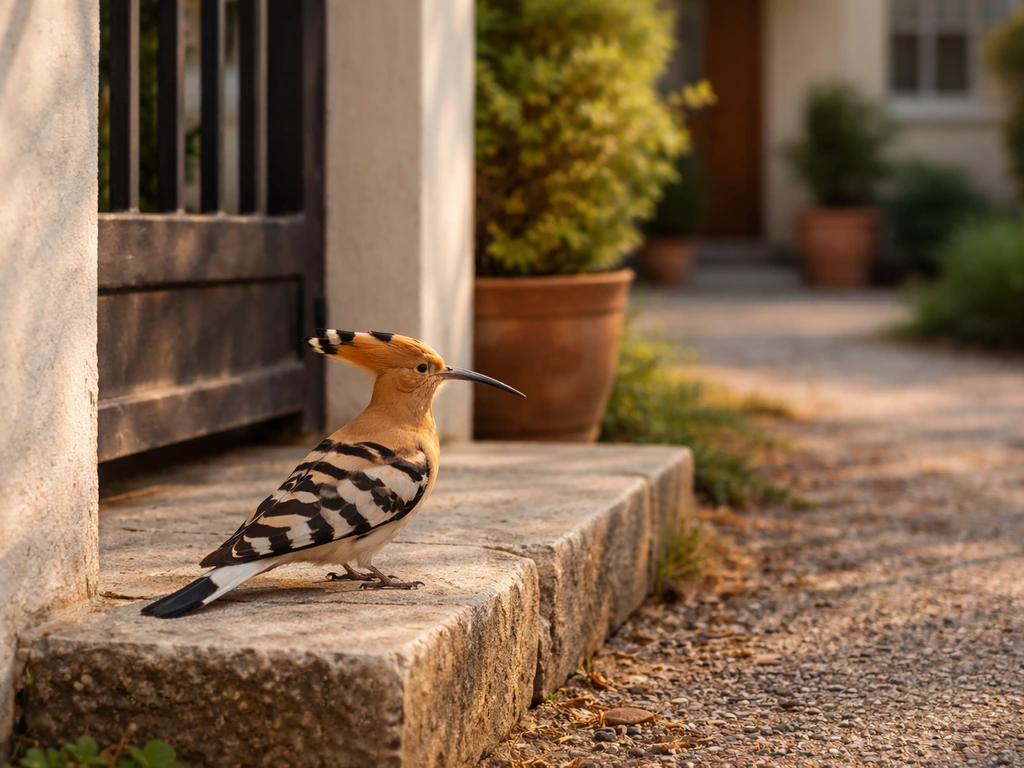
The hoopoe's love symbolism is less about butterflies-and-romance and more about the deeper architecture of a relationship: devotion, commitment, communication, and reconciliation. When this bird appears in the context of a current relationship, it often points to something that needs to be said, acknowledged, or acted on. Think of it as the universe nudging you toward the conversation you've been avoiding, the forgiveness you haven't offered yet, or the choice to consciously recommit to someone you love.
If you're in an established relationship, the hoopoe tends to show up as an invitation to deepen the bond rather than coast on it. The messenger symbolism is particularly relevant here: is there something your partner has been trying to tell you that you haven't fully heard? Or something you've wanted to express but keep postponing? The hoopoe's appearance can be a signal that now is exactly the right moment to stop circling around the thing and just say it.
If you're going through a rough patch or a separation, the hoopoe's reconciliation energy is especially meaningful. Just as the bird in Solomon's story carried an invitation that bridged two very different worlds, a hoopoe sighting during relational tension can suggest that an opening is available. Someone (maybe you) needs to extend the first invitation. The hoopoe doesn't promise a perfect outcome, but it does suggest the channel is open and the timing is right to try.
For those navigating new love or wondering whether a connection has real potential, the hoopoe asks you to look at the quality of communication in that relationship. Is there mutual honesty? Is there room for real messages, not just surface-level exchanges? The hoopoe energy says: authentic, courageous communication is the foundation of love worth having. The honeyeater bird, which also carries strong symbolism around sweetness and attraction in relationships, pairs interestingly with the hoopoe's more directive, message-forward energy if you're noticing multiple bird encounters.
How to read your specific encounter
The details of your encounter really do matter here. Two people can see a hoopoe on the same day and be receiving completely different messages based on what the bird was doing, where it appeared, and how the sighting felt emotionally. Here's how to think through the key variables.
Where you saw it
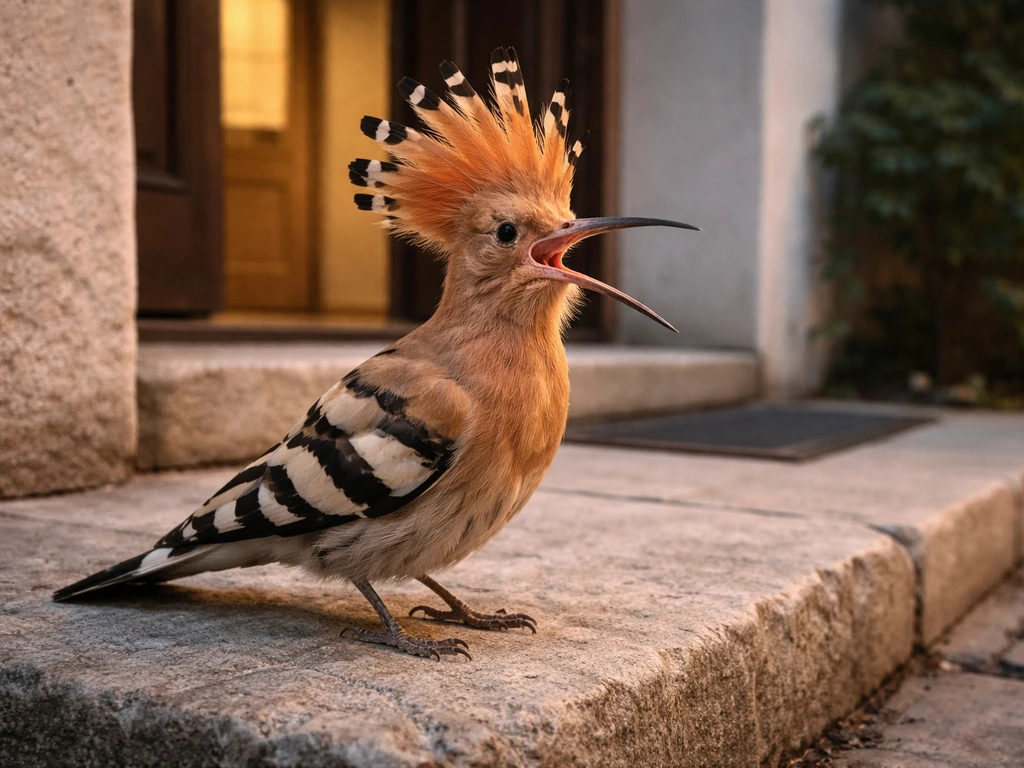
A hoopoe near your home or at your front door is one of the most significant placements, especially in Upper Egyptian folk tradition where a hoopoe visiting near one's home is treated as a clear good omen. Spiritually, the home represents your inner world, your domestic relationships, and your sense of security. A hoopoe at your door or window is almost certainly pointing to something within your close personal relationships. If you spotted it at work or in a public place, the symbolism may relate more to a broader life message or a relationship that exists in that context.
What the bird was doing
- Calling or vocalizing: This is the most direct messenger signal. Something or someone has a message for you. Be open and listen actively in your relationships right now.
- Tapping or visiting a window: Windows in spiritual symbolism represent thresholds between inner and outer worlds. A hoopoe at your window is asking you to look at what you've been keeping inside versus what needs to be expressed outward.
- Landing near you or on you: Physical proximity is significant. The message is personal and immediate, meant specifically for you at this moment in your life.
- Lingering or circling back: If the bird stayed longer than felt coincidental, it suggests the message is urgent or has been waiting for a while. Don't let it sit longer.
- Feeding or foraging calmly: This can signal that a relationship is in a grounding or nourishing phase. Less of an urgent message, more of an affirmation that you're in the right place.
When it appeared
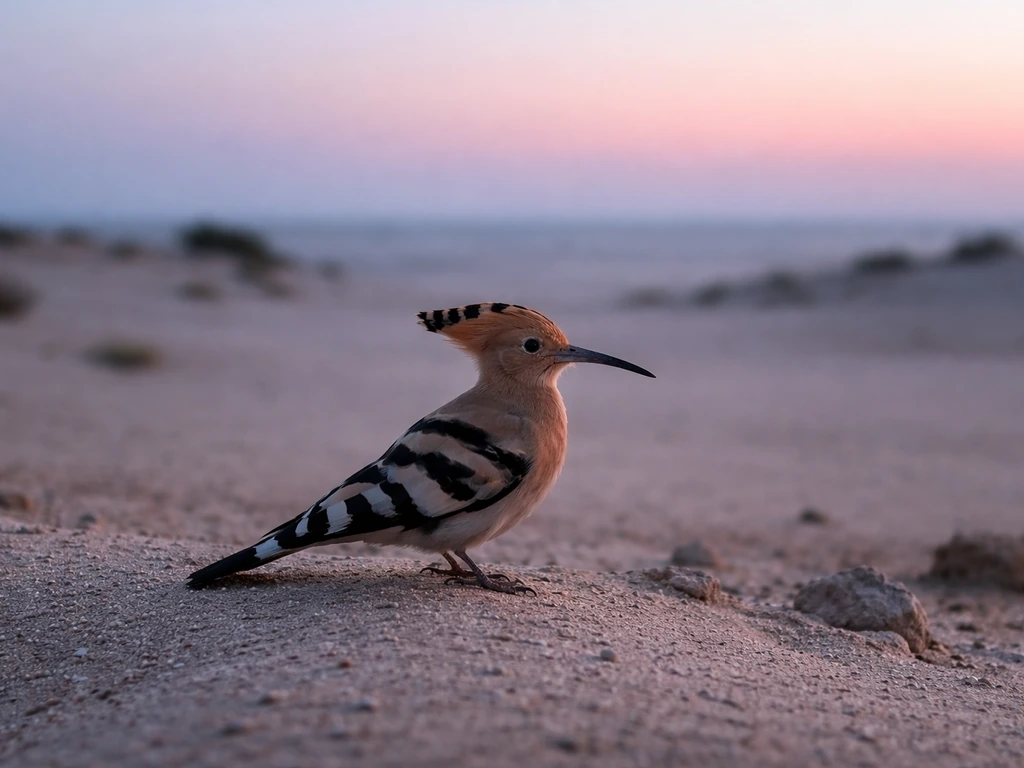
Timing adds a layer of meaning. A hoopoe calling at dawn, which Upper Egyptian tradition specifically highlights as auspicious, connects to new beginnings and first light. That's a strong signal that something fresh is becoming possible in a relationship. A sighting during or immediately after a difficult conversation, a moment of doubt, or a decision point in love is rarely coincidental. In Attar's Sufi framework, the hoopoe appears precisely when the birds are ready to begin the journey but need guidance. If your sighting came at a crossroads, the message is: take the next step, even if you're not fully certain of the path.
How it made you feel
Your emotional response is one of the most reliable lenses for interpretation. Did the sighting fill you with warmth and recognition, like hearing a familiar voice? That usually means the message is an affirmation, a confirmation that you're on the right track with someone or something. Did it catch you off guard and leave you slightly unsettled? That can signal a message you've been avoiding. Did you feel a deep, quiet calm? The hoopoe may be offering reassurance during a period of relational uncertainty. Trust what your body and emotions registered in that first unguarded moment.
The message themes worth sitting with: devotion, reconciliation, and communication

Once you've thought through the details of your encounter, it helps to narrow down which of the hoopoe's core message themes resonates most. These three keep surfacing across every tradition and cultural context this bird appears in.
Devotion is probably the hoopoe's most layered theme. It isn't just romantic loyalty; it's the choice to show up for another person with your full self, even when it costs something. The hoopoe in Solomon's story didn't just deliver the message mechanically. It took initiative, took a risk, and completed a task that mattered. If devotion is your theme, the hoopoe is asking: where in your relationship are you holding back? What would full devotion actually look like in practice, not just in feeling?
Reconciliation shows up strongly when the sighting comes during or after conflict, distance, or estrangement. The hoopoe's role as a bridge between Solomon and the Queen of Sheba is essentially a story about reconciliation: two very different people finding a way into connection through honest, courageous communication. If this theme resonates, notice any resistance you feel around being the one to reach out first. The hoopoe suggests that whoever makes the first move is acting with wisdom, not weakness.
Communication as a theme goes deeper than just talking more. The hoopoe is associated with wisdom and hidden knowledge in Upper Egyptian lore, which means the communication it symbolizes isn't small talk. It's the kind of honest conversation that reveals something real. Much like how the lyrebird carries symbolism around voice and authentic self-expression, the hoopoe specifically connects communication with the courage to say the true thing to the right person at the right time.
Where people get the hoopoe's meaning wrong
One of the most common mistakes I see is people landing on a single fixed interpretation of a bird encounter and treating it as gospel. The hoopoe is a great example of why that approach falls short. Across different traditions, this bird carries genuinely different emphases: in Islamic tradition it's primarily a messenger and communicator, in Persian Sufi literature it's a spiritual guide and leader, in ancient Egypt it connects to legacy and succession, and in modern Upper Egyptian folk culture it's a general good omen connected to wisdom. None of these are wrong. They're just different facets of the same bird's symbolic life.
This means you shouldn't feel locked in if the "love and relationships" frame doesn't immediately resonate with your encounter. Maybe the hoopoe showed up to prompt spiritual guidance rather than romantic guidance. Maybe it's about a friendship, a family dynamic, or even a relationship with yourself. The phoebe bird, for instance, carries symbolism around rebirth and personal renewal that can overlap with hoopoe encounters in interesting ways if you're in a period of personal transformation rather than an active relationship.
Another thing to watch out for: the impulse to make the meaning entirely positive or entirely cautionary. People either want the hoopoe to be a green light for a new relationship, or they worry it's warning them away from something. Most of the time, this bird isn't doing either. It's holding up a lantern so you can see the path more clearly, not telling you which direction to walk.
Cultural context matters too. If you have roots in or personal familiarity with Islamic, Persian Sufi, or Egyptian traditions, those frameworks will likely carry more resonance for you than a generic Western spiritual interpretation. And if you're coming to this purely from a personal intuitive angle with no specific cultural background in mind, that's completely valid. Spiritual meaning-making is fundamentally personal. Some birds, like the potoo, carry symbolism that varies so dramatically between traditions that the personal and emotional response ends up being the most reliable guide, and the hoopoe can work that way too.
What to do right now: rituals, journaling, and real relationship actions

The hoopoe is a bird of action, not just contemplation. Here are concrete things you can do today to work with the message you received.
Journaling prompts to start with
- Write down exactly what was happening in your life and specifically in your closest relationships on the day you saw the hoopoe. What were you thinking about? What had been weighing on you?
- What is one thing you've been wanting to say to someone important in your life but haven't said yet? Write the full version of that message as if they'll never read it.
- Where in your closest relationship have you been coasting rather than choosing devotion actively? What would choosing devotion look like this week in a concrete, behavioral way?
- Is there a conversation you've been avoiding because it feels too vulnerable or risky? What's the worst realistic outcome of having it, and what's the best realistic outcome?
- If the hoopoe was delivering a message from someone you love (living or passed), what do you imagine that message would say?
A simple heart-focused ritual

You don't need anything elaborate here. Find a quiet moment, place your hand over your heart, and spend two or three minutes consciously thinking about the person (or relationship) that came to mind when you first saw the hoopoe. Set a clear intention: "I am open to the message, and I am willing to act on it." Then write down the very first thing that surfaces, whether it's a name, a feeling, a memory, or a sentence that needs to be spoken out loud. This simple act of intentional attention is often where the real insight comes from.
Practical relationship actions aligned with the hoopoe's energy
- Have the conversation: If you've been putting off a meaningful talk with a partner, family member, or close friend, treat the hoopoe sighting as your sign that now is the time. Start with honesty about how you feel rather than leading with grievances.
- Clear the air: If there's unresolved tension between you and someone you care about, reach out today. A simple "I've been thinking about us and I'd love to talk" is enough to open the door.
- Write the letter or send the message: If direct conversation feels too big right now, write what you need to say. You don't have to send it immediately, but getting it out of your head and onto paper moves the energy.
- Choose devotion visibly: Do one concrete thing today that demonstrates your commitment to someone you love. Not a grand gesture, but a real, specific act of care that says "I see you and I'm here."
- Revisit an unfinished conversation: Think back to the last conversation you left incomplete with someone important. Is there a thread there that the hoopoe might be pointing you back toward?
The hoopoe doesn't just ask you to feel something. It asks you to carry the message forward. In every tradition this bird appears in, from Solomon's court to Attar's seven valleys, the hoopoe fulfills its purpose by completing the journey and delivering what it was entrusted with. That's the invitation this bird is extending to you: be the messenger, have the courage, and make the connection real.
If you find yourself drawn to exploring other birds with similarly rich relationship-centered symbolism, the loerie bird carries fascinating symbolic weight around belonging and emotional territory that often comes up in the same conversations as the hoopoe. And for those who keep encountering smaller, more subtle birds alongside the hoopoe, the black phoebe and the pee wee bird both carry symbolism around boundaries and personal clarity that can help you understand the fuller picture of what your encounters might be telling you.