If a small gray-and-white bird with a flash of white tail feathers just crossed your path, landed near you, or has been showing up around your home, there's a good chance you're looking at a dark-eyed junco. And if you're here, you're probably sensing that the encounter meant something. The short answer: the junco is one of the most quietly powerful birds in spiritual symbolism, carrying themes of renewal, grounding, resilience, and the kind of inner replenishment that winter demands of us. But the meaning that lands for you depends on what the bird was doing, where you are in life right now, and how your gut responds. This guide walks you through all of it practically and directly.
Junco Bird Spiritual Meaning: Messages, Signs, and Next Steps

Eliza Thornwick
13 Apr 2026
First: Make Sure You're Looking at a Junco
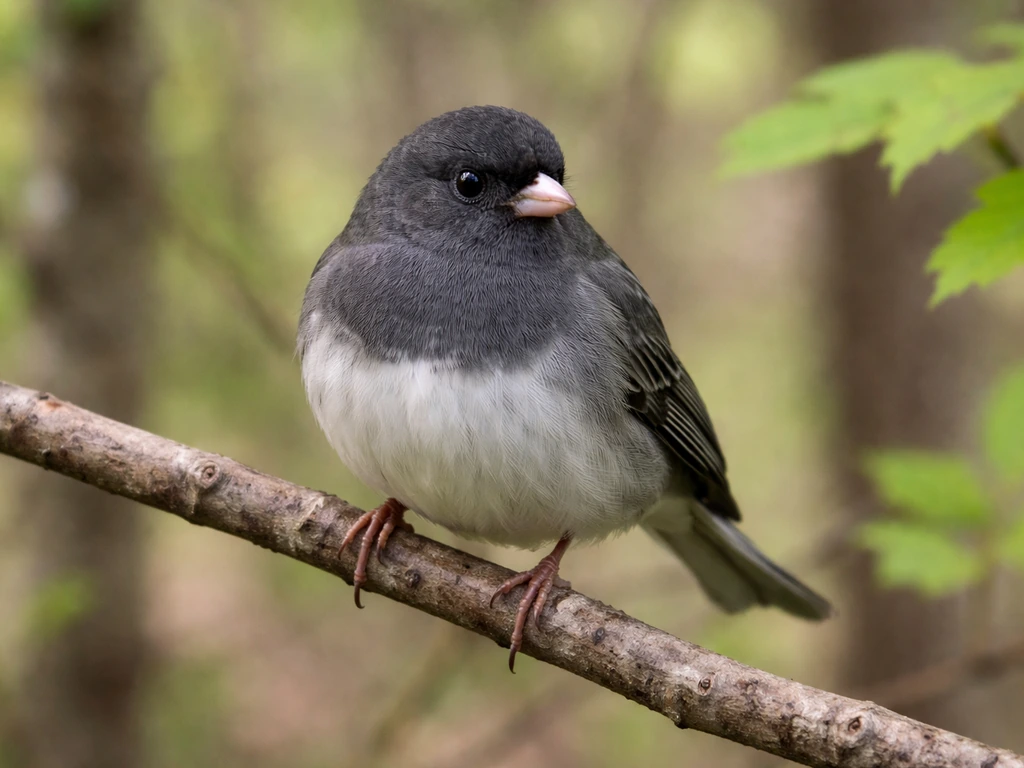
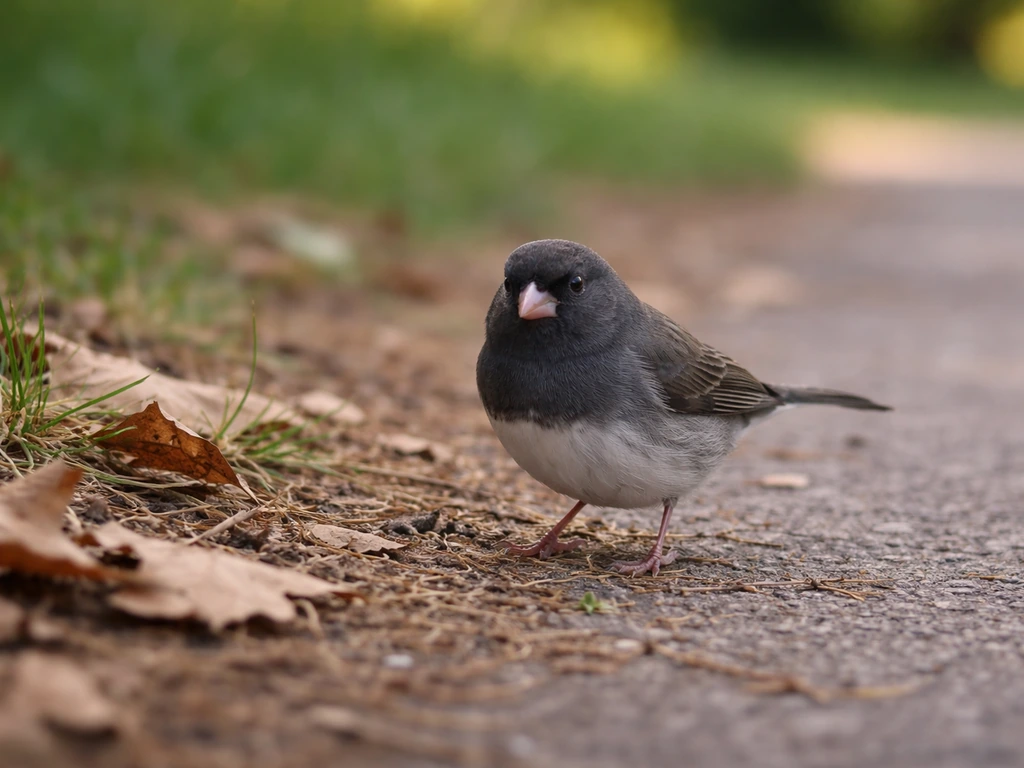
Before you apply any symbolism, it helps to confirm you actually saw a junco and not one of its look-alikes. The dark-eyed junco is a medium-sized sparrow-like bird with a rounded head, a short stout conical bill that's pale pinkish-to-whitish in color, and a fairly long tail. The field mark that makes juncos unmistakable: white outer tail feathers that flash open when the bird takes flight. You'll often see it as a quick white burst as it hops away from you. The bird typically shows a darker hood or head (slate gray to blackish depending on your region), a white belly, and brownish or grayish upperparts. It's a bird that looks put-together in a quiet, unshowy way.
A common mix-up is the American Tree Sparrow, which has a noticeable eye-ring and a bicolored bill with a black upper and yellow lower mandible, very different from the junco's soft pinkish bill. Juncos also vary quite a bit by region. Depending on whether you're in the Pacific Northwest, the Appalachians, or the northern Midwest, the exact shading of the hood and sides will shift. Don't let variation throw you off.
If you've got white outer tail feathers, a pale bill, and a dark-above-light-below pattern, you're almost certainly looking at a junco. Audubon even calls them the original snowbirds because flocks show up across much of the United States as winter arrives, so a winter sighting is especially on-brand for this species.
Once you're confident it's a junco, take a moment to note the key details of your encounter: the time of day, the location, what the bird was doing, how long it stayed, and honestly, what you were thinking or feeling when it appeared. That context is going to do more work for your interpretation than any general meaning list.
The Core Spiritual Themes Juncos Carry
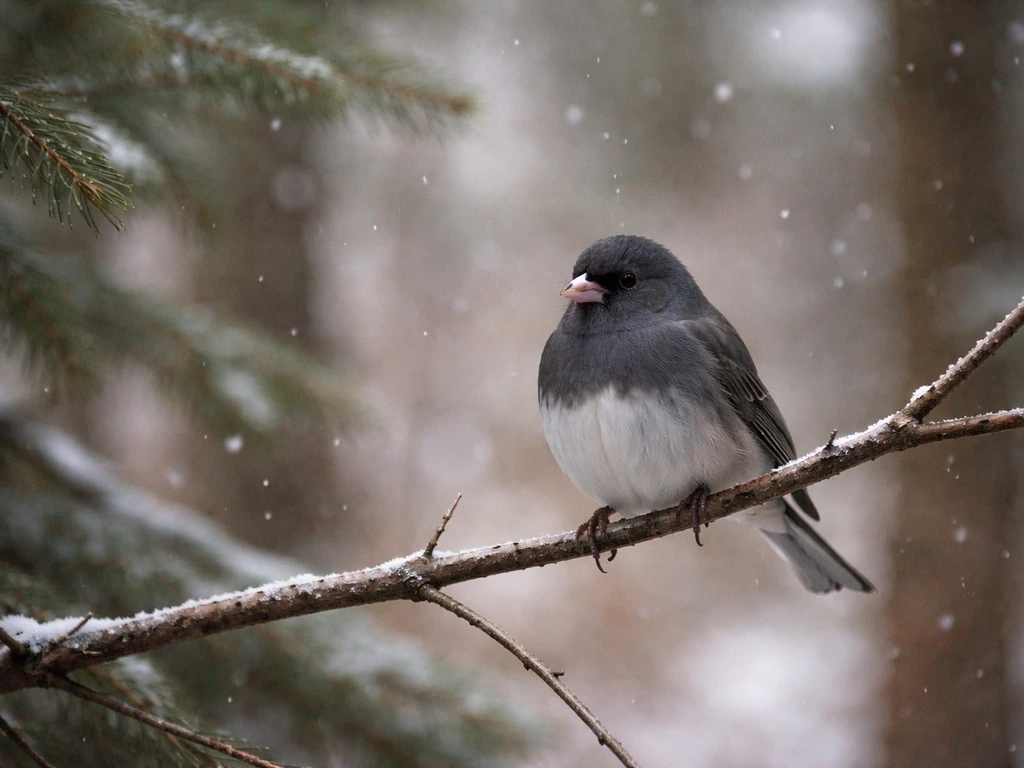
The junco's spiritual identity is deeply tied to winter, and not winter as a bleak or frightening thing, but winter as a necessary season of quiet, clearing, and inner work. Its Latin species name, hyemalis, literally means 'of the winter,' which tells you something about how this bird has always been understood. It doesn't flee the cold. It arrives with it, moves through it, and seems utterly at peace in the stillness that sends other birds south. Spiritually, that's a significant energy to carry.
- Replenishment and renewal: Multiple spiritual traditions associate the junco with refilling what's been depleted, the kind of quiet restoration that comes from stillness rather than action.
- Grounding and simplicity: The junco is not flashy. It lives close to the ground, forages in leaf litter, and asks for very little. Its medicine is about stripping back to what matters.
- Resilience through seasonal change: The junco doesn't wait for easy conditions. It thrives in the cold, modeling how to find nourishment and peace even when the environment feels harsh.
- Purification: Several spiritual sources link the junco's winter-and-snow imagery to a clearing of old energy, making space for what comes next.
- Harmony of opposites: The bird's dark-above, light-below coloring has been connected to the balance of opposing forces, the yin-yang idea that light and dark coexist and need each other.
- Messages about home, family, and safety: Juncos are ground-dwellers and nesters. Their presence near your home often speaks to themes of domestic grounding and the safety of your inner circle.
- Breath and letting light in: Some spiritual writers frame a junco encounter as a nudge to breathe more intentionally and allow more light into your body and spirit, especially during dark or heavy seasons.
These themes don't all apply to every encounter. Think of them as a menu. Your intuition, your current life circumstances, and the specific behavior of the bird will help you choose what resonates.
What the Junco Was Doing Changes Everything
You Simply Saw One
A junco appearing in your line of sight, especially if it caught your attention in a way that felt deliberate, is often read as a gentle reminder to slow down, get grounded, and pay attention to what season you're in spiritually. Not the calendar season, but the internal one. Are you in a period of rest and rebuilding, or are you pushing against the cold instead of moving with it? The junco as a spirit animal message here is usually: you have everything you need to get through this quiet, lean stretch. Trust the stillness.
It Landed Near You or Approached You
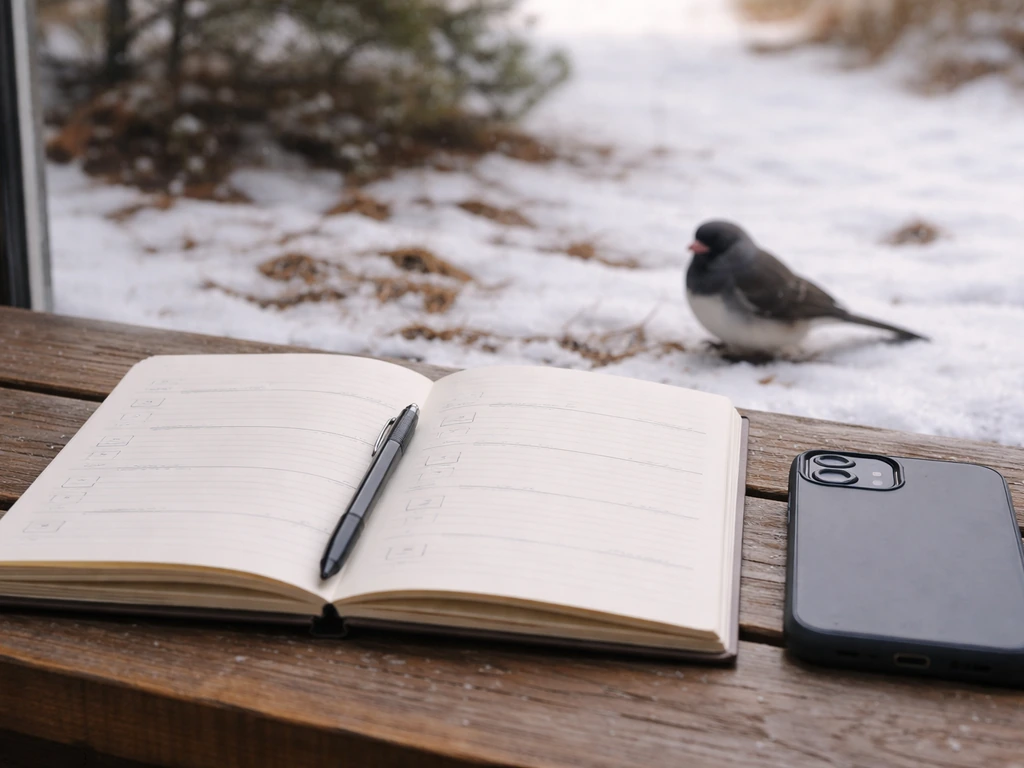
When a junco moves toward you or lands unusually close without fear, most spiritual traditions read that as a more direct communication. This bird is comfortable on the ground and close to people at feeders, but it still has a personal space boundary. If it crossed that boundary toward you, pay attention. This is often interpreted as a message about a specific situation rather than a general theme. What were you thinking about in the moments before it appeared? That thought or worry or question is likely what the message is touching.
It Was Tapping at or Flying at Your Window
Window encounters are where spiritual interpretation and real-world concern need to work together. Birds tap at or fly toward windows primarily because they see a reflection and perceive it as open space or another bird. Spiritually, window behavior has long been associated with messages from the threshold, the boundary between the seen and unseen world. But before you go deep on meaning, check whether the bird looks stunned or injured.
A window strike can be fatal even when a bird appears to recover momentarily. Tufts Wildlife Clinic also advises that if you find a bird dazed from a window strike, place it in a dark container and keep it warm and quiet while keeping it out of reach of pets and predators [A window strike can be fatal even when a bird appears to recover momentarily. ](https://vet. tufts.
edu/tufts-wildlife-clinic/resource-library/bird-strikes-and-windows). If the junco is sitting on the ground below your window and not moving normally, that's an injury situation first and a spiritual message second. Set the symbolism aside briefly and make sure the bird is okay.
If the bird is clearly fine and repeatedly returning to tap at the glass, the spiritual theme here often connects to something trying to get your attention at a threshold in your own life: a decision you've been avoiding, a message from a loved one who has passed, or a shift in your circumstances that you haven't fully acknowledged yet. The junco specifically tapping in winter amplifies the purification and replenishment themes, like the universe asking: what do you need to clear out before you can let the light back in?
It's Nesting Near Your Home or Lingering in Your Yard
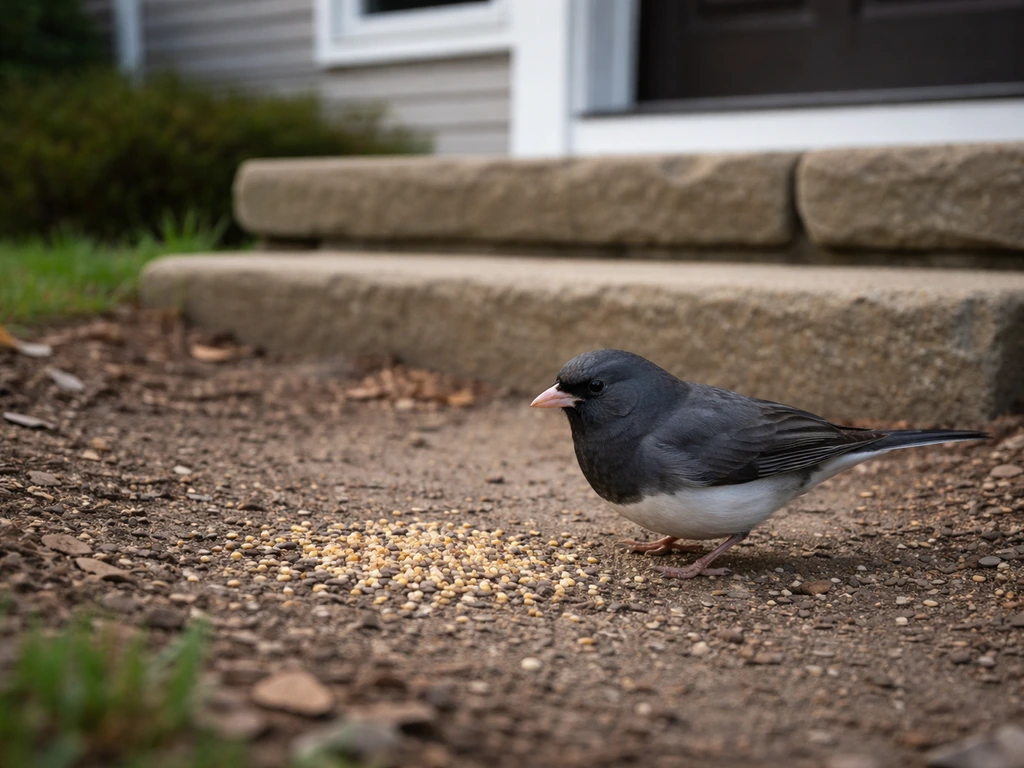
Juncos that nest or consistently forage near your home are often interpreted as a protective and stabilizing presence. Because they are so connected to the earth (they nest on or near the ground and spend most of their time there), their sustained presence around your living space is associated with grounding energy for the whole household. This is particularly meaningful if you've been feeling unmoored, financially stressed, or anxious about family.
The junco's energy here says: this is home, this is safe, and stability is being woven around you. Some readers find that juncos start showing up regularly right before or during a period of major change, which fits perfectly with their seasonal role as winter companions who hold steady while everything shifts.
When the Junco Is Injured, Dead, or Acting Strangely
Finding an injured or dead junco understandably feels more charged with meaning than a simple sighting, and it's okay to sit with that feeling. But the practical step comes first: if the bird is injured (bleeding, not flying, shivering, or sitting in an exposed spot), contact a local wildlife rehabilitator as quickly as possible. Don't try to feed or give water to the bird, and minimize your handling and noise around it, since human contact is genuinely stressful to wild animals even when you're trying to help. Place it somewhere quiet, dark, and contained while you make the call. The spiritual meaning of the encounter doesn't go anywhere while you're doing the right thing for the animal.
Once the bird is cared for (or if it's already gone), you can open up to what the encounter might mean. In most spiritual frameworks, an injured or dead bird is not an omen of doom. More often, it's a symbol of something in your life that has run its course or needs careful tending.
A dying junco might be asking you to look at what in your own life needs release, what winter-worn belief or relationship or habit has exhausted itself and is ready to be let go. Culturally, similar themes run through black cormorant bird spiritual meaning traditions, where unusual or difficult encounters with birds are framed as thresholds rather than warnings. The invitation is to cross through, not to be afraid.
If the junco was stunned by a window strike and recovered and flew off, that's actually one of the most hopeful encounter types spiritually. Something hit you hard enough to stop you in your tracks, and you recovered. That's the message.
Connecting the Message to Your Life Right Now
The most useful spiritual interpretation is always the most personal one. A junco's general themes are your starting point, not your destination. Here are some questions and journaling prompts to help you make the message specific to you.
- What season am I in internally right now? Am I in a period of effort and pushing, or is something asking me to rest and restore?
- What have I been depleting without replenishing? What feels empty right now, and what would genuinely fill it?
- Is there something I need to release before I can move forward? Something that's already spent its season in my life?
- Where in my life do I need to feel more grounded or safe? Is it at home, in a relationship, in my body, or in my finances?
- What was I thinking or worrying about the moment I noticed the junco? That is almost certainly the direct address of the message.
- What would it mean for me to thrive in difficult conditions rather than waiting for easier ones?
- Am I resisting a necessary stillness or quiet period because it feels like loss rather than preparation?
Sit with these questions rather than trying to answer them quickly. The junco doesn't rush. It hops and forages and stays present in the cold. You can afford to take a few days with the reflection.
Practical Next Steps: Rituals, Grounding, and Asking for Confirmation
If you want to do something with this encounter beyond thinking about it, here are practical ways to deepen the connection and ask for clarity.
Ground Yourself First
Since the junco is so deeply connected to the earth, grounding practices align naturally with its energy. Stand or sit outside if possible, even briefly. Feel the ground under your feet. Breathe slowly and intentionally, which mirrors what some spiritual writers describe as the junco's breath-and-light invitation: pulling air and presence into your body with deliberate awareness. You don't need a formal meditation practice. Even five minutes of quiet outdoor sitting, noticing what's around you without a phone, is a real and effective practice.
Record the Encounter While It's Fresh
Write down: the time, the location, exactly what the bird was doing, how long the encounter lasted, what you were doing or thinking immediately before, and your emotional state during and after. This isn't just spiritual journaling. It's pattern recognition. If the junco has shown up more than once recently, seeing the log will help you notice the common thread in what was happening in your life at each moment.
Set an Intention or Offer Gratitude
You don't have to follow any specific tradition to do this. Simply speak aloud or write: what you're grateful for in the encounter, what question you're holding, and what you're open to receiving as clarity. Some people light a candle while doing this. Some do it while looking out the window where the bird appeared. The ritual container matters less than your sincerity.
Ask for Confirmation
If you're unsure whether you interpreted the message correctly, ask the universe, your guides, or whatever you call the larger intelligence you trust, to show you confirmation within the next three days. Then pay attention. Confirmation often doesn't come as another junco. It might be a conversation, a dream, a line in a book that catches your eye, or a sudden inner clarity about the situation you were thinking about when the bird appeared. Many traditions across the world use this kind of patient asking, including those connected to the spiritual meaning of cuckoo bird, where the first call of the season is treated as an invitation to ask a question and then watch for the answer.
Explore the Seasonal and Directional Layer (Optional)
If you want to go deeper, consider the time and season of your encounter. The junco's associations are thickest in winter and around the solstice. If you saw it during the darkest months, the message carries maximum weight around themes of endurance, inner light, and preparing for what's coming. Some older naturalist traditions note that the first junco sighting of the season aligns with the first snowfall, making a first sighting feel like the start of a new inner chapter.
If you saw the bird in spring or summer, the message may be more about holding onto groundedness and simplicity even as things accelerate around you. Direction isn't widely established for juncos specifically, but if the bird arrived from or faced a particular direction that felt significant, trust that instinct and journal about it.
Comparing the Junco's Message to Similar Bird Encounters
It can help to see how the junco's spiritual themes compare to those of other birds, especially if you're unsure which bird you actually saw or if multiple birds have been appearing to you.
| Bird | Core Spiritual Theme | Tone of Message | Best For When You're... |
|---|---|---|---|
| Junco | Replenishment, grounding, resilience through winter | Quiet, steady, internal | Feeling depleted or in a heavy season |
| Crow | Intelligence, transformation, shadow work | Sharp, urgent, confrontational | Facing a major change or hidden truth |
| Quail | Community, nurturing, family protection | Warm, protective, relational | Navigating family dynamics or group belonging |
| Coucal | Omen awareness, ancestral messages, healing | Deep, cautionary, ancestral | Processing grief or major life transitions |
| Catbird | Mimicry, creativity, adaptability, voice | Playful, expressive, communicative | Finding your voice or creative direction |
If you were drawn to this article because you're trying to sort out whether you saw a junco or another small bird, it's worth knowing that quail bird spiritual meaning carries some overlapping family-and-safety themes, while crow bird spiritual meaning moves in a very different direction: transformative, shadow-facing, and urgent where the junco is steady and restorative.
Similarly, if you've been seeing multiple bird species and trying to make sense of the pattern, cat bird spiritual meaning deals heavily with themes of creative voice and adaptability, which pairs interestingly with the junco's quieter grounding energy if both are showing up together.
Don't Over-Mean It or Let Fear Run the Interpretation
This is probably the most important section for anyone who felt anxious when the junco appeared. The biggest mistake people make with bird symbolism is letting fear lead. A bird at your window becomes a death omen. An injured bird becomes a warning of disaster. A dead bird feels like a terrible sign about someone you love. These fear-based interpretations are almost never what's actually being communicated, and they tend to say more about the interpreter's anxiety than the bird's message.
Here's a simple test: when you first saw the junco, before your mind started spinning, what did you feel? That first flash of feeling, wonder, calm, curiosity, warmth, is usually the accurate read. Fear creeps in after the analytical mind gets involved. Train yourself to go back to that first-moment feeling as your baseline. It's worth noting that similar nuance applies when reading black-naped monarch bird spiritual meaning or other less familiar species: the unfamiliarity of a bird can trigger anxiety when the encounter itself was neutral or positive.
Another common mistake is forcing a meaning when you're simply not sure. It's completely okay to note the encounter, hold it lightly, and wait. Not every bird visit is a cosmic telegram. Sometimes a junco is just a junco foraging for seeds in your yard. The invitation to find meaning is real, but it comes with the freedom to say 'I'm not sure what this was' and leave space for clarity to arrive on its own timetable.
Finally, be cautious about applying symbolism that came from a completely different cultural context without sitting with whether it resonates for you personally. Junco symbolism draws from North American naturalist traditions, some Eastern ideas about balance and opposing forces, and various spiritual-animal frameworks. That's a wide range. Just because one source says the junco means X doesn't mean X is your message. Your intuition is the filter. Traditions like those around the coucal bird spiritual meaning or the koel bird spiritual meaning remind us that the same bird can carry radically different meanings depending on the tradition, which is a feature, not a bug. You get to choose what resonates.
The junco showed up quietly, did its thing, and caught your attention. That's enough to work with. Slow down, get grounded, ask your question, and then trust the stillness the bird itself models so well. The answer is usually already in you. The junco just reminded you to look.
FAQ
If I saw a junco for the first time this year, does that make the spiritual message stronger?
Yes, a “first junco” sighting can be meaningful, but treat it like a starting signal rather than proof of a specific event. If it happened right after a personal turning point (a breakup, job change, moving, or health decision), the spiritual takeaway is usually “begin the next chapter gently,” with your focus on small daily stability, not big leaps.
How can I tell whether the junco’s message is about my mindset versus an external situation?
Look for patterns in the minutes before the encounter. If you felt a specific emotion (relief, worry, impatience) and the bird’s behavior matched that state (foraging calmly, landing close, watching you), that alignment is often the clearest clue. Juncos usually work as “inward guidance,” so the message tends to point to what you are ready to accept or release internally.
What if I only saw one junco, how do I avoid over-interpreting it?
A single sighting is often a prompt, repeated appearances are usually a theme. If the junco shows up the same way (same window, same time of day, same behavior like tail-flicking or landing near the same spot), write down those variables and compare them over 3 to 7 days. Consistency tends to indicate the “what to do next” part is the real lesson, not the general symbolism.
What does it mean spiritually if a junco comes close but doesn’t act injured or frantic?
If it landed near you but did not seem wary, the practical read is that it was comfortable with your proximity (often because you were still, quiet, and not threatening). Spiritually, that comfort is commonly interpreted as a green light to move toward grounding practices or a conversation you have been avoiding, but take it slowly since birds still have personal space boundaries.
How should I interpret a junco encounter if I have pets and I'm worried about safety?
If you have a cat, keep in mind that window strikes can happen when a bird mistakes reflections for open space, but predation risk can also be a factor around ground-level foraging areas. Spiritually, the “threshold” theme can still apply, yet the safest next step is physical prevention, such as moving feeders farther from windows and supervising outdoor pets during peak bird activity.
Is it ever okay to feed a junco to support the spiritual message?
Don’t feed a wildcard. If you need to help a healthy junco, use standard birdseed from a reputable mix, and stop if the bird appears to change behavior unusually or crowds aggressively. For any bird that seems stunned, keep your focus on wildlife rehab guidance rather than “spiritual help,” since wrong feeding can worsen stress or injury.
What should I do differently after a junco hits or repeatedly taps my window?
After a window tap, the most useful “next step” is to check for subtle injury even if the bird flies off, then reduce repeat strikes. Practical steps include closing blinds during peak hours, adding a window sticker or mesh, and placing feeders at a safer distance. Spiritually, the meaning often points to a boundary issue, so your action is “adjust the boundary safely,” not just reflect.
If I felt anxious when the junco appeared, how do I work with the message without spiraling?
If the junco appears during a stressful period, it can feel like comfort, but it might be asking for specific emotional processing. Try pairing one grounding action with one clarity action, for example, a slow outdoor breath plus writing down the decision you keep postponing. This turns the encounter from reassurance-only into usable direction.
How can I be sure I’m not mixing up a junco with a look-alike or creating the meaning in my head?
Use three filters: identity check (it is truly a junco), behavior match (what the bird was doing), and timing relevance (what you were actively dealing with). If one filter is uncertain, keep the meaning tentative and journal as “maybe.” This prevents forcing a story and keeps the encounter from becoming a self-fulfilling anxiety loop.
What counts as “confirmation within three days,” should it be another bird or a specific kind of sign?
Yes. If you want confirmation in a practical way, set a small “listening assignment” for the next 72 hours, such as watching for a direct answer to the question you wrote down, or noticing a concrete opportunity (a message, a meeting, a sign of progress). Confirmation often arrives as an actionable cue, not an additional bird.
Next Article
Crow Bird Spiritual Meaning: What It Could Signal Today
Interpret crow bird spiritual meaning with omens, lessons, and practical steps to personalize repeated encounters and ca