If a crow showed up in your life today and you felt that quiet nudge to look up what it means, you are already doing the right thing. The short answer: crows are almost universally associated with intelligence, transformation, magic, and communication across spiritual traditions. But the fuller answer depends on what the crow was actually doing, how you felt in that moment, and what is happening in your life right now. This guide walks you through all of that.
Crow Bird Spiritual Meaning: What It Could Signal Today

Eliza Thornwick
11 Apr 2026
What crows actually symbolize spiritually
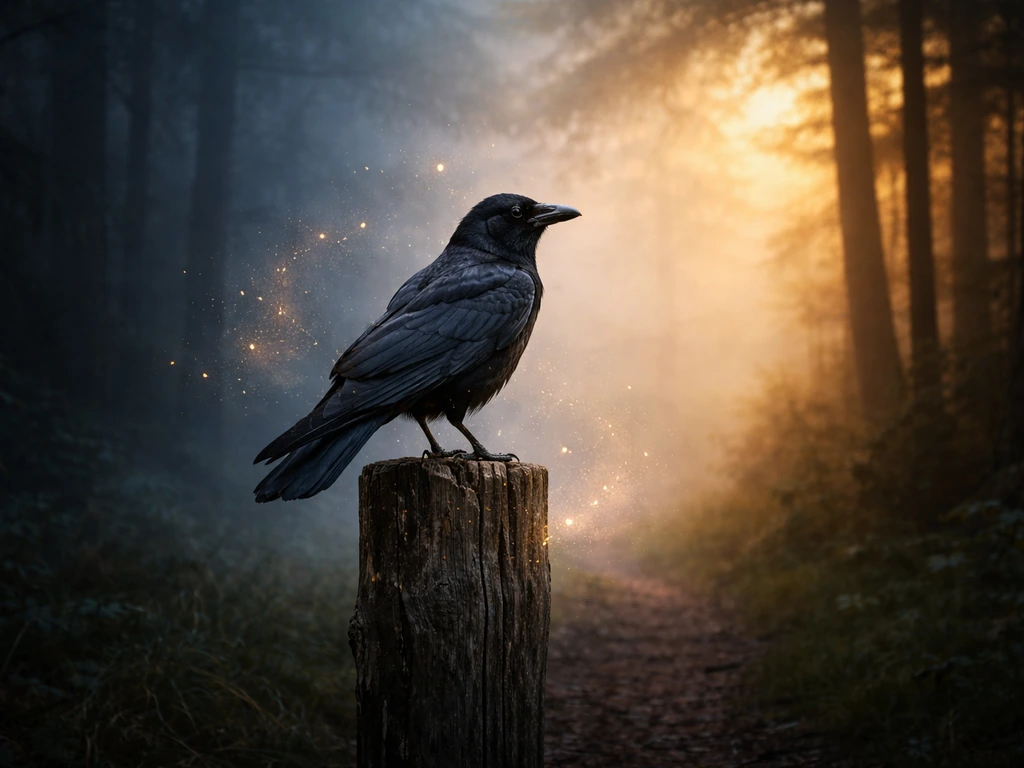
At their core, crows carry a handful of recurring spiritual themes: wisdom, transformation, mystery, and the ability to move between worlds. They are birds of the threshold, meaning they turn up at liminal moments, when you are ending one chapter, beginning another, or standing at a crossroads and not quite sure which way to go.
Crows are also deeply tied to intelligence in a very literal sense. Research shows corvids have problem-solving abilities comparable to great apes, and anyone who has watched a crow figure out a latch or remember a face knows they are not ordinary birds. In spiritual terms, that intelligence translates to the idea that a crow encounter is rarely random. Many traditions hold that crow is asking you to pay attention, to use your own wit and discernment, rather than just handing you an answer.
Other core symbolic threads include: protection (crows mob predators to defend their family groups, a behavior that reads as fierce guardianship), communication (they are famously vocal and social), shadow work (their black feathers connect them to the unseen, to what we tend to hide or avoid), and change. If a crow has landed in your awareness today, the most common spiritual read is that something is shifting, or it needs to.
What your specific crow encounter probably means
Not every crow sighting means the same thing. The scenario matters a lot. Here is how to read the most common encounters:
A single crow watching you
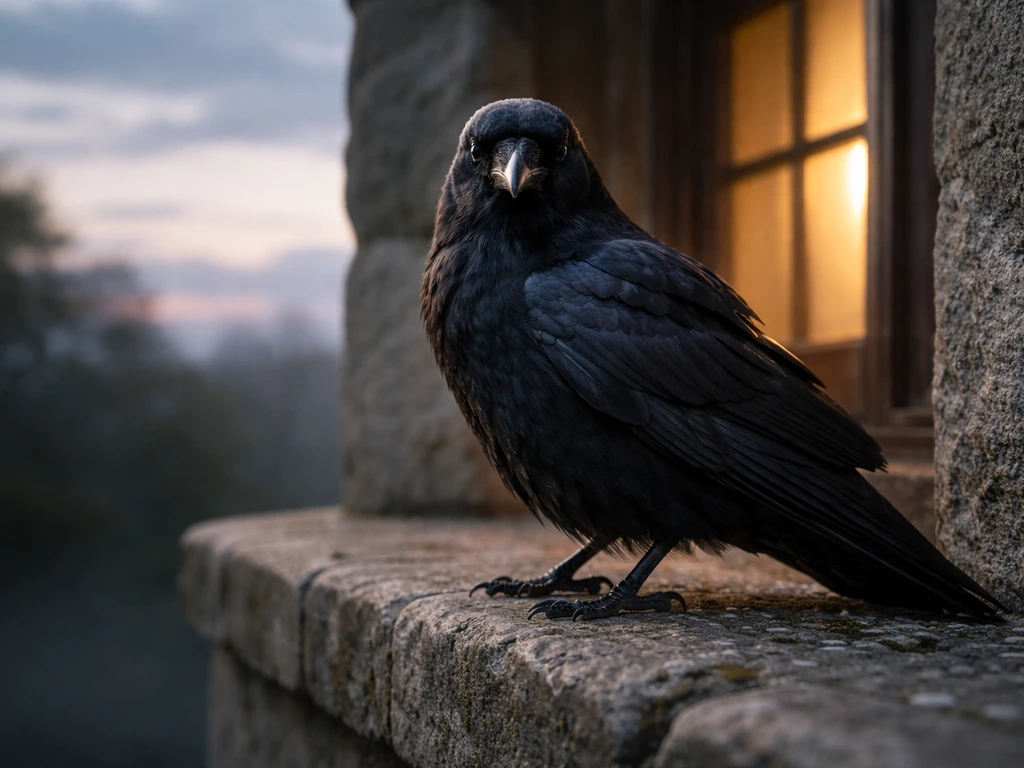
A lone crow that holds your gaze or lingers near you is one of the most classic spiritual encounters. Across many traditions this is read as a message specifically for you, not a general omen. It is often associated with a nudge to trust your own instincts, or a reminder that you are being guided or watched over, depending on the tradition you resonate with.
A group of crows (a murder)
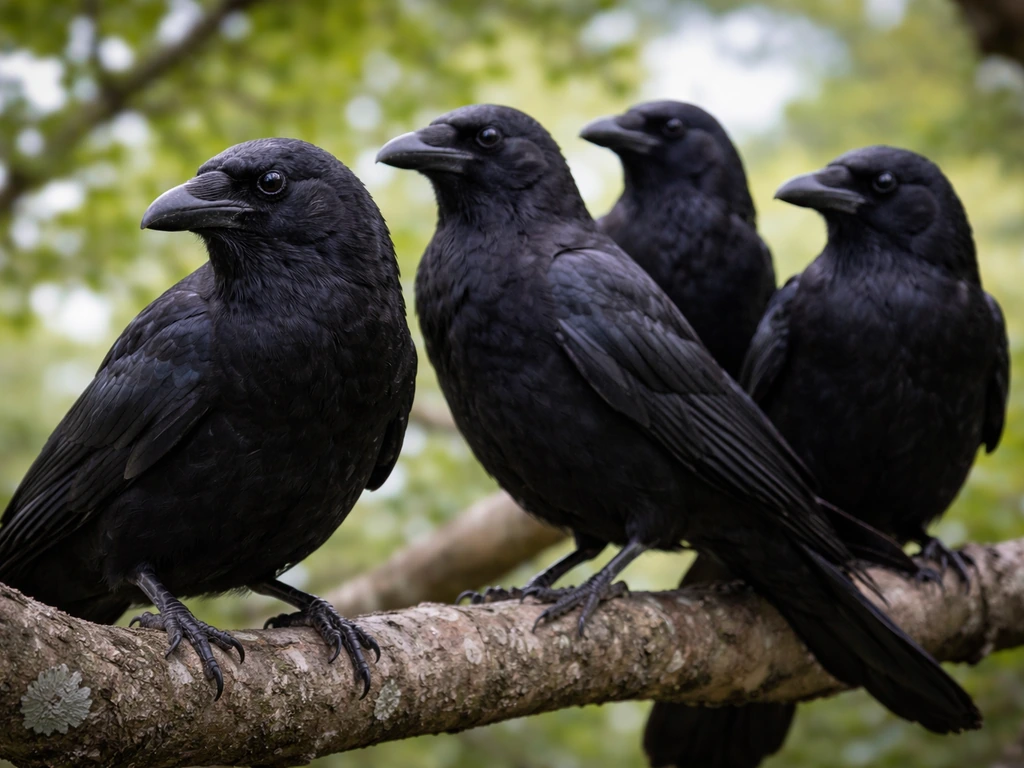
Crows are family birds. Cornell Lab of Ornithology notes they live in family groups year-round, so seeing several together is completely natural. Spiritually, a group is often linked to community, collective wisdom, or a message that feels bigger in scope. If you see a large, noisy gathering, some traditions read this as an amplified call to pay attention, almost like the universe is using a loudspeaker rather than a whisper.
A crow landing on or very close to you
This is the encounter people remember most. A crow choosing to land on you or within arm's reach is rare, and it tends to feel significant because it is. Spiritually this is widely interpreted as a direct, personal message: pay close attention to your thoughts right now, because they may be guiding you somewhere important. It can also signal a period of heightened intuition.
Repeated crow sightings over days or weeks
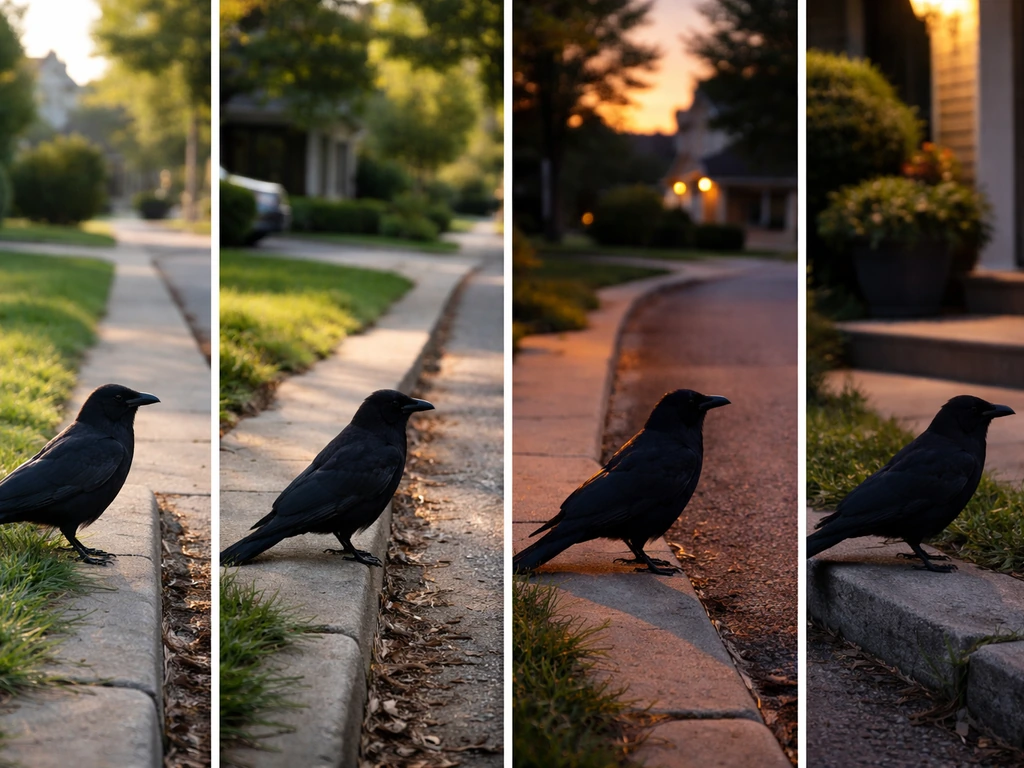
When a crow or crows keep appearing in your daily life, it is hard to dismiss as coincidence. Spiritually, repetition is usually read as escalation: the message is still there, you have not fully received or acted on it yet. This is a good moment to slow down and reflect on what theme or question keeps circling back in your own mind.
A crow near your home or workplace
Crows near the home are sometimes seen as protective sentinels in folklore, and sometimes as a heads-up to be watchful. The key is the feeling: did the crow's presence feel unsettling or strangely comforting? That internal response is often a better guide than any fixed rule about location-based omens.
How crow behavior changes the spiritual read
Loud calling and vocalizing
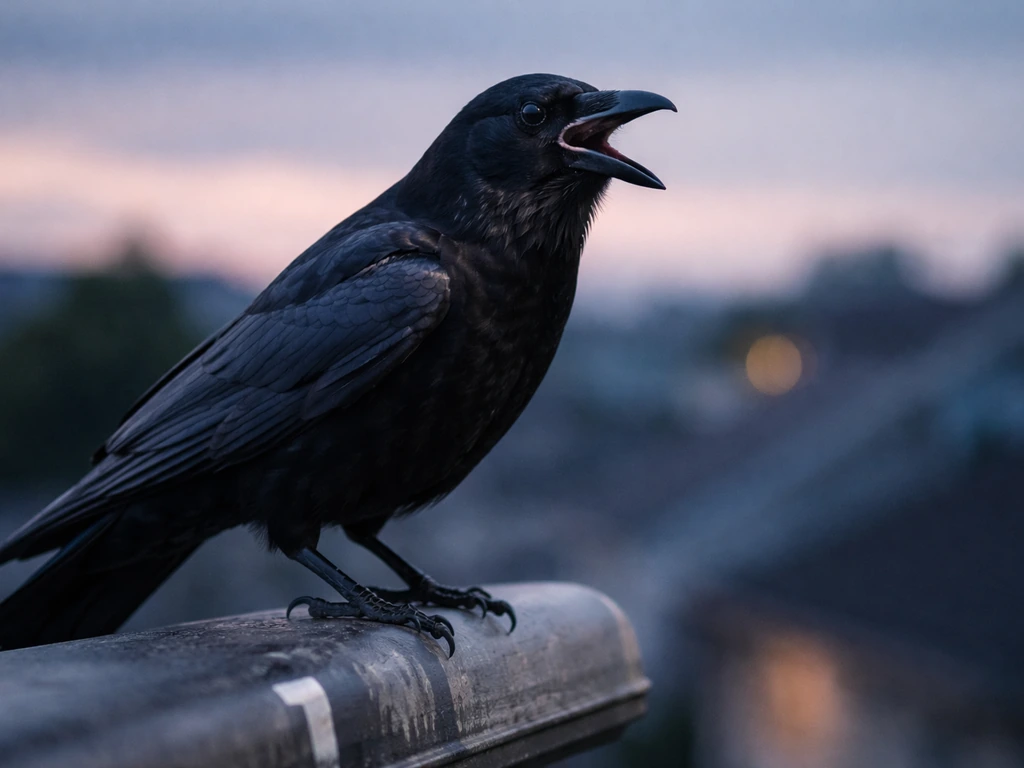
Crows are complex communicators, and research distinguishes different call contexts, including calls linked to food sources, territory defense, and social coordination. If a crow is cawing loudly and persistently near you, the spiritual interpretation often mirrors the biological one: something is demanding your attention. Loud crow calls are frequently read as a wake-up call, an urgent prompt to look at what you have been ignoring. In some traditions, it is also a form of announcement, something new is coming.
A crow tapping on your window
Window tapping is one of the most asked-about crow encounters, and it has a very practical explanation worth knowing: crows (and many birds) will attack their own reflection in glass, perceiving it as a rival. According to NIH NIEHS, birds attacking windows are likely trying to attack their own reflection and the behavior is most noticeable in spring during breeding and territorial defense [attack their own reflection in glass](https://www. niehs. nih.
gov/health/kids/topics/natural-world/wildlife/animals/birds-windows). Wildlife biologists note this territorial behavior is especially common in spring and tends to stop once nesting season ends.
So before you assign deep spiritual weight here, it is worth gently ruling out the reflection trigger. That said, in a spiritual framework, a bird persistently tapping your window is still a meaningful image. Windows represent the boundary between your inner world and the outer one. The traditional read is that something from the outside is trying to get your attention, or alternatively, you are being shown a mirror and asked to look honestly at yourself.
A crow that seems unusually calm or unafraid
Crows are naturally wary of humans, so one that is unusually relaxed around you is notable. This is often interpreted as an ancestral or guide energy making itself known, or simply as a sign that you are in a particularly receptive state. Some people experience this after a loss or during a period of deep spiritual inquiry, and it tends to feel quietly comforting rather than alarming.
A crow acting erratically or aggressively
Crows mob perceived threats, from hawks to humans who have bothered them before. If a crow is dive-bombing or acting aggressive toward you, it is almost certainly a nesting behavior with a very practical cause. Spiritually, if you still want to read it, aggression from a crow is sometimes framed as a strong push: stop delaying, confront what you have been avoiding. But please do not take it personally on the literal level.
Making the meaning personal: your emotions, timing, and life situation
Here is the part most spiritual guides skip over, and it is the most important part. The crow did not appear in a vacuum. It appeared in your life, at a specific moment. Two people can see the same crow on the same morning and need entirely different messages.
Ask yourself these questions as honestly as you can. What was I thinking about right before I noticed the crow? What is the biggest unresolved question or decision in my life right now? Did the encounter feel like a warning, a confirmation, or an invitation? What is my gut reaction to the word transformation? And finally: if the crow had a one-sentence message for me, what would I secretly hope it was?
That last question is not a trick. Your honest answer often reveals exactly what you most need to hear, and that is the message. Spiritual teacher Dr. Steven Farmer suggests that when you encounter an animal you feel is carrying a message, you can quietly ask it internally: what do you have for me? Then sit with the first honest response that surfaces, not the one you edit for reasonableness.
Timing matters too. A crow encounter during a period of grief, a major life decision, or the beginning of something new carries different weight than one on an otherwise ordinary Tuesday. If you are in the middle of a transition, the transformation and liminal-space symbolism of crow is almost certainly relevant. Just as the spiritual meaning of the cuckoo bird is often tied to cycles of change and new beginnings, crow tends to show up when a cycle is completing or another is about to start.
Spiritual warning vs wake-up call: there is a difference
People often worry that a crow sighting is a bad omen, a warning of death or disaster. It is worth unpacking that fear directly. In many Western folk traditions, black birds in general got tangled up with death symbolism, which made crows feel threatening. The black-naped monarch bird is also linked with spiritual messages in some traditions, especially around communication, protection, and inner guidance black-naped monarch bird spiritual meaning. But across the broader global picture, crow is far more often a guide, a trickster teacher, or a herald of change than a harbinger of doom.
That said, there is a meaningful difference between a spiritual warning and a spiritual wake-up call, and crow can deliver either. A warning tends to feel like a stop sign: something in your current path is out of alignment and needs to be examined now. A wake-up call feels more like a loud alarm: you have been asleep to something, and it is time to open your eyes. Both are ultimately helpful. Neither one is punishment.
If your crow encounter felt dark or unsettling, here is how to respond safely. Ground yourself first: step outside, breathe, drink some water. Then ask what specifically felt threatening, and whether that feeling points to a fear you already carry or something genuinely new. Often, unsettling encounters touch old wounds rather than predict future disasters. If the feeling persists, treat it as a prompt for shadow work, exploring what you tend to push away or avoid rather than a literal forecast of harm.
Also worth remembering: a crow near your window is almost certainly doing what birds do. Wellness practitioners who work with animal symbolism consistently remind us that if an interpretation does not resonate after honest reflection, you should keep exploring rather than locking into a fixed omen meaning. Trust your own read.
What to actually do after a crow encounter

The most grounding thing you can do right after a crow encounter is write it down before the details fade. Date, time, location, what the crow was doing, and most importantly, what you were thinking or feeling. This is not just record-keeping. Over time, patterns emerge that can be surprisingly instructive.
Spiritual journaling with wildlife sightings works best when you log specifics: the day, time, and exact location of the encounter, then your emotional state, the context of your life at that moment, and any intuitive impression you had on the spot. GAIA's guidance on working with animal spirit guides frames this kind of reflection as about synchronicities and patterns, not certainty, which is exactly the right posture.
After journaling, try setting a short intention or affirmation based on the crow's core energy. Something like: I am open to transformation and trust my own intelligence to navigate what is ahead. Or: I am paying attention. I am ready to see clearly. Keep it in your own words; the point is to create a conscious response to the encounter rather than just wondering about it.
If crow encounters repeat over the coming days or weeks, that pattern-tracking journal becomes genuinely useful. Look for: do they appear at the same time of day? During the same type of activity? When you are thinking about a specific person or situation? The answers can help you narrow the message considerably.
- Write down the encounter immediately: date, time, location, crow behavior, and your emotional state.
- Ask yourself: what was I thinking about just before I noticed the crow?
- Identify the dominant theme in your life right now (transition, grief, decision, new beginning) and see how crow's symbolism maps to it.
- Set a simple intention or affirmation aligned with transformation, wisdom, or the specific quality the encounter evoked.
- Track repeat sightings over the next two weeks to look for patterns in timing or context.
- If the encounter felt scary, do a brief grounding practice and then journal specifically about what fear was touched, rather than what disaster might be coming.
How different cultures and traditions see the crow
Crow's spiritual reputation is ancient, global, and fascinatingly varied. In Norse mythology, Odin traveled with two ravens or crow-like birds named Huginn (Thought) and Muninn (Memory), sending them out each day to gather wisdom from the world. That pairing of thought and memory as the crow's gifts is one of the most elegant summaries of crow symbolism in any tradition.
In Celtic mythology, the figure of Brân the Blessed, whose very name translates to blessed crow or raven, is associated with protection and the threshold between life and death. The famous tradition of keeping ravens at the Tower of London draws from this protective symbolism: legend holds that if the ravens ever leave, the kingdom will fall. Crows and ravens in the Celtic world were guardians, not threats.
In Japanese Shinto tradition, the three-legged crow Yatagarasu is a divine messenger and guide, sent to help Emperor Jimmu navigate difficult terrain. This guiding, problem-solving crow is a beautiful counterpoint to Western death associations, and it aligns closely with the intelligence and navigation themes that modern crow encounters often seem to carry.
Among many Native American traditions, the crow or raven figure (often used interchangeably in oral tradition) appears as the trickster-creator: a being who disrupts the existing order to bring about something new. Raven narratives include themes of creating salmon, establishing ceremonies, and instituting the cycle of birth and death itself. These are not dark stories. They are stories about a bird that has the courage to transform reality.
In Hindu tradition, crows are associated with ancestors, and feeding crows during certain ceremonies is an act of honoring those who have passed. This gives crow a warm, familial dimension that is easy to miss when you are only reading Western sources.
It is worth exploring how crow's symbolism compares with other birds that share similarly layered spiritual reputations. The black cormorant bird's spiritual meaning, for instance, also carries themes of depth, persistence, and navigating between worlds, in that bird's case between water and air. And just as the coucal bird's spiritual meaning is often connected to grounding and ancestral protection in African traditions, crow occupies a similar guardian-ancestor role in Hindu and some Indigenous frameworks.
A quick comparison: crow symbolism across traditions
| Tradition | Primary Symbolic Role | Core Qualities Attributed |
|---|---|---|
| Norse | Odin's messengers (Huginn & Muninn) | Thought, memory, wisdom |
| Celtic | Guardian at the threshold (Brân the Blessed) | Protection, passage between worlds |
| Japanese Shinto | Divine guide (Yatagarasu) | Navigation, divine assistance, problem-solving |
| Native American | Trickster-creator (Raven/Crow) | Transformation, disruption, renewal |
| Hindu | Ancestor messenger | Ancestral connection, reverence, honoring the dead |
| Western folk | Omen bird | Warning, death (often misread as negative) |
The takeaway from that table is important: only one tradition, and specifically Western folk superstition, leans heavily negative. Every other major tradition treats crow as a guide, protector, or messenger of transformation. That alone should ease some anxiety if your encounter felt ominous.
Crow in the company of other symbolic birds
Crows rarely appear in isolation in a spiritually active life. Many people who find themselves drawn to crow symbolism also start noticing other birds with layered meanings. If a small, unassuming bird has been showing up alongside your crow encounters, it is worth exploring the junco bird's spiritual meaning, which is often tied to hope, endurance, and the quiet persistence needed to move through difficult winters. Similarly, those attuned to bird symbolism sometimes find that the bold, boundary-crossing energy of the catbird's spiritual meaning echoes crow's trickster dimension, both birds carry themes of speaking your truth and using your voice without apology.
If you have been seeing crows alongside ground birds, the quail bird's spiritual meaning (community, groundedness, and moving as a unit) can offer a grounding counterbalance to crow's more intense transformational energy. And for those who feel drawn to the vocal, rhythm-heavy dimension of crow's calls, comparing it with the koel bird's spiritual meaning or the black-naped monarch bird's spiritual meaning can round out a richer picture of what birds with strong vocal or visual presence tend to symbolize across cultures.
The bottom line on crow's message for you
Crow is not a bird that shows up to scare you. It shows up to wake you up. Whether the message is about transformation, using your intelligence more boldly, paying attention to what is shifting in your life, or honoring an ancestor, it is almost always a call toward something, not a warning away from it. The crow's reputation as a dark omen is largely a Western cultural artifact that does not hold up when you look at the full global picture.
So: write down what happened. Sit with the feeling it left you with. Ask what you were already thinking about when the crow appeared, and be honest with yourself. Set an intention. And keep your eyes open. If crow has something to say to you, it will say it again.
FAQ
If I saw a crow and it felt ominous, how do I tell whether it is a real warning or just fear talking?
Not necessarily. If a crow appears while you are focused on a specific worry, the spiritual read is often about that exact topic, not a broad prediction. A quick check is to write one sentence about what you were thinking immediately before noticing the crow. That sentence usually reveals the “target” of the message (decision, fear, relationship, creative work, grief), which prevents overgeneralizing.
How can I differentiate between a “wake-up call” and a “stop sign” when a crow keeps showing up?
Look for your body reaction and timing, not the bird’s color alone. If you felt tension, dread, or a sense of “something is coming,” treat it as shadow material to explore. If you felt clarity, urgency, or relief, it more often reads as a wake-up call or guidance. Also note whether you can connect the feeling to something already in your life, if yes, it is usually a prompt to address an existing issue rather than a sign of new danger.
What should I do if a crow is tapping or hitting my window repeatedly, and I already ruled out the reflection?
Yes, but do it carefully. If the crow was near glass (window, car window, patio door), first assume it may have been attacking its reflection. Still, you can use the spiritual layer as a mirror prompt, ask yourself what “rival” or uncomfortable trait you keep projecting onto someone else. If there is no glass involved, then the symbolism is less about reflection and more about your attention and choices in the moment.
What practical steps can I take if I keep seeing crows and feel like I am not “getting” the message?
Track the pattern, then test one practical action. For example, if crows appear when you are postponing a decision, choose the smallest next step within 24 to 72 hours (a call, a draft email, an appointment, a boundary conversation). In many people’s experience, the “message” clarifies after you act, and the repeating encounters decline.
How do I know when crow symbolism applies to me versus it being normal crow behavior in my neighborhood?
It can, because some sightings are social and local rather than supernatural signals. If you notice crows mainly around food sources, trash bins, or a nearby park, that leans toward environmental behavior. Spiritually, you can still use it as a reminder, but frame it as “pay attention to where you are feeding your attention” (habits, news intake, relationships) rather than assuming a specific personal omen.
I tend to overthink animal signs. How can I journal about a crow encounter without spiraling?
Use journaling as a bias-corrector. Write the facts you can verify (date, time, location, what the crow did), then write only your emotional impression in a separate line. If later you realize your story about the crow changed, that is a clue you were projecting. Keeping facts and feelings apart helps you extract the real message without forcing it.
What is a good way to ask for clarity from the experience, so I get something actionable?
If you want a message that is more grounded and less vague, ask a narrower internal question. Instead of “what do you have for me,” try “what decision or conversation am I avoiding right now” or “what part of me needs protection.” This produces a more usable answer and reduces the chance you will interpret random traits (like color or location) as destiny.
If a crow seems aggressive, is it wrong to interpret it spiritually?
Yes, in the literal sense, crows can be protective during nesting. If a crow is dive-bombing near your path, the immediate priority is safety, avoid the area and give it distance. If you still want the spiritual layer, interpret it as “create space for your next step” and slow down, do not use it as permission to face danger just to fulfill a lesson.
What if my crow encounter means something different depending on how I remember it?
Start by confirming which “version” of the encounter you are remembering. If your memory includes details like “it stared at me” or “it was right above my head,” write what you truly remember versus what you assumed. Then revisit your earlier emotions and what was happening in your life at that time. That distinction keeps the spiritual meaning aligned to your real experience, not the story your mind invents afterward.
I get anxious when I look for signs. Is there a way to use crow symbolism safely?
If you have anxiety or a history of obsessive sign-seeking, set a time limit. For instance, decide to reflect for 10 minutes, write one takeaway, and then return to normal daily priorities. The goal is guidance, not constant monitoring, and repeated reassurance can become a cycle that increases stress rather than helping you act.
Next Article
Cat Bird Spiritual Meaning: What It May Symbolize and What to Do
Interpret cat bird spiritual meaning by scenario, symbols of cats and birds, and step-by-step reflection and compassiona