Quick spiritual takeaway: what a blue bird is telling you
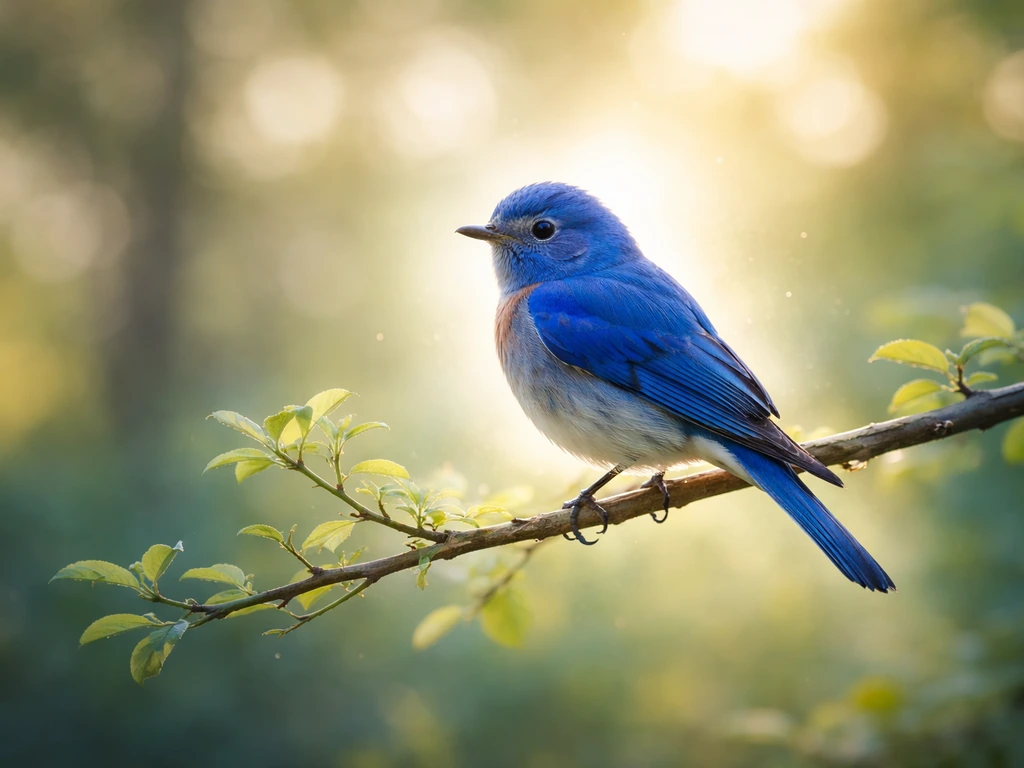
Seeing a blue bird is most commonly interpreted as a message of hope, joy, peace, and open communication. Across a wide range of spiritual traditions and folk beliefs, the blue bird shows up when you need a reminder that things are moving in a positive direction, even if you can't quite see it yet. If you just had an encounter and you're wondering whether it meant something, the short answer is: yes, it likely carries a meaningful message for you right now, and the most likely theme is one of optimism, gentle encouragement, or a nudge to speak your truth. That said, the fuller meaning depends heavily on the details of your encounter, your own life context, and which cultural or spiritual lens resonates most with you.
What seeing a blue bird usually means spiritually
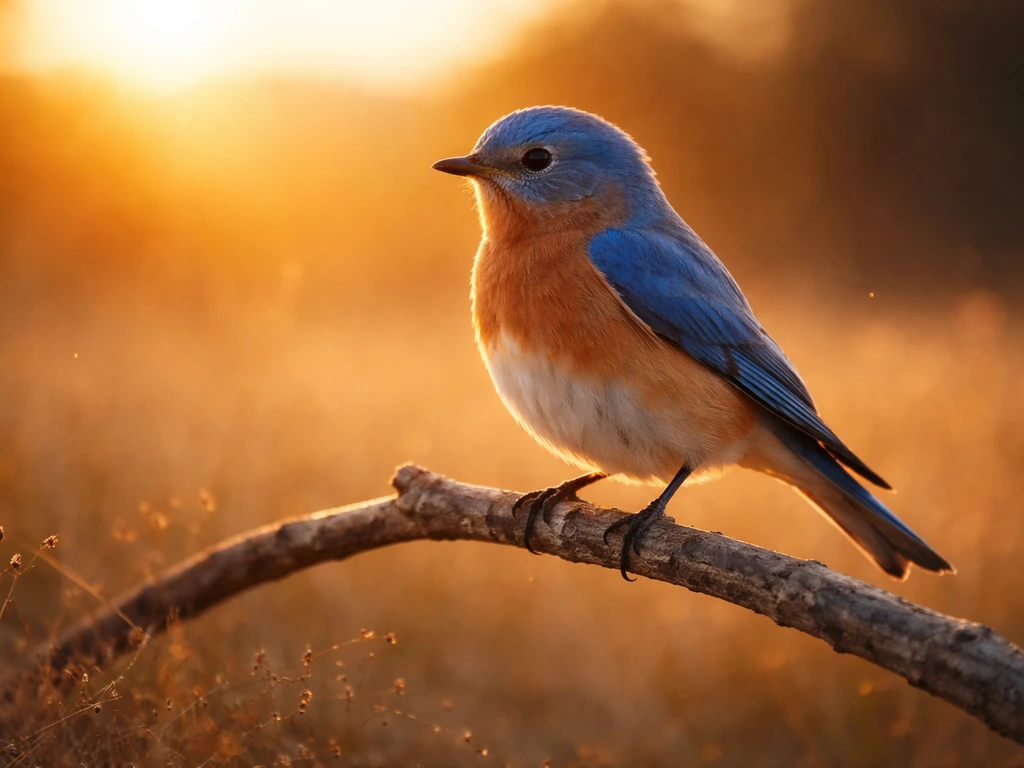
The blue bird's most enduring spiritual reputation is tied to happiness and good fortune. This goes back centuries in Western culture, popularized through Maurice Maeterlinck's 1908 play 'The Blue Bird,' which cemented the bluebird-of-happiness symbol in the popular imagination. But long before that play, the image appeared in American folk art as a motif associated with good fortune, friendship, love, joy, and even fertility, often tied to the bluebird's return in early spring as a harbinger of better days ahead.
Beyond happiness, spiritual counselors and symbolists frequently frame the blue bird's core messages around a few recurring themes. The color blue itself is widely associated with communication, intuition, and calm, so a blue bird sighting often layers those qualities onto the base message of joy. Some interpreters describe it as a symbol of 'unwavering belief' that the universe is working in your favor, even when circumstances feel uncertain. If you've been going through a rough stretch, many practitioners would say the blue bird is essentially a spiritual pick-me-up: a visible, tangible reminder to look up and hold on.
- Hope and optimism: things will improve; don't give up on what you're building
- Joy and happiness: you're being invited back into a lighter emotional state
- Communication: something important needs to be said, heard, or acknowledged
- Peace and harmony: a signal to slow down, breathe, and find your calm
- Good fortune and positive change: a favorable shift is on the horizon
- Faith: trust in the process, even without visible evidence of progress
These themes aren't mutually exclusive, and your encounter may carry more than one of them. The trick is figuring out which one lands most deeply for where you are right now in life.
How to interpret your specific encounter
The details of how and where you saw the blue bird matter more than most people realize. A blue bird perching on a wire ten feet away and calling softly carries a different energy than one that landed on your shoulder or tapped at your window. Walk through these dimensions to sharpen your interpretation.
What the bird actually did
Eastern Bluebirds are known to perch low, call in a short wavering voice, and drop suddenly to the ground to catch an insect. So a bird simply sitting nearby and singing isn't unusual behavior on its own. But if your encounter felt different from a routine sighting, pay attention to what made it stand out. A blue bird that lingered near you, approached you closely, made extended eye contact, or seemed to track your movements is typically read as a more direct message. A bird that sang persistently is often linked to communication themes: someone or something is trying to get your attention. A bird that flew directly toward you and then veered off might symbolize a message being delivered and then released.
If you noticed courtship-like wing-fluttering behavior, the symbolism may lean toward themes of love, partnership, or new beginnings in a relationship. Male bluebirds perform distinctive wing and tail displays during courtship, so if you witnessed something like that, creativity and connection are likely in the message.
Where you were and what you were doing
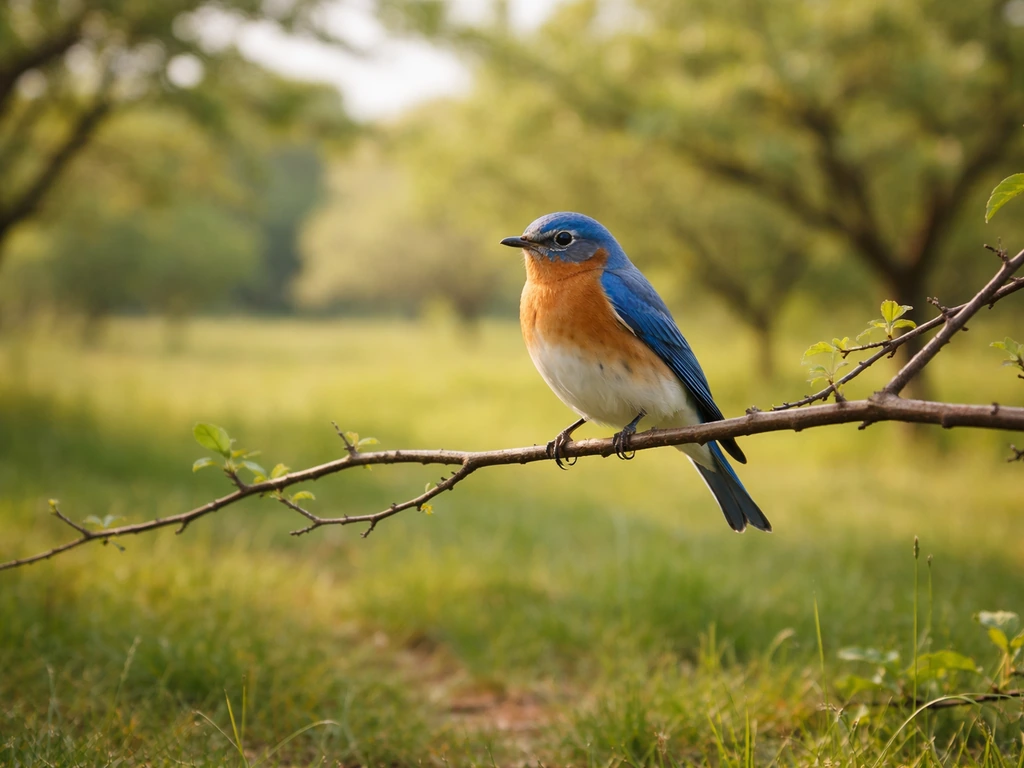
Location sets the stage. Bluebirds naturally favor semi-open habitats: orchards, meadows, parklands, and areas with scattered trees and short ground cover. If you saw one in that kind of setting, it's in its element, which is ordinary. But if you saw one in an unexpected place, like near a window in an urban area, at a graveside, during a moment of prayer or grief, or right after a meaningful conversation, the context amplifies the spiritual weight considerably. Timing matters too. A blue bird appearing at a crossroads moment, right before a big decision, immediately after you asked for a sign, or on a meaningful anniversary, is harder to dismiss as coincidence, and most spiritual frameworks would say you shouldn't try to.
The emotional tone of the moment
This is the detail most people overlook. How did the encounter make you feel? Not what you thought about it afterward, but the immediate emotional response, before your analytical mind kicked in. Did you feel comforted? Startled? Moved to tears? Excited? That gut-level response is often the most reliable guide to what the message is and whether it's relevant. A sudden wave of peace or warmth during the sighting is widely considered a confirmation sign in many spiritual traditions. A feeling of being watched or called is often tied to communication or guidance themes.
Cultural and symbolic lenses on the blue bird
Different traditions see the blue bird through different eyes, and knowing a few of those perspectives helps you find the one that resonates most with your own worldview.
| Tradition / Lens | Core Blue Bird Meaning | Emphasis |
|---|
| Native American (various tribes) | Light, positivity, spiritual medicine, good fortune | Healing, guidance, and connection to positive forces |
| American folk tradition | Bluebird of happiness, good luck, friendship, love, fertility | Optimism, spring renewal, favorable omens |
| General spiritual / New Age | Hope, communication, intuition, peace, harmony | Messages from spirit, alignment with higher self |
| Color symbolism (blue) | Truth, clarity, calm, open communication, trust | Throat chakra, speaking and hearing truth |
| Literature / mythology | Happiness pursued and found (Maeterlinck's 'The Blue Bird') | The idea that joy is already close, not far away |
It's worth knowing that the specific species matters too. The Eastern Bluebird, with its vivid blue back and rusty orange chest, carries slightly warmer, more heart-centered energy than, say, a purely blue bird with no warm tones. Meanwhile, blue and white birds tend to be interpreted through a lens of clarity, purity, and spiritual communication. The color combination you observed adds nuance to the base message.
If you're working within a Celtic or Irish spiritual framework, small birds in general are often seen as messengers between worlds, and the wren in particular holds that role. But the blue wren carries its own distinct spiritual identity in those traditions, blending the messenger quality with the calm, communicative energy of the color blue. In contrast, the Eastern Bluebird is far more prominent in North American spiritual contexts, where it's practically synonymous with the bluebird-of-happiness archetype.
If you live near water and your sighting involved a large, slow-moving blue bird rather than the small and lively bluebird, you may actually be dealing with a very different message entirely. The blue heron's spiritual meaning leans heavily toward patience, solitude, and deep introspection, quite the opposite energy from the cheerful, social bluebird. Getting the species right helps you get the message right.
Personal reflection and practical next steps

Once you've sat with the encounter for a bit, the most useful thing you can do is move from 'I wonder what that meant' to active reflection. Here's a straightforward process that works well.
- Write it down immediately. Describe the encounter in as much sensory detail as you can: what the bird looked like, what it did, where you were, what time it was, and how you felt in the first few seconds. Do this before the memory fades.
- Ask yourself three grounding questions: What area of my life feels most unsettled or uncertain right now? Is there something I've been afraid to say or afraid to hear? And: have I been forgetting to notice the good things around me? Blue bird messages almost always connect to one of these.
- Sit with the theme that resonates most. Don't force yourself to adopt a meaning that doesn't feel true. If 'hope' lands but 'communication' doesn't, go with hope. Your own resonance is the best filter.
- Consider what action, if any, feels called for. Sometimes the message is simply to feel better. Other times it's a nudge to have a conversation, start something new, or return to something you abandoned.
- Return to it in a few days. Write a short follow-up note about what shifted (if anything) in your circumstances or mood since the sighting. Patterns across multiple sightings or synchronicities are often more instructive than a single event.
In terms of which life areas the blue bird most commonly speaks to: relationships and communication top the list, followed by creative projects, personal joy and self-care, and matters of faith or spiritual practice. If you've been feeling stuck or disconnected in any of those areas, that's likely where the message is pointing. Many people also find that small songbirds appearing unexpectedly tend to signal a return to simpler pleasures and grounded everyday joy, rather than grand life changes. The blue bird is rarely a dramatic messenger. It's more like a gentle hand on the shoulder.
Reputable spiritual practitioners often describe receiving signs not as a lightning-bolt revelation but as a quiet 'sense of knowing,' a feeling of love or comfort, or an inner voice that simply says 'pay attention.' If your blue bird encounter felt like any of those, that's the sign confirming the sign. Trust it, note it, and carry it with you without overthinking it.
Stay grounded: when ordinary explanations apply too
Here's the honest part, and it matters: blue birds behave in ways that can look significant but are actually completely routine. Eastern Bluebirds readily visit feeders for mealworms, sunflower seeds, and suet, so if you live near a feeder or recently put one out, the bird may simply be doing bird things. They're cavity-nesters that thrive near human-made nest boxes, which means neighborhoods with birdhouses see bluebirds regularly. Their spring return is well-documented and timed to breeding season, so an uptick in sightings in March and April is biological, not necessarily mystical.
None of that cancels out a spiritual interpretation. It just means you want to hold both possibilities gently rather than latching onto one so hard that you either dismiss a genuine intuition or spiral into obsessive sign-reading. A useful mental practice here is to step back from the thought 'this was definitely a message' and treat it more like 'this felt meaningful, and I'm going to sit with what that might be offering me.' That slight shift, where you observe the thought rather than become it, keeps you spiritually open without letting a bird sighting take over your week.
A good rule of thumb: if the encounter gave you a feeling of peace, clarity, or gentle encouragement, work with that feeling. Let it do its job, which is to make your day a little better and your outlook a little wider. If the encounter is making you anxious, or you're hunting for 'the exact right meaning' with growing urgency, that's a signal to step back and ground yourself. The blue bird's message is almost always a good one. It doesn't need to be decoded under pressure.