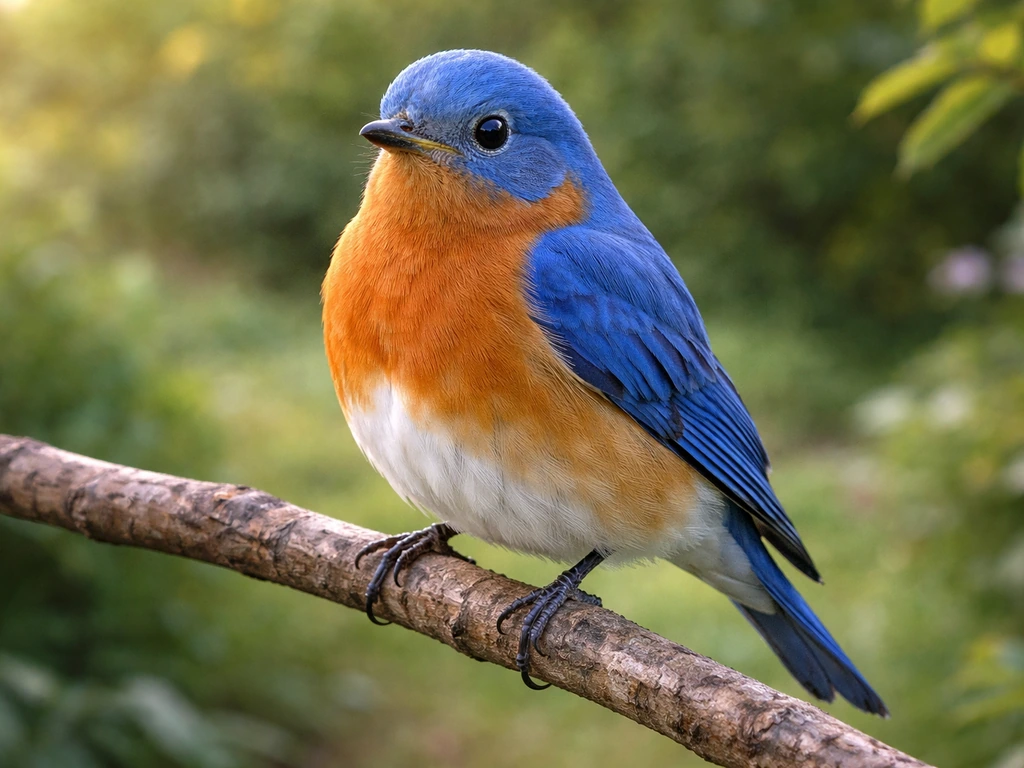
If a Blue Wren just caught your attention, the most likely spiritual message is one of authentic self-expression, joyful resilience, and the courage to show up fully as yourself, even when you feel small. Blue Wrens are tiny birds that carry an almost unreasonable amount of vibrancy and confidence, and that combination is the heart of what most spiritual traditions and personal reflection frameworks point to when this bird crosses your path. But the specific meaning that fits you depends on exactly what the bird was doing, when it appeared, and what was already on your mind.
Blue Wren Bird Spiritual Meaning and What to Do Next

Eliza Thornwick
29 Apr 2026
Core symbolism themes to connect with your life
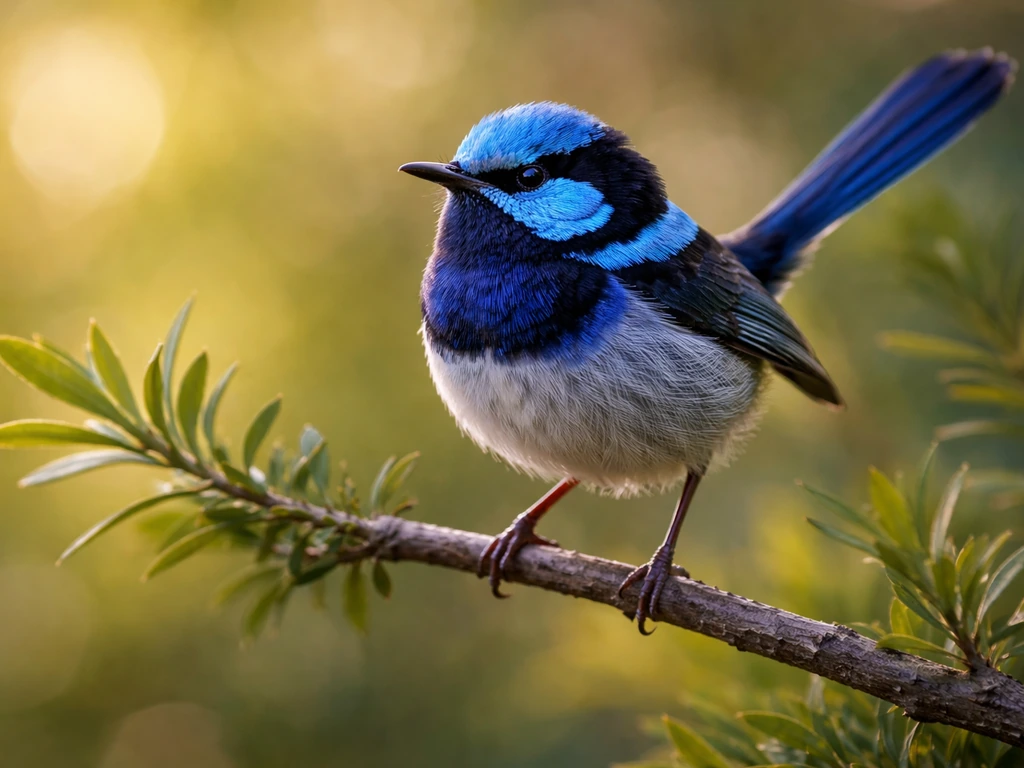
The Blue Wren (most commonly the Superb Fairy-wren or Splendid Fairy-wren in Australia) carries a striking spiritual profile precisely because of the contrast it embodies: a tiny, energetic bird wearing one of the most intense blues in the natural world. Spiritually, that contrast is the message. Here are the major themes consistently connected to this bird across spirit animal and totem frameworks.
- Authentic identity and confidence: The male Blue Wren's brilliant cobalt plumage (which develops during breeding season, roughly September through April in Australia) is a vivid symbol of owning who you are without apology. If you've been dimming yourself for others, this bird often shows up as a nudge to stop.
- Joyfulness and positive thinking: Multiple spiritual frameworks highlight joy as the Blue Wren's primary gift. Its constant movement, song, and playfulness are seen as reminders not to take life so heavily.
- Communication and emotional expression: The Blue Wren is a vocal, alert bird. Its appearance is often linked to a message about speaking your truth, expressing feelings you've been sitting on, or opening up to someone.
- Loyalty, family, and community: In the wild, Blue Wrens are cooperative breeders. The whole family group helps raise and defend nestlings. Spiritually, this maps to themes of chosen family, loyalty, and the power of showing up for your people.
- Vigilance and protection: Despite their small size, Blue Wrens actively defend their territory. This is often read as a message about protecting your energy, your home, or what matters most to you.
- Hidden strength: What looks delicate carries surprising resilience. This is a common theme in wren symbolism generally, and it applies directly to the Blue Wren's spiritual signature.
It's worth noting that these themes come from a blending of modern spirit animal frameworks, cross-cultural bird symbolism, and personal reflection traditions rather than one single ancient source. Different cultural traditions, including Native American, Celtic, and Christian perspectives, each bring their own lens to blue birds and wrens separately. The Blue Wren sits at the intersection of those, so there isn't one fixed universal script. What matters most is which theme resonates immediately when you read it, because that resonance is your own intuition pointing you toward the relevant message.
How to interpret your exact encounter
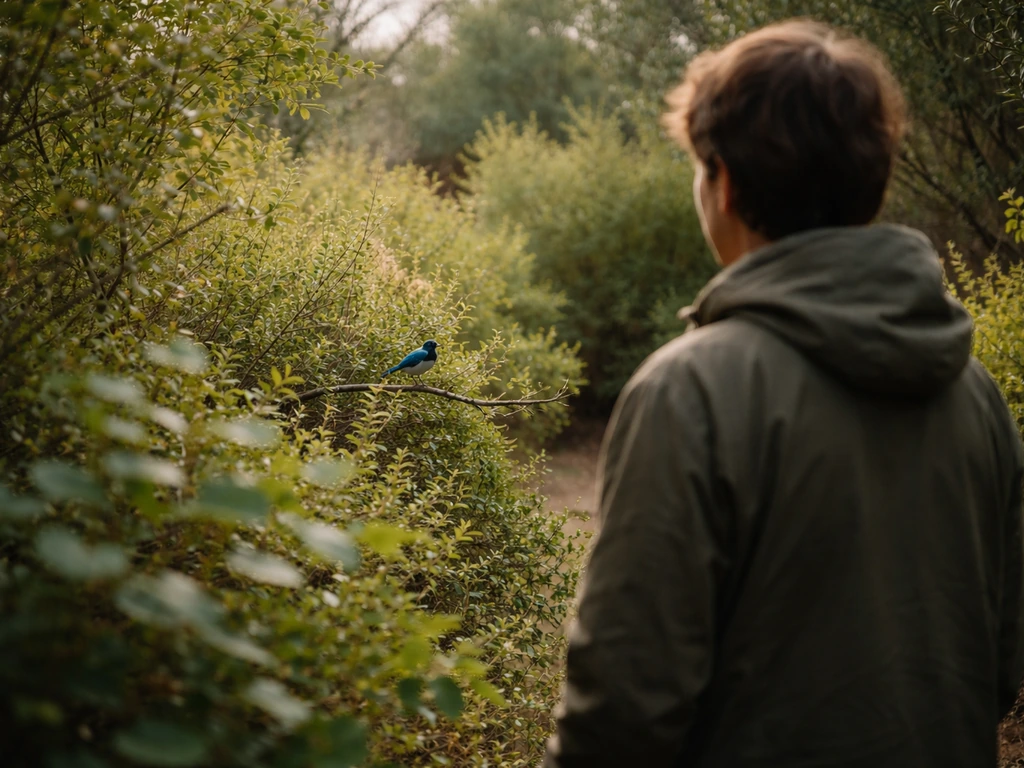
The single biggest mistake people make when searching for the meaning of a bird encounter is grabbing the first symbolic meaning they find and applying it wholesale. A more useful approach, and the one that actually yields something you can act on, is to slow down and notice three things: what the bird was doing, where you were and what you were feeling, and whether this is a one-time sighting or a repeating pattern.
Sighting (you saw it once)
A single clear sighting of a Blue Wren, especially if it made you stop and take notice, is worth paying attention to as a prompt for reflection rather than a definitive omen. Ask yourself: what were you thinking about in the moments before you saw it? That's often the subject the message is touching. A one-time sighting usually points toward the joy and communication themes, a gentle tap on the shoulder rather than an urgent signal. If you also feel drawn to the idea of an eastern blue bird spiritual meaning, you can use the same reflection prompts to see which theme matches your current life context.
Hearing it without seeing it
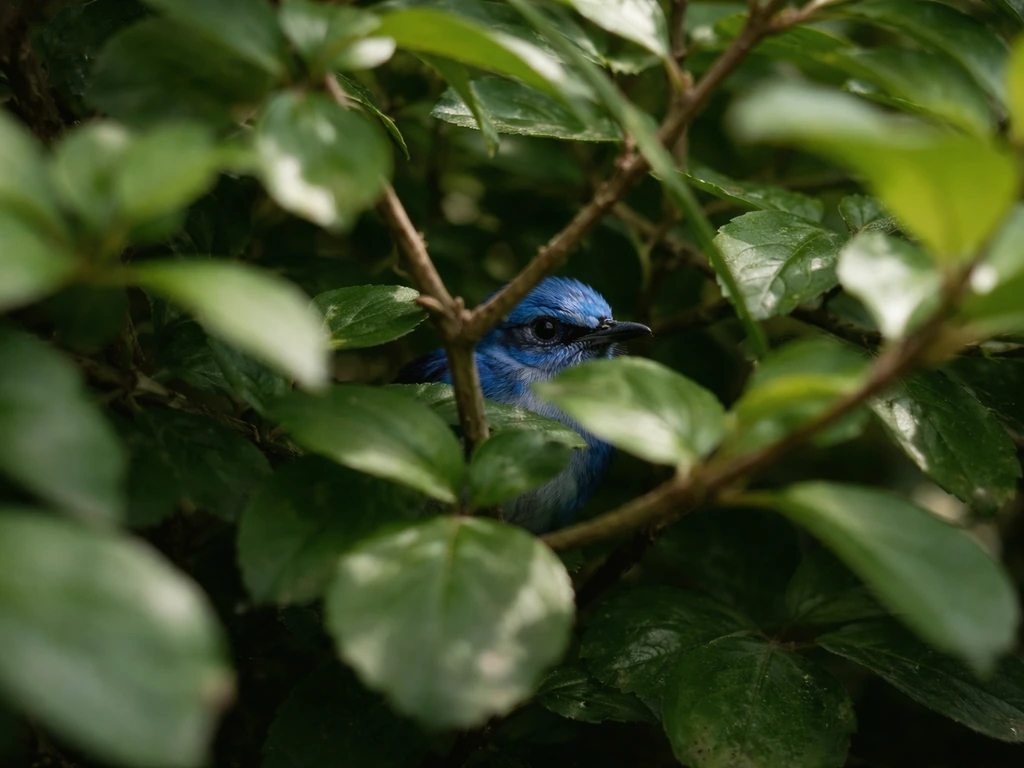
Blue Wrens are vocal and alert birds. Hearing a Blue Wren's call without seeing the bird is often associated spiritually with messages you need to listen for rather than look for. This encounter type tends to connect most strongly to the communication theme: something or someone is trying to reach you, or there's an inner voice you've been tuning out.
Repeated visits or sightings
If you're seeing a Blue Wren regularly, whether in your garden, on your morning walk, or in different locations across a short period of time, that repetition is the real signal. If you're looking specifically for blue heron bird spiritual meaning, use the same approach: notice the situation, your reaction, and which message feels true for you right now. Repeated encounters almost universally indicate that the theme being pointed to is something you haven't fully addressed yet. Look at the core symbolism themes above and ask yourself honestly: which one have you been avoiding?
Specific meanings by behavior
The behavior of the Blue Wren at the moment of encounter layers on top of the core symbolism and often sharpens the message considerably. Here's how to read the most common scenarios.
| Behavior | Most Common Spiritual Interpretation | Reflection question to ask yourself |
|---|---|---|
| Landing near you or approaching closely | A direct, personal message; often linked to confirmation, reassurance, or a call to pay attention right now | What do I most need to hear or acknowledge in this moment? |
| Window tapping or appearing at a window | A message trying to get through a barrier; themes of communication blocked or a truth waiting to be seen | What am I refusing to look at or acknowledge in my life? |
| Entering your home or garden area | Connection to domesticity, family loyalty, and protection of your personal space or relationships | Is there something in my home life or close relationships I need to tend to? |
| Nesting nearby or defending a nest | Strong themes of family, community, protection, and building something lasting; also loyalty and cooperative effort | Who or what am I being called to protect or invest in more fully? |
| Following you or staying near you over time | A persistent spiritual companion message; often linked to a theme you haven't resolved or a quality the bird represents that you need to embody | What quality does this bird have that I've been denying in myself? |
| Singing loudly or calling repeatedly | A call to communicate, express yourself, or speak up about something you've been holding back | What have I been wanting to say but haven't? |
| Appearing during or after conflict | A reminder of resilience, loyalty, and the possibility of rebuilding; also a prompt to check whether your communication in the conflict was authentic | Am I expressing myself honestly in this situation, or am I holding back out of fear? |
When it's a 'good' vs 'challenging' message, and how to respond

Most Blue Wren encounters carry an uplifting or encouraging energy. The bird's joyfulness, vibrancy, and cooperative nature lean naturally toward positive spiritual interpretations: you're on the right track, express yourself more fully, lean into your community. Parks Australia notes that during the breeding season (September, December) the male splendid fairy-wren grows cobalt-blue breeding plumage, a seasonal shift that may explain why vivid blue presence often stands out express yourself more fully. But not every encounter is simply a warm hug from the universe.
When the message feels supportive
If the sighting lifted your mood or felt like a confirmation, trust that. This type of encounter, especially if it comes right when you needed a boost, is generally pointing toward joy, identity confidence, and moving forward with something you've been hesitant about. Receive it as encouragement and let yourself feel it.
When the message feels like a challenge or a warning
A Blue Wren that seems agitated, is tapping insistently at a window, or appears in a context that feels unsettling to you is more likely pointing to something that needs attention: a relationship issue, a communication breakdown, or an area where you've been shrinking rather than showing up. In these cases, the message isn't negative, it's urgent. The bird's energy says: you have what it takes, now use it.
Finding a dead Blue Wren
Finding a dead Blue Wren can feel alarming, but across many cultural lenses, a dead bird is most often read as a symbol of transformation and ending cycles rather than a bad omen for you personally. It may signal that a phase, pattern, or situation in your life is completing. If you find one, handle it practically first (avoid direct touch, use gloves), and then sit with what has recently been ending or releasing in your life. Many people find that the 'transformation' interpretation fits something very real that's already happening.
Blue Wren droppings
Spiritually, bird droppings landing on you are commonly interpreted across many traditions as a cleansing or even lucky sign rather than a negative one. If a Blue Wren drops on you specifically, some frameworks add the element of emotional release or clearing out old energy. Don't spiral into worry about this one.
Timing and context cues: when you saw it matters
The when and where of a Blue Wren sighting can add important nuance to your interpretation. Here are the most common timing and context factors and what they tend to point toward.
- Morning sighting: Often linked to new beginnings, a fresh start on a situation, or the start of a new phase. If you saw a Blue Wren first thing in the morning, the message is likely about how you're approaching a new chapter.
- Evening or dusk sighting: More reflective energy. This timing often connects to themes of reviewing what you've built, releasing what's not working, or receiving insight after a period of effort.
- During or right after a personal transition (job change, relationship shift, move): The Blue Wren's identity and confidence themes are most active here. The message is almost always about stepping into who you're becoming rather than clinging to who you were.
- After conflict or a difficult conversation: The communication and loyalty themes are heightened. Ask whether you need to reconnect with someone or finally say something you've been avoiding.
- During breeding season (roughly September through April in Australia, when males are in full cobalt-blue plumage): Encountering a Blue Wren in his full display is spiritually amplified. The message around authentic identity and showing up fully is at its strongest.
- In an unexpected location (not a garden or park, somewhere unusual): An out-of-context sighting tends to carry a stronger 'pay attention' signal. The more surprising the location, the more deliberately your intuition is flagging it.
- What you were thinking or feeling right before: This is the most important context cue of all. The subject of your thoughts at the moment of encounter is almost always the subject the message is addressing.
A note on not over-interpreting
It's easy to go down a rabbit hole with bird symbolism and end up more confused than when you started. Blue birds generally carry a wide range of meanings depending on tradition, and bluebirds specifically vary quite a bit across different cultural frameworks. The Blue Wren is its own creature with its own energy, but even within that, there's no single universal meaning that applies to every person in every situation. “Helpers at the nest” is a social structure in which juvenile or sexually mature individuals blank" rel="noopener noreferrer">remain with their parents and help raise subsequent broods or litters instead of dispersing to reproduce. The most useful interpretation is always the one that feels personally true and connects directly to something real in your current life. If you're cross-checking similar signs like a blue and white bird spiritual meaning, keep the focus on what feels personally true right now. If a meaning doesn't connect to anything you're actually experiencing right now, it's probably not your message this time. This is also why the Blue Wren's spiritual meaning may feel different from what you find when looking at related birds like the blue heron, the eastern bluebird, or the general wren, each of which carries its own distinct symbolic energy.
Practical ritual and journaling guide to integrate the message
Once you've noticed your encounter and have a sense of which theme or themes resonate, journaling is one of the most reliable ways to actually absorb the message and turn it into something useful. Here's a simple, repeatable process you can use right after any Blue Wren encounter.
- Write down the encounter in detail: where you were, what time of day, what the bird was doing, and how long the interaction lasted. Include what you were thinking or feeling in the minutes before you noticed it.
- Note your immediate gut reaction: did the encounter feel warm and encouraging, or did it feel like a nudge toward something uncomfortable? That emotional response is data.
- Look at the core symbolism themes (identity/confidence, joy, communication, loyalty, protection, hidden strength) and write down which one, if any, immediately jumped out at you or made you feel a little uncomfortable. Discomfort often means relevance.
- Ask yourself: where in my life right now is this theme most active or most unresolved? Write without editing yourself for at least five minutes on this question.
- If the encounter involved a specific behavior (window tapping, nesting, following you), revisit the behavior meanings above and add any additional reflection based on that layer.
- Write one concrete action you could take in the next 24 to 48 hours that honors the message. It doesn't need to be dramatic: sending a message to someone, setting aside time for a creative project, or simply allowing yourself to feel more joy in a small moment all count.
- If the Blue Wren appears again, revisit your journal entry and notice what has shifted since you last wrote. Repeated encounters often deepen and clarify the original message over time.
A simple grounding ritual if the encounter felt unsettling

If the encounter triggered anxiety rather than curiosity, especially if you found a dead bird or had a startling window-tapping experience, try this before journaling. Sit quietly for a few minutes, place both feet flat on the floor, and breathe slowly until you feel settled. Remind yourself that the encounter is information, not a verdict. You are not in danger. Then, from that calmer place, move through the journaling steps above. Spiritual encounters are most useful when you can receive them from a grounded, curious place rather than a fearful one. The Blue Wren's energy is fundamentally joyful and resilient, and that's the spirit it's most likely bringing to you.
FAQ
How do I know which spiritual theme of blue wren bird spiritual meaning is the right one for me?
If you are unsure whether the message is about authentic self-expression, communication, or an “avoidance you need to face,” start with the bird’s action, not the color. Ask, “What was happening in the moment I noticed it,” then pick the theme that matches your strongest felt sense. If you try to force a single theme from generic lists, you usually end up missing the one that fits your current life context.
Is it ever wrong to treat a Blue Wren sighting as a spiritual “omen”?
No. A spiritual read is considered guidance, not a guarantee. Use it to choose a next step you can verify in daily life, like having a clearer conversation, setting a boundary, or doing a small creative act. If acting on the message makes you panic or override your logic, pause and re-check what you actually need right now.
What should I do if the Blue Wren encounter makes me anxious instead of reflective?
Yes, when the interpretation relies on fear. Your own anxiety matters more than the symbolism. If you feel threatened, you can still reflect, but do it from grounding first (slow breathing, feet on the floor, remind yourself you are safe). Then journal with a practical question: “What action would help me today?” rather than “What bad thing will happen?”
How should the bird’s behavior (calm vs agitated) change the way I interpret it?
If the Blue Wren lands close, behaves calmly, and your mood lifts, focus on encouragement and identity confidence. If it shows agitation, repeated window-tapping, or appears in an unsettling setting for you, treat it as a prompt for repair, especially around communication or a relationship dynamic. The behavior-to-feeling link is your decision tool.
What does it mean when I only see a Blue Wren once?
A single sighting is best treated like a gentle prompt, so avoid big predictions. Try a short “pre-and-post” check: what were you thinking about immediately before you saw it, and what topic gets reinforced after. That usually reveals the exact area the message is pointing to.
If I keep seeing Blue Wrens repeatedly, what should I do differently?
Repetition usually means the same lesson is still unfinished. Pick one theme you keep circling, then choose one concrete micro-step within 24 to 72 hours, like sending the message you keep delaying, asking a clarifying question, or doing one courageous thing that expresses your real preferences.
What if I hear a Blue Wren calling but never actually see it?
If you hear the call without seeing the bird, treat it as an “attention signal” for listening rather than searching. Make a quick check for what you have been ignoring, such as an inner thought you keep dismissing or a message someone is trying to communicate. Then follow up in a normal, practical way.
How should I respond if a Blue Wren is tapping at a window?
Don’t interpret a window-tapping event as a spiritual instruction to ignore boundaries. Instead, combine the meaning with a practical safety check: gently deter window collisions, and reflect on what communication breakdown or relationship tension might be “banging on the same door” in your life.
What is the best way to think about finding a dead Blue Wren?
If you find a dead Blue Wren, handle it with practical care first, then reflect on what is ending or transforming for you right now. Avoid fear-based conclusions about your personal fate. A useful journaling prompt is: “What pattern has been completing itself lately, even if I resisted the change?”
What if a Blue Wren drops on me, and I start worrying?
If droppings land on you, it can be read as cleansing or emotional release, but keep it grounded. Wipe or wash normally, then do a simple emotional reset, like naming one thing you are ready to let go of. If the moment makes you spiral, treat the meaning as optional reflection, not a reason to worry.
I found conflicting meanings in different sources, how do I handle that?
Yes. Cross-checking related bird meanings can dilute the message if you jump between traditions. Use a single anchor framework: choose one theme that feels immediately true, then apply it to your current situation. If none of the meanings fit, it is valid to conclude the sign is just “attention training,” and you can wait for more clarity.
What’s a fast way to make the spiritual meaning feel personal and actionable?
If you interpret it through your body, you can reduce confusion. Notice how you felt during the encounter, then match that sensation to the theme: lifted mood often aligns with encouragement and confidence, heaviness or agitation often aligns with repair and honest communication. This keeps the meaning personal instead of generic.
How can I avoid obsessing over signs and still stay open?
If the Blue Wren meaning is coming from a “sign search,” you can accidentally force meaning where there is none. Try this reset: for one day, live normally, then reflect only after an encounter that genuinely grabs your attention. If the message does not connect to something real afterward, it likely was not your specific guidance this time.
Next Article
Blue Bird With Orange Chest Meaning Spiritual Message
Interpret a blue bird with orange chest spiritual omen, symbolism of blue and orange, and what to do today.