If you're seeing a blue bird with an orange or rusty chest and wondering what it means spiritually, here's the short answer: you're most likely looking at a bluebird carrying a message about joy, emotional healing, and the courage to express your true self. In Celtic-style and modern spiritual framings, bluebirds are commonly associated with happiness, prosperity, good luck, and communication or self-expression themes bluebirds with happiness, prosperity, good luck.
Blue Bird With Orange Chest Meaning Spiritual Message

Eliza Thornwick
15 Apr 2026
The blue-and-orange combination is one of the more vivid and meaningful color pairings in bird symbolism, and it shows up consistently across modern spiritual traditions as a sign of positive transformation. But the full picture depends on which bird it actually is, what it was doing, and what's happening in your life right now. Let's walk through all of it.
First, figure out which bird you're actually seeing
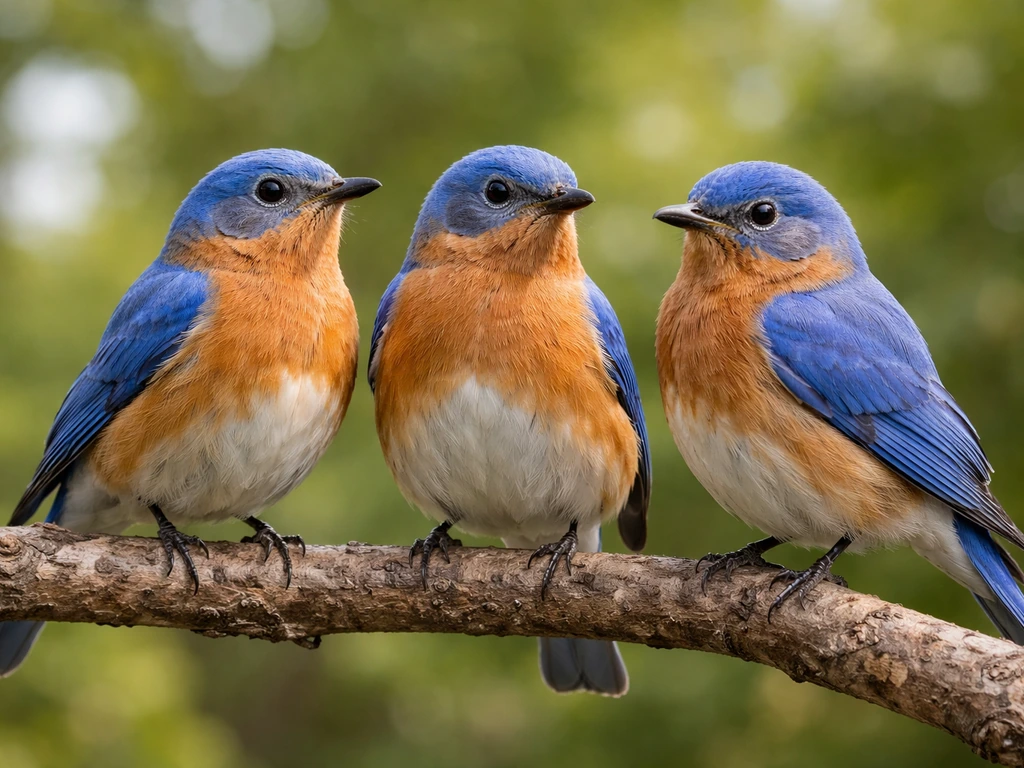
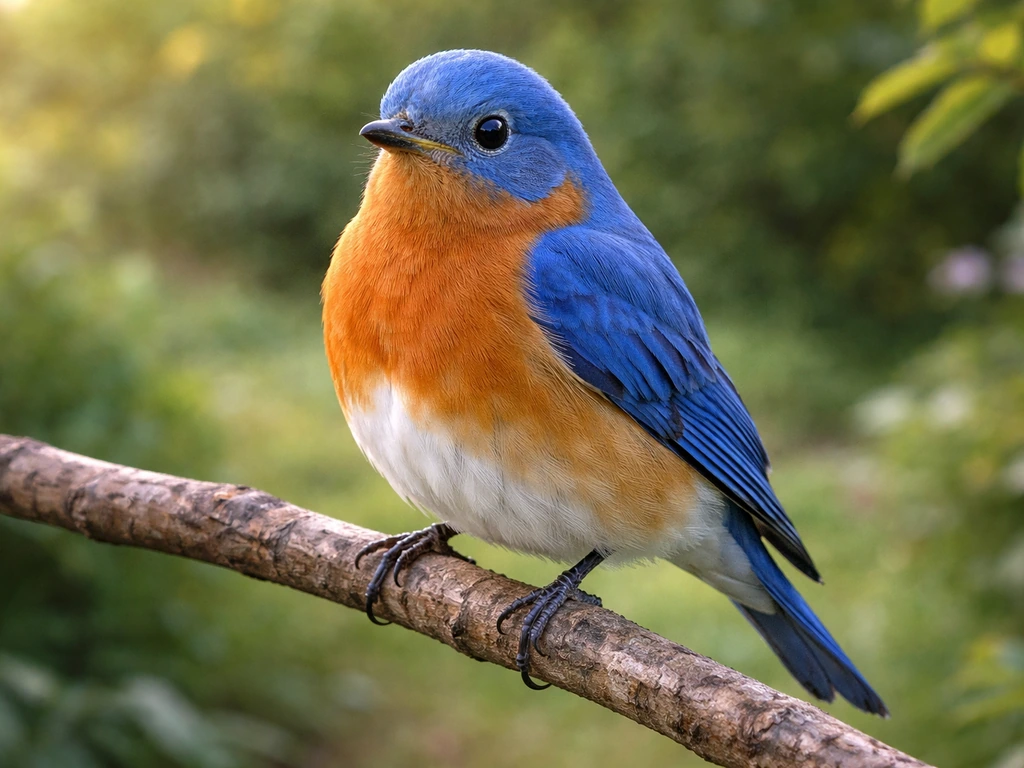
Getting the identification right matters more than you might think. Different bluebird species carry subtly different symbolic energy in many traditions, and knowing which bird you're dealing with helps you draw on the right interpretive lens. The most common match for 'blue bird with orange chest' is the Eastern Bluebird (Sialia sialis). The male has vivid deep blue upperparts and a rich rusty-brick red throat and breast that can extend up the sides of the neck. That orange wash creeping up onto the neck is actually a diagnostic field mark for the Eastern Bluebird. The female is grayer above with bluish wings and tail and a softer, paler orange-brown breast.
The Western Bluebird is the next most likely match, especially if you're west of the Rockies. Males have a brilliant cobalt-blue head (including the throat and chin, unlike the Eastern) with a chestnut or rust-colored breast. The key difference: the Western Bluebird has a blue throat while the Eastern has an orange one. Mountain Bluebirds are mostly sky-blue and generally lack orange on the body, though females and immatures can show a faint rusty wash on the breast. If you're seeing a bird that's mostly blue on top with a clearly orange or brick-red chest, Eastern or Western Bluebird is your most likely answer.
It's also worth mentioning that some people describe birds like the American Robin or even the Baltimore Oriole using language like 'blue bird with orange chest' when trying to recall details. Robins have dark gray-black backs, not blue. Orioles are striking orange-and-black birds. If your bird is truly and clearly blue on the back with orange underneath, a bluebird is the best fit. For a deeper dive into the symbolism of the Eastern species specifically, eastern bluebird spiritual meaning is worth reading alongside this guide.
What blue means when it shows up in bird symbolism
Blue is one of the most spiritually loaded colors in bird omens. Across traditions, it consistently points to trust, calm intuition, communication, and divine protection. In Celtic culture, bluebirds were seen as protection from evil spirits and carriers of good luck. In modern spiritual frameworks, blue connects to the throat chakra, which governs self-expression, honest communication, and speaking your truth. When you see a blue-dominant bird, many guides read it as an invitation to ask: am I saying what I really feel? Am I trusting the path I'm on?
The broader spiritual meaning of a blue bird tends to cluster around themes of hope, faith, and optimism, which appear consistently whether you're reading from a Native American, Christian-adjacent, or more metaphysical perspective. Blue birds, in general, are seen as messengers of good fortune, not warning signs. That framing is important to hold onto as you interpret what you're seeing.
What orange on the chest adds to the message
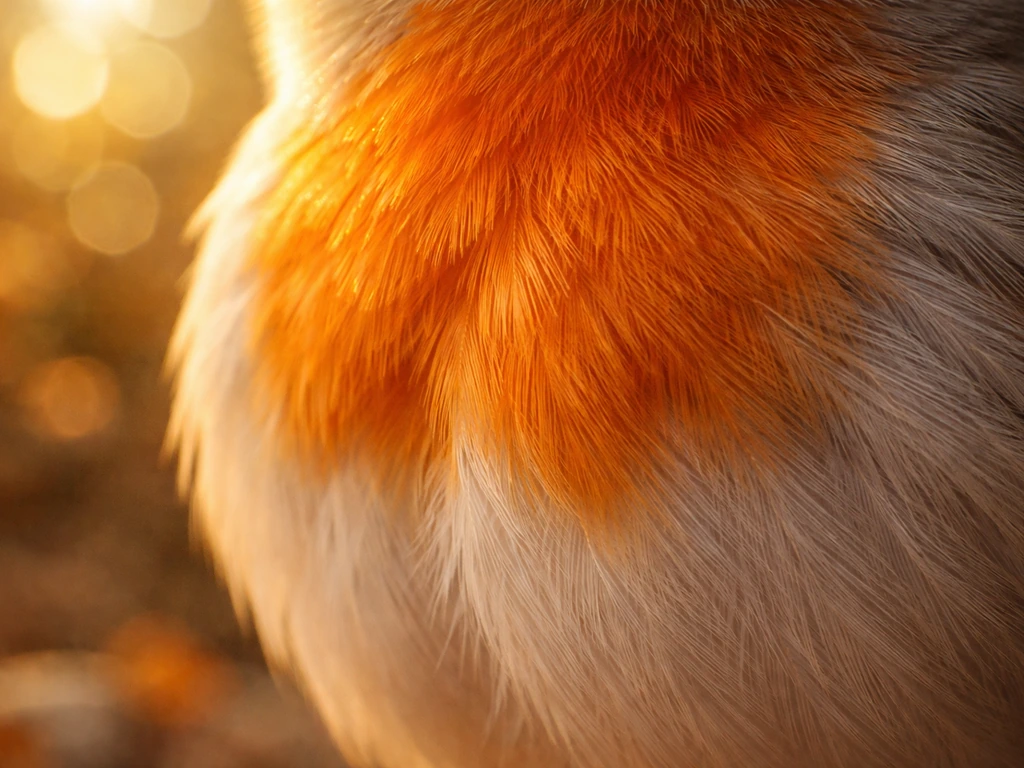
Orange is a warm, active, solar color in most spiritual traditions. It radiates vitality, enthusiasm, creativity, and warmth. It's also strongly tied to transformation cycles: the changing of seasons, the shift from one chapter of life to the next. In terms of chakra symbolism, orange connects to the sacral chakra, which governs creativity, emotional expression, relationships, and the capacity for joy. An orange-chested bird is essentially a creature that wears its vitality on its chest, right over the heart.
You can see a parallel in how people interpret other orange-toned birds. The Baltimore Oriole, for example, is widely read in spiritual circles as a symbol of joy, vibrant energy, and creative renewal. The orange chest on a bluebird carries much of that same energy. It grounds the calm, intuitive blue of the upperparts with something warmer and more emotionally alive. Think of it as blue saying 'trust and be still' while orange says 'but also feel this fully and move toward what lights you up.'
Blue and orange together: the full spiritual message
When you put blue and orange together in a single bird, the combined message is remarkably consistent across the spiritual guides and traditions I've come across: this is a sign of emotional healing through authentic self-expression. The blue asks you to slow down, trust your intuition, and communicate honestly. The orange tells you there's joy, creativity, and genuine warmth available to you if you do. Together, they're pointing toward a chapter of life where you stop hiding parts of yourself and start letting them be seen.
One way I find helpful to sit with this: imagine the bird as a visual metaphor. It moves through the world calmly (blue back, sky color, heaven-adjacent) but carries its fire right on the front of its body (the orange chest, the warm heart). That's the invitation. Calm on the outside, alive and warm on the inside, unashamed to show both at once. If you've been suppressing creativity, playing it small emotionally, or struggling to say what you actually think and feel, a repeated encounter with this bird is a nudge in an unmistakable direction.
This pairing also shows up in how certain traditions read bird encounters alongside other blue-dominant species. For example, the blue heron bird spiritual meaning leans heavily on themes of calm patience and self-reliance, and you'll notice some of those same trust-yourself undertones in bluebird symbolism too. The colors share a symbolic vocabulary.
How the details of your encounter shift the meaning
The broad spiritual message is one thing, but the specifics of how you're encountering this bird really do change the interpretation. Ornithomancy, the ancient practice of reading omens from birds, always emphasized the context of the encounter: where the bird appeared, what it was doing, how it behaved. That instinct to look at the details isn't superstition; it's actually practical wisdom. Here's how common encounter types tend to be read:
| Encounter Type | Common Spiritual Interpretation |
|---|---|
| Seeing it repeatedly over days or weeks | A persistent message you haven't fully received yet; the universe is being patient with you |
| Bird lands near you or on you | An unusually personal and direct signal; intimacy, trust, a message meant specifically for you |
| Bird makes eye contact or stares at you | You're being asked to pay attention right now; a moment of clarity or recognition is available |
| Bird is singing | A call to express yourself; your voice or creativity is being specifically highlighted |
| Bird taps on or flies toward your window | A message trying to cross a threshold into your awareness; something you've been avoiding needs attention |
| Appearing in an unexpected place (urban, indoors, unusual context) | The message is urgent or breaking through the ordinary; pay close attention to timing and what's on your mind |
| Bird behaving unusually (hovering, circling, unafraid) | An amplified sign; deeper engagement with the symbolism is warranted |
Window tapping deserves a note here because it's one of the most common triggers for spiritual inquiry about birds. Most window-tapping behavior in bluebirds is actually the male bird seeing his reflection and responding to it as a territorial rival, not a mystical act. Spiritually, many readers still find meaning in it as a 'message trying to break through.' But physically, repeated window strikes can injure birds, so it's worth noting the practical side too (more on that in the safety section below).
For comparison, smaller blue-toned birds like the blue wren carry their own distinct encounter-based symbolism, often more tied to perseverance and adaptability, which shows how even birds in the same color family can read differently depending on the species and context.
What to actually do today

Spiritual encounters with birds mean something only if you engage with them. Here's a practical framework for today, not eventually.
Ask yourself these reflective questions
- What have I been holding back from saying or expressing? Is there something I've been afraid to share?
- Where in my life have I stopped feeling joyful, creative, or enthusiastic? What drained it?
- Is there a relationship, project, or personal chapter that feels like it's in transition right now?
- Am I trusting my own instincts and inner guidance, or am I second-guessing myself?
- What would 'showing my true self more openly' actually look like in a concrete way this week?
Try these journaling prompts
- Describe the encounter in as much detail as you can: where you were, what you were doing or thinking just before you saw the bird, and how you felt when you noticed it.
- Write about one area of your life where you feel creatively or emotionally blocked. What would it look like to take one small step toward opening that up?
- Finish this sentence 10 times: 'If I were fully honest about how I feel, I would say...'
- Write a short note to yourself from the perspective of the bird. What would it want you to know?
A short spiritual practice to anchor the message

You don't need a formal ritual. Spend five minutes outside or near a window. Take a few slow breaths and hold the image of the bird in your mind: that blue back, that orange chest. Set a simple intention out loud or in writing: 'I'm open to expressing myself more honestly and joyfully.' Then watch for confirmation over the next week, not in a worried, scanning way, but in a relaxed 'I'll notice if something resonates' way. Confirmation might show up as an unexpected creative opportunity, a conversation where you speak your mind more freely than usual, or simply a feeling of warmth or rightness when you move in a particular direction.
You might also find it useful to read about the blue and white bird spiritual meaning to see how color variation within the blue-bird family shifts the symbolism, and whether that feels more resonant with what you're experiencing than the orange-chest interpretation.
Cautions, cultural differences, and why context matters
Not every tradition reads blue-and-orange birds the same way, and it's worth knowing that before you build a whole narrative around a single encounter. The spiritual symbolism I've described above draws primarily from modern Western metaphysical and nature-spirituality traditions. Some Native American traditions assign specific meanings to specific bluebird species based on local tribal lore, and those meanings don't always line up with the generic 'joy and communication' framing. Christian interpretive traditions, for example, tend to caution against using bird encounters as determinative guides for decisions, reminding believers that personal faith and discernment matter more than any external omen.
That's actually wise advice regardless of your tradition. Symbolism is an interpretive tool, not a prediction engine. The meaning of the bird should invite reflection, not replace your own judgment. If you're tempted to make a major life decision solely because a bluebird showed up in your yard, pause. Let the encounter deepen your self-awareness, not override it. A good rule of thumb: the bird's message should feel like a confirmation of something you already sense is true, not a substitute for thinking something through.
It's also worth knowing that smaller birds with similar color profiles, like the wren, sometimes get grouped into general 'small bird omen' interpretations by people who aren't sure exactly what they saw. Wrens carry their own distinct symbolism, often tied to resourcefulness and adaptability, so if your bird identification is uncertain, it's worth spending a few minutes with that before locking in on a single narrative.
A practical note on bird safety
If your encounter involves a bird that has struck a window, is grounded and unable to fly, or appears dead or dying, there's a real-world dimension to handle first. If a bird hits your window and appears stunned, the Audubon Society recommends getting it to a licensed wildlife rehabilitator rather than attempting to care for it yourself, because internal injuries from window strikes aren't visible to an untrained eye and the bird may not survive without proper treatment. On the prevention side, window strikes happen because birds can't perceive glass as a barrier, and applying bird-safe window tape or film can reduce collisions significantly.
If your encounter involves bird droppings (a common 'good luck omen' scenario), the CDC recommends wetting surfaces with water or disinfectant before cleaning, wearing gloves, and avoiding breathing in dust or aerosolized particles from droppings or feathers. This isn't meant to alarm you; it's just responsible guidance, especially if you have young children or immunocompromised family members nearby.
A dead bluebird, in many spiritual traditions, is read as a transition symbol: the end of one chapter and the beginning of another, rather than a bad omen in the doom sense. But the physical reality still applies, so handle any deceased bird with gloves and follow standard hygiene practices. The spiritual meaning doesn't require direct physical contact with the bird.
Bringing it all together
If you're repeatedly seeing a blue bird with an orange chest, the most likely spiritual message is this: something in your life is ready to open up. You're being invited to express yourself more honestly, reconnect with joy and creativity, and trust that the transition you might be feeling is moving in a good direction. The blue says trust and communicate. The orange says feel it fully and let yourself be seen. Together, they're saying: the time for hiding or holding back is over.
Take that message seriously enough to journal about it and sit with the reflective questions above. But hold it lightly enough that you're not manufacturing meaning where there isn't any, or using a bird sighting as a substitute for your own good judgment. The best way to honor an encounter like this is to let it open a door in your inner life, not to lean on it as a prediction about the outer one.
FAQ
How can I tell if my “blue bird with orange chest” is actually an Eastern or Western bluebird, and does it change the spiritual meaning?
A quick way to separate “message” from “misidentification” is to check the key field marks described in the article: a male Eastern Bluebird typically shows a deep blue back plus a rusty-brick red throat and breast that can creep up onto the sides of the neck. If the throat itself is distinctly blue (not orange/rust) and you’re in the western range, the bird is more likely Western Bluebird, which can shift the “communication” emphasis slightly toward throat and expression.
If the bird appears during a specific situation (breakup, job stress, moving), should I interpret it differently?
Yes, but not in a “one-size-fits-all prediction” way. In spiritual practice, the most consistent adjustment is to connect the encounter context to the color themes, then keep the outcome tied to your own choices. For example, if the bird appears during a difficult conversation, emphasize blue’s communication and trust, and use orange as permission to express feelings honestly, rather than treating it as a guaranteed result.
What if I only see the blue bird for a few seconds, no lingering behavior, what does that mean spiritually?
If the bird only briefly appears, many readers use it as a “prompt,” not a directive. Spend a moment noting what was on your mind in that instant, then translate it into a small action within 24 to 72 hours (one honest text, one creative outlet, one boundary conversation). That keeps the symbolism actionable without building an anxious narrative.
My bluebird keeps tapping my window. Is that spiritual, or is it just a bird behavior issue?
Window tapping has two layers. Spiritually, some interpret repeated tapping as a “message trying to break through,” but physically it is often a territorial response to a reflection, so treat safety first. If it’s happening repeatedly, reduce collisions with bird-safe window film or tape and place feeders or decoys carefully, then use the moment as an intention check rather than a sign of imminent danger.
What does it mean if the bird seems calm and present versus moving strangely or not flying well?
If the bird is foraging and acting normal, symbolism readers often treat it as “stability plus opportunity,” meaning your emotional work and creativity can grow steadily. If it looks disoriented, grounded, or lethargic, shift to the real-world interpretation: follow safe guidance (contact a licensed rehabilitator if it struck glass) and let the “transition” message be about caring responsibility first.
How do I know if this is a helpful spiritual confirmation versus just me assigning meaning to a random sighting?
For many people, the sign strengthens when it becomes “confirming,” not “demanding.” Use a simple test: write down one thing you already feel is true (a desire to speak up, a creative pull), then see whether the encounter nudges you toward a concrete, values-aligned step. If it makes you second-guess your judgment, scale back the reading and return to your own decision-making process.
I’m not sure what species it was. Should I still interpret it as the blue-and-orange bluebird message?
If you are seeing similar blue-and-orange tones but cannot confidently identify the species, keep the interpretation broad and avoid over-precision. The article notes that robins and orioles can be described loosely, and wren-like birds can get mixed into “small bird omen” narratives. A practical approach is to interpret the shared color themes (blue and orange) while delaying specific conclusions until you can confirm the bird.
What’s the spiritual meaning if the bird is dead or appears to have died, and how should I handle it safely?
If you find a dead bird or one that appears fatally injured, the spiritual framing in many traditions is a transition symbol, but the first priority is hygiene and care. Wear gloves, avoid direct handling, and do not try to “fix” the situation yourself. Let any meaning focus on closure or letting go, not on contacting or physically interacting with the bird.
What if I’m already stressed or burned out and “joy and creativity” feels unrealistic right now?
Orange-chest encounters are often treated as encouragement to activate joy and creativity, but the edge case is when you are already overloaded. In that case, translate orange into “sustainable vitality,” choose one small joy practice (music, sketching, a walk) instead of forcing a big life change. This prevents the omen from becoming another pressure to perform emotional healing quickly.
How long should I wait for “confirmation,” and what counts as confirmation in real life?
Yes, and a helpful way is to set a brief intention and define “confirmation” in specific categories. Instead of scanning for omens, look for confirmation in tangible forms within a week: a conversation where you speak more honestly, a creative opportunity you can actually start, or a noticeable shift in how you feel when you consider a next step.
Next Article
Wren Bird Spiritual Meaning: Messages, Timing, and How to Act
Interpret wren bird spiritual meaning from timing and behavior: joy, persistence, home, protection, new beginnings, and