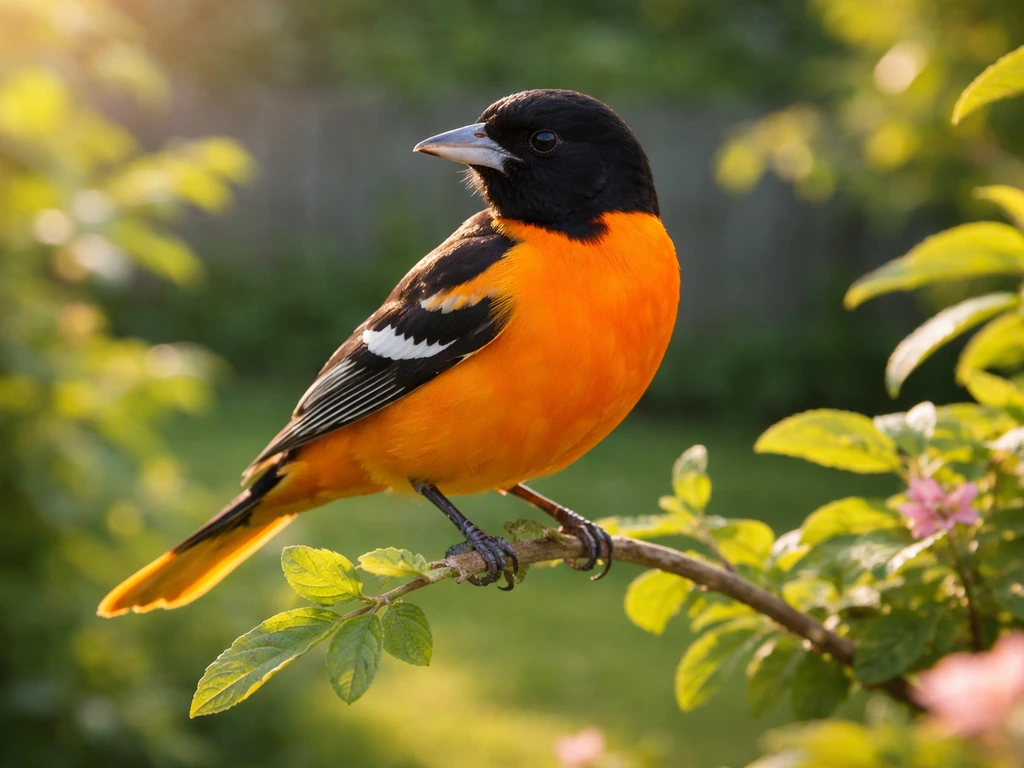
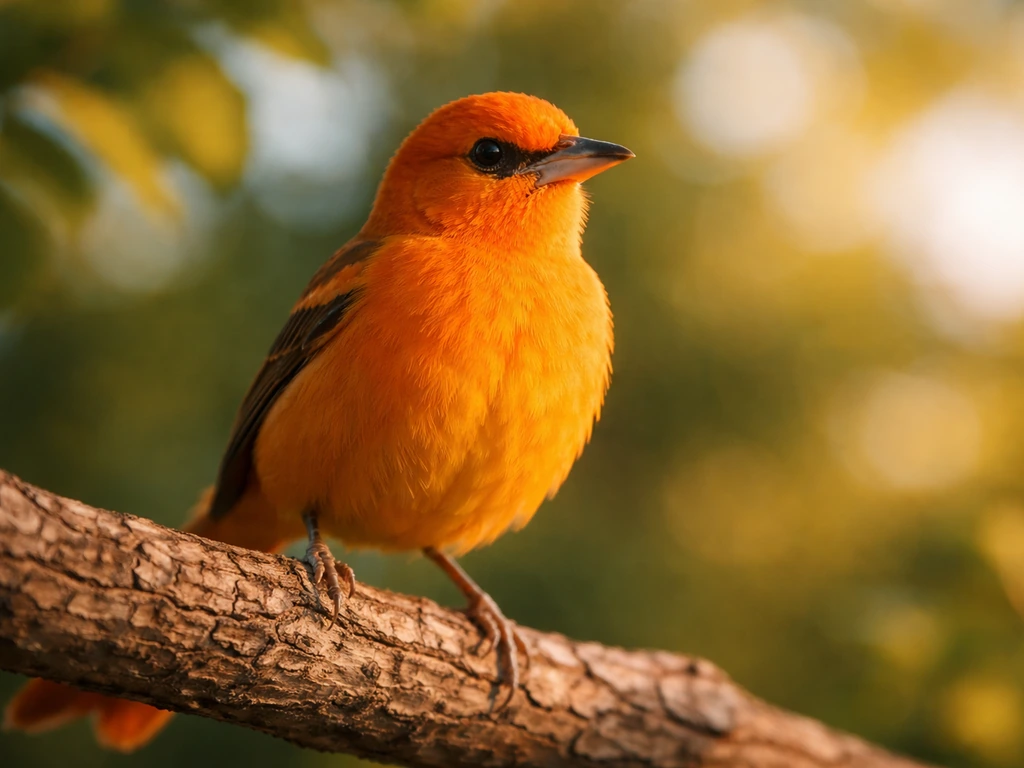
But here's what I want you to know before we go any further: the oriole's message isn't one-size-fits-all. How you encountered the bird matters enormously. A fleeting sighting in the yard is a different kind of nudge than one landing on your shoulder or hearing that unmistakable, flute-like song drifting through your window. This guide walks you through each of those scenarios so you can arrive at the interpretation that actually fits your situation.
What the encounter type changes about the meaning
Seeing an oriole
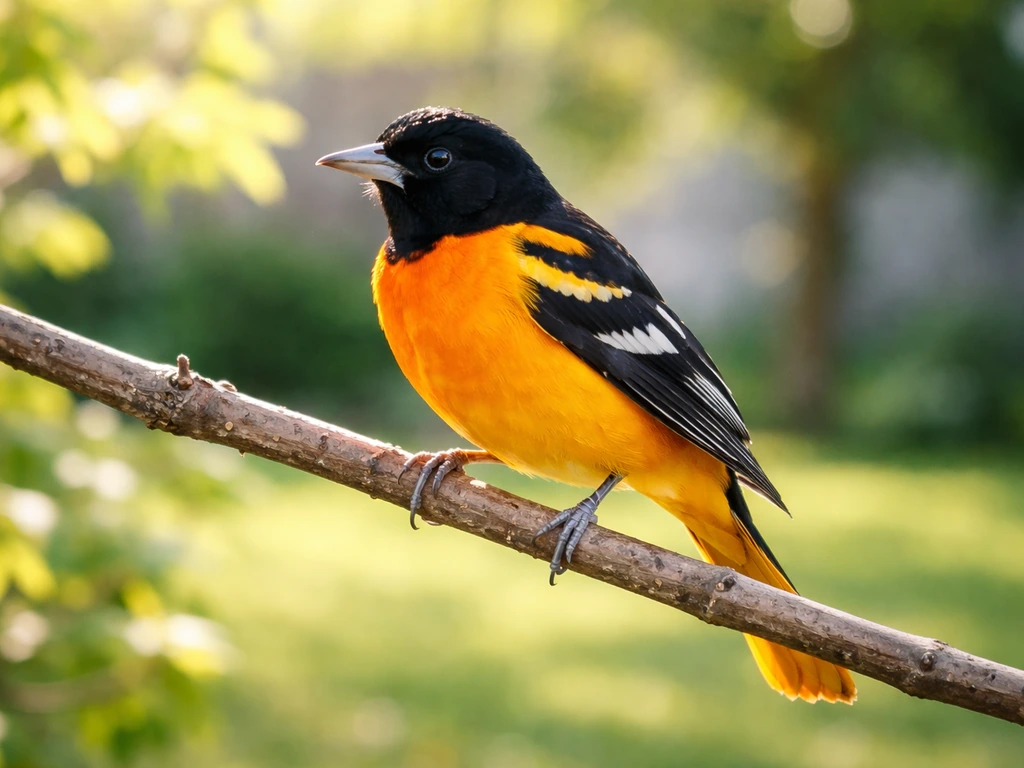
A sighting, especially a clear and unhurried one, is the most common oriole encounter and usually carries a message of hope and emotional growth. Think of it as a gentle reminder that positive change is already in motion, even if you can't see all the pieces yet. Seasonality plays a big role here. Maryland DNR notes that Baltimore oriole females lay four to six eggs in May through June. Because orioles are migratory and associated with spring and summer returns, spotting one naturally cues themes of new beginnings and cycles of growth. If you saw one today, ask yourself what new chapter might be quietly opening in your life. The encounter is less a guarantee and more an encouragement to stay open.
An oriole landing on you
This is the most intensely personal of all oriole encounters, and most spiritual traditions treat it as a direct, individualized message rather than a general omen. The dominant interpretation is that you're being blessed or specifically guided, that the universe is paying close attention to you right now. Where the bird lands adds nuance: a landing near or on your head is often linked to new thoughts, a shift in perspective, or a burst of awareness; a shoulder landing tends to point toward protection and guidance being offered to you; a landing on or near your hand is widely read as an invitation to act, to reach out and take hold of something.
Your emotional reaction in the moment is important data too. If the landing felt peaceful and you felt warm or calm afterward, most spiritual frameworks read that as reassurance. If it felt startling or the bird seemed agitated, it may be more of a wake-up call than a pat on the back. Pay attention to both.
Hearing an oriole sing
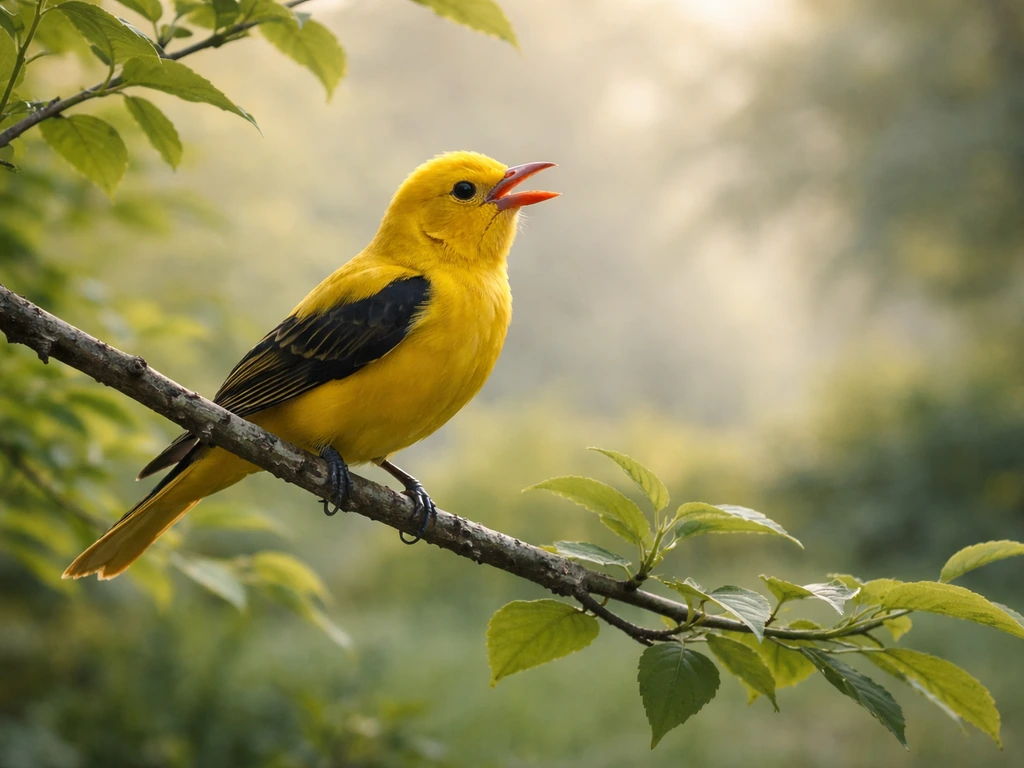
The oriole's song is spiritually tied to your own voice. The most consistent message across traditions is simple: it's time to speak up, create, and share what you've been holding inside. The phrase 'sing your true song' shows up repeatedly in oriole symbolism, and it's not just poetic. It's practical. If you've been sitting on a creative project, a difficult but necessary conversation, or an idea you're afraid to share, hearing an oriole may be the prompt you've been waiting for. Beyond self-expression, the song also carries that classic oriole theme of hope and welcome change, with a specific timing angle. Many spiritual writers treat the oriole's call as a signal that right now is the right moment to begin, not next week, not after conditions are perfect.
Watching an oriole build a nest
Nest-building is one of the most grounded and practical of the oriole's spiritual messages. When you witness an oriole weaving its remarkable hanging nest, the symbolism centers on creating something lasting that shelters what matters most to you. This can point to your home, your relationships, your creative work, or a project you're in the middle of building. There's also a strong thread of teamwork and cooperation here, since oriole pairs often collaborate on the nest, and spiritual writers use that behavior as a prompt to consider who you're building alongside. Are you trying to carry everything alone, or are you letting the right people help?
Reading oriole behavior as a sign or message
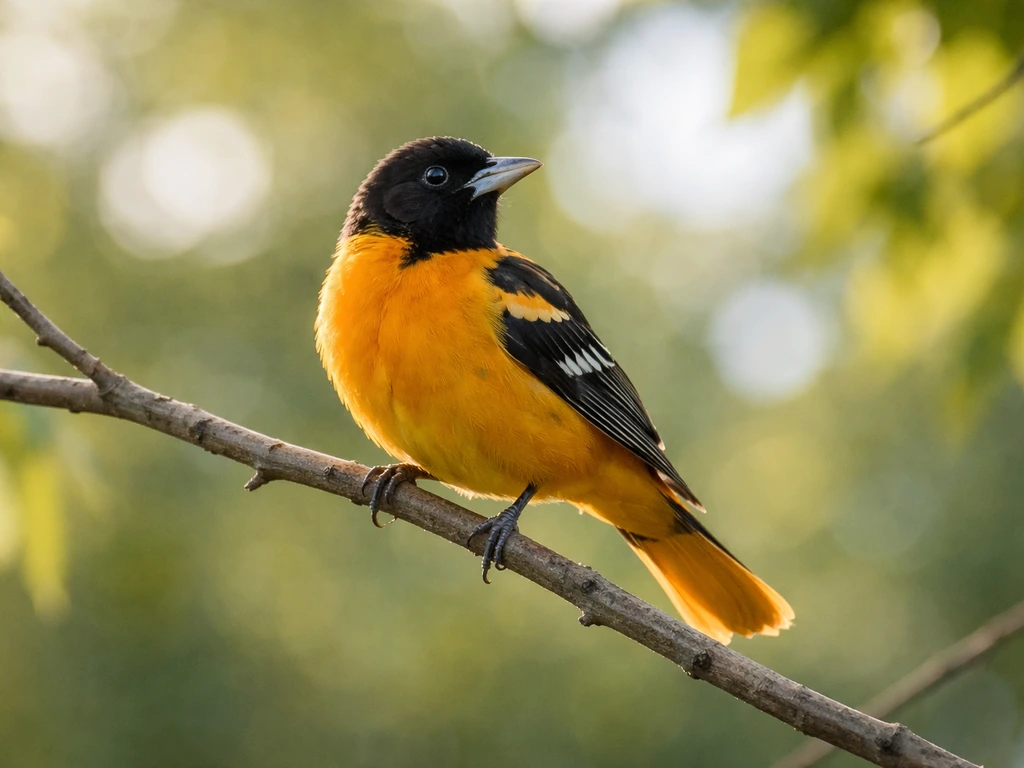
Beyond the type of encounter, the specific behavior of the oriole can shift the message considerably. A calm, lingering oriole that stays nearby suggests reassurance. A restless or repeatedly appearing oriole nudges you toward resourcefulness and adaptability, as if it's asking whether you're using all the tools you already have. Repeated sightings over days or weeks are worth noting especially. This is what spiritual writers call a pattern check: when an oriole keeps showing up during a particular life theme, whether that's a creative project stalling, a relationship at a crossroads, or a transition you keep postponing, that repetition is usually pointing directly at that area. The bird's message isn't random; it's contextual.
Timing matters just as much as behavior. Did the oriole appear right after a difficult conversation, or while you were sitting with a decision? Many spiritual frameworks treat the moment just before the encounter as the real key. What were you thinking about? What emotion were you sitting in? That emotional context is often where the oriole's message lands most precisely. The bird rarely interrupts nothing. It tends to show up in the middle of something.
It's also worth considering that the oriole isn't always whispering 'everything is fine. Audubon also notes that blank" rel="noopener noreferrer">Maryland has called the Baltimore Oriole its state bird since 1947, with protections dating back to 1882 before the Migratory Bird Treaty Act. ' Sometimes its message is specifically about transformation and growth, which implies there's something that needs to change or be released. The owl bird spiritual meaning is often the go-to for messages about deeper unseen forces, but orioles carry their own version of transformation energy, one that's more forward-facing and solar than nocturnal and introspective.
When the message is reassurance vs. a call to act
This is the question most people actually have when they search for oriole symbolism: is this a good sign or should I be worried? The honest answer is that most oriole encounters lean positive, but not all of them are passive reassurance. Some are direct invitations to move.
| Interpretation type | What it looks like | What it's asking of you |
|---|
| Reassurance | Calm sighting, peaceful landing, cheerful song during an ordinary moment | Receive it. Stay present. Trust what's unfolding. |
| Hope / new beginning | Oriole appears during a transition or emotional low point | Shift attention toward what's possible. Let go of what's ending. |
| Creative call | Song heard repeatedly, bright sighting during creative stagnation | Speak up. Create. Share what you've been sitting on. |
| Action prompt | Oriole near your hand, or appearing right before an opportunity | Take the step. The timing is being confirmed, not promised. |
| Challenge / release | Agitated behavior, appears repeatedly during resistance or avoidance | Something needs to change. What are you holding onto too tightly? |
The key differentiator is how you felt in the moment and what the bird did. A calm, welcoming arrival tends to signal reassurance or blessing. A disruptive, persistent, or unusually close encounter tends to signal that something needs your attention and possibly your courage. Neither is a bad message. One is gentler than the other.
Some spiritual writers specifically frame the oriole's 'letting go' message as the challenging side of its symbolism. New beginnings require endings. If the encounter feels tied to something you've been avoiding, the oriole isn't threatening you. It's pointing at the door you haven't opened yet. That's actually a loving message, even when it's uncomfortable.
How different cultures and traditions see the oriole
Spiritual meanings shift depending on which cultural tradition you're drawing from, and orioles are a good example of that variation. In some Native American traditions, the oriole is treated as a spirit guide connected to renewal and the spirit world. One specific example comes from the Pima tribe, where the oriole has historically been regarded as a sun symbol, bright, cyclical, and life-giving. There are documented legend traditions across multiple tribal nations that reference orioles, though the specific meanings differ by nation and region. If you feel a strong pull toward a particular Indigenous tradition, it's worth researching that specific nation's stories rather than treating Native American symbolism as a single unified framework.
In East Asian traditions, the oriole carries a markedly different but equally warm energy. It's often called 'the bird of friendship,' with a long artistic and poetic history of representing warmth, companionship, and the beauty of spring. This lens is especially relevant if your encounter felt connected to a relationship, a reunion, or a sense of being welcomed.
A note worth making: the word 'oriole' covers a range of species across the world, and the symbolism attached to each can differ. The Baltimore oriole bird spiritual meaning carries its own nuances shaped by that particular species' presence in North American culture and birdwatching tradition. The yellow oriole bird spiritual meaning draws more on solar and intellectual energy themes tied to its warmer coloring. If you know the specific species you encountered, it's worth exploring that more closely before settling on a single interpretation.
The oriole also naturally invites comparison to other vibrantly colored birds. If you've been seeing other brilliantly colored visitors alongside your oriole, the indigo bunting bird spiritual meaning is a fascinating contrast, pointing more toward spiritual clarity and purpose rather than joy and expression. Multiple species appearing together sometimes amplifies or clarifies the message rather than muddying it.
What to actually do with this today
Here's where spiritual symbolism becomes useful rather than just interesting: you apply it. The most consistent advice from spiritual writers who work with bird symbolism is to treat the oriole encounter as a short-lived invitation, not a passive omen you can pocket and forget. Here's how to work with it right now.
Journal it while it's fresh

Write down exactly what happened: where you were, what you were doing, what you were thinking or feeling in the minutes before the encounter. Then write what the encounter felt like. Warm? Startling? Peaceful? Urgent? That emotional texture is the message container. The symbolism (joy, new beginnings, creative expression) is the general language; your emotional state at the time is the specific vocabulary your encounter was speaking.
Reflection questions worth sitting with
- Where in my life am I being invited to express something I've kept quiet?
- What new beginning am I resisting because it requires letting something else go?
- Who am I building something with right now, and is that collaboration healthy and mutual?
- Where have I been waiting for the 'right time,' and what would it look like to start now?
- What feels like it's been trying to grow in me, and what has been blocking that growth?
A simple practice for today
Pause for a moment and offer genuine gratitude for the encounter, whatever form it took. Then set one concrete intention connected to the oriole's core themes: joy, expression, or new beginnings. It doesn't have to be elaborate. 'Today I'm going to say the thing I've been avoiding' counts. 'I'm going to start the thing I've been postponing' counts. The oriole's message is rarely asking for a grand gesture. It's usually asking for one honest, courageous step.
What to watch for next
After your oriole encounter, look for a concrete opportunity to speak, begin, or change your routine within the next few days. Spiritual symbolism writers consistently frame bird encounters as short-lived invitations rather than open-ended promises. The door gets opened; you still have to walk through it. If orioles keep appearing over the coming weeks, especially during specific life themes, that pattern is worth tracking. Note it in your journal and see which area of your life keeps showing up alongside the bird.
Also keep an eye on what other birds are showing up. Sometimes the message gets layered. A brown bird spiritual meaning appearing in the same window of time as your oriole might be pointing toward groundedness and practicality as a companion message to the oriole's brightness and invitation to launch. The uppan bird spiritual meaning and the ibaka bird spiritual meaning are both worth exploring if you find yourself noticing an unusual variety of birds in a short period. Sometimes that kind of cluster is pointing at a larger spiritual shift rather than a single specific message.
Whatever approach you take, trust your own resonance. You came looking for the spiritual meaning of an oriole encounter because something about it felt significant enough to investigate. That instinct is itself worth honoring. The oriole isn't random. And neither is the fact that you noticed it.