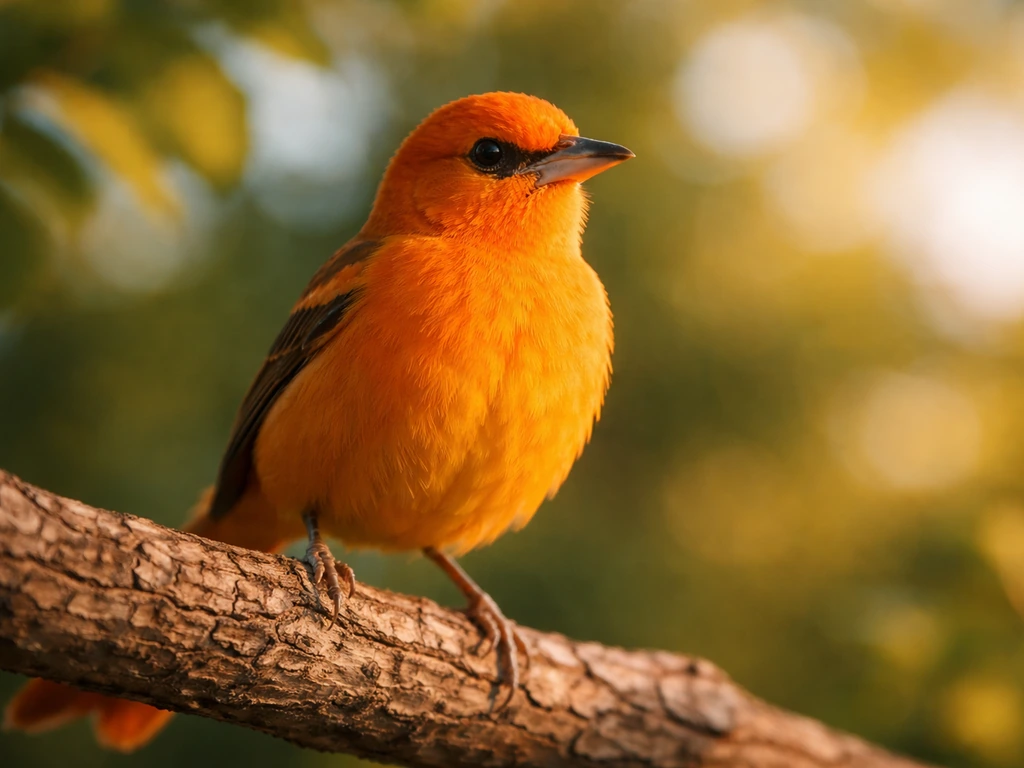
If you just saw an orange bird and felt that quiet pull to look up what it means, you're in the right place. The short answer: an orange bird is almost always a message about energy, creativity, and visibility. It's the universe (or your own deep intuition) nudging you to stop playing small, lean into what excites you, and show up more fully. But the full picture depends on what you actually saw, how the encounter felt, and what's going on in your life right now. Let's work through it.
Orange Bird Spiritual Meaning: What It May Signal Today

Eliza Thornwick
10 Apr 2026
What bird did you actually see? (This matters more than you'd think)
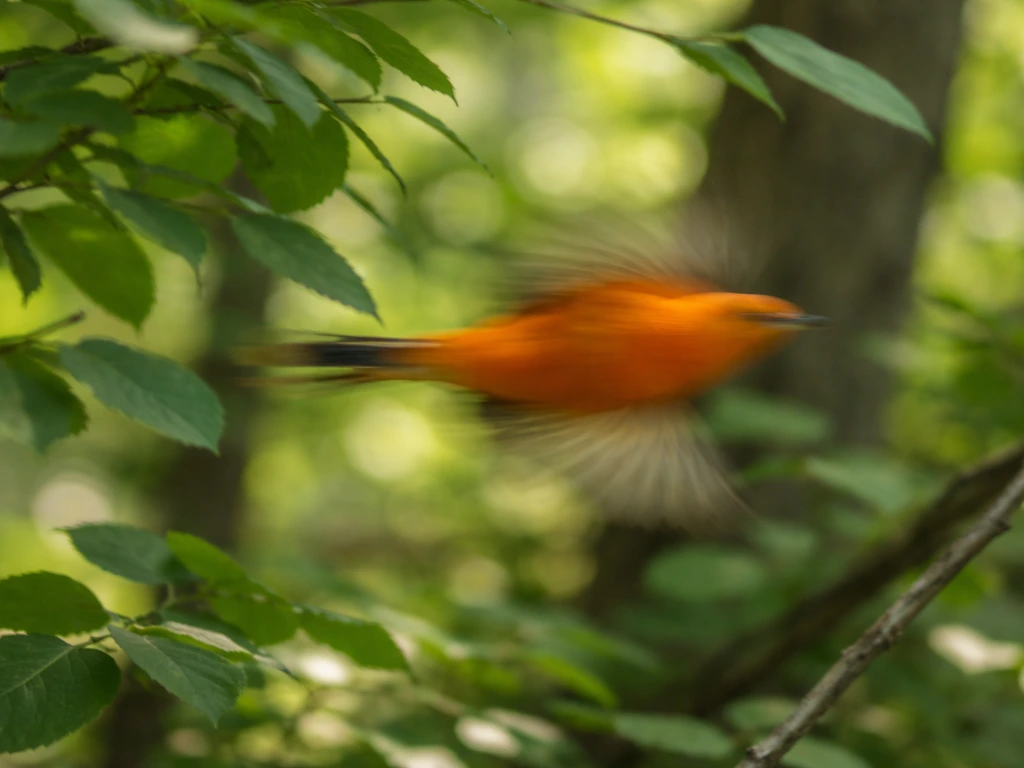
Most people searching 'orange bird spiritual meaning' didn't see a bird they can name. They saw something bright orange flash past and want to understand it. Before diving into meaning, it helps to narrow down the species, because different birds carry different symbolic weight even when they share a color.
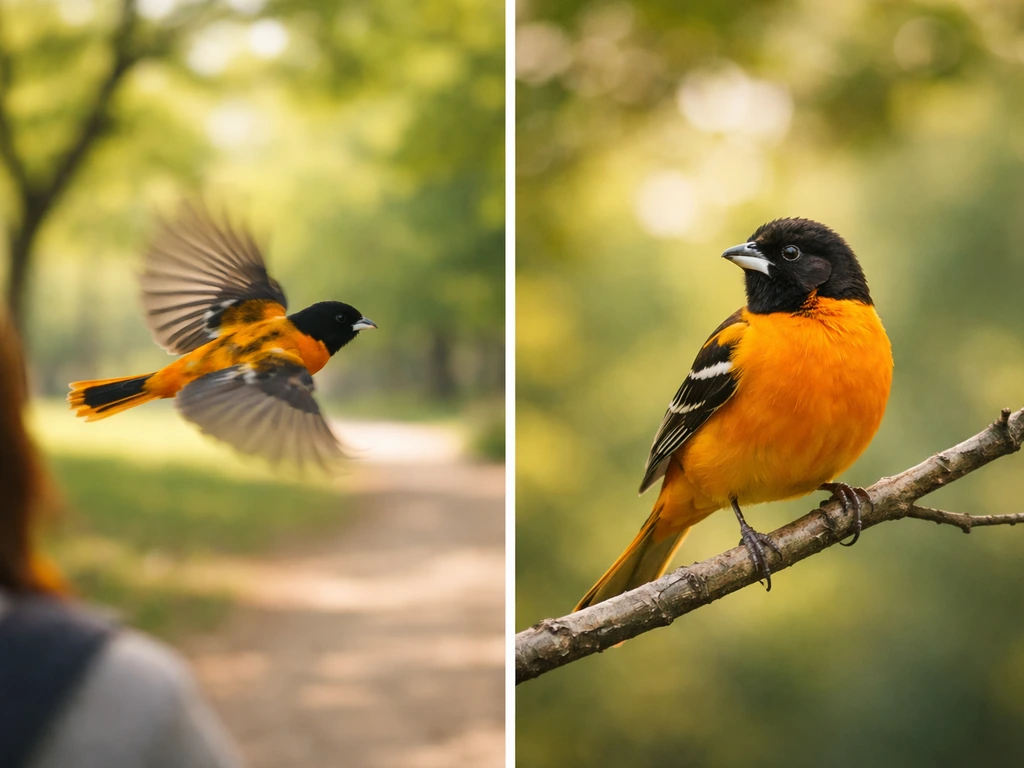
The most likely candidates in North America are the Baltimore Oriole, the Northern Cardinal, and the Eastern Towhee. The male Baltimore Oriole is hard to miss: flaming orange and black, with the brightest orange concentrated on the breast and belly, a completely black head, and a bold white wingbar. Females and immatures lean more yellow-orange on the breast with grayish upperparts and two white wing bars, so they can look subtler. If you want to go deeper into what that specific bird means energetically, the Baltimore Oriole's spiritual meaning has its own rich layer of symbolism worth exploring.
The Northern Cardinal is another common source of 'orange bird' reports. The adult male's plumage is technically red, but in certain light it reads as a vivid orange-red, especially through a window or at dusk. Its crest and thick orange-red conical bill are the key ID markers. Juveniles don't carry that classic color yet, which is why the same backyard bird can look completely different depending on the season. The Eastern Towhee is a third possibility: it has rusty-orange sides, a dark hood, and white flashes in its tail corners that can catch your eye as a burst of orange when it moves.
There are actually at least 17 orange-feathered bird species in the U.S. alone, so if none of the above match, trust your gut on the color and move forward with the symbolism. The species affects the nuance; the color carries the core message.
What orange actually means in a spiritual context
Orange is one of the most energetically charged colors in the spiritual spectrum. It sits between red (raw passion, survival, urgency) and yellow (intellect, clarity, communication), which makes it the color of creative fire channeled into joyful expression. Cross-culturally, orange consistently maps to cheerfulness, enthusiasm, stimulation, extroversion, warmth, and vitality. It's the color of amusement, energy, and activity, which is why an orange bird landing in your path feels so alive.
From a psychological and symbolic standpoint, orange is tied to emotional expression, pleasure, confidence, and creativity. In Hindu and Buddhist traditions, saffron (a rich yellow-orange) is the color worn by monks and holy figures, representing devotion, renunciation, and spiritual illumination. So depending on your own tradition or background, 'orange' can simultaneously mean 'go be bold and creative' and 'there is something sacred being offered here.' That's not a contradiction; it's the full range of what this color holds.
Confucian symbolism also associates orange with transformation, which makes it especially meaningful if you're in a period of transition. When an orange bird shows up during a life change, many traditions would read that as confirmation: you're moving in the right direction, even if it's uncomfortable right now.
The oriole family specifically carries a lot of this solar, joyful energy. If you're drawn to orioles in general, the oriole bird's broader spiritual meaning connects these themes to themes of hope, abundance, and the return of light after darker seasons.
Common encounter scenarios and what they tend to mean
Context changes everything. The same bird carries a different message depending on how the encounter actually unfolded. In a r/spirituality thread about a bird hitting a window, commenters noted that reactions and personal context shape whether the event feels meaningful or just emotional The same bird carries a different message depending on how the encounter actually unfolded.. Here's how to read the most common scenarios:
- The bird flew past you or caught your eye briefly: A gentle nudge toward joy or creative action. You're being reminded to pay attention to what lights you up, even if you've been too busy to notice.
- The bird landed near you or seemed unbothered by your presence: This is a more personal message. Proximity in bird encounters often suggests the message is specifically for you right now, not just a general symbol. It may point to a need to step into visibility or claim space in some area of your life.
- The bird sang loudly or called near you: Orange energy through voice is about communication and expression. If an orange bird is singing to you, ask yourself: is there something you need to say out loud that you've been holding back?
- The bird tapped or hit a window: Window strikes often carry symbolic weight around self-deception or running into invisible barriers. If you're also a fan of owl symbolism, the owl bird's spiritual meaning offers a useful counterpoint here around clarity, since owls and window symbolism share that theme of seeing through illusions.
- The bird appeared during or right after a difficult moment: Orange here often signals that warmth and momentum are still available to you. It's a reminder that your creative fire hasn't gone out.
- The bird flew directly toward you, then away: Many traditions read this as direction-giving. What you were thinking about in that exact moment matters. It may point toward that idea or away from a fear you were dwelling on.
One-time sighting vs. seeing orange birds repeatedly
A single orange bird encounter is a prompt. A repeated one is a conversation. If you've seen orange birds multiple times recently, in different places or contexts, that pattern is worth paying real attention to. Repeated animal sightings are widely interpreted as a signal that it's time to take action on your visions and ideas, not just think about them. The 'orange message' is likely tied to something specific in your life that keeps calling for your attention.
That said, it's worth keeping your feet on the ground here. Not every orange bird is a cosmic telegram, and getting too fixated on interpreting every sighting can actually work against you spiritually. It turns a natural, flowing awareness into anxious scorekeeping. One healthy approach: if you've seen orange birds three or more times in a week and each sighting felt meaningful or emotionally charged, treat it as confirmed. If you're noticing orange birds mainly because you looked them up and are now hyperaware of them (which is just your brain doing its normal pattern-recognition thing), be honest with yourself about that distinction.
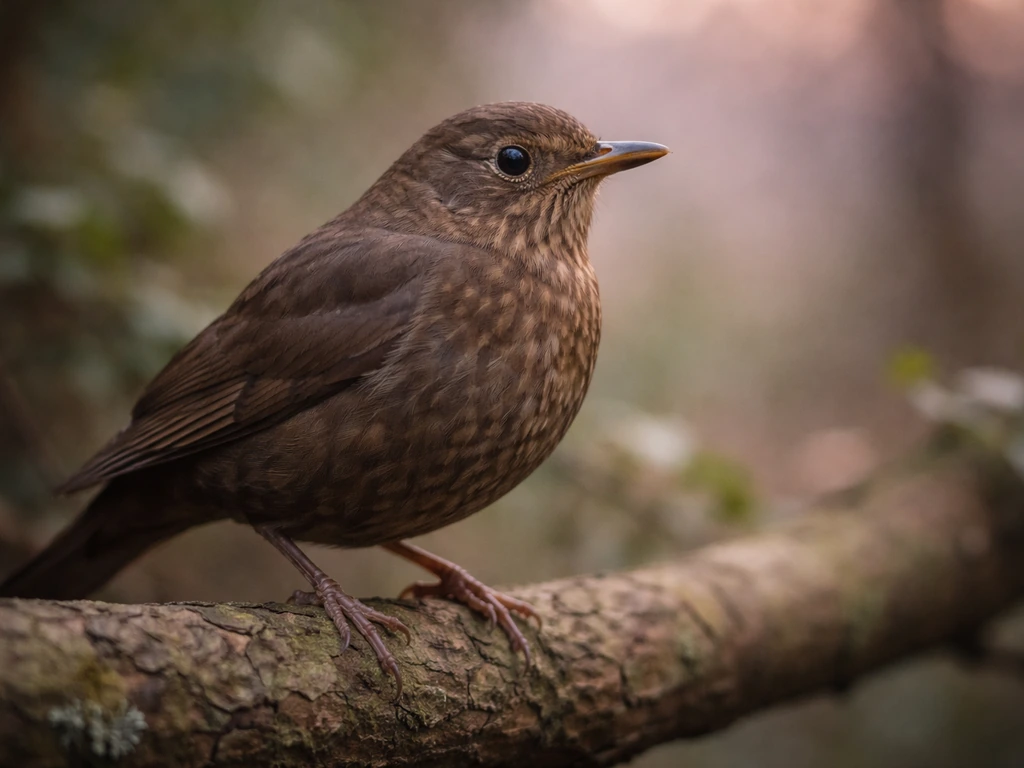
Life changes also intensify these sightings. If you're in the middle of a career shift, a relationship change, or some kind of identity transition, repeated orange bird appearances are often read as confirmation of alignment. The message intensifies when you're already in motion. Compare this to how sightings are treated in the context of the brown bird's spiritual meaning, which is more about groundedness and patience during transitions rather than acceleration.
How to do a quick personal reading right now

You don't need a spiritual teacher or a complex system to make sense of what you saw. A simple three-part reflection is enough. Take five minutes and try this:
- Notice: What did I actually see? Write down the bird's color, size, behavior, and the exact moment it caught your attention. Include where you were and what you were doing or thinking about just before the sighting.
- Wonder: What does this make me think about? Without forcing it, let your mind go to whatever comes up first. What area of your life does the word 'orange' or 'fire' or 'visibility' connect to right now?
- Remind: What does this remind me of? Is there a goal you've been putting off? A conversation you've been avoiding? A creative project you keep almost starting? The thing that shows up here is usually where the message lives.
This 'I Notice, I Wonder, It Reminds Me Of' structure comes from nature journaling practice and translates naturally into spiritual reflection. The key is speed and honesty. Don't overthink it. Your first instinct is almost always more accurate than your edited second thought.
If you want to track this over time, keep a small encounter log. Write the date, location, what the bird did, and your immediate emotional response. After a few entries, patterns become visible in a way that single-moment reflection can't capture. Think of it as a conversation unfolding over days rather than a single message to decode.
What to actually do after seeing an orange bird
Spiritual meaning only matters if it leads somewhere useful. Here are the most practical next steps depending on what resonates with your current situation:
- If creativity or a stalled project comes to mind: Treat the sighting as a green light. Set one small, concrete action you can take in the next 24 hours toward that thing. Not a plan, one action.
- If visibility or 'being seen' comes to mind: Ask yourself where you've been hiding or holding back. Is there a conversation to have, a piece of work to share, or an opportunity to apply for? Orange energy is specifically about stepping into the light, not waiting until you feel ready.
- If the sighting felt like a warning or disruption (window strike, sudden appearance): Pause and check in. Is there something in your path that you've been refusing to see clearly? Window-strike symbolism often points to self-created barriers.
- If you felt warm and comforted: Sometimes the message isn't 'do something.' It's 'you're okay.' Accept that and let it settle.
- If you're exhausted or burned out: Orange can also signal that you need to reconnect with what originally energized you, not push harder. The message here is return to joy, not accelerate.
The yellow oriole is a close cousin to the orange-feathered birds we've been discussing, and the yellow oriole bird's spiritual meaning carries a related theme around optimism and forward momentum that can complement what you're feeling if your orange bird leaned more golden-yellow in tone.
Why meanings can differ depending on your tradition
Orange doesn't mean the same thing in every culture, and that's worth knowing so you can choose the framework that actually resonates with you rather than defaulting to the most common Western interpretation.
| Tradition / Context | What Orange Represents | What It Means for Your Encounter |
|---|---|---|
| Western (general spiritual) | Creativity, joy, enthusiasm, warmth, action | A call to step into your creative energy and show up boldly |
| Hindu / Buddhist | Saffron: devotion, renunciation, spiritual illumination | A sacred invitation toward spiritual practice or inner clarity |
| Confucian symbolism | Transformation, change | Confirmation that a current life transition is meaningful and on-course |
| Color psychology (cross-cultural) | Stimulation, cheerfulness, extroversion, fire | An energizing prompt to move from thinking into doing |
| Chinese mythology / folk tradition | Birds as totems and divine messengers vary widely by region | Context-specific; the behavior of the bird matters as much as the color |
Some traditions also weight the direction the bird flew, whether it sang or was silent, and whether it was alone or in a group. Birds have functioned as spiritual messengers across Chinese mythology, Celtic tradition, and Indigenous North American traditions for thousands of years, and the specific meaning was always context-dependent. There is no single universal answer, which is actually freeing: you get to choose the layer of meaning that fits your situation and belief system.
For comparison, the indigo bunting bird's spiritual meaning illustrates how dramatically color-symbolism shifts: where orange maps to outward energy and creativity, the indigo bunting's deep blue points inward toward truth, spiritual depth, and intuition. Same 'small, brightly colored bird' category, completely different message.
There are also more regionally specific birds whose symbolic weight is worth understanding. The uppan bird's spiritual meaning and the ibaka bird's spiritual meaning are both examples of how localized bird symbolism can be, rooted in specific cultural and geographic contexts that produce meanings quite different from the broad Western color-symbolism framework.
The bottom line on your orange bird encounter
If you saw an orange bird today and felt something, trust that. The core message across almost every tradition and framework is consistent: this is a signal about your creative energy, your visibility, and your willingness to show up with warmth and courage. Whether it's a Baltimore Oriole blazing through your backyard or a cardinal catching the afternoon light, the color is doing the talking. Write down what you saw, sit with the three reflection questions above, and then take one small honest action in the direction the encounter is pointing you. That's really all you need to do.
FAQ
What if the bird wasn’t clearly orange, more like red or yellow-orange?
Use the closest “tone” you actually saw. Red-leaning reads more like urgency and passion, while yellow-orange leans more toward clarity, communication, and optimism. If you cannot pin the tone, focus on the color intensity (bright, fleeting flash versus steady glow) because intensity often mirrors how strongly the message is felt.
Does it matter whether the bird flew toward me, away from me, or crossed my path?
It can, but keep it grounded. If it flew toward you or stopped near you, people often read it as an invitation to engage now. If it flew away after you noticed it, the common interpretation is to stop pushing and let an idea “set” before acting. If it only crossed your path, treat it as a reminder rather than a direct call to make a move immediately.
If I only noticed the bird because I was searching “orange bird spiritual meaning,” was the message still real?
That still might be meaningful, but the “signal” is likely internal rather than external. After you look something up, your pattern-recognition increases, so the spiritual value often shifts to what your mind urgently latched onto (the specific theme you felt, not the bird itself). A useful test is to write what you felt before you searched, then what you felt after.
How many sightings count as a “pattern” versus coincidence?
A practical threshold is the one the article suggests: three or more emotionally charged sightings in a week. For weaker feelings, use a longer window (for example, three sightings over a month). The key is emotional charge and variation in context, because repeated sightings in the same exact moment (like one location at the same time each day) can be environmental rather than symbolic.
What if the encounter felt negative, uneasy, or intrusive instead of uplifting?
Try not to force an “only positive” interpretation. Unease can be a sign that you are avoiding something connected to visibility, creativity, or confidence. A helpful reframe is to ask, “What part of me felt exposed?” Then choose a small action that reduces avoidance, like starting a draft, sending one message, or setting one boundary.
Should I log my encounters, and what details matter most?
Logging helps when you include both objective and felt details. Date and location matter, but also note behavior (singing, landing, hopping, staying hidden) and your immediate reaction (calm, excitement, urgency, fear). After a few entries, look for repeated triggers, such as “appears when I consider applying for something” or “appears when I’m about to speak up.”
Do different orange bird species change the spiritual meaning, or is color enough?
Color is the core theme, species often adds nuance. For example, an oriole type sighting may feel more tied to social presence and “return of light,” while a towhee-like look may feel more grounded or associated with noticing what’s under the surface. If you cannot identify the species confidently, still keep the meaning anchored to the emotional tone you experienced.
Is it safe to treat these signs as guidance for major life decisions?
Use signs as inspiration, not a sole decision-maker. Before major commitments (career moves, breakups, relocations), pair the spiritual reflection with real-world checks, like finances, timing, and how you feel after a calm night’s sleep. A good rule is, if the “orange message” points to action, make the first step small and reversible.
How should I interpret an orange bird that landed, versus one that only appeared briefly?
Landing often symbolizes availability, a chance for you to engage with the lesson now. Brief flashes tend to symbolize reminders, not instructions. If the bird landed and you felt pulled to do something specific, treat it as permission to begin, even if the full outcome is not defined yet.
Can cultural or religious background change the meaning I should use?
Yes, and that can make the message clearer. If your traditions emphasize saffron or devotion, you may experience the encounter as spiritual offering. If you prefer frameworks tied to transformation or social energy, you may read it as motivation to change your habits or how you show up. Choose the layer that produces a grounded, useful next action, not the layer that only feels exciting.
What is one “small action” that usually matches the orange bird message?
Pick an action that increases visibility or creative output by a notch. Examples: share a draft with one person, introduce yourself in a new setting, pitch an idea, post something you’ve been hiding, or schedule a 30-minute creative session. The goal is consistent courage, not a dramatic overhaul.
Next Article
Brown Bird Spiritual Meaning: Colors and What to Do Next
Brown, grey, green, purple, pink bird spiritual meanings plus what to do next based on signs and encounter details.