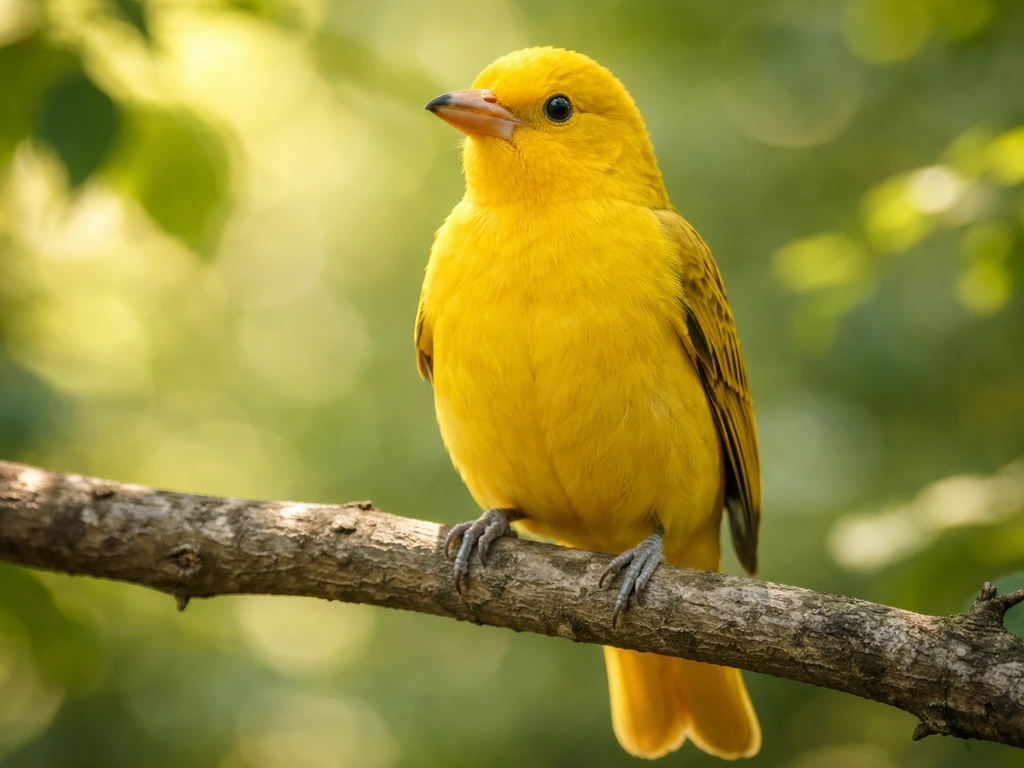
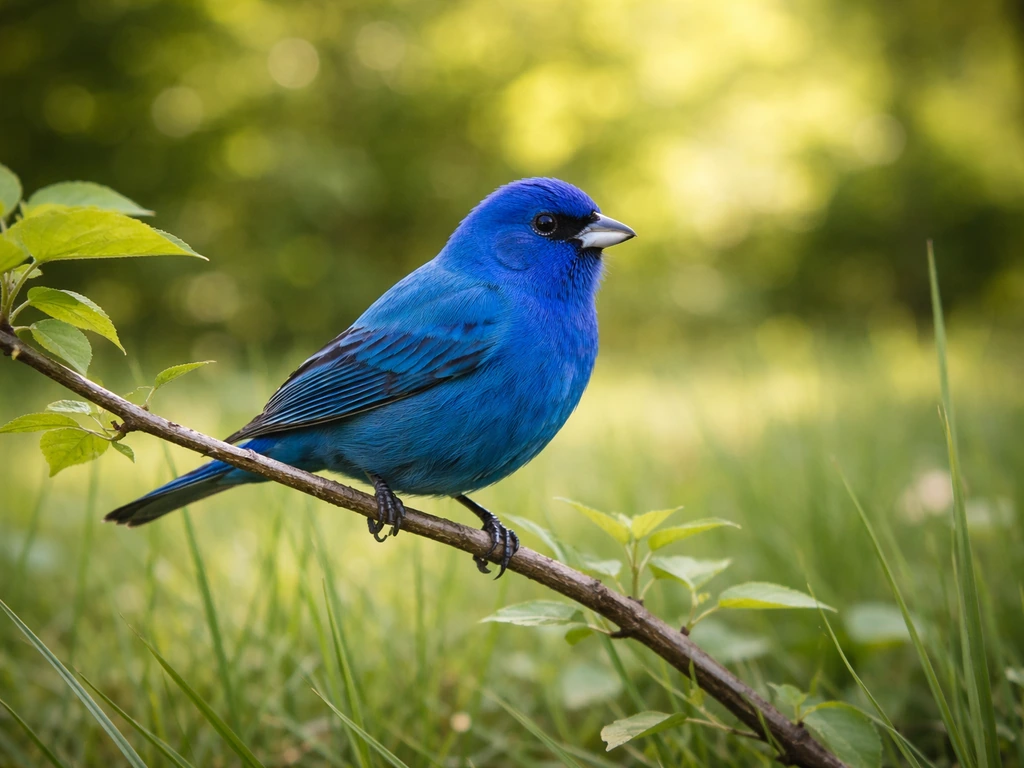
Seeing an Indigo Bunting usually carries a message of joy, creative energy, and spiritual alignment, the kind of nudge that says you're either moving in the right direction or you need to start. That vivid, almost electric blue isn't accidental symbolism. This tiny bird (barely the size of a sparrow, around 4.5 to 5 inches long) has a color so intense it stops people in their tracks, and in spiritual traditions across cultures, that stopping-you-in-your-tracks quality is the whole point. If you had an encounter today and you're trying to figure out what it means for your life right now, keep reading. We'll work through the symbolism, your specific encounter, and what to actually do next.
Indigo Bunting Bird Spiritual Meaning and What to Do Next

Eliza Thornwick
16 May 2026
Indigo Bunting spiritual meaning at a glance
The Indigo Bunting is most consistently associated with joy, clear communication, creative inspiration, intuition, and spiritual alignment. Think of it as a bird that represents the moment when inner knowing and outward expression line up. Its deep blue color connects it symbolically to the throat chakra (honest, heartfelt communication) and the third eye (intuition and clarity), depending on which spiritual framework you work with. In folk traditions and nature-based spirituality, a sudden bright blue bird appearing in your path is often read as a sign of good news, a creative breakthrough approaching, or a reminder to trust what you already sense is true.
Across multiple traditions, blue birds in general carry messages from higher realms or from loved ones who have passed. The Indigo Bunting adds a specific note to that: it's a songbird, and an incredibly vocal one at that. Cornell Lab of Ornithology documents male Indigo Buntings singing up to about 200 songs per hour at dawn, then continuing throughout the day. That relentless, joyful song isn't just biology, spiritually, it echoes the idea of expressing yourself fully, not holding back, and filling your space with your authentic voice.
| Spiritual Theme | What It Often Points To | Traditions That Emphasize It |
|---|---|---|
| Joy and uplift | A period of emotional lightness coming; releasing heaviness | Nature-based spirituality, folk symbolism |
| Clear communication | Speaking your truth; an important conversation needed | Chakra traditions (throat chakra) |
| Creative inspiration | A creative project ready to begin or accelerate | Celtic and Eastern philosophy |
| Intuition and alignment | Trusting inner knowing; you're on the right path | New Age, indigenous traditions |
| Love (romantic or self-love) | Deepening connection; openness to love | Multiple folk traditions |
| Star navigation / spiritual guidance | Finding your direction even in darkness | Linked to the bird's actual star-navigation behavior |
That last point is worth pausing on. Indigo Buntings are nocturnal migrants, they navigate at night using the stars. Scientists have documented their ability to orient themselves by the night sky. Spiritually, that translates beautifully into a symbol of finding your way when things feel dark or uncertain. If you're going through a disorienting season of life, this bird showing up can feel like a very specific message: you have an internal compass, and you know how to use it.
Common symbolic themes of the Indigo Bunting (and what they usually point to)
Let's get more specific about the main themes so you can match them to what's actually happening in your life.
Joy and emotional renewal
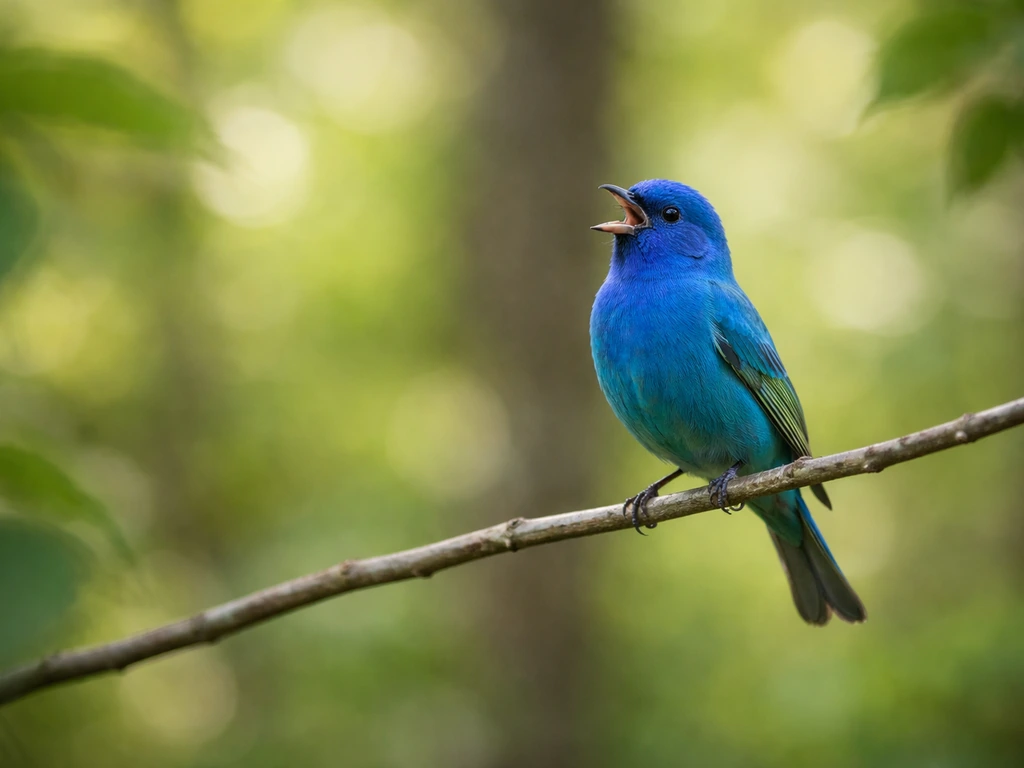
This is the most immediate and consistent message. The Indigo Bunting is not a subtle bird, that blue is startling, almost impossible, especially in certain light. When something that beautiful suddenly appears in your ordinary day, it jolts you out of your routine. Spiritually, that's often interpreted as a reminder to notice what's good, what's alive, what brings you genuine delight. If you've been stuck in a heavy or monotonous stretch, the Indigo Bunting is essentially asking: what would it feel like to sing anyway?
Communication and authentic expression
Because this bird is such a prolific singer, it's often read as a messenger about your voice. Is there something you've been holding back, a conversation, a creative project, a truth you haven't said out loud? The Indigo Bunting appearing can be a gentle but firm signal that it's time to speak. This isn't about being loud; it's about being genuine. The bird sings because that's what it does, it doesn't second-guess itself.
Creative inspiration and new beginnings
In Celtic and Eastern traditions, vivid blue birds are often heralds of new creative energy. If you've been waiting to start something, a project, a relationship, a new direction, this bird showing up is often interpreted as a green light. The timing matters too: Indigo Buntings breed from late spring through summer (they migrate into the U.S. from southern Mexico and Central America), so seeing one during that season amplifies themes of growth, fertility, and new cycles beginning.
Intuition, trust, and spiritual alignment
In many Native American traditions, blue birds carry messages from spirit and are associated with the sky, the divine, and the connection between worlds. The Indigo Bunting, with its star-navigating ability and intense blue coloring, fits squarely into this archetype. If you've been questioning a decision or doubting your own instincts, this bird's appearance is often read as confirmation: you already know what you need to know.
How to read your specific encounter (timing, location, and behavior)
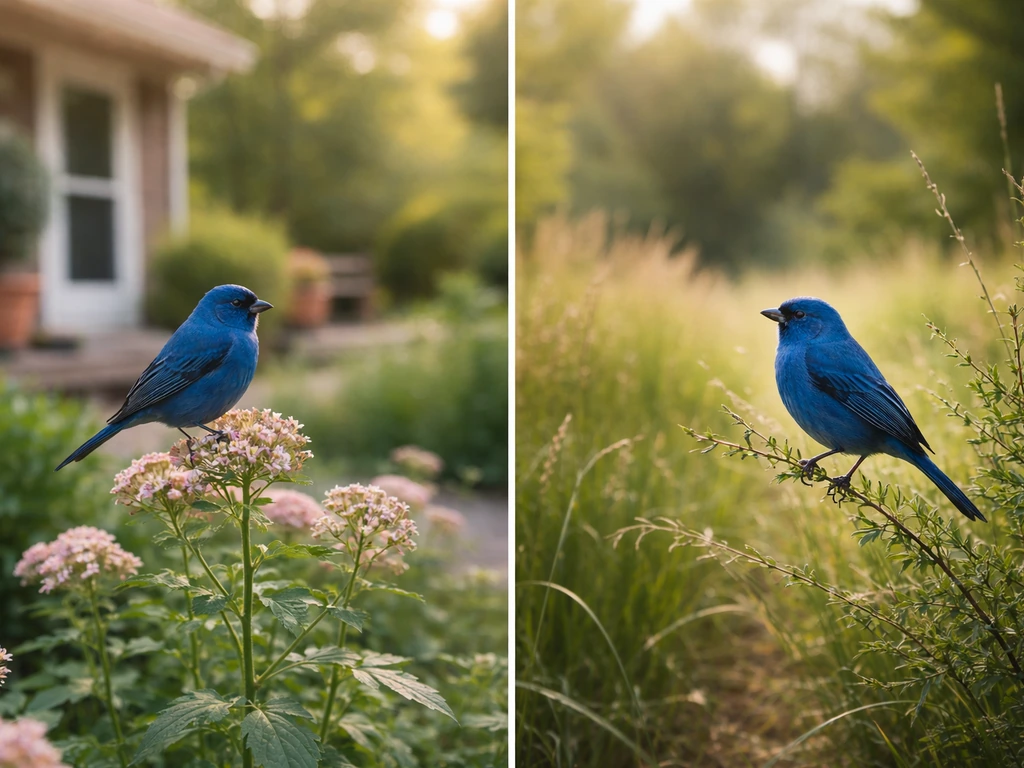
Context is everything. The same bird means something different depending on how and where you saw it. Here's how to read the details of your encounter.
Where you saw it
- In your garden or near your home: A message connected to your personal life — relationships, home, family, or a creative project you're working on privately. The Indigo Bunting is drawn to habitat edges, brushy fields, and yards with shrubs, so a yard sighting is naturalistic but no less meaningful spiritually.
- At a road or path crossing your route: Guidance about a decision or direction you're taking. The bird is crossing your path, literally — what path are you on right now?
- In a forest or wild place: A deeper spiritual message, often connected to your inner world, intuition, or soul-level direction rather than everyday circumstances.
- In an unusual or unexpected place (indoors, urban setting, out of context): A stronger sign, especially if it felt jarring. Out-of-place sightings tend to carry more urgency symbolically.
What the bird was doing
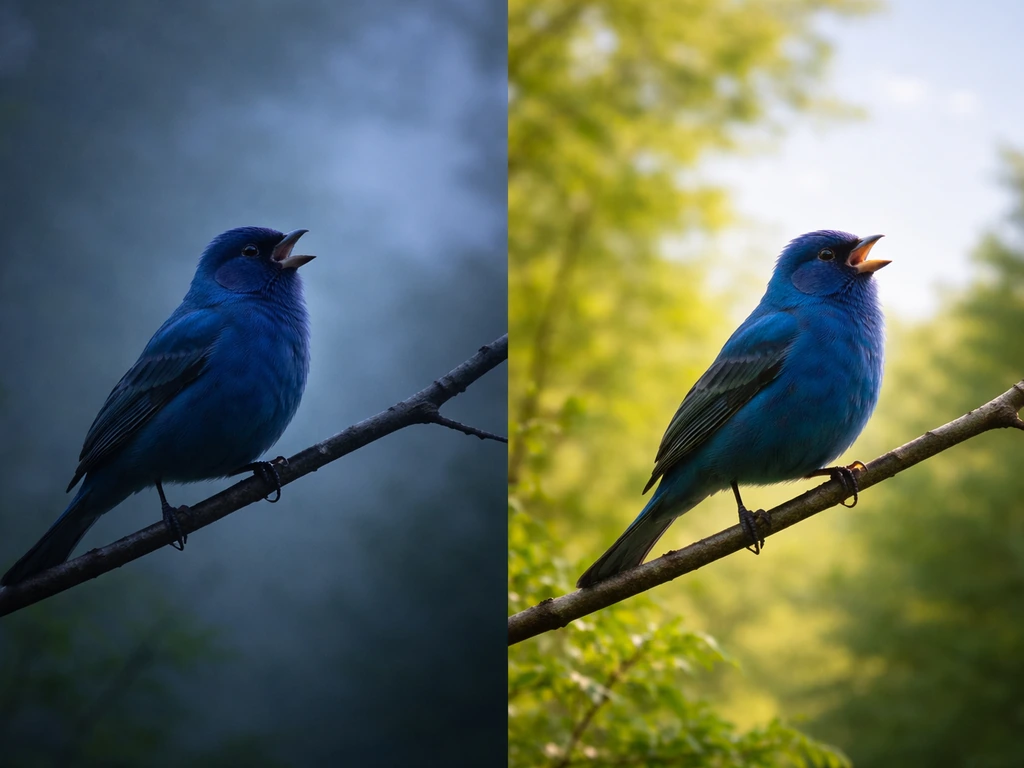
- Singing: The most powerful version of this encounter. Pay attention to communication, self-expression, and what you've been afraid to say.
- Flying toward you or landing nearby: A direct message; something is trying to get your attention about your current situation.
- Circling or repeatedly appearing: Persistence in symbolism usually means persistence is required — you may be avoiding something that needs your attention.
- Tapping or hitting your window: See the section below on difficult signs; this one has nuance.
- Sitting still and looking at you: An invitation to be present. Stop what you're doing. What were you thinking about in that exact moment?
When you saw it
Timing matters. Seeing an Indigo Bunting at dawn (when they sing most intensely) amplifies messages about new beginnings and speaking up. A midday sighting during ordinary activity is often a nudge to return to joy or creativity in the midst of routine. If you're in the bird's breeding season (late spring to mid-summer in North America), themes of growth, new projects, and creative fertility are especially alive. A fall sighting, when they're beginning to migrate south, can carry themes of completion, release, and preparation for a new chapter.
What to do next: journaling prompts and practical spiritual actions
Symbolism is only useful if you do something with it. Here's a short, practical plan for turning your encounter into actual reflection.
Journaling prompts to try today

- What was I thinking about or worrying about in the moments before I saw the bird? What if that exact thing is what the message is about?
- Is there something I've been wanting to say — to someone, or even to myself — that I keep putting off? What would it feel like to finally say it?
- What creative energy have I been sitting on? What would I start if I knew it was safe to begin?
- Where in my life do I need to trust my own instincts more? Where am I second-guessing myself unnecessarily?
- What brings me genuine joy right now, and am I letting myself actually feel it?
Simple spiritual practices to deepen the message
- Meditation or visualization: Sit quietly and imagine that vivid blue color filling your chest and throat. Let it represent your own voice, your own creativity. What does it feel like to let that color out into the world?
- Gratitude practice: Write down three things that genuinely brought you joy in the last week. The Indigo Bunting's message of joy only activates when you actually notice what's good.
- Intention-setting: If the encounter felt like a nudge toward something specific, write a single clear intention: 'I am open to [creative inspiration / honest conversation / trusting my direction].' Keep it simple and personal.
- Go outside: This one sounds obvious, but the bird came to you in the physical world. Spending quiet time in nature — particularly near the kind of brushy edges where Indigo Buntings like to hang out — can open the channel for more clarity.
- Listen: If you can find a recording of an Indigo Bunting's song, listen to it deliberately. Let it be a kind of reset — a reminder of what it sounds like to express yourself without holding back.
Interpreting difficult signs (dead/injured bird, feathers, out-of-place sightings)
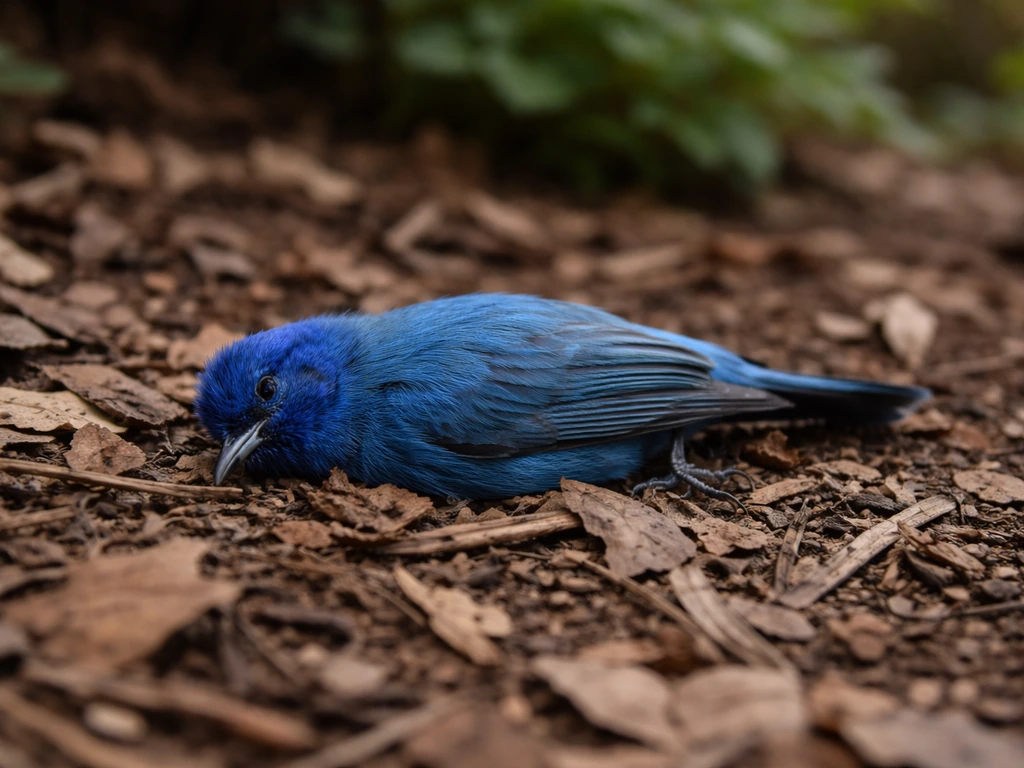
Not every encounter feels joyful, and it's important to address the harder ones honestly.
A dead Indigo Bunting
Finding a dead Indigo Bunting is a jarring experience, especially given how beautiful and symbolically charged the bird is. In spiritual interpretation, the death of a bird that represents joy and communication doesn't mean those things are being taken from you, it more often signals that a cycle is ending, making room for a new one. It can be an invitation to let go of something (a relationship, a creative project, an old version of yourself) that has run its course. Sit with what came to mind when you found the bird. That first thought is often the honest one.
On a practical note: if you find a bird that's been stunned by a window strike, it may still be alive. Tufts Wildlife Clinic recommends placing the bird gently in a dark, warm, quiet container like a shoebox and keeping it away from pets until it can be assessed. Many window-struck birds recover within an hour or two. If the bird doesn't recover, you can contact your local wildlife rehabilitator.
An injured bird or window strikes
Window strikes are common, birds see a reflection of sky or trees and either mistake it for open space or see their own reflection as a territorial rival. Window strikes can also happen when birds peck at perceived food or stimuli, so redirecting their attention, such as using alternate reflections, can help [Window strikes are common](https://www.
bto. org/learn/helping-birds/injured-birds/window-strikes). The USGS and British Trust for Ornithology both document this behavior. Spiritually, a bird hitting your window is one of the more complex encounters to interpret: it can signal that something in your environment or perception is creating a false picture, you may be seeing a reflection of a situation rather than the situation itself.
Ask yourself: where am I working from incomplete or distorted information right now? If the bird repeatedly hits the window, that urgency is usually worth taking seriously as a symbol.
Finding an Indigo Bunting feather
Finding a single feather, especially one with that distinctive blue coloring, is generally read as a gift, a smaller, quieter version of the full encounter. The message themes are the same (joy, communication, intuition) but often softer in urgency. A feather is often interpreted as a gentle confirmation rather than a pressing call to action. Put it somewhere you'll see it as a daily reminder of whatever resonated most from this article.
An out-of-place or indoor sighting
If an Indigo Bunting showed up somewhere genuinely unusual, inside your home, in a city environment with no natural habitat nearby, or repeatedly over several days, that is spiritually significant in most traditions. Out-of-place sightings are generally read as stronger messages, often connected to a loved one who has passed or a moment of spiritual guidance that needs your immediate attention. Ground yourself first (breathe, get your feet on the earth), and then let yourself sit with the question: who or what was I just thinking about? What life area needs my full attention right now?
Don't confuse it with other blue birds or generic 'indigo' symbolism
This matters more than it might seem, because the specific species shifts the interpretation. Here's how to make sure you're working with the right symbolism.
Indigo Bunting vs. Blue Grosbeak
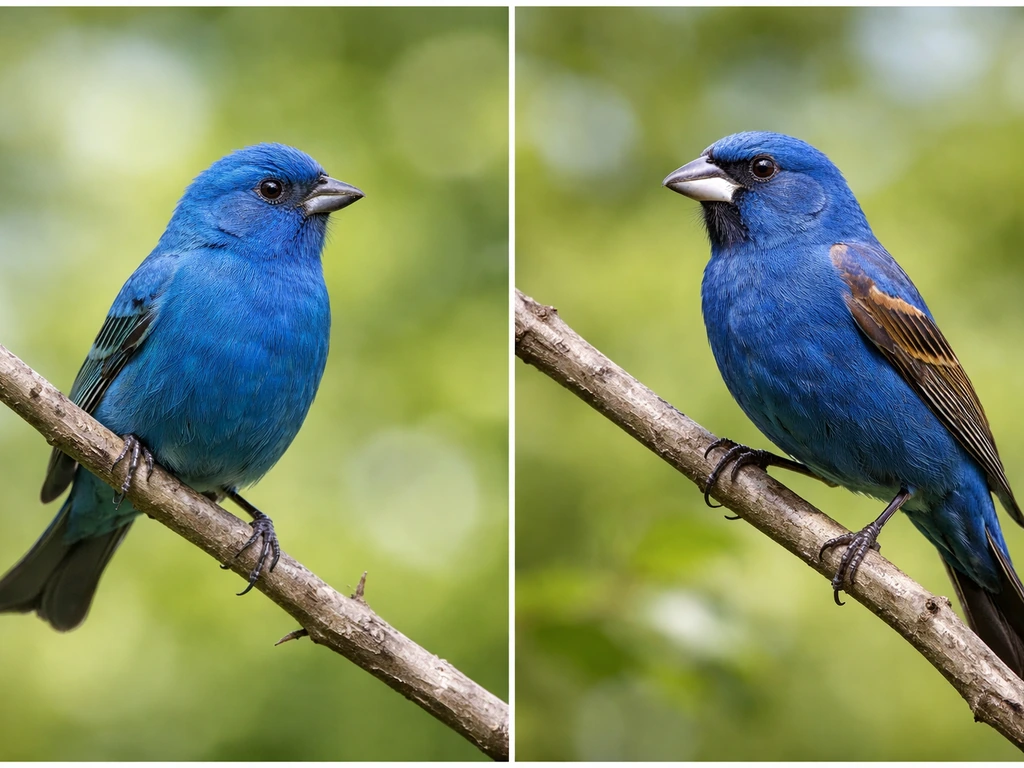
The Blue Grosbeak is the most common misidentification. It's also blue, also sings, and overlaps with the Indigo Bunting's range. The key differences: the Blue Grosbeak is noticeably larger, has a heavier bill, and shows distinctive rusty-brown wing bars. The Indigo Bunting is all blue with a slim silver-gray bill and no wing bars. Spiritually, the Blue Grosbeak carries its own symbolism (often associated with strength and endurance rather than the joyful expressiveness of the Indigo Bunting), so getting the ID right actually does change the message.
Female Indigo Buntings
Female Indigo Buntings are brown, streaky, sparrow-like, and easy to overlook or misidentify as a completely different species. The brown bird spiritual meaning can also point to grounded inner work, subtle intuition, and preparation for a new phase Female Indigo Buntings are brown. If you saw a small brown bird near where males were singing, it may well have been a female Indigo Bunting. The symbolic themes apply to both sexes, but the female's more understated appearance can shift the emphasis toward inner work, quiet intuition, and things happening beneath the surface rather than outward expression.
Generic 'indigo' color symbolism vs. this bird
There's a lot of 'indigo' symbolism floating around in spiritual circles, indigo children, indigo auras, indigo as a chakra color, and while some of that overlaps thematically (intuition, spiritual sensitivity), it's a different framework. The Indigo Bunting's symbolism is grounded in what this specific bird actually does and how it actually behaves: its song, its migratory star-navigation, its habitat. Don't layer generic color symbolism onto a bird encounter. Stay with the bird itself.
How this compares to other symbolically rich birds
If you're drawn to bird symbolism generally, you'll find some overlap with other songbirds and colorful species. The Baltimore Oriole, for example, shares themes of joy and new energy but leans more toward optimism and transition. If you’re also looking into the oriole bird spiritual meaning, it can add another layer to how you interpret joy and new energy in your life Baltimore Oriole.
The Baltimore Oriole bird spiritual meaning is often tied to optimism, heartfelt connection, and positive change. The Indigo Bunting is more specifically about authentic expression and trusting your inner compass. Owls carry very different energy, more associated with wisdom, the unseen, and sometimes forewarning, so the Indigo Bunting's message tends to feel lighter and more actionable by comparison. If you saw another bird alongside your Indigo Bunting, it's worth looking at both messages as a conversation.
Pulling it together: your one-page plan
Here's the short version you can actually use today. The Indigo Bunting most likely showed up to tell you one or more of these things: express yourself more fully, trust your direction even when the path isn't perfectly clear, let joy back in, or pay attention to a creative or communicative impulse you've been ignoring.
If you are also drawn to an orange bird, you can explore its spiritual meaning too, since different colors often point to different inner lessons orange bird spiritual meaning. The specific message depends on your context, use the encounter details and the journaling prompts above to narrow it down. Then pick one concrete action: write in your journal, start that conversation, begin that creative thing, or simply go outside and listen. The bird came to you singing.
The invitation is to respond in kind. If you are wondering about upan bird spiritual meaning, focus on how the encounter is pushing you toward joy, clear expression, and inner trust. If you’re also curious about the yellow oriole bird spiritual meaning, look for similar themes of joy, guidance, and messages that support your next step.
FAQ
If I saw an Indigo Bunting but didn’t feel joyful, does the spiritual meaning still apply?
Yes, but the message may be “start with what’s truthful” rather than pure joy. When the bird shows up and you feel flat or heavy, treat it as a prompt to express something you have been avoiding, even if it is not emotionally positive yet (for example, saying no, asking for help, or admitting what you want).
What should I do if I keep seeing Indigo Buntings in a short period but nothing changes in my life?
Repetition usually means the reminder is not sinking in yet. Pick one small, measurable action tied to the themes (send the email you keep drafting, set aside 30 minutes for your creative work, or have the conversation you’re postponing), then check whether your environment starts to reflect that shift within a week.
Does the meaning change if the bird was silent or I only saw it in flight?
It can. The article emphasizes song as part of the symbolism, so if you did not hear singing, lean more toward the “inner compass” and visual alignment aspects (clarity, direction, timing). In that case, journal “What is becoming clear to me right now?” instead of “What should I say?”
How should I interpret it if I saw the bird near a window but it never hit it?
A window proximity can still point to perception and “reflection” themes, but without the impact the urgency is usually lower. Ask what in your life might be a mirror image, for example assumptions you are making from limited information, or fear-based interpretations of what others think.
If I found a blue feather, is it better to keep it or dispose of it?
Keep it if it helps you return to the intention, place it somewhere visible, and use it as a daily cue. If it makes you anxious or brings up grief, consider keeping it in a private container and doing a short release ritual (write one sentence about what it is reminding you to do, then put it away).
What if I’m not sure it was an Indigo Bunting, could the spiritual meaning be “wrong”?
The spirit theme you derive is usually still about expression and alignment, but your specificity matters. If you cannot confidently distinguish it from similar species (especially Blue Grosbeak or a female), use a broader interpretation: “a message about voice, creativity, or direction” until you can verify. That prevents you from forcing an ID-based storyline.
Can Indigo Bunting sightings be a sign of a deceased loved one, or is that just spiritual symbolism?
It can be interpreted that way in many traditions, but treat it as emotionally meaningful rather than factual proof. If the encounter stirs comfort, allow it to support your next step (call someone you miss, tidy up their photo space, or write a letter). If it triggers fear, return to the “inner compass” angle and focus on what action reduces uncertainty.
What if the bird showed up during a breakup, grief, or a health scare?
In hard seasons, the bird’s message often shifts from “celebrate now” to “communicate and reorient.” Choose one grounded expression, such as telling a trusted person what you need, making an appointment, or writing down your next practical step. This keeps the spiritual meaning usable instead of purely symbolic.
Is there an ideal time to reflect on the meaning after the sighting?
Most people get clearer results by reflecting within 24 hours while the encounter is still vivid. Do one quick check-in (where were you emotionally, what conversation or creative impulse was present, what felt ignored?), then decide on one action for the next 48 hours.
If I see an Indigo Bunting at night or extremely late, does it change the message?
A late sighting can intensify the “finding your way in the dark” theme, especially if you are dealing with uncertainty. Make the response practical: ask one specific question that guides you (What do I know for sure? What is my next step?), then take the smallest action that reduces darkness, such as gathering information or making a call.
Next Article
Yellow Oriole Bird Spiritual Meaning: Signs, Symbols, and Next Steps
Interpret yellow oriole bird signs: joy, communication, vitality and alignment, with context tips and journaling next st