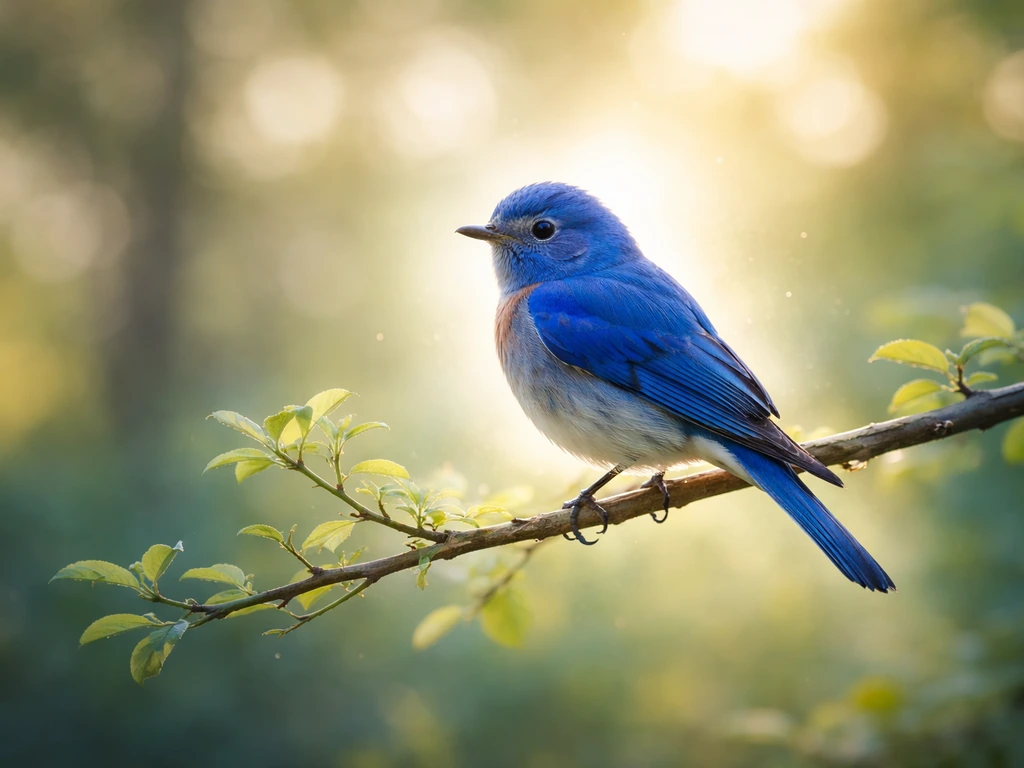
If an Eastern bluebird just crossed your path and you felt like it meant something, you're probably right to pay attention. The Eastern bluebird (Sialia sialis) is one of the most spiritually loaded birds in North American symbolism, and for good reason. At its core, an Eastern bluebird encounter is almost universally read as a message of happiness, hope, love, and the arrival of something better. Texas Parks and Wildlife even calls it "the harbinger of spring" and a symbol of happiness, love, and hope. That's not a coincidence you can brush off, especially when the encounter feels charged or repeated.
Eastern Bluebird Spiritual Meaning: What It Means for You

Eliza Thornwick
7 Apr 2026
Quick meaning at a glance
Here's the short version for anyone who just wants a fast read before diving deeper. An Eastern bluebird encounter most commonly signals:
- Happiness arriving or returning to your life
- Hope after a difficult stretch
- Gentle, trustworthy guidance toward something good
- A reminder to open your heart to love and connection
- Encouragement that your home, family, or emotional foundation is being supported
- An invitation to communicate more freely and honestly
The Eastern bluebird has carried these meanings for centuries across different cultures. It was named Missouri's state bird in 1927 specifically because of its longstanding reputation as a symbol of happiness. That kind of staying power in symbolism tells you something. This bird doesn't just pop up randomly in folklore and spiritual traditions. It earns its place.
What the colors and traits are really saying
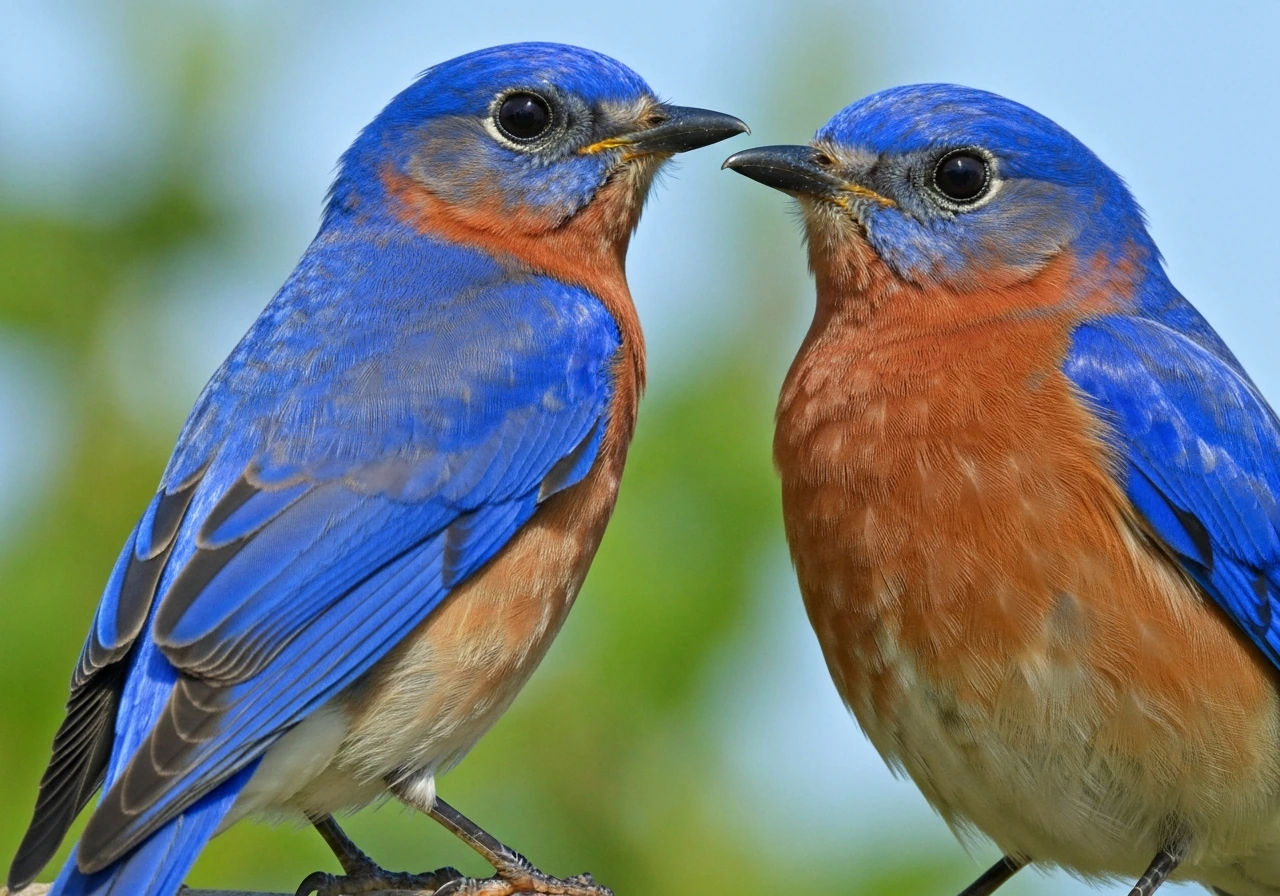
You can't talk about Eastern bluebird symbolism without talking about that blue. The vivid, almost electric blue on the male's back and wings is the first thing people notice, and spiritually it carries a lot of weight. Blue is the color of the throat chakra, which governs communication, truth, and authentic expression. It's also linked to the sky and infinite possibility. When you see that blue in nature moving toward you, it can feel like a message about speaking your truth or opening yourself to a wider perspective.
The Eastern bluebird also has a warm reddish-orange chest, which brings in the energy of the heart and sacral chakra: warmth, passion, nurturing, and emotional depth. If you want to go deeper into what that particular combination of blue and warm chest coloring means spiritually, the spiritual meaning of a blue bird with an orange chest explores exactly that pairing and how it shapes the bird's symbolic energy.
Beyond color, the Eastern bluebird's nature is worth noting. It's gentle and approachable. It doesn't startle easily. It's a cavity nester that returns to the same spots year after year, deeply loyal to place and partner. In many Native American traditions, birds that are faithful to home and mate are seen as messengers of fidelity, commitment, and groundedness. In Celtic tradition, small colorful birds often represent the soul itself, carrying news between the visible and invisible worlds. Across Eastern philosophy, the bluebird is associated with joy that comes from inner peace rather than external noise. All of these threads point in the same direction: this is a bird that represents something steady, warm, and genuinely good.
If you're drawn to blue birds more broadly and want to understand the wider spiritual language they speak, the spiritual meaning of a blue bird gives you a solid foundation for understanding why this color shows up in bird symbolism across so many cultures and traditions.
What it means depending on how it showed up
Context changes everything in bird symbolism. The same bird can deliver a different message depending on whether you saw it, heard it, it landed near you, or you found a nest. Here's how to read the most common scenarios.
Simply seeing one
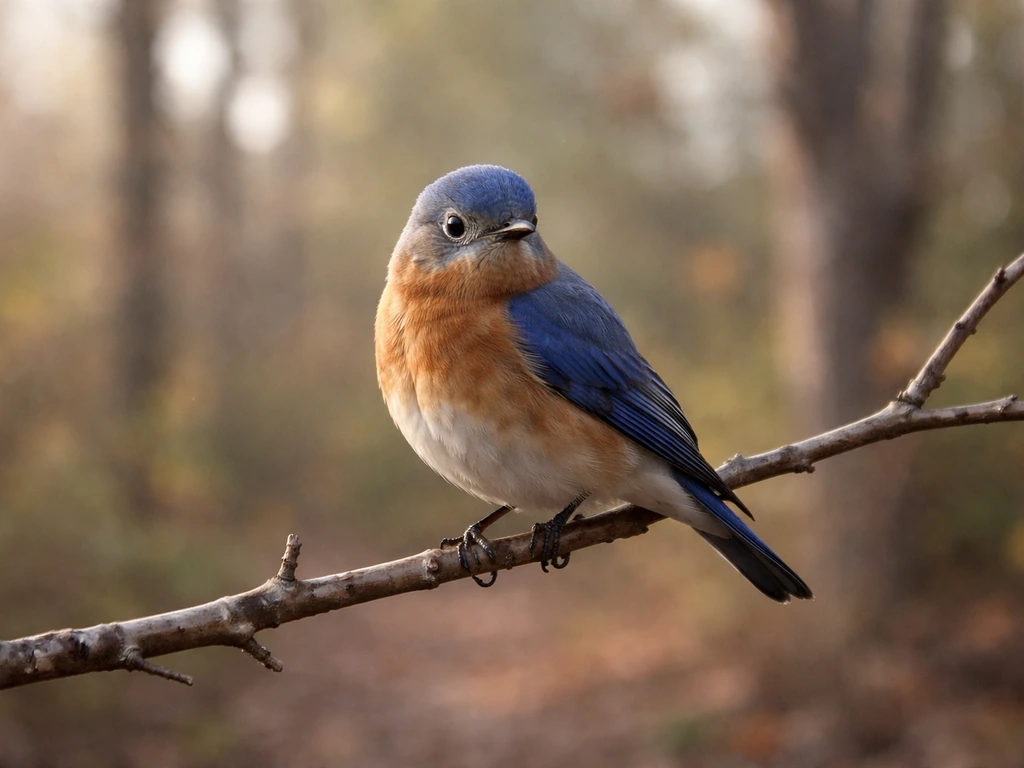
A single sighting, especially if it stopped you in your tracks or felt significant in the moment, is typically read as a reassurance message. You're on the right path. Happiness is coming, or it's already here and you need to slow down enough to notice it. If you were in a low moment when it appeared, take it as a nudge that things are shifting.
Hearing it but not seeing it
The Eastern bluebird's call is a soft, low-pitched "tu-a-wee" with what Cornell Lab describes as a slightly querulous, questioning tone. Its song is a series of short, warbling phrases, used across seasons to maintain connection with a partner or signal to nestlings. Spiritually, hearing the bluebird without seeing it is a message aimed specifically at your communication. Something unsaid needs to be voiced. A conversation you've been putting off might need to happen. Or you're being asked to listen more carefully to what's already being communicated around you.
It lands near you or on you
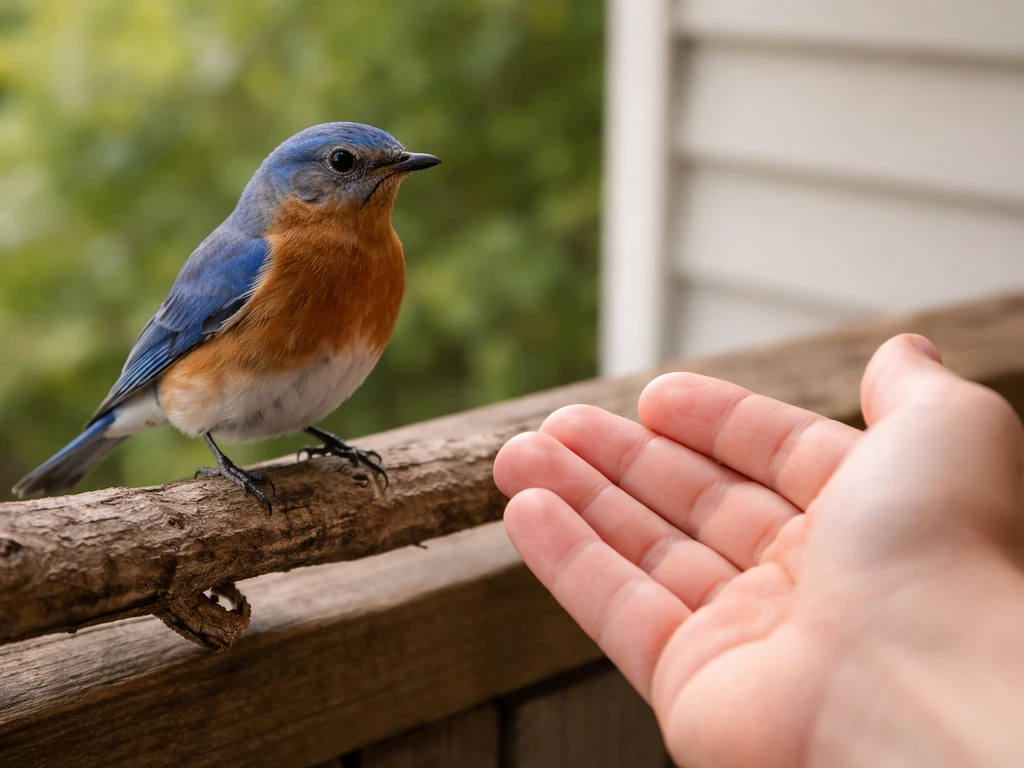
This is a high-contact encounter and one of the most exciting for people who follow bird symbolism. When a wild bird chooses to land close to a person, many spiritual traditions read it as a direct, personal message rather than a general one. The Eastern bluebird landing near you specifically suggests that the happiness and hope it represents is meant for you, now, in your current situation. It's not a far-off promise. It's immediate. Some people who experience this describe feeling a sudden calm or clarity, which tracks with the bird's association with inner peace and trustworthy guidance.
Repeated sightings
If you've been seeing Eastern bluebirds repeatedly over days or weeks, that's the universe turning up the volume on a message. Pay attention to what you were thinking about or going through each time it appeared. The pattern often reveals the specific area of life the message is aimed at. Keep a small note on your phone, nothing elaborate, just a line about where you were and what was on your mind. Patterns emerge fast.
Active nesting near your home
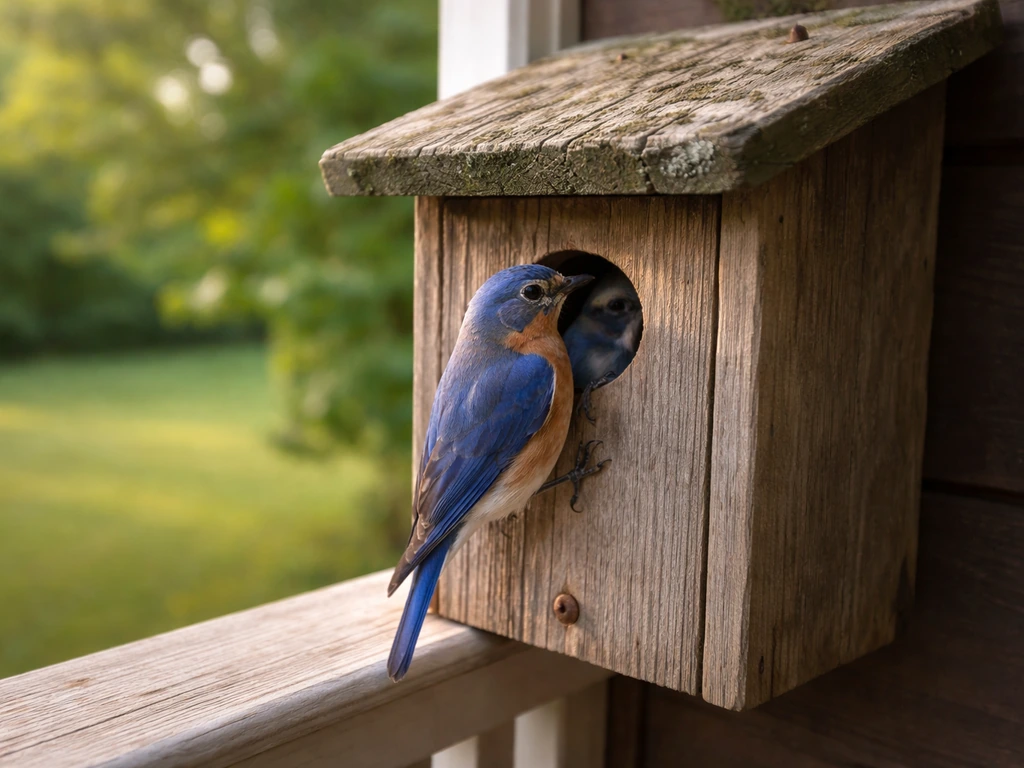
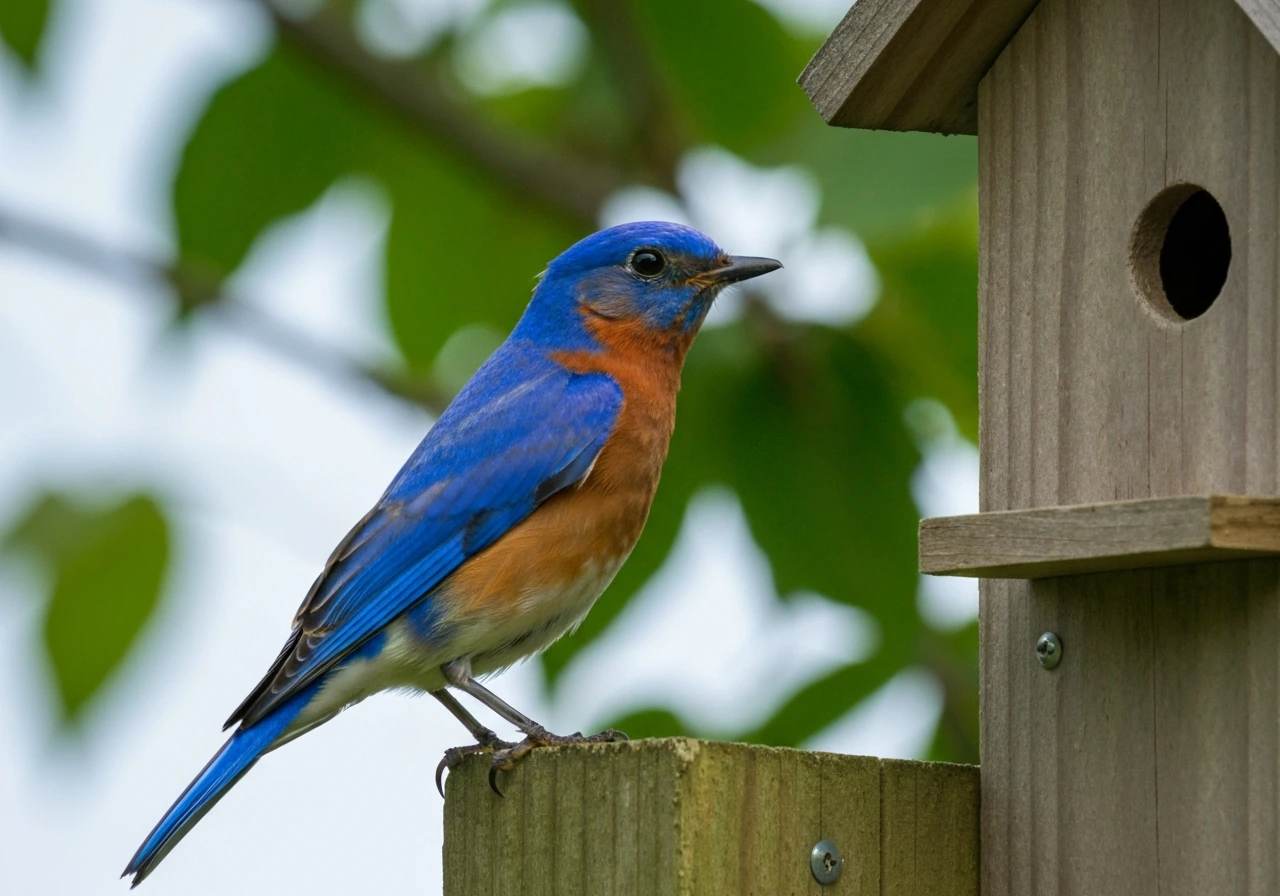
Eastern bluebirds nesting on or near your property is considered one of the most positive omens in North American bird folklore. This is a bird that is famously loyal to a nesting site, returning year after year. When it chooses your space, it's symbolically "choosing" your home as a place of safety, love, and growth. This is deeply connected to themes of family stability, blessing of a household, and long-term rooting. If you're going through any decisions about home, family structure, or where to put down roots, a bluebird nesting near you is a very encouraging sign.
Love, relationships, and emotional healing
The Eastern bluebird is one of the birds most tightly linked to love, and not just romantic love. It speaks to all forms of heartfelt connection. In relationships, this bird's symbolic energy tends to show up when you need one of two things: either an affirmation that a connection is real and worth nurturing, or a gentle push to open your heart again after it's been closed by hurt.
If you're in a relationship and the bluebird appeared during a moment of doubt, most traditions would read that as a signal to trust what you have. The bluebird pairs for long periods and both partners are involved in raising young, which makes it a symbol of partnership that actually works, where both people show up. If the relationship you're questioning has those qualities, the bluebird may be telling you to lean in rather than pull back.
For emotional healing, the Eastern bluebird's message is about moving from grief or numbness back into the warmth of life. It doesn't ask you to rush. Its song, remember, is low and gentle, not urgent. But it does suggest that the conditions for joy are already around you. You might be ready to receive them even if it doesn't feel that way yet. This is a bird that shows up as a companion during grief, not to fix it, but to remind you that happiness is part of your nature too.
It's worth noting that bluebird symbolism in love is consistent across quite different traditions. If you find these meanings resonate, you might also find value in looking at the spiritual meaning of blue and white birds, which carries similar themes of purity and faithful connection in relationships.
Home, family, and stability
The Eastern bluebird is deeply domestic in its energy. It nests in sheltered cavities, often inside birdhouses placed by people who want them nearby, which makes it unusually comfortable in the human domestic sphere. Spiritually, this translates to a strong connection with home life, family bonds, and the creation of a safe, nurturing environment.
If you're navigating decisions about your living situation, family dynamics, or the kind of stability you want to build, an Eastern bluebird encounter tends to carry a message of encouragement. The home you're building (literally or metaphorically) is the right one. Invest in it. Protect it. Let it be a place of warmth and return.
For families going through transitions, whether that's a new baby, a move, a blending of families, or healing after conflict, the bluebird's appearance can feel like a benediction. It's a spiritual pat on the back that says: you're doing the right things to create something lasting here. Interestingly, other small birds carry similarly grounded domestic symbolism. The wren bird's spiritual meaning, for example, also connects deeply to home and family energy, and the two birds together in your awareness can amplify that message considerably.
Communication, opportunities, and personal growth
Because of its strong throat-chakra blue and its vocal, melodic nature, the Eastern bluebird is a powerful symbol for communication in all its forms. This includes speaking up for yourself, having honest conversations, listening more deeply, and expressing creativity. When the bluebird appears around a time when you're considering a new opportunity or facing a moment that requires you to put yourself forward, it's almost always a positive omen.
The "harbinger of spring" framing matters here too. Spring is the season of beginning, of growth after stillness. When the Eastern bluebird arrives spiritually, it often signals that a new chapter is opening. Something you've been waiting for, whether it's an opportunity, a relationship, a creative project, or a personal shift, is becoming available. The bluebird doesn't create the opportunity. It signals that you're in a window where moving forward will be fruitful.
For personal growth specifically, the bluebird's message is about joy as a path, not just a destination. This bird doesn't grind. It sings. Spiritually, it asks you whether you're approaching your own development with too much seriousness and not enough lightness. Sometimes the most growth happens when you follow what genuinely makes you happy rather than what you think you're supposed to be doing.
Other blue birds carry complementary messages around communication and growth. The blue heron's spiritual meaning, for instance, speaks to patience and strategic timing in self-development, which can pair beautifully with the bluebird's more immediate, joyful nudge toward action. And if you've encountered a smaller blue bird like the blue wren, that encounter brings its own related but distinct energy around creativity and expression worth exploring.
How to actually interpret your own encounter
General symbolism is helpful, but the most accurate interpretation is always personal. Here's a practical method for making sense of what your specific encounter might mean.
Use context as your decoder
Think about four things: where you were, what you were doing or thinking about, how you felt when the bird appeared, and what changed (if anything) after it left. These four factors usually point you straight at the relevant life area. If you were anxious about a relationship and felt a wave of calm when the bird appeared, the message is almost certainly about that relationship. If you were feeling stuck in your career and the bird appeared at a moment of unexpected lightness, it's nudging you toward a shift there.
Journaling to deepen the message
Write it down within 24 hours while the details are still fresh. Include the date, time, location, weather, and what the bird was doing. Then write freely for a few minutes about what's currently weighing on you. Don't try to force a connection. Just write both things out and then read back what you wrote. Nine times out of ten, the connection becomes obvious on its own. Over time, a journal of bird encounters becomes an incredibly useful personal spiritual record, especially if you're someone who tends to experience these moments regularly.
What to do next
The Eastern bluebird's message is almost always an invitation to move toward something rather than away from something. After your encounter, here are the most grounded next steps based on which theme feels most relevant to you:
| Life Area | What the Bluebird Might Be Saying | Suggested Next Step |
|---|---|---|
| Love / Relationships | Trust the connection; open your heart | Have the honest conversation you've been avoiding |
| Emotional Healing | Joy is available to you right now | Do one small thing today that genuinely makes you happy |
| Home / Family | Your domestic foundation is supported | Invest time and attention in the people and space you're building |
| Communication | Something needs to be said or listened to | Speak up or create space for a meaningful conversation |
| Opportunity / Growth | A new chapter is opening | Take one concrete step toward the thing you've been holding back on |
| General Guidance | You're on the right path | Slow down, notice the good already around you, keep going |
One thing worth sitting with: the Eastern bluebird doesn't show up as a warning. If you saw one and felt uneasy, that unease is most likely your own resistance to the positive change the bird represents. That's worth journaling about too. Sometimes the messages we most need to hear are the ones that make us feel complicated rather than purely happy.
However your encounter arrived and whatever combination of life themes it stirred up, the Eastern bluebird is one of those rare messengers that almost every tradition agrees on: it means something good is either here or on its way. Your job is simply to pay attention, stay open, and take the small steps that move you toward the happiness this bird has been symbolizing for centuries.
FAQ
What should I do if I see an eastern blue bird but I feel anxious instead of hopeful?
Treat the unease as part of the message, not a contradiction. Journal what you were afraid would happen if things improve (for example, loss, disappointment, or having to change), then choose one tiny action that supports the positive shift (a conversation, an application, or asking for help).
Does the spiritual meaning change if the eastern blue bird is a male versus a female?
Most symbolism you see is based on the characteristic blue and warm chest colors, but in practice the encounter’s meaning still depends on your context. Use the color themes you felt most strongly (communication for blue, warmth and trust for the reddish-orange chest) and map it to the life area you were focused on when it appeared.
Is it more meaningful if I heard the call instead of seeing the bird?
Yes, many people read “heard but not seen” encounters as communication focused, especially when you recently held back words. Try noting any conversation you have been avoiding, then plan when you will speak, text, or address the issue, even if it is only a first step.
How can I tell whether it is a general sign or a personal one?
A personal message is more likely when the encounter is high-contact (landing nearby, lingering attention) or when it matches what you were thinking about immediately beforehand. If it felt vague or you were distracted, treat it as a broad reminder to return to your values, not a specific prediction.
What does it mean if the eastern blue bird flies away quickly?
A quick departure often suggests “pay attention now” rather than “wait for a big event.” If you felt a sudden urge, that is usually the point. Choose one decision you have been delaying and make a small move within 24 to 48 hours.
Can an eastern blue bird meaning apply to family or friendships, not just romance?
Yes. The bird’s domestic, loyal energy commonly gets interpreted as stability, support, and repair. If you experienced the encounter around a family transition or a strained friendship, read it as encouragement to create safe communication and consistent follow-through.
What if I’m seeing eastern blue birds at different times of day, does that change the message?
It can. Morning sightings are often felt as a nudge for intention setting, midday sightings as reassurance and alignment, and evening sightings as emotional processing or relationship check-ins. Use your feelings and what changed after the encounter, since timing alone is rarely definitive.
Do multiple sightings always mean the same message?
Not necessarily. Repeated appearances usually amplify the theme, but the exact “chapter” can change. In your notes, look for whether each sighting connects to the same life area (for example, home) but different sub-questions (for example, boundaries, repairs, or moving).
Is it appropriate to use spiritual interpretations alongside practical decisions?
Yes. A grounded way is to treat the symbolism as guidance for your next step, then verify it with reality. For example, if you feel the message is about communication, prepare what you will say and follow through. If you feel it is about home, make tangible improvements rather than waiting for confirmation.
What should I avoid doing when I have an eastern blue bird encounter?
Avoid forcing a “perfect interpretation” or making life-changing decisions only because you saw a bird. Also be cautious about interpreting every uncomfortable feeling as a spiritual warning. If something feels off, use the journaling method and wait for clarity from your own decisions and circumstances.
What if the bird appears near my birdhouse or property, how should I respond spiritually?
Consider it a sign to support the life you want to grow, including routines at home. If you have a birdhouse or plan for one, maintain it safely and consistently, and symbolically reflect on what makes your household feel secure, such as boundaries, repair work, or family time.
Can a bluebird encounter relate to grief or healing if I still feel numb?
Yes. The symbolism often points to gentle movement back toward warmth without demanding instant joy. Choose one nurturing activity that is realistic for your capacity (a small outing, a comforting meal, or one supportive message), rather than trying to “feel better” on schedule.
Next Article
Spiritual Meaning of a Blue Bird: What Seeing One Means
Discover the spiritual meaning of seeing a blue bird, with practical ways to interpret your encounter, emotions, timing.