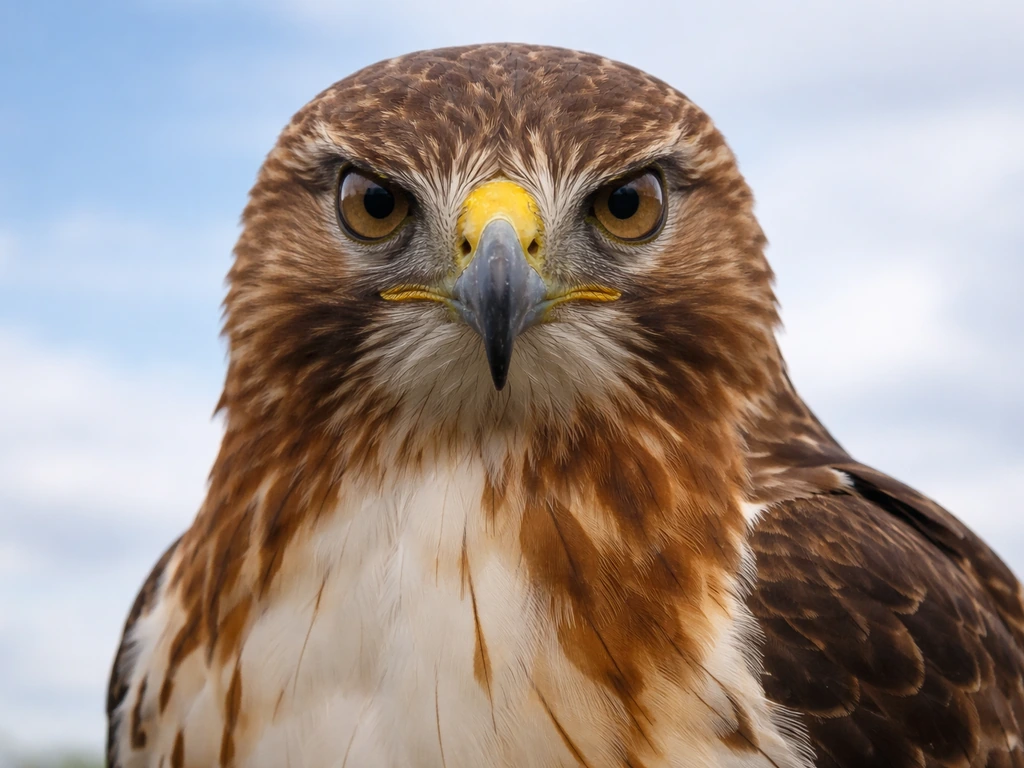
When a nighthawk shows up in your life, especially more than once or in an unusual way, it is rarely something you brush off easily. There is something about this bird that stops people mid-step. Maybe it is the timing (always at dusk or deep into the night), maybe it is the way it moves (erratic, swooping, almost theatrical), or maybe it is simply a gut feeling that this encounter means something. If you are here, you probably already sense that. So let me give you a direct answer: the nighthawk is widely understood in spiritual symbolism as a messenger of intuition, transition, and hidden truths. It operates in the in-between spaces, the threshold between day and night, between what you know and what you have not yet allowed yourself to see.
Nighthawk Bird Spiritual Meaning: Signs, Timing, and What to Do

What the Nighthawk Means in Spiritual Terms
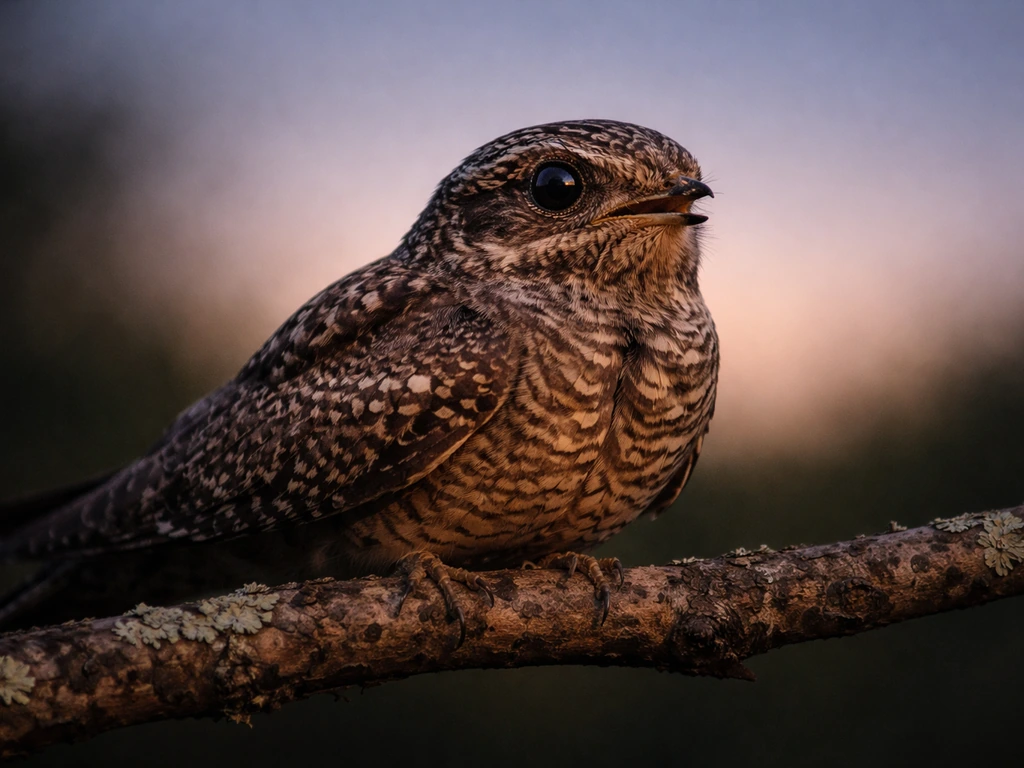
First, a quick note on what makes the nighthawk spiritually distinct. It is not a hawk in the raptor sense. It does not hunt by day with sharp talons and piercing eyesight. It is a nocturnal insect-eater that moves on the wing, swooping through the sky at dusk and dawn and, as any birdwatcher will tell you, especially on moonlit nights. That behavioral profile matters enormously in symbolism. Birds that thrive at dusk, in the half-light, and under the moon are almost universally associated with the subconscious, with things that are hidden, and with transitions between states of being.
In many Indigenous North American traditions, night birds carry messages from the spirit world or signal that unseen forces are active around you. Celtic traditions tie nocturnal creatures to the thinning of the veil between worlds. In Eastern philosophies, the creature that moves between darkness and light represents the balance of yin energies: receptive, intuitive, and inward-looking. None of these traditions is saying the nighthawk is dark or ominous. They are saying it belongs to the world most of us ignore, the world that runs quietly underneath our daylight routines. That is its spiritual territory.
The core spiritual themes associated with the nighthawk are intuition and inner knowing, transition and liminal states, shadow work and facing what is hidden, protection during vulnerable times, and awakening to subtler layers of reality. Think of the nighthawk as a spiritual prompt rather than a prophecy. It is not coming to predict something. It is nudging you to pay attention to something you may have been overlooking.
If you are already drawn to what hawks mean in spiritual symbolism more broadly, the nighthawk adds a specific layer: where the daytime hawk is about clarity, vision, and decisive action, the nighthawk is about what you perceive when the noise of ordinary life quiets down. It is the hawk of your inner world.
What Different Nighthawk Encounters Can Mean
Not every sighting carries the same weight. The circumstances of your encounter genuinely shape what it might be pointing toward. Here is a breakdown of the most common scenarios people ask about.
Seeing One Repeatedly Over Days or Weeks
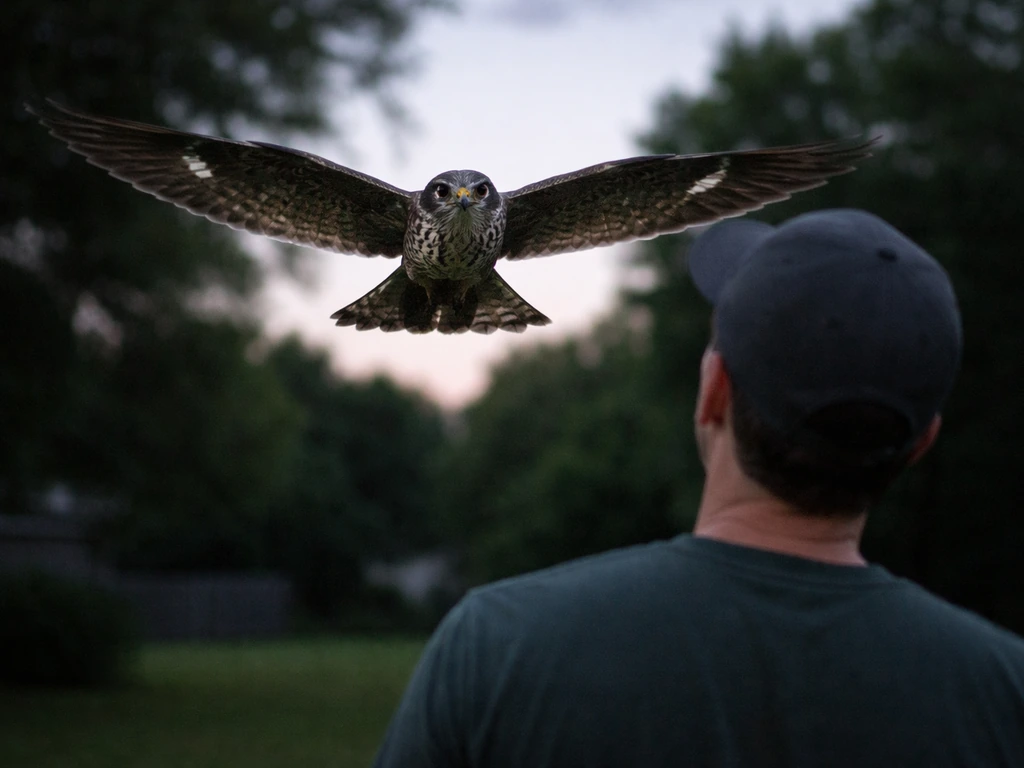
Repetition is the clearest signal that something wants your attention. If a nighthawk keeps appearing in your sightline, in your yard, over your commute route, or in an unusual location, treat it as a sustained message rather than a coincidence. Spiritually, this pattern often points to a persistent invitation: you are being asked to look inward, to address something you have been avoiding, or to trust an intuition that keeps surfacing and getting pushed aside. The message will usually feel personally relevant once you sit quietly and ask yourself what it might be about.
Flying Close or Directly Toward You
When a nighthawk swoops close to your head or body, the immediate instinct is to flinch, which is fair. But spiritually, close proximity is often interpreted as urgency. The spirit world equivalent of someone leaning in to speak directly to you. It may indicate that guidance or protection is being actively extended to you, or that a message is particularly time-sensitive. It can also mean you are being invited to shed fear, since the nighthawk is a fearless flyer that moves through darkness without hesitation.
Circling Overhead
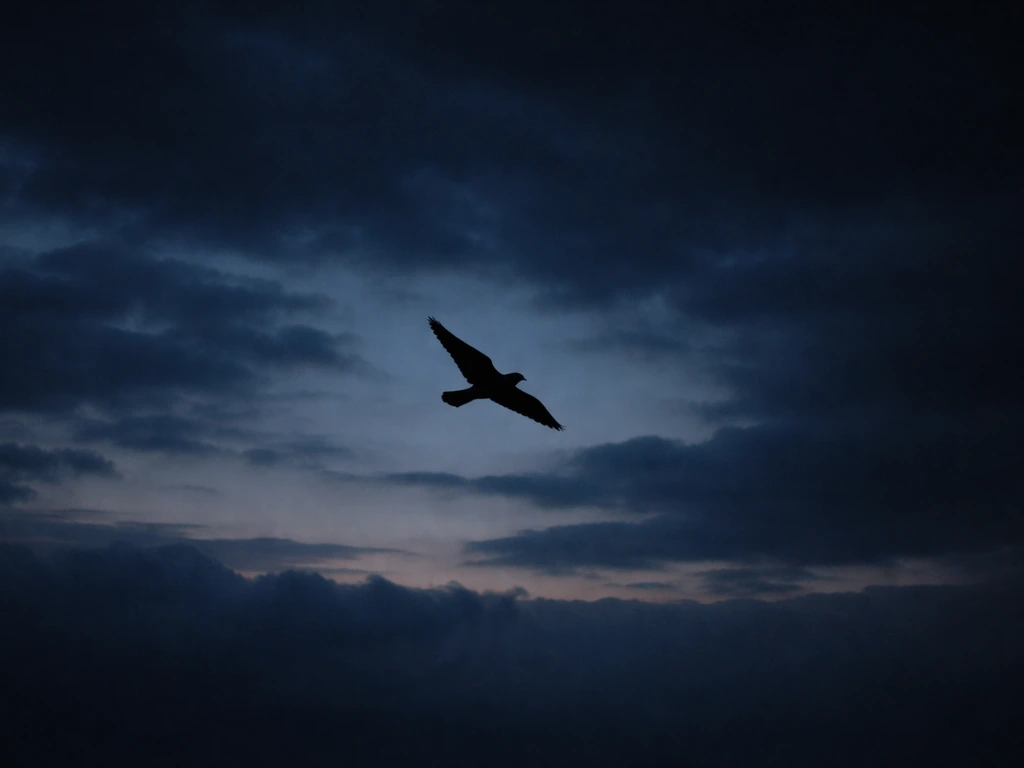
Circling behavior is often linked to watchfulness and protection in bird symbolism across many traditions. A nighthawk circling you may be pointing to the idea that you are being watched over, that unseen guides or ancestors are present, or that you are at the center of a significant decision point in your life. Circles themselves are powerful symbols of wholeness, cycles, and return, so the image of a bird tracing circles in the sky above you carries that resonance too.
Landing Unusually Close to You
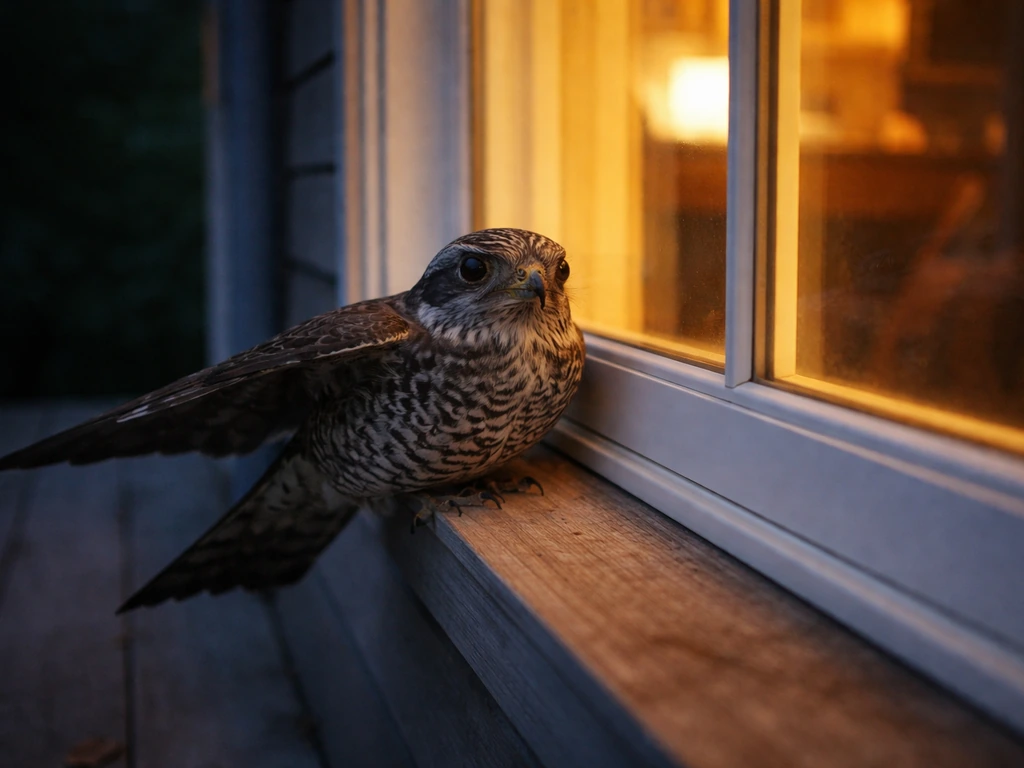
Nighthawks are not birds that typically land near humans. They roost flat on the ground or along branches and are cryptically patterned to stay hidden. If one lands very close to you and holds its ground, that is genuinely unusual behavior and spiritually speaking, unusual behavior from an otherwise shy animal is almost always worth taking seriously. This scenario is often connected to a direct, personal message, a call to stop moving and be still, or a signal that rest and reflection are what is needed right now.
Hovering or Appearing at a Window
Windows carry strong symbolic weight across virtually every spiritual tradition: they represent the boundary between the inner world and the outer world, between the known and the unknown. A nighthawk appearing at your window, hovering near it, or circling close to it may be pointing to a threshold moment in your life. Something is asking to come through. Alternatively, it could be asking you to look more clearly at what is happening inside your own home, life, or psyche. It is worth noting that nighthawks are genuinely attracted to bright lights at night because insects congregate there, so if your windows are illuminated after dark, part of what you are seeing may be natural bird behavior. But the symbolic invitation is still real and worth reflecting on.
Appearing Briefly Once and Disappearing
A single, brief sighting that felt significant is often a check-in rather than an urgent message. Many people describe these moments as a gentle reminder to reconnect with their intuition, to slow down, or simply as a sign that they are not alone during a challenging period. Trust your first emotional response to the encounter. That instinctive feeling is usually the message itself.
Night Timing, Seasons, and What the Environment Is Telling You
Timing and setting add important context to any bird encounter. The nighthawk, as a species, is most active at dusk, dawn, and through the night, especially under moonlit skies. These are already liminal times in spiritual terms: dusk is the crossing from day to night, dawn is the crossing back. A nighthawk encounter at these threshold hours amplifies the transitional message. If the bird appears during a full moon, many traditions would read that as an especially potent moment for intuition, emotional clarity, and releasing what no longer serves you.
Season matters too. Nighthawks are migratory birds, so seeing one early in spring or late in summer can carry the symbolism of arrival or departure, of new chapters beginning or old ones completing. A sighting during a period of personal transition, a job change, a move, the end of a relationship, carries extra weight because the bird's own seasonal story mirrors what is happening in your life. That resonance is not coincidental in spiritual interpretation. It is the language of synchronicity.
Weather adds another layer. On foggy or overcast nights, nighthawks and other birds can become disoriented and behave unusually, flying lower or circling bright lights more persistently. Spiritually, fog is a classic symbol of confusion, unclear vision, or a period of not-yet-knowing. If your encounter happens in murky weather, the message might specifically be about navigating uncertainty with trust rather than forcing clarity before it is ready to arrive. The nighthawk moves confidently through the fog. That is its teaching.
Think also about your immediate surroundings. Was the bird near your home, your workplace, a place that holds emotional significance? Location in bird symbolism often indicates the area of life the message is connected to. A nighthawk near your home points to family, roots, and inner life. Near your workplace, it may speak to career, purpose, or something hidden in your professional world that deserves attention.
How to Discern What the Message Is For You
Here is the honest truth about spiritual symbolism: no article can tell you exactly what your nighthawk encounter means for your specific life. What it can do is give you a framework for finding out yourself. The real interpretation work happens in quiet reflection, and that is where the most meaningful answers come from.
Start by sitting with the encounter for a few minutes before grabbing your phone or a book. Ask yourself: what was I thinking about just before I saw the bird? What feeling did the encounter leave me with? Those immediate associations often cut straight to the message. If you felt a sense of calm and reassurance, the nighthawk may be confirming that you are on the right path even if it does not feel obvious yet. If you felt a jolt of something closer to recognition or urgency, something probably needs your attention.
Journaling is genuinely useful here. Write down the details of the encounter: time, place, weather, what the bird did, how long it stayed, and most importantly how it made you feel. Then write freely about what is going on in your life right now. Look for connections between the themes the nighthawk represents (intuition, transition, hidden truths, protection, shadow work) and what is active for you personally. The overlaps are usually not subtle once you start writing.
Some useful reflection questions to sit with:
- Is there something I have been ignoring or avoiding that keeps resurfacing in my thoughts?
- Am I in a period of transition, and am I resisting it or moving with it?
- Do I trust my own intuition right now, or have I been overriding it with logic?
- Is there a fear I have been carrying in the dark that might be ready to be brought into the light?
- Have I been asking for guidance or protection, consciously or not?
The nighthawk's symbolism shares some beautiful parallels with the nightingale's spiritual meaning, particularly around messages that come through in the quiet hours when the noise of daily life falls away. Both invite you to listen more carefully to what is beneath the surface.
When the Encounter Feels Unsettling: Dead Birds, Unusual Signs, and Warnings
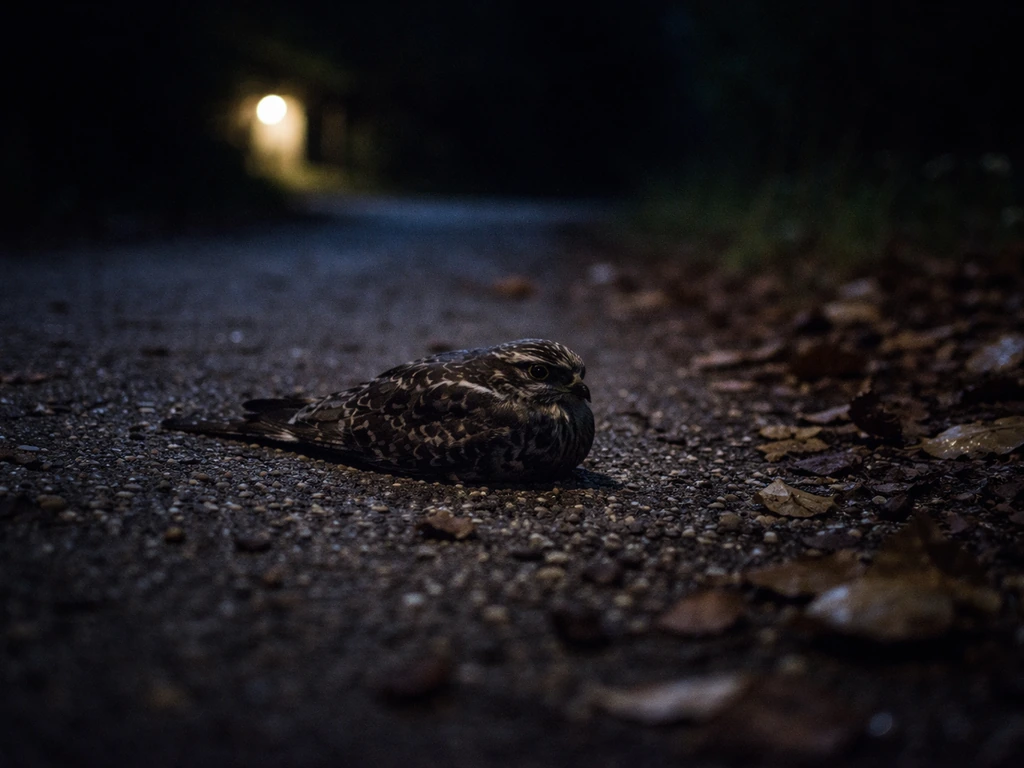
Not every encounter feels good, and it is important to address that honestly. If you found a dead nighthawk, or saw a nighthawk behave in a way that felt distressing or foreboding, you deserve a direct conversation about what that might mean spiritually, alongside some grounding.
In many spiritual traditions, a dead bird is understood as a symbol of ending and release rather than doom. The death of a night bird specifically often points to the completion of a shadow period: something that was hidden or suppressed is now fully resolved, or it is asking to be released so you can move forward. It can also symbolize the end of a cycle of confusion, fear, or unconscious patterns. Rather than treating it as an omen of something bad to come, try sitting with the question: what am I ready to let go of?
It is also worth knowing that nighthawk deaths near windows are not uncommon in the physical world. Nighthawks are attracted to the insects that congregate around bright lights at night, and glass is genuinely invisible to birds. Window strikes happen with tragic regularity, and the bird found on your doorstep may have died from a collision rather than from any symbolic cause. Even when a bird flies away after a window collision, it can still die later from injuries such as concussion or internal trauma, according to the Animal Welfare Institute may still die later from injuries such as concussion or internal trauma. That does not diminish the spiritual encounter if it resonates with you, but it is important not to assign heavy meaning to something that also has a plain physical explanation.
If the encounter left you feeling anxious or unsettled, here is a grounding practice: go outside, stand or sit on the earth if you can, breathe slowly, and consciously name three things around you that feel stable and safe. Spiritual encounters are meant to awaken, not to destabilize. If you feel shaken, grounding comes first. Interpretation can wait.
Similar unsettling symbolism sometimes comes up around larger scavenger birds. If you are navigating the heavier end of bird omens, understanding the buzzard's spiritual meaning can offer a useful parallel, since both birds carry themes of transformation and release rather than simple bad luck.
Practical Next Steps and Spiritual Hygiene After a Nighthawk Sighting
Once you have had time to reflect on the encounter, there are practical steps that help you integrate the experience and respond to whatever the nighthawk was pointing toward.
- Journal the encounter within 24 hours. Details fade fast. Write what you saw, felt, and immediately thought. Note the time, weather, and location. This becomes your record for pattern-spotting if the encounters continue.
- Meditate or spend quiet time in nature within a day or two. The nighthawk's message is about the inner world. You will not access it through busy, distracted thinking. Create space for stillness.
- Identify one area of your life that connects to the nighthawk themes: intuition, hidden truths, transition, fear, or protection. Ask yourself what one honest step you could take there.
- If the encounter was at or near your home windows, consider whether your lighting is unnecessarily bright at night. Reducing unnecessary light is not only spiritually symbolic (turning down the noise, so to speak), it also genuinely protects birds from collisions. Window decals or exterior films placed in visible patterns can help birds detect the glass before impact.
- Return to the location of the encounter, if possible, and sit quietly for a few minutes. Sometimes the environment itself has more to tell you when you approach it with intention.
- Talk to someone you trust about what you experienced. Spiritual encounters often clarify through conversation, especially when the other person asks simple, grounded questions.
- Trust your resonance. If a particular interpretation clicks for you, that click is data. The nighthawk is pointing you inward, and your inner sense of rightness is the best compass you have.
On the window and lighting point: this is worth taking seriously beyond the symbolic. Research on bird collisions consistently shows that interior lights left on after dark make glass deadly, especially during foggy or overcast nights when birds fly lower. If nighthawks or other birds are appearing near your lit windows after dark, you can make a real difference by using window coverings, switching to task lighting, or applying exterior-facing window treatments that birds can detect. It is a small act that carries both practical and symbolic weight: you are making space for the birds without inadvertently harming them.
Common Misconceptions and Using These Meanings Responsibly
Bird symbolism attracts a lot of oversimplification, and the nighthawk is not immune to it. Here are the most common pitfalls, and how to steer around them.
| Common Misconception | A More Useful Approach |
|---|---|
| The nighthawk is a dark omen because it comes out at night. | Nighttime symbolism is not negative. It represents the subconscious, intuition, and hidden truths, all of which are valuable and necessary parts of life. |
| One sighting has a fixed, universal meaning. | Meanings shift based on context: timing, your emotional state, the bird's behavior, and what is happening in your life. Use symbolism as a prompt, not a prediction. |
| If it felt scary, it must be a bad sign. | Fear is often the first response to anything that asks us to look at something uncomfortable. The nighthawk does not bring fear; it asks you to move through it. |
| The nighthawk is actually a hawk with extra meaning. | The nighthawk is not a hawk at all. It is in the nightjar family. Its symbolism is distinct from raptor symbolism and rooted more in mystery, intuition, and the in-between than in power and clarity. |
| You need to find the 'correct' cultural interpretation. | No single tradition owns this symbolism. Take what resonates from Indigenous, Celtic, Eastern, or other frameworks, and leave what does not. Your own resonance is a valid interpretive tool. |
Symbolism is a language, not a law. The goal is not to decode a fixed message from the universe but to use the encounter as a mirror that helps you see your own situation more clearly. The nighthawk does not tell you what to do. It asks you to look.
It is also worth comparing the nighthawk's energy to some of its relatives in the symbolic world. Cooper's hawk carries its own spiritual symbolism, leaning more toward bold focus and decisive pursuit. The nighthawk is softer, more interior. Both are valid teachers, just in different registers.
And if the nighthawk's invitation to slow down and listen to the quiet feels unfamiliar, you might find it helpful to explore the hummingbird's spiritual meaning, another bird that asks you to be fully present in the moment, even if its energy is considerably more energetic and joyful. Both birds, in their own way, are about presence and paying attention to what is right in front of you.
The nighthawk showed up in your life for a reason that is personal to you. Use the frameworks here as starting points, trust your own sense of what resonates, do your reflection work, and then act on whatever feels true. That is the most responsible and the most meaningful way to work with any spiritual encounter.
FAQ
How do I know whether my nighthawk sighting is a real spiritual message or just coincidence?
If you want a practical threshold, treat “more than once” as the signal to reflect deeply, and treat “a single brief sighting” as a cue for a quick check-in. If you keep noticing the same pattern within a short window (for example, several nights in a row), that is usually more than a one-off mood event.
What should I do with the feeling I had right after seeing the bird?
Yes. Write down any emotion you felt first (fear, calm, urgency), then write the thought that followed it. If the bird left you calmer, the prompt is often about alignment and reassurance, while a lingering jolt usually means you should address something you have been delaying, even if the “answer” is still unclear.
Do I use the nighthawk meaning to predict events, or should I focus on my inner life?
Start with “what was I ignoring?” rather than “what will happen next.” The nighthawk is typically interpreted as a mirror for inner knowing, so the most useful question is what internal transition you are currently in (beliefs, relationships, identity, boundaries), not what date or event you should predict.
If the bird shows up in the same location, does that change the interpretation?
If the bird repeatedly appears near the same type of place, use that as a hint for the life area it relates to. For example, recurring sightings near a bedroom or home entrance can point toward privacy, rest, and what you let in emotionally, while repeated sightings near a commute or workplace often relate to decisions you keep postponing.
What if the nighthawk flies very close to my head or body, is it always an omen?
When a nighthawk swoops close, it can be read spiritually as urgency, but make sure you also follow safety basics. Stay still and avoid sudden running or throwing objects, and if it is hitting or circling around lights, adjust the environment because physical factors can create the same “close encounter” feeling.
How do I separate spiritual symbolism from environmental reasons, like it being attracted to lights?
Start with two layers. Layer one is the spiritual theme (intuition, transition, hidden truths). Layer two is the environment, especially bright lights and fog. If the bird is drawn to your lighting, the “message” may be about protecting vulnerable times and also about making your space safer for birds.
If I found a dead nighthawk or one hit a window, how should I interpret it without spiraling?
For a window strike or a bird that behaves oddly near glass, interpretation should be gentle and non-catastrophic. A common mistake is treating it as a guaranteed doom sign. Since birds often die from collisions, pair spiritual reflection (release, endings) with a practical response (change lighting, add coverings, reduce night glare).
What should I do if the encounter makes me feel scared or unsettled?
If you feel anxious, do grounding before interpretation. A helpful sequence is (1) breathe slowly outdoors or near an open window, (2) name three safe, stable things you can see or feel, then (3) only after you calm down, journal what you were thinking about before the encounter.
How do I do “shadow work” in a way that feels practical, not overwhelming?
Don’t ignore the “shadow work” theme, but don’t force it either. Use a low-pressure approach: identify one belief or habit you keep protecting (the thing you avoid), then ask what would change in your life if you faced it gently rather than all at once.
What is a concrete next step I can take after reflecting on the meaning?
The safest integration step after reflection is one small action that matches the theme of transition. Examples include setting a boundary, having a difficult conversation, clearing a physical or digital space that reflects the “old chapter,” or scheduling downtime to honor the liminal, introspective message.
What if the meaning doesn’t feel personal or convincing to me?
If it doesn’t resonate, it’s okay to treat the nighthawk as a prompt that simply increased your awareness, not as a personal instruction. Symbolism works best when it helps you clarify your situation, so replace “the universe must mean X” with “what does this help me notice about me right now?”
Hawk Bird Spiritual Meaning: Signs, Messages, What to Do
Discover hawk bird spiritual meaning, messages from common encounters, and practical steps to act wisely.