
Buzzards carry a surprisingly deep spiritual message: they are symbols of transformation, renewal, purification, and the wisdom to see what others overlook. If one has caught your attention, whether circling overhead, perching nearby, or showing up repeatedly, the encounter is most often read spiritually as an invitation to release what no longer serves you and to trust that something new is already forming in the space left behind. That said, getting the most out of this encounter starts with knowing which bird you actually saw, because the word 'buzzard' means different things depending on where you live.
Buzzard Bird Spiritual Meaning: What It Means and What to Do Next

Eliza Thornwick
15 May 2026

Wait, which bird is actually a 'buzzard'?
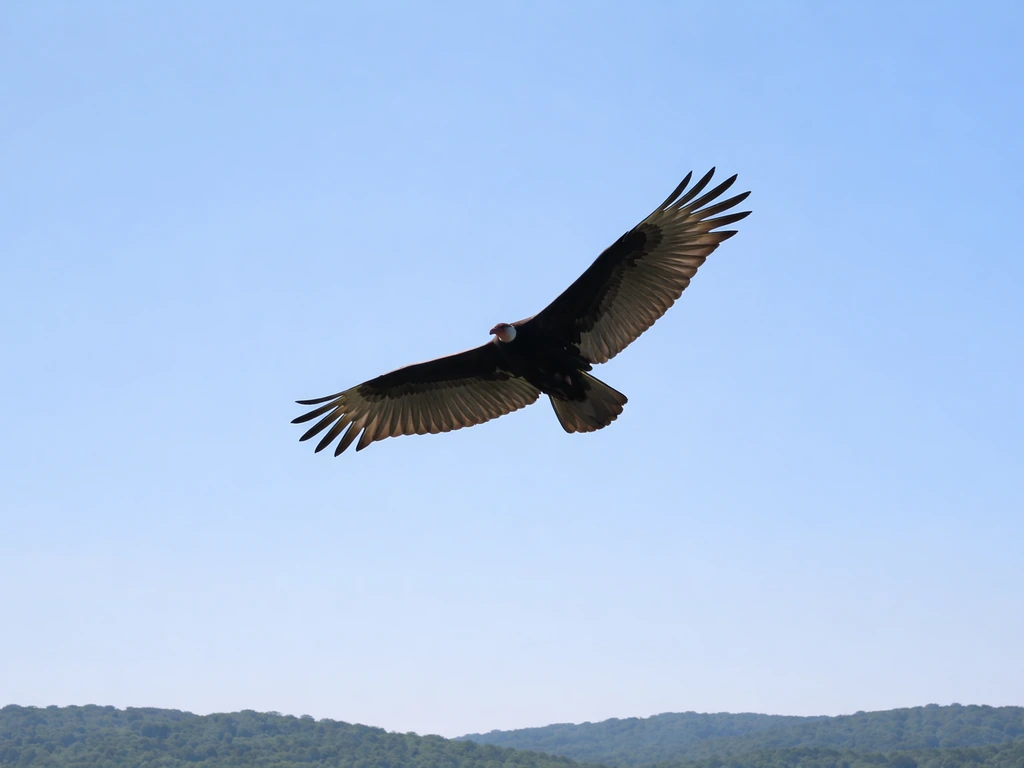
Before diving into spiritual meaning, it helps to sort out a quick identity question. In North America, 'buzzard' almost always refers to the turkey vulture (sometimes called the turkey buzzard), and occasionally the black vulture. In the UK and Europe, a 'buzzard' is a completely different bird: a Buteo hawk with broad rounded wings and a short tail, known for its mournful mewing call that can honestly sound like a cat. Both are real birds with genuine symbolic weight, but their spiritual traditions are a little different, so it's worth knowing which one you encountered.
If you're in North America and saw a large dark bird soaring in wide circles, often with a slight V-shape (dihedral) to its wings and a naked red head, that's a turkey vulture. If you're in the UK and saw a stocky, medium-to-large raptor spiraling high on thermals with a mewing call, that's the common buzzard. A Georgia wildlife education document even made this point directly: what many people confidently call a 'buzzard' is sometimes a misidentified bird entirely, so a quick look at field markings goes a long way. The spiritual guidance in this article applies to both, but I'll note where the traditions differ.
What a buzzard symbolizes spiritually
Across many spiritual traditions, the buzzard (in either its vulture or hawk-like form) is a bird of transition. It appears at the boundary between endings and beginnings, making it one of the more profound messengers in bird symbolism. The core themes that come up again and again are transformation, purification, patience, vision, and resourcefulness.
The turkey vulture specifically holds a remarkable place in Cherokee tradition, where both the turkey vulture and black vulture are called 'peace eagles.' The Eastern Band of Cherokee use this name because these birds are not predatory: they only consume what is already dead. That is a spiritually significant distinction. There is no aggression in the buzzard's relationship with death, only a quiet, efficient act of returning energy back to the earth. Spiritually, this reads as purification without violence, and transformation without fear.
In broader symbolic traditions, including spiritual and metaphysical frameworks, the buzzard is connected to intuition and psychic clarity, the ability to see beneath the surface of things. Because vultures locate carrion partly through an extraordinary sense of smell, they are associated with trusting your inner senses over external appearances. The bird essentially says: look past what is visible and trust what you feel is true. Ancient cultures, including some in Mesoamerica and parts of Africa, viewed vultures as bridges between the physical world and the spirit world, protectors who escorted the dead safely onward. The symbolism is not morbid so much as it is honest about the full cycle of existence.
- Transformation and major life transitions (especially endings making way for new beginnings)
- Purification: clearing away what is no longer alive or useful in your life
- Patience and trust in timing, letting things unfold rather than forcing outcomes
- Heightened intuition and the ability to see or sense what others miss
- Resourcefulness: making the most of what is available, even in difficult circumstances
- Protection and spiritual guardianship, especially during times of grief or loss
- A reminder of life's cycles and the sacredness of the space between endings and beginnings
How to interpret buzzard behavior
Circling overhead
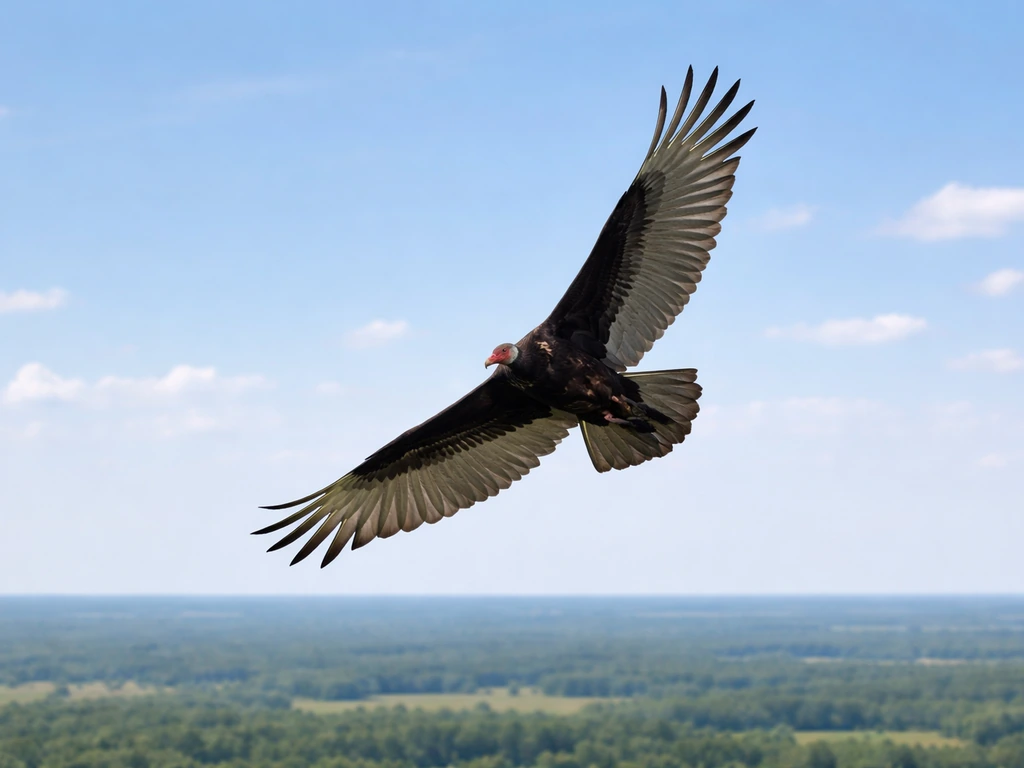
Seeing buzzards or vultures circling is probably the most common encounter people want to interpret. From a purely practical standpoint, circling is how these birds use thermal air currents to stay aloft with minimal energy while scanning a large area below. They are extraordinarily efficient fliers. But spiritually, the circling motion has long been read as a signal to pause and take stock. The bird is not diving, not fleeing, just moving in wide patient loops, observing everything. Many spiritual traditions interpret this as a prompt to step back from whatever situation feels urgent and look at the bigger picture before acting. If you have been caught up in a fast-moving situation, crisis, or decision, a buzzard circling overhead can be the universe's way of saying: slow down, look wider, there's more here than you're currently seeing.
Perching nearby
A buzzard or vulture sitting still on a fence post, rooftop, or tree branch and watching you is a different kind of encounter. Perching is a grounding posture, still, deliberate, and fully present. Spiritually this is often read as a message about patience: something in your life needs you to wait rather than push. It can also be a reminder to ground yourself, to stop moving so fast and simply be where you are. If the bird held eye contact with you, that adds a layer of directness to the message, as though it wanted to make sure you noticed.
Hearing a buzzard's call
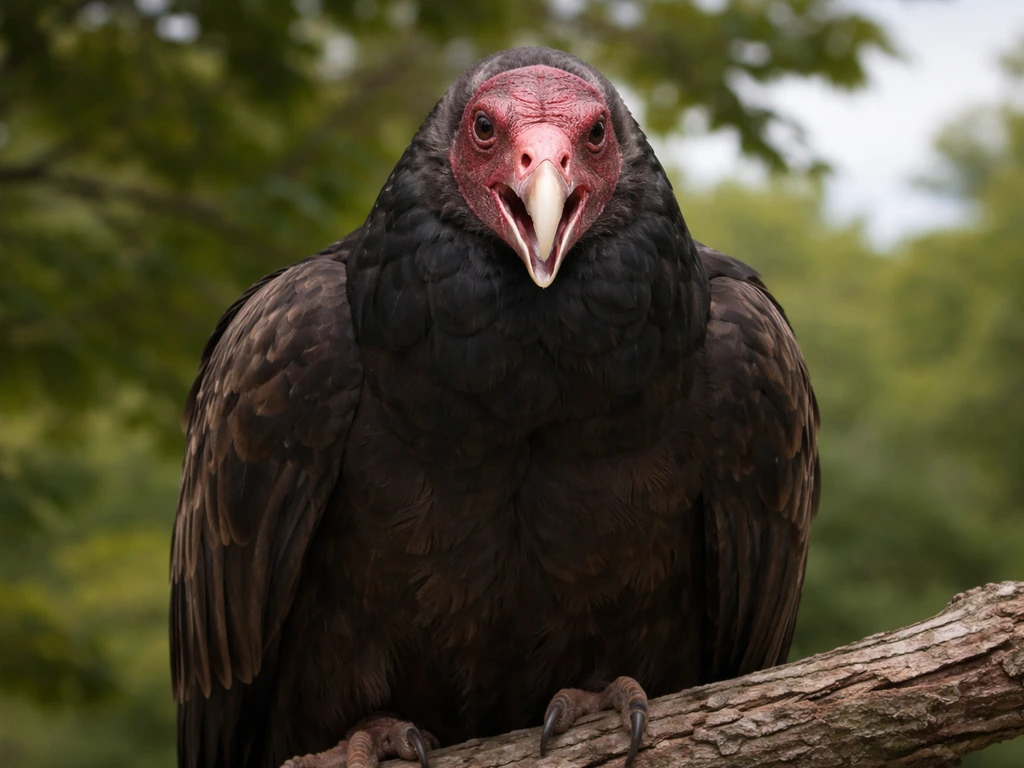
This one requires a bit of identification work. Turkey vultures are actually nearly silent, producing only hisses and low grunts. If you heard a mewing, almost cat-like cry coming from a soaring bird, that is the signature sound of the European common buzzard. In the common buzzard, Wikipedia describes high circling or spiraling flight and, in display contexts, nearly always with calling, which fits the idea of a normal “circling + call” behavior pattern blank" rel="noopener noreferrer">common buzzard high circling or spiraling flight with calling. The RSPB notes this call specifically as something people often mistake for a domestic cat. Spiritually, a call that reaches you and stays with you, that you keep hearing or that seems to follow you on a walk, is typically interpreted as an urgent nudge to pay attention. Something is trying to get through. It may be your own intuition rather than an external message, but the result is the same: stop and listen.
Buzzards in real encounters: landings, repeated sightings, and signs
When a buzzard or vulture lands very close to you, on a fence you were leaning on, on a car nearby, or even closer, that is an unusual enough event to sit with seriously. Birds of prey and scavengers are naturally wary of humans. A close landing often means the bird was drawn in by something, or it can feel, spiritually, like an unusually direct contact. Many people who experience this describe a sense of being seen. Spiritually, a landing near you is often interpreted as a strong signal about transformation: something in your life is at a real turning point, and the buzzard is essentially confirming it. This could be a relationship ending, a career shift, a health journey, a grief process, or a deep internal change.
Repeated sightings are worth noting differently than a single encounter. If you have seen buzzards or vultures multiple times across a short period, especially in unusual contexts like one appearing in your yard when you rarely see them, or noticing them every day for a week, that pattern is what many spiritual practitioners call synchronicity. The message in repeated sightings tends to be about persistence: the theme the bird represents has not resolved yet, and you may be resisting it. Ask yourself what in your life feels like it needs to end, be released, or transformed, and whether you have been avoiding that question.
Buzzards around your home or property can feel unsettling, but they often have practical reasons (a nearby food source or roosting spot) alongside any spiritual dimension. If the spiritual layer feels relevant to you, the traditional interpretation is that your home or a situation connected to it is in a period of clearing and renewal. Some traditions would treat this as protective rather than threatening, the bird cleaning what is stagnant so that something healthier can take root.
Dead buzzards and unsettling encounters
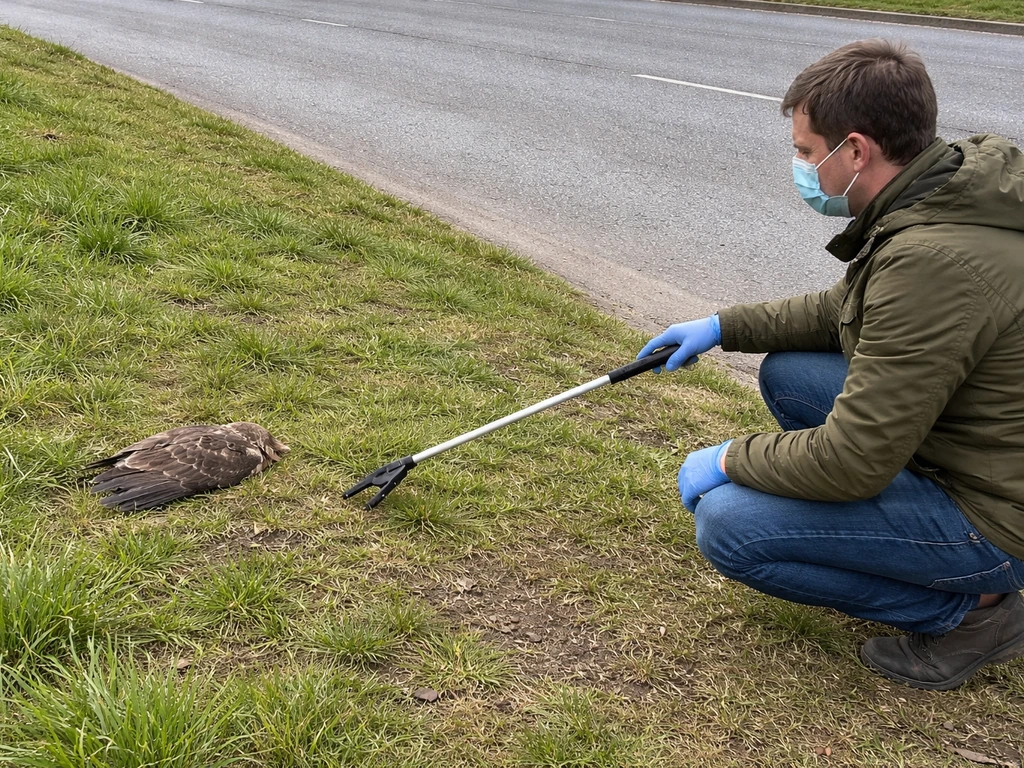
Finding a dead buzzard, vulture, or any large bird stops most people cold, and it should be taken seriously on two levels: the practical and the symbolic. Let's start with the practical, because it matters first.
Do not handle a dead wild bird with your bare hands. Wildlife health protocols are clear that direct contact with a dead animal's blood, fluids, or waste carries infection risk, and H5N1 avian influenza guidance specifically flags those who handle sick or dead birds as higher-risk individuals. If you need to move or dispose of the bird, use gloves and a bag, wash your hands thoroughly afterward, and check with your local animal control, health department, or state wildlife agency for specific disposal instructions. In many areas they will handle it for you.
On the spiritual level, finding a dead bird does not automatically mean something terrible is coming. Across many spiritual frameworks, a dead bird signals the end of a phase or cycle rather than a literal death. The emphasis is on completion: something has run its course. With a buzzard specifically, this reading is compounded by the bird's own role as the creature that processes death and returns it to life. A dead buzzard can symbolize the end of a transformation period, a closing of the cycle the bird itself represents. Some practitioners treat it as a sign to acknowledge what has ended in their own life, name it honestly, and express gratitude for what that chapter gave them before letting it go.
If the encounter feels distressing or is sitting heavily with you, that is worth exploring through journaling or conversation with someone you trust. However, if you find that fear of what a dead bird means is motivating avoidance behaviors or significantly affecting your daily life, that is a signal to talk to a mental health professional. Healthline also advises seeking medical help when distressing perceptions encourage harm or come with other concerning symptoms, and notes that factors like grief, stress, and sleep deprivation can make such experiences more intense Hear Voices in Your Head? When to Be Concerned. Spiritual sensitivity is a real thing, but so is anxiety, and the two can overlap. Taking care of your mental health is not separate from your spiritual practice; it is part of it.
Cultural and symbolic variations (and the hawk/eagle mix-up)
The buzzard's spiritual meaning genuinely varies across traditions, and it is worth knowing this so you can filter the interpretation through your own framework rather than assuming one universal reading.
| Tradition / Region | What 'buzzard' usually means | Core spiritual theme |
|---|---|---|
| Cherokee / Eastern Native American | Turkey vulture as 'Peace Eagle,' gentle transformer | Purification, peace, non-violence |
| Mesoamerican traditions | Vulture as death deity and spiritual bridge | Transition between worlds, sacred death |
| European / Celtic | Common Buzzard (Buteo) as a watchful raptor | Vision, patience, territorial guardianship |
| Ancient Egyptian | Vulture (Nekhbet) as protective mother goddess | Protection, maternal power, royalty |
| Contemporary Western spiritual | Buzzard/vulture as transformation symbol | Letting go, renewal, life cycles |
| Some African traditions | Vulture as both omen and purifier | Context-dependent: warning or cleansing |
The mix-up with hawks and eagles is worth addressing directly. Because buzzards and hawks are both large soaring birds, people sometimes apply hawk or eagle spiritual symbolism to a buzzard encounter, or vice versa. Hawks (like the red-tailed hawk) tend to carry symbolism around focus, sharp vision, and messages from above, themes you might explore through hawk bird spiritual meaning. If you are also exploring hawk bird spiritual meaning, compare the messages side by side to see what resonates most with your situation. If you are exploring the nightingale bird spiritual meaning, compare its messages for intuition, inner truth, and guidance from subtle signs alongside what you learned here about buzzards. If you want to explore related themes for other birds, you can also look into hawk bird spiritual meaning and how it may overlap with what you are experiencing. If you feel drawn to hawk symbolism instead, exploring hawk bird spiritual meaning can help you refine what the message is asking you to focus on. Eagles carry themes of power, freedom, and high-level spiritual vision. Buzzards and vultures, by contrast, are specifically linked to transformation through release and the purification of what is dead or no longer alive. This is sometimes discussed as the humming bird spiritual meaning too, especially when you notice repeated visits that feel guided. If you are working through a grief process, a major life ending, or a long period of stagnation, the buzzard is arguably the more relevant messenger. If you are being called toward new action, clarity, or leadership, revisiting whether you actually saw a hawk or eagle might sharpen your interpretation.
What to do right now: journaling and reflection
Whether your encounter just happened or has been sitting with you for a few days, the best immediate step is to capture it before the details fade. Open a journal or the notes app on your phone and write down everything you remember: where you were, what the bird was doing, how long the encounter lasted, and most importantly, what you felt in your body the moment you noticed it. That somatic memory, the tightening in your chest, the surprising calm, the unexpected tears, is often the most honest spiritual data you have.
Once you have captured the encounter, sit with the following reflection questions. You do not have to answer all of them at once. Pick the one or two that create the most resistance, because that is usually where the real work is.
- What in my life right now feels like it is ending or already over, even if I haven't fully acknowledged it?
- Is there something I am holding onto out of fear rather than genuine need or love?
- Where have I been avoiding looking at the full truth of a situation?
- What would 'letting go' look or feel like in my most pressing challenge right now?
- Am I trusting my own intuition, or am I waiting for external permission or proof before acting on what I already sense?
- What would renewal look like for me in the next three to six months?
- Is there grief I haven't fully processed that is waiting for me to acknowledge it?
These questions are not meant to be answered quickly or perfectly. The buzzard's message, if there is one for you, tends to come through sustained reflection rather than a single flash of insight. Come back to your journal over several days and see what rises.
Grounding, protection, and closing the message
Some spiritual encounters leave you feeling stirred, open, or slightly unsettled, and that is normal. A few simple practices can help you integrate the experience and close the energetic loop, so you carry the insight forward without carrying anxious open-endedness with you.
Grounding after the encounter
The simplest grounding practice is physical contact with the earth. If weather allows, stand barefoot on grass or soil for a few minutes. Breathe slowly and let yourself feel the ground beneath you. If that is not possible, hold something heavy and natural in your hands, a stone, a piece of wood, or a bowl of water, and focus your attention entirely on its texture and weight. This brings your awareness back into your body after an emotionally or spiritually activating encounter.
A simple closing ritual
You don't need elaborate ritual to close a spiritual message. Simply speaking your acknowledgment aloud can be enough. Step outside if you can, face the direction where you saw the bird, and say something like: 'I received your message. I am paying attention. Thank you.' You can customize this to your own spiritual language completely. What matters is the intentional act of closing the encounter as complete rather than leaving it as an open loop in your mind.
Protection if the encounter felt dark
If the encounter, particularly finding a dead buzzard or a repeated unsettling pattern, felt threatening or heavy rather than meaningful, add a small protection practice to your closing. This might be lighting a white candle with the intention of clearing your space, burning sage or rosemary if that is part of your tradition, or simply taking a full shower with the conscious intention of washing away anything that does not belong to you. Set a clear mental boundary: 'I am open to spiritual messages, and I am also protected.' Both things can be true.
When to seek more guidance
If the encounter is pointing toward something genuinely significant in your life, a major loss, a long-avoided decision, or a spiritual opening you feel underprepared for, consider taking it to a trusted spiritual advisor, counselor, or community. Bird symbolism is a starting point, not a complete map. The buzzard points you toward transformation; what that transformation looks like in your specific life is something you will need to explore with the people and practices that know you best. And as mentioned earlier, if the spiritual dimension of the encounter starts driving anxious behavior or avoidance that disrupts your daily life, talking to a mental health professional is a genuinely wise next step, not a spiritual concession.
FAQ
Does a buzzard bird spiritual meaning always mean something bad is coming?
Not necessarily. The bird can be a spiritual prompt, but you get the most accurate meaning by pairing it with context. Ask, “What in my life has been asking to end, change, or release lately?” If there is no clear connection, treat it as reflection material rather than a prediction.
What if I’m not sure whether it was a turkey vulture, black vulture, or a common buzzard?
If you cannot confidently identify the bird, you can still interpret the spiritual theme without overcommitting. Use the encounter “type” instead of the species, for example circling as pause and overview, perching as patience and grounding, and close landing as a turning point. Then note whether your local “buzzard” is actually a vulture-like bird or a hawk-like bird and keep your interpretation flexible until you confirm.
How do I know my interpretation is helpful and not turning into anxiety?
A good rule is to track whether the message triggers insight or spiraling. If repeated sightings lead you to avoid responsibilities, check behaviors obsessively, or feel constant dread, switch from interpretation to action: choose one small, concrete next step that honors release or clarity, or speak with a mental health professional.
What should I write down if I want a reliable message from the encounter?
Start with the details you can verify. “It felt intense” is valid, but add specifics like time of day, weather, where you were standing, what the bird did (circling, perching, landing), and whether it happened at a boundary moment (a decision, an argument, a deadline). Those anchors make later journaling more accurate than relying on emotion alone.
Can I use a buzzard sighting to make decisions like moving, changing jobs, or ending a relationship?
You can, but be careful not to replace your instincts with a single sign. Use buzzard symbolism as a lens, then validate it with your real-world priorities, values, and needs. If you are deciding something high-stakes, treat the buzzard as a reminder to slow down and compare options, not as an automatic directive to act immediately or avoid acting.
What is the practical way to “release what no longer serves me” after seeing a buzzard?
Yes. If you notice the “release and purification” theme, the practical version is usually a cleanup or closure action. Examples include finishing the paperwork you have delayed, ending contact with something draining, clearing a cluttered space, or having the difficult conversation you have been postponing.
What does it mean if a buzzard lands very close to me, and could it be non-spiritual?
A close landing can also have ordinary causes. The bird may be drawn to food, a safe perch, or an area with activity. Spiritually, it can feel like you are “being seen,” so the best approach is dual: check for practical reasons in your environment while also reflecting on whether you are at a personal turning point.
If I keep seeing buzzards, how do I avoid overreading the pattern?
Pay attention to what repeats, not just that it repeats. If you see the bird every day for a week, the theme tends to be persistence, but the “work” is often noticing where you keep avoiding an ending or boundary. If your life situation changes during that period, update your reflection instead of forcing one interpretation to stay fixed.
Which reflection questions should I focus on first when a buzzard encounter feels intense?
For journaling, pick one or two reflection questions that feel charged, then review them over several days like you would revise a draft. A helpful prompt is: “If I released the thing I am resisting, what would become possible in the next 30 to 60 days?”
Do different buzzard behaviors (circling vs perching vs calling) change the message?
Circling, perching, and calling are different signals. If you mainly heard a mewing call, focus on “listen and pay attention” rather than “wait.” If the bird is just circling overhead, the invitation is usually broader perspective and patience. Match the practice you choose to the encounter type you experienced.
What should I do if I find a dead buzzard, and how do I handle the emotional impact?
If you find a dead bird, treat it as both a practical matter and an emotional one. Use gloves, bag it, and follow local disposal guidance. Spiritually, many people frame it as completion of a phase, but do not let fear drive avoidance. If the distress is escalating, it is reasonable to talk with a mental health professional.
How can I tell when I should use buzzard meaning versus hawk or eagle symbolism?
Yes, there is overlap, and that’s why identity matters. If you are exploring hawk or eagle symbolism too, compare the “instruction style”: buzzards tend to emphasize release, transformation, and purification, while hawks and eagles tend to emphasize focus and high-level perspective. Let your situation determine the fit, not just the size or general shape of the bird.
How do I close the energetic loop after an encounter without feeding rumination?
Keep your “spiritual closure” grounded. A short acknowledgment is usually enough, then do one reality-based integration step like stepping outside, cleaning a small area, or making a small boundary decision. If you still feel open-ended dread after closing, it can help to re-check identification and reduce rumination.
What if the encounter feels threatening, what kind of protection is still “grounded”?
You can incorporate protection thoughtfully without making it extreme. A clear boundary statement, a shower with conscious intention, or a simple candle and gratitude practice can be enough if it helps you feel safe and regulated. Avoid escalating rituals if they increase fear or obsession.
Next Article
Cooper Hawk Bird Spiritual Meaning: What It Means for You
Cooper’s hawk spiritual meaning, symbolism, encounter context, and practical steps to act on the message today