When a falcon crosses your path, something in you takes notice. That sharp, electric feeling is not random. The falcon is one of the most spiritually charged birds you can encounter, and across cultures and centuries, it has consistently shown up as a symbol of divine vision, focused power, and messages from a higher realm. If you are here trying to figure out what your falcon encounter means, the short answer is this: the falcon is asking you to sharpen your focus, trust your perception, and move with precision and courage toward what matters most to you right now.
Falcon Bird Spiritual Meaning: Encounters, Dreams, and Guidance

Eliza Thornwick
13 Apr 2026
What the Falcon Represents at Its Core
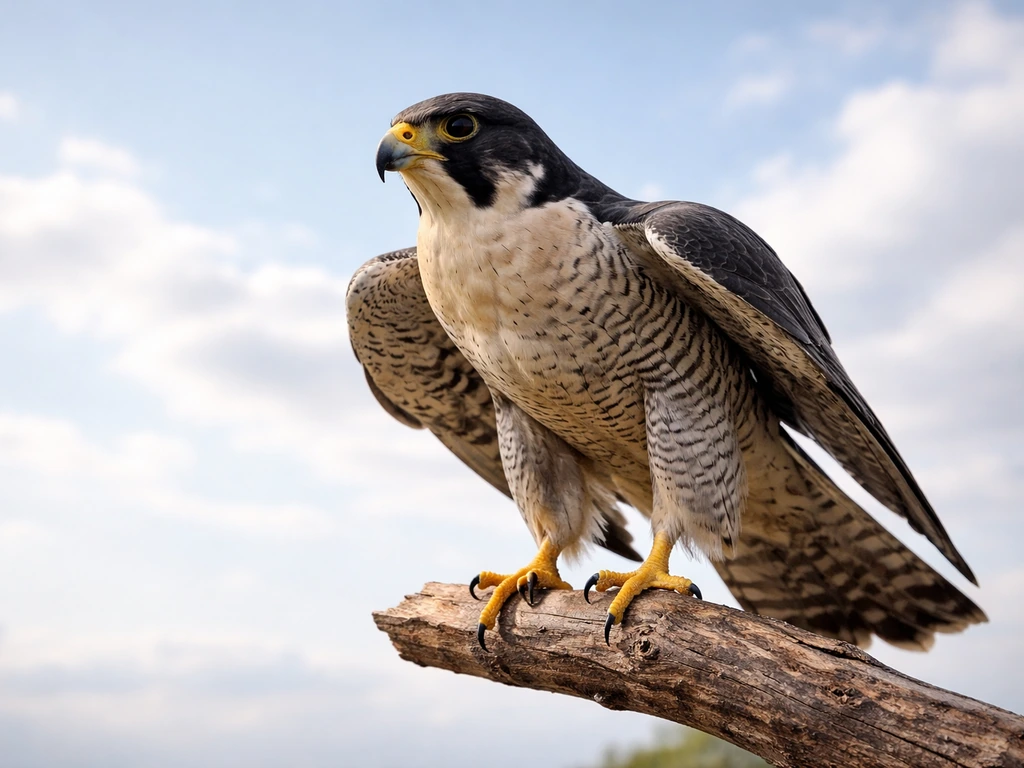
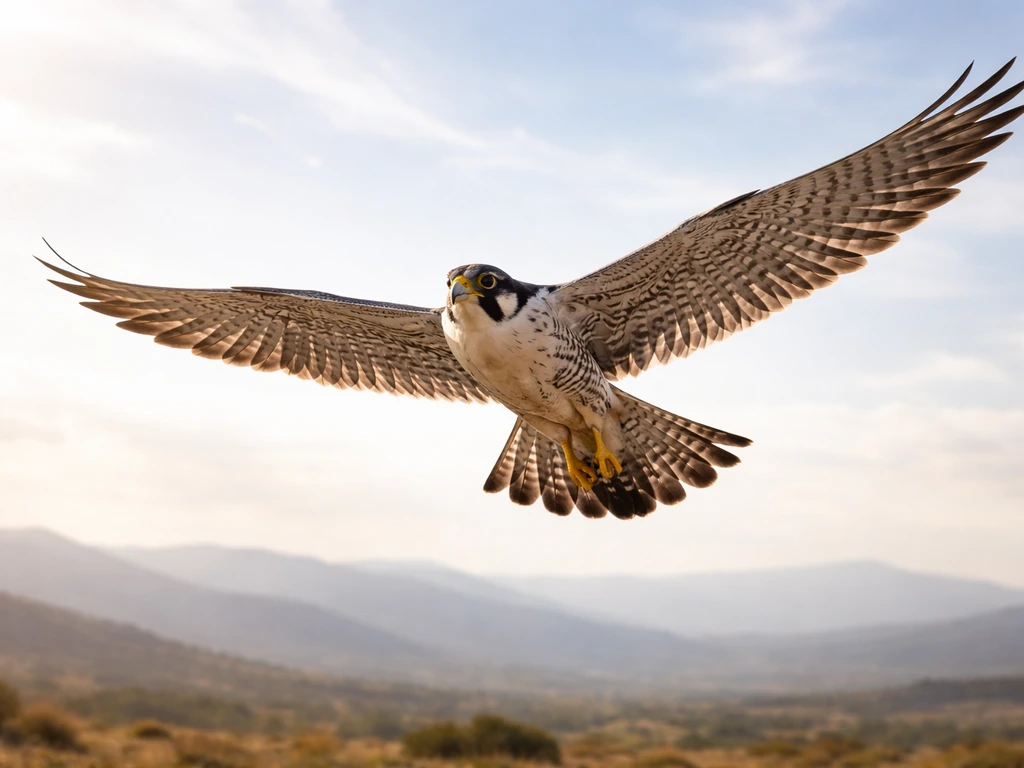
The falcon's spiritual identity is built around a handful of powerful themes: clarity of vision, focused intention, speed, courage, and divine protection. These are not arbitrary associations. The falcon can spot prey from over a mile away and dive at speeds exceeding 200 miles per hour. Guinness World Records also cites a peregrine falcon’s diving stoop as reaching about 200 mph (approximately 320 km/h) in ideal conditions dive at speeds exceeding 200 miles per hour. Spiritually, that physical reality becomes a mirror. The bird is telling you something about seeing clearly, acting decisively, and not flinching when the moment comes.
In ancient Egypt, the falcon was the face of Horus, the sky god associated with kingship and protection. Horus was often depicted carrying a shen ring, the Egyptian symbol of eternal protection, and his Eye (the wedjat) became one of history's most enduring symbols of healing, well-being, and divine sight. That lineage matters because it tells you the falcon has been read as a protector and a guide for thousands of years, not just in one tradition but across many.
In the Bahá'í tradition, the falcon appears as a symbol of nobility and spiritual magnanimity, something elevated and rare. In many modern spiritual interpretations rooted in Native American frameworks, the falcon and its close relatives are described as messengers that bridge the everyday world and the spirit world. These traditions are different, but the common thread is striking: vision, power, protection, and guidance.
- Clarity and vision: the ability to see truth without distortion
- Focused intention: moving toward a goal with precision and no wasted energy
- Courage and decisiveness: acting swiftly when the moment is right
- Divine protection: being watched over or guided from a higher source
- Spiritual messengership: carrying a communication between realms or dimensions
- Noble purpose: a calling toward something greater than everyday concerns
What Different Encounters Actually Mean
Not all falcon encounters carry the same message. How the bird behaved, where it was, and what you were doing or thinking in that moment all shape the interpretation. Here is how to read the most common encounter types.
Simply Seeing a Falcon
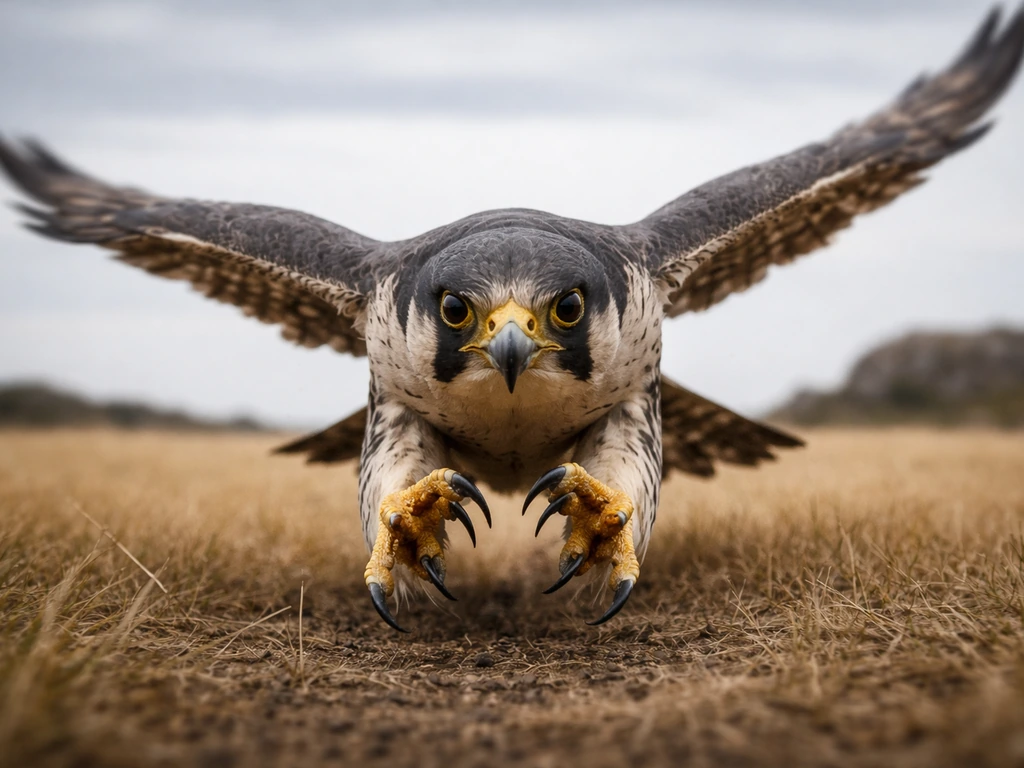
A falcon sighting, even a brief one, is generally read as an invitation to step back and look at your life with wider, clearer eyes. If you caught a glimpse of a falcon soaring or perched high above you, the message is often about perspective: you may be too close to a problem to see it clearly. The falcon is asking you to rise above the noise. If this happened during a time of confusion, indecision, or overthinking, take it as a nudge to stop spinning and start seeing.
A Falcon Swooping Near You
A swoop is more urgent. When a falcon dives in your direction, especially unexpectedly, the spiritual interpretation tends toward a call to action. Something in your life likely needs your attention right now, not eventually. The falcon's dive is one of the most targeted, committed movements in nature. It does not waver. If a falcon swooped near you, ask yourself: what have you been procrastinating on? What decision have you been circling without committing to? The bird may be modeling the decisiveness you need.
A Falcon Landing Near You or Hovering
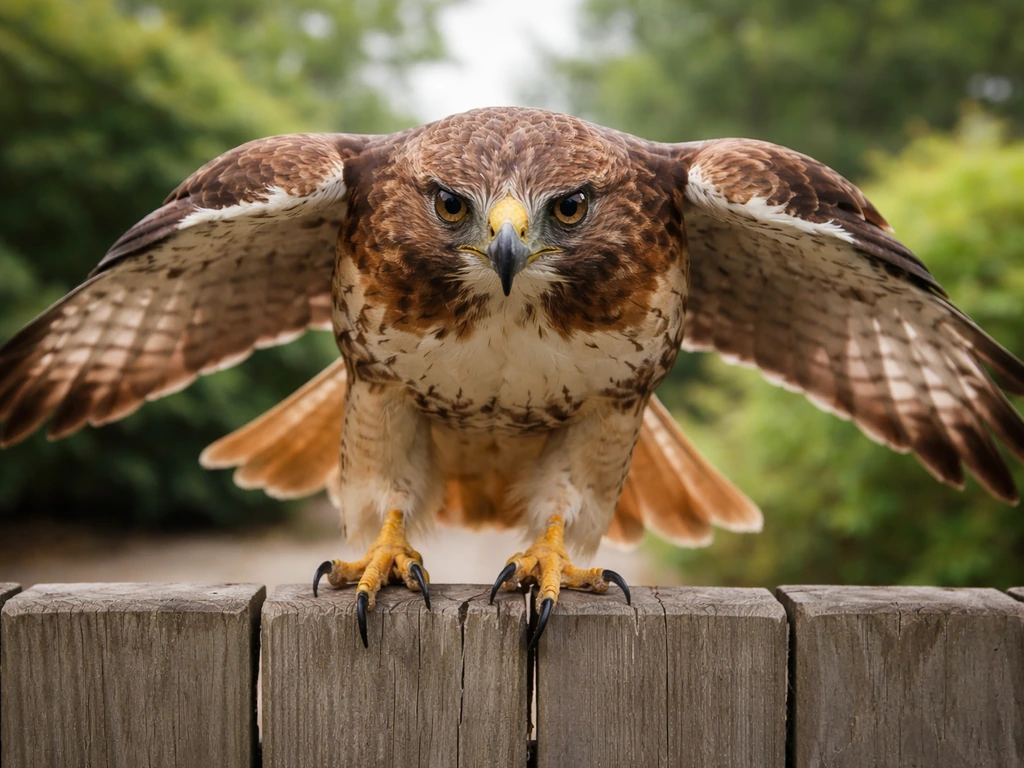
This is the rarest and most intimate encounter. When a falcon lands close to you, stays for a moment, or hovers in a way that feels deliberate, the message is usually personal and direct. Many people who have experienced this describe a feeling of being seen, like the bird was communicating something specific. In spiritual terms, a landing or hovering falcon is often interpreted as a protector checking in, a guide drawing close, or a very clear confirmation that you are on the right path. It can also signal that protection is being offered during a vulnerable period in your life.
Falcon in Dreams: What Is It Telling You?
Dreaming of a falcon is just as meaningful as a physical encounter, sometimes more so, because your subconscious is actively using the symbol to send you a message. The emotional tone of the dream is your first clue. Did you feel awe, calm, and inspired? Or anxious, chased, and unsettled? Those two emotional registers point in very different directions.
A falcon flying freely in your dream, especially high in a clear sky, is widely interpreted as a sign of ambition, clarity, and rising opportunity. Modern dream interpretation consistently ties this image to perception and vision: you may be gaining a clearer view of a goal or a situation that was previously murky. If the falcon was perched calmly and you felt peaceful, the dream likely signals protection and steadiness heading your way.
In Islamic dream interpretation traditions attributed to Ibn Sirin, a falcon on your hand or under your control suggests honor and authority coming your way. A falcon flying away or dying in the dream shifts the reading toward loss of power, transitions in rank, or endings that precede new beginnings. One statement often cited in this tradition is that a falcon can be linked to shifts in leadership or authority, which is worth sitting with if you are navigating power dynamics at work or in your community. That said, even in this tradition the meaning is noted to vary based on context, so avoid locking onto one reading without considering the whole dream.
If the falcon in your dream felt threatening, was trapped, or was injured, the message usually turns inward. A caged or wounded falcon often reflects a sense that your own vision or ambition is being suppressed, either by external circumstances or self-doubt. That is not a doom omen. It is an honest mirror.
Timing matters too. If you dreamed of a falcon during a period of major decision-making, relationship uncertainty, or career crossroads, the dream is almost certainly commenting on that specific situation. Write it down as soon as you wake up, especially the emotional tone, what the falcon was doing, and what you were doing in the dream.
What to Actually Pay Attention to During the Encounter
The details of a falcon encounter are not decoration. They are the message. Here is what to notice in the moment and reflect on afterward.
- Direction of flight: a falcon flying toward you suggests incoming clarity or a message arriving; flying away suggests you may be the one needing to pursue something
- Where you were and what you were doing: encounters during a walk in nature feel different from ones that happen at a stressful intersection or during a difficult phone call
- What you were thinking right before it appeared: many people report that a meaningful bird encounter happens in the middle of a specific internal question or worry
- Eye contact: if the falcon made direct eye contact with you, even briefly, most spiritual traditions read this as particularly significant, a conscious acknowledgment
- How long it stayed: a brief flash vs. a prolonged presence points to different levels of message intensity
- Your gut reaction in the first three seconds: before you started analyzing, did you feel fear, wonder, or recognition? That first reaction is often the most honest spiritual signal
How to Apply This to Your Actual Life
This is where a lot of spiritual symbolism writing falls short, giving you the meaning but not the application. Let me break down how falcon symbolism maps onto the areas of life where people usually go looking for this kind of guidance.
Career and Work Direction
A falcon encounter during a period of career uncertainty is almost always a prompt to get focused. The falcon does not scatter its energy. It locks onto one target and commits completely. If you have been juggling too many goals, feeling pulled in multiple directions, or avoiding a hard professional decision, the falcon's message here is to choose your target and go. The bird also carries that thread of vision from a higher vantage point, so it may be asking you to zoom out and see the bigger picture of where your work is actually taking you, not just the immediate grind.
Relationships and Boundaries
Falcons are territorial and precise. They do not make unnecessary moves. In a relationship context, the falcon's spiritual meaning often shows up around the theme of boundaries: where you need to hold your space, where you have been too permissive, or where you need to see a person or situation more clearly instead of through the lens of what you wish it was.
The pelican bird spiritual meaning is also often associated with emotional healing, protection, and trusting your inner vision. The protective energy of the falcon, rooted in that ancient Egyptian symbolism around the wedjat and the shen ring, can also appear when you or someone you love needs guarding. If you have been concerned about a person's safety or a relationship's stability, a falcon encounter can be a reassurance that protection is present.
Personal Growth and Spiritual Development
On the inner path, the falcon is an invitation to stop drifting and to step into your actual power. Many people encounter falcons during spiritual awakenings or at turning points in their self-development journey. The bird is associated with rising above lower-level thinking, fear, and distraction to see what is truly real. If you have been feeling called to a deeper spiritual practice but keep putting it off, this could be the falcon's most direct message: it is time. The falcon does not wait for perfect conditions. It acts when the moment is right.
Healing and Recovery
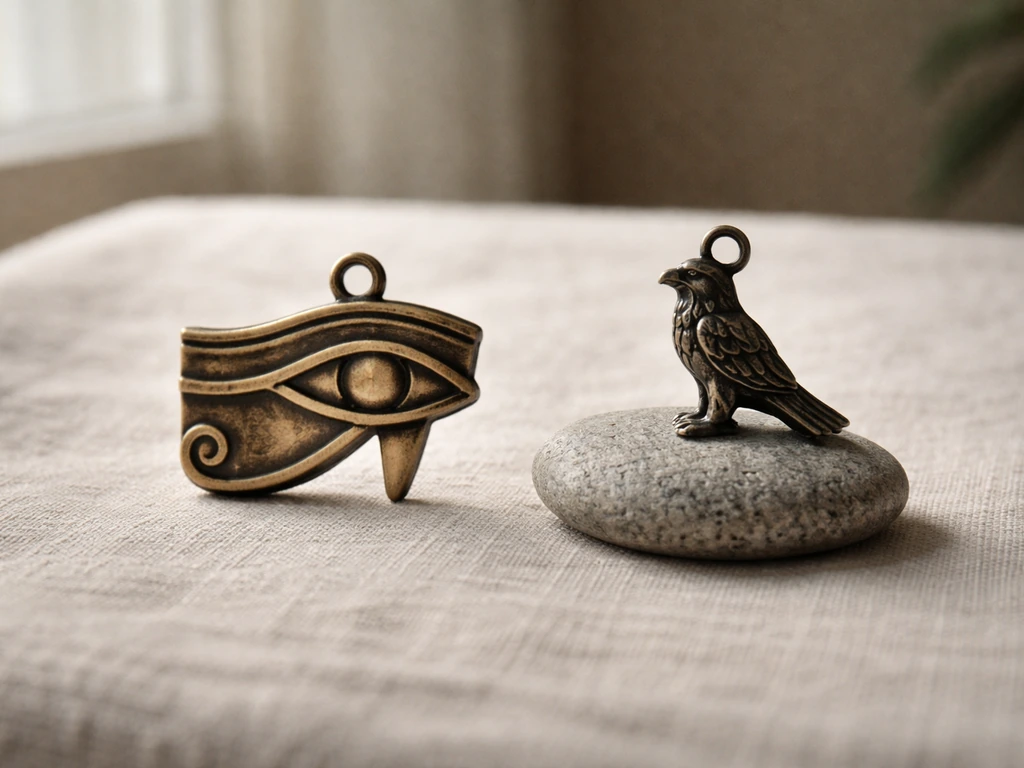
The Eye of Horus was explicitly a symbol of healing and well-being in ancient Egyptian culture, and that association carries forward. If you or someone close to you is in a period of physical, emotional, or spiritual healing, a falcon can be a genuinely comforting sign. It is not a guarantee of outcomes, but it is a signal of protective, restorative energy moving in your direction. Let it be a source of quiet confidence rather than a prescription.
How Different Traditions Read the Falcon
It is worth being honest that traditions diverge here, sometimes significantly. The falcon is not a single universal symbol with one agreed-upon meaning. In Egyptian spirituality, it is royalty and divine protection. In modern shamanic and Native American-influenced writing, it is a messenger and bridge between worlds.
In the Bahá'í framework, it speaks to inner nobility. In a 7 June 1992 message from the Universal House of Justice, falcon imagery is used metaphorically, including a line referring to “the royal Falcon. ” [“the royal Falcon”](https://www. bahai.
org/library/authoritative-texts/the-universal-house-of-justice/messages/19920607001/19920607001. pdf). In Islamic dream traditions, it often connects to authority and rank. And in Celtic traditions, the falcon and hawk are associated with soul journeying and ancestral wisdom.
When you read the falcon's message, bring your own tradition, intuition, and life context to the table. No single framework owns this symbol.
If you enjoy exploring how different birds carry different spiritual weight across traditions, it is worth noting how related birds are read. The osprey's spiritual meaning, for instance, overlaps with the falcon in themes of precision and water-level vision, but carries its own distinct current. Similarly, the merlin bird's spiritual meaning shares the falcon family's themes of swiftness and magical energy but is often associated with mystery and transformation in ways the larger falcon is not.
How to Respond When You Receive a Falcon Sign
Getting a meaningful sign is only half of it. What you do with the message determines whether it actually helps you. Here is a practical sequence you can follow after a falcon encounter or dream.
- Pause and breathe first: before you start Googling or asking everyone what it means, give yourself five minutes of quiet. Just let the encounter sit. What was your first feeling? What came to mind before the analysis started?
- Write it down immediately: capture the details while they are fresh. Where were you, what were you doing, what was the falcon doing, how did it make you feel, and what thought or question was in your mind at the time?
- Identify the life area that feels most activated: without forcing it, which area of your life does this encounter seem to be speaking to? Career, relationships, spiritual path, health? Trust the first answer.
- Sit with one focused question in meditation or prayer: bring the encounter into a quiet meditation and ask a single, honest question. Something like: what do I need to see more clearly right now? Or: where do I need to commit rather than circle?
- Set one concrete intention: the falcon is an action-oriented symbol. It is not asking you to just think about things. After your reflection, identify one real-world step, even a small one, that honors the message.
- Give it time: not every sign demands immediate dramatic action. Sometimes the falcon is planting a seed of awareness that will ripen over days or weeks. Journal it and revisit it.
For the journaling piece specifically, these are the questions worth returning to over the following days: What have I been avoiding seeing clearly? Where am I holding back when I should be moving? Who or what needs my protection right now? Am I using my gifts with full commitment, or am I staying small out of fear?
Clearing Up Common Misconceptions
A few things that trip people up when they start interpreting bird signs, and the falcon is no exception.
Not every falcon encounter is an urgent omen
One of the most common mistakes is treating every animal encounter as a high-stakes spiritual alarm bell. Sometimes a falcon flies by because you live near a habitat where falcons are common. The spiritual dimension of the encounter depends on resonance: did something in you respond to it with recognition? Did it feel like more than coincidence? Those are the encounters to work with. The ones that do not grab you probably do not need interpretation.
Falcon encounters are not doom signs
Some people come to this topic scared, having read somewhere that a bird encounter means death or disaster. The falcon is overwhelmingly associated with positive, protective, and empowering energy across traditions. Even in the Islamic dream tradition, where a falcon can be linked to shifts in rulership or authority, the meaning is contextual, not automatically negative. A transition is not the same as a catastrophe. Do not let fear-based readings become the default. The ancient Egyptians did not build a civilization around a symbol of doom, they built it around a symbol of divine kingship and eternal protection.
Do not over-literalize the symbol
Spiritual symbolism is a language of resonance and invitation, not a rulebook. The falcon does not mean the same thing to every person in every moment. Someone going through grief might receive a different message from a falcon encounter than someone launching a new business. Context, emotional state, and personal history all shape interpretation. The goal is not to find the one correct meaning but to find the meaning that is true for you right now.
One encounter is enough; you do not need a flood of confirmations
Some people get one meaningful encounter and then start anxiously hunting for more signs to confirm it. That is the opposite of what the falcon is modeling. The falcon spots its target once, commits, and goes. One clear moment of connection is enough to work with. Trust it.
How the Falcon Sits Among Other Powerful Bird Symbols
Understanding the falcon is richer when you see it alongside birds that share some of its symbolic territory but carry their own distinct energy. The condor's spiritual meaning, for example, operates in a similar zone of sky mastery and divine vision but leans more heavily into themes of death, rebirth, and collective or ancestral messages.
The vulture's spiritual symbolism is another fascinating contrast: where the falcon is about precision and forward movement, the vulture is about purification and the wisdom of what has already ended. On the lighter, more communal end of the spectrum, the pelican's spiritual meaning carries themes of sacrifice, nurturing, and abundance that are quite different from the falcon's solitary, sovereign energy.
Each bird has its own lane, and knowing where the falcon sits helps you understand what makes its message unique: it is personal, direct, vision-forward, and action-oriented in a way few other birds match.
If the falcon has shown up for you, it is not asking you to be anything you are not. It is asking you to be fully what you already are, without hesitation, without second-guessing your sight, and without pulling back at the last moment. That is the invitation. Take it.
FAQ
If I saw a falcon in my neighborhood, how can I tell whether it is a real spiritual message or just coincidence?
Use resonance as your filter. If the encounter evokes a specific inner realization (for example, “I keep avoiding that conversation,” or “I need to slow down and see clearly”), and it connects to something you are already facing, it is more likely a meaningful prompt. If you feel neutral, distracted, or it does not relate to your current life themes, treat it as a background event and move on.
What should I do if a falcon swoops near me but I feel fear instead of inspiration?
Fear does not automatically mean a negative omen. Take note of what the fear is pointing at in your waking life, then ask what decision you have delayed. A practical step is to choose one concrete action within 24 hours that addresses the specific worry (send the email, set the boundary, make the appointment), because the falcon’s energy in this scenario tends to be about “commit and act,” not “panic.”
Do I need to interpret the falcon differently if it was injured, dead, or trapped?
Yes, context matters. In many spiritual readings, an injured or trapped falcon reflects suppressed ambition or “caged” vision, but it is also a reminder to check for real-world strain. If the bird appears harmed, consider contacting local wildlife rehabilitation or animal services instead of trying to force a purely symbolic reading.
How should I interpret a falcon dream if I do not remember my emotions clearly?
When emotion is unclear, use the dream’s behavior cues. Flying freely and calmly often points to clarity and upward momentum, while stalking, caging, or repeated attempts to control the bird often highlight restraint or authority themes. Then connect the strongest detail to what has felt “under review” in your life lately, such as leadership, boundaries, or a goal you have been working around.
Is it better to stick with one spiritual tradition’s interpretation, or blend traditions?
Blend carefully. Choose the tradition that matches your intuition and the life area the symbol most clearly touches for you. If you try to reconcile every tradition at once, the meaning becomes diluted. A good decision aid is to pick one primary thread (vision, protection, authority, boundaries) and let the rest be background context, not equal-weight conclusions.
What if I get one falcon sign and then start obsessively looking for more signs to confirm it?
Treat obsession as a misalignment with the falcon’s “spot and commit” pattern. After one meaningful encounter or dream, make one practical move that puts the message into action, then pause for feedback. If more signs appear naturally later, you can revisit, but do not keep escalating your search to soothe uncertainty.
How can I apply falcon symbolism to boundaries in relationships without becoming overly rigid?
Use “precision, not control.” The falcon energy often points to clarity about what you will and will not accept. Write one sentence about your boundary, then decide how you will communicate it (time, tone, and consequence). This keeps the message action-oriented while avoiding fear-based harshness.
What if the falcon shows up during healing, but my healing feels slow or uncertain?
A falcon is typically read as protective and restorative, not as a guarantee of immediate results. The useful question is what form of support you need right now (rest, therapy, medication compliance, emotional processing, spiritual practice). Let the sign prompt “choose the next supportive step,” rather than demanding a timeline.
Are there falcon meanings I should avoid, like assuming it always predicts death or disaster?
Yes. Avoid fear defaulting, especially if you feel dread rather than insight. Transitions in leadership, rank, or life structure can be symbolically uncomfortable but not automatically catastrophic. If a reading only increases anxiety and does not produce any clear, constructive action, it likely is not the right message for you.
When interpreting a falcon encounter, what details are most important to remember?
Prioritize three details: the bird’s behavior (swoop, perch, hover, fly away), your location relative to it (high above, close on the ground, near your path), and what you were doing or thinking at the moment. Secondarily note weather, time of day, and any recurring themes in the day, since these often help you translate “vision” into a specific life area.
Next Article
Vulture Bird Spiritual Meaning: Encounters, Symbolism, Steps
Vulture bird spiritual meaning by encounter type, from death and purification to letting go, with practical steps and re