When a vulture shows up in your life, the message is almost always about something that needs to end, be released, or be transformed. That can feel heavy at first, but stick with me, because vulture energy is one of the most misunderstood in all of bird symbolism. This isn't a bird of doom. It's a bird of deep, practical wisdom about cycles, purification, and what happens after things fall apart.
Vulture Bird Spiritual Meaning: Encounters, Symbolism, Steps

Eliza Thornwick
12 Apr 2026
Why the vulture carries so much spiritual weight
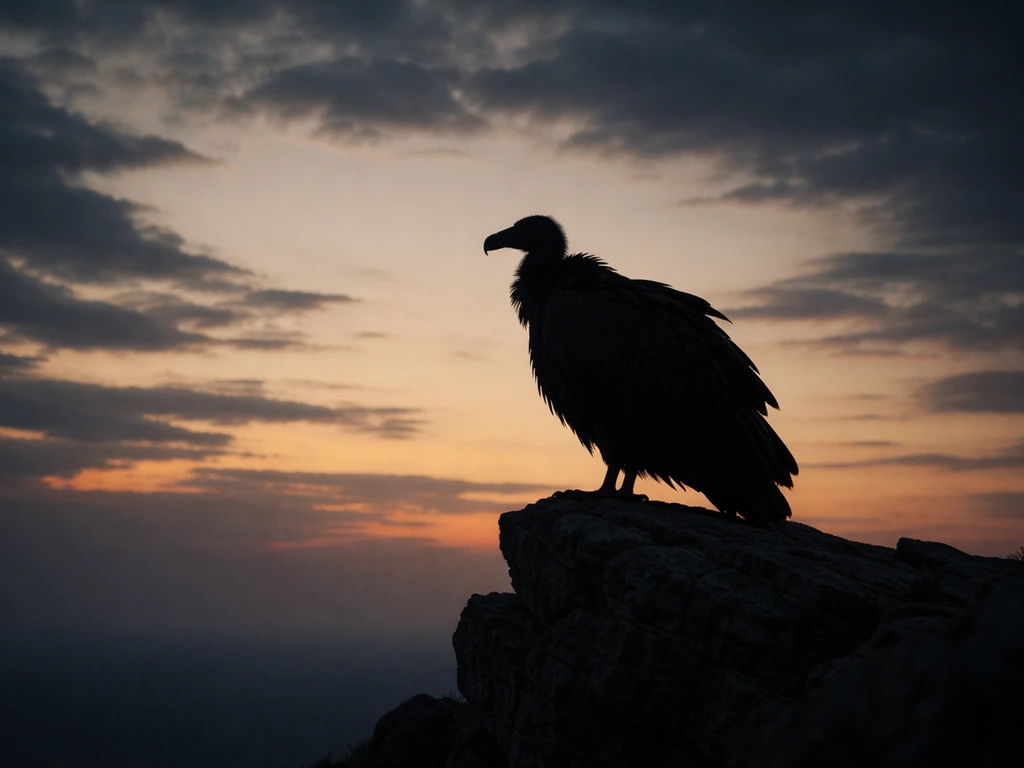
The vulture is one of the oldest spiritually charged birds on the planet. It shows up in ancient Egyptian iconography, in biblical dietary law, in Zoroastrian funerary architecture, in Tibetan sky burial tradition, and in the living oral traditions of West Africa. Everywhere humans have watched vultures do their work, they've noticed something: the vulture doesn't kill. It arrives after death. It cleans. It completes a cycle that would be left unfinished without it.
In Zoroastrian practice, structures called Towers of Silence (dakhmas) were built specifically so that vultures could consume the bodies of the deceased. The reasoning was both spiritual and ecological: the earth and water should not be contaminated, and the vultures expedite the transition. Zoroastrian communities in Mumbai maintained this practice for centuries, and it's a meaningful example of how a bird we associate with darkness was, in another tradition, a sacred participant in helping a soul move on. Similarly, in Tibetan sky burial, vultures are welcomed into the funerary process as vehicles of spiritual passage, not symbols of punishment or bad luck.
The Judeo-Christian framing is different. Leviticus 11:13 lists vultures among birds considered ritually unclean, and in certain biblical passages they're linked to judgment and death. That framing has a long cultural reach, and it's probably why, when many Western readers see a vulture, their first instinct is dread rather than curiosity. But even that tradition acknowledges what the bird is doing biologically: processing what has already died. The "unclean" label was about dietary law and ritual purity, not a spiritual condemnation of the bird itself.
In modern spirit-animal writing, the Turkey Vulture is consistently connected to purification, renewal, and the ability to finally let go of what's been weighing you down. That's a meaningful evolution from the purely ominous reading. The truth, as with most bird symbolism, sits somewhere in the middle and depends heavily on your own belief system, your current life circumstances, and the specific nature of the encounter.
What it most commonly means when you see a vulture
Across traditions and modern interpretations, a handful of core themes keep coming up. They aren't random. They map directly onto what vultures actually do in nature, which is part of why this bird's symbolism has such staying power.
- Death and endings: Not literal death in most interpretations, but the end of something, a relationship, a chapter, a habit, a belief, a phase of life that has run its course.
- Purification and cleansing: The vulture processes decay so that new life can emerge. Spiritually, this translates to clearing out what's gone rotten in your life, physically, emotionally, or energetically.
- Transformation and rebirth: Many guides present vulture as a death-and-rebirth symbol rather than a pure death omen. The ending it announces is usually followed by something new.
- Letting go and moving on: The Turkey Vulture is strongly linked to releasing the past so it won't keep pulling you back. Whatever you've been holding onto that no longer serves you is the target here.
- Patience and timing: Vultures wait. They circle and observe before committing. Spiritually, this can be a reminder to slow down and assess before you act.
- Resourcefulness: Nothing is wasted when a vulture is involved. This bird can signal an invitation to find the value in what others have dismissed or what feels like a loss.
Whether you're reading this through a spirit animal lens, a religious framework, or simply as someone trying to make sense of a vivid encounter, most of these themes will resonate in some way if you're honest about what's happening in your life right now. The vulture rarely shows up when everything is fine and nothing needs clearing.
What the specific encounter type is telling you
Where you saw the vulture and what it was doing matters a lot. A vulture soaring lazily overhead on a sunny afternoon carries a different energy than one standing in your yard staring at you. Here's how to think about each scenario.
Vulture nearby (on a fence, tree, or building close to you)
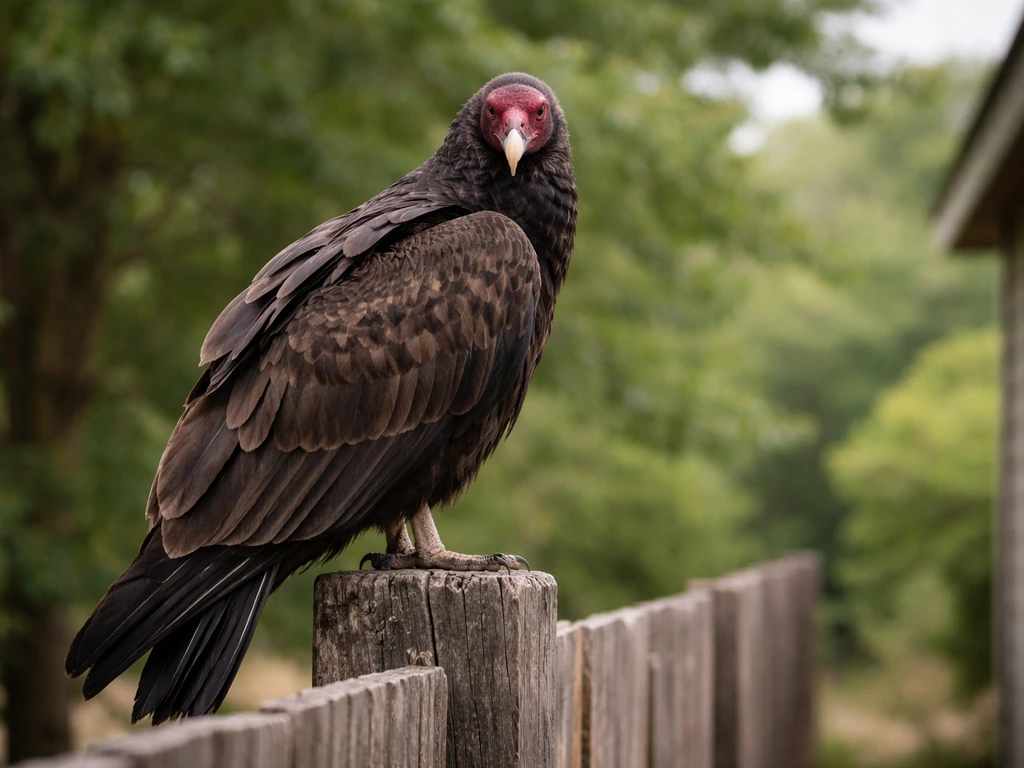
When a vulture is close and stationary, it's asking you to look more carefully at something you've been avoiding. It's not rushing you. It's just waiting, in that characteristic vulture way, for you to be ready to examine what's there. Think about what in your life right now smells off, what situation you've been walking past without fully dealing with. This encounter is a nudge toward honest assessment.
Vulture soaring overhead
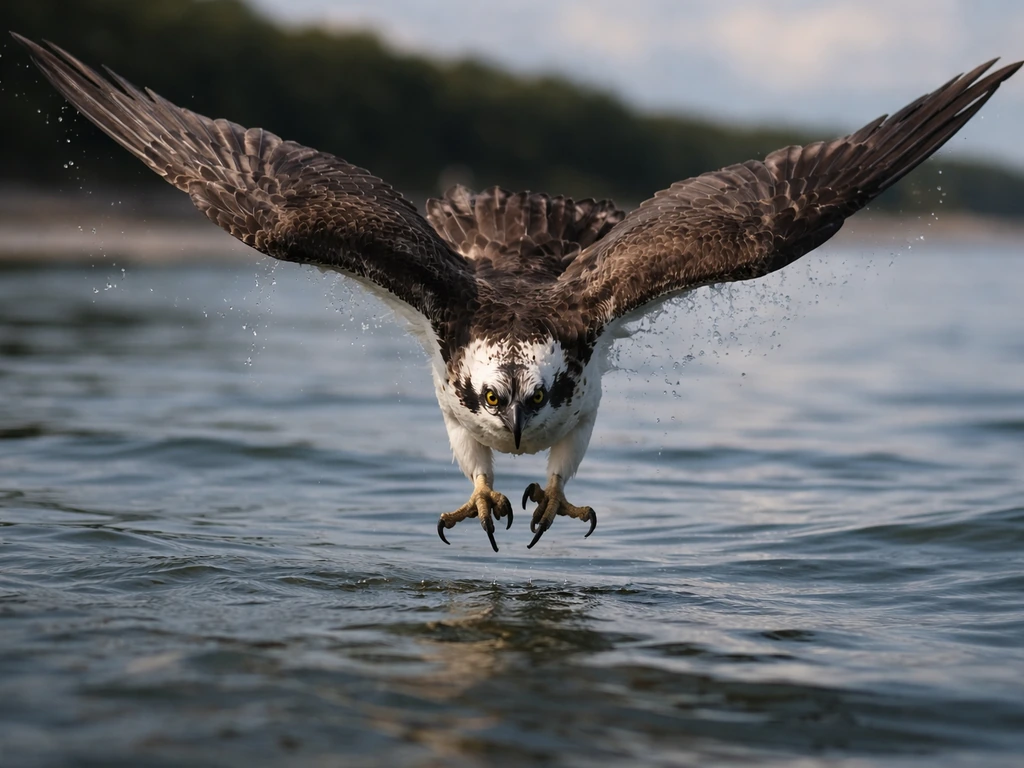
A single vulture soaring, especially one that seems effortless and unbothered by wind, is one of the more hopeful vulture sightings. This often reads as a message about rising above a difficult situation by using what's already there, including your pain, your losses, and your experience. Like the osprey bird, the vulture in flight can represent a kind of mastery that only comes after surviving hard things.
Vulture circling overhead
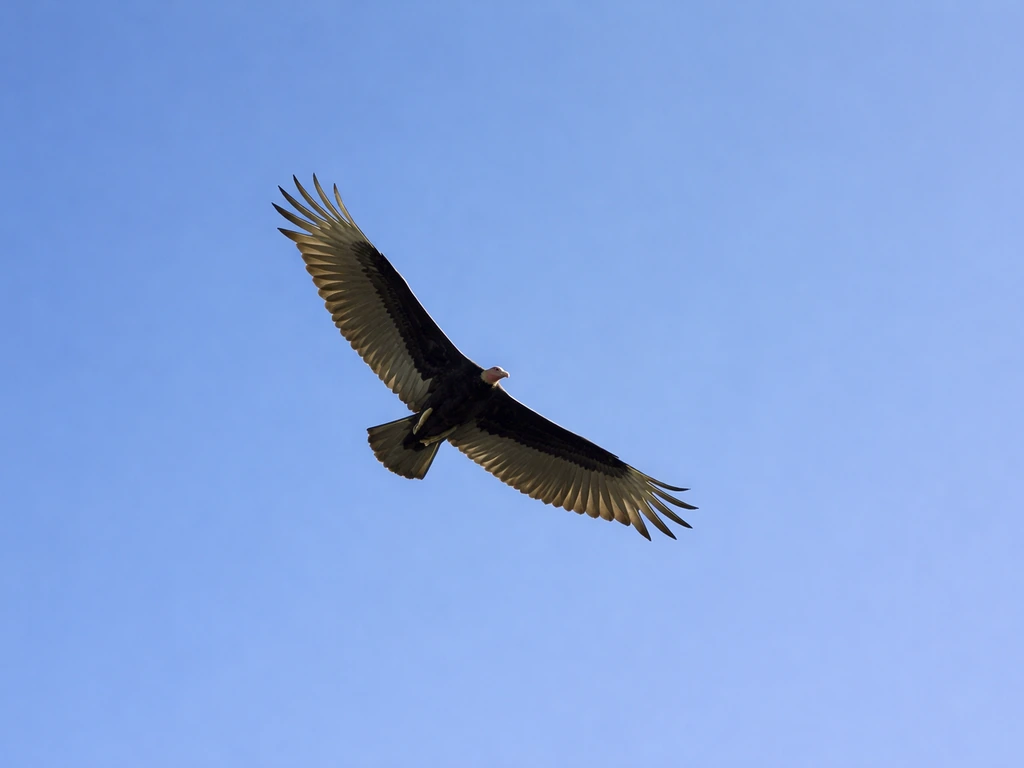
Circling is the encounter that tends to unsettle people the most, and it's worth knowing the biology first: vultures circle to locate and assess a carcass, and to signal to other vultures that something is there. They don't circle to cause harm, they circle to gather information before committing. Spiritually, this maps to a call to let go of something that is already gone. If vultures are circling above you or your home, the question to sit with is: what in your life has already died but hasn't been released yet? What are you still circling around without committing to an ending?
Vulture landing near you or approaching you
This is rare and, when it happens, tends to feel significant to the person who experiences it. A vulture that lands close or seems unusually unbothered by your presence is asking you to look directly at something you've been avoiding. This is the most intimate version of the encounter and often corresponds to a moment in life where something really does need to end or be confronted. Trust the discomfort that comes up. It's pointing somewhere.
Vulture flying directly over you
A low flyover, especially one that feels deliberate or that you notice in a way you can't explain, tends to be read as a message about a transition that's already in motion. You may not have named it yet, but something is shifting. The vulture overhead is confirmation that the old thing is ending and the clearing is beginning.
When vulture behavior itself is the message
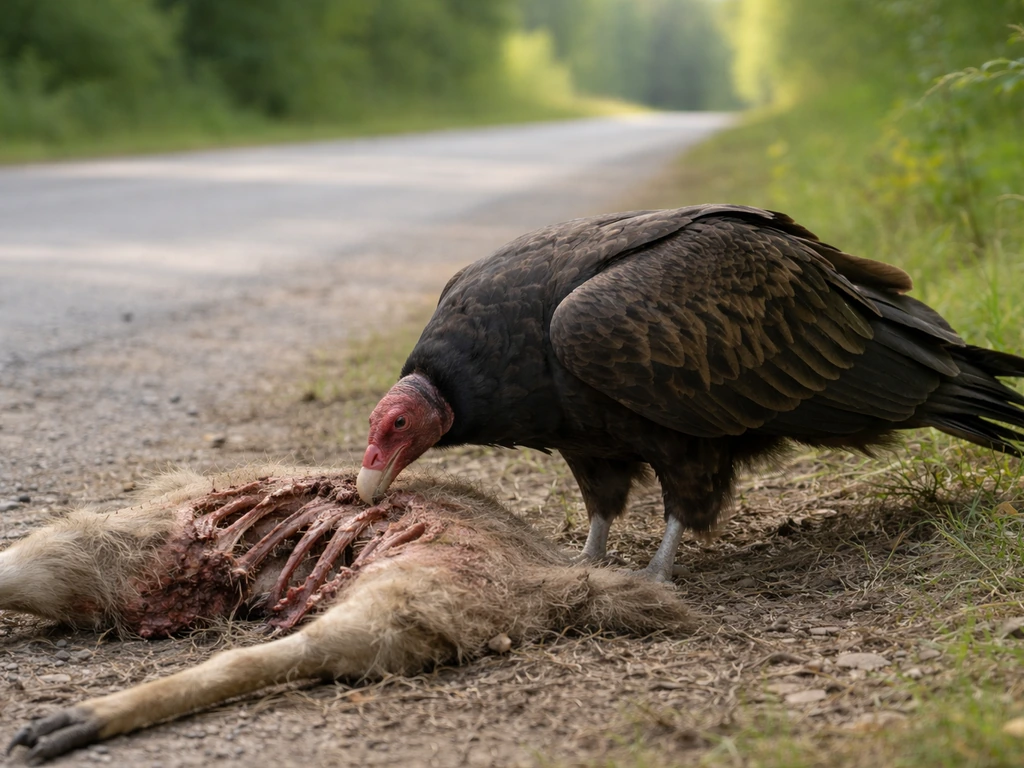
Sometimes it's not just the presence of the bird, it's what the bird is doing that hits you. Here's how to read specific behaviors.
Feeding or scavenging
Watching a vulture feed can feel confrontational, and that's partly the point. This bird is doing something most creatures and most people won't: it's willingly engaging with what has decayed. If you see this and feel called to reflect on it, ask yourself what you're refusing to process in your own life. What emotional or situational "carcass" is just sitting there because you won't look at it directly? The vulture's willingness to engage with the uncomfortable is a form of courage that's easy to miss.
Calls, hissing, or unusual vocalizations
Vultures are largely silent birds. They lack a syrinx (the vocal organ most birds use), so when you hear one making noise, whether a low hiss, a grunt, or an unusual sound, it stands out. A vocalizing vulture may be signaling urgency. Something that needs your attention isn't going to stay quiet, even if it has been until now. This is a good time to check in on what you've been dismissing or delaying.
Dominant posturing or spreading wings
The vulture's classic wing-spreading posture (sometimes called the "horaltic pose") is used to dry feathers, regulate temperature, and occasionally assert dominance at a feeding site. When you witness this, it can carry a message about owning your space, setting boundaries, and not allowing what doesn't belong in your life to crowd out what does. There's confidence in that posture. It's not aggression for its own sake. It's claiming ground.
Timing: when in your life the vulture appears
Pay attention to what was happening the day a vulture appeared. Were you at a crossroads? Mid-grief? Just finishing something that had gone stale? The timing is often the most personal piece of the interpretation. Vultures tend to show up symbolically when a transition is already underway, whether or not you've acknowledged it consciously.
Vulture symbolism and the theme of death and transformation
Let's talk honestly about the death symbolism, because it's real and it deserves more than a quick reassurance that "it doesn't mean literal death." Vulture energy is genuinely about endings. The question is what kind of ending, and what it makes room for.
In the Tibetan sky burial tradition, vultures are sacred participants in helping a soul transition to the next life. The body is returned to nature, and the vulture is the agent of that return. In the Tibetan practice known as sky burial, corpses are exposed for decomposition and scavenging animals such as vultures blank" rel="noopener noreferrer">Tibetan sky burial. There's nothing shameful in the process. It's a completion. The modern spirit-animal framing echoes this: the vulture as a guide through a "metaphorical death of your way of life," helping you digest an experience and emerge clearer on the other side.
This is meaningfully different from the Western fear-based reading, which tends to treat vulture appearances as bad omens. If you come from a Judeo-Christian background, it may take some intentional reframing to move past the "unclean bird" association. But even in that tradition, what the vulture is doing is completing something. It's not creating death. It's responding to it with purpose.
Vulture symbolism sits alongside other powerful birds of transformation. The condor bird, for example, shares many of vulture's death-and-renewal themes but often carries additional associations with grand perspective and ancestral wisdom in South American traditions. Both birds are vultures in the scientific sense, and both carry the message that endings are sacred, not shameful.
The practical takeaway from the death symbolism isn't "something bad is coming." It's: something that has already run its course is being noticed and processed. What do you need to let die so that something new can actually begin?
Shadow work, fear, and the taboo feelings vultures bring up

One of the things that makes vulture encounters so charged is that they tend to bring up feelings we'd rather not look at. Fear. Dread. A vague sense that something is wrong. The instinct to look away. That's shadow territory, and it's actually one of the most valuable things about this bird's spiritual energy.
The vulture specializes in what everyone else avoids. That's its entire ecological role. When it shows up spiritually, it often points toward the parts of yourself or your life that you've been treating the same way: avoiding, burying, pretending aren't there. Shadow work, in the psychological and spiritual sense, is exactly this process of turning toward what's uncomfortable and finding out what it holds.
In West African Vodún and Ifá traditions, animals can serve as vehicles for spiritual messages within highly specific ritual and cosmological frameworks. The important thing those traditions remind us is that an animal encounter isn't automatically a universal omen, it's a message that needs to be read in context, ideally with self-awareness and community support. That's useful here: if a vulture sighting brings up fear, the fear itself is worth examining. What specifically frightens you about this? The answer is almost always pointing somewhere real.
Taboo intuition is another way to think about this. Vultures are culturally taboo in many Western contexts, which means our instinct is often to dismiss what they stir up. But that dismissal is a clue. The things we call taboo are often the things that most need attention. If a vulture encounter brought up grief you haven't fully processed, anger you've been sitting on, a relationship that needs an honest conversation, or a habit you know is rotting from the inside, then the bird did its job.
It's also worth noting that not every spiritually powerful bird of prey carries this kind of weight. The falcon bird tends to be associated with focused ambition and clarity of vision, and the merlin bird with quick thinking and magical perception. Vulture is slower, more patient, and more willing to go where others won't. That's its gift.
How different traditions interpret the vulture
Before you settle on a personal interpretation, it's worth seeing how different traditions frame this bird. Your own background, heritage, and spiritual practice will influence which reading resonates most.
| Tradition / Framework | Primary Vulture Symbolism | Practical Emphasis |
|---|---|---|
| Ancient Egyptian | Protection, maternal care (Nekhbet), divine guardianship | Sacred role; vulture as protector of pharaohs and the dead |
| Zoroastrian | Sacred purifier, agent of transition | Vultures facilitate passage; their role is ethically essential |
| Tibetan Buddhist (sky burial) | Carrier of the soul to the next life | Death as sacred transition; vulture is a vehicle of grace |
| Judeo-Christian | Ritually unclean; associated with judgment and death | Caution, avoidance of spiritual impurity; ominous in prophetic texts |
| West African (Vodún / Ifá) | Animal messages within specific cosmological frameworks | Context-dependent; not a universal death omen |
| Modern / New Age spirit animal | Purification, transformation, letting go, renewal | Personal reflection; clearing what no longer serves you |
No single tradition owns the correct reading. What matters is which framework you're working within and what feels true to your current situation. Even the pelican bird, another bird historically loaded with religious symbolism, means something very different in Christian iconography versus coastal Indigenous traditions versus modern spirit-animal writing. The same bird can carry multiple legitimate meanings. Your job is to find the one that actually applies to your life right now.
How to figure out what the message means for you right now
Here's the practical part. You saw a vulture, or maybe you keep seeing them, and you want to know what to do with that. Below are some reflection prompts and actual next steps you can take today.
Reflection prompts to work with

- What in my life has already ended but hasn't been fully acknowledged or grieved? This could be a relationship, a career path, a version of myself, a belief I used to hold.
- What am I circling around without committing to a decision? What's the thing I keep approaching and retreating from?
- What feels "off" or decayed in my daily life right now? Routines, environments, relationships, habits: where is there rot I've been ignoring?
- What am I afraid to look at directly? The discomfort that comes up when I think about this encounter: what is it pointing toward?
- What would it feel like to release one specific thing I've been holding onto out of habit, fear, or obligation rather than genuine love or purpose?
Practical next steps you can take today
- Journal on the reflection prompts above. Write without editing yourself. The vulture doesn't avert its eyes, and neither should you right now.
- Do a physical clearing of one space: your car, a drawer, a room that's been cluttered or neglected. The act of physically releasing clutter often mirrors and supports an internal clearing.
- Name one thing you're ready to let go of: a grudge, a routine that's stopped working, a story you keep telling yourself about why something can't change. Write it down and then consciously decide to release it.
- If a relationship or situation needs a real conversation or closure, take one concrete step toward that today, even if it's just drafting a message or making a note to call someone.
- Notice what comes up in the next few days. Vulture encounters often arrive at the beginning of a transition rather than the end. Pay attention to what shows up in dreams, conversations, and feelings over the following week.
- Sit with any fear or discomfort the encounter stirred up. Ask it what it's protecting, and what it might be pointing toward. This is shadow work in its simplest form.
A note on personal belief and interpretation
None of this is a formula. Vulture symbolism can mean "death, doom, or rebirth," depending on the tradition, the encounter, and the person. What you're doing when you interpret a bird encounter is a form of reflective spiritual practice, not a prophecy. The point isn't to find the one correct meaning. It's to use the encounter as a mirror. What does this bring up for you? What feels true when you sit quietly with it? That's the message worth following.
The vulture is a patient teacher. It doesn't rush, it doesn't flinch, and it doesn't waste anything. If it has shown up in your life, there is something worth examining. The good news is you don't have to figure it all out at once. Start with one prompt, one honest look, one small release. That's how the clearing begins.
FAQ
How can I tell if the vulture is a message about an ending versus a sign of purification?
Try a quick check-in: write down (1) what you were doing right before noticing the vulture, (2) what emotion you felt in your body (fear, relief, numbness), and (3) what “unfinished” issue keeps repeating in your mind. If the same topic appears across all three, the vulture’s spiritual meaning is likely tied to that theme rather than a vague omen.
What should I do if I keep seeing vultures but nothing in my life seems to be ending?
Use timing. Purification usually shows up when something feels “dirty” emotionally or energetically, like lingering resentment, guilt, or a cluttered living situation. An ending tends to point to a clear shift, like a breakup, job change, loss, or a decision you have been delaying. If the sighting feels repetitive without closure, purification is often the closer match.
Does the vulture bird spiritual meaning always mean literal death or something bad is coming?
If you’re in a genuinely stressful period, interpret “let go” as micro-release. Choose one small action you can complete, for example deleting an unused subscription, having one difficult conversation, setting a boundary text, or taking a first step toward therapy. Vulture symbolism often needs an applied step, not just insight.
I’m afraid of vultures because of my religious upbringing. How do I reframe the message safely?
Not necessarily. In some contexts, the vulture’s “unclean” association is a cultural lens about ritual purity, not a spiritual condemnation. If the encounter brings dread, treat that fear as information, then ask what aspect of your life you feel is “taboo” to look at, and start with self-compassion rather than assuming harm is inevitable.
What’s the difference between a vulture being a reflective mirror versus a predictive omen?
Watch your attention. If you notice a vulture only after you are thinking about a problem, the meaning is probably reflective. If you notice it unexpectedly in calm moments, the message may be more about ongoing processing already underway. Either way, grounding questions help more than trying to “predict” events.
How do I interpret different vulture behaviors like circling, landing, or feeding?
Count the behavior, not just the bird. Circling can indicate assessment and delayed commitment, stationary closeness often points to avoidance you are ready to examine, and feeding can suggest you are being asked to confront what you have been refusing to process. Then match the behavior to one specific life area you can act on this week.
A vulture made a sound, does that change the meaning?
If you hear unusual vocalizing, treat it as a prompt to stop postponing. Make a concrete “next contact” plan, such as replying to a message you’ve ignored or scheduling the appointment you keep delaying. Urgency in symbolism often asks for a direct, time-bound action.
What if the vulture meaning increases my anxiety instead of helping me reflect?
Yes, and the key is how it impacts you. If the encounter helps you move toward closure, boundaries, or honest processing, it’s usually aligned. If it pushes you into panic, obsessive checking, or avoidance, pause and return to practical steps, because shadow material can be activated without being “a prophecy.”
How do I choose which spiritual interpretation to trust when traditions disagree?
Check for alignment with your belief system and consent of attention. Choose a framework you can actually live with, for example “endings are sacred” or “purification and letting go.” If a particular interpretation doesn’t feel true, drop it. The right meaning is the one that produces clarity and a useful next step, not the one that sounds most dramatic.
I keep seeing vultures in a pattern. How can I use that repetition productively?
When the vulture is seen repeatedly, set an intention for one month. Each time you spot it, write one line: “What ending or release is most relevant today?” After 30 days, review what patterns show up. This turns coincidence into a disciplined reflective practice rather than constant speculation.
What are practical next steps if I feel the vulture is pointing to a relationship or habit?
If the encounter feels unusually personal, consider it a cue to address one “rotting” issue with care, not force. Start with a boundary (what you will no longer accept), a cleanup (physical or digital), or a conversation (what truth you are ready to say). The vulture’s spiritual meaning often becomes real when you change your daily behavior.
Next Article
Osprey Bird Spirit Meaning: Protection, Focus, and Renewal
Learn osprey bird spirit meaning for protection, focus, renewal and clear direction from your real encounter.