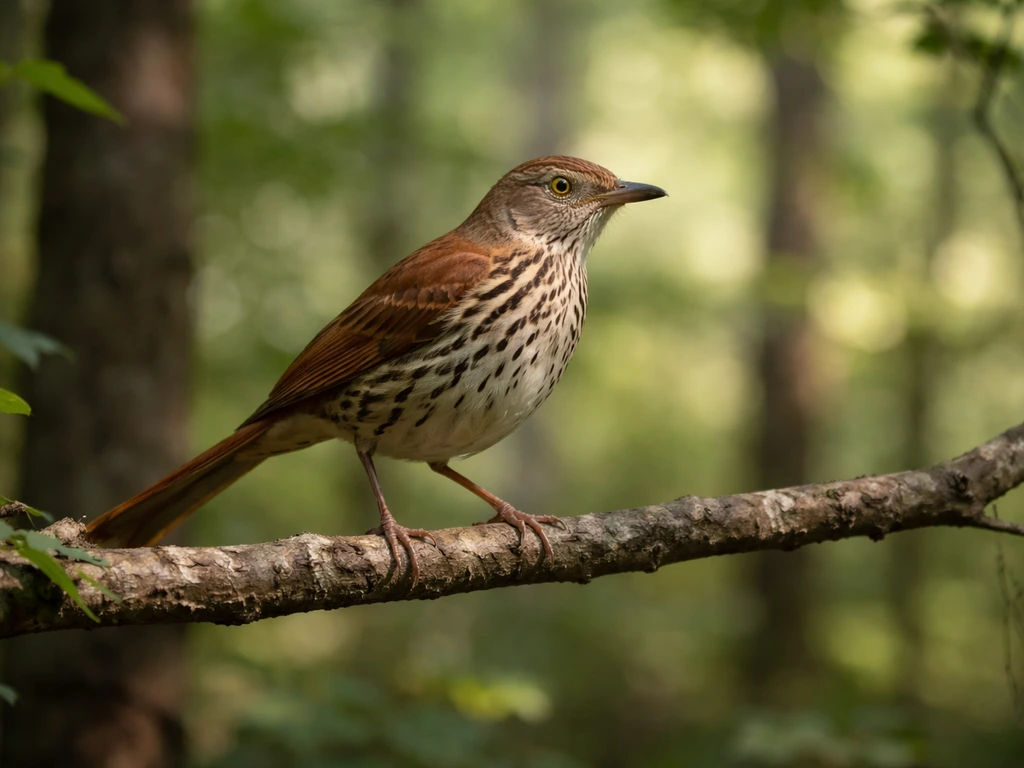
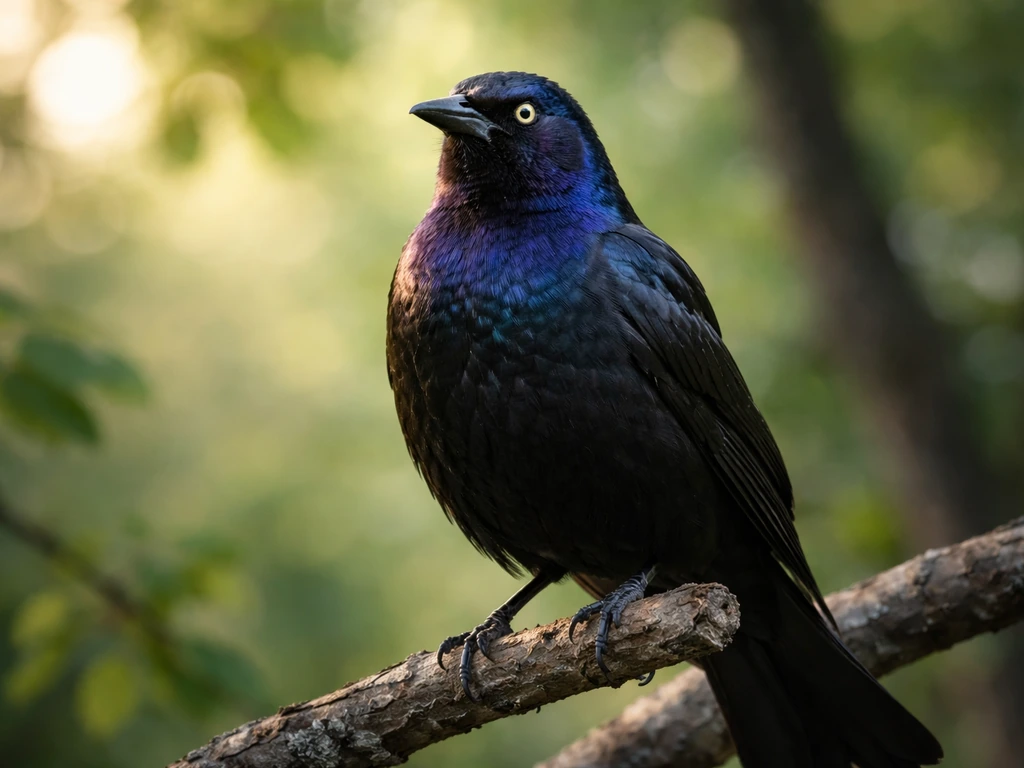
That said, the brown thrasher carries layers beyond just voice. Protection, persistence, creativity, and bold self-assertion all flow through this bird's symbolism, and which layer feels most relevant to you depends entirely on how, when, and where you encountered it. This guide will walk you through all of those angles so you can land on an interpretation that actually fits your life right now, not just a one-size spiritual greeting card.
What the brown thrasher symbolizes
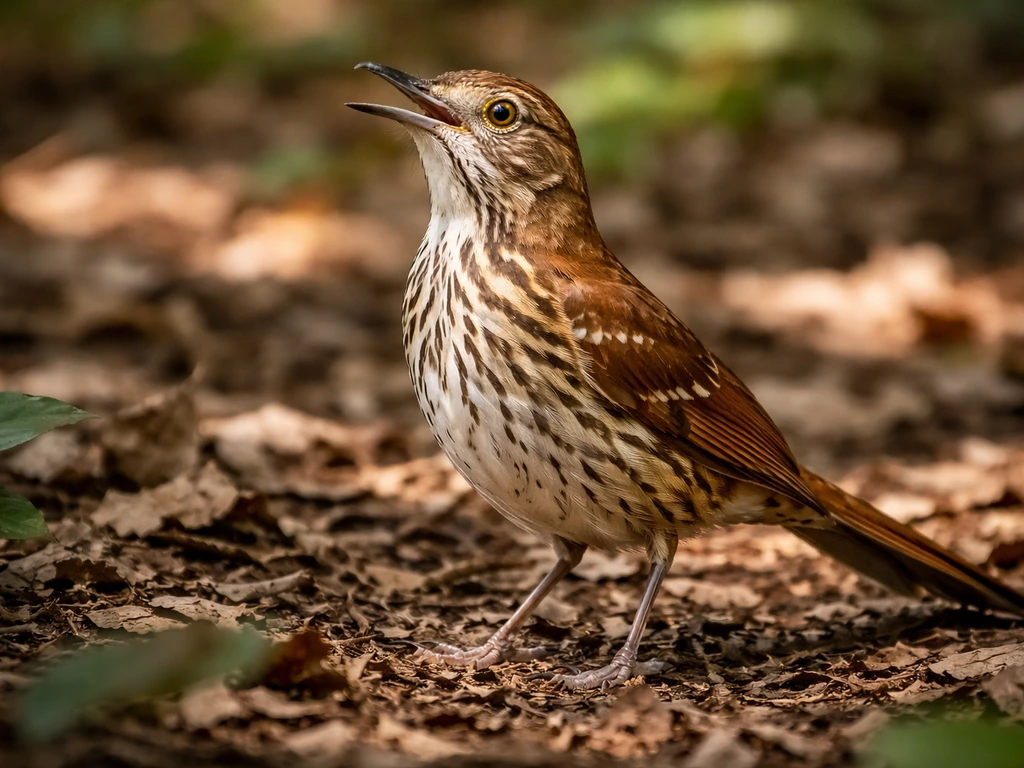
Voice and communication
This is the big one. The brown thrasher's 1,100-plus song types are not mimicry in the way the Northern Mockingbird borrows other birds' calls. The thrasher has its own original repertoire, meaning it is not copying anyone, it is genuinely creating. Spiritually, that distinction matters a lot. Seeing a thrasher is less about "speak up" in a general sense and more about "speak in your own voice." It is an invitation to stop borrowing other people's frameworks, scripts, or permission slips, and to say what only you can say.
Persistence and creative problem-solving
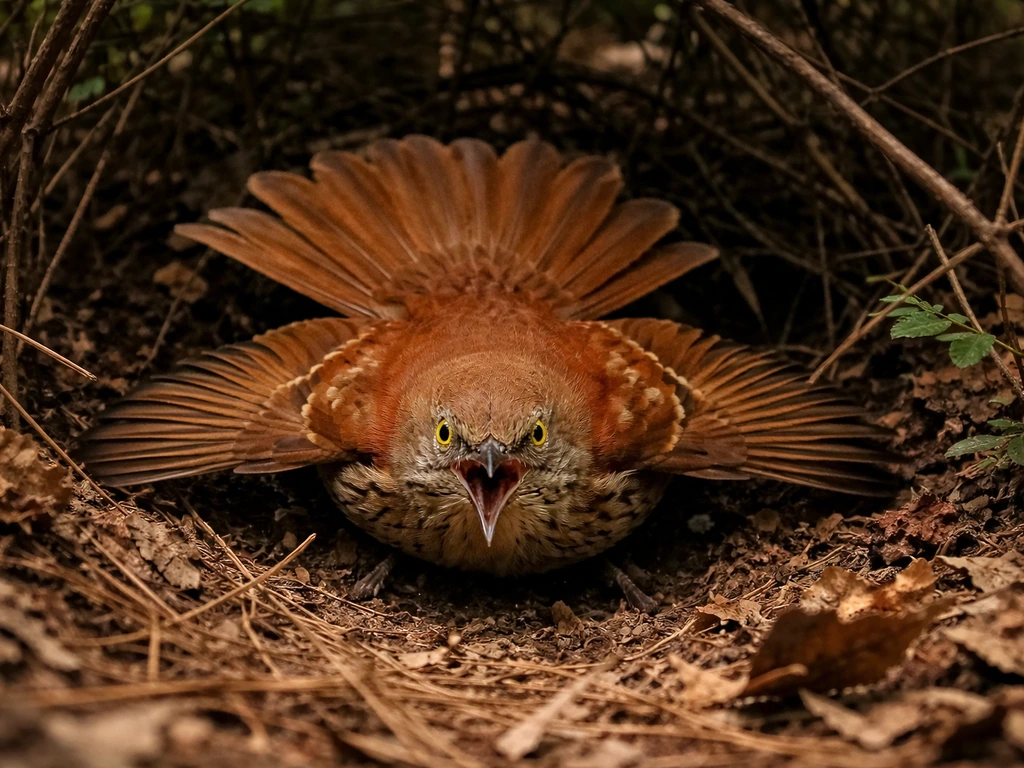
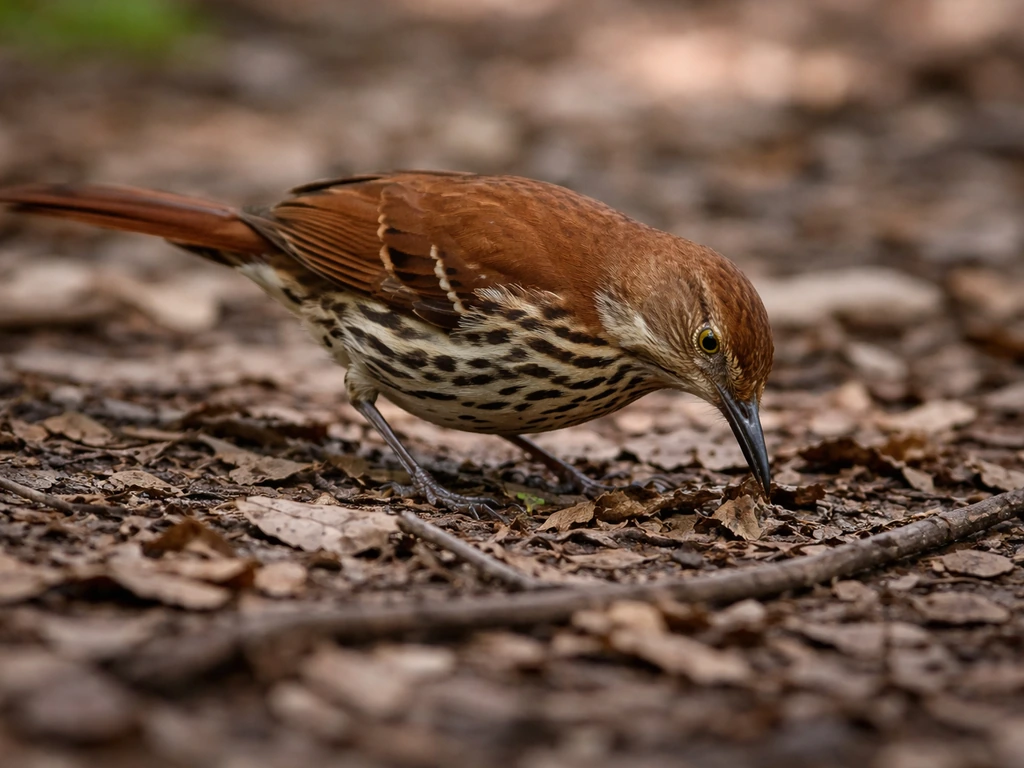
The bird's common name actually comes from its feeding style: it uses its long, curved bill to thrash through leaf litter and pine needles, flicking debris aside in a determined, methodical search for food. It does not wait for an easy meal. It digs, clears, searches, and keeps going. If you have been grinding away at something without obvious results, the brown thrasher showing up is often read as a sign that you are on the right track, that the persistence itself is the point, and that the breakthrough is closer than it looks.
Protection
Brown thrashers are famously fierce defenders of their nests. They will confront animals much larger than themselves when a nest is threatened, and they choose nesting sites in dense thickets and tangled hedgerows precisely because cover equals safety. Spiritually, this maps onto themes of protecting what matters most to you: your relationships, your creative work, your boundaries, or someone in your care. If you are in a season of life where something precious feels vulnerable, the thrasher can appear as a reminder that fierce, active protection is not aggression. It is love in action.
Creativity and self-expression
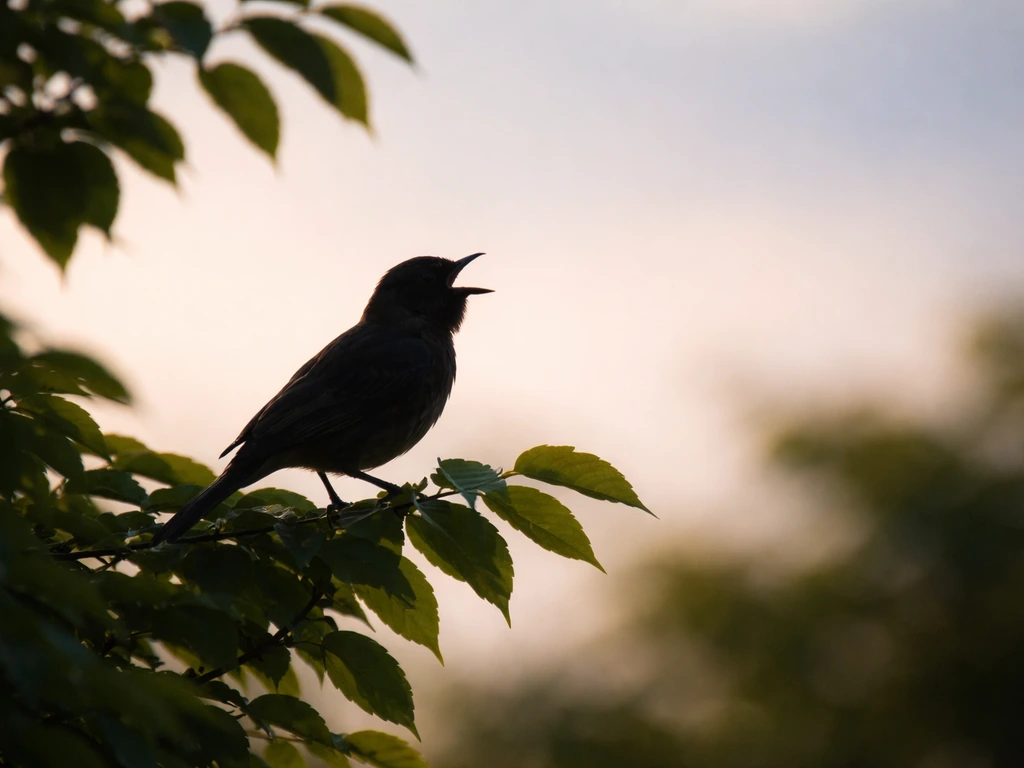
Across multiple spiritual traditions, birds that sing elaborate songs are linked to creative energy, inspiration, and the idea that your unique gifts are meant to be shared with the world, not kept private. the thrasher bird's spiritual meaning broadly points to authentic self-expression, and the brown thrasher in particular doubles down on that theme because its creative output is so extraordinary. If you are an artist, writer, musician, teacher, or anyone whose gifts involve communication, this bird has a specific message: the world needs the full version of what you have to offer.
Emotional uplift and joy
Some spiritual frameworks around the brown thrasher also emphasize change, protection, and joy together, framing the bird as a symbol of unity with the world around you. If your encounter happened during a difficult or heavy period, it can be interpreted as a sign that lightness is available, that you are not as alone as you feel, and that singing (literally or metaphorically) can be a pathway back to yourself.
How to read your specific encounter

Before you settle on a meaning, it helps to slow down and think about the context of your encounter. Spiritual interpretation is not one-size-fits-all, and the how, where, and when you saw or heard the bird can shift the message significantly. A useful first practice is what some spiritual guides call "inner imaging": after the encounter, close your eyes and let the image of the bird come back to you. Notice what it is doing in your mind's eye. Is it singing? Foraging? Sitting still? That inner image often has as much to tell you as the outer encounter itself.
It is also worth pausing on the ordinary wildlife explanation before you go deep into the spiritual one, and this is not a dismissal of your experience. It is actually a more honest way to work with it. Brown thrashers are present in backyards, thickets, and forest edges across much of the eastern and central United States. If it is late spring, you are likely near a habitat edge (where lawn meets shrubs or trees), and you keep hearing a loud, varied song from the treetops at dawn, there is a high chance you are simply near a male thrasher defending his breeding territory. That explanation does not erase the spiritual one. In fact, knowing why the bird is doing what it is doing can deepen the symbolic reading enormously.
Common encounters near your home and what they mean
Hearing it sing, especially at dawn
Brown thrashers are active participants in the dawn chorus, that concentrated burst of bird song that happens just before and after sunrise during breeding season. Males sing to establish territory and signal their presence to potential mates. Spiritually, dawn is almost universally associated with new beginnings, clarity, and intention. If the sound of the thrasher woke you up or caught your attention at first light, that combination of timing and voice is a strong nudge toward: what new chapter are you starting, and are you announcing it boldly or whispering it into the sheets? The bird is not whispering. It is calling from the tops of trees, clearly and repeatedly, for anyone in earshot to know it is there.
Seeing it land close to you or hover nearby
When a wild bird comes unusually close, the experience tends to feel significant, and it often is worth deeper reflection regardless of how you interpret it. Spiritually, a bird choosing to enter your personal space is frequently read as a direct message, a more pointed form of contact than a distant sighting. For the brown thrasher specifically, consider whether there is something in your life right now that needs your direct attention or protection, not from across the room, but up close and personally.
Watching it forage on the ground
If you have been watching a brown thrasher work through leaf litter with its bill, tossing debris aside systematically in search of food, you are watching a live demonstration of persistence. This encounter tends to appear for people who are in the middle of a long effort: a project, a healing process, a search for something that has not surfaced yet. The message here is less about voice and more about process. Keep going. Keep digging. The thing you are looking for is under the next layer.
Finding a nest or noticing a thrasher nesting nearby
Brown thrashers prefer to nest low, in dense thickets, hedgerows, and overgrown clearings where cover is thick. Discovering a nest (especially if the adults are actively defending it) is one of the most pointed protection symbols this bird offers. Spiritually, nests often represent home, family, creative incubation, or anything you are building that is not yet ready to be seen by the world. The thrasher's willingness to fight for that space is the message: whatever you are creating or protecting right now deserves that level of commitment from you.
Let timing and behavior sharpen the meaning
Context is everything in spiritual interpretation, and two simple factors, when and how, can help you tune the message much more precisely.
| Timing or behavior | What it might point toward |
|---|
| Dawn or early morning | New beginnings, fresh intentions, a call to announce yourself |
| Dusk or evening | Reflection, closing a chapter, protection of what matters as the day ends |
| Spring (breeding season) | Fertility, creative output, bold self-expression, starting something new |
| Repeated sightings over days or weeks | A message you have not fully received yet; time to sit with it |
| Singing loudly from a high perch | Your voice, your story, your truth needs to be heard |
| Foraging quietly on the ground | Persistence, patience, trust the process |
| Aggressive defense behavior (dive-bombing, alarm calls) | Something in your life needs stronger boundaries or active protection |
| Appearing during a difficult conversation or decision | Speak your truth; communication is the key to moving forward |
A single sighting during an ordinary Tuesday afternoon carries less weight than a brown thrasher that appears repeatedly, or one that shows up at an emotionally charged moment. Pay attention to what you were thinking, feeling, or doing when the encounter happened. Spiritual traditions across the board, from Native American animal spirit practices to Celtic nature mysticism, read animal encounters as most meaningful when they arrive at the threshold of a decision or a turning point.
It is also worth noting that other birds with overlapping symbolic territory can help you triangulate. If you have been noticing a lot of bold, loud birds recently, you might be in a whole season of "find your voice" symbolism. the grackle's spiritual meaning also deals with boldness and assertive self-expression, so if both birds have been appearing for you, that repetition is worth taking seriously.
Is this a spiritual message or just a bird?
Here is an honest answer: it can be both, and it does not have to be either/or. A male brown thrasher singing from a treetop at dawn is doing so because it is breeding season and he is marking his territory. That is real. And at the same time, if that song reaches you at a moment when you are wrestling with whether to speak your truth, the symbolism and the biology can point in the same direction. You do not have to choose.
What spiritual guides across many traditions do recommend is treating animal encounters as personal narrative rather than fixed prophecy. The encounter is a prompt, an invitation to ask certain questions of yourself. It is not a guarantee that something will happen or a verdict on a decision. If you approach it as a story the universe is telling you, something to interpret with curiosity rather than anxiety, it stays generative. If it starts to feel compulsive or alarming, that is important information too (more on that below).
Some readers find it helpful to read about symbolically adjacent birds to see which meaning resonates most right now. the spiritual meaning of the thrush bird shares some of the brown thrasher's voice and song symbolism, and comparing the two can help you identify which specific thread of meaning is most alive for you in this moment.
How to use this message today
Start with your journal
Writing is one of the most effective ways to move from "I think this means something" to actually receiving the message. Documenting the encounter in detail, where you were, what you saw, what you were thinking about at the time, and how you felt, creates a record that often reveals meaning you did not notice in the moment. Many practitioners of animal spirit work recommend spending time outdoors to observe wildlife and then bringing that observation back to the page. The combination of direct experience and written reflection is more powerful than either alone.
Try these prompts after your brown thrasher encounter:
- What was I thinking about, worrying about, or hoping for right before I noticed the bird?
- Is there something I have been wanting to say or create that I keep putting off? What is actually stopping me?
- Where in my life am I holding back my full voice, and what would it look, sound, or feel like if I stopped?
- What am I protecting right now? Is my level of effort and attention matching the value of what I am protecting?
- If the brown thrasher's persistence in digging through leaf litter is a mirror for my life, what layer am I being asked to push through next?
- What does joy or lightness feel like for me right now? When did I last let myself experience it fully?
Set a clear intention
Once journaling surfaces a theme, the next step is to name an intention clearly. Vague insight tends to evaporate. A concrete intention stays with you. Try writing a single sentence that begins: "In response to what the brown thrasher is pointing toward, I commit to..." Then keep it somewhere you will see it: your phone, a sticky note, the front page of your journal. Some spiritual practitioners use a selection-and-reflection method, choosing an animal symbol for the day and letting it guide their attention. You can reverse-engineer that here: let the thrasher's message be your guiding frame for the week, and notice what shifts.
Go back outside
One of the most grounded practices from animal spirit traditions is simply returning to direct observation. Go back to where you saw or heard the bird. Sit with it. Notice what it is doing and how you feel in its presence. This is not a mystical practice, it is a sensory one, and sensory grounding in nature is genuinely useful for reconnecting with your own clarity and calm. If you are in a period of grief, transition, or uncertainty, time near birds and trees has real psychological value, not just spiritual.
If you want to continue exploring symbolism in this family of birds, the gray bird grasshopper's spiritual meaning offers an interesting contrast around themes of timing and stillness versus the brown thrasher's active, vocal energy, and sitting with both can help you understand where you are on that spectrum right now.
When the encounter feels alarming or overwhelming

Most brown thrasher encounters are positive and curiosity-invoking. But occasionally a reader reaches out because a repeated animal encounter has started to feel unsettling, intrusive, or linked to significant anxiety or fear. If that is you, it is worth separating two things: the spiritual interpretation (which is personal, exploratory, and should feel expansive) and whatever emotional state you are actually in. If you are feeling overwhelmed, if the encounter has become tangled up with fears you cannot shake, or if the anxiety is interfering with daily life, that is worth addressing directly. Grounding practices such as the five-senses check-in (name five things you can see, four you can feel, and so on) can help in the moment. And if the distress feels bigger than a grounding exercise can reach, connecting with a trauma-informed therapist or counselor is a practical, wise next step. Spiritual seeking and mental health support are not in competition. They often work best together.
Putting it all together
The brown thrasher is one of the more specific and actionable bird messengers you can encounter. Unlike some birds whose symbolism stays broad and diffuse, this one keeps pointing to the same cluster of themes: your voice, your persistence, your creative gifts, and your willingness to protect what matters. The biological reality of the bird (its staggering song repertoire, its determined foraging, its fierce nest defense) and the spiritual symbolism around it are unusually well-matched, which makes it easier to trust the message when it arrives.
The most useful thing you can do after a brown thrasher encounter is not to look for a definitive answer. It is to ask a better question. Not "what does this mean?" but "what is this asking me to look at?" Then write it down, set an intention, and take one small step in that direction. The thrasher does not wait for perfect conditions before it sings. Neither should you.