
If a thrasher bird just crossed your path, you're likely being nudged toward one of a handful of consistent messages: stay grounded, keep going, speak up, or protect what matters most to you. These aren't random associations. They come directly from how thrashers actually live, and once you understand that, the symbolism clicks into place and becomes genuinely useful for wherever you are right now.
Thrasher Bird Spiritual Meaning: Signs, Behavior, and Next Steps

Eliza Thornwick
27 Apr 2026
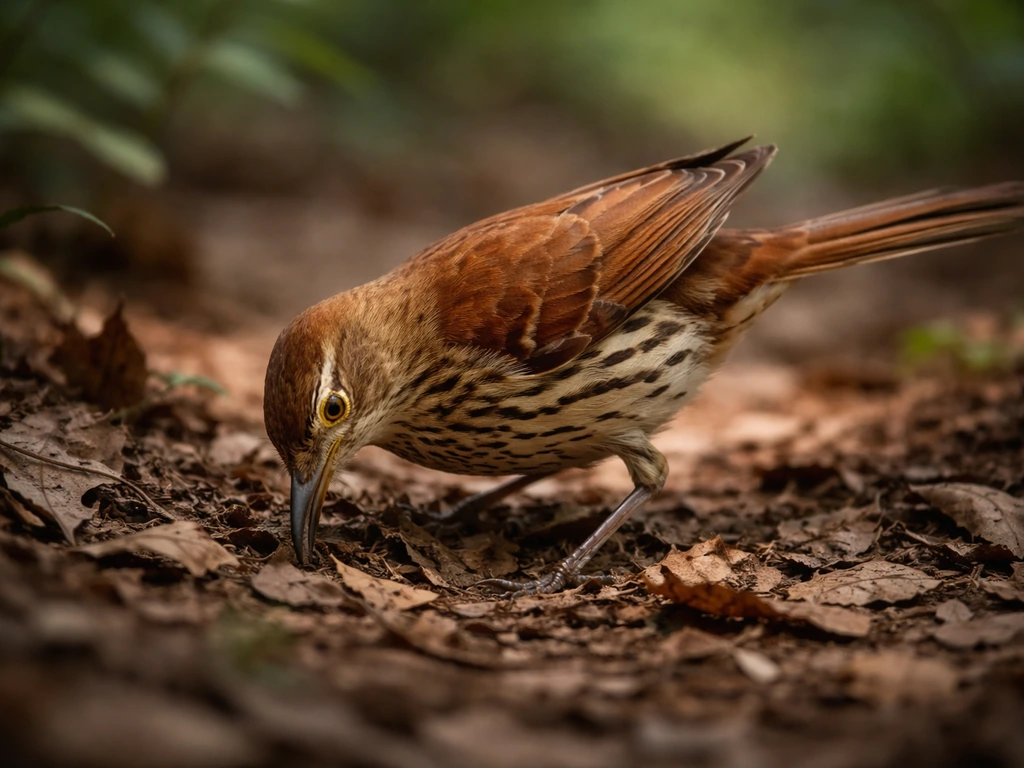
What the thrasher bird is (and why it matters symbolically)
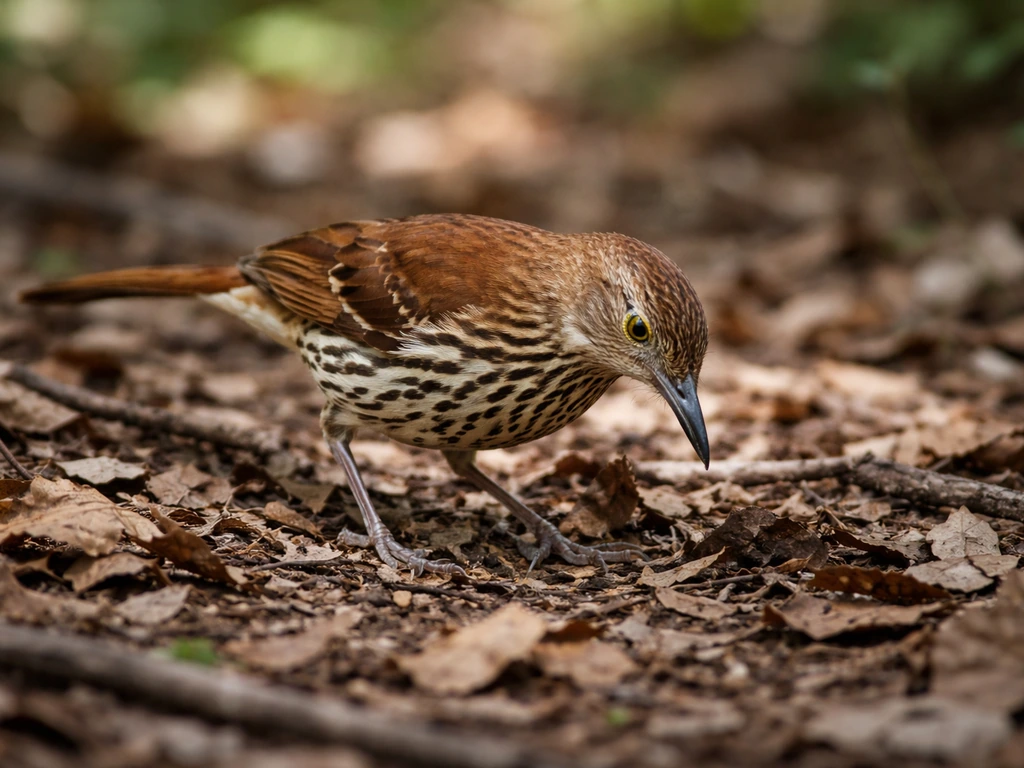
The thrasher is a family of birds found mostly across North and Central America. There are about a dozen species, including the brown thrasher, California thrasher, LeConte's thrasher, and the long-billed thrasher, among others. They share a few defining traits: curved bills, long tails, bold personalities, and a very grounded lifestyle. Most thrashers spend the majority of their time on or close to the ground, foraging through leaf litter, scratching the soil, and moving through dense brush rather than soaring in open sky.
That earthy lifestyle is exactly what makes thrashers so symbolically rich. In spiritual interpretation, a bird's natural behavior is always the best starting point. A bird that clings to the ground, digs persistently, sings loudly, and fiercely guards its territory is going to carry very different energy than, say, a hawk circling above the clouds. The thrasher's world is close, physical, practical, and vocal. That's the lens through which all thrasher symbolism should be read.
The name "thrasher" itself is telling. It connects to vigorous, twitching body movement, that energetic sweeping and tossing of leaf litter they do when foraging. Folklore and spiritual writers have reworked this into a kind of "tilling" energy, the idea that the thrasher is turning things over, renewing the ground level of life. Think of it as a bird that stirs things up not to cause chaos, but to uncover what's beneath the surface.
The most common spiritual messages when you see a thrasher
Across modern spiritual writing and folk-omen traditions, a handful of themes come up consistently when the thrasher appears. These aren't invented out of thin air. Each one maps back to something real about how this bird behaves and survives.
- Persistence and perseverance: The thrasher forages relentlessly, covering ground methodically and never seeming to give up. When it shows up, many people take it as a message to keep going, especially through slow or frustrating periods.
- Grounding and earth-level focus: Because thrashers live so close to the ground, their appearance is often read as a call to get practical, stop overthinking, and return to the basics of what you're building.
- Clear communication and using your voice: Thrashers, especially the brown thrasher, have one of the most complex songs of any North American bird. Hearing a thrasher sing is frequently interpreted as a push to speak up, express something you've been holding back, or pay attention to messages coming your way.
- Protection of personal space and what you value: Thrashers are known for fiercely defending their territory. This behavior translates spiritually into messages about protecting your energy, your home, your creative work, or your relationships.
- Creativity and adaptability: The thrasher's broad, varied song repertoire and its ability to thrive in dense, difficult terrain are often read as encouragement to be creative in problem-solving and to trust your resourcefulness.
Peace and a sense of freedom are also common associations, particularly in brown thrasher symbolism. Some spiritual readers describe the thrasher as carrying a quiet assurance that you are protected and that the path forward, even if it requires digging through difficulty, leads somewhere worthwhile.
What the thrasher is doing matters as much as seeing it
This is where interpretation gets genuinely personal and specific. The behavior you observed is often the clearest signal about what the message is pointing toward.
Singing or calling loudly
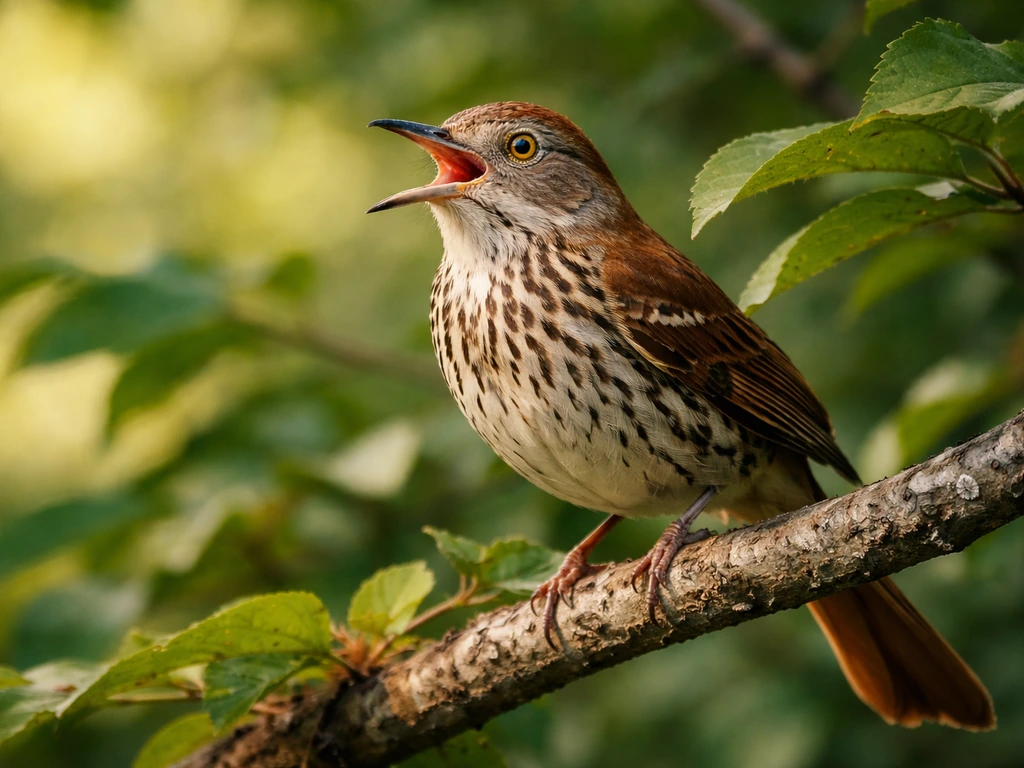
If you heard a thrasher before you saw it, or if its song was the most striking part of the encounter, the message is almost certainly about communication. A Reddit r/birding thread about blank" rel="noopener noreferrer">a brown thrasher sighting in Portland-area suburbs similarly notes that people focus intensely on the bird's song when trying to understand what they saw. Thrashers are often heard during morning and evening hours, and some species call at night. Spiritually, this is treated as a direct nudge: your voice matters, something needs to be said, or you need to become more receptive to guidance arriving through sound, conversation, or intuition. Ask yourself whether there's something you've been afraid to express or a conversation you've been putting off.
Pecking, scratching, or foraging on the ground
Watching a thrasher sweep and scratch at leaf litter is its most characteristic behavior. In spiritual terms, this is typically read as a message to dig deeper into a situation you've been skimming the surface of. There's something beneath the obvious layer that needs your attention, whether that's in a relationship, a creative project, a health concern, or a long-standing pattern. It can also simply mean: do the unglamorous groundwork, because that's what's being asked of you right now.
Building a nest or hovering near your home
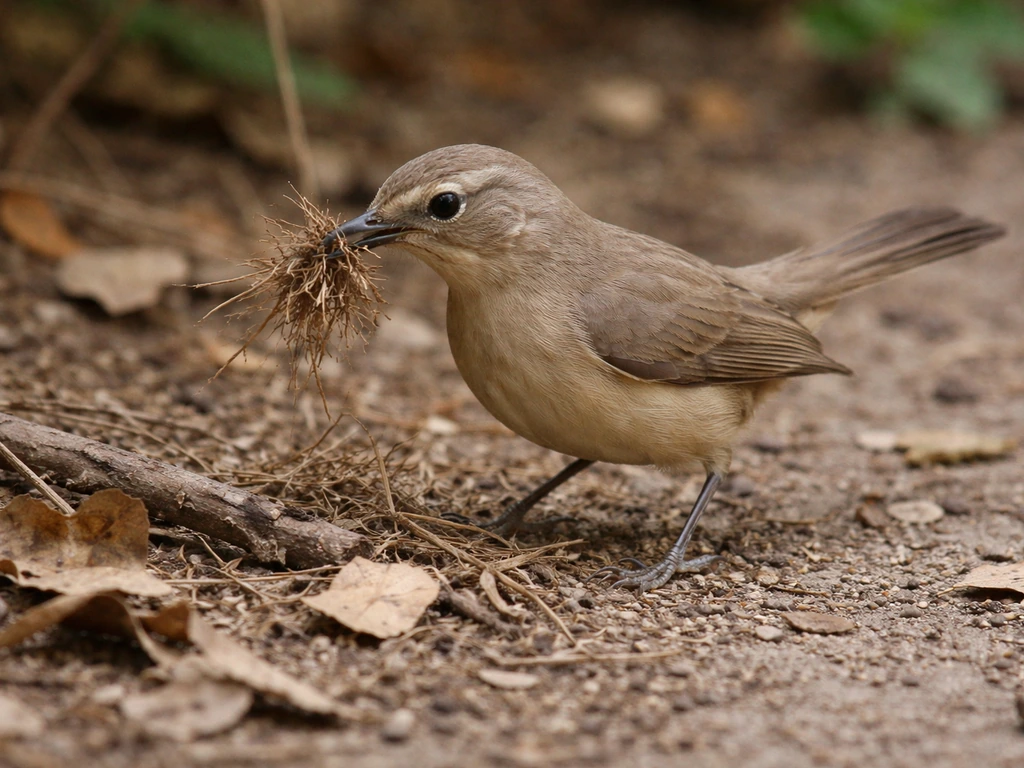
LeConte's thrasher, for example, is almost entirely ground-bound but will take to the air purposefully during nest building and when feeding young. If a thrasher is doing nest-related activity near your home, or if you've noticed one hanging around your yard or garden during a particular season, the spiritual reading leans toward home, foundation, and family. This could be a call to invest more intentionally in your living space, strengthen your family relationships, or build something that will shelter and support people you love.
Darting, quick movement or sudden appearance
Thrashers are ground-focused, so when one suddenly appears in an unexpected place or moves in a fast, attention-grabbing way, many spiritual interpreters treat it as an "interrupt" message. Spirit is essentially tapping you on the shoulder. Stop. Refocus. Whatever you were distracted by, this is a signal that you need to redirect your attention toward something more aligned with your actual priorities.
Where the thrasher appeared and when it showed up
Context shapes meaning enormously. A thrasher in your backyard while you're gardening carries a quieter, more domestic energy than one appearing at a crossroads while you're mid-decision about something major. Here's a practical way to think about location and timing.
| Where or when it appeared | Likely spiritual emphasis |
|---|---|
| In your yard or garden | Home, foundations, groundwork, daily practice |
| Near or at a window | A message trying to get through; pay attention to what's been overlooked |
| Along the road or at a crossroads | Decision point; a nudge to choose boldly or reconsider direction |
| In dense brush or hidden cover | Hidden resilience; undercover work; something unseen but growing |
| First thing in the morning | Sets the tone for the day; communication or creative work is highlighted |
| Repeatedly over days or weeks | Sustained message; the theme needs real action, not just noticing |
One thing worth paying attention to is how you felt in the moment. Were you at ease, curious, or surprised? Did the encounter feel like a gentle hello or something more insistent? Your internal reception is actually one of the most reliable tools you have for narrowing down which interpretation applies.
When the thrasher keeps coming back (or appears in an unforgettable way)
Repeated sightings are consistently treated across spiritual traditions as confirmation rather than coincidence. If you've seen or heard a thrasher multiple times in a short window, the message isn't just a passing nudge. It's an ongoing communication. Think of it like a persistent knock on the door: the first time, you might not answer. By the third or fourth, something in you knows it's real.
Pay attention to what's been constant in your life during the period of repeated encounters. Is there a decision you've been avoiding? A creative direction you've been second-guessing? A relationship boundary that keeps getting crossed? The thrasher returning again and again is usually asking you to stop postponing whatever that thing is.
A one-of-a-kind encounter, on the other hand, like a thrasher landing unusually close, behaving in a way you've never seen before, or appearing during a personally significant moment, tends to feel more like a marker. Something is being noted. You may not understand its full meaning immediately, but these encounters are worth recording and sitting with. Sometimes the significance only becomes clear weeks later.
If the encounter felt heavy or unsettling
Most thrasher symbolism lands on the positive side: persistence, protection, creativity, voice. But if your encounter felt strange, uncomfortable, or ominous, that's worth taking seriously without spiraling into fear. The healthiest framing for unsettling animal encounters is not doom, but awareness.
If a thrasher behaved erratically, or if you saw one in an unusual context that left you uneasy, consider these shadow-meaning questions before assuming the worst. Is there something in your life you've been avoiding that genuinely needs to be addressed? Are you protecting yourself emotionally where you should be? Have you been letting something slide beneath the surface of your awareness?
Shadow meanings in thrasher symbolism tend to cluster around two themes. First, unprotected vulnerability: the thrasher's fierce territorial instinct, when flipped, can signal that you're leaving yourself or something you care about unguarded. Second, suppressed voice: if the thrasher's song was absent or if the bird seemed distressed, some readers interpret this as a signal that staying quiet is costing you more than you realize.
The practical advice here is the same as for any unusual omen: stay calm, don't make it mean more than it needs to, and treat it as a prompt to look honestly at your situation rather than a verdict on your future. A wake-up call is not a punishment. It's information.
What to actually do after a thrasher encounter

Noticing a meaningful bird encounter is the easy part. The harder and more rewarding part is actually working with the message. Here's a simple process that applies regardless of which specific meaning resonates with you.
- Write it down immediately. Record what you saw, what the thrasher was doing, where you were, how you felt, and what you were thinking about just before it appeared. Details fade fast, and the most useful clues are often in those specifics.
- Identify what was already on your mind. The most accurate interpretation of any animal encounter usually connects to something you were already working through. What question, decision, or emotional weight were you carrying that day?
- Sit with the themes that resonate. Go through the core thrasher meanings (persistence, grounding, voice, protection, creativity) and notice which one produces a genuine physical or emotional response in you. That's your message.
- Set a small, concrete intention. Don't just think about the meaning. Translate it into one action. If the message is about communication, decide on one conversation you'll have or one thing you'll write or create. If it's about grounding, choose one practical step you'll take this week.
- Return to it in meditation or quiet reflection. Sit quietly, bring the image of the thrasher to mind, and ask inwardly what it came to show you. You don't need to follow any specific tradition for this. Just stay open and notice what surfaces.
- Track whether the theme keeps appearing. Over the next week or two, pay attention to whether the same core theme (the conversation, the decision, the protection boundary) keeps coming up in other areas of your life. Confirmation often arrives from multiple directions at once.
How to choose the meaning that actually fits you
Bird symbolism genuinely varies across cultures, and it would be misleading to pretend there's one universal thrasher meaning that applies to everyone. In some Native American traditions, birds are messengers between the human and spirit worlds, with meaning shaped by specific tribal stories and relationships with particular species. In Celtic and folk European traditions, bird omens are often tied to what the bird does and where it appears relative to the observer's home or journey. Eastern philosophies may approach the encounter through the lens of energy flow and natural balance rather than a specific message. Christian-influenced spiritual traditions might read it as a moment of divine attention or guidance.
None of these frameworks is wrong. What matters is which one resonates with your own worldview and life experience. If you've grown up with a particular spiritual or cultural tradition, start there. If you're drawing from multiple influences (which most spiritually curious people are), use personal resonance as your filter. The interpretation that produces a sense of recognition, a quiet "yes, that's it" in your chest, is almost always the right one for you.
It's also worth knowing that the thrasher exists alongside other richly symbolic birds worth understanding for comparison. The brown thrasher in particular has its own specific spiritual associations that go deeper than the broader thrasher family, and the thrush (a similarly ground-inclined, vocally gifted bird) shares some thematic overlap around communication and song. American Bird Conservancy also notes that the brown thrasher is a Mimidae (mimic thrushes) bird with a large vocal repertoire blank" rel="noopener noreferrer">Brown thrasher is a Mimidae member with a large vocal repertoire. If you’re also wondering about the spiritual meaning of thrush bird appearances, look to its communication and song the same way you’d read a thrasher encounter thrush (a similarly ground-inclined, vocally gifted bird). The brown thrasher bird spiritual meaning often points to themes of persistence, grounded protection, and finding your voice The brown thrasher in particular has its own specific spiritual associations. If you're drawn to ground-level foragers with bold voices, exploring those nearby species can give you a fuller picture of what this kind of bird energy means for you personally.
At the end of the day, you are the best authority on what a thrasher encounter meant for you. The symbolism, the cultural traditions, and the behavioral cues are all tools to help you hear something you may already sense on some level. Trust that. The thrasher isn't here to confuse you. It showed up to get your attention, and you're already listening. If you are also curious about the grackle bird spiritual meaning, you can use the same approach of observing behavior and noticing how it resonates with you. If you are also curious about the gray bird grasshopper spiritual meaning, you can use the same approach of observing behavior and noticing how it resonates with you.
FAQ
If I saw a thrasher but I did not feel anything in the moment, does that mean the spiritual message is not relevant?
Not necessarily. Many people only notice the “nudge” hours later, so try a quick check after the fact: write down what you were doing and thinking right before the sighting. The most useful meaning usually connects to the closest active topic in your mind, even if your emotions were neutral at the time.
What should I do if a thrasher keeps showing up but I cannot tell what it is “asking” me to change?
Use the article’s behavior clues as a decision tool. If it feels like communication, look for a conversation you keep avoiding. If it feels like grounding, pick one practical task you have been postponing (planning, cleanup, budgeting, or a health habit) and commit for 7 days. If it repeats, the theme will become clearer through action, not just interpretation.
Does the spiritual meaning change if the thrasher is alone versus with others?
Yes, often. A solitary thrasher appearance is commonly read as self-reliance, personal boundaries, or “your voice matters” for an individual issue. A thrasher seen near other birds can suggest community support, social responsibilities, or family dynamics, especially if the setting involves backyard routines or seasonal nesting activity.
How should I interpret a thrasher near my home, but not on a specific day or at a crossroads?
Home proximity usually emphasizes foundation themes (security, protection, family patterns, and routine). If there is no major decision happening, treat it as an invitation to strengthen your base, for example improve the space you live in, repair something practical, or set clearer expectations with people who share your daily life.
What if the thrasher acted distressed, injured, or repeatedly interrupted something I was doing?
Shadow interpretations in spiritual work can point to vulnerability and suppressed voice, but physical distress still matters. Check for real-world safety (if appropriate, keep distance and follow local wildlife guidance). Then combine that with reflection: where are you ignoring a problem because it feels inconvenient or uncomfortable?
Is it appropriate to act on the thrasher meaning immediately, or should I wait for more signs?
If the message is aligned with a clear, low-risk action (having a conversation you have been avoiding, setting a boundary, starting a grounded project), acting right away is usually the best way to “answer” the nudge. If it would require a major irreversible choice, pause and wait for additional confirmation, or test it with a reversible step first.
How can I distinguish between a thrasher “marker” encounter and a coincidence?
A marker encounter often ties to timing that feels personally relevant, such as arriving during a meaningful conversation, a deadline, or a moment of inner resolution. A coincidence is more likely when nothing in your life changed and the sighting has no thematic overlap with what you were grappling with. Keep a short note for a week to see which pattern holds.
Can the thrasher spiritual meaning be negative, and how do I avoid spiraling into fear?
It can feel unsettling, but the helpful frame is information, not doom. If you sensed fear or discomfort, run a reality check: what is actually within your control that corresponds to “unguarded vulnerability” or “suppressed voice”? Then choose one small corrective step, instead of trying to predict outcomes.
Does bird spiritual meaning depend on the species (brown thrasher vs others), or is the “family meaning” enough?
Species can refine the message. The article highlights that brown thrasher symbolism often carries quieter protection and assurance, while nesting-related behavior can sharpen home and family themes. If you can identify the species, you can narrow the interpretation; if you cannot, use behavior and context as the main filter.
How do I track my sightings in a way that actually helps with interpretation?
Keep a simple log: date, time of day, location (yard, street, window, crossroads), what you were doing, and your emotional tone (ease, surprise, urgency). After three or four entries, look for one repeating life theme, for example communication, digging deeper into a problem, or protecting a boundary.
Next Article
Gray Bird Grasshopper Spiritual Meaning: What It Signals
Spiritual meaning of a gray bird and grasshopper together: symbolism, context clues, and next-step reflection for guidan