Birds have been read as messengers of luck, warning, and spiritual guidance across nearly every culture on earth. When one crosses your path in an unexpected way, whether it lands on you, taps your window, nests under your eave, or simply sings loudly from a nearby branch, that encounter tends to feel meaningful. Most of the time, bird superstitions around good luck are real and well-documented across traditions, but the catch is that the meaning shifts depending on the species, the behavior, and even the direction the bird approaches from. This guide walks you through how to read what you saw today, what the old traditions actually say, and what to do next in a way that's grounded and genuinely useful.
Bird Superstitions for Good Luck: Signs, Meanings, and What to Do

Eliza Thornwick
17 May 2026
Why birds have been linked to luck for thousands of years
The core reason birds ended up as lucky (or unlucky) symbols across so many different societies is that they occupy a space humans can't: the sky. Ancient peoples watched birds move freely between the earth and the heavens and concluded they must be carrying messages between those realms. A bird appearing at the right moment wasn't random; it was a signal. That interpretive instinct survived because it's genuinely useful. Paying attention to the birds around you connects you to the natural world in a way that most daily routines don't.
From Roman augurs reading flight patterns to Celtic traditions treating wrens as sacred, to Native American cultures recognizing specific birds as spirit guides, to Eastern philosophies that see cranes as symbols of longevity, the thread running through all of it is the same: birds are viewed as intermediaries. They notice things before we do. They appear and disappear on their own schedule. That unpredictability is exactly what makes an unexpected bird encounter feel like it carries weight. And across traditions, the superstitions that stuck tend to be the ones tied to specific, observable behaviors, not vague ideas. That's important when you're trying to interpret what you saw today.
The most common good-luck bird signs
Several bird encounters have been widely treated as good-luck signs across multiple traditions, and they're worth knowing by heart. The most universally recognized ones aren't just superstition for the sake of it; they're patterns people have observed and recorded for generations.
- A bird landing on you or your hand: One of the most startling and personally felt encounters, landing is almost universally read as a positive sign. The bird chose you, deliberately, and that sense of being singled out by a wild creature carries real symbolic weight across traditions.
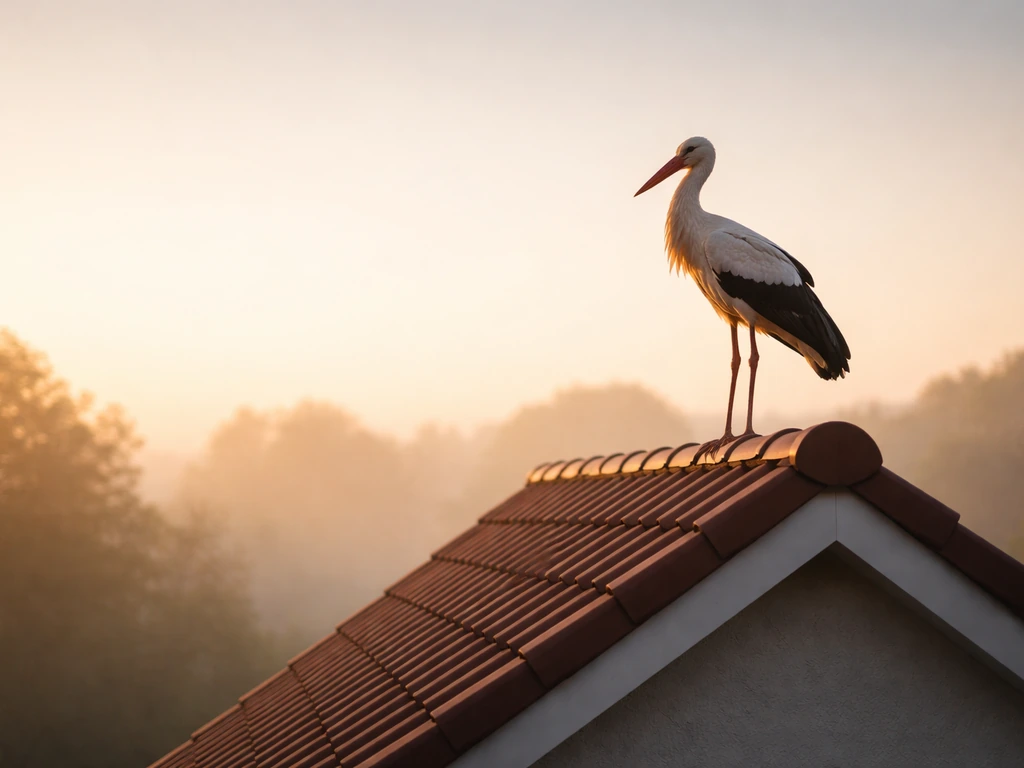
- A bird nesting near or on your home: In many European folk traditions, a blackbird making a nest on your house is an explicit sign of good luck. White storks nesting on rooftops were so strongly associated with prosperity and fertility in Germany, the Netherlands, and Poland that families actively encouraged them to build there.
- A bird singing persistently near you: An unexpected, sustained song directed toward you or your home has been treated as a blessing or an announcement of good news arriving. Robins especially carry this reputation in Celtic and British folk traditions.
- A bird appearing repeatedly over several days: When the same species keeps showing up around you, it's less likely to be dismissed as coincidence and more likely to register as a message. Repetition is how many traditions signal that the universe is trying to get your attention.
- A bird pooping on you: Yes, really. This one is genuinely documented across multiple cultures, including in compiled bird superstition records, as a sign of incoming good luck and financial fortune. It's the universe's most inconvenient gift, but the tradition is consistent enough to be worth knowing.
Beyond visual sightings, the timing matters too. A bird appearing just after you've asked a question, made a decision, or set an intention tends to feel more charged with meaning, and across traditions, that timing is exactly when people pay closest attention. Trust that instinct. If a bird encounter stopped you in your tracks today, the feeling itself is data worth exploring.
Good-luck birds vs. tricky ones: how species changes everything
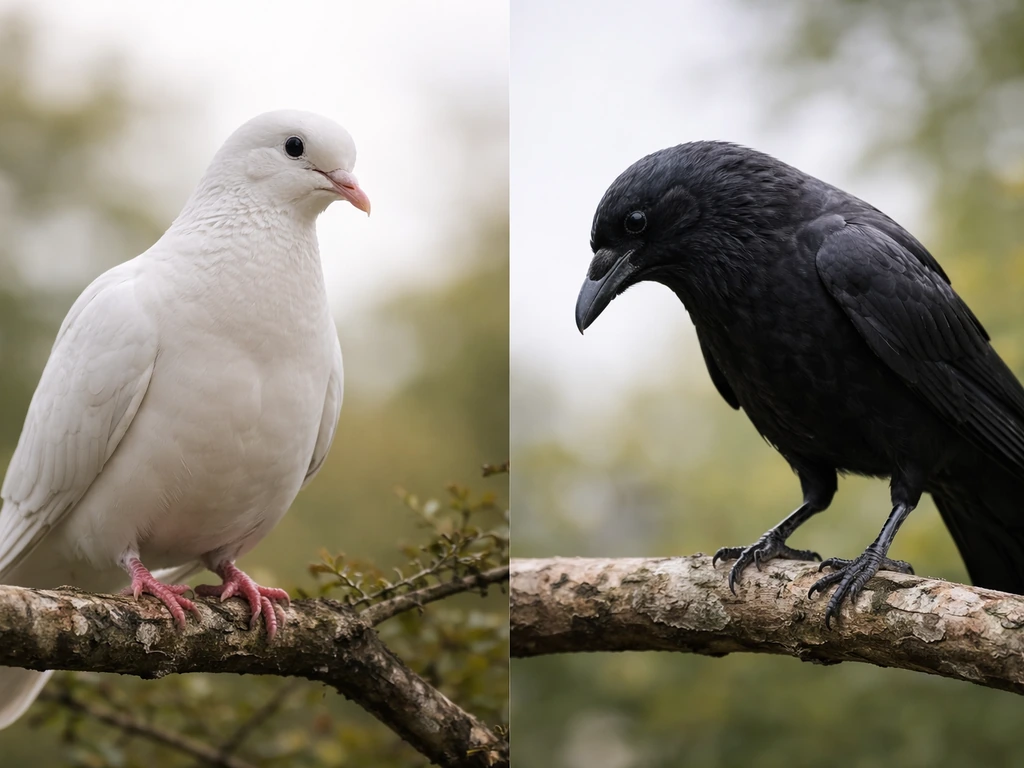
Not every bird carries the same reputation, and this is where a lot of people get confused. The species you saw matters enormously. Here's a clear comparison of commonly encountered birds and how their traditional symbolism breaks down:
| Bird | General Symbolic Reputation | Key Tradition or Note |
|---|---|---|
| Robin | Good luck, new beginnings, hope | Celtic and British folklore; red breast associated with blessing |
| White Stork | Prosperity, fertility, good fortune | German, Dutch, and Polish traditions actively encouraged nesting for luck |
| Swallow | Safe return, loyalty, good luck at sea | Sailors' tradition; nesting near home seen as protective |
| Bluebird | Happiness, fulfilled wishes, positivity | North American and Native American traditions |
| Dove | Peace, love, divine blessing | Widespread; Christian, Greek, and general Western tradition |
| Cardinal | Messages from loved ones who have passed, good luck | Strong in North American folk and spiritual traditions |
| Magpie | Ambiguous; one = sorrow, two = joy | British counting rhyme; traditionally one magpie alone is negative |
| Owl | Often treated as a death omen or bad luck signal | Widespread historical association; framed as a myth by modern wildlife orgs but culturally persistent |
| Crow / Raven | Mixed; intelligence, transformation, sometimes death | Context-dependent; one crow negative in some traditions, groups of crows mean different things |
| Kestrel | Vigilance, patience, spiritual clarity | Less commonly tied to luck per se; more about focused attention and timing |
| Starling | Community, communication, collective movement | Murmurations especially are read as signs of harmony and flow |
| Black Starling | Mystery, shadow work, deep transformation | Less universally positive; associated with threshold crossings |
The most practical takeaway here is that if you saw a robin, swallow, dove, or bluebird today, the traditional reading is almost always positive. If you saw a magpie alone or an owl, the older traditions lean cautionary, but the modern and spiritual-community view is more nuanced: owls, for example, are increasingly read as wisdom figures rather than death omens, and even the magpie's solo appearance invites you to look for its pair or to salute it (which is itself a kind of ritual acknowledgment). What you do with the sign matters as much as what the sign is.
Reading bird behavior: what they're doing is as important as what they are
Species is one lens. Behavior is the other, and it's often the one people forget to look at. The same bird can mean very different things depending on what it was doing when you noticed it.
Window tapping
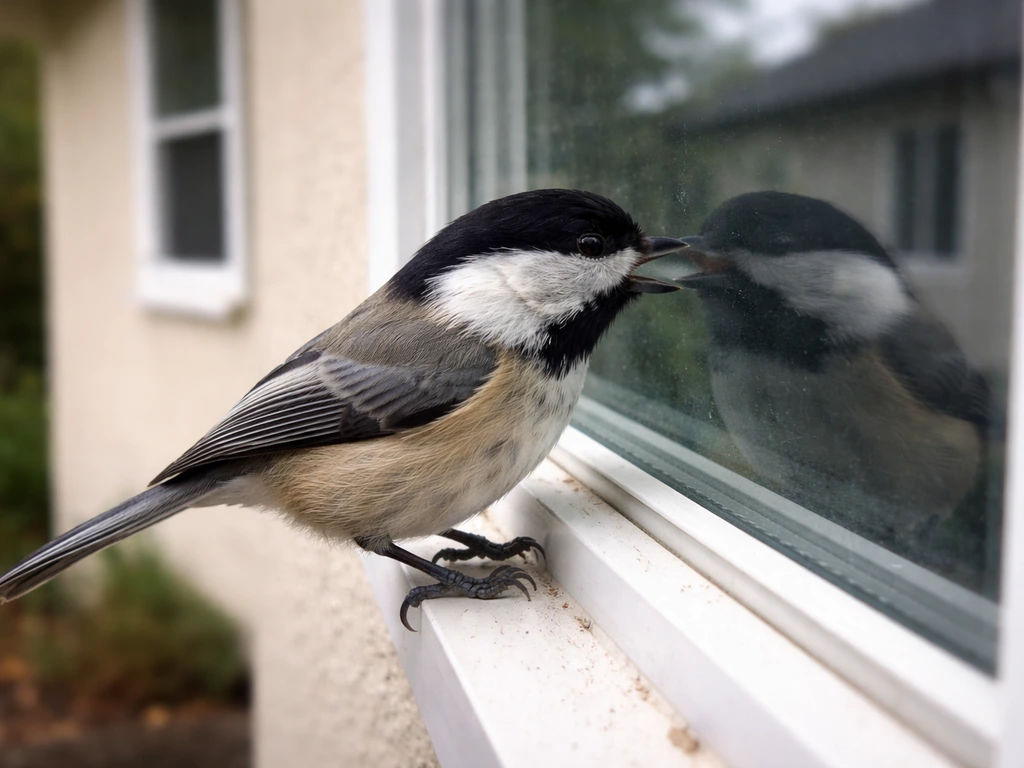
A bird tapping on a window has a very straightforward physical explanation in most cases: the bird sees its reflection and is responding to what looks like a rival, or it's attracted to something on the glass. That's worth knowing so you don't spiral. But the spiritual interpretation, consistent across many folk traditions, is that window tapping is a message seeking entry, sometimes read as contact from a departed loved one, sometimes as an alert to pay attention to something you've been ignoring. Older superstition books explicitly link birds hitting or tapping on glass to portents and messages. If the tapping keeps happening, or if it started at a particularly charged moment in your life, that's when the symbolic layer becomes worth sitting with.
Nesting near your home
A bird choosing to build a nest on or very near your house is one of the oldest good-luck signs in the book, and it's one of the most culturally consistent ones. Polish ethnobiological research documented that people broadly believe a stork's nest signals good luck, happiness, and even a mark of a good homeowner's character. In many traditions, the stork is also tied to spiritual meaning beyond good luck, including themes of renewal, protection, and guidance stork spiritual meaning. If you want a deeper read of a specific species, exploring the starling bird spiritual meaning can help you connect what you noticed to the message you are ready to receive. The blackbird nesting tradition says the same. A nesting bird is choosing to trust you with something precious. That's the symbolic core, and it's hard to read it as anything other than positive. In particular, when people notice a black starling bird in the same context, they often treat it as a sign tied to spiritual insight and meaningful change black starling bird spiritual meaning.
Circling overhead
A bird circling you can mean very different things depending on species. Hawks and eagles circling are often read as signs of a broader perspective available to you, a nudge to look at your situation from above rather than from inside it. For many people, a kestrel bird spiritual meaning centers on focus, protection, and seeing the next step clearly. Vultures circling, on the other hand, carry heavier associations with endings, releasing what no longer serves, and clearing space. Circling in general tends to suggest a message in motion, something revolving around you that wants your attention, not necessarily something threatening.
Following or repeatedly appearing to you
When a bird seems to follow you, appearing at your car, then your door, then your window, or when you keep seeing the same species everywhere for a week, the traditional read is that you have a spirit messenger or totem animal making contact. This is where the spirit guide concept in Native American traditions becomes relevant: the bird isn't just a bird at that point; it's a sustained communication. Pay attention to what was on your mind the first time it appeared.
Dead birds and droppings: what to actually make of them
These two scenarios consistently come up in bird-superstition searches, and they deserve a direct, honest treatment rather than being glossed over.
Finding a dead bird
Finding a dead bird is jarring, and older superstitions often frame it as a death omen or warning. But across many contemporary spiritual traditions, a dead bird is read differently: as a symbol of a cycle ending, a transformation beginning, or something in your life completing itself so something new can grow. Death in symbolism almost never means literal death; it means change. If you found a dead bird today, the more useful question isn't "what's going to go wrong?" but "what has been ending in my life lately, and is that actually a release rather than a loss?"
That said, there is a real health consideration here that has nothing to do with symbolism. Do not handle a dead bird with bare hands. If you need to move it, use gloves or an inverted plastic bag, place it in a sealed bag, and wash your hands thoroughly with soap and water afterward. Wild birds can carry diseases including avian influenza, and the CDC specifically recommends avoiding direct contact and washing hands after any exposure. You can honor the spiritual meaning of finding the bird without touching it.
Bird droppings

Bird droppings landing on you are, somewhat charmingly, one of the most consistently documented good-luck signs across cultures. Multiple tradition compilations, including records compiled by naturalist organizations, confirm the "bird poop equals good luck" superstition. Audubon’s California “13 Bird Superstitions” explicitly links specific bird behaviors to luck outcomes, including examples like bird poop as good luck and magpies as bad luck. The logic in older traditions tends to be that the improbability of it happening singles you out for fortune. The practical follow-up: wash it off, obviously, since bird droppings can carry bacteria and contaminants, and the CDC advises washing hands and avoiding contact with bird feces. But do it with a grin, because if the old traditions are right, something good is heading your way.
What to actually do today: rituals, journaling, and next steps
The best bird-encounter response isn't passive. Here are practical steps you can take today to engage with the message you received, regardless of whether it felt positive or ambiguous.
- Write it down immediately. Date it, note the species if you know it, describe the behavior, and record what you were thinking about or doing at the moment. This is your raw data. Patterns across entries are often where real insight lives.
- Ask a question and sit with it. Bird encounters in most traditions are invitations, not pronouncements. Ask yourself: "If this bird is a messenger, what question do I most need answered right now?" Then write that question down and see what comes up over the next few days.
- Acknowledge the encounter with gratitude. This doesn't need to be elaborate. A simple pause, a breath, a quiet "thank you" directed at the bird and whatever it might represent is enough. Gratitude practices, even brief ones, shift the interpretive frame from anxiety to receptivity.
- Look up the specific species. Use this site and other symbolic resources to go deeper on the bird you saw. A kestrel, a starling, a white stork, a robin: each carries its own particular tradition, and the species-specific meaning often adds clarity that general "good luck bird" searches don't.
- Handle any practical health steps first. If you touched a dead bird or got droppings on you, wash your hands with soap and water before anything else. If you had direct unprotected contact with a sick or dead wild bird, the CDC recommends contacting your local health authority. Get the practical piece sorted, then return to the spiritual reflection.
- Watch for follow-up signs over the next week. Bird symbolism traditions often work in repetition. Notice whether the same species, or a connected one, appears again. Keep adding to your journal entry.
If you feel drawn to a more ritual-based response, you can also light a candle in the color associated with what you're hoping for (white for clarity, green for abundance, yellow for joy), sit quietly, and let the image of the bird come to mind. Ask it what it came to tell you. You don't have to believe literally in bird messengers for this to be a useful reflective practice. It's a way of giving your intuition a structured space to surface what it already knows.
What to do when the meanings conflict, or your gut says something different
Here's something worth saying plainly: bird symbolism traditions don't all agree, and that's fine. An owl is a death omen in one tradition and a wisdom teacher in another. A crow is bad news in one region and a clever guide in another. White storks carry good luck in European tradition but have some shadow-side folklore attached too. You will often find conflicting readings for the same bird, and that's not a flaw in the system; it's the nature of symbolism.
The practical tool for navigating this is your own response. When you read one meaning and feel a sense of recognition, a kind of quiet "yes," that's your intuition flagging relevance. When a meaning feels forced or fear-driven, especially if you're starting to catastrophize (thinking one bird sighting predicts disaster), that's worth pausing on. The tendency to search for blank" rel="noopener noreferrer">confirming evidence once we've latched onto a scary interpretation is well-documented in how human cognition works. If you notice yourself building a case for doom from one bird encounter, gently redirect: what's the most useful interpretation here? What meaning would actually help you act wisely right now?
Personal intuition is not a lesser source of meaning than tradition. It's the tradition you're living. If a bird that most books label as negative felt peaceful and hopeful when you saw it, trust that. The best bird symbolism practitioners, whether they're working from Native American, Celtic, or any other framework, consistently say the same thing: the inner response to the encounter is part of the message. Your job is to notice both the outer sign and your inner reaction, and let the two speak to each other.
Finally, it helps to remember that a single bird sighting doesn't rewrite your life. It's an invitation to pay attention, not a verdict. Approach your bird encounters with curiosity rather than urgency, and you'll find that over time, your own personal library of bird meanings, built from repeated encounters and honest journaling, becomes more useful to you than any external reference. That's exactly how these traditions grew in the first place.
FAQ
If I see a “negative” bird for good luck purposes, how do I decide what to do with it?
Not always. A lot of traditions treat “good luck” as a cue to adjust your next choices, not a promise that nothing bad will happen. If the encounter felt hopeful, focus on the action you can take in the next 24 hours (send the message you’ve been avoiding, double check plans, start the routine you keep postponing). If it felt ominous, translate it into a “review” step rather than a catastrophe.
How can I avoid overreacting when a bird superstition triggers anxiety?
Be careful with “single sign certainty.” If you keep getting fear after a sighting, look for behavioral overlap instead of repeating the same interpretation (for example, did the bird keep repeating a behavior like circling, calling, or showing up near a specific place). Then choose one grounded step, like making a small change to your schedule or environment, rather than trying to forecast events.
My bird kept tapping on the window. Is it always a bad omen, or should I treat it as a problem to solve?
Yes. Window tapping is often explained by reflections, but if it happens repeatedly on the same side of the house, at the same time of day, consider practical bird-safe fixes (move decorations away from the glass, add a light-pattern decal or screen, and close curtains during peak hours). This lets you respond responsibly while still reflecting on what the moment meant emotionally.
What if the same bird shows up near my door or car repeatedly?
If a bird returns in the same spot over days, the practical read is likely territory and shelter seeking. Symbolically, traditions may treat it as a “persistent message,” so pair that with a real check: are you ignoring something repeatedly (a decision, a broken habit, a boundary issue)? Jot down what you were thinking about each time it appeared, because that first-thought link is usually the most helpful.
Do direction and location of the bird actually matter, and how should I apply them?
A common “rule” is that location and direction matter, but it should be treated as a reflection tool, not a prediction tool. For example, if it approached from where you park (your daily starting point), you might focus on a fresh plan for routines. If it happened near where you rest (bedroom area), focus on mental clarity and rest boundaries. Use the setting to decide the next practical step.
I found a dead bird, can I follow the superstition but still do it safely?
To honor the symbolic meaning without risking your health, do not handle it. If cleanup is needed, use gloves or an inverted plastic bag, place it in a sealed bag, and wash hands thoroughly. Also avoid touching your face while cleaning. If you see multiple birds or unusual disease signs, contact local wildlife or animal control rather than managing it yourself.
Bird poop landed on me, what’s the best way to respond without being grossed out or unsafe?
If droppings land on you, treat it as a prompt to reset, not a sign of contamination. Wash the area with soap and water (and clean glasses or jewelry right away if they were affected). Then do a small “luck” action, like making a simple intention for the day (one call, one appointment, one task you’ve avoided).
What should I journal about so bird superstitions become useful instead of confusing?
Yes, keep the symbolism grounded by noting two data points each time: the species (or best guess) and the behavior (tapping, nesting, circling, following). Then write what you felt in the first minute. Over time, patterns in your notes become your personal “library,” which tends to be more accurate for you than any one traditional label.
How do I interpret a bird encounter when I cannot tell what it’s “about”?
Look for a tie between the bird’s behavior and your current “decision loop.” Circling can suggest something is repeating or needing a new perspective, following can suggest ongoing attention, and nesting can suggest something wants protection or commitment. If you cannot link it to any real situation, treat it as a reminder to pay attention generally, not a message with a specific forecast.
How should I handle conflicting traditions that say opposite things about the same bird?
General advice: keep a healthy skepticism. If a tradition’s interpretation makes you feel forced or fear-driven, pause and switch to a “what’s actionable now?” lens. Also compare with reality-based explanations when plausible (reflection, food availability, migration routes). You can still use the encounter for reflection without treating it as literal evidence of what will happen next.
Next Article
White Stork Bird Spiritual Meaning: New Beginnings Guide
Interpret white stork spiritual meaning for new beginnings, renewal, protection, and family signs using a practical chec