When a macaw crosses your path, whether in person, in a dream, or through a feather you stumble across, it is rarely a quiet moment. These birds are bold, brilliantly colored, and loud in every sense of the word. Spiritually, that is exactly the point. The macaw most commonly carries a message about vibrant self-expression, personal freedom, authentic communication, and the kind of life force that refuses to be dimmed. If you are trying to figure out what your macaw encounter meant and what to do next, you are in the right place. Let's work through it step by step.
Macaw Bird Spiritual Meaning: What to Do After Seeing One

Eliza Thornwick
24 Mar 2026
Why macaws show up in spiritual readings
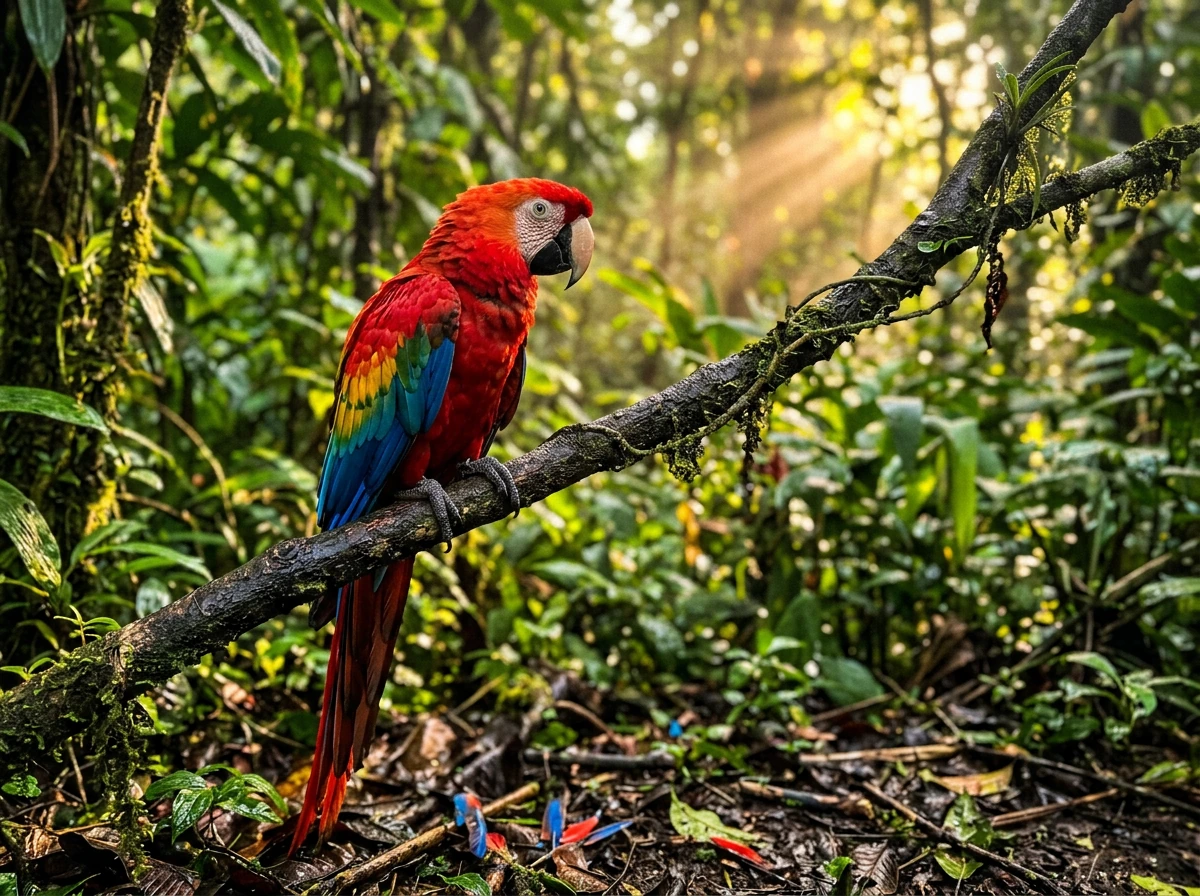
Macaws have been spiritually significant for a very long time. In Mesoamerican and Andean traditions, macaw feathers appeared in ceremonial headdresses and regalia used by multiple South American groups, treating the feathers as sacred rather than merely decorative. In shamanic frameworks tied to the Casas Grandes region, macaws appear in depictions associated with guidance and what scholars describe as 'soul flight,' a kind of tutelary-bird dynamic where the bird acts as a spiritual companion or guide. That is not a small cultural footnote. It means humans have been reading macaws as spiritually charged for centuries.
In contemporary spiritual frameworks, the macaw shows up in readings, meditations, and sign interpretations when someone is being called toward a more authentic version of themselves. Think of it this way: the macaw does not hide. It is one of the most visually striking birds in the world, it speaks loudly, and it bonds deeply. When the macaw appears as a sign or symbol, it is often because the universe is asking you to do the same things: stop hiding, speak up, and connect genuinely. That is the core energy behind the macaw's spiritual reputation.
Common macaw spiritual meanings
There are a handful of themes that come up again and again across modern esoteric traditions, animal spirit guides, and cultural symbolism when the macaw is involved. Here is what they typically mean in practice.
Love and loyalty
Macaws are strongly social birds that form and maintain monogamous pair bonds. In the wild, a bonded macaw pair stays together for years, often for life. Spiritually, this behavior maps directly onto themes of devoted partnership, loyalty, and the kind of love that shows up consistently rather than disappearing when things get inconvenient. If the macaw is appearing as a symbol in a relational context for you, that loyalty theme is almost certainly part of the message.
Freedom and agency
The macaw in its natural habitat flies long distances, moves through open jungle canopies, and belongs to no one. Many spiritual traditions interpret macaw energy as a reminder that you have more agency than you are currently claiming. If you have been feeling trapped, stuck, or like you do not belong where you are, a macaw encounter can be a nudge to ask honestly: what is keeping me here, and is it actually real?
Communication and personal truth
Macaws are extraordinarily vocal. Military macaws, for instance, are known for raucous, far-carrying calls that cut right through the noise. Spiritually, this is interpreted as a prompt to use your voice, speak your truth, and stop softening yourself for other people's comfort. The scarlet macaw in particular is often described in spiritual circles as a 'wake up, speak truth, embody vibrant authenticity' symbol, see also bharadwaj bird spiritual meaning for related guidance. If you have been holding something back, the macaw is not a subtle sign.
Personal power and vibrant life force
The macaw's colors are not accidental in a spiritual sense. Across traditions, that kind of visual boldness gets read as an expression of vitality and power. The macaw symbolizes a life lived at full saturation, not washed out or muted to please others. If you encounter a macaw when you are going through a gray or depleted period, the spiritual reading is often: your full life force is available to you; you just need to reclaim it.
What your specific encounter type likely means
The type of macaw encounter shapes the message significantly. Here is how to interpret the most common scenarios.
Simply seeing a macaw
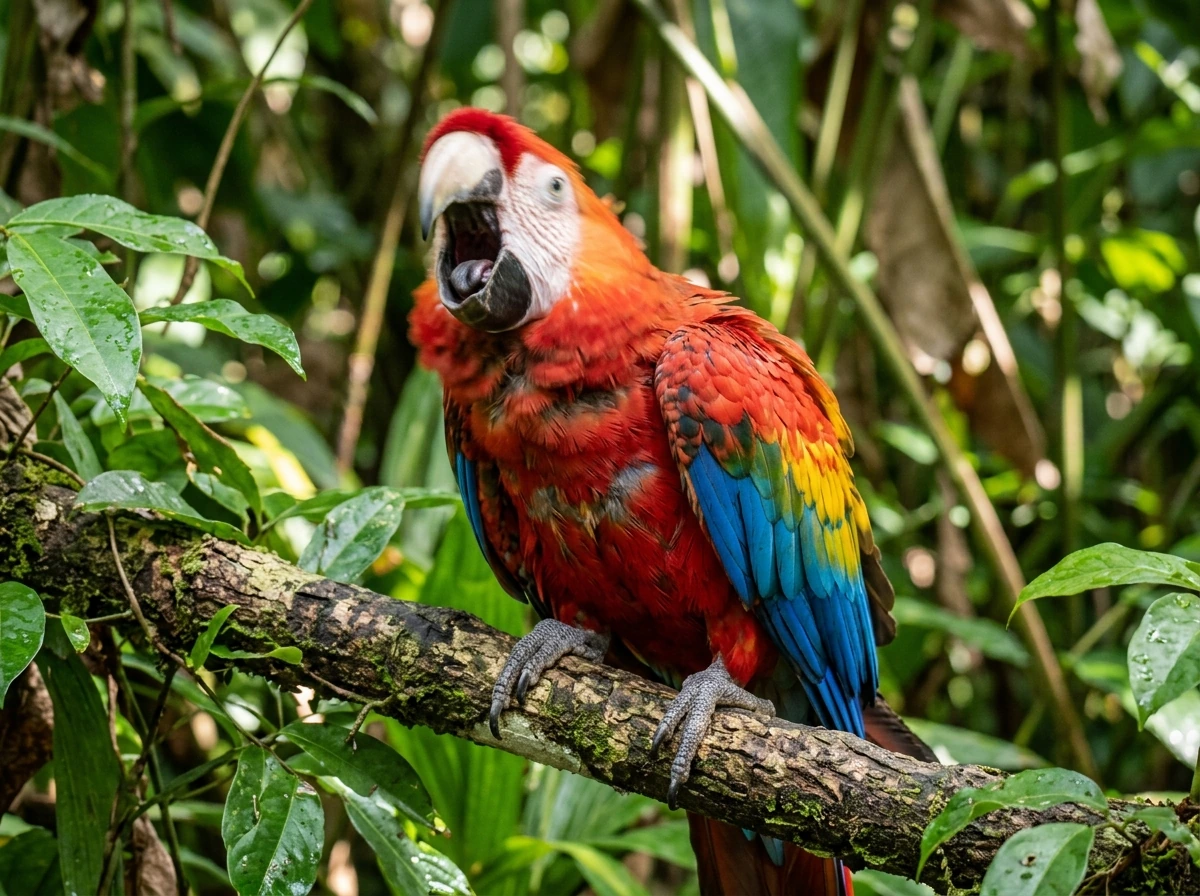
A single sighting, especially if it stops you in your tracks or feels oddly meaningful, is often a straightforward nudge toward the core macaw themes: expression, freedom, and vitality. Pay attention to what you were thinking about just before you noticed the bird. That mental thread is usually where the message plugs in. If you were mid-thought about a career choice, a relationship, or something you have been afraid to say, the macaw is almost certainly commenting on that.
Hearing a macaw (without seeing it)
A macaw's call reaching you before you see the bird is a particularly strong communication-themed sign. The voice arriving first, before the visual, suggests that the message is specifically about what needs to be said or heard. This is a prompt to review what conversations you have been avoiding, what truths you have been swallowing, or what feedback from others you have been refusing to take in.
A macaw landing near you or on you
This is the encounter people write to me about most often because it feels so personal and immediate. A macaw choosing to land on or near a specific person is rare enough in the wild that it carries real weight spiritually. This is typically read as direct contact from your spiritual guides or higher self, a personal message rather than a general nudge. The themes of partnership and bonding come forward here, because a macaw choosing you echoes its natural behavior of choosing a lifelong mate. Ask yourself: what or who in your life deserves that kind of dedicated attention right now?
A macaw following you or repeatedly appearing
Repeated sightings of the same bird, or noticing macaw imagery, references, and encounters in clusters across a short period of time, is the universe turning up the volume on a message you may have missed the first time. The macaw does not give up easily. When it keeps showing up, the spiritual invitation is to stop brushing it off and actually sit with what it is asking you to pay attention to.
Finding a macaw feather
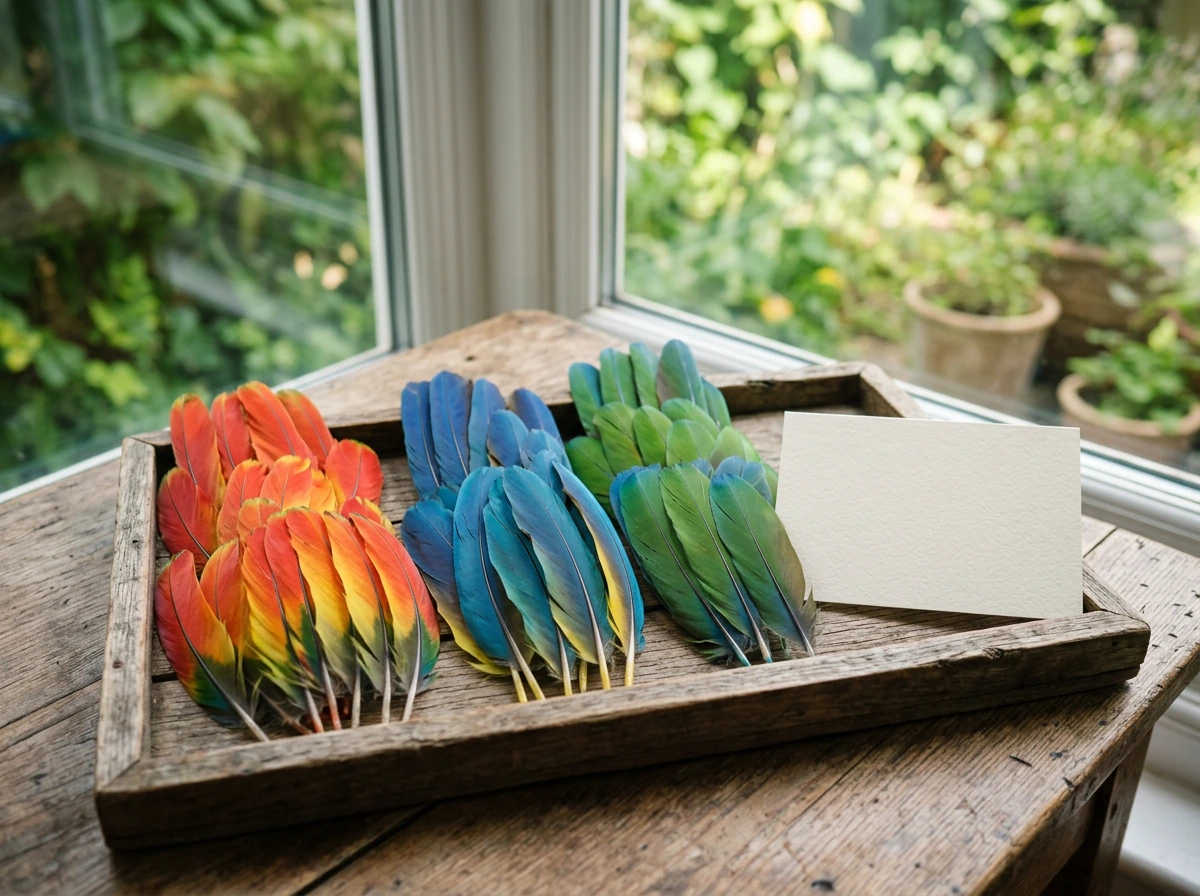
Feather encounters carry their own layer of meaning across many traditions. In angel-sign frameworks and broader metaphysical practices, finding a feather is widely understood as a marker of divine presence or a message from guides or ancestors. Finding a macaw feather specifically layers that general 'you are being watched over' reassurance with the macaw's own themes: you are being supported in your self-expression, your truth-speaking, and your desire for a freer, more authentic life.
What the color of the macaw is telling you
Because macaws come in dramatically different colors depending on the species, and because color carries its own symbolic weight across virtually every spiritual tradition, the color of the macaw in your encounter or dream can refine and focus the message considerably.
| Macaw Color | Primary Spiritual Themes | Practical Focus |
|---|---|---|
| Red (Scarlet Macaw) | Passion, courage, vital energy, action | What needs bold decisive action in your life right now? |
| Blue (Blue-and-Gold, Hyacinth) | Clarity, truth, spiritual depth, calm power | What do you need to say clearly, or understand more deeply? |
| Green (Military, Buffon's) | Growth, healing, heart, abundance | Where do you need healing or new growth to begin? |
| Yellow (Blue-and-Gold secondary) | Joy, optimism, mental clarity, creativity | What joy or creative project have you been postponing? |
| Multi-colored | Full spectrum of self-expression, integration | Are you allowing yourself to be fully, wholly seen? |
In dream encounters especially, the dominant color tends to be the one the message hinges on. A scarlet macaw in a dream during a period of indecision is leaning heavily on the courage and action theme. A blue macaw appearing when you are navigating a difficult conversation is pointing directly at the need for calm, clear communication. If the bird in your dream was vividly multi-colored and you woke up feeling expansive rather than anxious, that is often the 'vibrant life force, you are allowed to be all of this' message in its purest form.
Reading macaw behavior as part of the message
What the macaw is doing when you encounter it matters just as much as the encounter itself. Behavior adds a layer of specificity that pure symbolism cannot.
Mating or bonded pair behavior
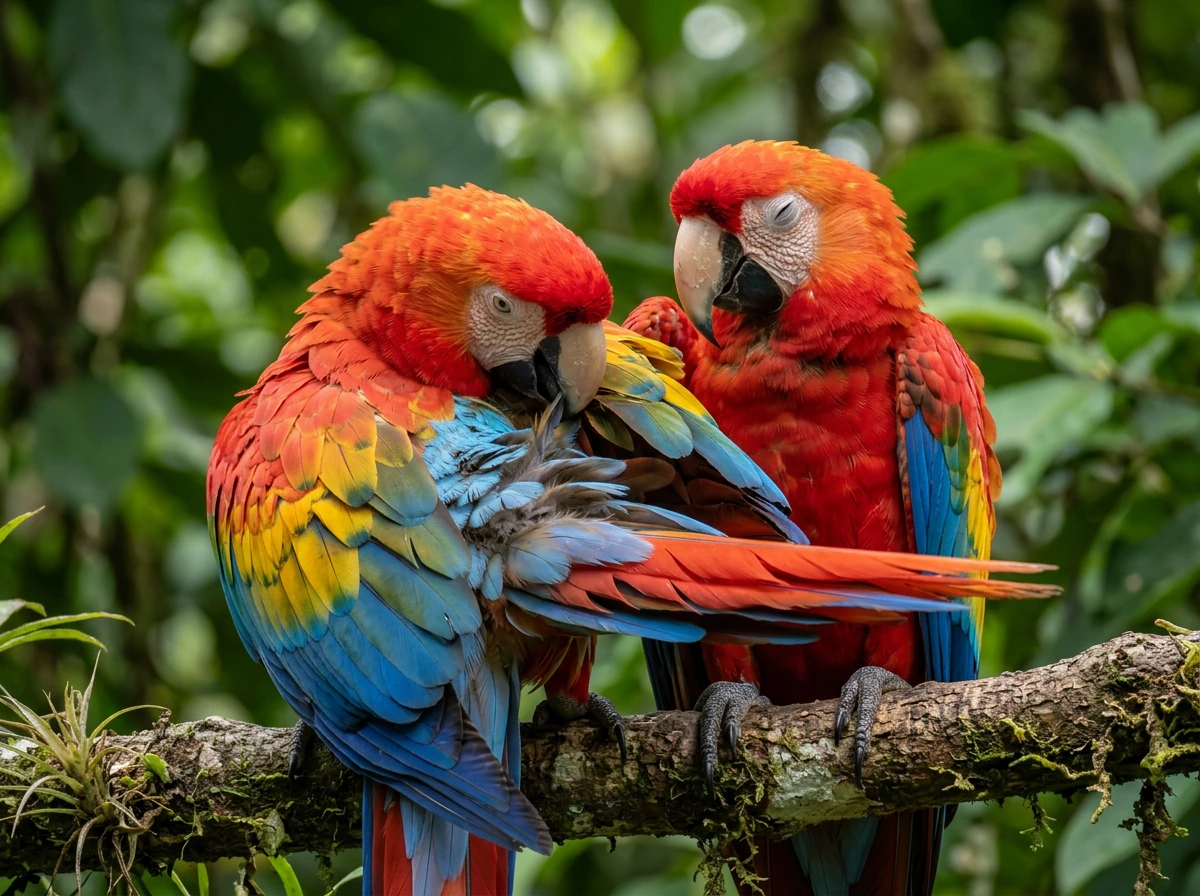
Watching a macaw pair interact, whether they are preening each other, flying in tandem, or calling back and forth, is a strong relational mirror. Spiritually, witnessing that kind of bond is often a prompt to examine your own relationships: where is the loyalty? Where is the reciprocity? Where have you been giving without receiving, or receiving without genuinely showing up? A bonded macaw pair is, in a sense, a living demonstration of what devoted partnership looks like.
Loud calling or vocalizing
If the macaw you encounter is loud, calling insistently, or seems to be directing its voice toward you, lean into the communication interpretation hard. This is not a gentle whisper. The macaw's call cuts through everything around it, and spiritually, that energy means the message has some urgency. Something needs to be said, started, or acknowledged and the macaw is making sure you know it.
Flock energy
Macaws in groups are extraordinarily social, noisy, and engaged with each other. Encountering a flock shifts the message from personal to communal. This is a prompt to look at your tribe, your community, your sense of belonging. Are you genuinely connected to people who see and celebrate you? Or have you been isolating in ways that are quietly costing you? Flock energy in macaw symbolism is about social alignment: finding your people and showing up for them.
Curiosity directed at you
A macaw that tilts its head, watches you intently, or seems specifically interested in you is one of the more striking encounters you can have. This behavior, which is genuinely common in macaws because they are highly intelligent and observant birds, carries a spiritual invitation: pay closer attention. Something you have been glossing over deserves a longer, more honest look. The macaw's curiosity is a mirror for your own.
What to actually do after a macaw encounter

The moment right after a spiritually significant encounter is when most people either make the most of the experience or lose it entirely by moving on too quickly. Here is a simple, practical sequence that works regardless of your spiritual background.
Ground yourself first
Before you try to interpret anything, bring yourself back into your body. This matters because spiritual encounters, even joyful ones, can leave you feeling floaty or disoriented. A simple grounding exercise: name one thing you can see, one thing you can hear, and one thing you can physically feel right now. That is it. That small sensory check-in reconnects you to the present moment and makes the reflection that follows much clearer. If the encounter triggered something more intense, like anxiety or panic, add a hand on your chest or stomach and just breathe there for a minute before moving forward.
Journal what happened while it is fresh

Write down the encounter in as much detail as you can: when, where, what the macaw was doing, what color it was, what you were thinking about just before you noticed it, and how you felt in your body during the encounter. Do not edit yourself or try to interpret yet. Just capture it. Then, separately, write the answers to these three questions: What was I thinking about or dealing with when this happened? What has been left unsaid or unexpressed in my life lately? Where do I feel most restricted or most free right now? The answers will almost always map directly onto the macaw's message.
Choose an intention
Once you have journaled, pick one specific thing the macaw's message is calling you toward. Keep it concrete and actionable. 'I intend to have that honest conversation with my partner this week' is more useful than 'I intend to be more authentic.' Tie the intention to the specific macaw theme that resonated: freedom, communication, partnership, or vitality. Write it down and put it somewhere visible.
Simple rituals to honor the encounter

You do not need an elaborate ceremony to work with macaw energy. A few approaches that people find genuinely useful: Light a candle in a color that matches the macaw you encountered (red for courage/action, blue for clarity, green for healing) and sit with your intention for a few minutes. Write an affirmation that reflects the macaw's message and say it aloud, because speaking it matters with macaw energy specifically. If you found a feather, place it somewhere meaningful, on an altar, a windowsill, or your desk, as a physical anchor for the message. You can also close a quiet meditation by expressing gratitude for the encounter, which in many traditions is understood to keep the channel between you and spiritual guidance open.
A few things worth keeping in mind
Symbolism is interpretive, not predictive. A macaw encounter is not a guarantee that your relationship will thrive, that a specific decision is right, or that something dramatic is about to happen. It is an invitation to reflect, not a prophecy to obey. Different cultural traditions read macaw symbolism differently, and your own intuition about what felt significant in the moment is legitimate data. If something about the encounter resonated strongly with you, that resonance is meaningful. If a particular interpretation feels forced or wrong, set it aside.
Cultural context matters too. The macaw's significance in Mesoamerican and Andean traditions is rooted in those specific cosmologies and ceremonial practices, and borrowing those meanings requires some humility and awareness. Many contemporary spiritual frameworks blend these traditions loosely, which can be enriching, but it is worth knowing that you are working with an interpretation rather than a fixed universal truth. Other brightly colored, vocal birds like the blue jay or various jay species carry overlapping but distinct energies in different traditions, so if you find yourself drawn to the communication and voice themes, exploring those sibling symbols can deepen your understanding. To understand the spiritual meaning of jay bird more fully, it helps to look at how jay symbolism is interpreted for communication, clarity, and intuition blue jay. If you are curious about that specific jay symbolism, explore the blue jay bird spiritual meaning for themes that connect to communication, clarity, and intuition. blue jay bird spiritual meaning. red jay bird spiritual meaning. steller's jay bird spiritual meaning
One genuinely important caution: if your macaw encounter, or any spiritual sign encounter, triggered significant anxiety, fear, or intrusive thoughts, please do not try to journal your way through it alone. That kind of response is not a spiritual failure; it is a signal that your nervous system needs support first. Talk to someone you trust, or reach out to a mental health professional before going deeper into the spiritual interpretation. Grounding exercises help, but they are not a substitute for real support when the distress is real.
The macaw showed up bold, colorful, and loud for a reason. The invitation is to meet that energy with the same willingness to be seen and heard. What you do with that invitation is, as always, entirely up to you.
FAQ
How long should I wait to interpret the macaw bird spiritual meaning, and what if I forget details later?
Interpret right after grounding and journaling while the sensations are fresh, ideally within the same day. If you need more time, set a 10 minute timer and record only the essentials first (color, behavior, your exact thoughts before noticing it). You can fill in the rest later, but the “what I was thinking” thread is the part most likely to get lost.
What if I saw a macaw, but I felt nothing special or it felt random?
That is still information. If you felt neutral, the message may be about noticing without forcing meaning. Try asking, “What in my life is asking for attention, even if it does not feel dramatic?” Use one small action tied to expression or communication, then reassess after a week.
Can a macaw spiritual message be “warning” instead of encouragement?
Yes, sometimes the spiritual tone is about accountability rather than comfort, especially when the encounter was urgent, repeated, or accompanied by intrusive thoughts or strong resistance. In those cases, the practical move is to identify one honest conversation or boundary you have delayed, rather than trying to predict danger.
Does the macaw bird spiritual meaning change if the bird was injured, deceased, or acting unusually?
Unusual behavior can point to an “urgent attention” theme, but it can also be a real-world signal (illness, habitat stress). If you encounter a downed or injured bird, prioritize safety and local wildlife guidance. If you do not handle the situation yourself, you can still do the reflection, but keep the interpretation separate from deciding what “must” happen next.
What should I do if the macaw visited me in a dream and I woke up anxious?
Do not chase symbolism immediately. First stabilize your nervous system with slow breathing and a body check (name sensations and temperature). Then journal two lines only: what emotion was strongest, and what situation in waking life matches that emotion. If the anxiety is persistent or escalates, seek support rather than relying on dream interpretation.
How do I work with the communication theme if speaking up would put me at risk?
The prompt is about truthful expression, but truth does not always mean confrontation. Choose the safest form of voice, like writing a message, asking for a meeting with structure, or sharing privately with one trusted person first. You can also practice “micro-expression,” such as stating needs clearly in one sentence.
If I find a macaw feather, should I keep it, cleanse it, or treat it like an omen?
You do not have to treat it as an absolute sign. A practical approach is to cleanse yourself (ground, breathe), then decide what intention you want the feather to hold for you. If you keep it, store it somewhere safe and meaningful, and set a time frame to reflect (for example, one month). Let the feather be a reminder for action, not an object that compels outcomes.
What if I keep seeing macaws repeatedly but my life feels stuck anyway?
Repetition usually means the “same lesson” has not been turned into behavior. After your journaling, pick one concrete step you can complete in 7 days that matches the theme (a decision, a boundary, a conversation, or a creative output). If you still do nothing, the pattern may be pushing avoidance rather than lack of opportunity.
How do I tell the difference between intuition and self-suggestion when interpreting a macaw encounter?
A useful test is specificity. Intuition tends to produce a clear, testable next action (who to talk to, what to start, what to stop). Self-suggestion often stays vague or inflates with fear-based possibilities. If your interpretation cannot be translated into one small step, pause and gather more facts from the encounter details.
Is it okay to connect macaw spiritual meaning to other birds like jays?
Yes, as long as you treat it as thematic exploration rather than merging fixed meanings. Compare what felt most relevant, for example voice and communication, and then choose one focus. If you find yourself bouncing between interpretations without acting, limit yourself to the macaw theme that was strongest in the moment.
What are signs that I should pause spiritual work and focus on support first?
If the encounter triggers panic, intrusive thoughts, sleep disruption, or compulsive “I must figure it out now” behavior, pause interpretation and seek help from someone you trust or a licensed mental health professional. Grounding supports healing, but it is not a substitute for care when distress is real and persistent.
Next Article
Bharadwaj Bird Spiritual Meaning: What It Could Signify
Bharadwaj bird spiritual meaning decoded: symbolism, encounter interpretations, and grounding steps for love, career, an