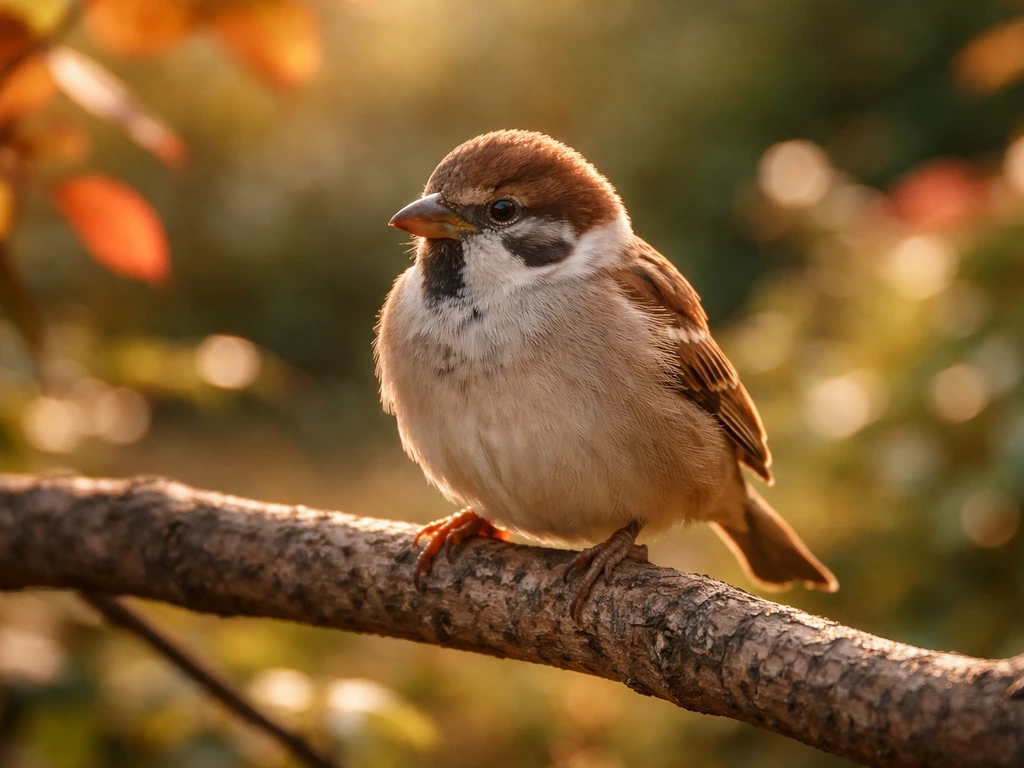
If a finch has caught your attention lately, here is the short answer: finches are almost universally read as messengers of joy, new beginnings, and lighthearted communication. But the specific meaning shifts depending on the type of finch, the color you saw, and exactly what it was doing when it crossed your path. Let me walk you through all of it so you can figure out what your particular encounter is pointing toward.
Finch Bird Spiritual Meaning: House and Red Finch Guide

Eliza Thornwick
11 Apr 2026
What the finch symbolizes spiritually
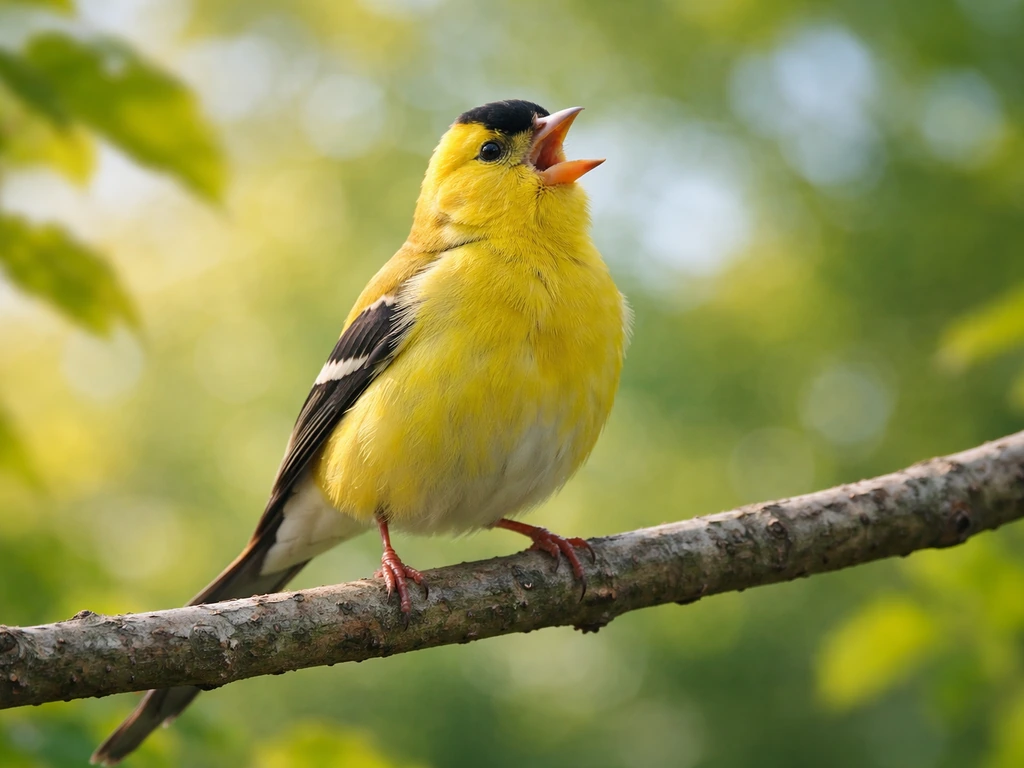
Across nearly every symbolic framework that mentions finches, three core themes keep showing up: happiness, renewal, and creative expression. The finch's lively, cascading song is a big part of why. When you hear that cheerful chatter, it is hard not to feel a small lift in your chest, and spiritual traditions have picked up on that quality for centuries. In Egyptian tradition, a finch appearing at sunrise near a new home or fresh start was read as a clear omen of joy. Some folklore compilations link the finch directly to new experiences and summer solstice energy, that turning-point feeling when something old is ending and something bright is beginning. Other traditions keep it even simpler: finch equals beginnings, full stop.
Freedom is another thread woven through finch symbolism. These birds move in small, social flocks, rarely staying in one place for long. Spiritually, that restless, communal energy is often interpreted as an invitation to loosen your grip on whatever feels stuck, to trust that movement is safe. If you have been sitting with a decision or feeling hemmed in, a finch showing up can be the universe's way of nudging you toward forward motion without pressure or urgency. Just cheerful, persistent encouragement.
Finches are also strongly associated with communication, which makes sense given how vocal they are. If the finch is your spirit guide or totem, many practitioners read this as a sign to speak up, express something you have been holding back, or simply pay more attention to the messages coming toward you right now.
House finch meaning and how it differs
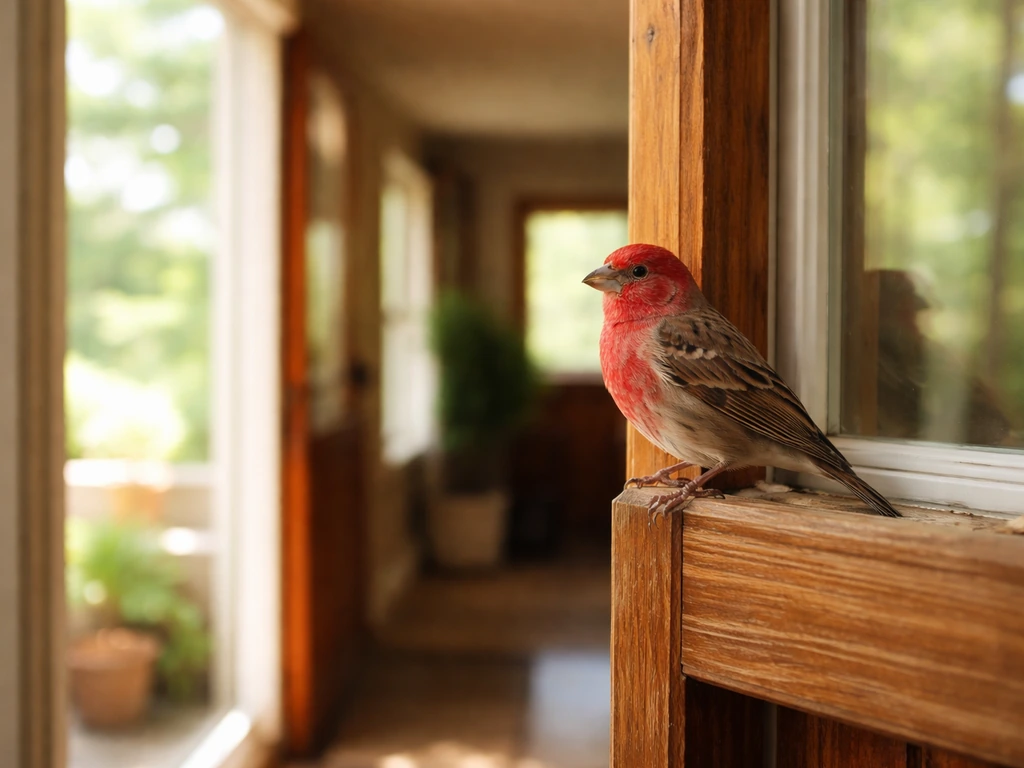
The house finch is where things get a little more personal. Unlike many wild birds that keep their distance, house finches actively choose to live near people. They nest on porch ledges, in hanging baskets, and along window frames, gathering grass stems, rootlets, twigs, and even bits of string and hair to build their homes right alongside ours. That intimacy is the first thing to notice spiritually: the house finch is not a distant messenger. It is choosing proximity to you.
Spiritually, house finches are often linked to emotional healing, divine communication, and trust. That last one is significant. Trust is not just about believing in a higher power; it also means trusting yourself, trusting the process, and trusting that you are being guided even when you cannot see the whole path. A house finch appearing in your immediate personal space, literally at your window or perched near your front door, is often read as a message to relax into trust rather than push against uncertainty.
House finches are also famously gregarious. Outside of breeding season, they are seldom alone, traveling in small social groups and joining other birds at feeders. So if you are seeing a house finch while navigating something isolating, that communal nature carries its own message: connection is available, and you do not have to carry this alone. The male house finch has a song that ends in a distinctive upward or downward slur, and during breeding season he performs an elaborate flight-song display, singing while fluttering up and then gliding down. That performance quality speaks to creative courage, the willingness to be fully seen and heard.
If you have been exploring what it means when smaller birds show up close to home, reading about sparrow bird spiritual meaning alongside this can be really illuminating, since sparrows carry overlapping themes of community and simplicity that complement finch energy beautifully.
Red finch meaning: when color adds another layer
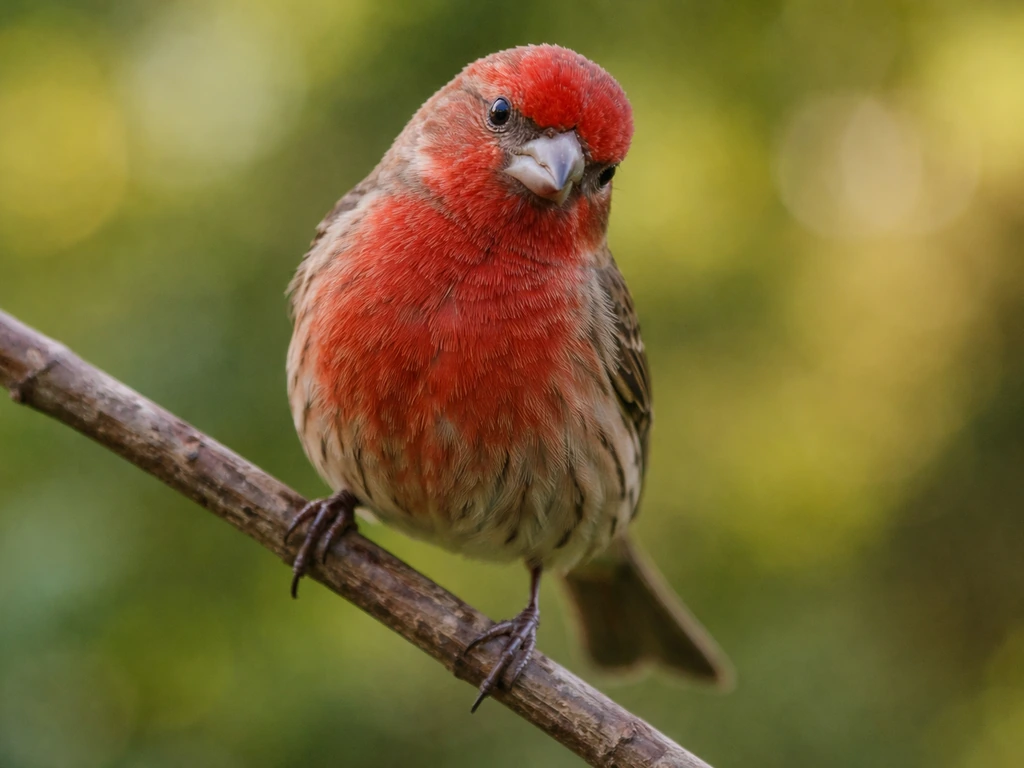
When the finch you encountered had red coloring, the baseline finch symbolism gets amplified by the spiritual weight of the color red itself. Red is one of the most energetically charged colors in almost every cultural tradition. It is associated with passion, courage, life-force energy, love, and intensity. Western surveys consistently link red with bravery and determination. In Chinese tradition, red signals good fortune and celebration. In many Indigenous frameworks, red connects to the south direction and themes of warmth, vitality, and healing.
Put that together with finch energy and you get a very specific message: whatever new beginning or joyful shift the finch is signaling, the red coloring says it carries heat and urgency. This is not a gentle nudge; it is a call to move with passion and courage. If you have been stalling on something you actually care about deeply, a red finch sighting is often interpreted as a direct push to stop waiting and act from the heart.
It is worth noting that in house finches, only the male carries the red coloring, and the intensity of that red varies based on diet and health. A particularly vivid red bird has historically been seen as a stronger, more urgent message than a pale or washed-out one. Pay attention to how vibrant the color was. That detail matters.
Red birds in general carry a rich symbolic tradition. If you want to explore that thread further beyond finches specifically, looking into flicker bird spiritual meaning is worth your time since the flicker, another colorful visitor, carries its own fire-and-transformation energy that often appears in similar contexts.
Common finch encounter scenarios and what they mean
Not every finch encounter looks the same, and the context matters a lot when you are trying to decode the message. Here is how to read the most common ones.
Repeatedly seeing finches
One sighting can be coincidence. Three or more sightings in a short window of time, especially if they feel notable or catch you off guard, is when most spiritual traditions say the message is worth sitting with. Repeated finch appearances are generally read as an amplified version of the core message: joy is available, a new chapter is forming, trust the direction you are heading. The repetition is the universe (or your higher self, or the divine, depending on your framework) saying: did you hear me the first time? Pay attention.
A finch landing on or very near you
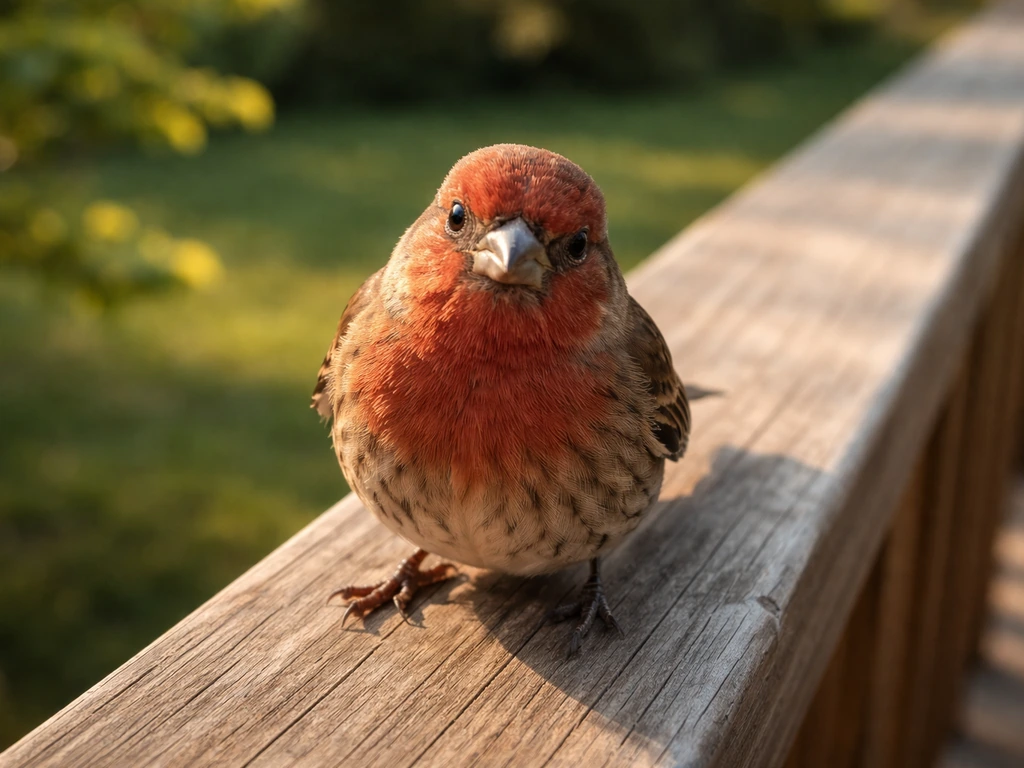
This is the most personal encounter possible and is almost always read as a high-significance sign. When a wild bird lands on you or comes within arm's reach without fleeing, it is breaking a fundamental instinct of self-preservation. Spiritually, this kind of unusual closeness is interpreted as direct contact, not a background symbol but a personal message meant specifically for you in this moment. The themes of trust and emotional healing that run through house finch symbolism feel especially relevant here. Think about what you were thinking or feeling in the seconds before it happened.
A finch tapping at or flying into your window
From a purely practical standpoint, birds tap windows or collide with glass because they see a reflection of sky, trees, or open space and mistake it for real. Cornell Lab also recommends reducing bird-window collisions by breaking up reflections, such as using window film, markers, or other treatments across the glass [birds tap windows or collide with glass because they see a reflection of sky, trees, or open space and mistake it for real. ](https://www. birds.
cornell. edu/home/seven-simple-actions-to-help-birds/). They may also peck at putty or hunt insects from webs near the glass. That does not mean the spiritual layer is absent, it just means you hold both pieces of information at once.
Spiritually, repeated window tapping is often read as a sign of impending change or transition, with persistence being the key indicator of meaning. One tap is probably a reflection issue. A bird that returns to the same window day after day is doing something worth noticing.
Ancient traditions framed birds as direct messengers from the divine, and a window, that threshold between inside and outside, between your private world and the larger world, carries its own symbolic weight as a boundary or portal.
Unusual timing: showing up during a significant moment
If a finch appeared right after you made a decision, during a conversation about something important, or on a meaningful date like a birthday or anniversary, timing is the message. Most spiritual traditions that work with animal signs treat synchronicity (meaningful coincidence) as the primary signal that an encounter is more than random. The finch did not cause the moment; it arrived in alignment with it. That is what makes it worth interpreting.
How to do your own finch reading today
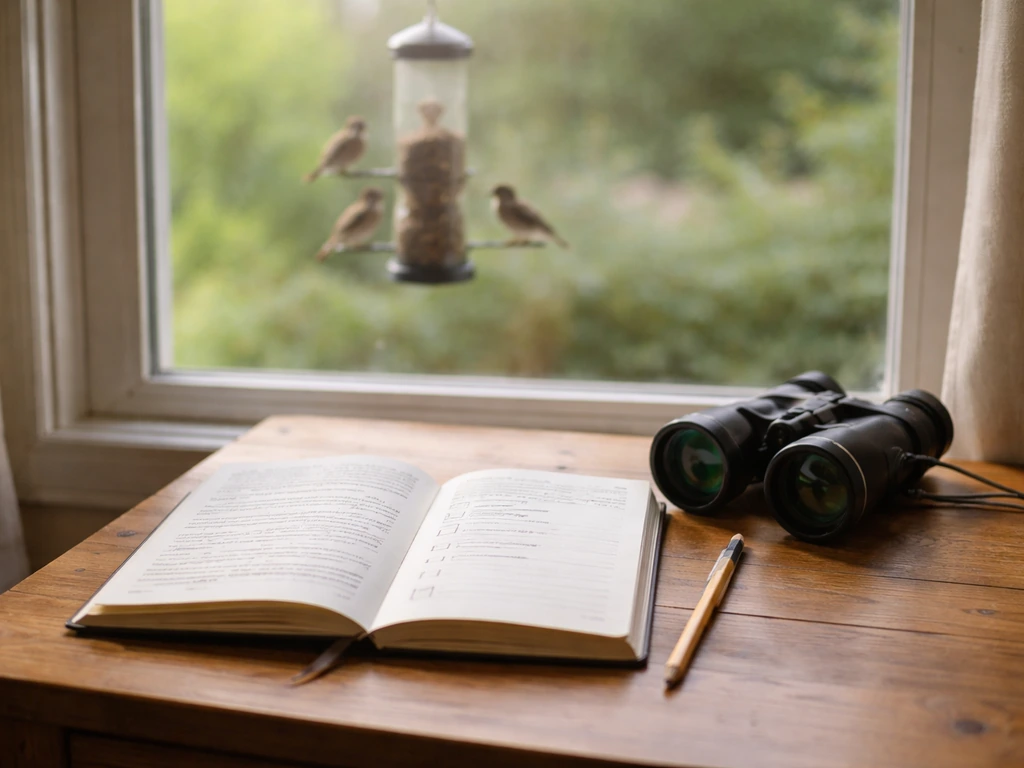
Reading a bird encounter is less about decoding a fixed dictionary definition and more about using the symbol as a mirror. Here is a simple process you can do today, right after your encounter while the details are still fresh.
- Write down every detail you can remember: what kind of finch, what color, what it was doing, where you were, what you were thinking about beforehand, and how you felt during the encounter. Do not edit, just capture.
- Ask yourself one focusing question: 'What area of my life am I currently seeking guidance about?' Most people already know the answer before they finish the question. Happiness, a new beginning, trust, emotional healing, the courage to act: which of these finch themes lands closest to that area?
- Sit with the feeling, not just the meaning. Spiritual encounters have a felt quality. If the finch brought a sense of warmth, relief, or excitement, that feeling is part of the message. If it felt urgent or startling, note that too.
- Look for confirmation signs over the next 48 to 72 hours. Watch for the same theme appearing in unrelated places: a conversation, a song lyric, something you read. This is not about forcing connections; it is about staying open and noticing patterns.
- Close with intention. Write one sentence about what you are going to trust or move toward based on this encounter. Keep it specific. 'I am going to trust that the timing on this decision is right' is more useful than a vague resolution.
Journaling is the single most effective tool for deepening bird encounter readings over time. When you build a record of what you noticed, what you were going through, and what unfolded afterward, patterns emerge that single-encounter interpretation simply cannot reveal. If you are developing a broader practice around feathers and bird signs, pairing this with bird feathers spiritual meaning gives you a richer vocabulary for reading what birds leave behind as well as what they do in your presence.
When meanings vary: cultural perspectives and common misreads
Not every tradition reads finches the same way, and it is worth knowing where the differences show up so you do not end up forcing a meaning that does not fit your framework or experience.
| Tradition / Framework | Primary Finch Meaning | Notable Nuance |
|---|---|---|
| Egyptian | Joy and good fortune, especially at new beginnings | Sunrise timing seen as especially significant |
| European folklore | Summer solstice energy, new experiences | Linked to seasonal turning points |
| General Western spiritual | Happiness, renewal, creative communication | Song quality seen as the key carrier of meaning |
| Native American (varies by nation) | Animal as direct spiritual messenger | Context and behavior weighted heavily over species alone |
| Christian symbolism | Small birds as signs of divine care and providence | Less finch-specific; applies broadly to small songbirds |
| Eastern philosophy | Lightness, harmony, adaptability | Social behavior seen as modeling right relationship |
The most common misread with finch encounters, or really any bird encounter, is confirmation bias. This is the very human tendency to notice and remember the sightings that fit the meaning you already want, while quietly ignoring the dozens of finches you walked past without registering them. If you are hoping a finch sighting means 'yes, go ahead with this plan,' you will find that meaning whether it is accurate or not. The antidote is honest journaling: write down what you noticed before you decided what it meant, and be willing to sit with ambiguity rather than rushing to the most reassuring interpretation.
It is also worth knowing that some traditions do not read bird appearances as messages at all. Animistic frameworks that treat animals as beings with their own agency and purpose would say a finch is living its life, and any meaning you draw from the encounter is something you are generating, not receiving. That is not a reason to dismiss the practice; it is a reason to hold your interpretations lightly and stay curious rather than certain.
One thing I always recommend: if a finch encounter feels significant but the standard symbolism does not quite land, look at the behavior more closely before you look for a new meaning. A finch perching quietly and singing for a long time carries different energy than one that is frantic and darting. A finch that appears alone (which is unusual, given how social they are) means something different than one that arrives with a flock.
Behavior is often more specific than species symbolism, and the details in your particular encounter are always more relevant than a general definition. For encounters with similarly patterned and colorful birds that carry distinct spiritual signatures, exploring northern flicker bird spiritual meaning can help you compare how behavior-specific readings differ from one species to another.
Finally, if the finch you saw had unusually striking or elaborate plumage, or if feather details stood out to you during the encounter, that is its own layer of meaning. The spiritual tradition around birds with many feathers and what that means spiritually adds nuance around abundance, layered messages, and the idea that a more visually complex bird carries a more multidimensional sign. Trust what your attention was actually drawn to, because that specificity is usually where the real message lives.
FAQ
What if I only see a finch once, does that still count as a spiritual message?
If you see a finch only once, most traditions suggest treating it as a gentle prompt rather than a definitive directive. A practical check is to ask, “What were my thoughts and feelings right before the sighting?” If nothing notable was happening, the sign is often read as general encouragement (joy, renewal) rather than a specific yes or no.
How should I interpret a red finch if the red was faint or only in patches?
The color red is typically treated as intensifying the core finch themes, but you can overread if you ignore how red appeared. Note whether the bird looked fully red, partially red, or only had red highlights, and whether the red seemed vivid or washed out, in house finches the male’s diet and health affect intensity, which is a detail some readers use to gauge “urgency.”
If a finch tapped my window, how do I tell whether it is a sign or just a bird mistake?
Window tapping is often a “transition” sign in symbolic readings, but you can distinguish it from pure coincidence by looking at persistence. One-time contact is commonly explained as reflection or misidentification, while repeated taps to the same spot over multiple days is what many spiritual approaches treat as more than random.
Can finch sightings be interpreted for a specific relationship or decision, or is it too general?
Yes, but with a grounded approach. If you repeatedly see a finch around a particular person, place, or question, interpret it as theme guidance (trust, connection, creative courage) rather than a guarantee of outcomes. A useful step is to journal the specific theme you notice returning, then choose one small action that aligns with it.
If a finch landed near me, how can I interpret it without forcing an overly definite meaning?
If the finch is unusually close and doesn’t flee, many readers treat it as personal, but you still want to confirm your interpretation. A good decision aid is to write two columns in your journal, “What felt true in the moment,” and “What would I do even if there was no spiritual meaning,” then compare them for overlap.
What if I saw the finch somewhere other than my home, does the spiritual meaning change?
If you see a finch far from home but in a place tied to change, like a hospital, job interview location, or moving process, timing and context become the main drivers. The symbolic meaning often shifts from “trust at home” to “renewal in transition,” so focus on what kind of transition you were in rather than the bird alone.
Does the finch’s behavior (quiet singing vs darting) change the spiritual message?
Yes, but treat “spiritual” and “behavioral” layers as complementary. If the finch’s behavior looked frantic, darting, or repeatedly searching, some traditions read that as heightened nervous energy or urgency, while quiet perching and sustained singing is read as steadier communication or creative courage.
How many sightings are “enough” before I treat it as more than coincidence?
Use a simple threshold: record sightings for a short window (for example, one to two weeks) before concluding it is a specific sign. Traditions often say three or more notable encounters in a short timeframe carries more interpretive weight than isolated events, especially if the timing lines up with a meaningful moment.
I follow a tradition that doesn’t treat animals as messengers. Can I still use finch encounters for insight?
If you are not sure whether your framework reads signs at all, the safest approach is to hold meaning lightly and focus on your own reflection. For animistic or agency-based views, you can still use the encounter as a mirror by asking what you noticed in yourself, without assuming the bird is delivering a message to you.
What is a practical next step I can take if I keep seeing a house finch?
If you want practical next steps, translate the symbol into one action aligned with its themes. For example, for trust and emotional healing (common house finch themes), try one trust-building behavior like reaching out to someone, finishing a conversation you have postponed, or creating space in your day for rest before making another move.
Next Article
Sparrow Bird Spiritual Meaning and Red Sparrow Insight
Interpret sparrow bird spiritual meaning and red sparrow symbolism, with practical guidance to apply messages of hope an