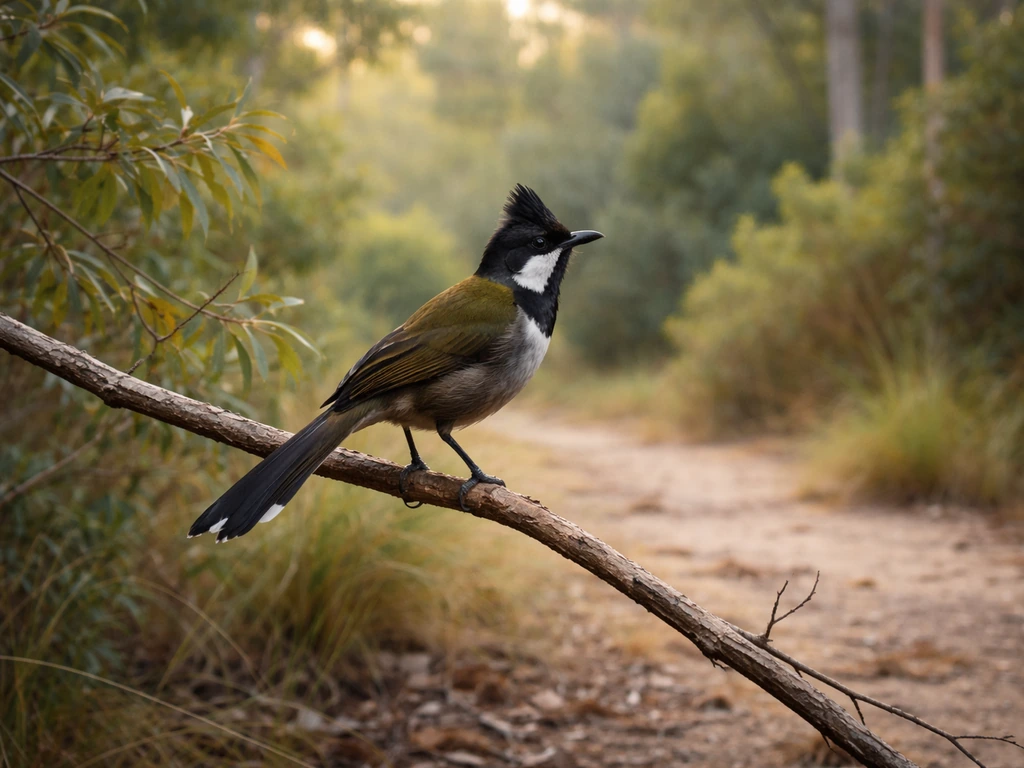
If you heard or saw a whipbird today, the most likely spiritual message is this: something important is calling for your attention, and it is time to listen and respond. The whipbird's signature sound, that sharp crack followed by an answering call, is one of nature's most striking 'pay attention' moments. Spiritually, it tends to show up when you have been ignoring a message, putting off a conversation, or missing a signal that life keeps sending your way. That said, the specific meaning shifts depending on how you encountered it, what you are currently navigating, and whether the bird you saw or heard is actually a whipbird. Let's sort all of that out right now.
Whip Bird Spiritual Meaning: What It Could Signify Today

Eliza Thornwick
2 May 2026

First: Are You Sure It Was a Whipbird?
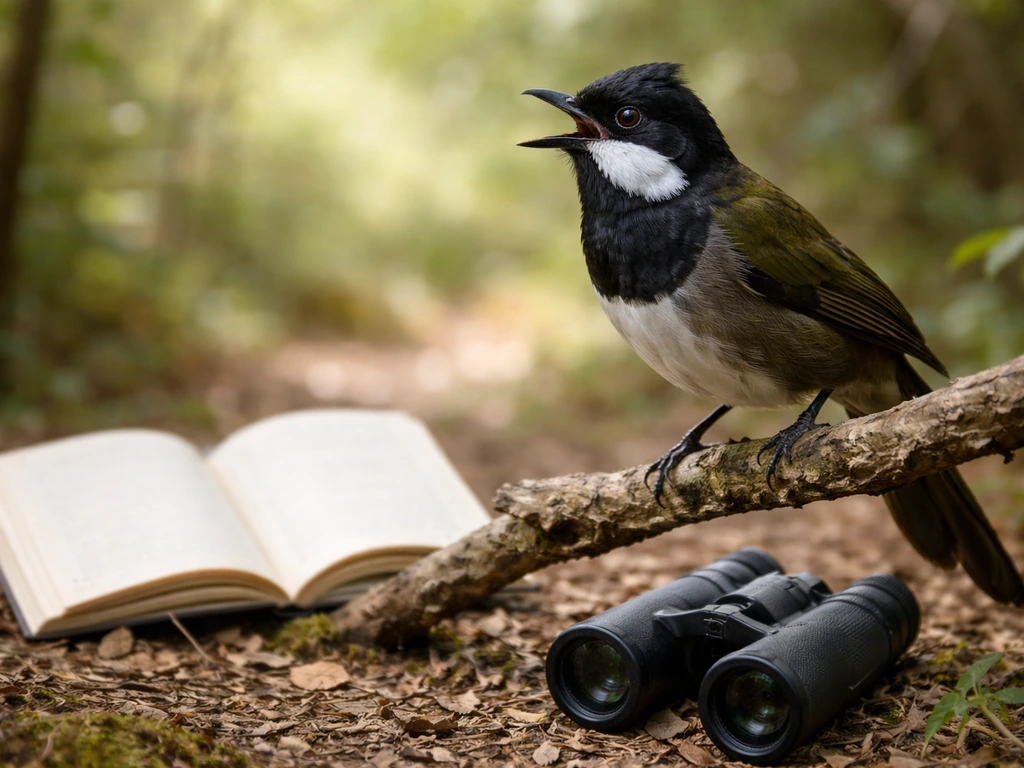
This matters more than it sounds. The word 'whipbird' gets applied loosely, and if you are trying to find a genuine spiritual message, starting with the right bird is the right move. In Australia, 'whipbird' almost always refers to the Eastern Whipbird (Psophodes olivaceus), a secretive, olive-green bird of dense forest undergrowth that is far more often heard than seen. Its call has a very specific architecture: a long introductory whistle, then a loud explosive whip-crack from the male, followed immediately by a short 'choo-choo' answer from the female. That duetting call-and-response pattern is the clearest way to confirm you are dealing with a real whipbird encounter.
The most common case of mistaken identity comes from people who heard a sharp, loud bird call and associated the word 'whip' with it. Two birds create this confusion most often. The bellbird has a piercing bell-like call that carries through Australian bush and is also 'heard more than seen,' so people sometimes mix the two. The other mix-up happens with the whip-poor-will, a North American bird whose name sounds similar but whose call is completely different: a repetitive, rhythmic three-note phrase, usually heard at dusk or dawn during breeding season. If you are in North America and you heard something at dusk repeating the same phrase over and over, you likely encountered a whip-poor-will, not a whipbird. The spiritual symbolism overlaps in some ways (both carry 'call' and 'communication' energy), but the traditional meanings and cultural histories differ, so it is worth getting clear.
| Bird | Location | Call Pattern | Typical Time of Day |
|---|---|---|---|
| Eastern Whipbird | Eastern Australia (forest/undergrowth) | Whistle + whip-crack + choo-choo duet | Daytime, especially morning |
| Bellbird (Bell Miner) | Eastern Australia (woodland) | Repetitive bell-like 'tink' or ringing tone | Daytime |
| Whip-poor-will | North America (woodland edges) | Repetitive 'whip-poor-will' three-note phrase | Dusk, dawn, nighttime |
If you are outside Australia and searching 'whip bird spiritual meaning,' there is a good chance you actually encountered a whip-poor-will or heard something described as a whip bird by someone else. Both birds carry meaningful spiritual energy, but this article focuses on the Whipbird's symbolism specifically. The Australian Whipbird encounter has its own distinct character worth exploring on its own terms.
Why the Whipbird Is So Deeply Tied to 'Call and Communication'
The Eastern Whipbird's call is not just loud. It is a perfect, two-voice conversation. The male fires off that explosive whip-crack and the female answers in the same instant, so precisely timed that people often think it is one bird. Research into this antiphonal (call-and-answer) duet shows that mated pairs coordinate these calls with remarkable synchrony, essentially speaking in one voice across the forest. That image is hard to ignore from a symbolic standpoint.
In bird symbolism, the whipbird sits at the intersection of several powerful themes: urgent communication, the courage to speak clearly and loudly, the discipline to listen and respond, and the hidden nature of real wisdom (this bird stays in the thick undergrowth; you have to be still and quiet to spot it). The 'whip-crack' quality also carries energy around cutting through noise, snapping out of complacency, and boundary-setting. It is not a gentle, cooing bird. It demands your attention.
The duet element adds something else: partnership, co-creation, and the idea that a message needs two parts to be complete. If you heard the full call-and-answer sequence, that duet quality may be particularly relevant to your situation right now, especially if relationships, collaboration, or two-way communication is something you have been thinking about.
What the Encounter Type Tells You
You Heard It But Didn't See It

This is the most common whipbird encounter, and it carries its own symbolic weight. When a message comes through sound rather than sight, the spiritual tradition of many cultures says: this is a call to your inner hearing. You are being prompted to tune in to what you have been filtering out. Perhaps someone in your life has been trying to reach you in ways you haven't quite registered. Perhaps your own intuition has been sending you signals you have been rationalizing away. The whipbird calling from the bush without showing itself says: the message is real, even if you cannot see its source yet.
You Saw It (Rare and Significant)
Because the Eastern Whipbird is so secretive and dense-cover-loving, actually seeing one is genuinely uncommon. The Australian Avicultural Society of NSW describes Eastern Whipbirds as rarely seen due to blank" rel="noopener noreferrer">secretive behaviour. If it showed itself to you, many spiritual traditions would read that as an amplified message, something moving from the background of your awareness into direct view. There is a sense of 'this can no longer stay hidden' when a normally invisible bird steps into sight. It may point to a truth about yourself or your situation that has been lurking in the undergrowth of your mind, ready to finally be acknowledged.
It Was Very Close to You
Proximity in bird symbolism tends to intensify the personal relevance. A whipbird calling from deep in the forest is a general message. A whipbird that came unusually close, or called from just a few feet away, is something that many people in the spiritual community would interpret as a direct, personal signal. The closer the encounter, the more the message is likely pointing at you specifically rather than being a general 'awareness' nudge.
Reading the Behavior: What Was the Bird Actually Doing?
Perching and Watching You
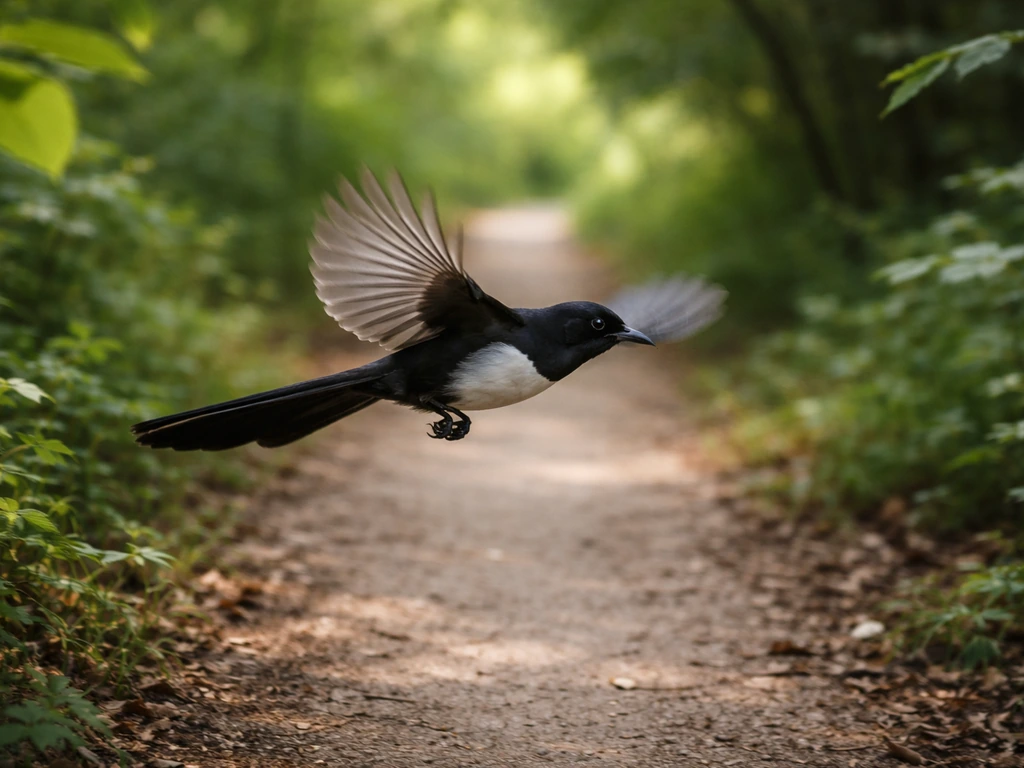
A whipbird that stops and seems to watch you is symbolically pointing toward witness energy: a reminder that you are being seen, or that you need to sit still and observe rather than react. It may also mirror something about your own role in a situation. Are you the one being called to witness something clearly right now, without judgment or rushing to fix it?
Flying Across Your Path
A bird crossing your path has been read across many traditions as a crossroads sign: something is intersecting with your direction of travel, literally or metaphorically. With the whipbird specifically, this can suggest that a communication or decision is crossing into your path whether you are ready or not. It is less a warning and more a heads-up: be alert, because something significant is about to require your voice or your choice.
Repeated Visits or Calls Over Multiple Days
Eastern Whipbirds are highly territorial and will call consistently from the same territory during breeding season, so there is a natural explanation for repeated calls near your home. But if a bird keeps appearing or calling in a way that you genuinely notice and feel drawn to, the spiritual interpretation is worth sitting with. Repeated encounters in symbolism usually signal that a message has not yet been received or acted on. The bird is, in a sense, following up. Ask yourself what you have been delaying or ignoring, and whether that thread connects to communication, boundaries, or a relationship that needs attention.
Near a Nest or Nesting Area
The Eastern Whipbird builds a sparse, open bowl-shaped nest tucked deep in shrubs, vines, or dense undergrowth, sometimes higher in a small tree. If you stumbled across a nest or noticed the bird behaving protectively, the symbolic layer often involves home, protection, and what you are nurturing or guarding. It might ask: what are you building right now, and is it well-protected? What in your life needs more careful tending?
Is This a General Message or a Personal One?
Not every bird encounter is a laser-targeted message to your soul. Sometimes you walked through a whipbird's territory and it called because that is what it does. The honest answer is that the spiritual weight of an encounter increases when it feels connected to something you are already actively wondering about. So the real question is: what were you thinking about, worrying over, or asking internally right before the encounter? That is your first and best clue.
| Your Current Focus | Most Likely Whipbird Message |
|---|---|
| Relationship or partnership | Is the communication channel clear and reciprocal? Are both voices being heard? |
| A difficult conversation you've been avoiding | It is time to make the call. The whipbird doesn't whisper. |
| Work or creative project | Speak up, claim your territory, or cut through the noise you've been tolerating. |
| Healing or grief | Allow the sound to move through you. Something that has been trapped needs release. |
| A decision you're stuck on | Snap out of the holding pattern. Make the move. Trust your instinct. |
| Spiritual path or growth | Listen more deeply. The real message is already there; you just haven't been still enough to hear it. |
A general whipbird message, one without a specific personal context, tends to centre on alertness and clear communication: wake up, pay attention, say what needs to be said. A personal message builds on that foundation and gets more specific based on your own current terrain. Neither reading is more 'correct.' They both start from the same energetic core and branch outward based on your life.
If the Encounter Felt Ominous: How to Stay Grounded
Some people hear a sharp, loud, unexpected bird call and it triggers a feeling of dread or unease. That is a completely understandable human response. Some cultural traditions, particularly around the whip-poor-will in North America, have historically linked the call of a 'whip' bird near the home to warnings or even death omens (certain Iroquois and Menominee traditions, for example). It is important to know those associations exist, and equally important not to let them hijack your nervous system.
Here is the practical discernment test: an ominous feeling after a bird encounter is almost always a combination of surprise (the call is loud and sudden), personal projection (you were already anxious about something), and cultural conditioning (you have absorbed 'bad omen' associations). That does not mean the message is meaningless, but it means the message is more likely 'pay attention' than 'something terrible is coming.' Urgency and warning are not the same thing.
If the encounter genuinely shook you, ground yourself first. The 5-4-3-2-1 technique works well here: name five things you can see, four you can physically feel, three you can hear, two you can smell, and one you can taste. This pulls your awareness back into the present moment and out of a spiral of symbolic interpretation. Once you are grounded, you can revisit the encounter with curiosity rather than fear. A calm mind reads signs much more clearly than an anxious one.
It is also worth remembering that in most spiritual traditions, a bird encounter, even a dramatic one, is a prompt to reflect, not a sentence. The message invites a response from you. You have agency in how you receive it and what you do with it.
What to Actually Do After the Encounter
Journal It While It's Fresh
Write down the encounter as specifically as you can within 24 hours. Include where you were, what time of day it was, what you were thinking or feeling just before it happened, and what your gut reaction was. Then answer these three prompts:
- What have I been putting off saying, deciding, or responding to?
- Is there a relationship or situation in my life right now where communication has become one-sided or has broken down?
- What would I do differently today if I took the whipbird's call as a direct nudge to act?
A Simple Meditation or Affirmation to Work With
You do not need a formal practice for this. Find five quiet minutes, close your eyes, and replay the sound or image of the whipbird in your mind. Ask inwardly: 'What is trying to get through to me right now?' Then sit with whatever surfaces, without judging or dismissing it. If prayer feels more natural to you, try something like: 'Help me hear clearly what I need to hear, and find the courage to respond.' The core affirmation that aligns with whipbird energy is simply: 'I listen fully and speak honestly.' Repeat it when you feel stuck or avoidant.
Practical Actions That Match the Symbolism

Spiritual meaning is most useful when it points toward real, concrete movement. Here are the actions most aligned with whipbird energy, match the one that resonates most with your current situation:
- Make the call or send the message you have been delaying. The whipbird does not hesitate.
- Set a boundary that has been blurring. The whipcrack is territorial; it marks where your space begins.
- Have the honest conversation you have been softening. Say what you actually mean, clearly and directly.
- Pause and listen before reacting to something that has been frustrating you. The female's answer comes quickly, but it comes after the signal.
- Check in on a relationship where communication has gone quiet. Re-establish the duet.
- If you have been scattered or distracted, use the encounter as a 'snap back to focus' moment. Pick one priority and give it your full attention today.
A Note on Related Birds and Where to Go Deeper
If you are drawn to exploring Australian bird symbolism further, the Australian Whipbird (which refers to the same Psophodes family in a regional context) carries much of the same communicative energy with some additional cultural nuance worth exploring on its own. If you are also curious about the western tanager bird spiritual meaning, its bright presence is often linked to joy, visibility, and speaking from the heart. Birds like the wagtail and weaver bird, which also show up frequently in bird symbolism searches, bring different energies: the wagtail is often tied to adaptability and joy, while the weaver is strongly connected to creativity, patience, and building. If you keep seeing the wagtail bird, you can explore its spiritual meaning too, especially around adaptability and joy wagtail bird spiritual meaning. If your encounter felt more like a gentle nudge than a sharp call to action, one of those may resonate more with what you are experiencing.
The core invitation from the whipbird, though, is distinctive and direct. It does not whisper. It cracks through the forest air and waits for an answer. If you heard it today, the most grounded thing you can do is ask yourself honestly: what is the call in my life right now, and am I ready to answer it?
FAQ
How can I tell if I really heard a whipbird (vs a different bird)?
Use the call-and-answer check. In Australia, a true Eastern Whipbird is typically heard as a long initial whistle, then the male’s explosive “whip crack,” followed immediately by the female’s short “choo-choo” response. If you only heard one repeating note pattern, or you heard it mainly at dusk with a three-note rhythm, you may have a different bird.
What does it mean if I keep encountering a “whip bird” message repeatedly?
Don’t assume the message equals a single event. If you see it, hear it, or feel drawn to it repeatedly, track what topic is most “alive” for you each time (a conversation, boundary, decision, or relationship). The spiritual “follow-up” in your pattern usually points to the same theme you keep circling around, not random new meanings.
How do I turn the whip bird spiritual meaning into something practical instead of just thinking about it?
Anchor it to a specific communication action within 24 to 72 hours. For example, send the text you keep drafting, schedule the talk you’re avoiding, or clearly state a boundary. If you can’t name a concrete next step, the encounter may be asking for tuning and clarity rather than immediate action.
What if the encounter felt scary or ominous, does that automatically mean a warning or bad omen?
If the call left you with dread, separate “surprise response” from “prophetic content.” Ask whether you were already tense, whether you have cultural associations that make the sound feel ominous, and whether the feeling fades after grounding. Treat it as a prompt to pay attention, not as proof of an incoming disaster.
Does the meaning change if I felt like the whipbird was watching me or crossing my path?
Yes, context can change the emphasis. If the message feels about “being seen,” it may point to witness energy (observe, don’t react). If it feels about “voice and choice,” it may be about speaking up or making a decision. A good clue is whether your next impulse is to hide, to argue, or to clarify.
Could repeated calling near my house be a normal bird behavior, and how should I interpret that spiritually?
Yes. If the bird’s call is near your home, territorial behavior during breeding season can explain repeated sounds. Spiritually, you can still take it as a nudge, but frame it as “an invitation to check where you’re ignoring signals” rather than “a supernatural reason it’s nearby.”
What might it mean spiritually if I saw the nest or the bird acting protectively?
If you found a nest or saw protective behavior, treat it as a prompt about what you’re nurturing and whether it’s safe. A useful question is: what am I building, and what supports (time, boundaries, resources) does it need to stay protected? This is often more about care and stewardship than urgent communication.
What if I only heard a sound that might have been a whipbird, can I still work with the spiritual meaning?
If you didn’t see or hear the bird clearly, avoid locking onto a precise interpretation. Use the broad core: “something is calling for attention, listen and respond,” then wait and observe what happens in the next few days. The message usually becomes clearer when you can connect it to a real situation you’re actively navigating.
What is the quickest way to use this symbolism when I feel avoidant or stuck?
The most useful next step is to write one sentence describing the “call” you’re receiving, then pair it with one honest boundary or one honest communication you can make. For example, “I will address the issue directly,” or “I will stop avoiding that conversation.” That combination keeps the meaning aligned with discipline to listen and respond.
How can I tell whether this is intuition (inner hearing) versus projection or anxiety?
Use “inner hearing” as a listening practice, not a truth verdict. After grounding, ask what part of your situation is asking for clarity, and check whether your intuition feels calm, specific, and workable. If the interpretation only creates panic, it may be projection or cultural conditioning rather than direct insight.
Next Article
Australian Whip Bird Spiritual Meaning: What Your Sighting May Indicate
Interpret Australian whipbird sightings by time, behavior, and feelings for grounded guidance and journaling prompts.