
A wagtail showing up in your life is most commonly a nudge toward movement, adaptability, and paying attention to timing. Whether it's a pied, white, grey, or yellow wagtail, the core message across most spiritual traditions is the same: something in your life needs to shift, and this little bird with its constantly wagging tail is reminding you not to stay stuck. That doesn't mean you need to upend everything, it usually means the right moment to act, speak up, or change direction is closer than you think.
Wagtail Bird Spiritual Meaning: What It May Symbolize

Eliza Thornwick
28 Apr 2026
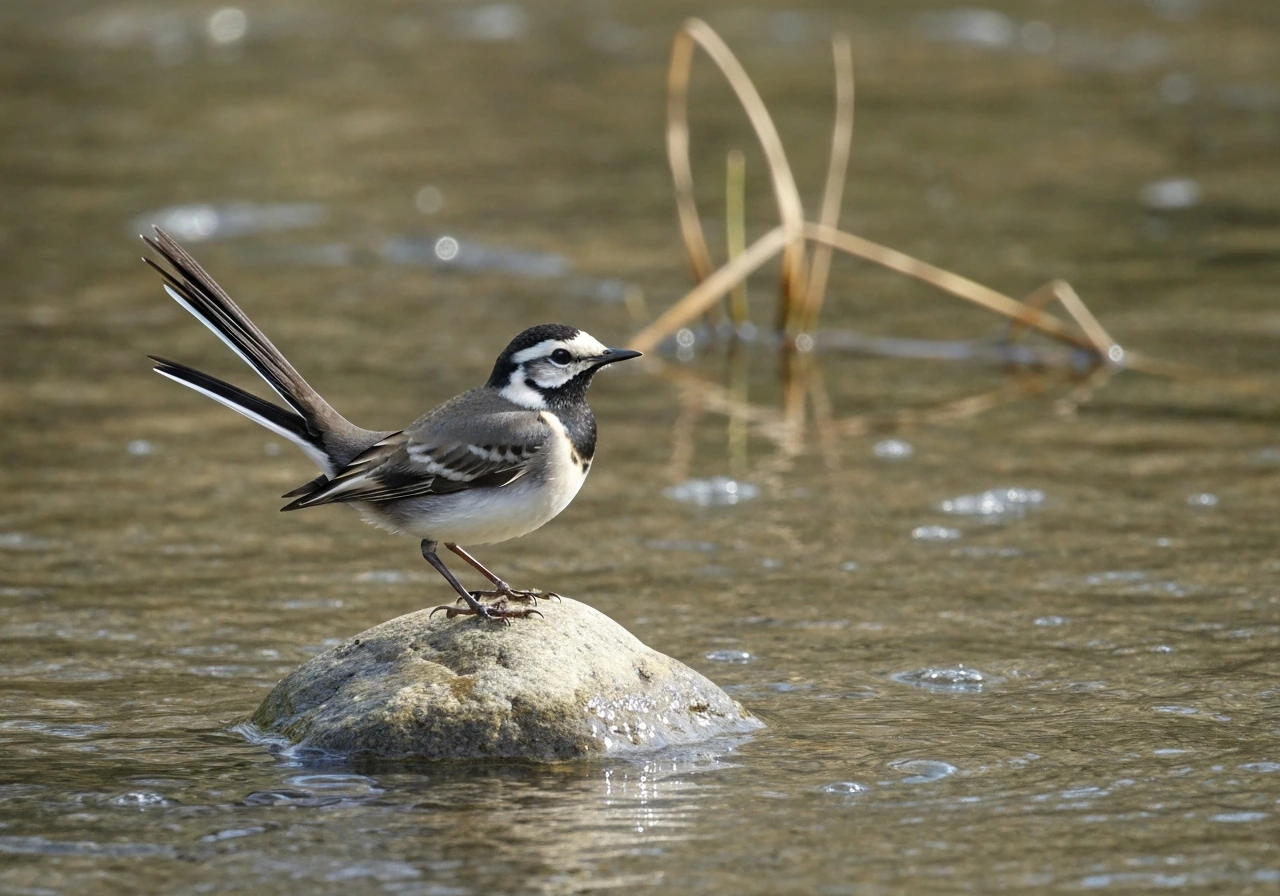
What a wagtail encounter most likely means
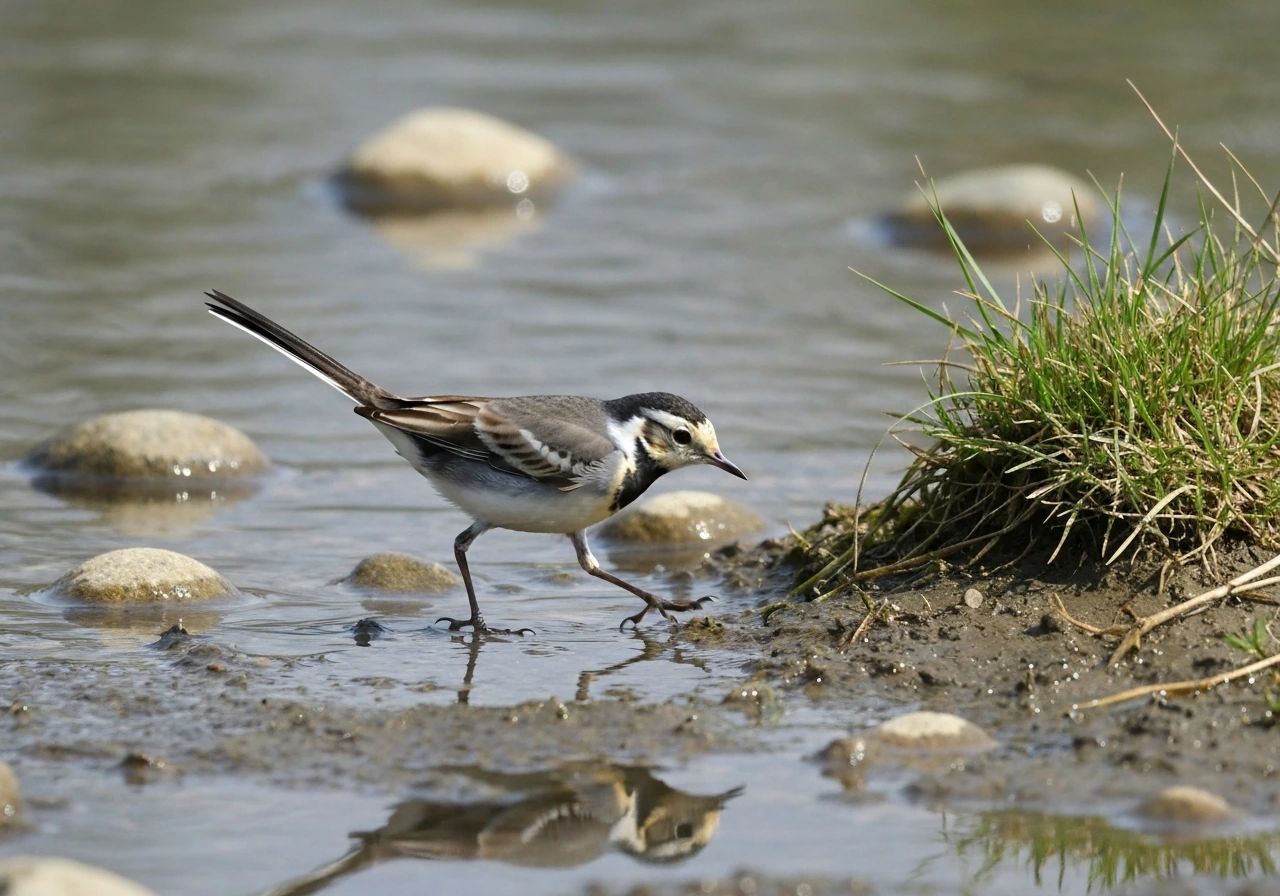
The wagtail's name itself is a clue. The genus name Motacilla comes from Latin roots meaning 'to move about,' and the bird's constant tail-wagging reinforces that energy of restless, purposeful motion. When one crosses your path, the most common spiritual read is that you're being invited to stop resisting change and lean into movement instead. Think of it less as a dramatic sign and more as a friendly prompt: is there something you've been putting off, overthinking, or waiting for 'the right time' to begin?
Across modern spiritual frameworks, the wagtail also carries themes of communication and alertness. It's often framed as a messenger bird, not necessarily delivering a specific piece of news, but flagging that you should be more attentive to what's already arriving: conversations, opportunities, or intuitive nudges you might be brushing past. Some divinatory traditions treat a wagtail sighting as a flat-out lucky sign, a signal that you're in an auspicious moment. That's a reassuring baseline to start from.
Symbolic themes the wagtail carries
Wagtails are linked to a surprisingly cohesive cluster of themes across different traditions and spiritual lenses. Once you know them, you'll find it much easier to figure out which one resonates with what's actually going on in your life right now.
- Movement and change: The wagtail's restless energy maps directly to personal transformation and the nudge to stop standing still.
- Adaptability: Wagtails thrive in varied environments—streams, gardens, city rooftops—and spiritually this translates to flexibility and resilience when circumstances shift.
- Communication and messages: In several traditions the wagtail is a messenger, signaling that something important is being communicated to you or that you need to speak up yourself.
- Right timing and vigilance: Cross-religious symbolism ties wagtails to watchfulness—not anxious paranoia, but the calm alertness of knowing when to move and when to wait.
- Persistence: These birds are famously bold and tenacious for their size. Spiritually, that translates to a reminder that consistent, determined effort matters more than grand gestures.
- Cleansing and new beginnings: The wagtail's association with water and movement also links it to emotional or energetic cleansing—releasing what's stagnant to make room for what's next.
- Ancestral connection and nearness: In some Indigenous Australian and folk traditions, a wagtail near your home can signal that an ancestor or loved one is close, or that a visitor or message is on its way.
You don't need to accept all of these at once. The point is to hold them up against your current situation and see which one lands. That instinctive 'oh, that's it' feeling is usually your best guide.
How the wagtail's behavior changes the meaning
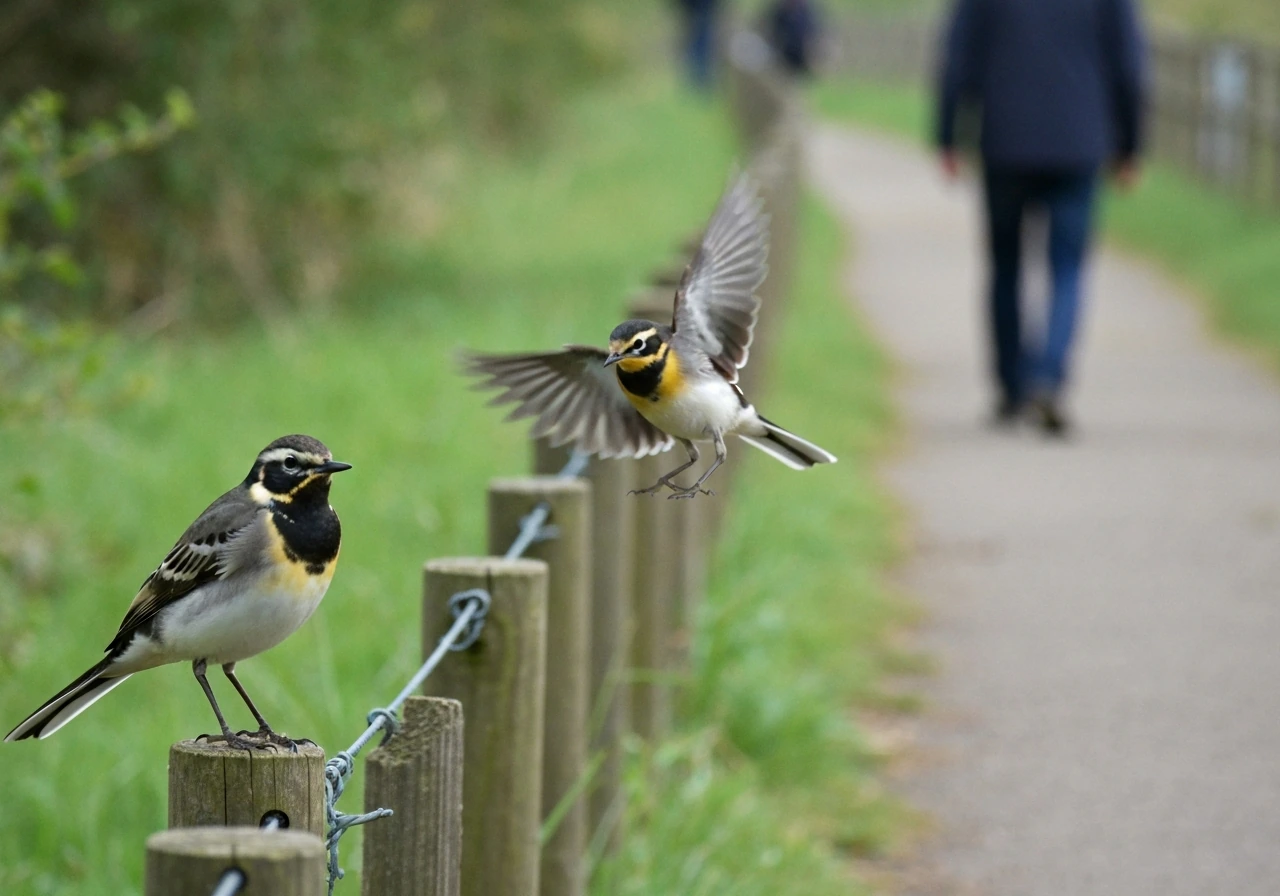
A one-off sighting and a wagtail that keeps finding its way back to you tell very different stories. Behavior and context are everything here, so pay attention to what the bird is actually doing, not just that it appeared.
Landing near you or following you
When a wagtail lands close to you, lingers, or seems to follow you as you walk, most spiritual frameworks read this as a personal and direct message. The bird isn't just in your environment, it's engaging with you. This is typically interpreted as confirmation: that you're on the right path, that help or guidance is near, or that something you've been thinking about deserves action. Trust your gut about what was on your mind in that moment.
Tapping on a window
Window-tapping is one of the more unnerving encounters, but it's worth knowing there's a completely natural explanation for it first: wagtails often tap at windows because they see their own reflection and mistake it for a rival, or because insects gather near glass. Historical accounts describe individual birds returning to the same house window morning after morning for months, purely for behavioral reasons.
That said, spiritually, window-tapping is widely read as an attempt to get your attention across a boundary. The window represents the threshold between your inner world and the outside, and a bird tapping insistently at it can symbolize a message, insight, or change that's trying to get through to you. The practical question to ask yourself: what have you been ignoring or avoiding looking at lately?
Nesting or building nearby
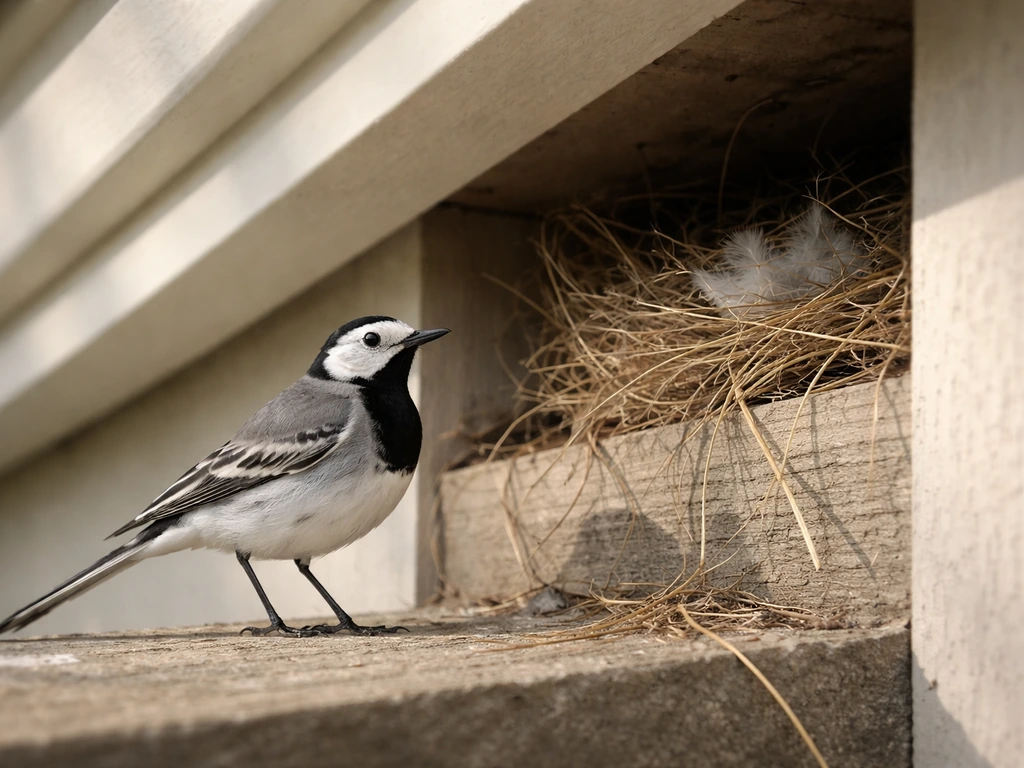
A wagtail choosing to nest near your home or workplace is generally a positive sign across traditions. Nesting symbolizes stability, new beginnings, and the patient building of something lasting. If you're in the middle of starting a project, relationship, or new chapter, this is often interpreted as encouragement to keep laying the groundwork even when progress feels slow. It can also signal that your space has the right energy for growth.
Repeated sightings
A single wagtail sighting might be a coincidence. When the same bird (or what feels like the same presence) keeps appearing over days or weeks, that's when most people start treating it as a genuine spiritual prompt. Repeated appearances amplify the core message, movement, change, communication, and usually mean the universe is being a bit more insistent than usual. Whip bird spiritual meaning is often tied to similar messages about change, guidance, and paying attention to what keeps repeating in your life spiritual prompt. Ask yourself: what have you been repeatedly putting off? The bird is likely mirroring your own pattern of circling without committing.
Reading the situation: timing, location, and context
Where and when you encounter a wagtail can add a useful layer to the interpretation. These aren't rigid rules, they're lenses to try on and see what fits.
| Situation | Common Spiritual Read | Question to Ask |
|---|---|---|
| Near your home | Ancestral message, visitor incoming, domestic change approaching | Is something shifting in my home life or family relationships? |
| Near your workplace | Career nudge, timing signal for a professional decision | Is there a move, conversation, or opportunity I've been stalling on at work? |
| During a significant life moment (grief, big decision, crossroads) | Comfort, confirmation, or guidance from beyond | What do I most need to hear right now, and does this encounter feel like an answer? |
| First thing in the morning | A prompt to set intention and stay alert throughout the day | What deserves my full attention today? |
| Repeatedly over weeks | Sustained spiritual message, recurring theme in your growth | What pattern in my life is the bird reflecting back to me? |
| Unexpectedly in an unusual location | Surprise opportunity or message requiring immediate attention | What feels out of place in my life right now—and is that actually an opening? |
It's also worth noting that cultural background matters. In some Aboriginal Australian traditions, the willie wagtail (a related but distinct species often grouped under 'wagtail' symbolism) can be a bearer of bad news or a warning, while in Papua New Guinea it's seen as a helpful messenger and good omen.
The WA Department of Education learning resource on Djiti Djiti (willie wagtail) notes it may be linked to messages or interpretations, including guidance against assuming it is always “something bad” [Djiti Djiti (willie wagtail) may relate to messages or interpretations, including guidance against assuming it is always “something bad”](https://myresources. education. wa. edu.
au/docs/default-source/resources/tracks-to-two-way/focusarea02optimised. pdf? sfvrsn=62b53a7a3). Neither reading is more correct than the other, they reflect different relationships with the same bird.
What matters is which cultural or spiritual lens you're working within, or which one resonates most with your own intuition.
Dead or injured wagtail: what it means and what to do
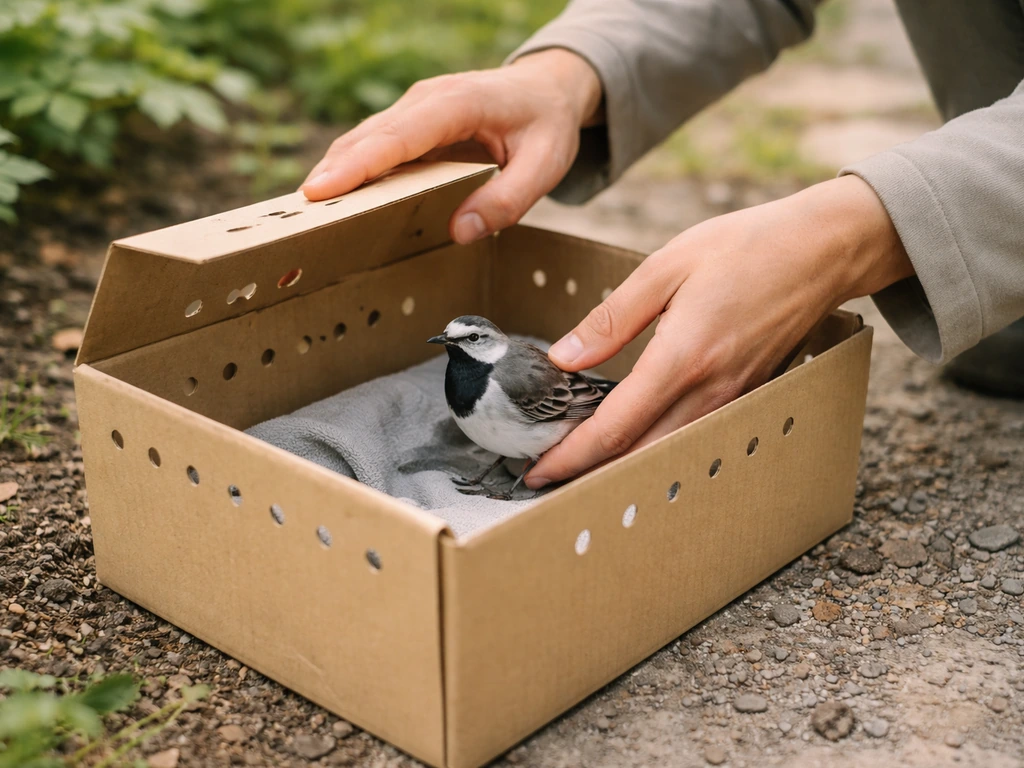
Finding a dead or injured wagtail tends to trigger worry, but try not to jump straight to dread. Across traditions, a dead bird can symbolize the end of a cycle, a transition, or the completion of one phase before a new one begins. It's rarely a straightforward bad omen, more often it's a reminder that change involves loss, and that what's ending is making space for something new. That said, cultural context matters: in some traditions a dead wagtail near the home is taken seriously as a signal to pause and reflect on what needs to be released.
An injured wagtail can carry a different message: that something in your life is wounded but not finished. It might point to a relationship, creative project, or aspect of yourself that needs care and attention before it can move forward again. The themes of persistence and adaptability are especially relevant here.
On the practical side, please don't skip the real-world steps. If you find an injured wagtail, contact a licensed wildlife rehabilitator or local vet, call ahead before bringing the bird in. Use gloves if you need to handle it and keep it in a ventilated box in a quiet, dark space while you arrange help. For a dead bird, avoid direct bare-hand contact. If you're in an area with active bird disease concerns (like avian influenza), your local state wildlife agency or health department may want to know, they can advise on safe disposal and testing. This isn't about fear; it's just responsible stewardship of both the bird and your own health.
How to confirm what the message is for you
Spiritual encounters with birds are personal. The same wagtail sighting can mean completely different things to two different people, depending on where they are in their lives. Here are some reflection tools that help you zero in on what the message actually is for you specifically.
Journaling prompts to try right after an encounter
- What was I thinking about or feeling in the moment before I noticed the wagtail?
- What life area feels most in motion (or most stuck) for me right now?
- If this bird is carrying a message, what would I most want it to say to me?
- Which of the wagtail's themes—movement, communication, timing, persistence, cleansing—resonates most strongly today, and why?
- Have I been waiting for a sign to do something? Does this feel like it?
- What would I do next if I trusted that the timing is right?
Write without editing yourself. The first answer that comes out is usually the most honest one, and it often reveals what you already knew but hadn't quite let yourself acknowledge.
Checking your intuition
After journaling, sit quietly for a few minutes and ask yourself: does this encounter feel significant, or am I projecting meaning because I want reassurance? Both are valid starting points, but they lead to different reflections. If it genuinely felt like a moment, if something in you shifted or stood at attention when the bird appeared, honor that. If you're honestly unsure, give it a few days. Repeated encounters tend to clarify whether this is a passing observation or a sustained spiritual nudge.
Grounded next steps (and how to avoid fear-based thinking)
The biggest trap with bird symbolism, and animal omens generally, is sliding from curiosity into anxiety. If you find yourself fixating on worst-case interpretations, or repeatedly searching for confirmation that something bad is coming, that's a signal to step back. Bird encounters are invitations to reflect, not verdicts on your future. A wagtail is not a court summons.
Here's a practical framework for turning a wagtail encounter into useful action, without spiraling:
- Pause and note the context: Where were you, what were you doing, and what was on your mind? Write it down before the details fade.
- Pick one theme: Out of the wagtail's core messages (movement, communication, timing, persistence, cleansing, ancestral connection), choose the one that feels most relevant to your current situation. Work with that one.
- Take one concrete step: If the message is 'it's time to move,' what's the smallest meaningful action you can take today? If it's 'pay attention to communication,' who should you reach out to or listen more carefully to?
- Stay curious, not anxious: If the encounter felt unsettling, remind yourself that even in traditions where wagtails carry warnings, the warning is framed as useful information—something to be aware of, not to fear.
- Return to it in a week: Did anything shift after the encounter? Does the message feel clearer in hindsight? Follow-up reflection is often where the real insight lands.
- Handle the physical world responsibly: If you're dealing with a real bird—injured, dead, or nesting—follow wildlife guidelines. The spiritual meaning and the practical care of the bird are not in conflict. You can honor the message and also call a wildlife rehabilitator.
If you're drawn to exploring other birds with similarly rich symbolic traditions, the weaver bird and whip bird carry their own fascinating threads around creativity, communication, and nature's timing that are worth exploring alongside wagtail symbolism. Different birds, but often overlapping themes, and comparing them can help you get clearer on what specifically resonates with you. In some Aboriginal Australian contexts, the Australian whip bird is also linked with specific spiritual meanings about voice, expression, and intuitive timing Australian whip bird spiritual meaning.
The wagtail is ultimately a bird that doesn't sit still, and that's exactly the point. When one shows up persistently in your world, it's usually because some part of you needs to stop hovering in place and start moving. If you’re drawn to other bird omens, you might also explore the western tanager bird spiritual meaning and how it aligns with your current themes of change and inner guidance. The direction is yours to choose, the bird is just the nudge. If you want to explore how other birds’ symbolism works alongside this, the weaver bird spiritual meaning is a related option that focuses on creativity and mindful creation.
FAQ
How can I tell if the wagtail message is about my timing versus my mindset?
Try to locate the “moment of friction.” If you keep hesitating, procrastinating, or over-planning, it often points to timing. If you’re taking action but still feel blocked, the symbolism usually targets mindset (fear, resistance, or inner dialogue). A useful check is to ask, “What would become easier if I stopped arguing with myself?”
What if the bird appears during a stressful time, does that mean something bad is coming?
Not automatically. Stress can make any encounter feel ominous, so the spiritual read tends to focus on what you can do right now. Look for the adaptive theme, “move, adjust, communicate,” and translate it into one concrete step (a tough conversation, a decision, or a boundary) rather than waiting for a disaster sign.
Do different wagtail colors (white, grey, yellow, pied) change the spiritual meaning?
Many traditions treat the core themes as consistent, but color can act like an emphasis marker. For example, lighter tones are often read as clarity or awareness, while darker tones are read as grounded patience or dealing with a hidden issue. Use the color only after you’ve identified the situation the encounter connects to in your life.
If I see a wagtail more than once, should I act immediately or wait?
A repeated appearance is usually an “amplifier,” but it does not specify the timeline. Use a decision filter: if the change is low-risk and reversible, act sooner. If it affects relationships, money, or health, wait until you have the information you need, then act quickly when the details click.
What if a wagtail is aggressive or keeps circling me, does that have a different spiritual read?
Behavioral intensity often shifts the symbolism from general nudge to focused attention. Aggressive or circling behavior can also relate to territoriality or nesting, so spiritually you can interpret it as “stop and address the issue right in front of you,” especially something you’re avoiding. Combine intuition with practicality, like checking whether there’s a nest nearby.
Is it better to interpret a window-tapping incident literally as a message or more as a sign to be mindful?
You can do both, without forcing certainty. Spiritually, treat it as a prompt to pay attention to your “threshold moments,” decisions between inner desire and outer action. If the tapping repeats for days, also treat it as a real environmental cue (bird reflections, insects near glass) and adjust the space as needed.
How should I handle a dead or injured wagtail spiritually without turning it into fear?
Use it as a “release and care” frame, not a prediction of loss. A dead bird can symbolize closure, so ask what chapter needs ending. An injured bird often points to restoration, so ask what part of you needs repair. If fear spikes, balance the practice with action by contacting a wildlife rehabilitator or vet when appropriate.
Do I have to follow a specific cultural tradition to use wagtail symbolism?
No, but cultural context matters. If you resonate with a particular tradition, let it guide your reflection. If you do not know the cultural lens, use a personal lens instead, focusing on how the encounter connects to your lived situation. This avoids treating someone else’s sacred framework as a universal rule.
What’s a common mistake people make when interpreting bird omens?
Overfitting and catastrophizing. Another frequent error is ignoring the “why now” question, you interpret the bird but not the timing in your own life. A corrective step is to write three facts about the encounter, what you felt, and what was happening in your life that week, then decide which spiritual theme best matches all three.
Should I document encounters, and if so, what details matter most?
Yes, brief notes help you see patterns. Record date, time, location, the bird’s behavior (landed, followed, tapped, nesting), your mood in that moment, and one issue you were thinking about. Over a few days, repeated themes become easier to separate from random coincidence.
Can I ask the wagtail a question, and how do I know if I’m getting a real “answer”?
You can, but treat it as a prompting ritual rather than guaranteed communication. After asking, watch for practical alignment, like clearer opportunities, a conversation you were avoiding, or the right moment to decide. If nothing changes and you only feel more anxious, scale back and focus on the next small step.
Next Article
Hamerkop Bird Spiritual Meaning: Messages, Encounters, Guidance
Hamerkop bird spiritual meaning by encounter, covering intuition, boundaries, protection, love guidance, and a daily rit