
When a cardinal shows up, most people feel something shift. There's a reason for that. Across dozens of spiritual traditions and cultural frameworks, the cardinal, especially the red cardinal, is consistently read as a messenger: a sign of hope, comfort, love, and sometimes the presence of someone you've lost. If you're here because you just saw one and felt like it meant something, you're probably right to pay attention, even if you can't explain why yet.
Cardinal Bird Spiritual Meaning: Red, Blue, and Black Insights

Eliza Thornwick
24 Mar 2026
What a cardinal usually symbolizes, in plain terms
The short answer: cardinals are most commonly interpreted as symbols of hope, encouragement, and divine connection. They show up in spiritual writing as messengers, as reminders that you're not alone, and as signs that something meaningful is trying to reach you. The red cardinal in particular is widely described as one of the most recognized spiritual messengers in Western culture, and that reputation holds up across Native American traditions, Christian symbolism, and general metaphysical interpretation.
But here's what I always tell people: the specific meaning depends heavily on what's going on in your life right now. A cardinal sighting when you're grieving a loss carries a different weight than one that appears when you're at a crossroads, even if the bird itself looks identical. The spiritual meaning of a cardinal bird isn't a fixed definition like a dictionary entry. If you're also curious about the <a data-article-id="A7461A32-A39D-4558-A60D-AD2DA4D11DC4">spiritual meaning of a red bird</a> beyond cardinals, there are common themes worth looking for. It's more like a prompt, and you're the one who fills in the answer.
Why the red cardinal carries such a strong spiritual message
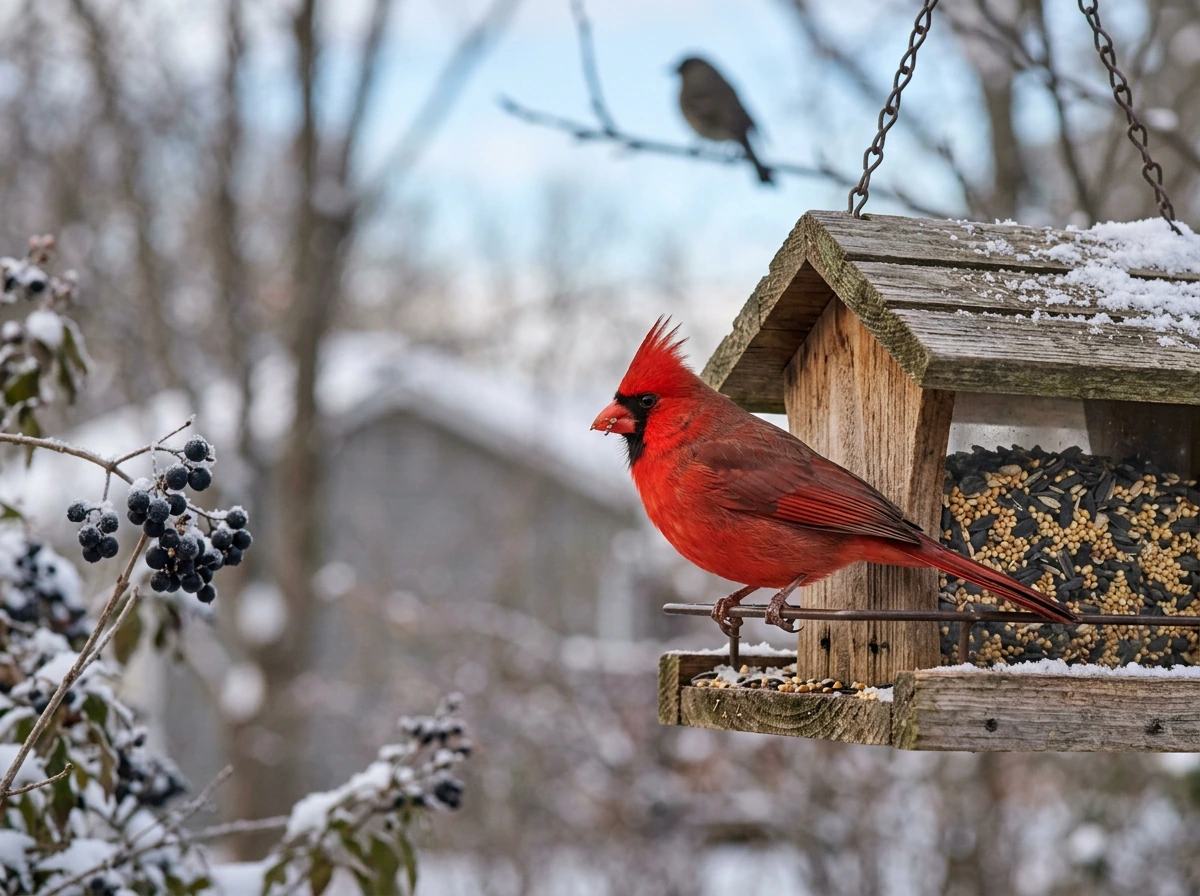
The red cardinal is hard to ignore, and that's kind of the point. That vivid, saturated red against a grey winter sky or a green backyard hedge makes you stop. Spiritually, that arresting quality is part of what gives the red cardinal its messenger reputation. It demands attention in a way that, say, a sparrow simply doesn't.
Across the most common interpretations, the red cardinal's message clusters around a few core themes: hope during hardship, reassurance that you're on the right path, enduring love, and the comforting presence of a loved one who has passed. Many people describe seeing a red cardinal shortly after a loss and feeling an almost immediate sense of peace, as if the bird's appearance was specifically timed. Whether or not you believe in that kind of spiritual connection, it's one of the most consistent experiences people report.
The red color itself matters symbolically. Red is the color of warmth, vitality, love, and heart-centered energy across nearly every spiritual tradition. In many interpretations, that red plumage is what marks the cardinal as carrying a message of love specifically, not just generic good fortune. Some frameworks connect it to the idea of eternal hope, the sense that even in difficult seasons, something warm and alive is still present.
One detail I find genuinely useful: pay attention to whether the cardinal is looking directly at you. Some interpreters read a cardinal that locks eyes with you as an especially pointed message, one urging you to look inward for an insight you need. A cardinal that appears but looks away, or seems indifferent to your presence, can still carry meaning, but the invitation there might be softer, more like a gentle nudge than a tap on the shoulder. If you've been too distracted to hear what life is trying to tell you, the look-away cardinal might be a reminder to slow down.
The biblical meaning of the red cardinal (and how to hold it wisely)

Here's something worth being upfront about: cardinals are not mentioned in the Bible. If you've read otherwise, that claim doesn't hold up to scrutiny. The Bible was written in a geographic region where cardinals don't live, so there's no scriptural text that names the bird directly. But that doesn't mean there's no connection to explore through a Christian lens, it just means the connection is built from symbolism rather than direct scripture.
The most common biblical interpretation of the red cardinal works through the symbolism of red and crimson in scripture. Crimson and scarlet imagery in the Bible is deeply connected to sacrifice, redemption, and the blood of Christ. Some Christian writers extend this symbolism to red birds, including cardinals, as visual reminders of grace, forgiveness, and God's enduring love. It's an analogical reading, not a literal one, and it can be genuinely meaningful when held that way.
If you're coming from a Christian background and you feel a pull toward interpreting a cardinal sighting spiritually, I'd encourage you to do what 1 Thessalonians 5:19-22 actually suggests: test it. That passage urges believers to hold onto what is good, to discern rather than dismiss or blindly accept. If a cardinal sighting stirs something in you that feels like comfort, hope, or a nudge toward prayer, that's worth sitting with. But the biblical framework asks you to check it against your faith, your scripture, and your own prayerful reflection rather than treating it as automatic divine communication.
The wisest approach I've seen in Christian-flavored spiritual reflection is this: pray first, then interpret. Don't build a theology around a bird sighting. But don't dismiss the emotional and spiritual weight of a meaningful encounter either. Let it point you toward God rather than stopping at the bird itself.
Blue cardinals, black cardinals, and what they mean spiritually
If you've been searching for blue or black cardinal spiritual meanings, here's something important to know before we get into symbolism: a true blue cardinal is not a recognized bird species. The bird you might be picturing, or have seen, is likely a Blue Jay, an Indigo Bunting, or a similar species. In spiritual writing, the "blue cardinal" is largely a concept rather than a bird, but the symbolism attributed to it is still worth understanding because many people encounter it in dreams, in art, or as a symbolic archetype.
Blue cardinal spiritual meaning

The blue cardinal, in spiritual interpretation, is associated with peace, calm, divine communication, and hope. Blue is widely read as the color of the throat chakra and spiritual clarity, so a blue cardinal in a dream or vision is often interpreted as a message asking you to speak your truth, trust in a higher guidance, or find stillness in a turbulent time. Because the blue cardinal exists more in the imagination than in the field, its meanings tend toward the ethereal and the introspective. If this image is showing up for you, the question worth asking is: where in your life do you need more peace or more honest expression?
Black cardinal spiritual meaning
The black cardinal (again, not a widely recognized species in ornithology, though some birds like the Phainopepla are sometimes called by this name) carries heavier, more introspective symbolism. Black in spiritual frameworks tends to represent mystery, the shadow self, transformation, and the need to look at what's hidden. Unlike the red cardinal's warmth and comfort, a black cardinal encounter or dream is more often read as an invitation to do inner work, to examine what you've been avoiding, and to sit with uncertainty rather than rushing toward resolution. It's not a warning of doom, it's a call to depth.
| Cardinal Color | Core Spiritual Themes | Emotional Tone | Common Framework |
|---|---|---|---|
| Red | Hope, love, comfort, divine messenger, presence of loved ones | Warm, reassuring, urgent | Widely cross-cultural; especially common in Christian and general spiritual contexts |
| Blue | Peace, clarity, divine communication, truth-speaking | Calm, reflective, gentle | More metaphysical and dream-based; not a recognized species |
| Black | Mystery, introspection, transformation, shadow work | Serious, contemplative, inward | More Jungian/metaphysical; uncommon sighting |
How to actually interpret a cardinal sighting in real life
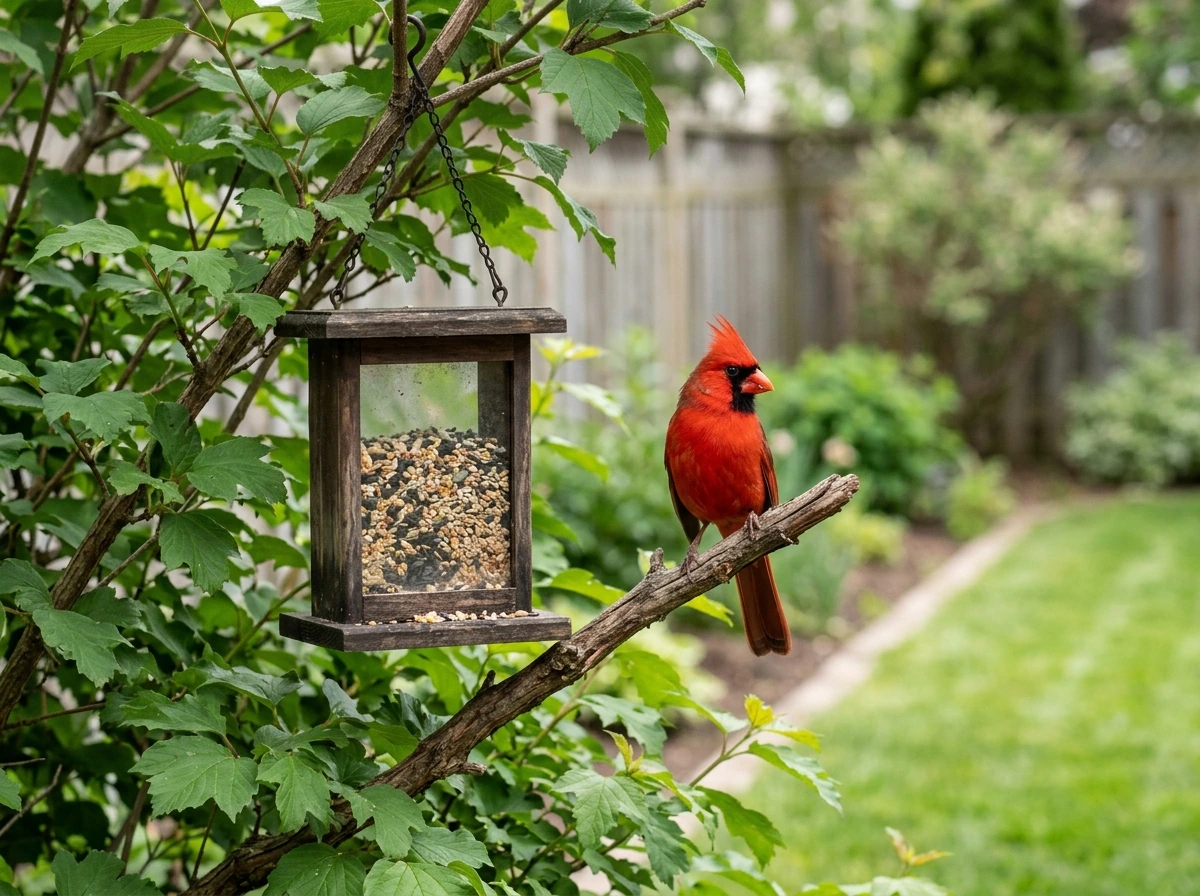
Not every cardinal that lands near your bird feeder is a cosmic message. I want to be honest about that. Cardinals are common backyard birds across much of North America, and they visit feeders, tap on windows (often because they see their own reflection and read it as a rival), and sing from fence posts for entirely biological reasons. That doesn't mean a sighting can't also carry meaning, but it's worth holding both possibilities at once rather than immediately jumping to the supernatural.
What makes a sighting feel spiritually significant, and what actually shapes the interpretation, is the context around it. Here are the details worth noticing when a cardinal appears:
- Timing: Did it appear at a significant moment? Right after you were thinking of someone who passed away? During a difficult decision? On a meaningful date like a birthday or anniversary?
- Behavior: Was it looking directly at you? Did it linger unusually long? Was it pecking at your window, which many interpreters read as a more insistent or urgent message?
- Location: Was it in your yard, on your windowsill, or somewhere unusual for a cardinal? An unexpected location tends to feel more noteworthy than a regular feeder visit.
- Your emotional state: What were you feeling or thinking about when it appeared? That inner context often holds the key to what the message might be for you specifically.
- Whether it returned: A single sighting is one thing; a cardinal that keeps coming back to the same spot over days or weeks is something many people find harder to dismiss.
The most useful framework I've come across is simple: treat the cardinal as a prompt, not a verdict. It's not there to hand you a complete answer. It's there to get your attention so you can ask a better question. What do you need right now, hope, comfort, courage, a reminder that you're loved? The cardinal's appearance is often most meaningful as a mirror for where you already are.
If the red cardinal spiritual meaning resonates with you as the presence of a loved one who has passed, that's one of the most commonly reported and deeply felt interpretations out there. There's no need to dismiss it. Many people across many traditions have found genuine comfort in that reading, and comfort that comes from a meaningful encounter is real regardless of how you explain it philosophically.
For more on how red birds specifically are read across spiritual frameworks, the broader category of red bird spiritual meaning is worth exploring. For more on how red birds specifically are read across spiritual frameworks, the broader category of red bird spiritual meaning is worth exploring spiritual meaning of a red bird. And if you're also seeing robins and wondering whether they carry similar messages, the spiritual meaning of a robin bird covers some overlapping but distinct territory. If you're looking for details on robins in particular, the robin bird spiritual meaning is often discussed alongside cardinal symbolism but with its own distinct themes.
What to do after a cardinal sighting: reflection, journaling, and next steps
If you want to move beyond just identifying what a cardinal might symbolize and actually do something useful with the experience, here's a practical approach that works regardless of your spiritual background.
- Pause before you interpret. Give yourself a few minutes to just sit with the experience before you go searching for meanings online (or after you've finished reading this). What was your gut reaction when you saw it? That initial feeling often tells you more than any list of symbols.
- Write down the details. Date, time, location, what the cardinal was doing, how long it stayed, and what you were thinking or feeling just before it appeared. These specifics will matter when you reflect later.
- Ask one honest question. Not 'what does this mean?' but something more personal: 'What do I need right now?' or 'Is there something I've been avoiding thinking about?' Let the cardinal's appearance be the entry point for that question.
- Sit with it for a few days. Don't rush to a conclusion. Notice whether the themes that came up in your reflection keep appearing in other parts of your life. Spiritual messages rarely come with a single exclamation point and then vanish. They tend to echo.
- If you have a faith practice, bring it there. Pray, meditate, or talk to someone you trust spiritually. Use the sighting as a starting point for deeper connection rather than a standalone event.
- Let the interpretation breathe. The meaning you land on today might shift as your circumstances change. That's okay. Spiritual symbolism isn't a locked box. It's a living conversation.
One thing I've noticed in the many conversations I've had around bird encounters: the people who get the most out of these experiences are the ones who treat the sighting as an invitation to pay attention, not a message to decode and then move on from. A cardinal appearing in your life is less about getting the right answer and more about being willing to ask the right questions. The bird is vivid and unmistakable for a reason. It wants to be noticed. What you do with that noticing is entirely up to you.
FAQ
How can I tell whether my cardinal sighting is a real spiritual prompt or just a coincidence?
A good way to tell is to separate your feelings from the “definition” of the bird. If the sighting leaves you calmer, more hopeful, or more willing to pray or reflect, that often indicates the message is meant as emotional guidance. If it mainly triggers fear, obsession, or compulsive searching for signs, treat it as noise and return to grounding, like breathing, journaling, or seeking support from a real-world person.
What should I do with a cardinal spiritual meaning if I want to stay consistent with my faith?
If you have a strong belief system, use it as your safety filter. For example, in a Christian lens, the article recommends prayer first and testing after, so you would not base major decisions on the bird alone. Instead, treat the sighting as a check-in, then confirm with prayer, scripture alignment (as you understand it), and practical steps based on your circumstances.
What questions should I ask myself right after I see a cardinal?
Try using three concrete questions immediately after the sighting: What am I grieving or hoping for right now? What part of me needs comfort or courage? What is one small action I can take within 24 to 48 hours? This keeps the experience from turning into endless decoding, and it often produces a clearer, more actionable “prompt” outcome.
Does the spiritual meaning change if I see a cardinal during grief versus during a major decision?
Yes, because the “message” is often tied to timing and internal state. A cardinal appearing during grief is frequently experienced as reassurance or love, while a cardinal appearing during a crossroads is more often interpreted as encouragement to trust your path. Even if the bird’s appearance is identical, the context determines which theme your mind and spirit naturally connect with.
If the cardinal keeps showing up at my windows or feeder, does that make the message stronger?
If the cardinal taps a window, lands repeatedly near a specific spot, or appears at the same time of day, it can still be meaningful to you, but it also has plausible natural explanations. Repeated window-tapping can be related to reflections and territorial behavior, so consider both: take note of the pattern, but avoid turning it into a guarantee that a specific outcome is coming.
What if the cardinal I saw looked different than expected, like not clearly red?
Many people project meaning when the cardinal is red, but you can refine the interpretation by tracking the color you actually see, the posture, and your emotional reaction. If the bird is not clearly red, it may be lighting, distance, or even a different species. The safest approach is to interpret the prompting you receive, not to force a color-based certainty.
How do I avoid over-interpreting common backyard cardinal sightings?
Cardinals are common in many areas, and your brain is good at pattern recognition, so it helps to set a rule for yourself. For instance, only treat the sighting as spiritually significant if it prompts you toward prayer, honest self-reflection, or helpful action. Otherwise, let it be what it likely is biologically, and move on.
If I saw a bird that seemed “blue” or “black,” should I trust the spiritual symbolism or focus on what it actually is?
If you want to incorporate “blue” or “black” symbolism, treat it as archetypal meaning rather than a strict identification. The article notes a true blue cardinal species is not recognized, so if you saw something blue, it may have been another bird. For black, similar caveats apply. Using the color symbolism without insisting it was the “right” species helps you benefit from the insight without getting stuck on accuracy.
What if I didn’t understand the meaning the first time, or I feel like I missed the message?
The cleanest approach is: don’t bargain with the sign. If you missed the “meaning,” you can still return to the purpose. Journal your current situation, then pick one next step that supports hope, peace, or inner work. A cardinal sighting is more useful as a prompt for attention than as a required riddle you must solve perfectly.
I saw a cardinal after a loss, and it brought up intense emotions. Is that normal, and how should I respond?
If the sighting involves a loved one you miss, it can be comforting to treat it as emotional presence, even if you are unsure of the mechanism. If the interpretation increases despair, panic, or fear of “signs” going wrong, scale it back and seek real support. Comfort matters, but it should also leave you more stable, not less.
Is there a practical way to track patterns in cardinal sightings without getting obsessed?
Use a “time and action” log. Write down when you saw the cardinal, what you were thinking about, and what you did within a day or two afterward. Patterns across a few entries can show whether the prompts are consistently tied to comfort, hope, or self-reflection, helping you interpret more responsibly over time.
Next Article
Robin Bird Spiritual Meaning: What It Means and What to Do Next
Discover robin bird spiritual meaning, interpret signs by behavior and timing, and get practical next steps to reflect a