The robin bird carries a spiritual meaning rooted in renewal, new beginnings, and hope, much like the red bird meaning spiritual idea people often connect with vitality and guidance. Across a wide range of cultural and spiritual traditions, the robin is seen as a messenger that spring is coming, that something fresh is on its way, or that you are being gently nudged to pay attention to what is growing in your life. If you just saw a robin and felt like it meant something, you are not overthinking it. The robin has been treated as a meaningful sign for centuries, and there are some genuinely useful ways to interpret what you experienced.
Robin Bird Spiritual Meaning: What It Means and What to Do Next

Eliza Thornwick
24 Mar 2026
Core Spiritual Symbolism of the Robin Bird
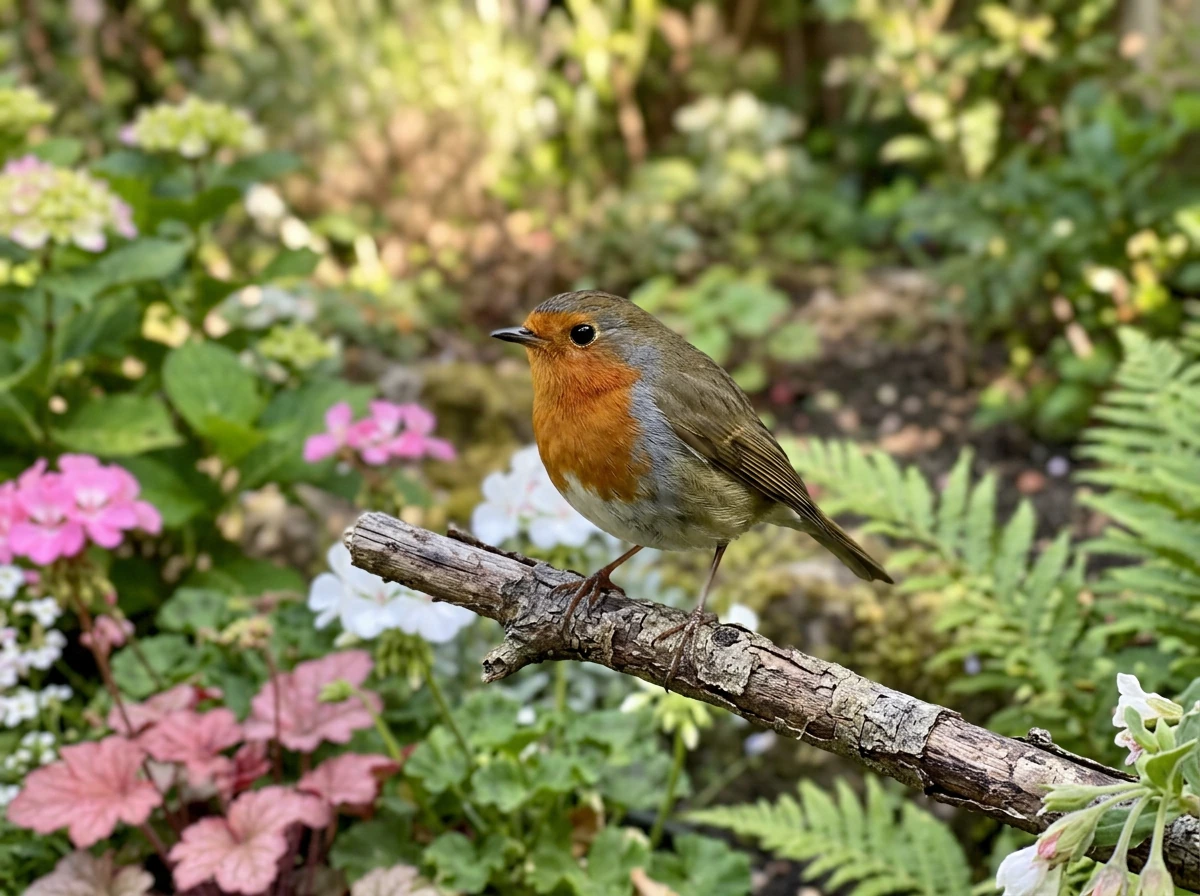
The robin's most recognizable spiritual themes are renewal, awakening, and the promise of good things ahead. Its bright red-orange breast is almost universally associated with vitality, passion, and the life force returning after a period of cold or difficulty. In many European traditions, the robin was treated with extraordinary reverence. The old English folklore surrounding the "robin redbreast" described it as a bird of good omen, and harming one was considered deeply unlucky. Part of this esteem traces back to legends like the Babes in the Wood, where robins were said to cover abandoned children with leaves to keep them warm, painting the robin as a tender, protective presence.
In a broader spiritual context, the robin is commonly associated with the following themes:
- New beginnings and fresh starts, especially after a period of struggle or stagnation
- Hope and optimism, the sense that better days are genuinely coming
- Divine guidance and the presence of loved ones in spirit, particularly in Celtic and folk Christian traditions
- Courage and confidence, since the robin is a small bird that sings boldly and defends its territory fiercely
- Awakening intuition, and the invitation to trust your inner voice more fully
- Joy returning after grief, a gentle reminder that lightness is still available to you
The robin's red breast also carries its own symbolism. In some traditions it is linked to the heart chakra, love, and emotional healing. In older Christian folklore, the robin's breast was stained red while it tried to pull thorns from Christ's crown, giving the bird a sacred, selfless quality. Whether or not you come from a Christian background, the theme of compassion and sacrifice running through that story adds another layer to the robin's spiritual profile.
It is worth noting here that the American robin and the European robin are actually different species, though both carry overlapping spiritual themes across traditions. If you are researching specifically the American robin bird spiritual meaning or the red robin bird spiritual meaning, the core symbolism is remarkably consistent: renewal, vitality, and the return of hope. The differences tend to show up in regional folklore rather than in the spiritual themes themselves. american robin bird spiritual meaning
Common Robin Encounters and What They May Mean
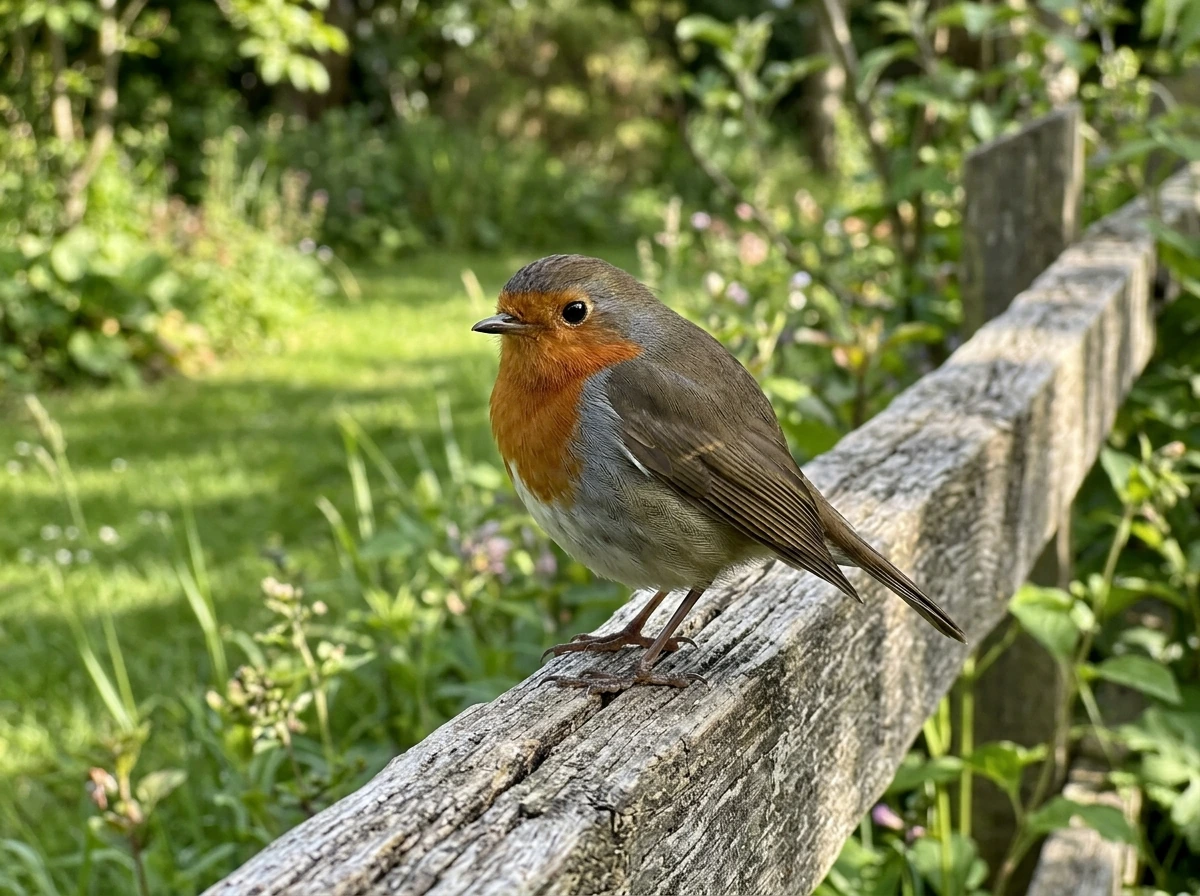
Where and how you encounter a robin shapes the message considerably. A robin sitting calmly on your garden fence carries a different energy than one that flies directly into your path or appears during a moment of personal crisis. Here are the most common encounter types and how to think about each one.
Robin appearing unexpectedly or unusually close
When a robin appears in an unexpected place, or approaches closer than birds normally do, many spiritual traditions read this as a direct sign. The closer the encounter, the more intentional it tends to feel. If the robin held eye contact with you, lingered without flying away, or followed your movement, treat that as a nudge worth paying attention to. The message in these encounters is often one of reassurance: you are on the right path, or someone or something is watching over you.
Robin tapping or hitting a window
Window tapping is one of the most searched robin encounters, and it comes with both a practical and a spiritual explanation. Behaviorally, robins, especially territorial males in spring, will tap or repeatedly strike windows because they see their own reflection and perceive it as a rival bird. This is called reflection boxing, and it is most common in spring when territorial instincts run high. Knowing this does not have to strip the moment of meaning. Spiritually, a bird tapping at a window is often read as a message trying to get your attention, something you have been ignoring or avoiding is making itself known. The older folklore is more dramatic: in some regional traditions, a robin tapping three times at a window was considered an ill omen, even a warning of illness or death in the household. Most modern spiritual readers interpret it more gently as a wake-up call rather than a death warning, but it is worth acknowledging that the encounter has historically carried both hopeful and cautionary meanings depending on the tradition.
Robin landing on you
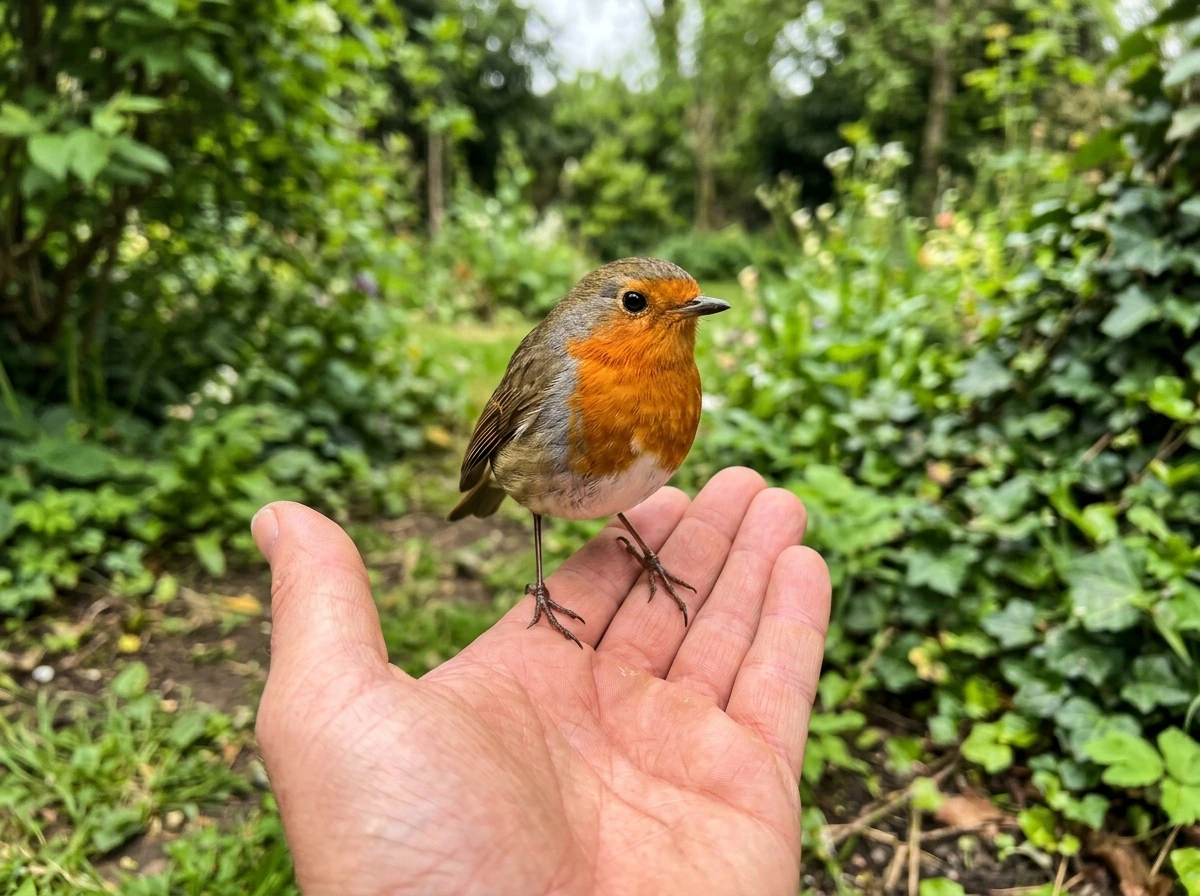
This is a rare and striking encounter that most spiritual traditions treat as a powerful, personal sign. A robin landing directly on a person is almost universally read as a blessing, a message of comfort, or the presence of a loved one who has passed. If you have recently experienced a loss and a robin lands on you, many people would see that as a deeply comforting connection. Even outside grief, a robin landing on you is generally read as a moment of grace, a reminder that you are supported and that something good is unfolding.
Robin nesting near your home
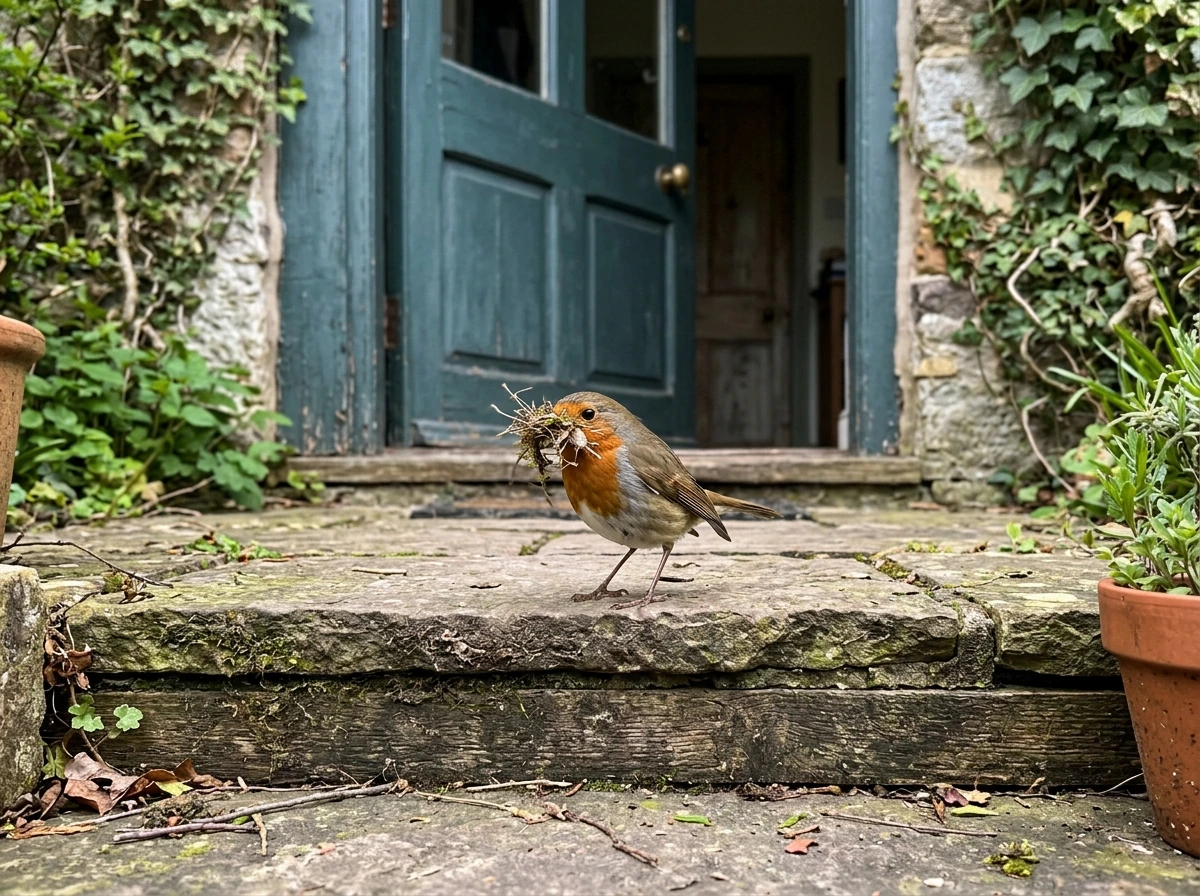
Robins build a new nest for each brood and may nest in trees, shrubs, on buildings, or even near doorways and windows. Finding a robin nesting near your home or at an entrance is traditionally seen as a very good omen, one associated with domestic harmony, new life, creative projects taking root, and protection of the household. If a robin has chosen to nest on or near your property, many traditions would say your home has been chosen as a place of good energy.
Behavior-Specific Messages: Singing, Landing, Nesting, Following
The robin's behavior during your encounter is one of the clearest ways to refine your interpretation. Here is a practical breakdown of the most spiritually significant behaviors.
| Robin Behavior | Common Spiritual Message | Practical Reflection Prompt |
|---|---|---|
| Singing near you or at your window | Encouragement, joy returning, a new chapter beginning | What area of your life is ready to open up right now? |
| Landing on you or very close | Personal blessing, presence of a loved one, strong reassurance | Who or what came to mind the moment it landed? |
| Tapping or striking a window | A message demanding attention, something unacknowledged in your life | What have you been avoiding looking at honestly? |
| Following you or staying close | Gentle guidance, you are being watched over on your path | Are you second-guessing a direction or decision right now? |
| Nesting near your home | New beginnings, domestic protection, creative projects taking root | What are you building or nurturing in your life? |
| Flying directly across your path | A sign of change ahead, pay attention to what you were just thinking | What thought were you holding at the exact moment it appeared? |
Robin song deserves special attention. Male robins are part of the dawn chorus, singing in the early morning to defend territory and attract mates. Spiritually, a robin singing at dawn near you is one of the most hopeful encounters possible. The dawn itself is symbolic of new beginnings, and the robin's voice cutting through that early quiet is often read as a direct message that something new is starting for you, whether that is a relationship, a project, a phase of healing, or a shift in perspective. A robin singing at your window was historically noted as a good omen in older superstition collections, and that reading has held across time.
Sign Variations: Seasons, Weather, and Day vs Night Sightings
Context matters enormously in spiritual sign reading, and timing is one of the most useful layers to factor in. When you saw the robin, what season was it, what time of day, and what was the weather doing? All of these details can shift the message.
Seasonal meaning
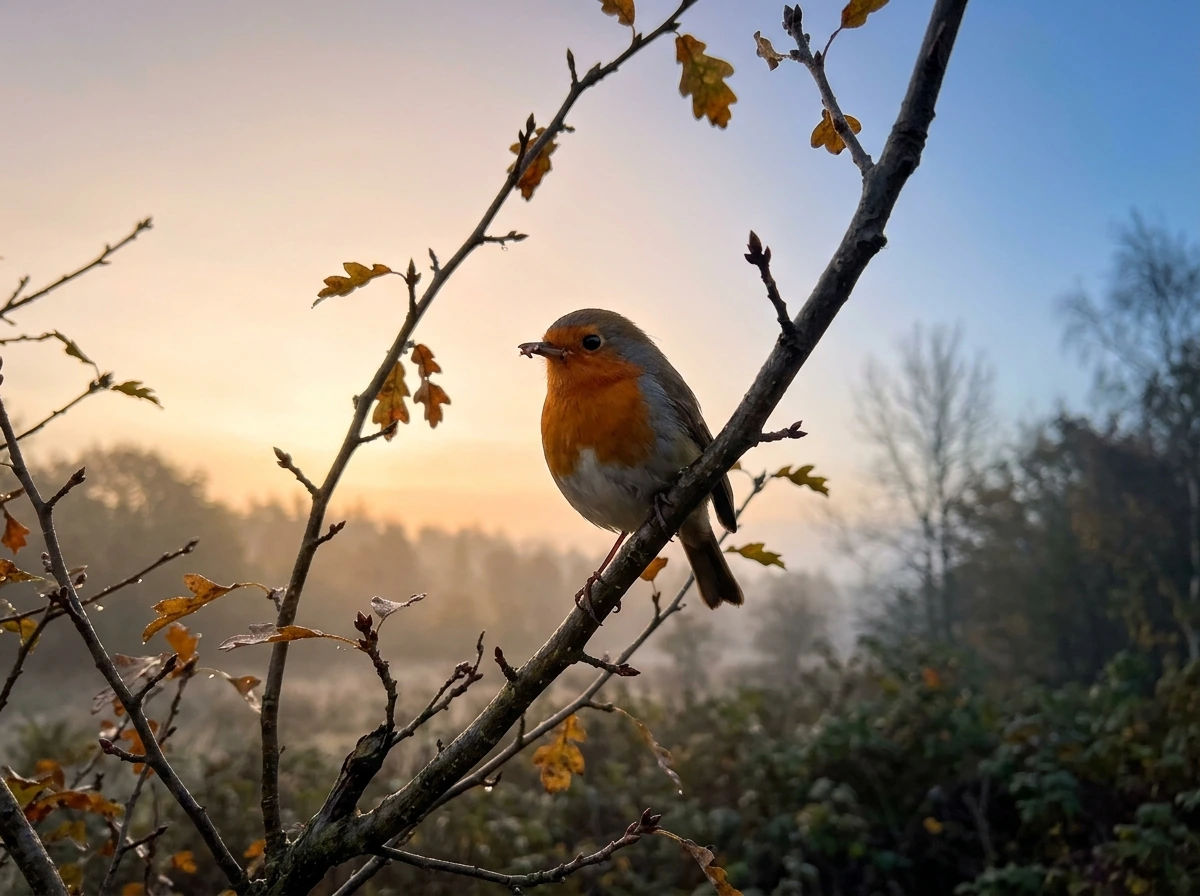
Spring is the robin's most spiritually charged season, and most people associate robin sightings with renewal and new beginnings during this time. But robins appear year-round, and each season carries its own nuance. A robin in winter, especially when seen against snow or on a bare branch, is often read as a particularly powerful symbol of hope and resilience: life persisting in the cold. In summer, when robins are busy nesting and raising young, the spiritual emphasis shifts toward growth, nurturing, and seeing something you have invested in come to fruition. In autumn, the message often touches on release, transition, and preparing for a necessary change.
Time of day
Robins are strongly associated with dawn. European robins are known to begin singing roughly an hour before civil sunrise and may continue until about 30 minutes after sunset. Spiritually, a dawn encounter with a robin amplifies themes of new beginnings and awakening. If you saw or heard a robin at dusk or in the evening, the message tends to lean toward reflection, completion, and the closing of one chapter before another begins. A robin encountered at midday, in full light, is often simply read as an affirmation of the path you are currently on.
Weather and environmental context
A robin appearing after rain is one of the most classically hopeful signs in bird symbolism, connected to the idea of storms passing and clarity arriving. A robin singing in the middle of a rainstorm carries a bolder, more courageous message: keep going, even in difficulty. If the robin appeared on a clear, bright day, the reading is generally straightforward and affirmative. If it came during fog or overcast conditions, the message might be more about navigating uncertainty with faith, even when you cannot see the full picture yet.
How to Interpret Robin Meaning with Intuition and Context
Here is something I always tell people who ask me about bird encounters: the most accurate interpretation is the one that resonates with your specific life circumstances at the time. Spiritual symbolism gives you a vocabulary, but your intuition gives you the translation. No external source, including this article, can tell you with certainty what the robin meant for you personally. What it can do is give you a framework to reflect within.
One of the most useful tools here is what some mindfulness traditions call non-judgmental observation. Before you try to decode the encounter, simply sit with it. Notice what you felt in the moment, without immediately labeling it as good, bad, meaningful, or coincidental. Rushing to assign meaning can actually get in the way of genuine intuitive insight. Observe first, interpret second.
It is also worth being honest with yourself about confirmation bias. If you are going through a difficult time and desperately want a sign of hope, you may be more likely to notice robins and assign them that meaning, while ignoring encounters that do not fit. This is not a reason to dismiss your experience. It is a reason to hold your interpretation with some lightness rather than treating it as absolute truth. The robin can be a genuine and meaningful sign AND your mind can be primed to look for it. Both things can be true at once.
Ask yourself these questions when you are trying to interpret your specific encounter:
- What was I thinking about or feeling in the moment the robin appeared?
- Did the encounter feel ordinary or did something about it feel significant? Trust that distinction.
- What is the most pressing situation or question in my life right now? How might the robin's symbolic themes apply to that?
- Did I feel comforted, warned, energized, or something else entirely? My emotional response is data.
- Have I been asking for guidance recently, consciously or not?
Your answers to those questions will get you much closer to a meaningful personal interpretation than any generic list of robin symbolism. The themes of renewal, courage, and new beginnings are your starting points, not your conclusions.
Practical Next Steps and Grounding After a Robin Encounter
Once you have sat with the encounter and started to form a sense of what it might mean, here are some concrete things you can do to deepen the experience and integrate any guidance you feel you received.
Journal it while it is fresh
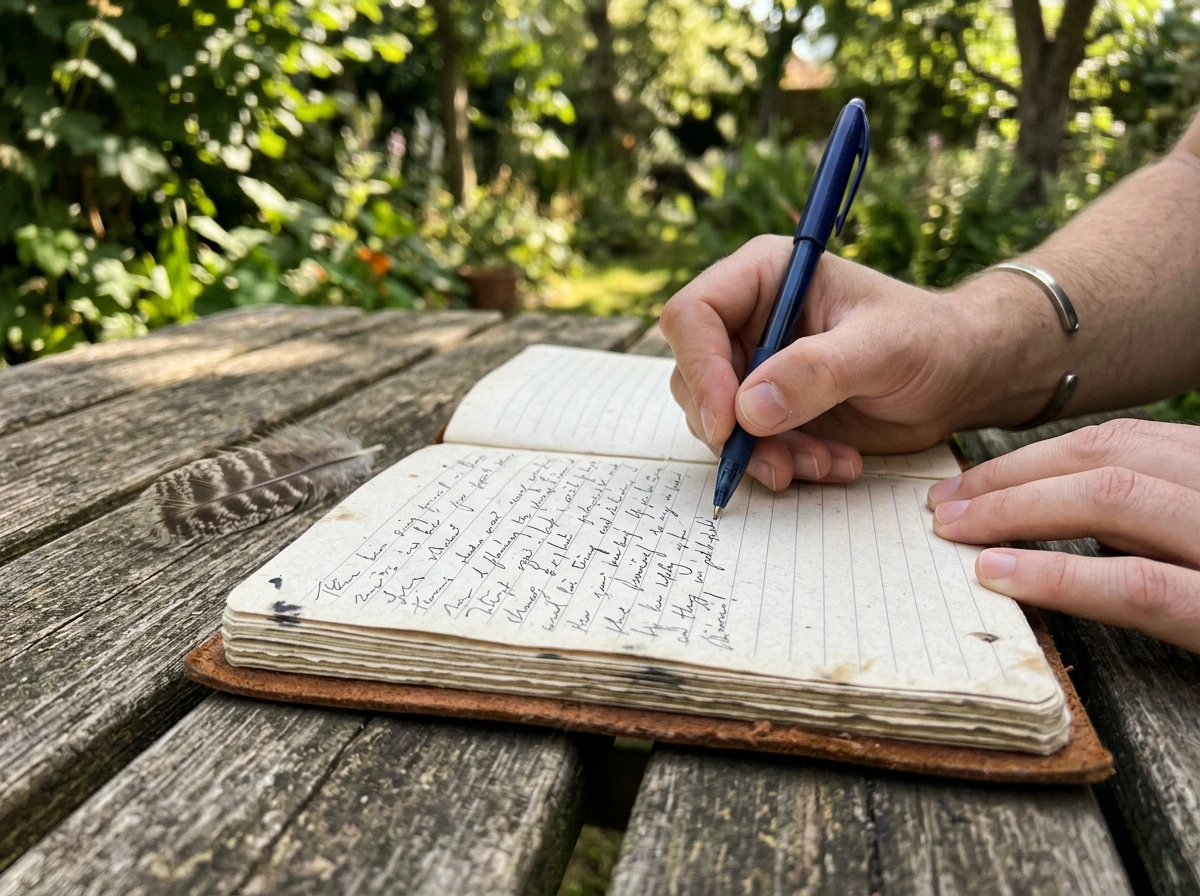
Write down what happened as specifically as possible: the time, the season, the weather, the robin's behavior, and most importantly, what you were thinking and feeling at the moment. Then write freely about what the encounter brought up for you. Do not edit yourself. Some of the most meaningful insights from encounters like this come through the act of writing, not the act of analyzing.
Try these specific journaling prompts after a robin encounter:
- What in my life right now needs a fresh start or a renewed sense of hope?
- Is there something I have been avoiding that this encounter might be pointing me toward?
- If this robin was a message from someone I love or from my own deeper wisdom, what would it be saying?
- What would I do differently today if I fully trusted that things are going to work out?
Set a small, grounded intention
If the robin's message felt like a nudge toward new beginnings or courage, do not just sit with that feeling. Let it move into action, even in a small way. Set one specific intention for the next 24 hours that aligns with what you felt. If the robin felt like a sign of hope during a hard time, your intention might be: today I will take one step toward the thing I have been putting off. If it felt like a message from a loved one who has passed, your intention might be: today I will honor their memory in one small, concrete way.
Stay grounded and avoid over-interpreting
One of the most important things I can tell you is this: a meaningful spiritual encounter does not require you to spend the rest of the day in a state of heightened analysis. Notice the sign, reflect on it, let it inform one clear intention, and then get back to living your life. Over-analyzing repeated sightings can tip into anxiety rather than insight, especially if you start reading every robin you see as a new urgent message. Give the encounter its rightful weight, which can be quite significant, and then let it settle.
Connect with nature to deepen the conversation
If you felt a genuine connection with the robin you encountered, spending more time in nature is one of the best ways to continue that dialogue. You do not need to force another encounter. Simply go outside, be quiet, and observe. Robins are ground foragers and are easy to watch in gardens, parks, and open lawns. Spending even ten minutes watching a robin go about its day can be surprisingly settling and can help you move from intellectual analysis of the encounter into a more embodied, intuitive sense of what it was pointing toward.
If you are drawn to exploring bird symbolism more broadly, encounters with red birds in general carry their own rich tradition worth exploring, and the cardinal in particular shares some overlapping themes with the robin around vitality and spiritual messages. Each bird has its own voice, but the practice of paying attention to these encounters and reflecting on them with genuine curiosity is the same across all of them.
FAQ
How do I tell if a robin sighting is actually a personal message or just a coincidence?
If you want a practical way to judge whether it is “spiritual” or just coincidence, compare the timing to what is already on your mind. If the robin showed up right when you were making a decision, grieving, or planning a change, it is more likely your intuition tagged it as meaningful. If it happened during a completely unrelated moment, treat it as a general reminder of hope, not specific guidance.
What should I do if I keep seeing robins and it starts to feel overwhelming?
Avoid treating every robin you see as a new urgent instruction. The healthiest approach is to pick one “takeaway” from the first meaningful encounter, then give yourself a 24 to 72 hour window to act on it. After that, re-check how you feel, if the same theme keeps showing up in your life through your choices, then it is more likely an aligned message than a random repetition.
Is window tapping always a spiritual warning, or can it be normal bird behavior?
Window tapping is often “reflection boxing,” especially during spring when territorial males mistake their reflection for a rival. If the tapping is happening repeatedly over multiple days, you can still do the spiritual side by pausing and checking what you are avoiding, but you can also reduce real-life triggers by closing blinds near the window or changing reflective surfaces temporarily.
What does it mean if the robin gets very close to me or seems to follow me?
If you notice a robin acting unusually close, like landing nearby or following your movement, use that as a cue to ground your interpretation. Sit for a few minutes, notice your breath and emotions, then choose one concrete question to answer (for example, “What is asking for attention right now?”). This keeps the message connected to your real circumstances instead of chasing a vague “sign.”
If a robin lands on me, what should I do next, especially if I have no recent loss?
When a robin lands on you, many people read it as comfort, support, or connection, especially after loss. Spiritually, the most useful next step is to honor the feeling it brings up, for example by writing a short note to the person you miss or doing a small ritual in your own way. If you have no grief context, treat it as a gentle reminder to receive help and lean on your support network.
Do American and European robins have different spiritual meanings?
Yes, species differences can matter for interpretation only in a practical way. If you are in the United States, you might be more likely to be seeing American robins, and in Europe European robins. The spiritual themes often overlap, but the encounter details, like season timing and local behavior patterns, are usually more reliable than trying to force a difference into the meaning.
How should I interpret a robin sighting if the season symbolism does not match my life situation?
A seasonal interpretation can be helpful, but do not let it override what is happening in your personal timeline. For example, a robin in autumn may traditionally suggest release, but if you are preparing for something new, the “release” may be about letting go of doubt to make space. Use the season as a lens, then decide what the message is asking you to do now.
What if I am afraid the robin sign means something bad?
If you are worried about negative meanings, especially in stories about window tapping, balance caution with agency. Instead of treating it as fate, treat it as a prompt to check practical health and household matters you have postponed (simple routines like appointments, safety checks, or rest). Spiritually, frame it as a wake-up call rather than a guarantee of harm.
What concrete steps should I take after I interpret a robin as renewal or hope?
The best “action” is usually small and time-bound. Choose one intention for the next day that matches the robin theme you felt (renewal, courage, love, emotional healing), then pair it with one concrete behavior like finishing a draft, sending a message, making a plan, or cleaning out a space. This turns symbolism into momentum without forcing constant interpretation.
How can I journal about the encounter without spiraling into over-analysis?
If you feel spiritually activated after the encounter, you can keep it grounded by documenting details and your emotional response, then setting a stopping point. Try a short log, then stop analyzing and do one normal task. The goal is “one clear intention,” not endless meaning-making, which can tip into anxiety.
Next Article
Grey Go-Away Bird Spiritual Meaning: What to Do Today
Grey go-away bird spiritual meaning, likely species, symbolism of boundaries and protection, plus what to do today.