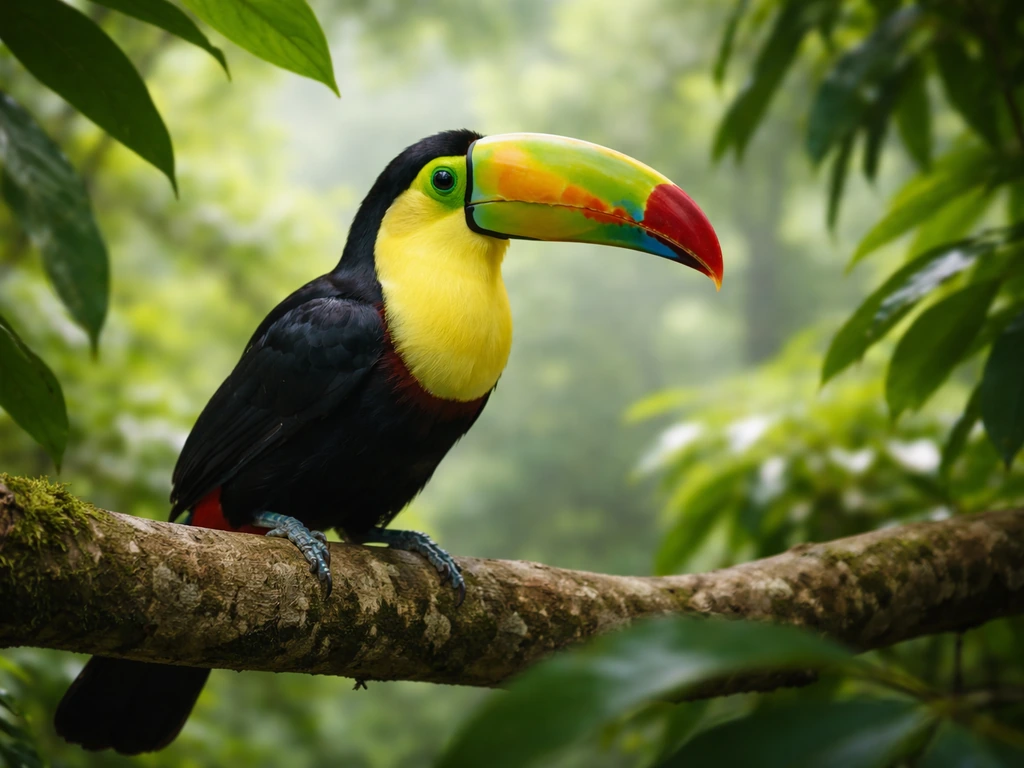
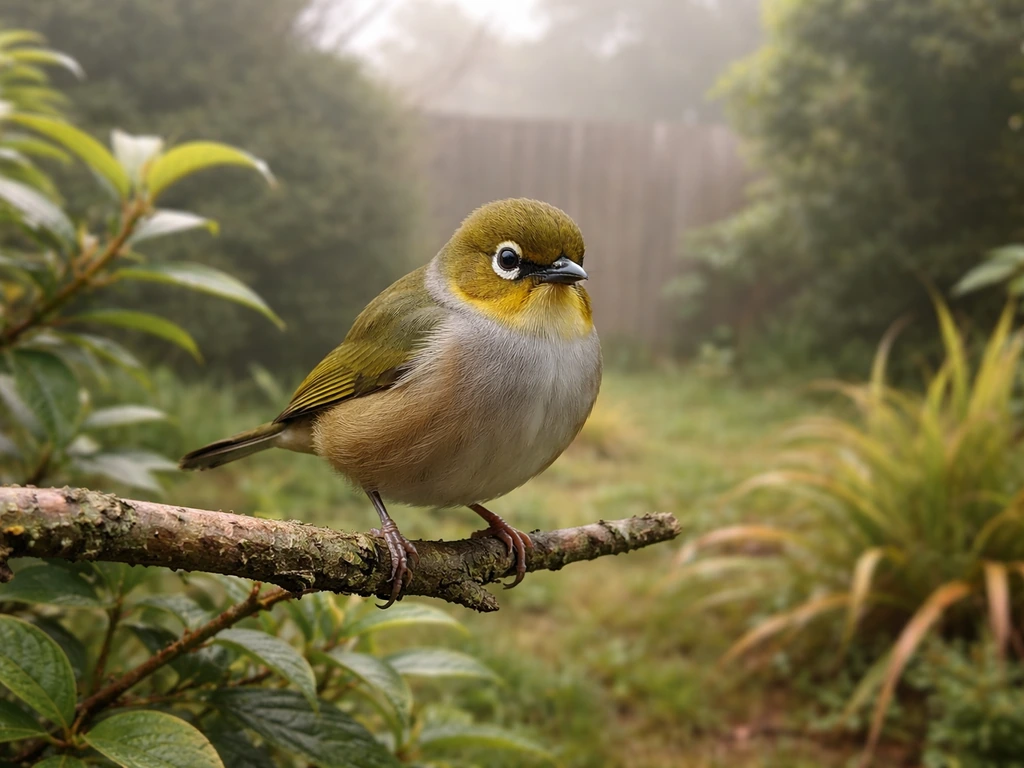
The tauhou bird is the silvereye, a tiny olive-green songbird with a striking white ring around its eyes. In te reo Māori, tauhou means "stranger" or "new arrival," and that name alone carries enormous spiritual weight. A local Sanctuary Mountain species page also explains the tauhou naming as a “new sight” connection and links tauhou to the silvereye or wax-eye concept [tauhou means "stranger" or "new arrival"](https://www. sanctuarymountain.
Tauhou Bird Spiritual Meaning: How to Interpret Encounters

Eliza Thornwick
25 Apr 2026
co. nz/about-us/our-wildlife/birds/tauhou). If you've had an encounter with this bird and you're wondering what it might mean, the short version is this: the tauhou tends to show up as a messenger about transitions, fresh starts, and the courage it takes to arrive somewhere new. But the specific message depends a lot on how it appeared to you, and that's exactly what this guide is here to help you work out.
What bird is the tauhou, and how do you confirm it's what you saw?
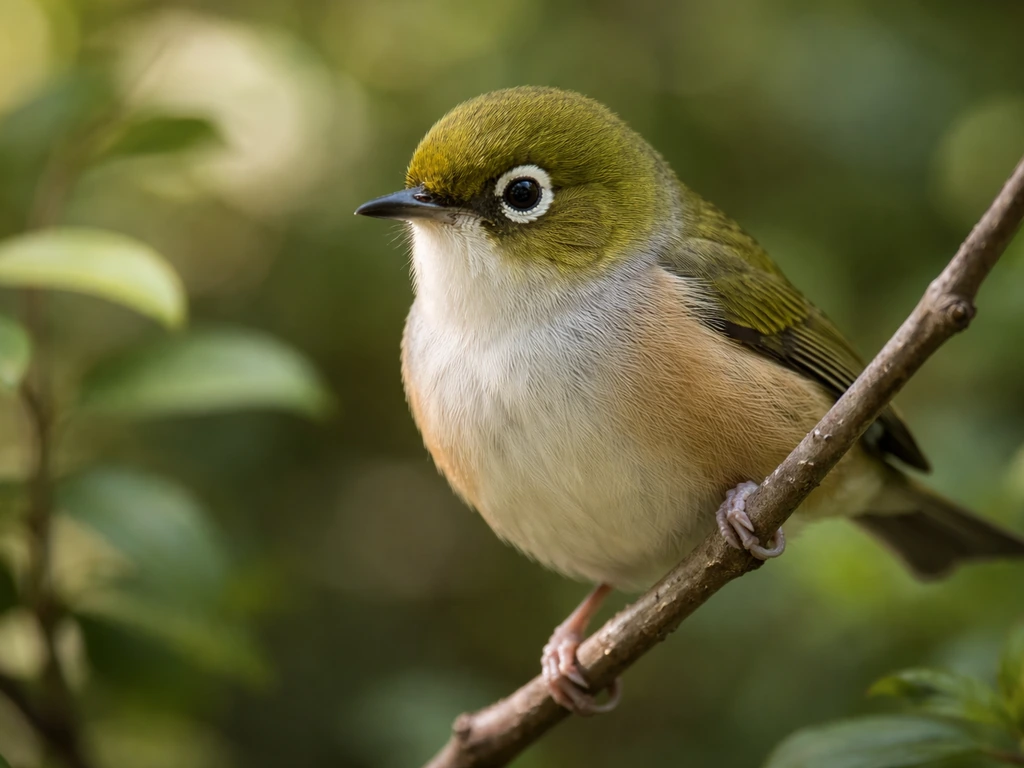
The word "tauhou" is primarily used in New Zealand, where it's the official Māori name for the silvereye (Zosterops lateralis). You'll also hear it called waxeye or white-eye. These are all the same bird. If you're outside New Zealand and you've come across the term "tauhou" in a spiritual or symbolic context, it almost certainly refers to the silvereye too.
Confirming you saw a tauhou is pretty easy once you know what to look for. It's a very small bird, weighing about 13 grams, which is barely anything. The defining feature is that conspicuous white eye-ring, almost like it's wearing glasses. Its plumage is mainly olive-green on top and creamy underneath, and it has a short, fine, slightly pointed beak. It's an active, mobile little thing that rarely sits still for long. You'll find tauhou in suburban gardens, orchards, woodlands, and forest edges across New Zealand, from sea level right up above the treeline, though it tends to avoid deep dense forest and open grassland.
If you heard it before you saw it, tauhou have a few recognizable calls. In a flock, they chatter with an excited "cli-cli-cli" or liquid "kee-kee-kee" sound. A lone bird often gives a more plaintive, drawn-out "cree" that can feel almost wistful. In winter especially, they move in flocks, so if you saw several small olive-green birds with white eye-rings moving through your garden together, that's almost certainly tauhou.
The core spiritual themes tauhou tends to bring
The meaning embedded in the bird's very name is a great place to start. "Stranger" or "new arrival" isn't just a description of how the silvereye got to New Zealand (blown across roughly 2,000 km of ocean from Australia by westerly winds), it's a lived metaphor. This bird made one of the most audacious journeys imaginable and then built a life here. When tauhou shows up in your life, it often carries a message about newness, arrival, and the willingness to be somewhere unfamiliar.
From a broader spiritual perspective, the tauhou tends to cluster around a handful of recurring themes. You don't need to believe every encounter is a message from the universe for these to be worth reflecting on. Sometimes a bird just lands in your garden. But if something about the encounter felt notable to you, these are the threads worth pulling.
- New beginnings and transitions: The tauhou's origin story is one of arrival against the odds. Seeing it often invites you to consider what new chapter is opening in your life, even if it feels uncertain.
- Adaptability and resilience: This bird didn't just survive its crossing, it thrived and spread across an entire country. Tauhou may be reminding you that you're more adaptable than you think.
- Community and connection: Tauhou are deeply social birds, especially in winter when they flock together. Their appearance may point to your relationships, your need for community, or the strength found in belonging.
- Seeing clearly: That white eye-ring is impossible to miss. Spiritually, it's often associated with clear sight, perception, and the ability to see what others miss or what you've been avoiding looking at.
- Courage in vulnerability: Being a stranger, arriving somewhere new, is an act of courage. The tauhou may be signaling that it's time to take a brave step, even if you feel like an outsider.
What the encounter type is telling you
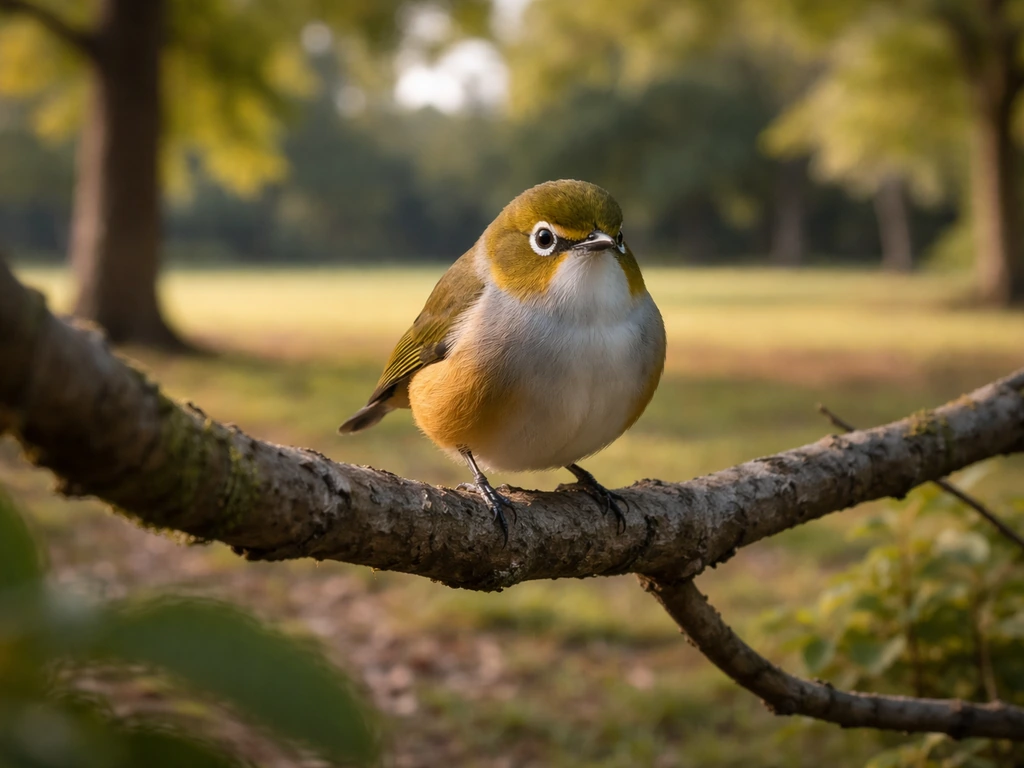
You simply saw a tauhou
A straightforward sighting, especially a repeated one, is usually a gentle nudge rather than an urgent message. If you've been noticing tauhou more than usual, ask yourself what's new or changing in your life right now. Are you on the edge of a transition? Have you been resistant to something unfamiliar? The tauhou's energy here is encouraging, almost like a soft tap on the shoulder saying: it's okay to arrive somewhere new.
The tauhou came close to you or landed near you
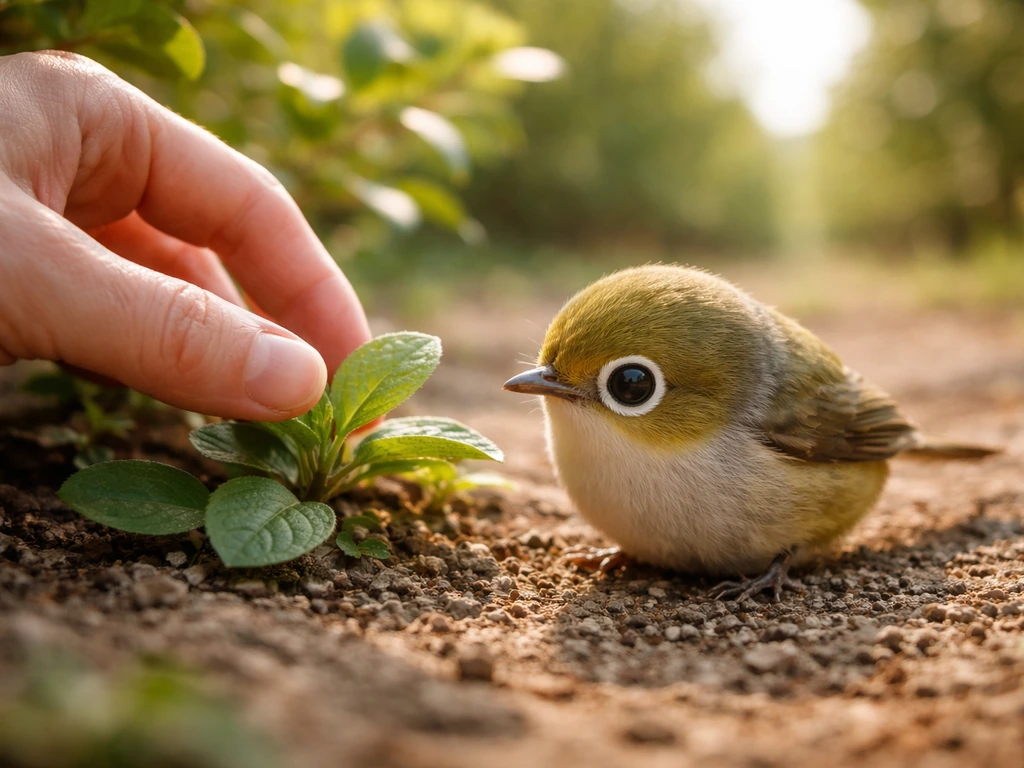
Tauhou are described as small and friendly, and they will sometimes come surprisingly close to humans, especially in gardens or orchards where they're foraging. If one approached you, landed nearby, or made direct eye contact, the spiritual invitation becomes more personal. This kind of encounter often points to a message that's meant specifically for you rather than a general theme. Sit with it. What were you thinking about right before it appeared? What question have you been carrying? That context matters more than any general interpretation.
Tauhou tapping on or hitting a window
Window encounters are among the most common things people ask about when it comes to bird symbolism, and it helps to know what's actually happening. When a tauhou repeatedly taps on a window, it's usually because the bird can see its own reflection and is treating it as a territorial rival. It's defending its space against a version of itself it doesn't recognize. Ecologically speaking, this is a normal behavior during breeding season.
The spiritual layer here is genuinely interesting, though. A bird fighting its own reflection, not recognizing itself, is a potent symbol. Many traditions would read this as a prompt to examine where you might be in conflict with yourself, where your self-perception might be distorted, or where you're expending energy battling an illusion rather than seeing clearly. If the window strike was accidental (the bird hit the glass and didn't linger), it may simply be that the window was reflecting sky or foliage and looked like open air. That's a practical explanation, and it's worth noting before you build too much meaning around it.
A tauhou nesting near your home
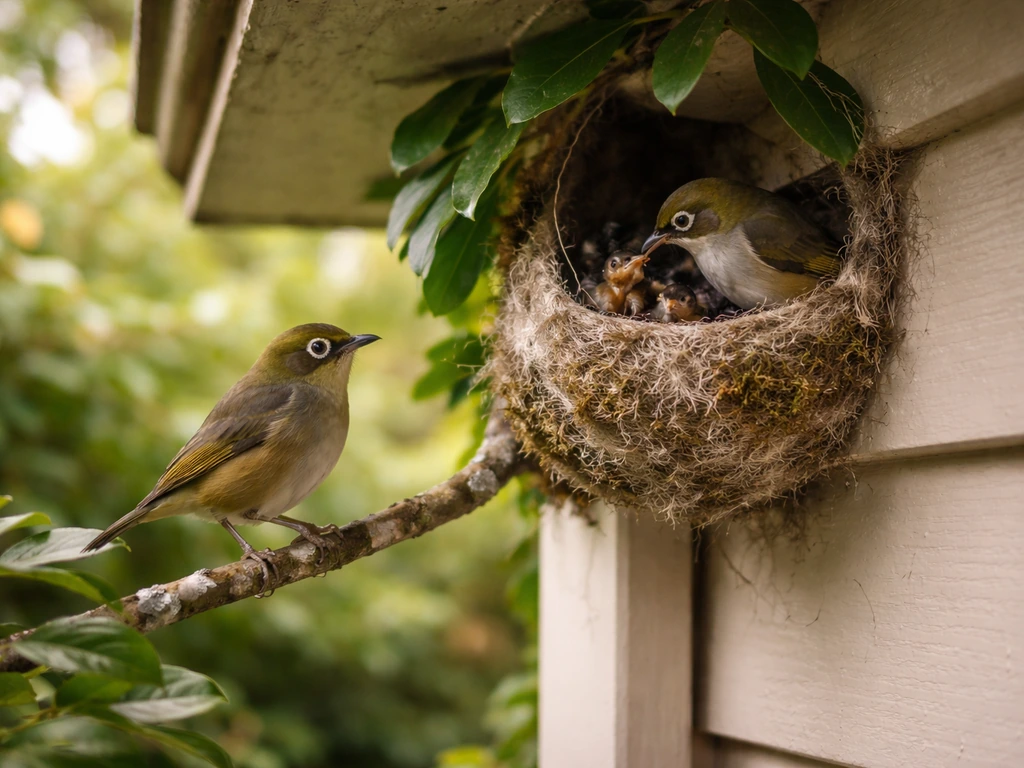
Finding a tauhou nest near your home, or watching a pair build one, is generally read across many spiritual traditions as a sign of fertility, new growth, and the establishment of something lasting. Tauhou pairs are territorial during breeding season, actively protecting the space they've chosen. If they've chosen your space, that's worth noticing. Spiritually, this often speaks to foundations being laid, projects or relationships that are ready to grow roots, and a period of creative or personal expansion coming into form.
Finding a dead tauhou or other unexpected signs
Finding a dead bird always feels significant, and it's natural to wonder what it means. Before reaching for symbolic interpretation, it helps to consider the practical: tauhou frequently fly into windows (they can be disoriented by reflections of open sky or trees), and they're small and vulnerable to cats. A bird that hits a window may appear fine and then die later from internal injuries. If you find a dead tauhou near glass, that's most likely what happened, and it's worth making your windows more visible to birds as a practical response.
Spiritually, a dead tauhou is most often interpreted as a marker of endings that make space for new arrivals. Given this bird's core meaning as a "new arrival," finding one that has passed can symbolize that a cycle of transition is completing, that something which was new is now integrated, or that you're at the very end of one chapter and about to step fully into the next. It's rarely interpreted as a bad omen in isolation. Context matters enormously here, especially what's going on in your life at the time.
Other signs, like tauhou droppings on your car or home, are almost always practical rather than symbolic. That said, in some folk traditions, bird droppings are considered a sign of incoming luck or unexpected abundance. If that resonates with you, you're welcome to hold it lightly.
How to figure out what the message actually means for you
Here's the thing about bird symbolism that a lot of guides don't say clearly enough: the timing and your emotional state at the moment of the encounter matter just as much as any traditional meaning. A tauhou appearing while you're feeling stuck in a dead-end job carries a different message than the same bird appearing on the morning you've just made a big decision. Your inner state is part of the interpretation.
Ask yourself a few honest questions when you sit with the encounter. What was I thinking about or feeling just before I saw it? What areas of my life are currently in transition? Is there somewhere I feel like a stranger or a new arrival? Am I resisting change that's already happening? The tauhou's energy is almost always forward-facing. It doesn't tend to show up to tell you to stay put.
Also notice the flock or solo distinction. A lone tauhou giving that plaintive "cree" call may be pointing to something more personal and introspective, while a flock moving through your space tends to speak to community, collective energy, and your place within a group. Winter sightings of flocking tauhou often carry messages about finding warmth and solidarity through a difficult season.
Practical things you can do today
You don't need to turn this into a major spiritual practice if that's not your style. Even a few minutes of intentional reflection can help you receive whatever this encounter is offering. Here are some concrete starting points.
- Write down the encounter details now, while they're fresh. Note the time of day, where you were, what you were doing, and how you felt. These specifics will help you make sense of the timing later.
- Journal on this prompt: "Where in my life am I arriving somewhere new, and what is making me hesitate?" The tauhou's name is your best clue about the core message.
- Sit with this question for a few minutes: "What would it look like to be as adaptable and brave as a bird that crossed 2,000 km of open ocean?" That's not a metaphor, that's what this bird literally did.
- If you want to set an intention, try something like: "I am open to new beginnings, even when they feel unfamiliar." Keep it simple and connected to what actually showed up for you.
- If the tauhou came to your window, take the practical step of adding window decals or external patterns to reduce future strikes. Birds can see UV light, and UV-reflective decals stand out clearly to them even when they're nearly invisible to us.
- Look at what's currently changing or arriving in your life, in relationships, work, creative projects, or where you live. Make a short list and notice which one carries the most emotional charge. That's likely where the tauhou's message is pointing.
A note on cultural context and not forcing a meaning
The spiritual meaning explored in this guide draws primarily from the Māori name and the bird's own natural history, which is honestly one of the richest symbolic foundations any bird could have. The silvereye has no deep pre-colonial Māori mythological tradition attached to it the way some other native New Zealand birds do, partly because it's a relatively recent arrival itself. That makes the name "tauhou" (stranger, new arrival) its most resonant and legitimate symbolic anchor.
If you're interested in how other New Zealand birds carry deeper indigenous spiritual meaning, the tui is a good comparison point. If you’re curious about other birds and their spiritual symbolism, you may also like to explore titmouse bird spiritual meaning as a related perspective. If you want the spiritual meaning of the tui bird in Aotearoa, it can add useful context for how these traditions differ tui bird spiritual meaning.
The tui bird is often linked with different spiritual themes in Māori tradition, so you can explore that tui bird spiritual meaning for additional context tui is a good comparison point. The tui holds a much more established place in Māori tradition and spiritual symbolism. The kiwi, too, carries its own distinct layers of meaning in Aotearoa. If you are also drawn to the kiwi, you might be curious about the kiwi bird spiritual meaning and how its symbolism compares.
The tauhou's symbolism is quieter and more personal by contrast, which is actually fitting for such a small, unassuming bird.
One final thing worth saying plainly: not every bird encounter is a spiritual message, and that's okay. Tauhou are common birds in New Zealand gardens and they forage actively through most vegetated habitats. If you want to compare that energy with another bird, you might also explore the toucan bird spiritual meaning. If you want to compare that energy with another bird, you might also explore the towhee bird spiritual meaning.
If you see one, it's entirely possible it was just hungry and your garden had good food. The question of whether to treat something as meaningful is one only you can answer, and it should be guided by your own intuition and the felt sense of the encounter. If something about it made you stop and pay attention, that instinct is worth exploring. If it felt ordinary, let it be ordinary.
The most grounded spiritual practice is the one that honors both possibilities without forcing either.
| Encounter Type | Most Likely Spiritual Theme | Practical Check First? |
|---|---|---|
| Repeated sightings | Transition, new chapter approaching, invitation to adapt | No, reflection is appropriate |
| Bird approaches or lands close | Personal message, pay attention to timing and your thoughts | No, sit with the specifics |
| Window tapping (repeated) | Self-conflict, distorted self-perception, battling illusions | Yes, likely territorial behavior toward reflection |
| Window collision (accidental) | Abrupt wake-up call, something you've been missing | Yes, check if window reflects open sky or trees |
| Nesting near home | New growth, foundations forming, creative or relational expansion | No, generally a positive sign |
| Dead tauhou found | End of a cycle, space clearing for what's next | Yes, check for window strikes or predator signs |
FAQ
If I saw a tauhou once, does that automatically mean it’s a spiritual sign?
Yes, but don’t force a single “fixed” message. Use the bird’s core theme (new arrival, transition) as the baseline, then match it to what was most active in your mind right before you noticed the tauhou (for example, job change, moving, ending a habit). If nothing in your life feels in motion, treat the encounter as a reflective nudge rather than a directive.
How can I be sure my bird was really a tauhou (silvereye) before I attach meaning to it?
Glasses-like eye-ring and small, active movement are helpful, but you can still misidentify silvereyes when they’re far away. If you can’t confirm the distinctive white eye-ring or the size, stay cautious with spiritual conclusions and instead focus on the “felt significance” (did it interrupt your attention, did it calm you).
What does it mean if a tauhou hits my window, versus repeatedly tapping the glass?
Window strikes can happen at any time, and timing matters. If the bird hit the glass and was gone quickly, it points more strongly to reflection-related disorientation. If it lingered, tapped repeatedly, or you saw it recover and fly away, that suggests the encounter felt intentional, even if a window was involved.
A tauhou came close to me. Does that make the spiritual message more personal?
If the bird approached you or made direct eye contact, consider a “micro-message” about your personal boundaries, because tauhou sometimes forage close to humans in gardens. A useful check is to ask, what were you doing mentally in that moment, relaxing, rushing, or pushing past discomfort. The meaning tends to be about your next step, not a distant fate.
If I keep seeing tauhou in flocks, how is that different from one lone bird?
If multiple tauhou show up in a short period, especially in winter or in a moving flock, interpret it as a broader theme: community support, warmth, and momentum through a slower season. For practical contrast, ask whether you’ve been isolating, or whether you’ve recently reconnected with people. The symbolism usually follows your social pattern more than your individual one.
If there’s a tauhou nest near my home, how should I interpret it practically and spiritually?
Generally, yes. Nesting nearby is about something taking shape in a tangible way, but it doesn’t guarantee speed. Pair protection can also indicate defensiveness, so a grounded takeaway is to give your project or relationship adequate space and stability (routines, resources, clear boundaries) rather than trying to force growth.
Are tauhou droppings on my car or home a sign of good luck?
If you find droppings, treat it as a low-stakes omen unless it clearly coincides with an emotional turning point. A practical approach is to clean up, note the timing, and then reflect briefly on what “incoming abundance” could realistically mean for you right now (more opportunities, better nutrition, improved savings), instead of expecting sudden windfalls.
Does tauhou symbolism always point to a new person or opportunity, or can it be about inner change too?
Yes, and it’s a common mistake to assume “new arrival” always means something external. It can also refer to an internal change, like learning a new skill, adopting a new identity, or accepting a new version of yourself. The decision aid is to ask, what new perspective have you been reluctant to try?
What’s a simple way to turn a tauhou encounter into a useful next step?
You can, but keep it proportionate. A helpful method is a one-minute journaling check after the encounter: (1) What was I thinking or feeling? (2) What transition is underway? (3) What would “arriving somewhere new” look like this week? If the answer feels like action, lean into it. If it feels vague, treat it as a gentle reflection only.
Next Article
Toucan Bird Spiritual Meaning: What It Usually Signals
Interpret toucan bird spiritual meaning from signs like calls, repeated sightings, dreams, and what to do next for joy