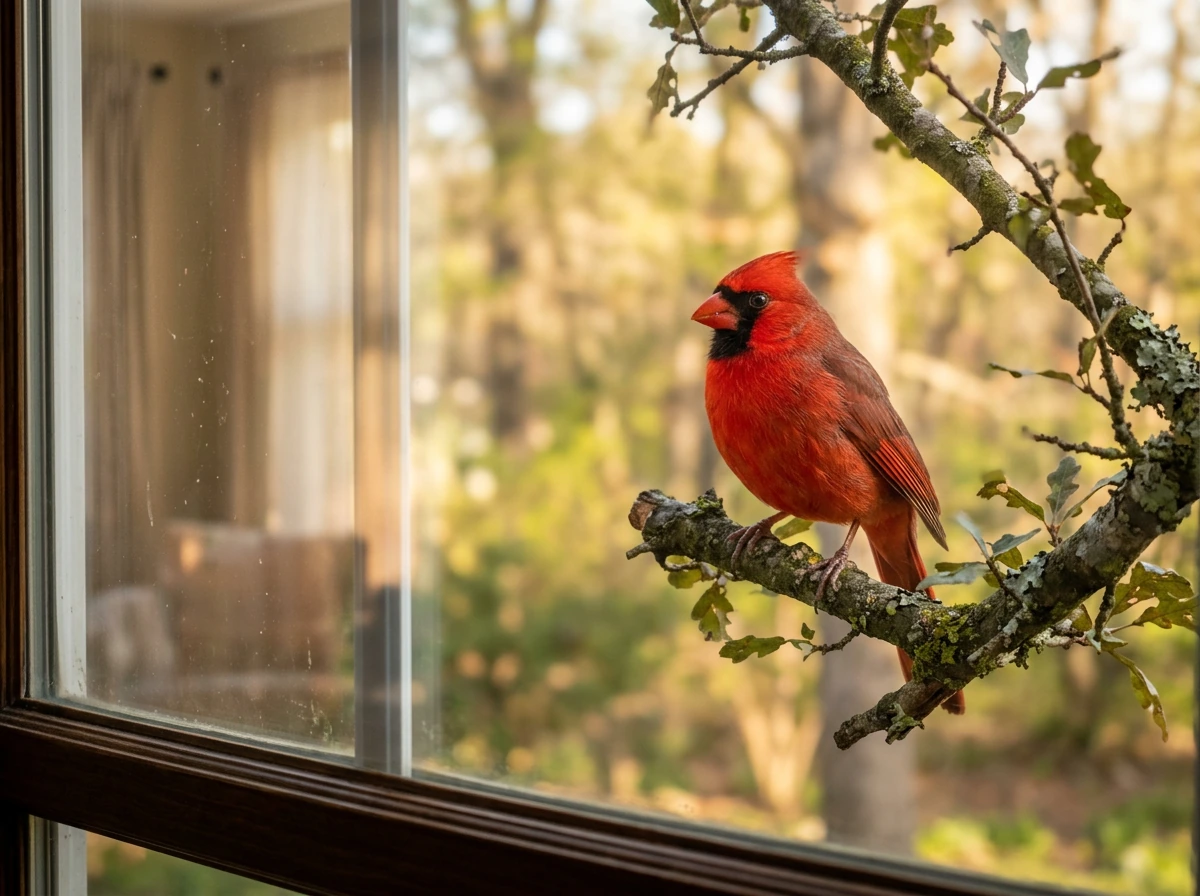
If you saw a red bird today and felt like it meant something, you are probably right to pay attention. Red birds carry some of the richest spiritual symbolism of any creature you might spot in your yard or along a trail. The short answer is this: a red bird most commonly signals vitality, passion, courage, divine presence, or a message from someone you have lost. But the longer, more honest answer is that what it means for you depends on how it showed up, where you were, and what was already on your mind. This guide will walk you through all of it, including how to read that encounter through a biblical lens without inventing a verse that does not exist.
Red Bird Meaning Spiritual and Biblical Significance

Eliza Thornwick
3 Apr 2026
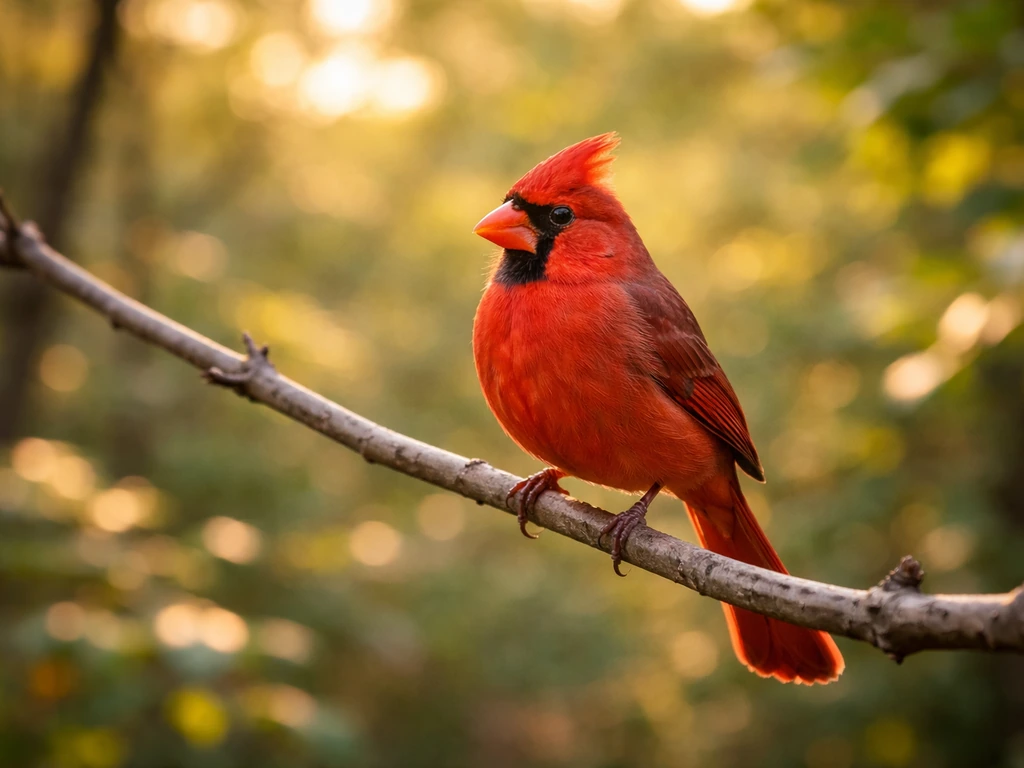
Why so many people search 'red bird meaning' in the first place
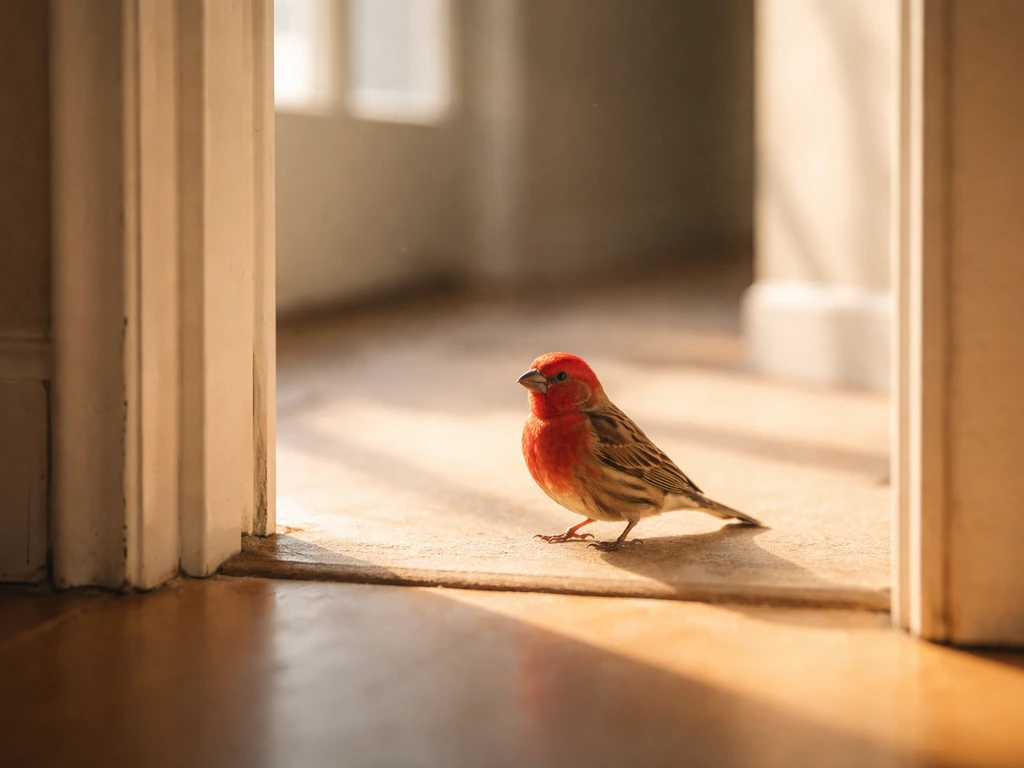
Most people who land on a page like this are not casual browsers. They saw something, felt something, and want to know if it meant something. Maybe a vivid red bird landed two feet from you while you were grieving. Maybe you keep seeing one every morning for a week. Maybe it tapped your window. That visceral sense that the universe is trying to get your attention is completely normal and spiritually valid across dozens of traditions.
Here is the honest context you need before diving in: when most English speakers say 'red bird,' they almost always mean the northern cardinal. The word 'redbird' is literally a folk name for the cardinal in many parts of the United States. So a lot of what you will find online about the spiritual meaning of a red bird is, in practice, cardinal symbolism dressed in broader language. That is not wrong, it is just worth knowing so you can read sources intelligently.
There is also a split in what people are actually looking for. Some readers want pure spiritual or metaphysical symbolism, the kind rooted in energy, omens, and archetypal meaning. Others specifically want a biblical angle and search terms like 'red bird meaning in the Bible' or 'biblical meaning of a red bird.' Both are valid starting points, and they overlap more than you might expect. This article covers both.
What red birds symbolize spiritually
Across modern spirituality and older folk traditions, red birds cluster around a consistent set of themes. The color red itself is doing heavy lifting here: it is the color of blood, fire, the root chakra, the heart, and urgent attention. Put that color on a living, breathing, singing creature and you have a potent symbol.
- Vitality and life force: Red birds are widely read as reminders that you are alive and should act like it. When you feel stuck or numb, a red bird sighting is often interpreted as a nudge to re-engage.
- Passion and courage: The boldness of a red bird's color is linked to bravery, confidence, and following something you love even when it feels risky.
- Messages from deceased loved ones: This is probably the most common interpretation in modern Western spirituality. Many people believe a red bird appearing after a loss is a sign that someone they loved is still near.
- Spiritual awakening or awareness: Some traditions read a red bird as confirmation that you are opening up to something bigger than yourself, a sign that your inner eyes are becoming more sensitive.
- Warning or heightened attention: Red is also a warning color in nature. A red bird can sometimes be read as a prompt to pay closer attention to your surroundings or a decision you are facing.
- Love and emotional depth: In some folk traditions, a red bird near your home signals incoming love or the deepening of a current relationship.
These themes are not mutually exclusive, and no single source owns the definitive list. What matters is which theme resonates with what is already alive in your life right now. That personal resonance is doing the interpretive work, not the bird.
The cardinal, as the most iconic red bird in North America, carries much of this symbolism most strongly. If you want to go deeper on that specific species, the cardinal bird spiritual meaning goes into far more detail about how different cultures and traditions have specifically honored the cardinal.
The biblical angle: what the Bible actually says (and doesn't say)

Let me be direct with you here: the Bible does not have a passage that says 'when you see a red bird, it means X.' Anyone claiming to give you the definitive biblical verse about red birds is either stretching the text or simply making it up. That does not mean the Bible has nothing to offer on this topic. It absolutely does. But you have to work with what is actually there.
The most relevant and grounding biblical passage for any bird encounter is Matthew 10:29-31, where Jesus points to sparrows to teach that not one bird falls outside God's awareness, and then says 'do not be afraid; you are worth more than many sparrows.' The interpretive posture Scripture most consistently points you toward when you see a bird is not dread or superstition. It is courage and reassurance of God's care. That is a genuinely useful frame for a red bird encounter.
There is also rich biblical imagery around red and crimson that is worth connecting. Leviticus 14:4 includes scarlet yarn in a ritual of cleansing and covenant restoration. Isaiah 1:18 famously says 'though your sins are like scarlet, they shall be as white as snow.' Red in biblical imagery is consistently tied to blood, sacrifice, purification, and the restoration of relationship with God. When a red bird appears during a season of guilt, grief, or spiritual searching, those crimson-covenant themes are worth sitting with.
Bird imagery specifically in Scripture is almost always tied to God's provision and care rather than to omens. Ravens fed the prophet Elijah in 1 Kings 17:6 because God commanded it. Sparrows are used in Matthew 10 to illustrate intimate divine attention. The pattern is clear: birds in the Bible point to God's active presence and provision, not to fortune-telling.
Spiritual meanings vs. biblical themes: a side-by-side look
Here is a practical crosswalk so you can see how the spiritual symbolism traditions and the biblical themes actually line up. They converge more often than they clash.
| What you feel the red bird might mean | Spiritual/archetypal tradition | Biblical/thematic parallel |
|---|---|---|
| A message from a loved one who has passed | Messenger from the spirit world; the soul visiting in bird form | God's comfort in grief; the Spirit as comforter (John 14:16); God's awareness of every creature |
| You need more courage right now | Red as the color of bravery and vital life force | Matthew 10:31: 'Do not be afraid'; birds as reminders of God's care |
| A season of passion or love is coming | Red as the energy of the heart, desire, and creative fire | Song of Solomon's celebration of love; God as the author of love and beauty |
| Purification or a fresh start | Red as transformation through fire, burning away the old | Isaiah 1:18: sins as scarlet made white; Leviticus 14 scarlet ritual of cleansing |
| Pay attention, a warning or shift is near | Red as a natural alert signal; heightened awareness | Deuteronomy 13's principle: test what you see against what you know to be true |
| Spiritual awakening or divine presence | A totem or spirit messenger activating awareness | God's provision through birds (1 Kings 17:6); Matthew 10 bird imagery as divine intimacy |
The honest takeaway from this table is that the spiritual traditions and biblical themes are rarely in direct contradiction. Where they differ most is in authority: biblical interpretation keeps God as the source of any message, while general spiritual symbolism may attribute it to the universe, ancestors, or the bird itself as an agent. If you hold a biblical framework, you can still receive encouragement from a red bird encounter while routing the meaning through God's character and Word rather than the bird's own spiritual power.
How to actually interpret what you saw
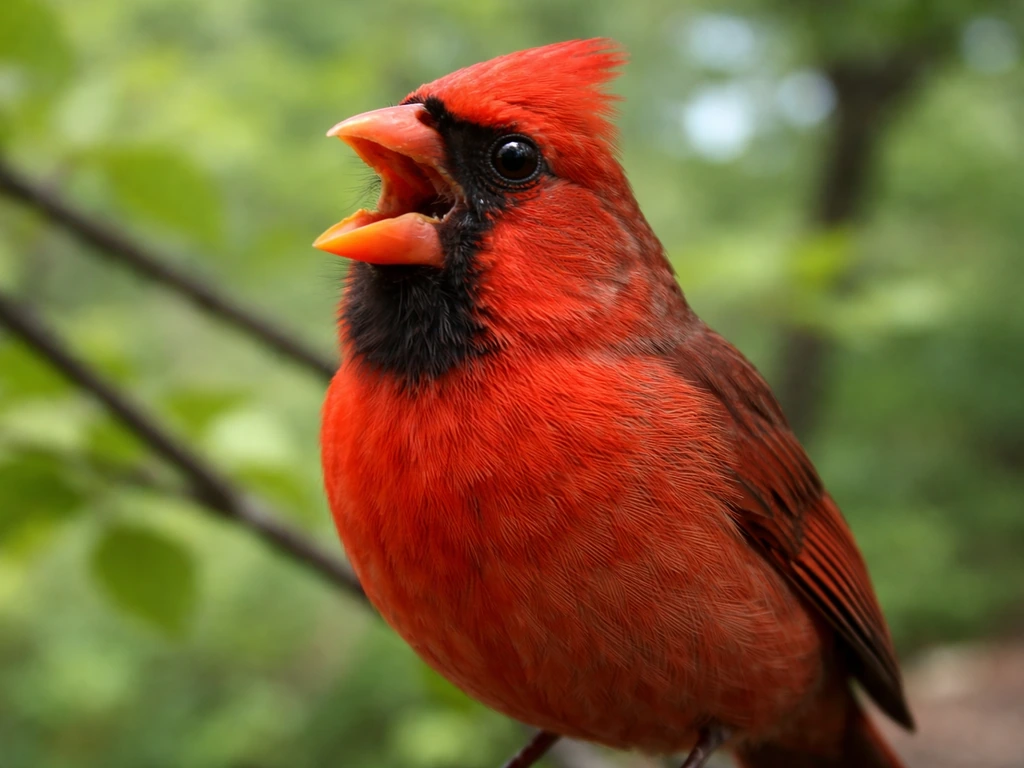
The details of your encounter matter a lot. A red bird that sat three feet away and stared at you for two full minutes is a different kind of experience than one you glimpsed through a window. Here are the interpretive layers to work through.
What the bird was doing
Singing: a red bird singing near you is widely associated with joy, communication, and an invitation to express yourself. Sitting still and watching you: stillness and direct eye contact across traditions signals intentionality, a message being delivered. Tapping or hitting a window: this tends to be read as a persistent knock, something trying to get through your awareness. Landing on you or very close to you: proximity in the animal world means something, and most spiritual traditions read this as an unusually strong or personal message. Flying across your path: a quick cross is often read as a threshold moment, you are about to move from one phase into another.
When and where it appeared
Timing and context are enormous. Did the red bird show up the day after someone died? During a moment of prayer? Right when you were making a hard decision? The encounter does not change, but your life context gives the symbolism something to attach to. A red bird at a funeral versus a red bird on your first day at a new job versus a red bird during a moment of despair each carry naturally different interpretive weight. Also notice the location: at your home suggests something about your personal life or family; in a workplace setting may speak to your career or purpose; in nature during a hike often signals something about your spiritual life or inner world.
Whether it keeps happening
One appearance can be coincidence. Repeated appearances over days or weeks are harder to dismiss and tend to signal that something is asking for ongoing attention. If a red bird keeps returning to your yard every morning, the interpretive invitation is to engage with whatever theme feels most alive for you right now, not to wait for a single definitive answer.
Which species it actually was
If your red bird was actually a robin, the symbolism shifts. Robins carry their own distinct meaning around new beginnings, spring, and renewal. You can explore that in the robin bird spiritual meaning article. The red robin specifically, with its combination of red chest and migratory arrival, carries themes of transition and hope that you can dig into through the red robin bird spiritual meaning article. And if you know it was specifically an American robin you encountered, the American robin bird spiritual meaning gives a fuller picture of what that particular species brings symbolically.
What to do after a red bird encounter

Getting a clear feeling that an encounter meant something is just the beginning. Here is how to work with it in a grounded, practical way.
- Write it down right away. Note the date, time, location, what the bird was doing, and what you were thinking or feeling in the minutes before it appeared. This is your raw data. Patterns only become visible when you have multiple data points recorded.
- Ask yourself what theme fits your life right now. Go back to the list of common red bird meanings (vitality, courage, a message, warning, love) and notice which one produces a physical response in you, a sense of recognition or a lump in your throat. That response is more useful than any external interpretation.
- If you hold a Christian framework, take it to prayer. Rather than asking 'God, did that bird mean something?' try asking 'God, what do you want me to know right now?' and then sit with the themes the encounter stirred up. You are not asking the bird. You are asking God.
- Test it against what you already know is true. The principle from 1 Thessalonians 5:21 to 'test all things and hold fast to what is good' applies here. Does the interpretation you are drawn to align with what you know of God's character? Does it encourage you toward love, courage, and relationship? Or does it lead toward fear, obsession, or replacing real decisions with symbolic ones?
- Let it remain open. You do not have to arrive at a definitive answer. Sometimes a red bird encounter is an invitation to stay curious, to soften your attention toward the spiritual dimension of ordinary life. That openness itself is the message.
- Talk to someone you trust. If the encounter stirred up grief, a major life question, or something that feels significant, share it with a trusted spiritual friend, pastor, or counselor. Symbolic experience is best processed in relationship, not in isolation.
A few honest boundaries worth keeping
Spiritual symbolism is a tool for reflection, not a decision-making system. A red bird cannot tell you whether to leave a job, end a relationship, or skip a medical appointment. If you find yourself waiting for a red bird to appear before making a serious decision, that is a signal to talk to an actual human, whether a doctor, counselor, lawyer, or trusted friend. The encounter can be meaningful and still not be the deciding factor in a real-world situation.
Also, be gentle with yourself if no interpretation clicks. Not every red bird sighting carries a cosmic message. Sometimes a cardinal is eating seeds in your yard because your yard has good seeds. The spiritually curious life is one that stays open to meaning without demanding it from every encounter. The bird does not owe you an answer.
What I love about sitting with a red bird encounter is that the very act of pausing to ask 'what might this mean?' is already doing something good. It slows you down. It opens you to the present moment. It reminds you that you are part of something larger. Whether you read it through a spiritual lens, a biblical lens, or both, that quality of attention is worth cultivating. Red birds, as it turns out, are pretty good teachers.
FAQ
How can I tell if my red bird sighting is truly meaningful or just a coincidence?
Start by writing down what you actually observed (species, distance, behavior like singing or window tapping, and the exact moment) and then match that to one theme that fits your current emotional season. Keep it to one or two meanings, so you are not forcing the encounter to explain everything at once.
Does the meaning change if the red bird appears at home versus at work versus outdoors?
Yes, location can shift the emphasis. If the bird appears at home, it often gets read as care for family or your inner life, while workplace sightings are commonly interpreted as courage, purpose, or renewed motivation. In nature during a hike, people tend to connect it to spiritual alignment and personal growth rather than specific external events.
What should I do if I keep wanting the red bird to tell me what decision to make?
Treat it as a prompt to reflect, not a sign that overrides responsibility. If you are facing a medical, legal, or safety decision, use the sighting to help you pray, journal, or calm your mind, but confirm the decision with qualified professionals and your practical next steps.
How should I interpret it if I am not sure whether it was a cardinal or another red bird?
If the bird looked like a northern cardinal, you can lean into cardinal-associated themes, but still verify by key traits. A lot of people call any red bird “red bird,” so a quick check (distinct crest, body shape, location in your region) helps you avoid mixing meanings from different species like robins.
What does it mean if the red bird tapped or hit my window repeatedly?
Window tapping is commonly read as persistence, attention, or a reminder to notice something you have been avoiding. In a biblical frame, keep it grounded by asking what area of life you may need to bring to God honestly (fear, grief, guilt, or a need for clarity), rather than assuming a specific prediction.
What does it mean if I keep seeing the same red bird over several days?
Repeated sightings are usually interpreted as an ongoing invitation, so aim for a “response plan” instead of a single conclusion. For example, choose one concrete action each time it appears (a prayer, a conversation you have been delaying, or a habit you want to rebuild) and re-evaluate after a short period.
What if the meaning I feel is fear-based or negative?
If you are worried the sighting signals something bad, use the biblical posture in Matthew 10:29-31 as a counterweight, focus on reassurance of God’s care, and avoid panic-based interpretations. You can still acknowledge grief or stress, but do not turn the encounter into a threat.
How does timing (for example, right after a death or during prayer) affect the interpretation?
Yes. If it happened right after a death, during intense prayer, or when you were making a major choice, the timing gives the symbolism a strong emotional attachment. Use that as a guide to name your real concern (loss, uncertainty, guilt, hope) and then seek comfort or support directly.
Is there a biblical verse that directly says what a red bird means?
Do not look for a specific “red bird verse,” because Scripture does not give a direct one-to-one red bird omen. Instead, route the message through themes Scripture actually emphasizes (God’s awareness, provision, purification imagery related to crimson/scarlet) and let the encounter lead you to reflection, not new doctrine.
How can I use the symbolism in a grounded way without becoming superstitious?
The best use is reflection that results in action you would take anyway, like journaling, forgiving, seeking prayer support, or scheduling an appointment. If you notice you are postponing real responsibilities waiting for another sighting, treat that as a sign to shift from symbolism to practical care.
Next Article
Spiritual Meaning of a Red Bird: What It Means When You See One
Spiritual meaning of a red bird encounter: interpret symbolism, emotions, timing, behavior, and find the message that fi