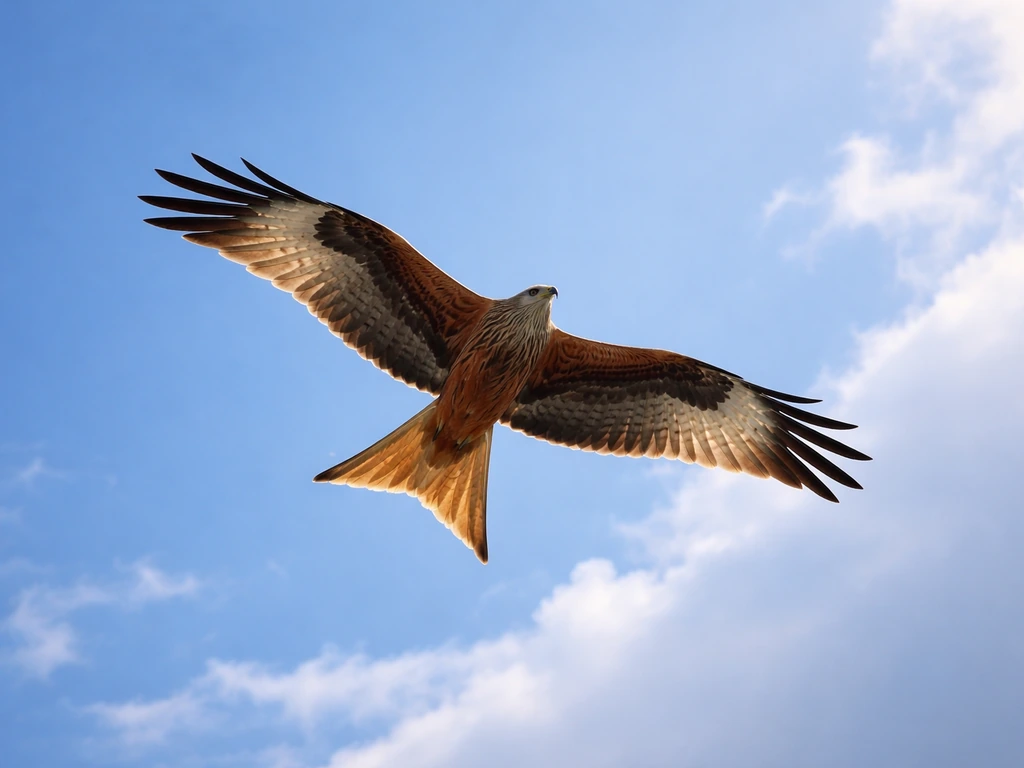
Seeing a kite bird is widely interpreted as a spiritual nudge toward clarity, vision, and decisive action. These birds are built for precision, whether they are hovering almost motionlessly over a field or riding thermals in wide, patient circles, and that behavior mirrors the message: you are being invited to rise above your current situation, get a wider view, and then move with confidence when the moment is right.
Spiritual Meaning of Seeing a Kite Bird: Practical Guide

Eliza Thornwick
24 Apr 2026

In raptor ID fact sheets, white-tailed kite behavior is often described with both hovering and pouncing highlights to support behavior-based interpretation. That is the core message. But how personal and specific that message gets depends a lot on which kite bird you actually saw, what it was doing, and what is going on in your life right now.
What seeing a kite bird usually means spiritually
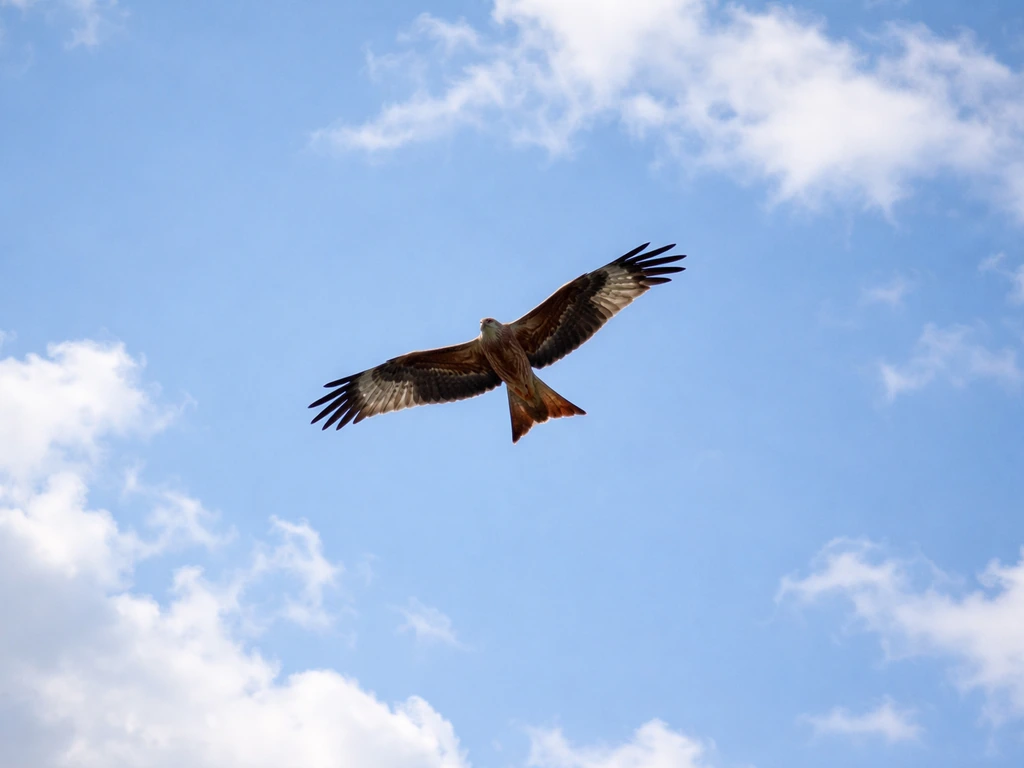
Kite birds, as a group, carry some of the most consistently positive spiritual symbolism in the raptor family. They are associated with freedom, elevated perspective, grace under pressure, and the ability to act decisively from a place of calm observation. Unlike owls (which lean into mystery and night wisdom) or crows (which carry more complex trickster energy), kites tend to arrive with a cleaner, more aspirational message: step back, see the full picture, and trust your ability to move when it counts.
If a kite bird has crossed your path today, the most immediate interpretation is that something in your life is asking for a higher vantage point. You may be too close to a problem, too caught in daily detail to see what is actually going on. The kite is a reminder that the answer is already visible, you just need to lift your perspective to find it. That said, the specifics matter, and we will get into them.
Which kite bird did you actually see?
This is genuinely important for interpretation, not just for birdwatchers. Different kite species carry slightly different energetic and symbolic signatures, and getting clear on which bird you encountered helps you tune into the right message. The term 'kite bird' gets used loosely, and people sometimes mistake other raptors for kites entirely. Here is a quick field guide to the most commonly spotted species.
Red Kite
The red kite (Milvus milvus) is hard to miss once you know what to look for. It has rusty-red plumage, long fingered wings, and a deeply forked tail that it uses like a rudder to steer in wide, soaring circles high in the sky. It moves with slow, steady wingbeats and almost seems to float. If you saw a large, warm-reddish bird gliding effortlessly with a noticeably forked tail, you almost certainly saw a red kite. Spiritually, the red kite tends to amplify themes of passion, life force, and courageous vision.
Black Kite
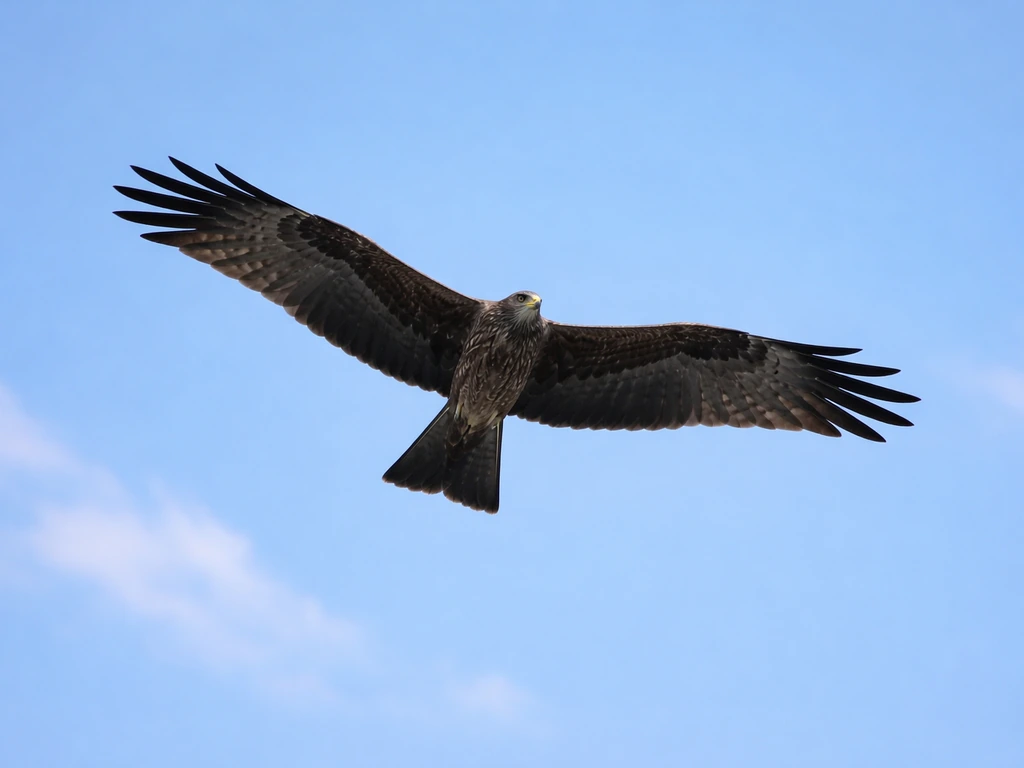
The black kite is slightly smaller than the red, has darker plumage with no rusty coloring, and a less dramatically forked tail. Its wings angle distinctively in flight, and it is blank" rel="noopener noreferrer">one of the few raptors comfortable circling and soaring over urban areas. If you saw what looked like a dark, medium-sized hawk gliding over a city or town, a black kite is a strong candidate. Its spiritual themes lean toward adaptability, resourcefulness, and finding your way through complicated environments.
White-tailed Kite
The white-tailed kite (Elanus leucurus) looks almost gull-like in coloration but has a falcon-like shape. Adults in flight are white below with black patches at the wrists and black primary feathers, plus a completely white tail with a subtle dark band near the tip. It is a small, elegant raptor more common in open grasslands and marshes in the Americas. If you saw a pale, almost ghostly bird hovering or gliding low over open ground, this is likely your bird. White-tailed kites carry strong symbolism around purity of intention and stillness before action. White-tailed kite symbolism is often linked with spiritual meaning around stillness, purity of intention, and timing.
Mississippi Kite
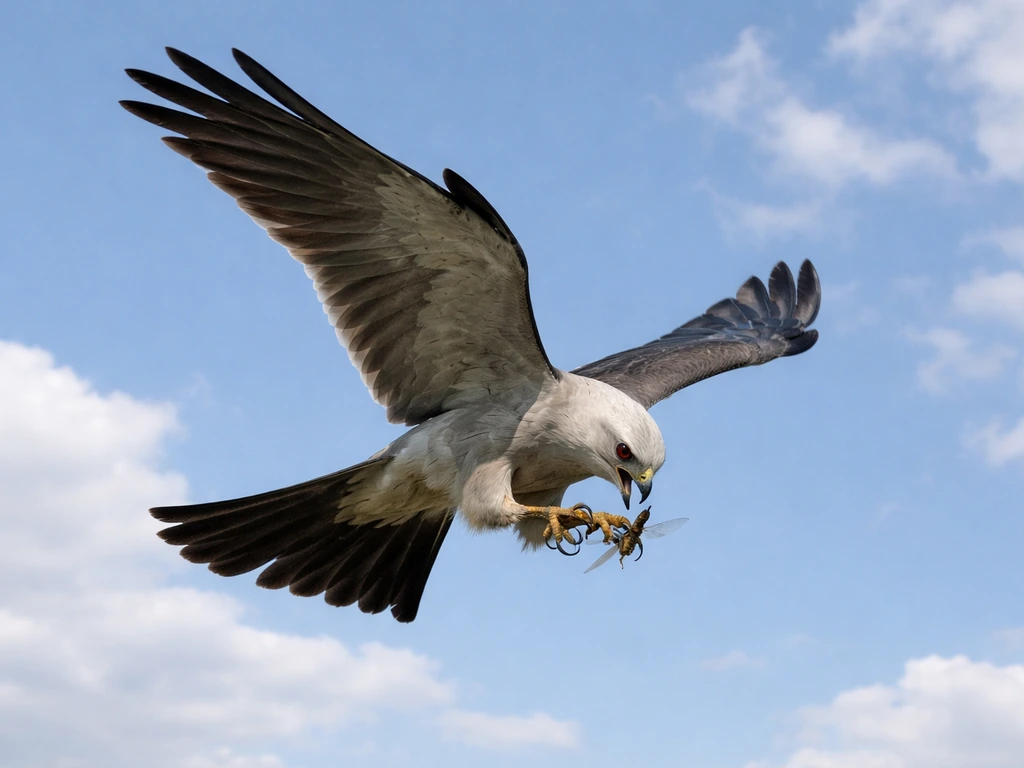
The Mississippi kite is a medium-sized, sleek raptor with roughly a three-foot wingspan and a long tail. It is famous for catching insects mid-air and eating on the wing, which gives it an almost playful, effortless energy in flight. If you saw a bird that seemed to be darting and catching things in the air with total ease, a Mississippi kite fits the picture. Spiritually, this one often speaks to flow, ease, and trusting your instincts in motion rather than standing still to overthink.
Is it actually a kite, or something else?
Red-tailed hawks are probably the most common bird mistaken for a kite, especially in North America. They are larger, have rounded tails (and as adults, a distinctive rusty-red tail with or without dark banding), and glide on broad flat wings rather than the angled, nimble wing posture of kites. If the bird you saw was big, broad-winged, and clearly a heavyweight, it was likely a hawk or buzzard, not a kite. That is not a lesser encounter spiritually, it is just a different message, and it is worth naming correctly.
What the bird's behavior is telling you
Once you have identified the bird, the behavior you witnessed is probably the richest source of spiritual information. Kite birds communicate through movement, and each behavior pattern carries its own meaning.
| Behavior | Spiritual Message | Suggested Action |
|---|---|---|
| Hovering or hanging still in mid-air | Patience and observation before acting; stillness as a power | Pause before making a decision; gather more information first |
| Circling slowly and high | Expanded perspective needed; something is being surveyed or assessed | Zoom out from your current situation; journal from a 'bigger picture' view |
| Swooping or striking quickly | Decisive moment; now is the time to act on what you already know | Stop deliberating; commit to the action you have been putting off |
| Landing near you or approaching you | Direct, personal message; the encounter is meant specifically for you | Sit quietly with it; ask what area of your life most needs attention today |
| Catching food in mid-air effortlessly | Flow and trust; your instincts are reliable right now | Lean into what feels natural rather than forcing a structured plan |
| Flying away or disappearing quickly | A transition or release; something is completing | Consider what you are ready to let go of or what chapter is closing |
Context changes everything: timing, location, and your life right now
The bird and the behavior are two ingredients. The third is you, and the specific moment the encounter happened. Context is the lens that focuses all the symbolism into something personally useful.
Time of day
A kite sighting early in the morning, when the day is just beginning, tends to carry forward momentum energy: this is a day to launch something, start the conversation, or take the first step. A midday sighting, when the sun is high and the bird is soaring at its peak, often speaks to clarity in the thick of things. A mindbodygreen piece on hawk symbolism similarly frames hawks in popular-culture spirituality as representing vision and clarity, which fits this “clarity” framing you discuss clarity in the thick of things. An evening sighting near dusk leans more toward reflection, completion, or releasing what has been weighing on you.
Where you were
Seeing a kite near your home suggests the message is about your personal life, family, or inner emotional landscape. At your workplace or during a commute, it often points to your career, creative work, or a professional decision. Out in nature or during travel, the encounter tends to carry broader themes of freedom, spiritual path, and life direction. A black kite circling over an urban space carries a particularly interesting resonance around navigating complexity, finding grace in a messy environment, which is a very specific and useful message if you are feeling overwhelmed by circumstances.
What was happening in your life at that exact moment
This is the most important question you can ask. Were you mid-conversation, mid-decision, mid-worry? Were you thinking about a specific person or situation when the bird appeared? Spiritually, the encounter tends to land its message in the territory you were already mentally occupying. If you were fretting about a relationship and a kite appeared hovering patiently overhead, the message is probably 'step back and observe this relationship from a calmer altitude before reacting.' If you were already confident and ready to act, the swooping kite confirms: yes, move.
Positive guidance vs. warning: how to tell the difference
One of the most common things I hear from readers is a kind of low-grade worry after a bird encounter: 'Was it a bad omen?' Kite birds, overwhelmingly, are not warning birds in the way that, say, certain owl traditions treat those encounters. They are active, daylight hunters associated with skill, precision, and grace, and their symbolism is almost universally forward-facing and positive. That said, any raptor can carry a caution if the encounter felt unsettling to you personally.
Here is a practical discernment framework: pay attention to your immediate felt sense in the first few seconds of the encounter. Did you feel a lift, a sense of wonder, a quiet excitement? That is almost always the signal that this is an encouraging, affirming message. Did you feel uneasy, a sudden drop in energy, or an instinctive sense of dread? That is worth examining, but even then it is rarely a cosmic warning. It is more often your own intuition signaling that something in your current situation needs honest attention.
The trap to avoid is confirmation bias in both directions. If you are already anxious, you may interpret a perfectly neutral bird circling overhead as a bad omen. If you are feeling hopeful, you might inflate a random bird sighting into a grand spiritual endorsement of every decision you are about to make. The middle path is: notice what arose in you, sit with it, and treat the encounter as a prompt for reflection rather than a verdict. If you want to explore another similar sign, you can also look into herring bird spiritual meaning for additional perspective.
Kite and raptor symbolism across spiritual traditions
Raptors as a category hold powerful spiritual significance across many traditions, though the meanings are not identical everywhere. It helps to know this so you can choose the lens that resonates most with your own background and practice.
- Native American traditions: Many Indigenous North American traditions associate raptors and hawks with the sun, with messengers from the spirit world, and with warrior energy in the sense of focused, purposeful power rather than aggression. A kite-like bird appearing might be read as a messenger carrying insight from ancestors or spirit guides.
- Celtic traditions: Birds of prey in Celtic lore were often linked to the otherworld and to vision, both literal and prophetic. The high-flying, far-seeing raptor was a symbol of one who could perceive what others could not. The red kite in particular has deep roots in Wales, where it is a national symbol carrying themes of endurance and resilience.
- Ancient Egyptian tradition: Kite birds appear explicitly in Egyptian mythology. The goddess Isis was depicted as a kite (or transforming into one) in texts describing how she used her wings to breathe life back into Osiris. This connection gives the kite a profound association with resurrection, healing, and the power of love to restore what is lost.
- Hindu and Eastern philosophy: Eagles and kites in Hindu tradition are often associated with Garuda, the divine bird vehicle of Vishnu, symbolizing devotion, spiritual power, and the ability to cut through illusion. While Garuda is technically an eagle, the broader class of soaring raptors shares this elevated, spiritually powerful symbolism.
- Christian symbolism: High-soaring birds in Christian contexts are frequently associated with the soul's ascent toward God, with the Holy Spirit, and with divine protection and watchfulness. A bird that hovers or circles can symbolize the presence of something greater watching over a situation.
- General Western spiritual symbolism: In more contemporary spiritual frameworks, seeing any raptor is commonly associated with the arrival of clarity, the need to trust one's vision, and receiving a message that one has the capability to handle whatever is coming.
Worth noting: if you encounter a black kite specifically, its symbolism in some traditions leans slightly darker, not in a frightening way, but in the sense of depth, shadow work, and navigating complexity with skill. And the red kite's rusty fire coloring connects it energetically to passion, vitality, and creative courage in many traditions. If you are curious about these species-specific differences, the symbolism of the black kite and the red kite each deserve their own deeper exploration.
What to do after your kite bird encounter

You do not need an elaborate spiritual practice to honor this encounter or get something useful from it. Here are practical next steps you can take today.
Reflection prompts to sit with
- What was I thinking about or feeling in the moment the kite appeared? What area of my life was most present in my mind?
- Am I currently too close to a situation that needs a wider view? What would it look like to rise above it and see the full picture?
- Is there a decision or action I have been hovering over without committing to? Is it time to swoop?
- What would 'trusting my vision' look like in my life right now?
- Is there something I am holding onto that is ready to be released?
Journaling prompts
- Write a paragraph describing the encounter in as much detail as you can remember: the bird, its behavior, where you were, what time it was, and how you felt.
- Write about the area of your life that feels most uncertain or 'unresolved' right now. Then write about it from an imaginary bird's-eye view, as if you were circling high above it. What do you notice from up there that you can not see from ground level?
- If this kite bird was delivering a single sentence message to you today, what would it say? Write it down, even if it feels made up. Trust whatever comes.
- List three areas of your life where you need more clarity or decisive action. Circle the one that felt most charged when the bird appeared.
Light spiritual practices to ground the encounter
- Spend five minutes in a meditative stillness, eyes closed, imagining yourself as the kite: hovering, perfectly still, seeing everything below with calm clarity. Ask internally: what do I see from up here?
- Set a simple intention for the next 24 hours that honors the message you received. Keep it one sentence: something like 'Today I will see my situation from a higher vantage point before reacting.'
- If you feel the encounter was significant, express a quiet moment of gratitude, whether to the bird, to nature, to whatever spiritual framework feels right to you. Gratitude closes the loop on a received message.
- If you can, spend a little time outdoors today, even briefly. Kite encounters often deepen when you stay in relationship with the natural world rather than returning entirely to indoor routines.
The most important thing is not to overthink it. The kite showed up, something in you noticed it as significant, and that noticing itself is the beginning of the message. Use these prompts to follow the thread. You do not need to have everything figured out immediately, and you do not need to assign a definitive meaning. Sometimes the most useful thing a bird encounter does is simply crack open a question you needed to ask. If you are looking for a more specific interpretation, you can explore the spiritual meaning of kingfisher bird as another perspective on what similar sightings may be pointing to bird encounter.
FAQ
How can I tell if I actually saw a kite bird or a look-alike raptor?
Use flight and tail shape first, not color alone. Kites tend to show a more angular, agile wing posture while gliding, and their tail shape is distinctive, especially the forked tail on red kites. If the bird looked oversized with broad, flat wings and a rounded tail, treat it as a hawk or buzzard instead, because the message you take from it may shift.
What should I do if I cannot identify the species, only that it was a kite-type raptor?
Lean on the behavior and your context rather than the exact species. If you are unsure, the safest interpretation is the core theme from the encounter, gain perspective and act decisively when ready, then narrow it using when you saw it (morning for initiation, midday for clarity, evening for release) and where you saw it (home for inner life, work for decisions, nature for direction).
Can a kite bird sighting have a negative or warning meaning?
Usually not in the way people expect. Kite birds are generally associated with forward movement, precision, and grace. However, if you felt genuine dread or the encounter pulled your attention to a neglected issue, treat it as an invitation to address a real-world concern calmly, not as proof of danger.
What if I felt nothing or the sighting felt neutral, should I ignore it?
Not necessarily. Even a neutral feeling can be useful, it may mean you are being prompted but not yet emotionally available to receive the message. Try a quick check after the sighting, ask what you were focused on mentally, then choose one small, concrete action that aligns with gaining perspective (for example, pause before replying, or review the next step in a plan).
How long should I sit with the meaning before acting?
Give it a short window, usually 24 to 48 hours, then act on the smallest clear step. Spiritual prompts often reveal in stages, first a shift in perspective, then a decision. If you still feel stuck after two days, it is often better to gather information or talk to someone than to wait for another sign.
What if the bird appeared during a tense moment, does that change the message?
Yes, context becomes even more important. If the kite appeared while you were mid-argument, mid-worry, or about to react, interpret it as timing guidance, step back and observe before responding. A practical way to honor that is to delay any decision that involves emotion, then revisit when you can think more clearly.
Is it meaningful if the kite bird circles repeatedly or hovers for a long time?
Long hovering and repeated circling usually point to sustained observation, patience, and the need to widen your viewpoint rather than rush. If you notice the bird lingering, treat it like a reminder to slow down and confirm details, especially before finalizing a plan or sending an irreversible message.
Does the spiritual meaning differ if I see the kite near my home, but at night?
Kites are typically day-active, so a night encounter may be a sign you may have seen a different raptor, like an owl. If it was truly a kite at night, it is worth double-checking identification. In most cases, use the existing framework by time and place, but prioritize accurate species and behavior before assigning symbolism.
Should I journal the sighting, and what exactly should I record?
Yes, journaling helps reduce confirmation bias. Write three things: the species confidence level, the bird behavior (soaring, hovering, darting or catching), and your immediate emotional reaction in the first few seconds. Then add one sentence about what you were thinking about right before it appeared, that sentence usually becomes the key to interpretation.
Can I use this interpretation alongside other bird signs?
You can, but avoid stacking multiple meanings until you confirm what is truly happening in your life. If you want additional perspective, use other bird symbols as secondary context, then choose the single most actionable prompt that reduces confusion, such as “clarify the next step” or “take a pause before reacting.”
Next Article
Red Kite Bird Spiritual Meaning: What It Signals & What to Do
Interpret red kite bird spiritual meaning and what to do, including white kite sightings, ID checks, and next steps.