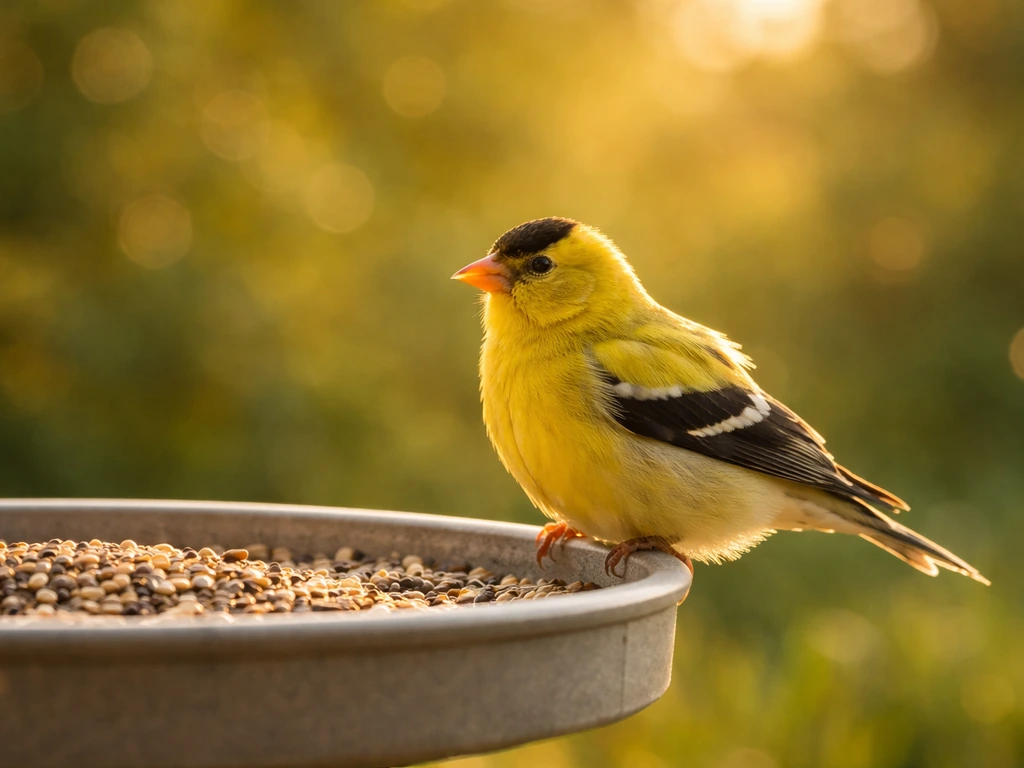
A fantail bird crossing your path is widely read as a sign of joy, adaptability, and incoming change. In New Zealand and broader Māori tradition, the pīwakawaka (fantail) carries an even deeper weight as a messenger between the living and the spiritual world. Whether it danced around you on a bush track, landed nearby, or tapped at your window, the message almost always circles back to the same core idea: pay attention, stay curious, and be ready to move with whatever is shifting in your life.
Fantail Bird Spiritual Meaning: Signs, Messages, and What to Do Next

Eliza Thornwick
5 May 2026
What the fantail bird actually is (and why it matters spiritually)
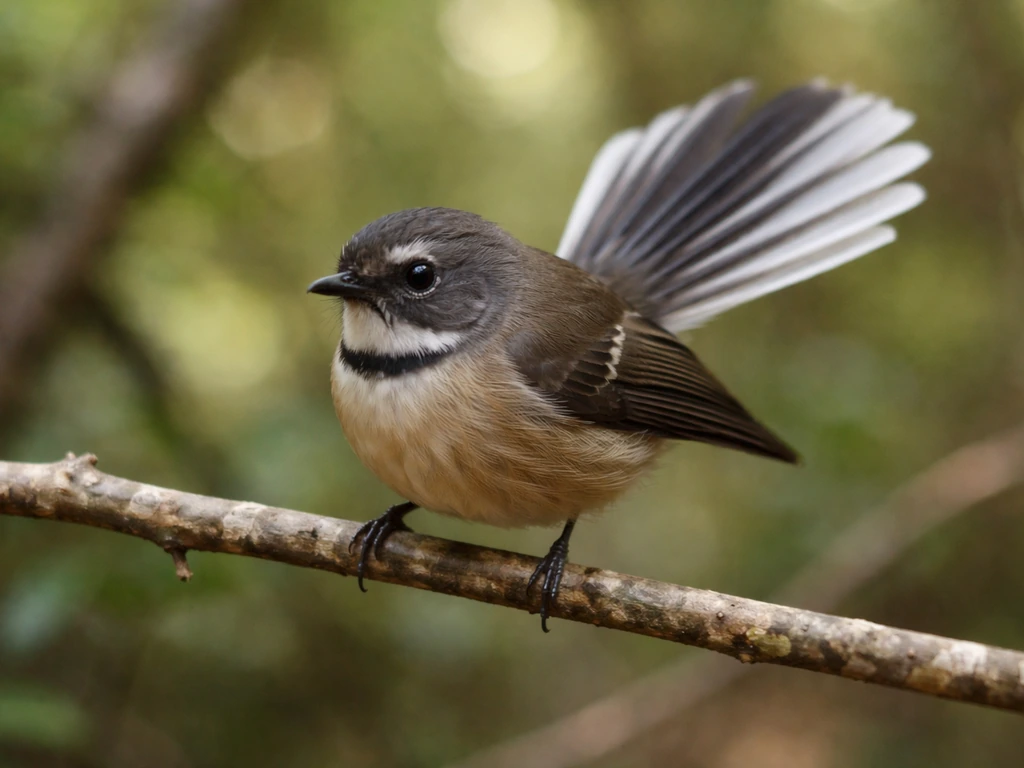
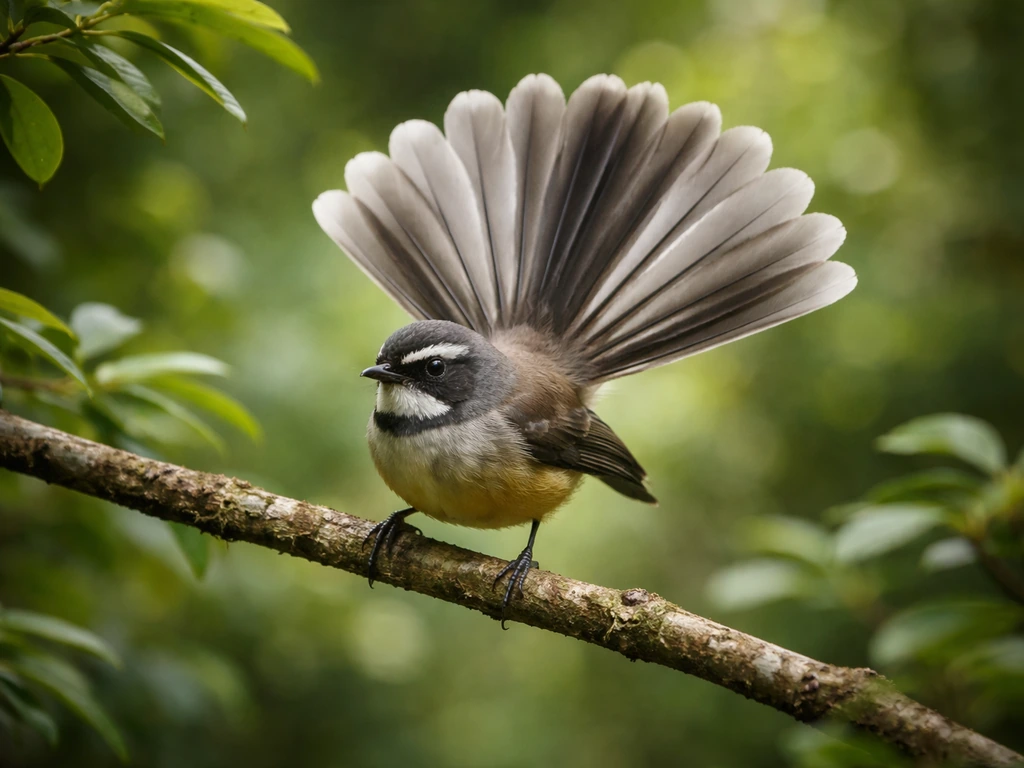
The fantail most commonly referenced in spiritual symbolism is the New Zealand fantail, Rhipidura fuliginosa, known in te reo Māori as pīwakawaka, tīwakawaka, or piwaiwaka. It is a small, energetic bird famous for its fan-shaped tail, which it spreads wide as it pivots and darts in the air catching insects. That tail is the visual signature people notice first, and it is central to the bird's mythology.
Behaviorally, fantails are bold. They are not shy around humans at all. In fact, they will often follow people along walking tracks, flitting around legs and feet, because our footsteps disturb insects hiding in the leaf litter. That characteristic 'following' behavior, combined with the persistent 'cheet cheet' chattering call, is what makes encounters feel personal and intentional, even when the bird is just after a meal. Spiritually curious people tend to notice that feeling of being singled out, and that is exactly where interpretation begins.
In Māori mythology, the pīwakawaka plays a significant role in the story of Māui. In the Māui, Hine-nui-te-pō story element, fantails are said to laugh, alerting the gods blank" rel="noopener noreferrer">Māui story. When Māui tried to win immortality for humanity by entering the body of Hine-nui-te-pō, the goddess of death, the blank" rel="noopener noreferrer">fantail laughed and woke her, ending Māui's quest and sealing death as part of the human experience. Because of this, the fantail has long been associated in Māori tradition with being a messenger connected to death or news of death from the gods. That is a very different cultural frame than the 'joy and playfulness' angle you will find on most spiritual symbolism sites, and it is worth knowing both.
The most common spiritual meanings of a fantail encounter
Across spiritual and totem traditions, a few core themes come up consistently when people interpret a fantail sighting. None of them are random. They map directly onto what this bird actually does in the wild: it moves fast, it adapts, it communicates constantly, it follows with curiosity, and it spreads itself wide and bright. If you are specifically exploring the scissor tail bird spiritual meaning, remember to compare those interpretations with what the fantail and local cultural context are pointing to in your situation.
- Joy and lightheartedness: The fantail's constant movement and chatter are read as a reminder not to take life so seriously and to find delight in small moments.
- Adaptability and embracing change: The tail-fanning itself is a physical expression of quick pivoting, spiritually framed as a nudge to stay flexible when life shifts direction.
- Curiosity and openness: The bird's bold, inquisitive nature mirrors an invitation to stay open to new experiences rather than retreating into comfort zones.
- Communication and messages: The persistent calling behavior leads many to interpret a fantail encounter as a direct signal to pay attention, something or someone is trying to reach you.
- Intuition and inner guidance: Spiritual writers broadly associate fantail energy with trusting your instincts and following inner prompts even when the path is not fully clear.
- Protection and spiritual presence: In some traditions, the fantail is seen as a guardian presence, particularly when it appears during emotionally significant moments.
- Connection to departed loved ones (Māori and broader traditions): A fantail appearing unexpectedly, especially inside a home, is sometimes interpreted as a visit from someone who has passed.
What your specific encounter likely means
The type of encounter shapes the message significantly. A fantail following you on a hiking trail carries a different tone than one appearing at your window during a hard week. Here is how to read the most common encounter types.
You simply see a fantail

A general sighting, especially if it feels notable or the bird stays longer than expected, is most often read as a gentle reminder to lighten up and trust the flow of what is happening in your life. If you have been overthinking a decision or carrying heavy energy, the fantail showing up is a cue to breathe, stay curious, and let things unfold. For more on the spiritual meaning of the fantail bird in New Zealand, including how the pīwakawaka is read as a message between worlds, see the deeper symbolism behind this encounter spiritual meaning of fantail bird nz.
A fantail follows you
This is one of the most commonly reported fantail encounters, and it feels deeply personal even though the bird is often just hunting insects your feet disturb. Spiritually, though, the feeling of being escorted or accompanied is the point. A fantail following you is typically read as a sign that you are being guided or watched over. It can also signal that you are on the right path and should keep moving, even if you cannot yet see where you are headed.
A fantail lands on you
This is the encounter people find most striking, and it tends to carry the strongest spiritual weight. When a wild bird makes physical contact, most traditions read it as direct communication: a message specifically for you, not just a general sign. The most common interpretations are that a significant shift is coming, that a loved one who has passed is close by, or that you are being called to pay attention to something you have been avoiding. Take note of exactly what you were thinking about when it happened.
A fantail taps at your window
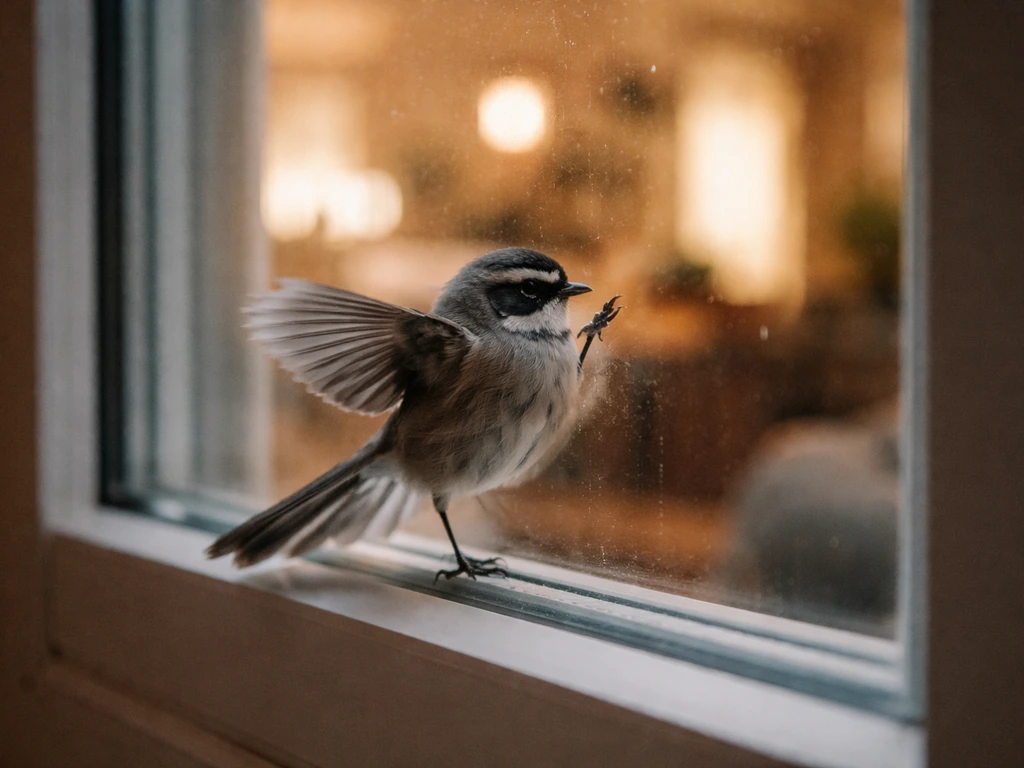
Window tapping across bird-symbolism traditions is generally read as a nudge to wake up to something you may be ignoring. Spiritually, windows represent thresholds between the inner world and the outer world, so a bird making contact with that boundary is often interpreted as a call to examine what you are keeping inside (fears, decisions, unspoken truths) and bring it out. If the tapping happens in the morning, many spiritual writers link it specifically to new beginnings and fresh starts.
A fantail appears inside your home
In Māori tradition, a fantail entering a home has historically been interpreted as a sign of coming news, sometimes specifically news of a death. That is a cultural lens worth acknowledging honestly rather than glossing over. In a broader spiritual context, many people interpret an indoor fantail as a visit from a departed loved one or as an urgent message that something in your home life needs your attention. In that same spirit, the yellow finch bird spiritual meaning can be read as a sign that your inner world is asking to be acknowledged and cared for inside your home. If this encounter feels emotionally heavy, trust that feeling rather than trying to rationalize it away.
You keep seeing a fantail repeatedly
Repeated encounters are almost universally treated as amplified messages in bird symbolism. If a fantail keeps showing up over days or weeks, the spiritual interpretation is that whatever message it carries has not yet landed or has not been acted on. Repetition is the universe turning up the volume. Sit with what the bird might be pointing to and ask yourself honestly whether you have actually done anything with the message yet.
Fantail symbolism in love, home, creativity, and personal growth
People often want to know what a bird sign means in a specific area of their life. Here is how fantail energy tends to map onto the themes readers most commonly connect to bird encounters.
| Life Area | What the Fantail Might Be Saying |
|---|---|
| Love and relationships | Bring more playfulness and lightness into connection. Stop waiting for the 'perfect' moment to open up. Curiosity and communication are the real foundations of closeness. |
| Home and belonging | Your home environment may need more joy and less heaviness. A fantail near the home can signal that it is time to create a space that truly reflects who you are now. |
| Creativity and self-expression | The tail-fanning display is pure expressiveness. A fantail encounter in a creative block often means: spread your wings wider, try the thing that feels too bold, trust your instincts over your inner critic. |
| Personal growth and change | This is the fantail's strongest domain. Its core energy is about adapting quickly and moving through transitions with grace. If your life is shifting, a fantail encounter says: you are built for this, keep pivoting. |
Reading meaning from specific fantail behaviors
Beyond the encounter type, how the bird is behaving when you see it adds another layer to the message. Fantails are expressive and active, so there is usually something specific to notice.
Tail-fanning and display
When a fantail fans its tail wide, it is doing what it does best: pivoting fast and showing its full range. Spiritually, this display is read as an encouragement to express yourself fully and without apology. If you have been making yourself small or playing it safe, the fanned tail is a direct visual cue to spread out and take up the space that is rightfully yours. In Māori mythology, the spreading of the tail feathers connects back to the bird's sacred role in the Māui story, giving it an additional layer of spiritual gravitas.
Calling and chattering
The fantail's constant 'cheet cheet' chattering is how you often know it is there before you even see it. When the bird is especially vocal during your encounter, the message leans strongly toward communication: there is something that needs to be said, heard, or acknowledged. Ask yourself what conversation you have been avoiding or what truth you have not yet spoken aloud.
Nesting activity
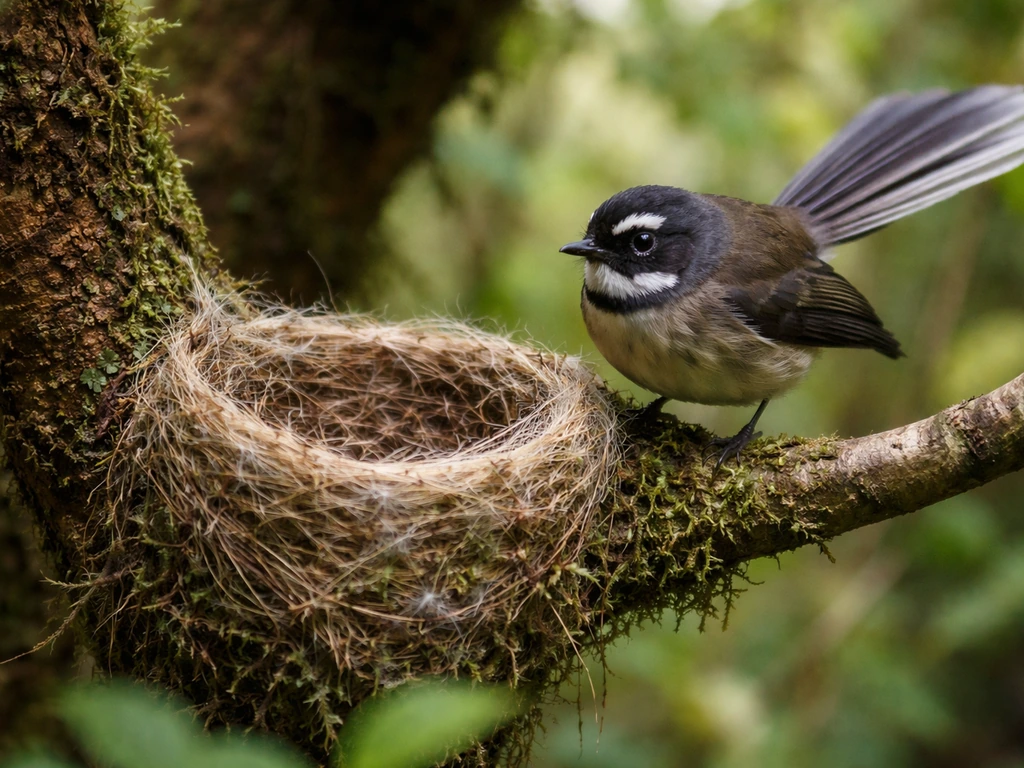
If you observe a fantail building or tending a nest (in New Zealand, this typically happens from August through March in the North Island, and September through January in the South Island), the symbolism shifts toward home, new beginnings, and nurturing something that is being built. This is a particularly positive sign if you are in the process of starting something new, whether that is a project, a relationship, or a significant life change.
Foraging and following patterns
A fantail foraging actively and moving with energy around you speaks to resourcefulness and trust. The bird finds what it needs by staying in motion and following opportunity. Spiritually, this mirrors a message to stay active in your own pursuit of what you need rather than waiting for things to come to you. Movement creates opportunity.
How to figure out which message is actually for you
The biggest mistake people make with bird symbolism is trying to assign a single universal meaning and apply it regardless of context. The fantail has multiple spiritual associations, some joyful, some serious, and the right interpretation depends on what was already alive in you when the encounter happened. Some people also connect the goldfinch bird spiritual meaning to themes of renewal, joy, and inner awareness, so it can be helpful to compare symbols across bird encounters.
A useful framework is to check four things immediately after an encounter. First, timing: what was happening in your life in the days just before? Major spiritual messages tend to arrive when you are at a crossroads or carrying a question. Second, location: did it happen in nature, at your home, at your workplace?
Location often narrows the life area the message relates to. Third, your emotional state: did the encounter feel warm and reassuring, or did it feel jarring and significant? Your gut response in the first few seconds is usually pointing at something real. Fourth, what was literally on your mind when the bird appeared?
Many people find the encounter interrupts a specific thought, and that thought is often the answer.
If you are drawn to the Māori cultural context of the fantail, it is worth sitting with that layer respectfully rather than dismissing it. In a Reddit discussion about a “black fantail” seen in Ōtautahi, people shared blank" rel="noopener noreferrer">many te reo Māori names and variants for fantails, which can help with wording variety without overstating spirituality. A fantail appearing during a period of illness, loss, or worry about someone dear to you carries a different weight than one that shows up during a joyful walk. Both are valid. Let the context guide you rather than reaching for the most comfortable interpretation by default.
One practical grounding tip: if you feel anxious after an encounter (especially the 'inside the home' or 'dead bird' scenarios), take a few slow breaths before you do anything else. Breath awareness is not mystical fluff; it genuinely settles the nervous system enough that you can interpret the encounter from a place of clarity rather than fear. If a fantail is in distress or injured, the right immediate action is contacting local wildlife authorities, not interpreting the symbolism. Spiritual meaning and practical care are not mutually exclusive.
Rituals, journaling prompts, and what to do next

Once you have had the encounter, the most useful thing you can do is create a small ritual that anchors the moment and gives the message somewhere to land. This does not need to be elaborate. Even a few minutes of quiet reflection immediately after makes a significant difference in how clearly the meaning comes through.
A simple grounding ritual
- Find a quiet spot and take three slow, intentional breaths to settle out of the initial excitement or surprise of the encounter.
- Close your eyes and mentally replay the encounter in detail: where the bird appeared, what it did, how you felt.
- Ask internally: 'What do I most need to hear right now?' Sit with whatever surfaces without judging it.
- If it feels right, hold an intention for the day: something small and actionable that reflects the fantail's message (stay curious, speak up, embrace what is changing).
- Thank the bird and the moment, regardless of whether you feel fully certain about the meaning.
Journaling prompts to deepen the message
- What was I thinking about or worrying about just before the fantail appeared?
- Where in my life have I been resisting change or holding back from expressing myself fully?
- Is there a conversation I have been putting off that this encounter might be nudging me toward?
- If I let myself believe this was a message from a loved one who has passed, what would I most want them to say to me right now?
- What does 'adapting with joy' look like for me in my current situation?
- What small step could I take today that reflects the energy of curiosity and movement?
Setting an intention going forward
After journaling, choose one concrete intention to carry through the next few days. It could be as simple as reaching out to someone you have been meaning to contact, making a decision you have been circling, or giving yourself permission to try something creative without needing it to be perfect. The fantail does not hover and wait for things to be safe. It moves. That is the invitation.
If the fantail keeps showing up after you have done this work, treat each new encounter as a check-in rather than a repeat alarm. And if you are exploring the specific spiritual landscape of New Zealand and the deeper cultural meaning of the pīwakawaka in Māori tradition, that context deserves its own careful attention and is worth exploring in more depth, particularly if you are living in or closely connected to Aotearoa. The spiritual meaning of the fantail in a New Zealand context carries layers that go well beyond the general symbolism covered here, and those layers are genuinely worth sitting with.
FAQ
Is the fantail bird spiritual meaning always positive, or can it be warning-like?
Generally, yes, but use the emotional tone as the tiebreaker. A fantail can be a playful, joy-oriented sign when you feel light and open, but it can carry heavier “news” symbolism when the encounter happens during grief, illness, or intense worry. If you feel fear or dread, prioritize safety and support first, then interpret.
What does it mean if I see a fantail but nothing changes afterward?
It is still meaningful, but the message may be more about your internal shift than an external event. If you sensed the bird “stuck” your attention but nothing obvious changes afterward, treat it as guidance to act on something you have been postponing (a conversation, decision, or boundary) rather than waiting for a specific outcome.
What if the fantail keeps appearing in different locations, not just one place?
Yes. Repetition usually means the same theme is still active in your life. If the bird shows up in different places (yard, work, route to a store), map each sighting to the life area where you were at that moment, then ask what specific action would align with “pay attention, stay curious, move with change.”
How should I interpret window tapping differently from a bird crossing my path?
Window tapping is often treated as a “threshold” message, but you can narrow it by timing and your current focus. If it happens while you are ruminating, the nudge may be to bring an unspoken truth into daylight. If it happens during a morning routine, many people connect it to new beginnings, so set a small start immediately (one email, one plan, one commitment).
What if the fantail is sick, injured, or unusually unresponsive?
If a fantail is injured or behaving oddly, do not rely on symbolism as the reason to do nothing. Contact local wildlife or animal welfare services, keep pets and people away, and only after the immediate care is handled should you reflect spiritually on what the encounter stirred up in you.
What is the biggest mistake people make when interpreting a fantail sighting?
There are two common pitfalls. First, assuming one universal meaning, ignoring your context. Second, over-reading a single detail (like tail fan or call) without considering the encounter type and your emotional state. Use a “theme first, detail second” approach: decide the main theme from the overall situation, then interpret the behavior as emphasis.
How can I tell whether the fantail sign is practical guidance or just coincidence for me?
A good rule is to treat the “message” as a prompt you can test, not a certainty. Choose one concrete, low-risk action you can take within a week, then reassess. If it helps you move, clarify, or speak honestly, that is strong confirmation.
How should I approach Māori cultural meanings if I am not Māori?
If you are in Māori cultural context, the encounter can be meaningful even when you do not feel confident about the mythology. The key is to avoid claiming certainty about specific messages like death news. Instead, show respect, keep your reflection personal, and if you want deeper understanding, engage with appropriate local knowledge and language.
What if I did not notice what I was thinking about when the fantail appeared?
Not necessarily. If the bird arrives, but you cannot recall what you were thinking, rely on timing and emotion instead. Ask what decision, worry, or conversation has been most “sticky” in the last few days, because that often becomes the interpretation even without a precise moment of awareness.
Do I need to do a ritual every time I see a fantail, or only once?
You can, but keep it grounded. A simple intention after the encounter is usually enough, and you do not need a long ritual. If the bird appears again, view it as a check-in, then adjust the next concrete step rather than adding complicated symbolism layers.
How should I handle an indoor fantail encounter while still considering the spiritual meaning?
If it is an indoor visit, treat your emotional reaction as data, especially if it feels heavy. At the same time, focus on safe, practical steps like gently guiding the bird out and reducing disturbances. Symbolism can guide reflection, but it should not replace home safety, ventilation, and humane removal.
Does the fantail bird spiritual meaning change depending on where I live or what species I see?
Different species can be visually similar, and different regions can have different birds with “fan tail” features. If you can identify it as a New Zealand fantail, the pīwakawaka framing applies more closely. If you are elsewhere, you can still use the general themes of adaptability and communication, but be cautious about assuming exact Māori associations.
Next Article
Goldfinch Bird Spiritual Meaning: Signs, Messages, Next Steps
Interpret goldfinch bird spiritual meaning: joy, hope, voice and renewal, plus journaling and next steps based on your e